
TAG Heuer
Kirium Blue Dial
WL5113
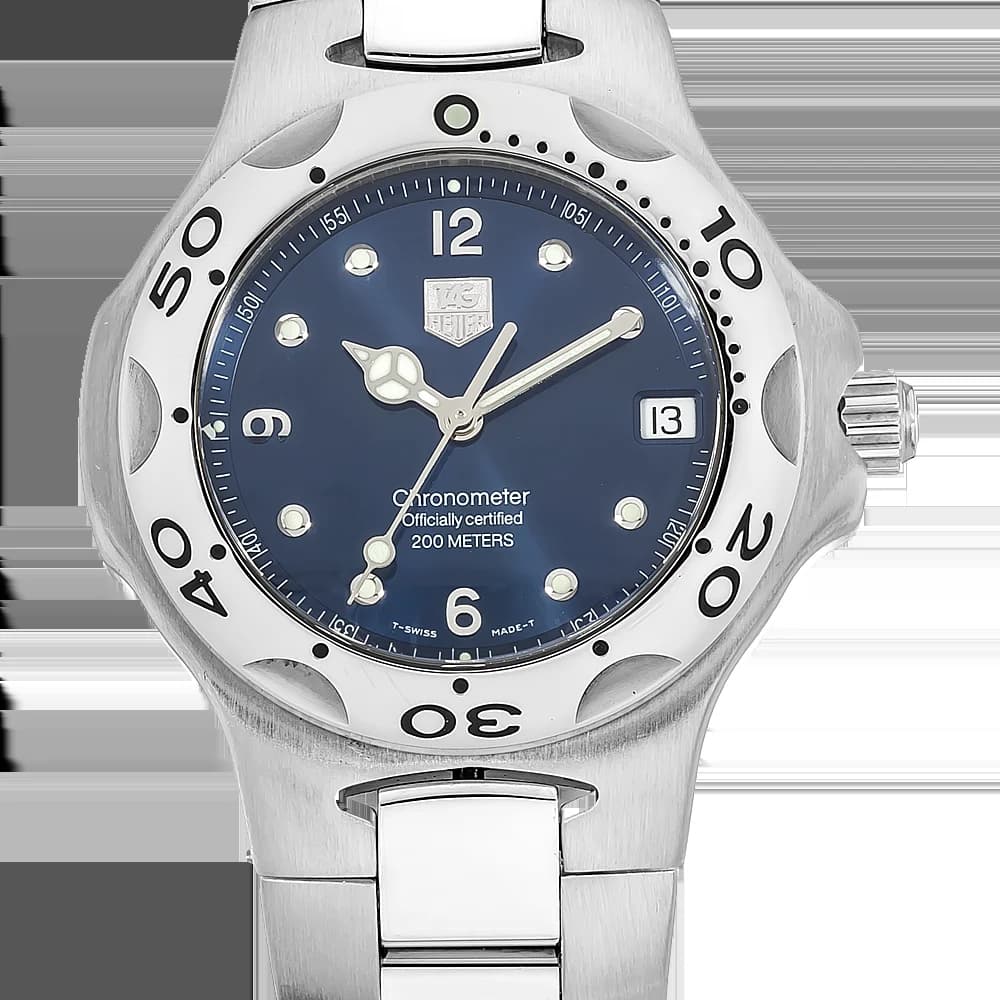
To understand the TAG Heuer Kirium, you need to understand where TAG Heuer was in 1997. Edouard Heuer had founded the company in 1860 in Saint-Imier, a small town in the Swiss Jura. By 1997 the brand had survived 137 years, two world wars, the Quartz Crisis, and a corporate restructuring that bolted the acronym TAG (Techniques d'Avant Garde) onto the Heuer name in 1985. Christian Viros had been running the company since 1988, and the core lineup was the Carrera, the 2000 series, and the aging 4000 series. The 4000 series needed a successor. The brief was ambitious: design a watch that carried TAG Heuer into the 21st century. Viros hired Jorg Hysek. That decision is what makes this story interesting.
Hysek is one of the most important watch designers most people have never heard of. Born on May 14, 1953 in East Berlin, he moved with his family to Geneva in 1960, just before the Wall went up. His father was a goldsmith, so he grew up around small-scale metalwork and precision craft. He studied micromechanics in Biel, trained at the Watchmakers School in Pforzheim, spent two years studying sculpture at the London Academy of Art, and then worked for Rolex for four years. That combination of technical training and artistic sensibility shows up in everything he touched. In 1977, Hysek led Project 222 for Vacheron Constantin, which produced the 222, one of the great integrated bracelet sport watches and the direct ancestor of today's Overseas. Most people assume Gerald Genta designed the 222. He did not. Genta designed the Royal Oak for Audemars Piguet in 1972 and the Nautilus for Patek Philippe in 1976. Hysek designed the 222 for Vacheron Constantin in 1977. Different designer, same integrated bracelet DNA. In 1984, Hysek won the Grand Prix de la Ville de Geneve for a Vacheron Constantin cuff watch, and the following year received a Special Jury Mention for a Jean Lassale pocket watch. He also designed the Breguet Marine in 1990, the Tiffany Streamerica in 1990, and the Seiko Arctura. When TAG Heuer needed someone to reimagine their sport watch line, they went to the man who had already done it for Vacheron Constantin.
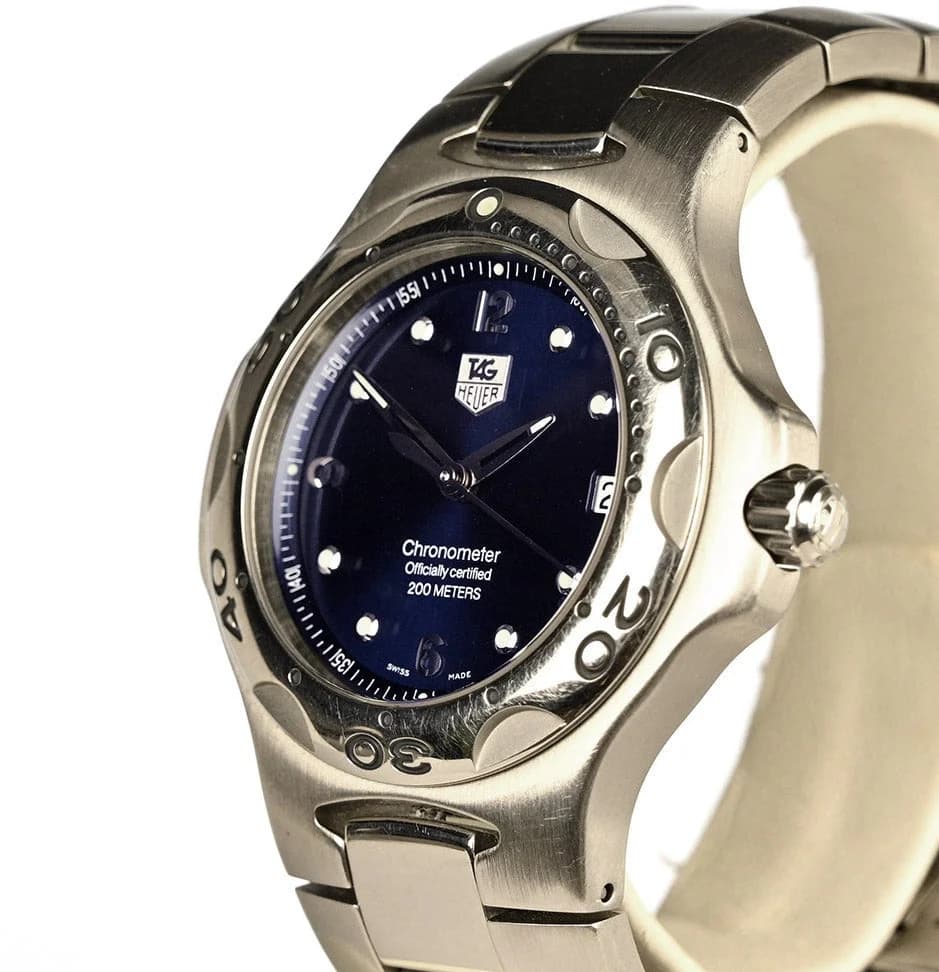
The Kirium was launched in 1997 after a two-year development process as the successor to the 4000 series. It was the last major collection released before LVMH took over, the final product of the independent TAG Heuer era under Viros. TAG Heuer marketed it as a watch inspired by liquid metal, and the polished versions earned that description. The case and bracelet were designed as a single continuous form, the links flowing into the case without visible lugs, the whole thing shaped to follow the contour of the wrist. It was TAG Heuer's most ambitious design statement since the Monaco. The Kirium entered the catalog at a time when the watch industry was still recovering from the Quartz Crisis and trying to figure out what a modern sport watch should look like. Hysek's answer was sculptural: a watch that treated the bracelet as part of the design, not an afterthought bolted onto the case. The marketing reflected the confidence. Viros said publicly that the Kirium and planned new product launches would drive strong growth for the brand in Europe and the Americas.
The Kirium range was broader than most people realize. TAG Heuer produced it in quartz three-handers, automatic chronometers, and chronograph configurations. The men's bracelet codes alone came in three finishes: brushed, polished center link, and fully polished. There were mid-size variants and ladies models. Dial colors included black, white, silver, and the blue that I love. The reference numbering tells you what you are looking at. The WL1000 through WL1300 range covered the quartz models. The WL5100 range covered the automatics. The WL5113 specifically is the automatic chronometer with the blue dial on the integrated steel bracelet. That is the one I keep coming back to.
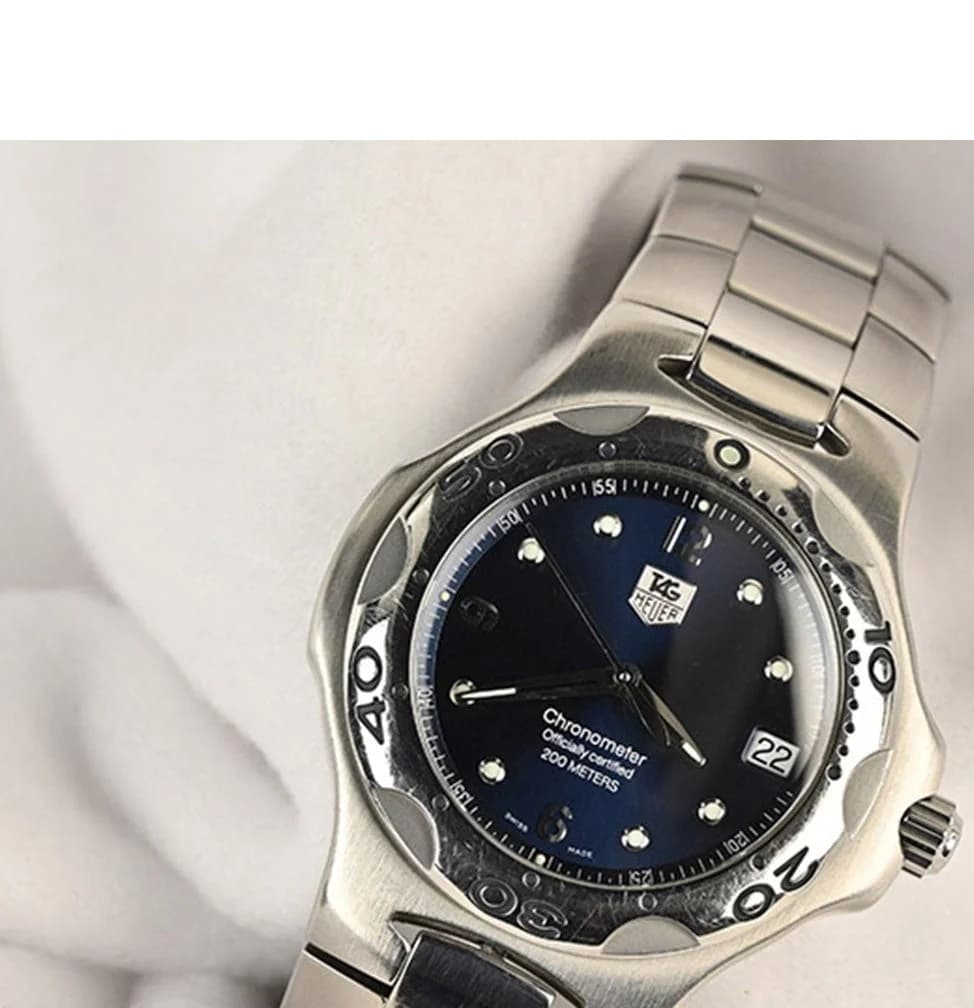
Inside the WL5113 is an ETA 2892-A2, one of the finest movements ETA ever produced. It has 21 jewels, beats at 28,800 vibrations per hour (4 Hz), and stores 42 hours of power reserve. The movement stands just 3.6mm tall, which is one reason the Kirium sits relatively flat on the wrist despite housing an automatic caliber. The 2892-A2 was the premium tier of ETA's automatic lineup, sitting above the workhorse 2824 that powered most entry-level Swiss automatics. Brands like Breitling used the 2892-A2 as the base for their B17, IWC built on it, and Omega sourced it for several references. The movement uses an Incabloc shock protection system, a ball-bearing rotor for efficient winding in both directions, and the Etachron regulator system for fine adjustment. In the Kirium, it received COSC chronometer certification, meaning each individual movement passed the Controle Officiel Suisse des Chronometres testing protocol: 15 days of measurement across five positions and three temperatures, with daily rate deviation held between minus four and plus six seconds per day. Not every Kirium was a chronometer. The quartz models ran on standard TAG Heuer quartz movements. The basic automatics ran the ETA without COSC testing. The WL5113 was the one with the papers.
The blue dial is the one. A deep royal blue with luminous hands, applied dot indices at most hours, and Arabic numerals at 12 and 6 o'clock. The color shifts depending on light. In fluorescent office light, it reads as a corporate navy. In sunlight, it opens up into something brighter, more saturated. There is a depth to the blue that flat photographs never capture. The lacquer catches light at different angles and produces a range of blues from almost black in shadow to a vivid cobalt in direct sun. The date window sits at three o'clock, matching the dial color. The hands carry luminous material for low-light legibility. Applied indices at the hour positions give the dial a three-dimensional quality that printed markers cannot match. The case is stainless steel, approximately 39mm across (sources vary from 38 to 41mm because the integrated bracelet makes consistent measurement difficult, a quirk the TAG Heuer Enthusiast community has debated for years). Thickness sits around 11mm. The crystal is sapphire. The bezel rotates in one direction, engraved with minute markers, which gives the watch genuine dive tool functionality. Water resistance is 200 meters, which puts it firmly in dive watch territory. A screw-down crown seals the case. The caseback is solid stainless steel, bolted down. For a sport watch from 1997, these are strong specifications.
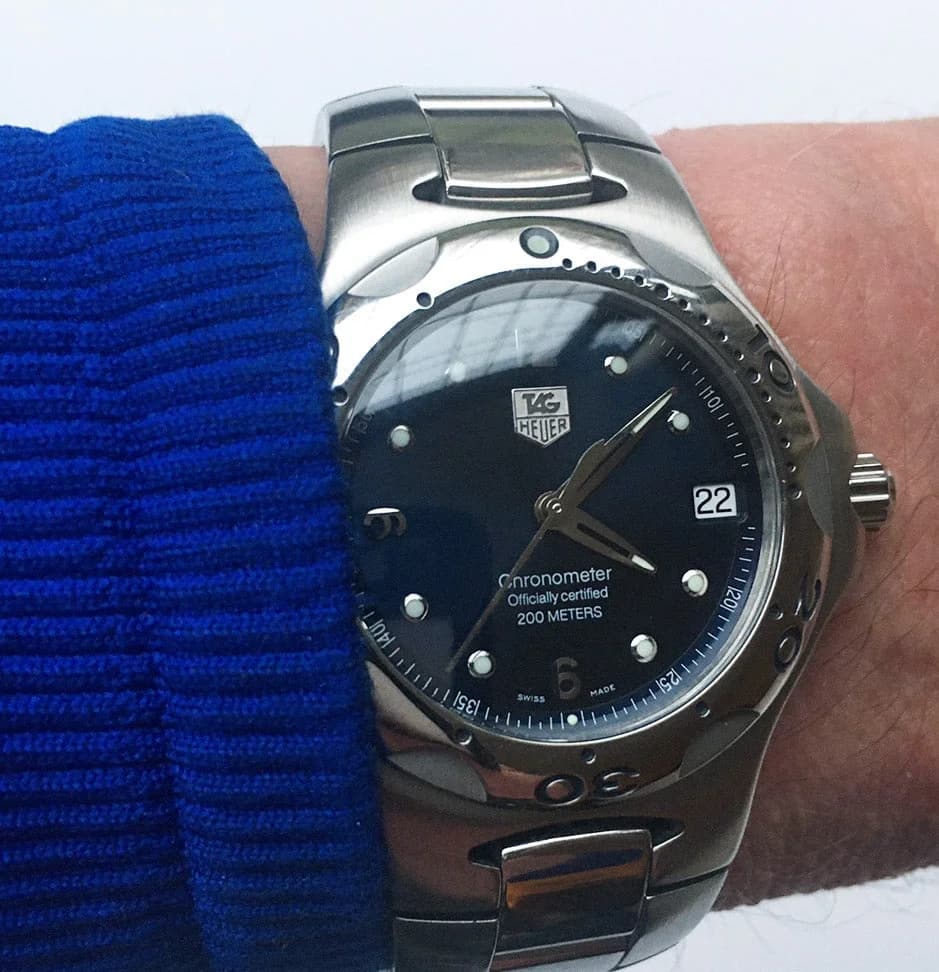
There is a specific feeling that the integrated bracelet produces on the wrist. A seamless transition from case to bracelet that makes the watch feel like a single piece of metal rather than a case bolted to a strap. The concept was not new. Genta had done it with the Royal Oak in 1972 and the Nautilus in 1976. Hysek himself had done it with the Vacheron Constantin 222 in 1977. But the Kirium brought that integrated aesthetic to a completely different audience. The Royal Oak and the Nautilus lived behind glass in boutiques. The 222 was produced in tiny numbers, 500 in steel, 100 in gold, 120 in two-tone, before Vacheron discontinued it in 1985. The Kirium sat on the counter next to the Carrera and the 2000 series, accessible, and it looked like it belonged in a different conversation entirely. That is the thing about Hysek's work. He understood how to bring high design language down to real-world availability without losing the design intent.
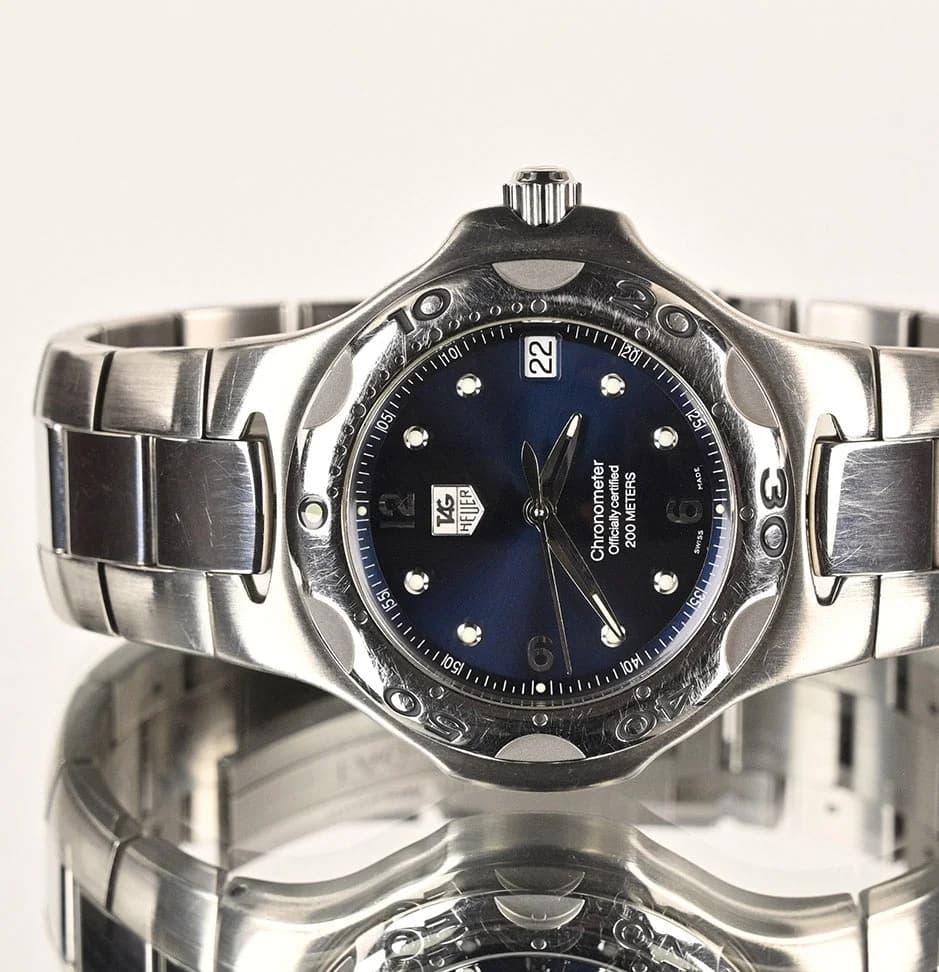
What I notice about the Kirium's design is how intentional every surface transition is. The case does not simply end where the bracelet begins. There is a sculptural flow where the case curves inward and the first bracelet link picks up that curve exactly. The bezel sits almost flush with the sapphire crystal, which gives the watch a clean silhouette from any angle. The crown is recessed into the case profile so it does not snag on shirt cuffs. These details sound minor individually, but together they produce a watch that feels resolved. Nothing is accidental. Hysek had trained as a sculptor before he designed watches, and the Kirium shows that background more than anything else in his catalog. The polished versions especially look like they were carved from a single billet of steel.
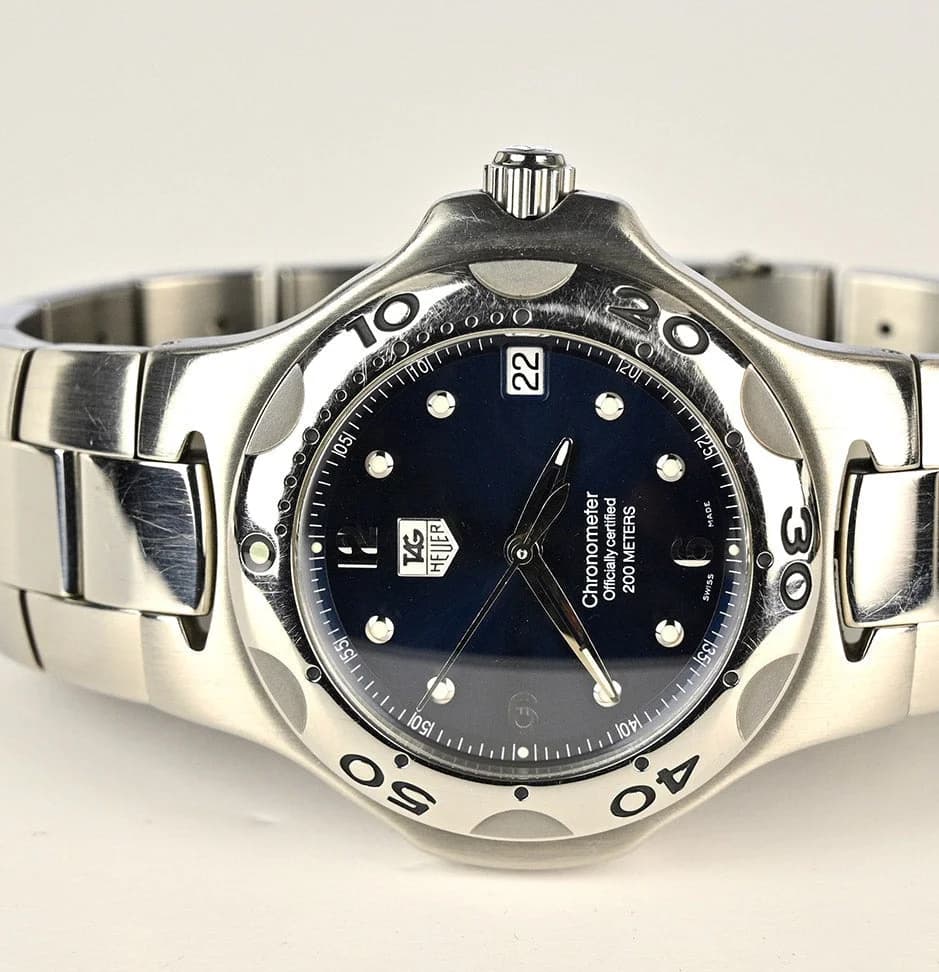
Two years after the Kirium launched, LVMH acquired TAG Heuer in 1999. The acquisition brought the brand under the same corporate umbrella as Louis Vuitton, Dior, Bulgari, Hublot, and Zenith. The Kirium survived the transition. It stayed in the catalog through the early LVMH years, went through at least three distinct dial redesigns during its production run, evolving from the original Mercedes-style hands to a proprietary Kirium handset, and eventually to bold Arabic numerals at 12 and 6 o'clock. Production of the core Kirium line ended around 2005. The F1 Kirium variant continued for a few more years, with the last examples appearing around 2008. In total, the Kirium had roughly a decade in the catalog. TAG Heuer replaced it with the Link, then the Aquaracer, and eventually the Connected. The industry moved on. The watch community largely forgot about it.
But the design holds up. I appreciate the Kirium more now than I did when it was current. The integrated bracelet, the case proportions, the way the bezel sits flush against the crystal. It was ahead of its time in 1997. The fact that integrated bracelets became the dominant luxury sport watch trend twenty years later proves it. When Audemars Piguet, Patek Philippe, and Vacheron Constantin started commanding waiting lists for their integrated bracelet sport watches in the mid-2010s, and when every independent brand from Czapek to Norqain started launching their own integrated bracelet references, the playbook was the same one Hysek had written decades earlier. He saw where the industry was going before the industry got there. The difference is that he did it for TAG Heuer, not for a brand the collectors take seriously in that conversation, and so the contribution gets overlooked.
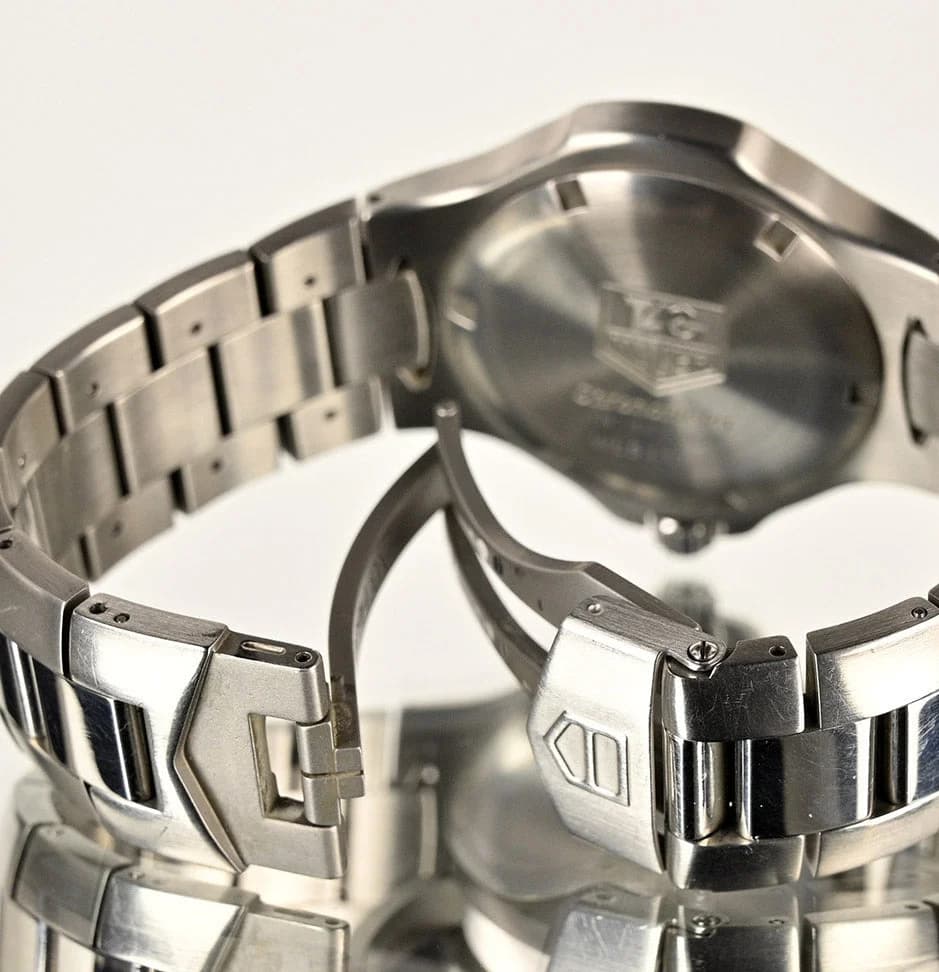
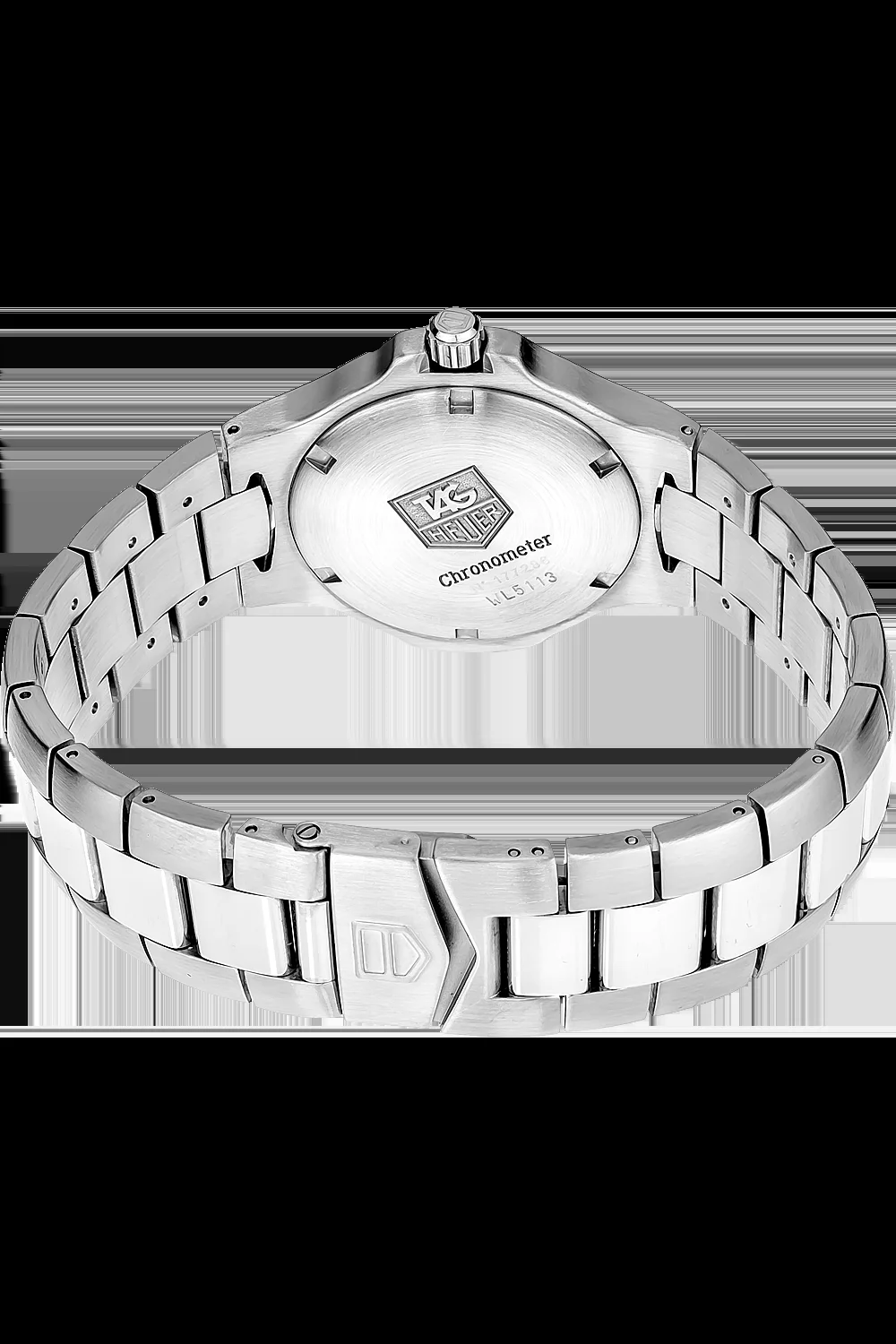
The bracelet itself is one of the most comfortable integrated designs from any era. Owners on WatchUSeek and other forums consistently report that the Kirium feels natural on the wrist, that they forget they are wearing it. The links are finished with a mix of brushed and polished surfaces, alternating textures that catch light differently as the wrist moves. The deployment clasp is solid and sits flat against the underside of the wrist. The folding mechanism locks with a satisfying click. The whole bracelet feels like the engineering budget went into it, not just into the case. That is something I notice about the best integrated bracelet watches. The bracelet is not an accessory. It is half the watch. The Kirium understood that in 1997.
The main critique I have with the bracelet is the lack of microadjustment. Sizing is done through full and half links. If you fall between sizes, you are stuck with a bracelet that is either slightly too loose or slightly too tight. On a modern watch, this would be a real complaint. The Royal Oak has had a concealed microadjustment button since the 15500 generation. The Vacheron Overseas has a quick-change system. But in 1997, microadjustment on a sport watch bracelet was not standard, so the Kirium gets some historical context for that omission. It is still the one thing I wish were different about the watch.
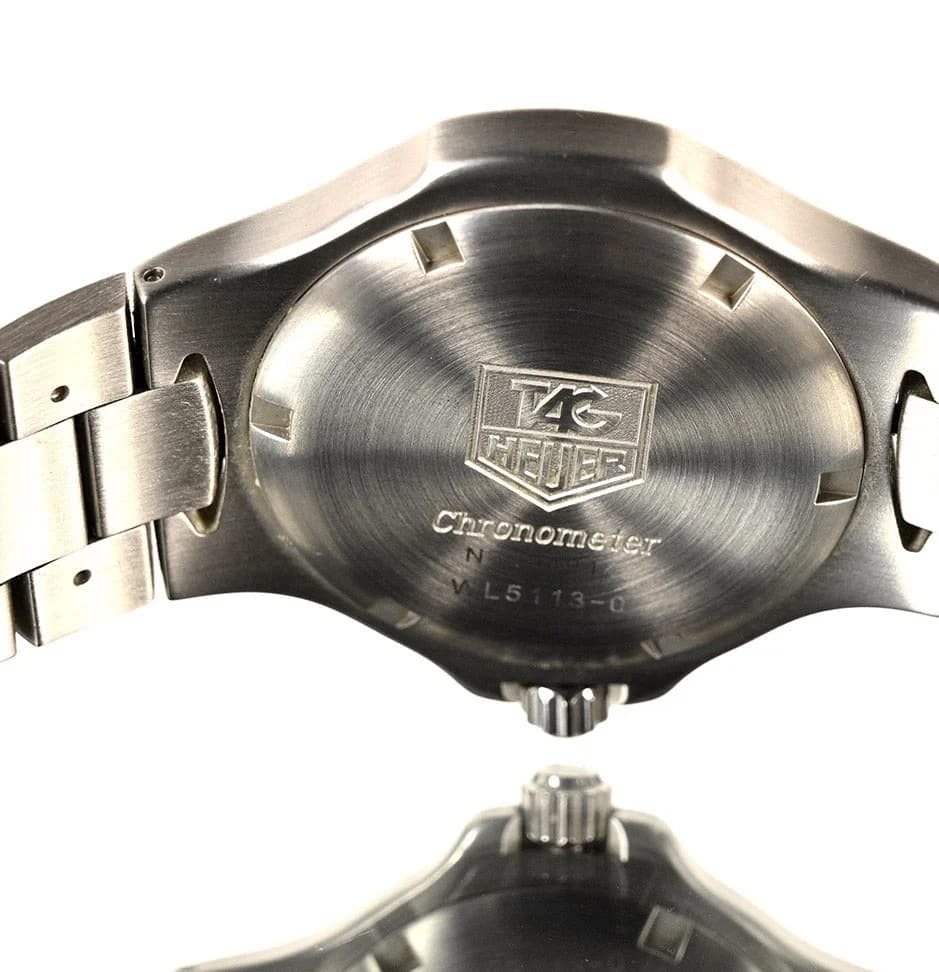
The Kirium is also locked to its bracelet. The integrated design that makes it so comfortable also means there is no easy path to a leather strap or rubber for a different look. A Santos has QuickSwitch. A Rolex Oyster can take an aftermarket strap in minutes. The Kirium is the Kirium. Steel bracelet, always. For some people that is a limitation. For me, it is part of the character. This watch is what it is. One look. Commit to it.
The blue dial Kirium taught me something that stayed with me through every watch I have spent time with since. Color on a sport watch dial changes everything about how the watch feels. A black dial Kirium is a tool watch. The blue dial Kirium is something else. The blue catches the light differently depending on the angle, the time of day, the environment. It reads cool and corporate under fluorescent light. It opens up warm and saturated in sunlight. On darker skin tones, the royal blue against stainless steel creates a contrast that is clean without being cold. That warmth is something that steel with a white or black dial does not produce. It is a styling consideration that almost nobody in watch media talked about in the late 1990s, and honestly, most still do not. The Kirium blue pairs well with grey flannel, with navy wool from Cerruti, with a white shirt and no tie. It is a sport watch that functions as a dress watch through color alone.
The legacy of the Kirium is really the legacy of Jorg Hysek, a designer who keeps appearing in the origin stories of watches that define entire categories. The Vacheron Constantin 222 became the Overseas. The Breguet Marine became a pillar of the Breguet collection. The TAG Heuer Kirium became a decade-long production run that introduced the integrated bracelet concept to an audience that could not walk into a Patek Philippe boutique. After the Kirium, Hysek founded his own watch brand in 1999, then left it in 2006 to co-found HD3 Complication. The man kept designing. The Kirium was one chapter, but it was a chapter that mattered.
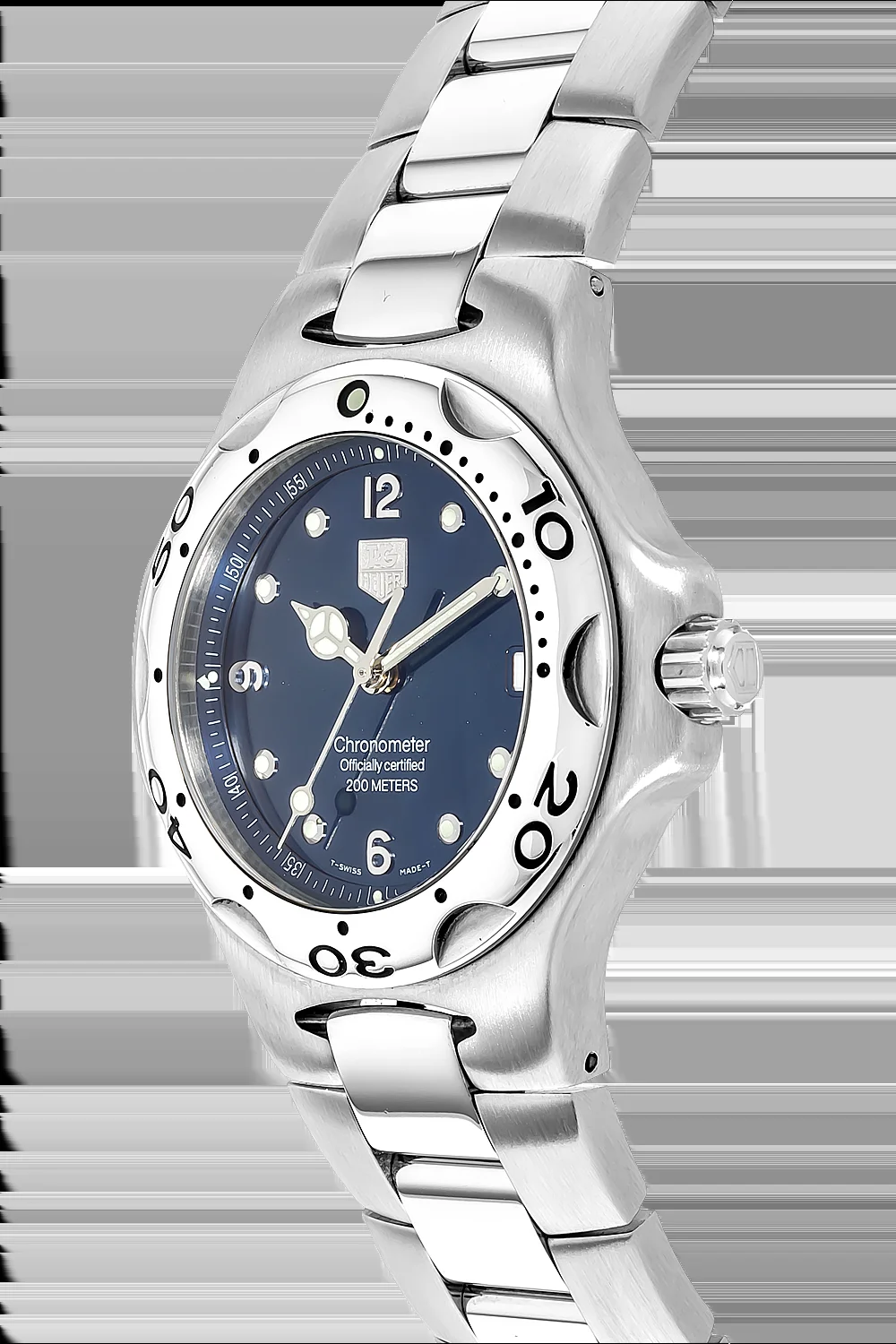
I include this watch because it is part of my history. The Kirium was one of the first watches I spent real time with. The blue dial version specifically. It taught me that color is not decoration. It is identity. That lesson showed up later when I spent time with the Seamaster blue wave dial, the Submariner Bluesy, the Vacheron Overseas brown. Every time a dial color stops me, I trace the instinct back to that royal blue on stainless steel.
There is something worth noting about watches that disappear from the catalog. Some are forgotten because they deserve to be. Some are forgotten because the brand moved on before the market caught up. The Kirium is the second kind. TAG Heuer launched it in 1997 with a designer who had already shaped the integrated bracelet category for Vacheron Constantin. They built it with one of the best ETA movements available, COSC-certified, behind sapphire, with 200 meters of water resistance. They put it on a bracelet that people still talk about for its comfort. And then they let it go. The Link replaced it. The Aquaracer replaced that. The Connected replaced the whole conversation. But the Kirium's design language, the integrated flow, the sculptural case-to-bracelet transition, lives on in every modern integrated bracelet sport watch that commands a waiting list today. TAG Heuer has moved on. The Kirium is not coming back. But the things it taught about integrated design, about color, about what a sport watch could look like when someone with Hysek's eye got involved, those ideas are everywhere now. They just do not carry the Kirium name anymore.
Also in Tool Watches