
Rolex
Submariner Date "Bluesy"
126613LB
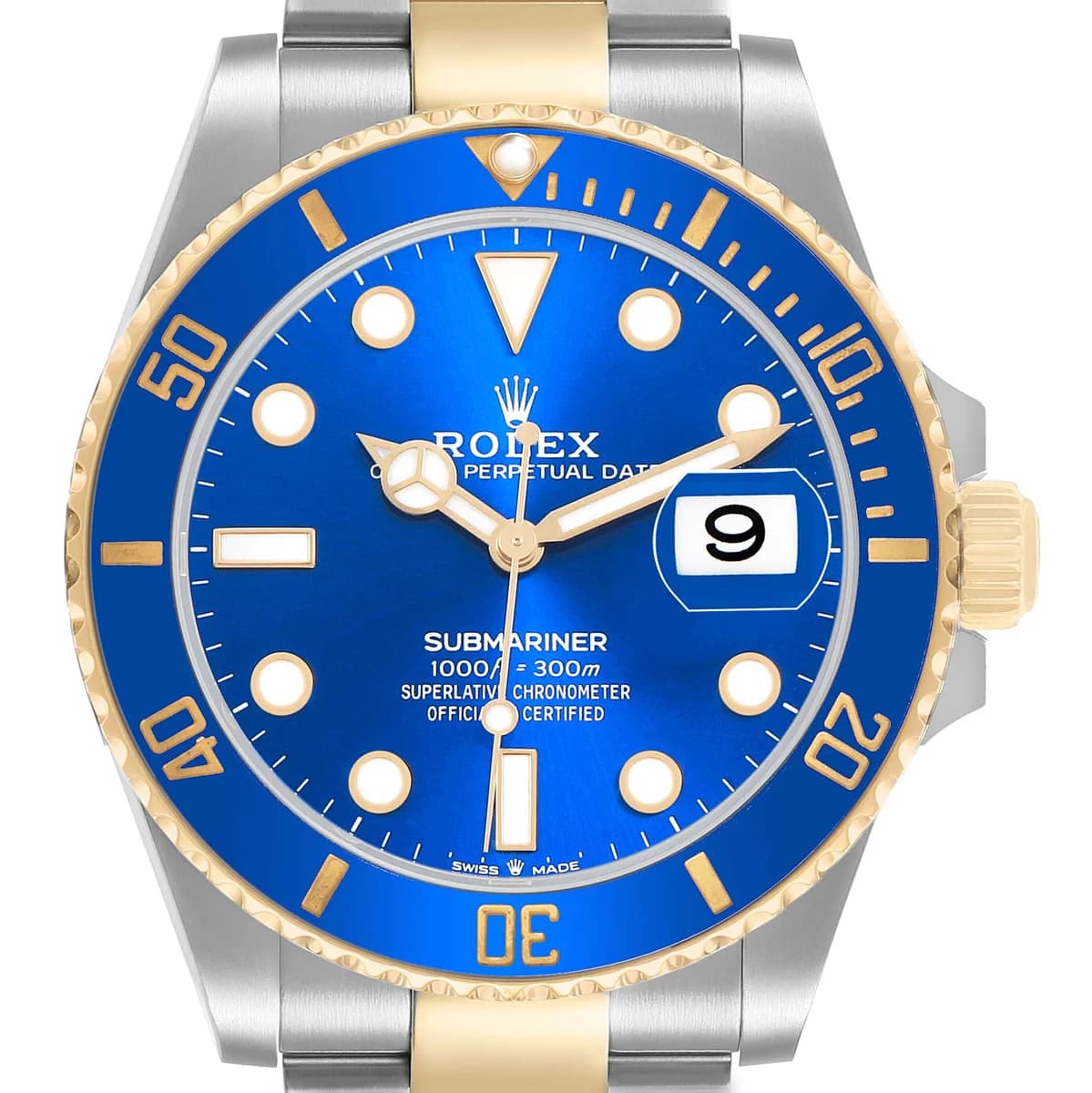
The two-tone Submariner has existed since 1984 when the reference 16803 introduced yellow gold into the dive watch. That was the year Rolex decided a 300-meter dive instrument could also be a piece of jewelry. Some purists hated it. Some collectors loved it. Forty years later, the debate is settled. The two-tone Submariner is one of the most commercially successful configurations Rolex has ever produced, and the Bluesy, the 126613LB in Oystersteel and 18K yellow gold with a royal blue sunburst dial, is its most charismatic expression.
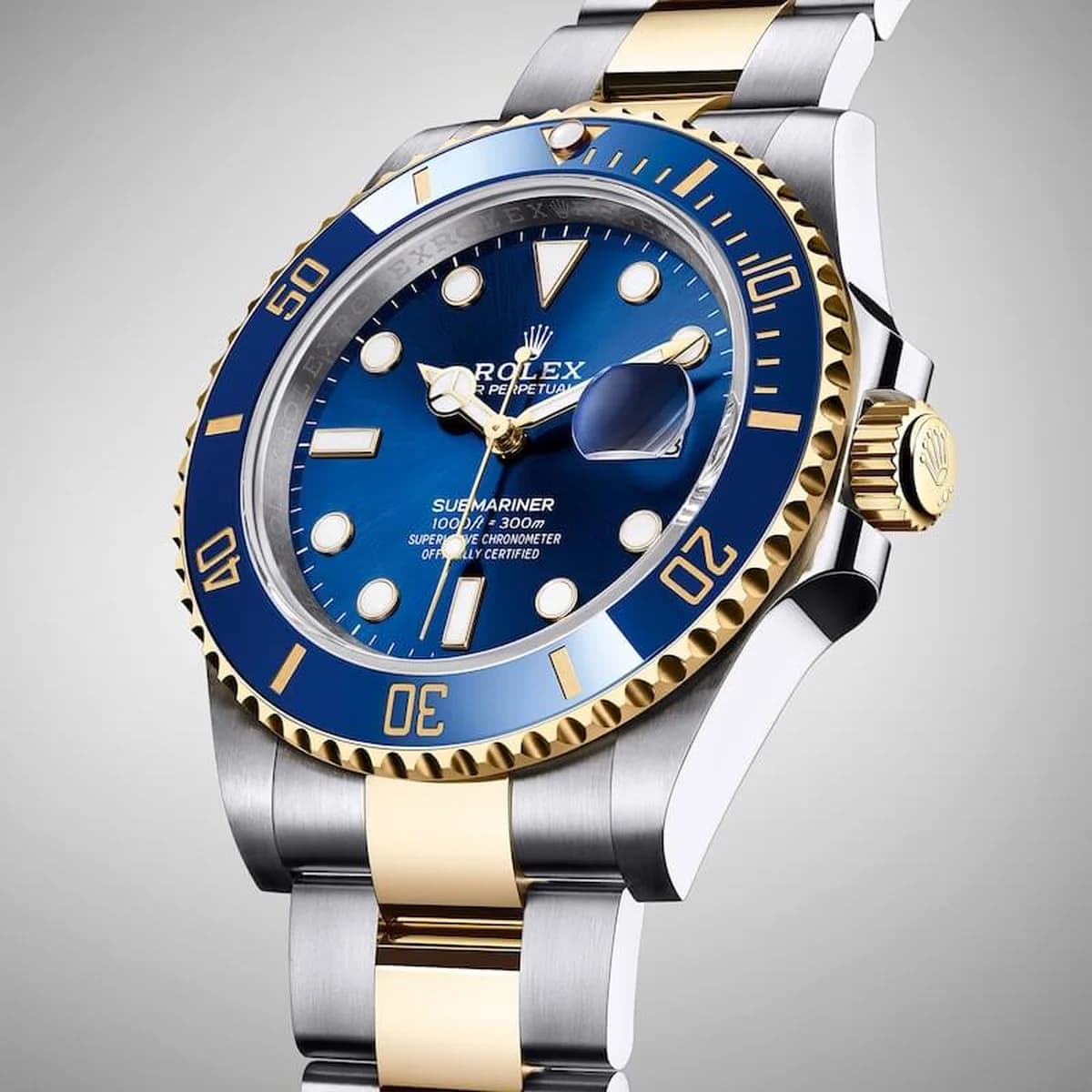
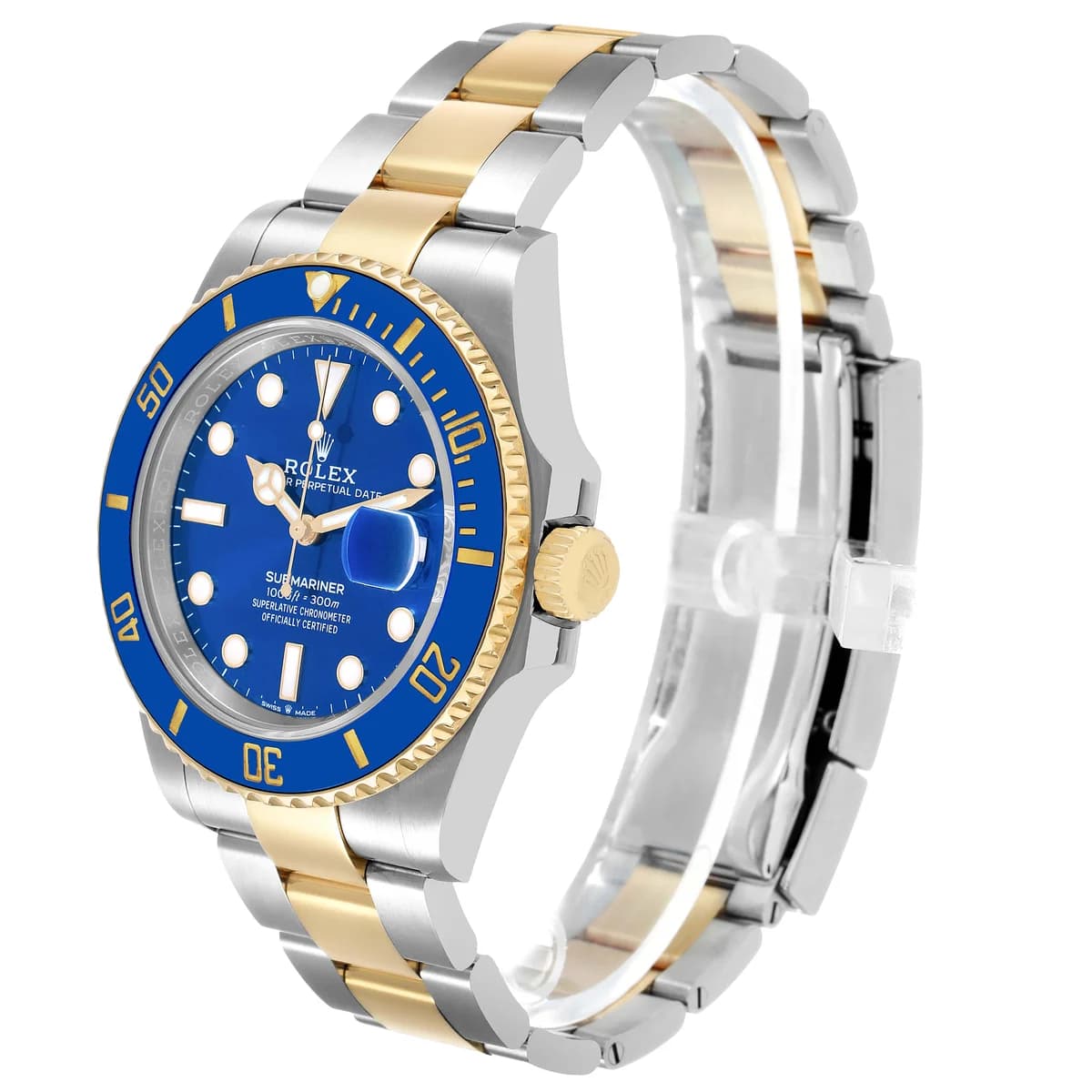
The LB stands for Lunette Bleu, French for blue bezel. The LN is Lunette Noire, black bezel. Rolex uses French designations for their bezel colors, a nod to Geneva's position in French-speaking Switzerland. The Bluesy is the LB. Blue dial, blue ceramic bezel, yellow gold accents on the case, bracelet, and bezel numerals. It is the most visually expressive Submariner in the current lineup and possibly in the entire history of the reference.
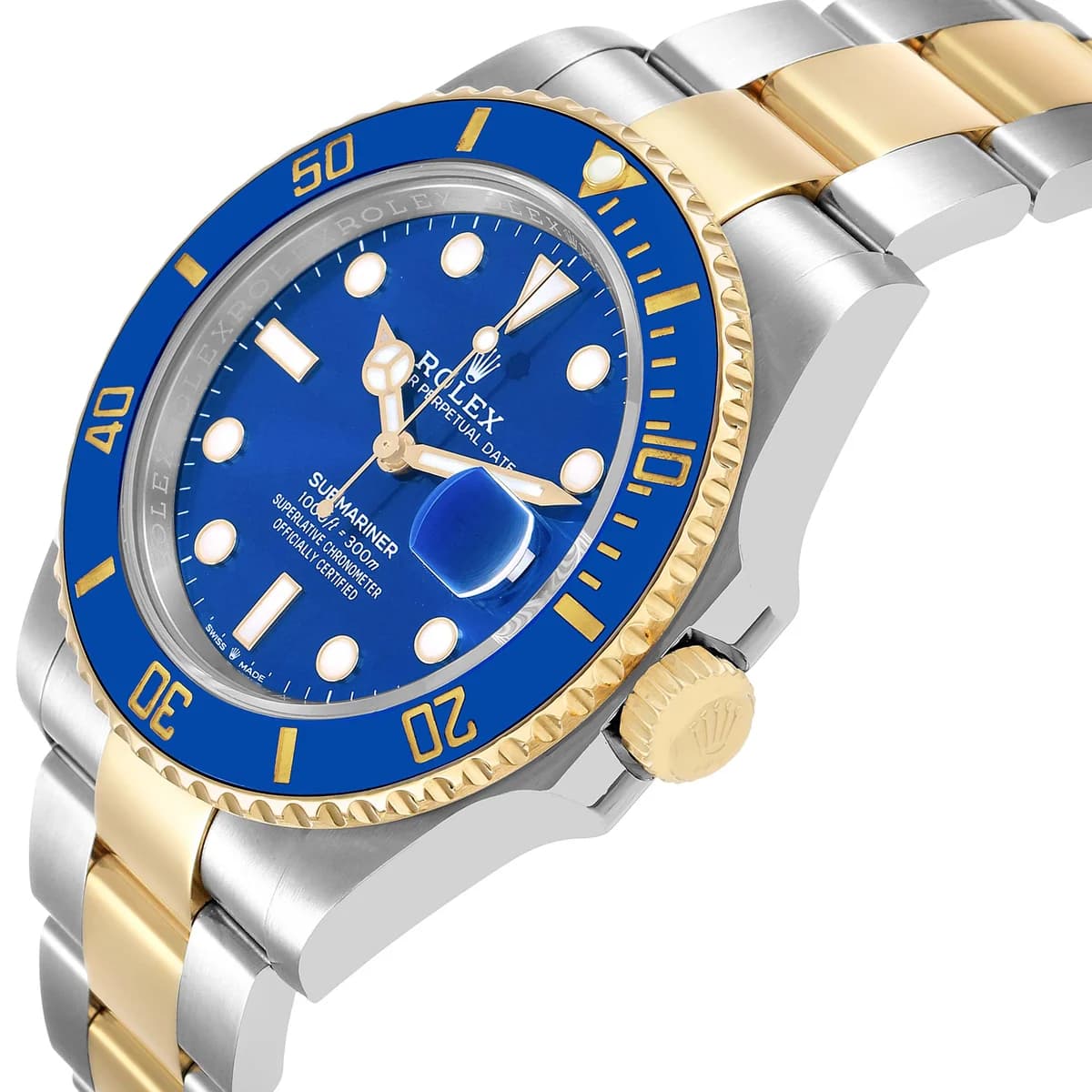
I want to start with why the blue matters. Rolex has offered blue dials on the Submariner for decades, but the blue on the 126613LB is not a simple color application. It is a sunburst finish created by radial brushing the dial surface. Fine lines emanate from the center of the dial outward, like rays from a sun. When light hits the surface, those lines scatter and redirect it, creating a dial that shifts from deep navy in shadow to bright electric blue in direct light. The color is never static. It moves as your wrist moves. In a dimly lit restaurant, the dial looks almost black. Step outside into sunlight and it explodes into a vivid blue that is impossible to miss. I have seen dozens of blue dials across the industry. Tudor does an excellent job with their blue. Omega's blue wave dials are iconic. But the Rolex sunburst blue on the Bluesy has a luminosity to it that is difficult to describe until you see it in person. It glows from within. The radial brushing creates depth that a flat-painted dial cannot achieve.
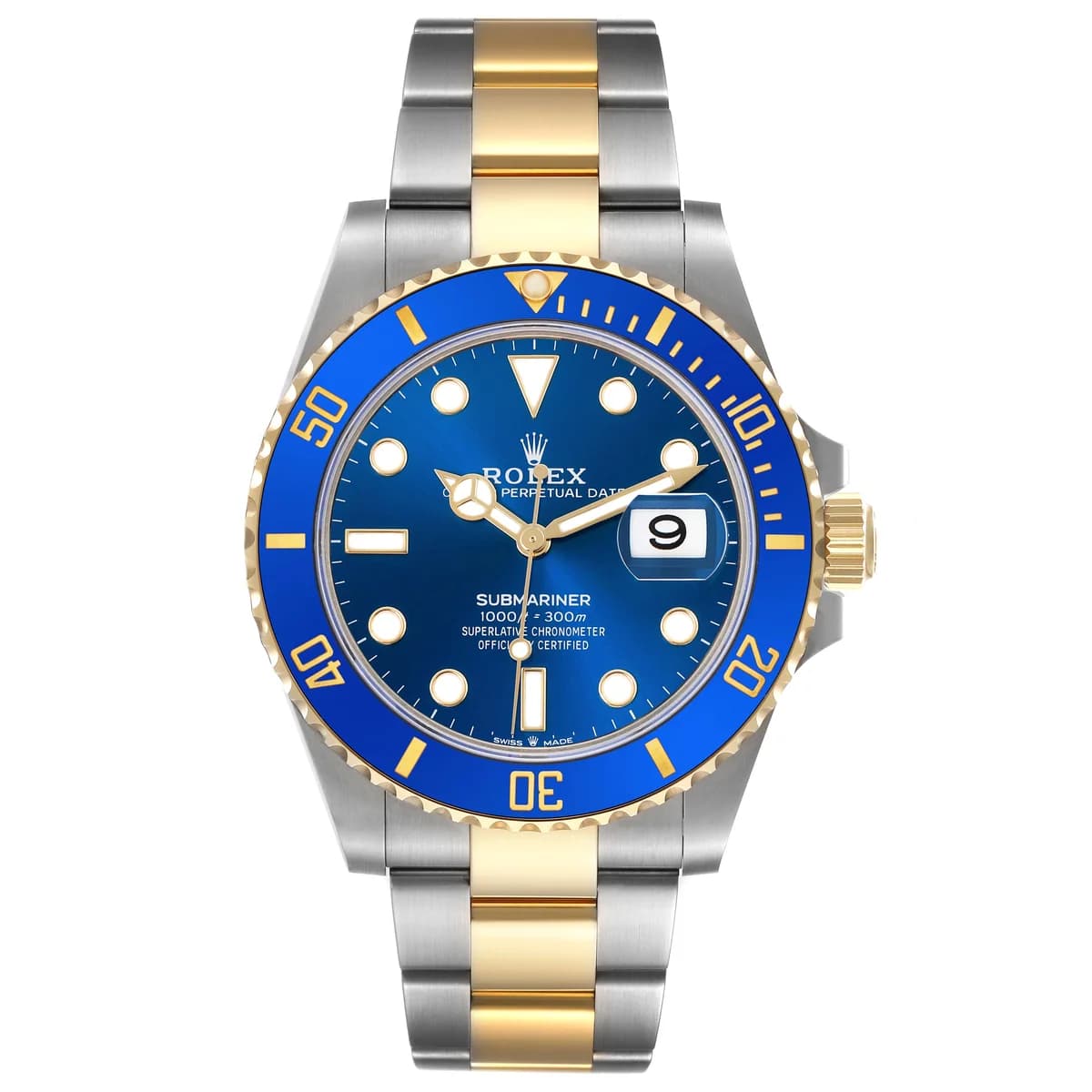
The yellow gold is 18K, Rolex's standard. They do not use gold plating. They do not use gold-filled construction. The center links of the bracelet, the crown guards, the winding crown, the bezel ring that holds the Cerachrom insert, and the hour markers are all solid 18K yellow gold. Rolex produces their own gold alloys in their own foundry in Plan-les-Ouates, the largest facility the company owns. They are one of the only watchmakers on earth that smelts its own gold. Pure 24-karat gold arrives at the facility and Rolex metallurgists alloy it down to 18 karats because pure gold is too soft for a wristwatch. The exact formulations are proprietary, but what is known about Everose gold, their patented rose gold, is that the composition is approximately 76 percent gold with roughly 2 percent platinum and the balance in copper. The copper provides the warm pink tone. The platinum locks that color permanently so the copper never oxidizes or fades. Conventional rose gold loses its color over decades. Everose does not. The yellow gold on the Bluesy is produced through the same foundry, alloyed to Rolex's specifications for hardness, color consistency, and resistance to discoloration. Every gold component on the 126613LB, from the center links to the crown guards to the bezel ring, was cast, machined, and polished at Plan-les-Ouates. Rolex controls the entire chain from raw metal to finished watch. The yellow gold is formulated to resist discoloration and maintain its warmth over decades. On the Bluesy, the gold serves a specific visual purpose: it creates contrast. Blue and gold is one of the most powerful color combinations in design. It appears in heraldry, in Renaissance painting, in the Flag of Sweden, in the livery of luxury brands. The combination works because blue is cool and gold is warm. They are complementary without being complementary colors on the wheel. On the wrist, the gold catches light and the blue absorbs it. They alternate across the bracelet and dial in a rhythm that keeps the eye moving.
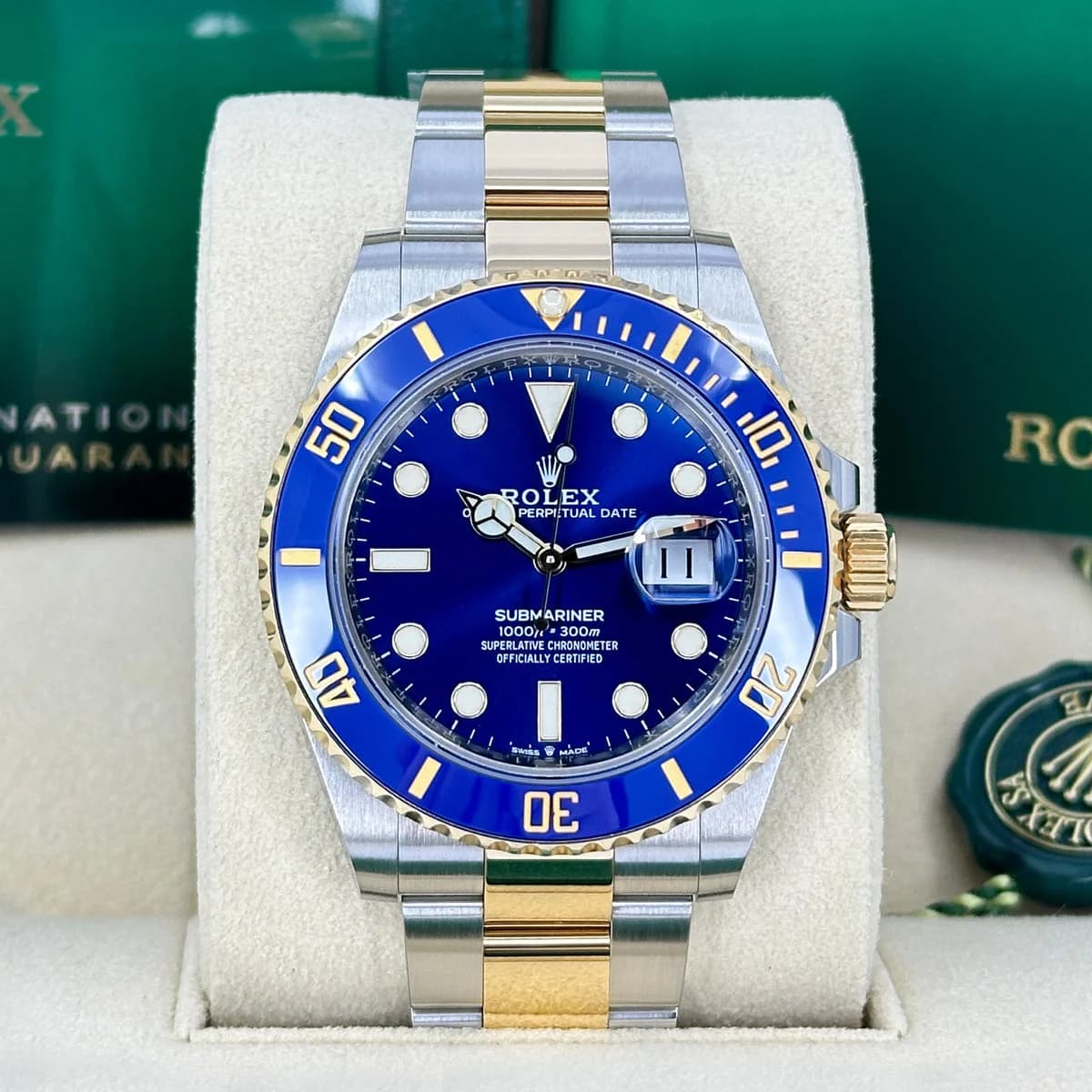
The Cerachrom bezel insert is blue ceramic with gold-coated graduation numerals. The same zirconium dioxide construction as the black Cerachrom on the no-date, sintered at approximately 1,600 degrees Celsius, but with blue pigmentation added during the manufacturing process. The numerals and markings are engraved into the ceramic and filled with gold via PVD deposition rather than the platinum used on the stainless steel models. The gold is deposited through Physical Vapor Deposition, the same PVD process used on the black Submariner's platinum numerals. The ceramic is engraved, then coated with a thin layer of gold in a vacuum chamber, then polished to remove the gold from the flat surfaces, leaving only the recessed numerals and graduation marks filled with 18K gold. Gold on blue ceramic. The luminous pip at 12 o'clock is a Chromalight-filled capsule capped with a tiny piece of sapphire crystal to protect the lume material from damage and water intrusion. You can feel it raised above the bezel surface, which means you can confirm alignment by touch alone in the dark. It is unmistakably luxurious, and it is also functionally indestructible. The ceramic will not scratch. The gold-filled engravings will not wear away. The color will not fade under UV exposure. In ten years, twenty years, fifty years, the bezel will look exactly as it does today.
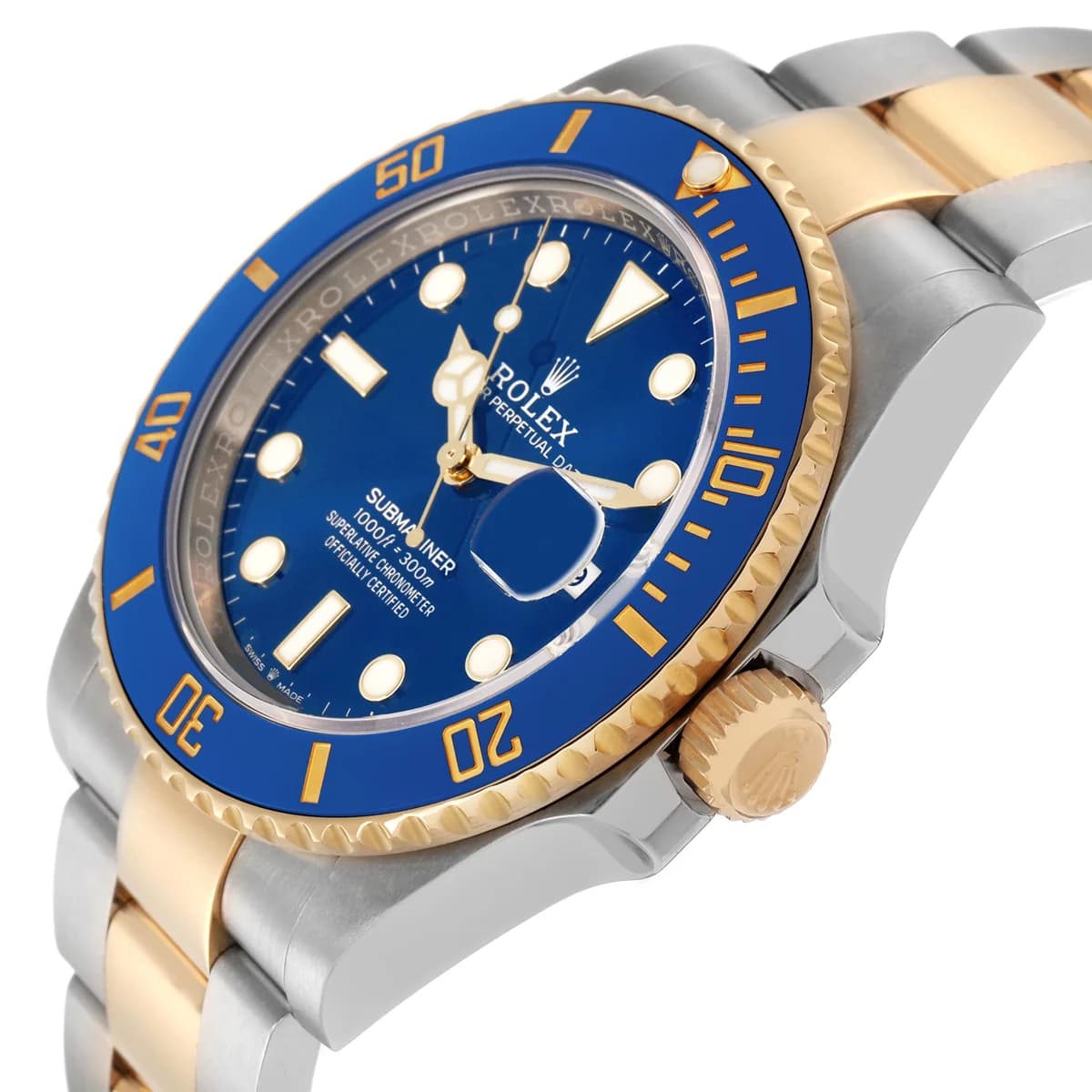
The case is Oystersteel, Rolex's proprietary 904L stainless steel, with yellow gold crown guards and a yellow gold winding crown. The mix of steel and gold across the case creates a visual complexity that the all-steel Submariners do not have. You notice different materials catching light at different angles. The polished gold crown guards flanking the matte crown tube. The brushed steel case flanks transitioning to polished gold on the bezel ring. Every surface has been considered. The case is 41mm, the same dimensions as the 124060 no-date, with the same redesigned lugs that Rolex introduced in the 2020 update. Slimmer, more graceful, with a 21mm bracelet attachment. The thickness is the same 12.3mm. It is the same case. The difference is the gold accents that layer over the steel foundation.
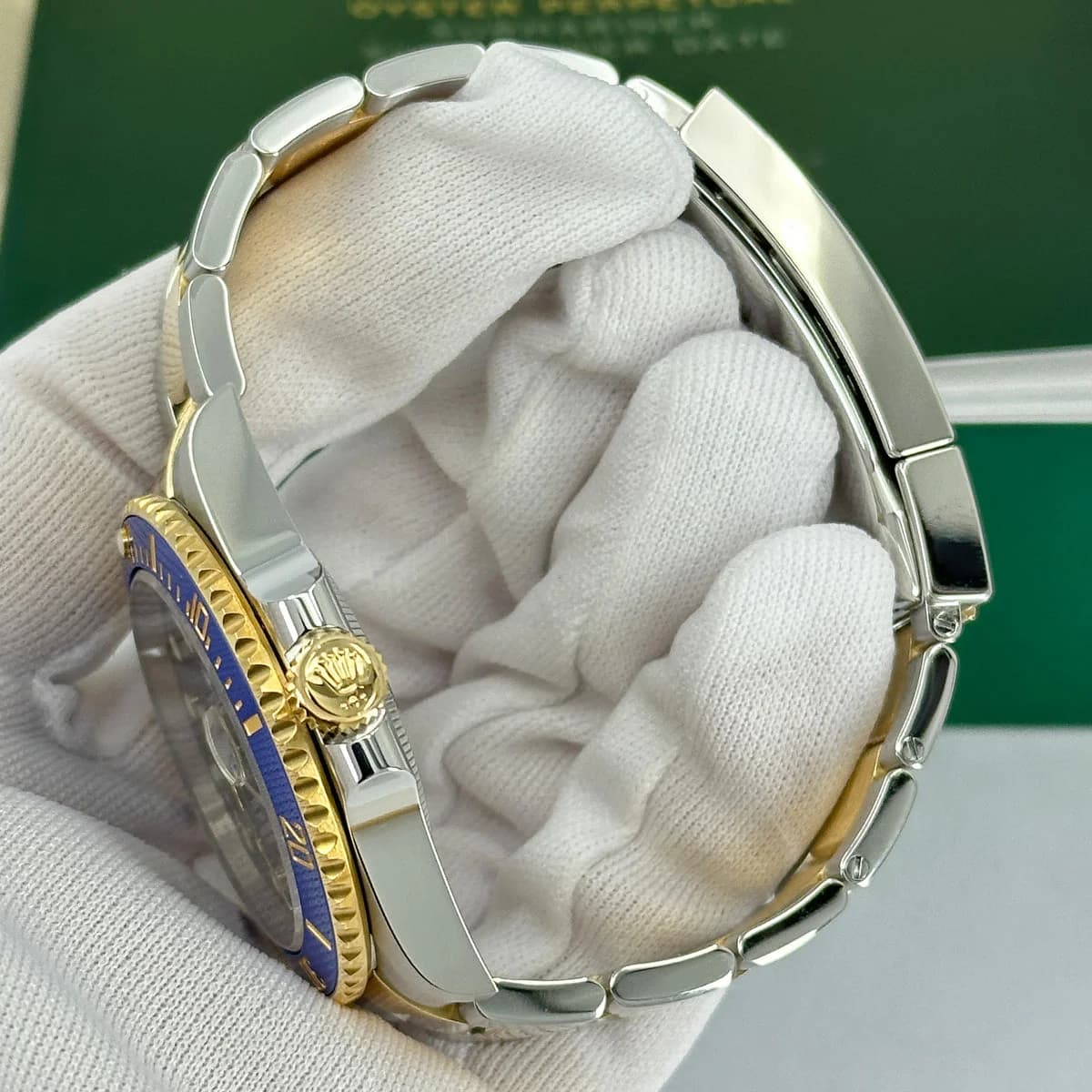
The Caliber 3235 is the date-equipped version of the movement platform that powers the no-date 3230. Same Chronergy escapement with nickel-phosphorus components fabricated using liga technology. Same Parachrom Blue hairspring in niobium-zirconium alloy. Same 70-hour power reserve. Same Superlative Chronometer certification at plus or minus two seconds per day. The difference is the date mechanism. The winding crown on the Bluesy is 18K yellow gold with Rolex's Triplock system, identifiable by the three dots beneath the Rolex coronet logo. On gold and two-tone models, the center dot is visibly larger than the two flanking dots, distinguishing it from a steel Triplock crown at a glance. Triplock means three independent sealed zones inside the crown tube, each with its own gasket, providing the 300 meters of water resistance. The 3235 adds an instantaneous date change at midnight, driven by a date disc that jumps rather than gradually rolling over. The Cyclops lens at 3 o'clock magnifies the date window 2.5 times. Some people love the Cyclops. Some people think it disrupts the crystal profile. On the Bluesy, I think it works because the watch is already making a statement. The Cyclops is part of that statement. It says Rolex louder than anything else on the watch, and the Bluesy is not trying to whisper.
I need to talk about the steel Submariner versus the Bluesy because the choice between them reveals something about the buyer. The 124060 no-date is the purist's watch. All steel. No date. Perfect dial symmetry. It communicates precision, restraint, discipline. The Bluesy communicates something entirely different. Warmth. Confidence. The willingness to wear gold without apology. In an era where understated has become the default luxury aesthetic, the Bluesy pushes back. It says that luxury can be visible and still be legitimate. That showing up in gold does not mean you are compensating. It means you like gold. There is a confidence required to wear a two-tone watch that an all-steel watch does not demand. The no-date lets you hide behind the tool watch narrative. The Bluesy does not give you that cover. It is openly, unambiguously a luxury object that happens to be rated to 300 meters.
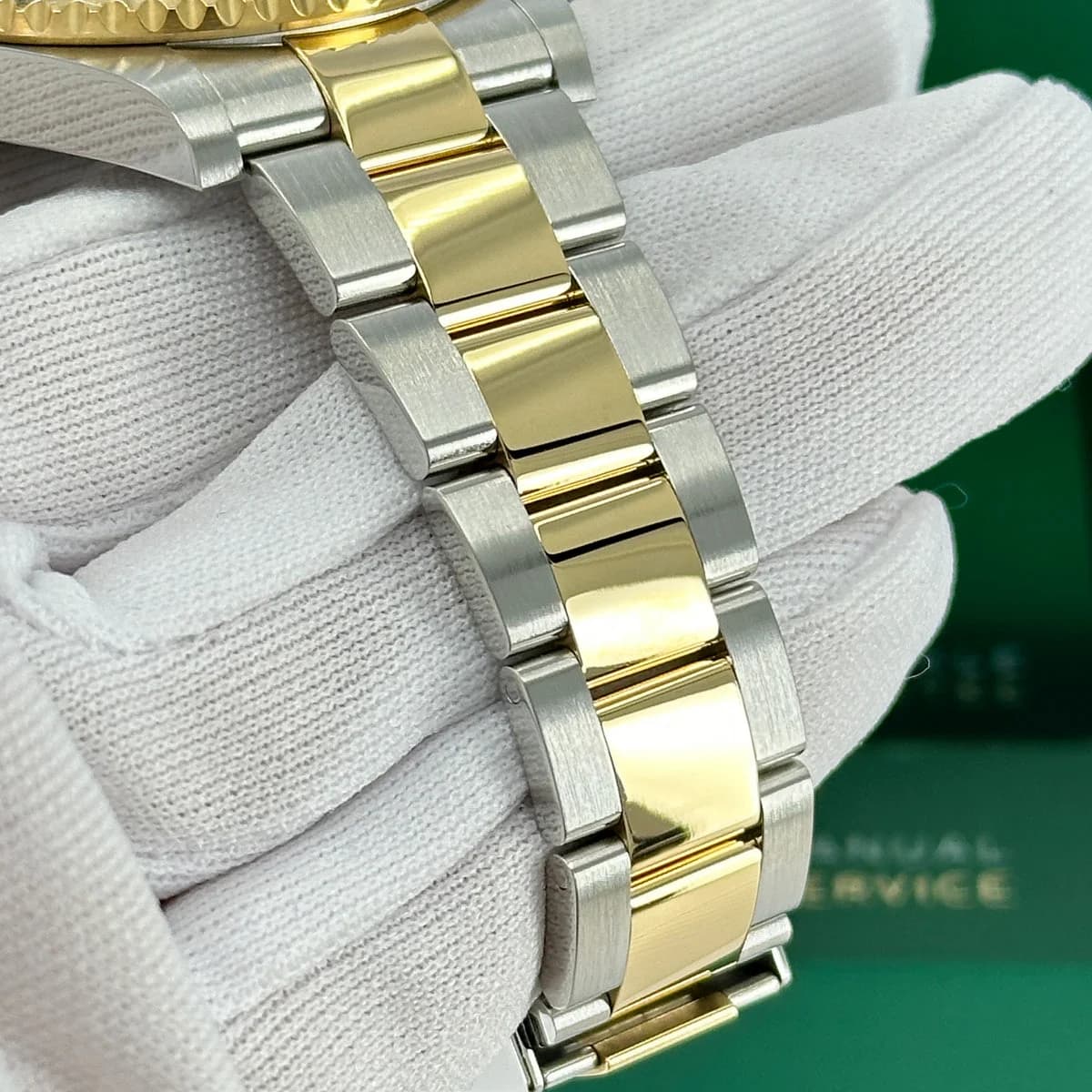
The bracelet is the detail that separates the Bluesy from every other two-tone dive watch. The Oyster bracelet on the 126613LB has polished 18K yellow gold center links alternating with brushed Oystersteel outer links. The pattern creates a visual rhythm across the bracelet that draws the eye down the wrist. Other brands do two-tone. Omega does it on the Seamaster. Tudor does it on the Black Bay. But the Rolex execution is different because of the weight. Solid gold center links have a heft that gold-plated or gold-capped links do not. You feel the difference. The bracelet is heavier than the all-steel version. That weight is part of the experience. It is a tangible reminder that you are wearing real gold, not a simulation of it. The Oysterlock safety clasp with Glidelock extension provides the same 20mm of tool-free micro-adjustment as the steel models.
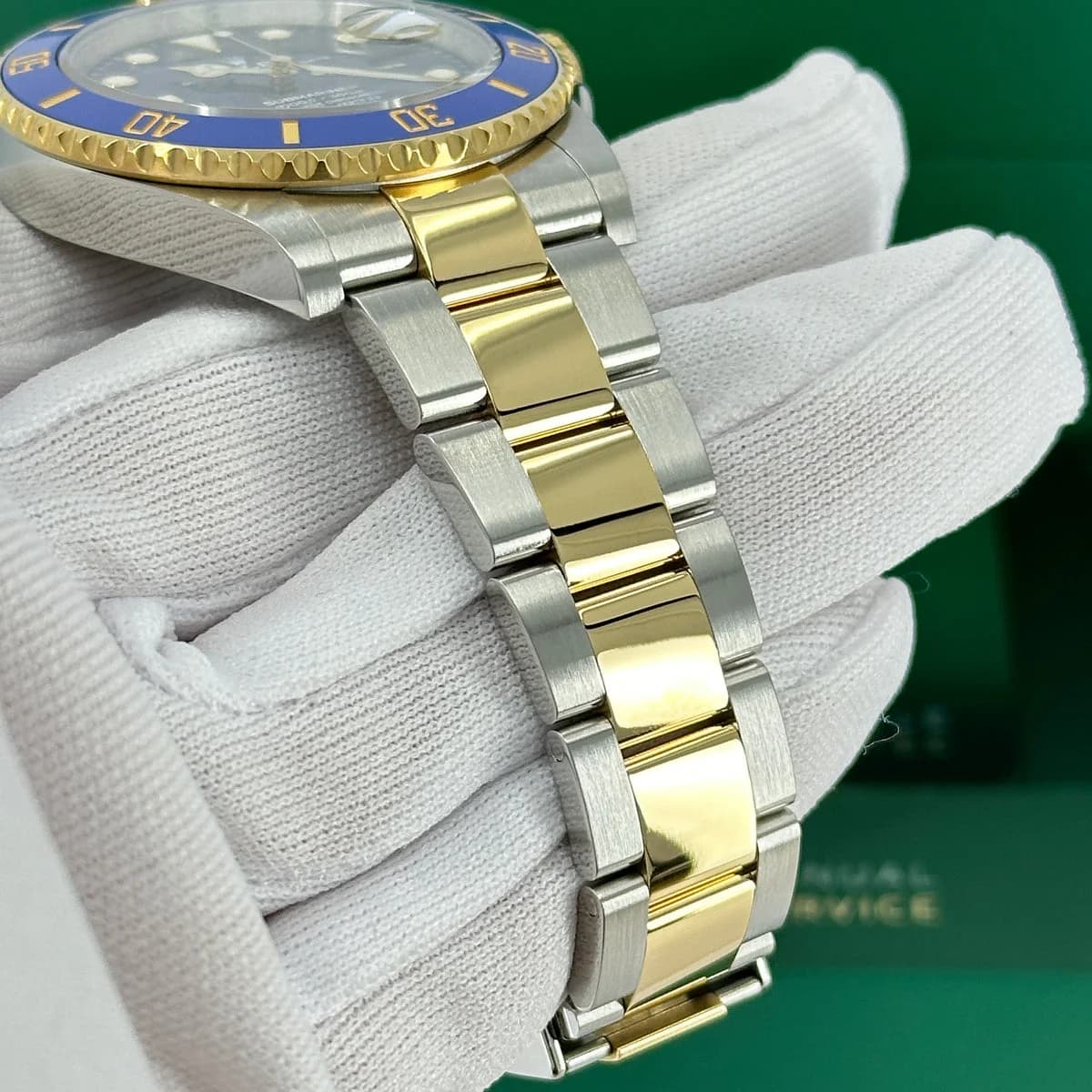
On darker skin, the yellow gold creates a contrast that is particularly striking. I have written about this in other articles because it is something that almost nobody in watch media discusses. Warm metals against melanin-rich complexions produce a visual effect that cool metals do not. Rose gold works beautifully. Yellow gold works even better because it is bolder. The blue dial amplifies the effect. Blue is one of the most universally flattering colors against dark skin. Combine that with yellow gold and you have a watch that looks like it was designed for that specific complexion. It was not, obviously. Rolex designs for everyone. But the Bluesy on dark skin is one of those combinations where everything aligns, the color temperature of the gold, the depth of the blue, the contrast against the skin, and the result is something that photographs cannot fully capture. You have to see it in person. I find the interplay between the Cerachrom bezel and the sunburst dial shifts dramatically depending on the light angle.
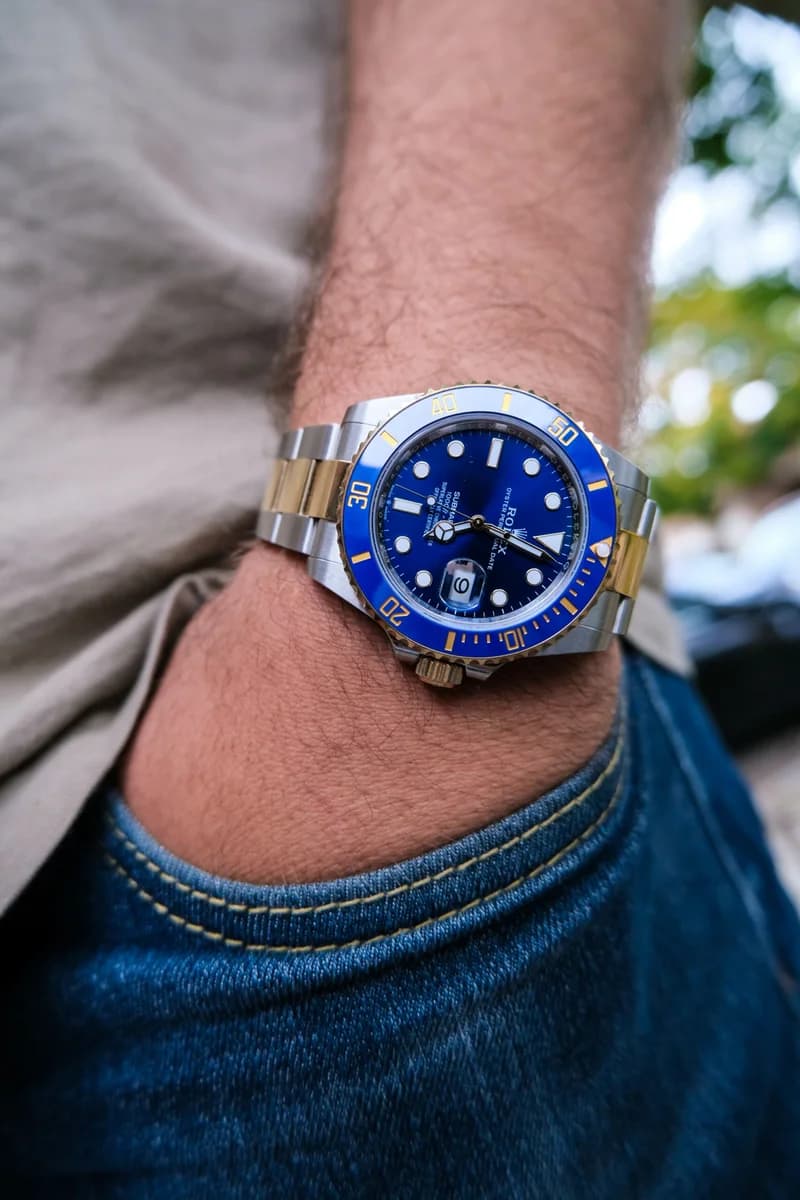
The two-tone Submariner lineage runs through four generations. The 16803 in 1984 was the first, with a stamped bezel insert and an acrylic crystal. The 16613 replaced it in 1988 with a sapphire crystal and lasted until 2009. The 116613LB arrived in 2009 with the Cerachrom ceramic bezel, the first two-tone Submariner with ceramic. And the 126613LB in 2020 brought the current case design, the 3235 movement, and the updated proportions. Each generation refined the concept. The 16803 was the experiment. The 16613 was the establishment. The 116613LB was the modernization. The 126613LB is the maturation. Each generation refined the formula, but to me, the shift from the stamped bezel insert on the 16803 to the Cerachrom ceramic on the 116613LB was the most consequential upgrade in the lineage. That is the moment the two-tone Submariner stopped aging.
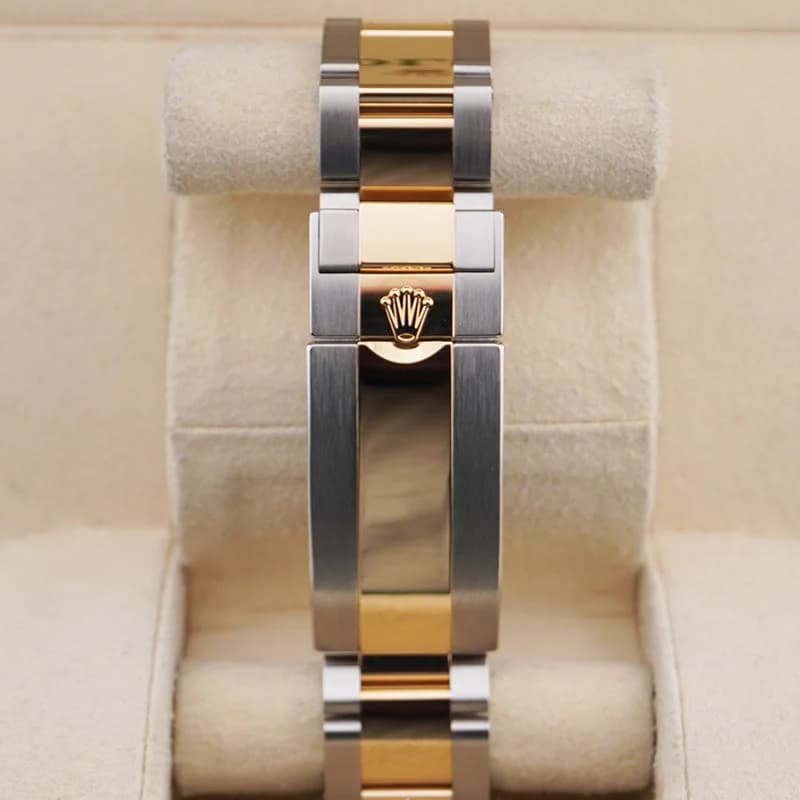
Two-tone watches have a smaller audience than all-steel models. Not everyone wants gold on their wrist. That self-selection means the Bluesy is, in some ways, a more genuine purchase than the steel Submariner. People who buy the Bluesy buy it because they want it, not because it is the default choice. The difference between the steel model and this one is real gold. You are choosing the material, not just the configuration.
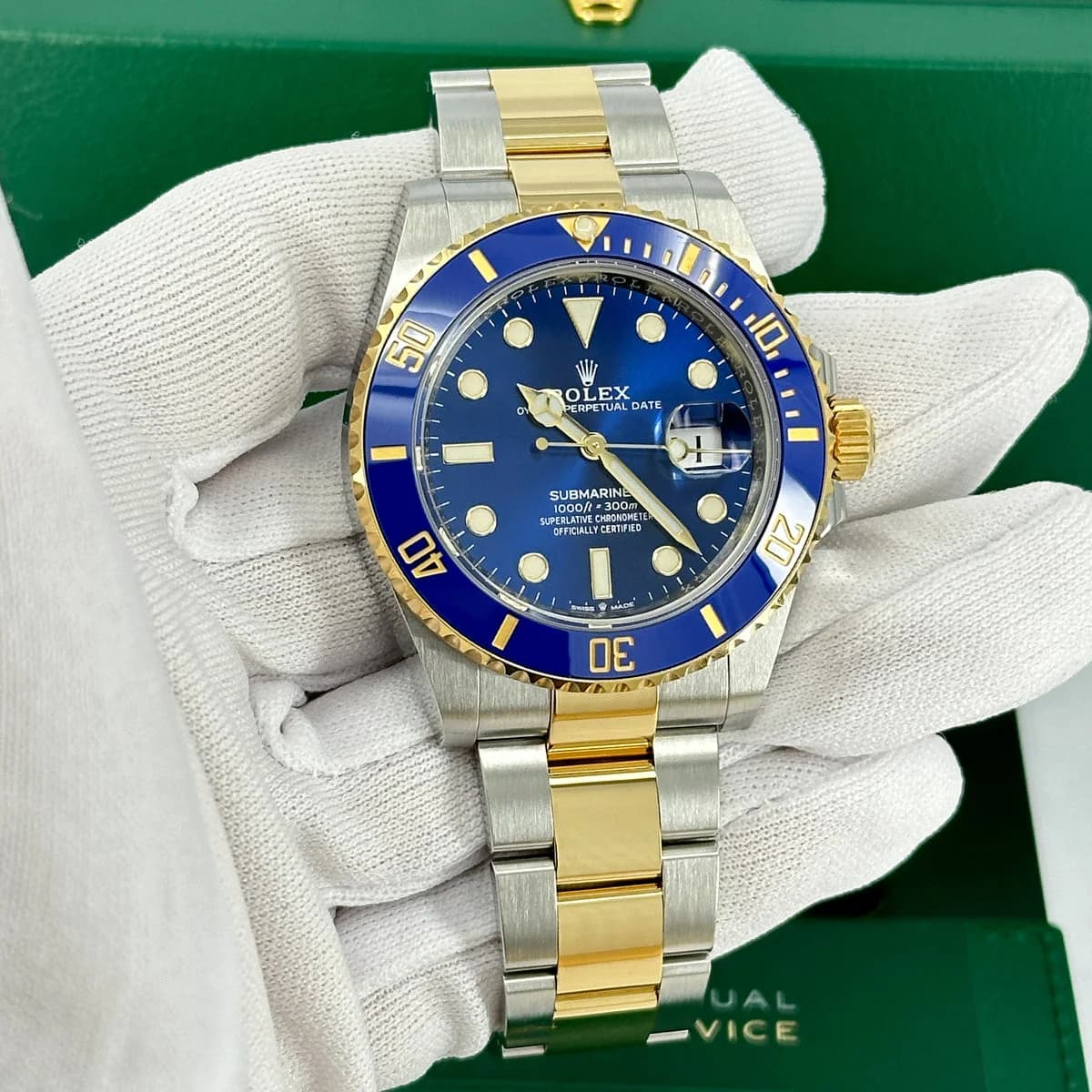
The honest critique is the same one that applies to every two-tone watch. Gold scratches more easily than steel. 18K yellow gold has a Mohs hardness of approximately 2.5 to 3 compared to 5.5 to 6 for Oystersteel. The polished gold center links will develop micro-scratches faster than the brushed steel outer links. Over years of daily wear, the gold will develop a patina. Some people view this as character. Some people view it as damage. Rolex service can polish it back to original condition, but you need to accept that 18K gold on a daily-wear bracelet will show wear faster than stainless steel. It is not a flaw. It is physics. The same physics that makes gold beautiful, its malleability and warmth, also makes it softer than steel. The tradeoff is inherent to the material and cannot be engineered away. If you want the warmth of gold with the durability of steel, the answer is to enjoy the patina or polish the watch periodically.
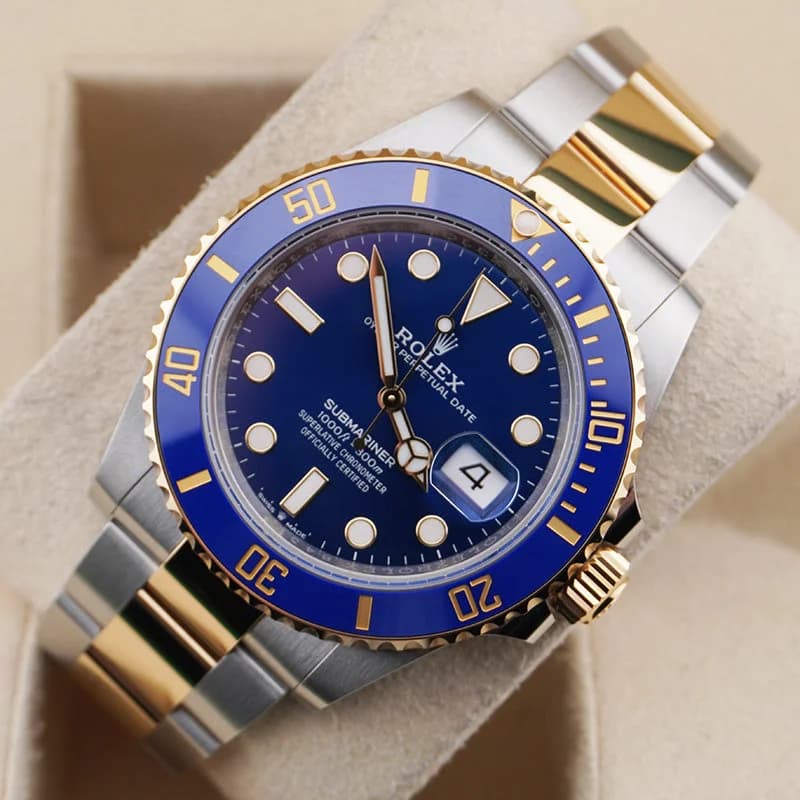
The other thing I want to address is the question of whether a two-tone dive watch makes sense. The purist argument is that a dive watch should be a tool, and tools do not need gold. That argument made sense in 1953 when Submariners were actually used for diving. It does not make sense in 2026 when the overwhelming majority of Submariners never see saltwater. The Submariner has been a luxury watch that can dive since the 1980s at least. The Bluesy is the version that admits this openly. It does not pretend to be a tool. It is an openly luxurious object that is built to dive watch specifications because Rolex builds everything to that standard. The 300 meters of water resistance, the Cerachrom bezel, the Triplock crown, the Chromalight lume, all of it functions exactly as it would on the steel version. Every individual Bluesy is pressure-tested at the factory to 375 meters, 25 percent beyond the rated depth, using a proprietary hyperbaric tank Rolex developed with COMEX. The gold does not get a pass. It gets the same test. The gold does not compromise the engineering. It just makes the engineering beautiful.
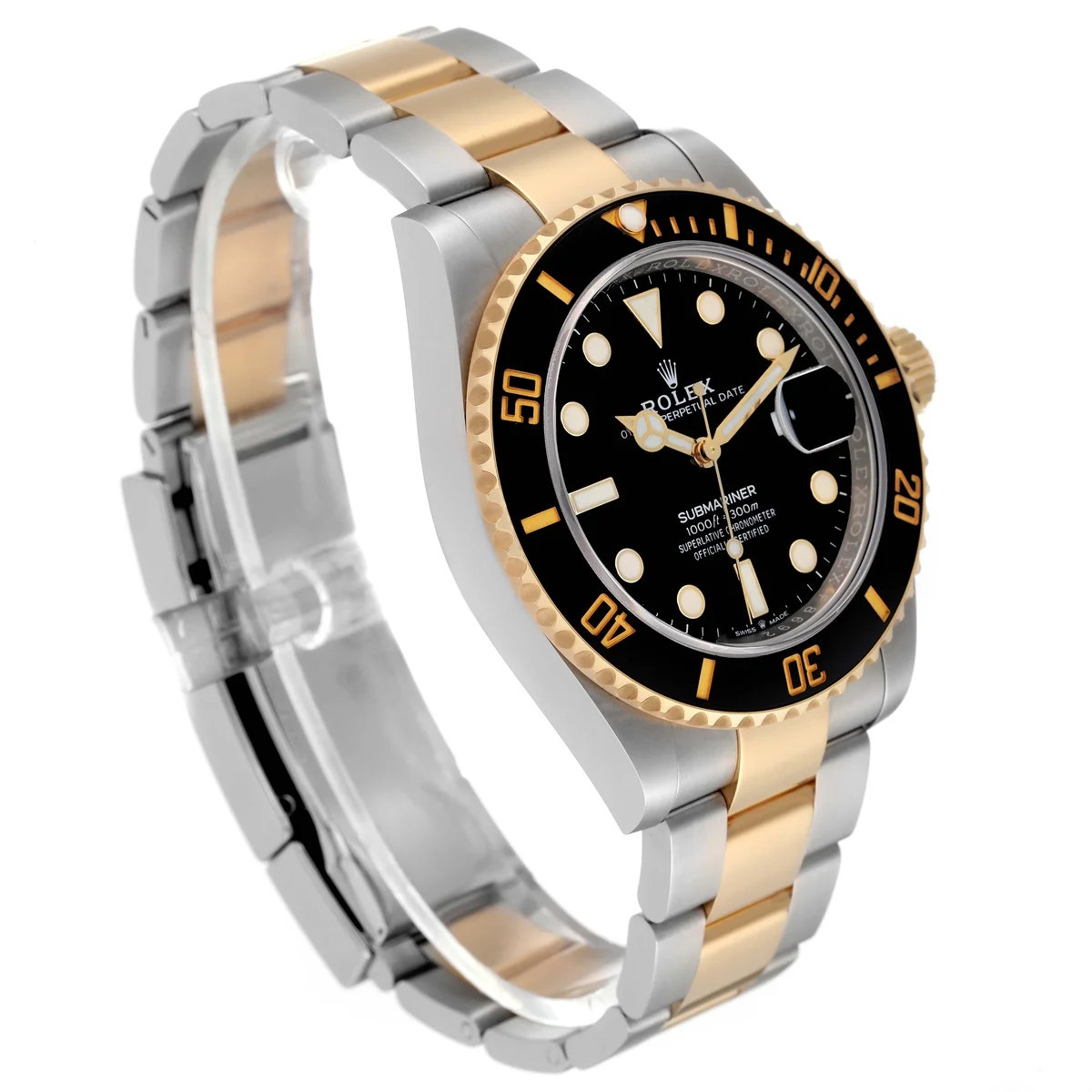
I cannot write about the Bluesy without talking about its sibling, the 126613LN. Same case. Same movement. Same two-tone Oystersteel and 18K yellow gold construction. Black dial instead of blue. Black Cerachrom bezel instead of blue. No nickname. No hype. I call it the Bumblebee and I think it is one of the most underappreciated watches Rolex makes. The collector community largely ignores it in favor of the Bluesy, which is a mistake. The black-and-gold Submariner is quietly one of the best values in the entire lineup, and I want to explain why.
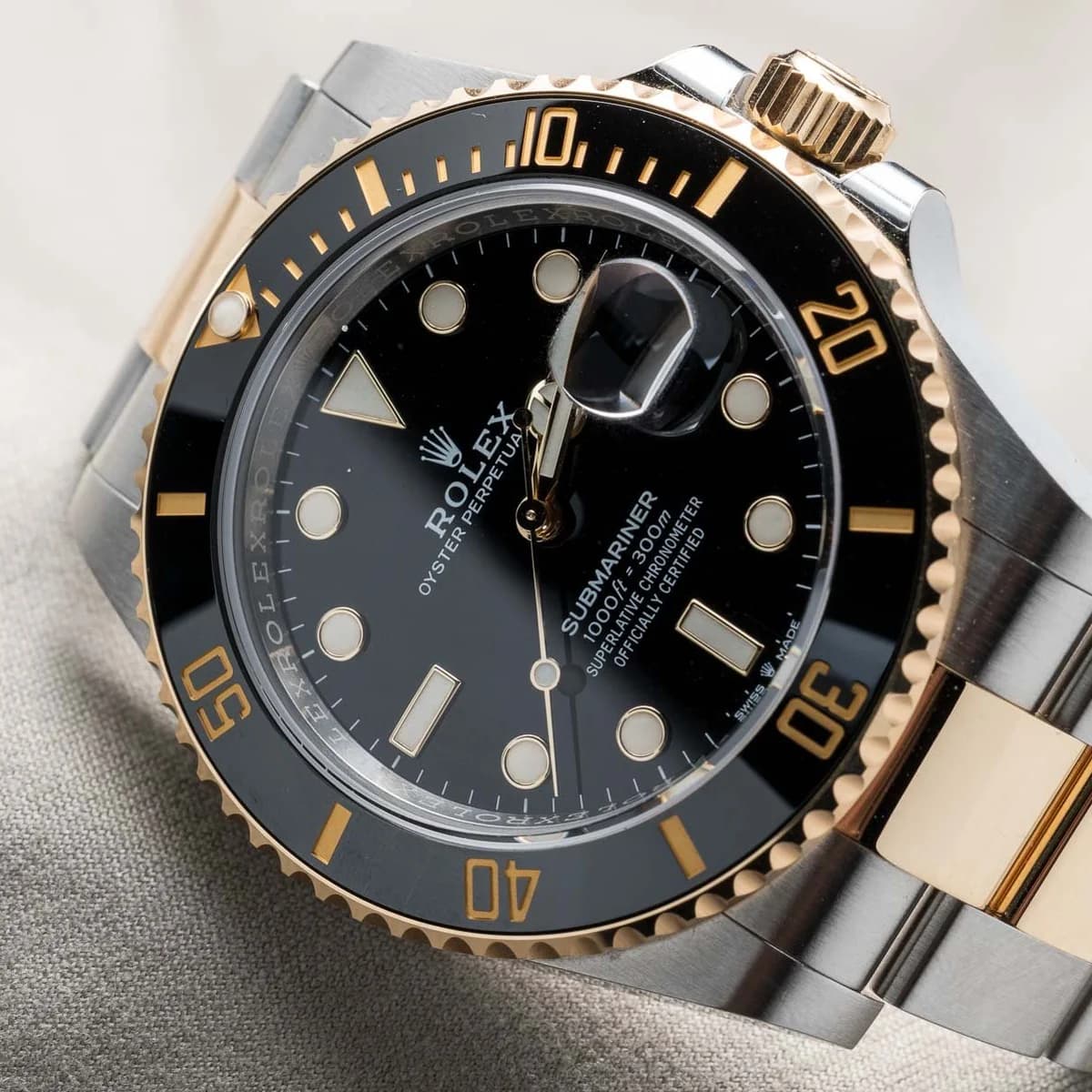
The blue sunburst dial on the Bluesy is spectacular. I have said that already and I mean it. But the blue makes a statement. It announces itself. The black dial on the 126613LN does something different. It absorbs light where the blue reflects it, and the same gold accents that feel exuberant on the Bluesy suddenly read as classic and conservative on the black dial. The gold hour markers, the gold hands, the gold center links, all of it becomes quieter against black. The result is a two-tone Submariner that works in every context. A business meeting at 8 AM. Dinner at a restaurant at 9 PM. A weekend in jeans and a linen shirt. The black dial gives the gold permission to be subtle. The Bluesy demands attention. The 126613LN earns it.
If I had to choose one, I would choose the Bluesy because that sunburst blue is unlike anything else in the Rolex catalog. But if I am being honest about which one I would reach for more often on a daily basis, it is the black and gold. It is more flexible. It transitions between situations without asking you to think about whether the watch matches the moment. The Bluesy is the watch you build an outfit around. The 126613LN is the watch that fits into whatever you are already wearing. Both deserve to be in the conversation and the fact that the black-and-gold gets less attention than the Bluesy tells me collectors have not caught up yet.
There is a broader point here that I want to make. The watch community has a strange bias against precious metals in sport watches. The argument is always the same: a dive watch should be steel, gold belongs on a dress watch, two-tone is for a certain generation. I think that perspective is lazy. Every major brand in the industry, Rolex, Omega, Audemars Piguet, Patek Philippe, puts precious metals on sport watches because gold adds something that steel physically cannot provide. Warmth. Color. A play of light against brushed surfaces that monochromatic steel will never achieve. And here is the thing that nobody in watch media talks about: gold looks different on different skin tones. On lighter complexions, yellow gold can look bright and pronounced. On darker skin, the warmth of the gold harmonizes with the undertones of the complexion and the effect is extraordinary. The blue dial amplifies that. The black dial refines it. Both are beautiful. The fact that most watch photography, most YouTube reviews, and most editorial coverage features the same narrow range of wrist tones means that a significant portion of the audience has never seen what a two-tone Submariner actually looks like on their skin. That is a gap in the conversation, and it matters.
The Submariner No-Date tells the pure tool watch story. The Bluesy tells the luxury Rolex story. Both are legitimate. Both belong in the collection. The difference is what you want the watch to communicate when someone notices it across the table. The no-date says precision. The Bluesy says warmth, confidence, and the understanding that luxury is not something to apologize for. There is room for both. The fact that Rolex has produced both versions continuously for four decades proves that both audiences exist and neither is going away. The Submariner is big enough to hold the purist and the aesthete. The 124060 is for one. The 126613LB is for the other. And for the collector who owns both, the conversation between the two watches is one of the most interesting in the entire Rolex catalog.
Also in Tool Watches