
Rolex
GMT-Master II "Rootbeer"
126711CHNR
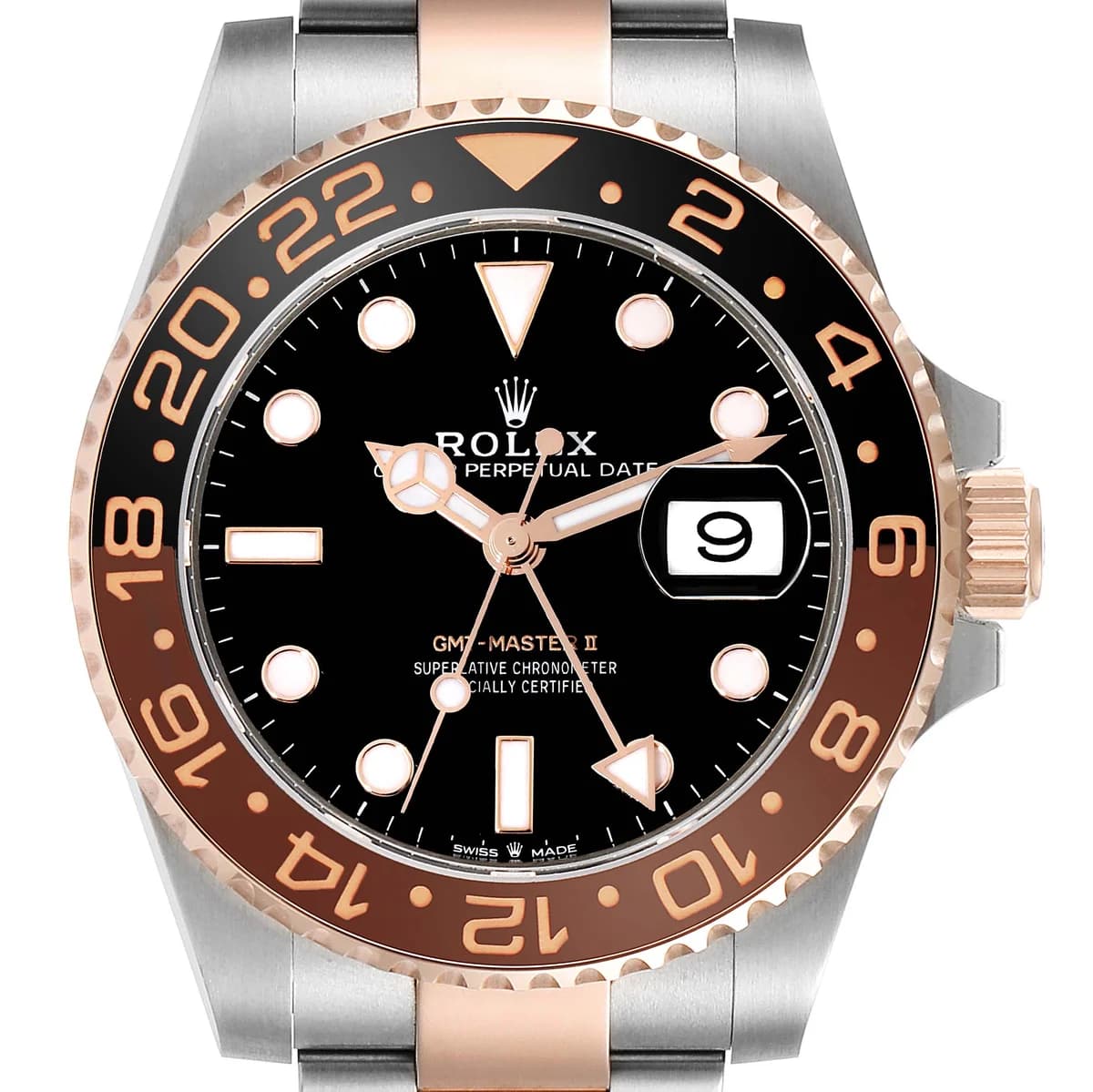
The GMT-Master has one of the best origin stories in watchmaking. In 1954, Pan American World Airways asked Rolex to build a watch that could display two time zones simultaneously for their pilots flying long-haul international routes. This was the golden age of commercial aviation. Jet travel was just beginning to shrink the world, and pilots were crossing multiple time zones on a single flight for the first time. The problem was simple: a pilot needs to know the local time at their destination while simultaneously tracking the time at their origin, because flight plans, fuel calculations, and air traffic control communications all depend on coordinated time. Rolex's solution was a 24-hour hand that rotated once every 24 hours against a bidirectional rotating bezel marked with a 24-hour scale. Set the bezel, read two time zones at a glance. That was the GMT-Master.
The Rootbeer variant showed up in 1970 with the reference 1675/3. This was the first GMT-Master in Rolesor, Rolex's term for the combination of stainless steel and 18K gold. The brown and gold bezel gave it a warmth that none of the other GMTs had, and collectors started calling it the Rootbeer because the colors reminded them of a frothy mug of root beer. Other nicknames stuck too. Tiger Eye. And most famously, the Clint Eastwood, because Eastwood wore a ref. 16753 Rootbeer constantly through the 1980s and 1990s. It showed up in Firefox, Tightrope, In the Line of Fire. If you've ever seen Eastwood in a movie from that era and noticed the watch on his wrist, that's a Rootbeer.
The thing about two-tone watches is that they went through a complete cycle in public perception. In the 1970s and 1980s, the Rootbeer was peak jet-set cool. Then through the 1990s and 2000s, two-tone fell completely out of fashion. It became "dad's watch." Vintage Rootbeer references traded at steep discounts. Nobody wanted brown and gold. And then it came back. The luxury market's taste shifted, rose gold replaced yellow gold as the contemporary precious metal, and in 2018 at Baselworld, Rolex relaunched the Rootbeer as the reference 126711CHNR. But they made one critical change. Instead of the traditional yellow gold, they paired it with Everose gold. That single material decision modernized the entire watch.
Historical context
2 images· tap to view
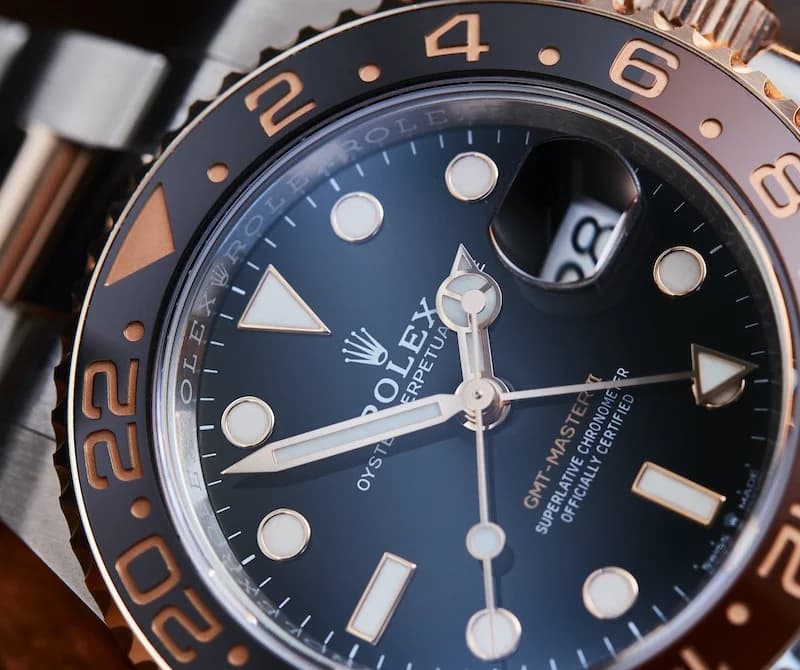
Everose is Rolex's proprietary 18K pink gold alloy, and I think it's worth explaining why it matters. Standard rose gold gets its color from copper mixed into the gold alloy. The problem is that copper oxidizes over time. Exposure to air, moisture, and skin contact gradually tarnishes the copper, and the rose gold slowly loses its pink hue. It fades. Rolex solved this in 2005 by developing Everose, which adds approximately 2% platinum to the alloy. The platinum bonds to the copper at the molecular level and prevents it from oxidizing. The result is a rose gold that maintains its warm pink tone indefinitely. It won't fade in five years. It won't fade in fifty. Rolex casts it exclusively in their own foundry in Plan-les-Ouates, Geneva, and they patented the formulation. No other brand has this alloy. A. Lange & Sohne makes a beautiful rose gold, and there are other excellent ones in the industry, but Rolex's Everose is specifically engineered for color permanence in a way that nobody else has matched.
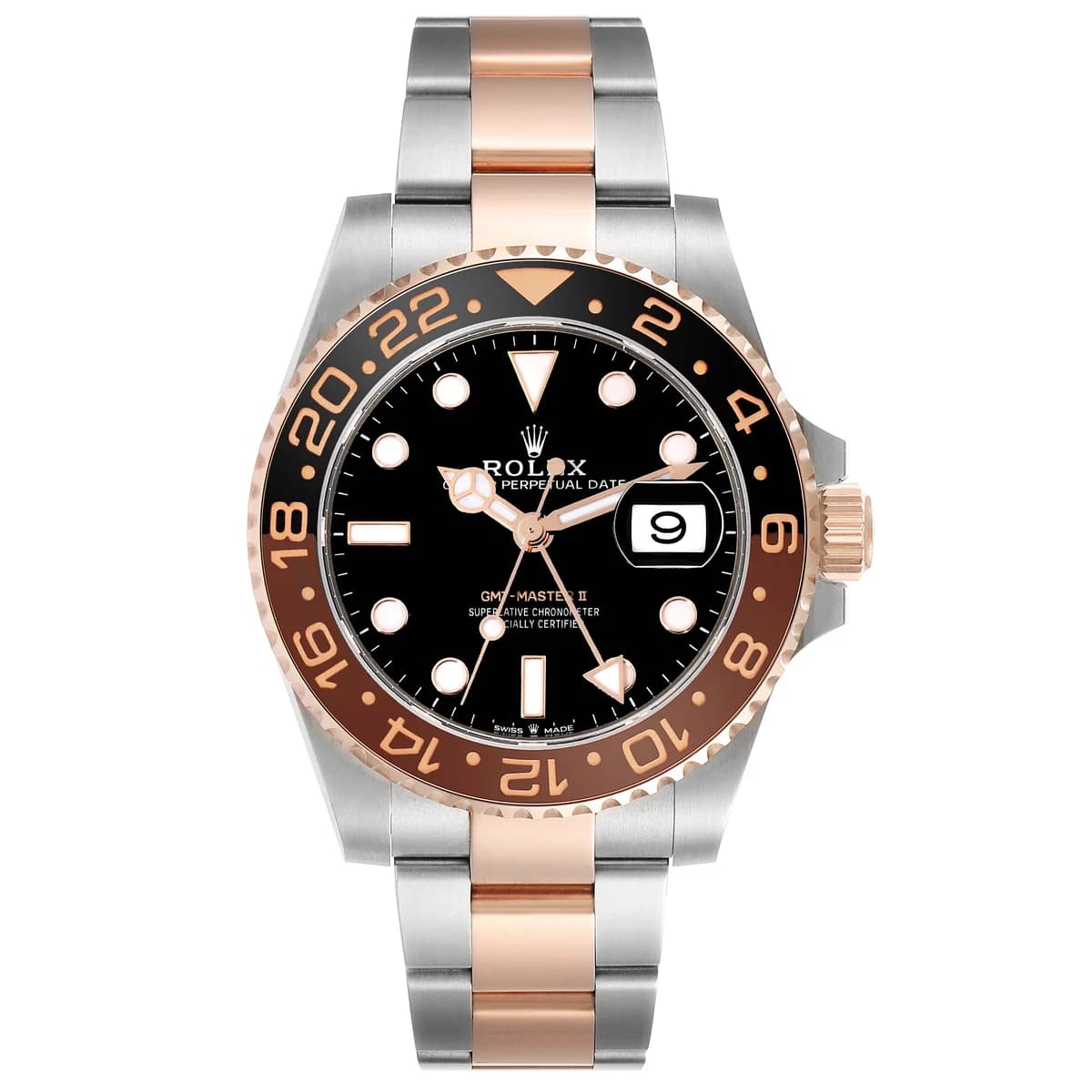
The CHNR in the reference number stands for Chocolat/Noir. French for chocolate and black. That's the two-tone Cerachrom bezel, and the way Rolex manufactures this is genuinely impressive. The bezel insert starts as extremely fine alumina ceramic powder, particles less than one-thousandth of a millimeter. Rolex's European patent (EP2746243B1, filed 2013) specifies the composition: 96.7-97.9% alumina, 1.5-2.9% chromium oxide, plus trace rare earth metals. They had to develop an entirely new alumina-based ceramic for this because zirconia, which they use for other bezels, couldn't produce brown or red tones. The powder is mixed with pigments and a binding agent, molded into the bezel shape, and then one half is selectively treated with additional chemical compounds. The entire piece is sintered at approximately 1,600 degrees Celsius. During sintering, the binding agents burn away, the ceramic densifies, and the treated half reacts chemically to produce the second color. The result is a single monolithic piece of ceramic with two distinct, stable colors. Not two pieces glued together. One piece. And it's virtually scratchproof and completely UV-resistant. Those colors will look exactly the same in 30 years. The old aluminum bezels on the vintage Rootbeers would scratch, fade, and develop a patina over decades. The Cerachrom is permanent.
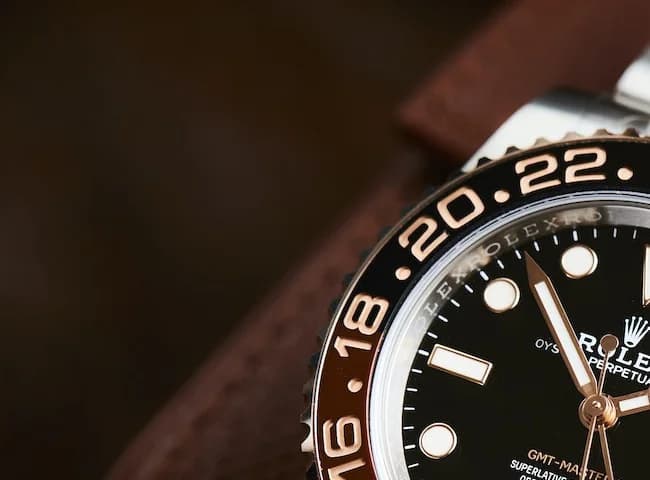
Inside is the Caliber 3285, introduced in 2018 with 10 patents to its name. This replaced the 3186 and the improvements are significant across the board. The Chronergy escapement is made from nickel-phosphorus, which makes it insensitive to magnetic fields, and it delivers 15% greater energy efficiency than the previous Swiss lever escapement. That efficiency gain, combined with thinner barrel walls and a longer mainspring, pushed the power reserve from 48 hours on the 3186 to 70 hours on the 3285. That's nearly three days. You can take the watch off Friday evening and put it on Monday morning and it's still running. The Parachrom hairspring is manufactured by Rolex in a paramagnetic alloy, resistant to both temperature variations and shocks. And the accuracy standard is -2/+2 seconds per day under the Superlative Chronometer certification, which is twice the precision of standard COSC.
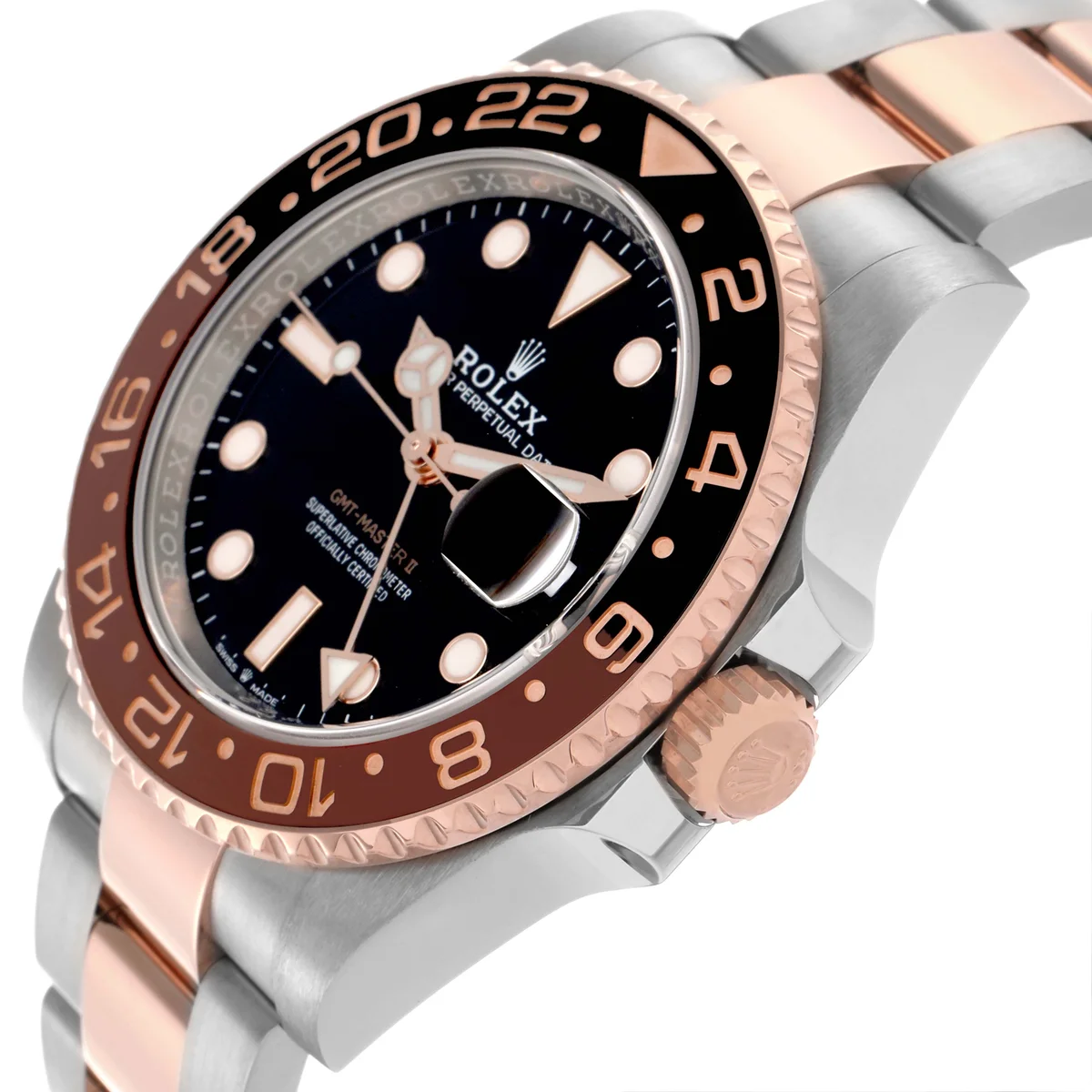
The GMT complication on this movement is what Rolex calls a "true GMT" or what the industry calls a flyer GMT. The local 12-hour hand can be independently adjusted in one-hour increments without stopping the movement or affecting the minutes, seconds, or the 24-hour GMT hand. When you land in a new time zone, you pull the crown to the second position and click the hour hand forward or backward to the correct local time. The 24-hour hand stays locked to your home time zone. Combined with the rotating bezel, you can actually track three time zones simultaneously. For anyone who travels regularly, this is one of those complications that's genuinely useful rather than decorative. And once you get used to having it, going back to a watch without a GMT feels like losing a tool.
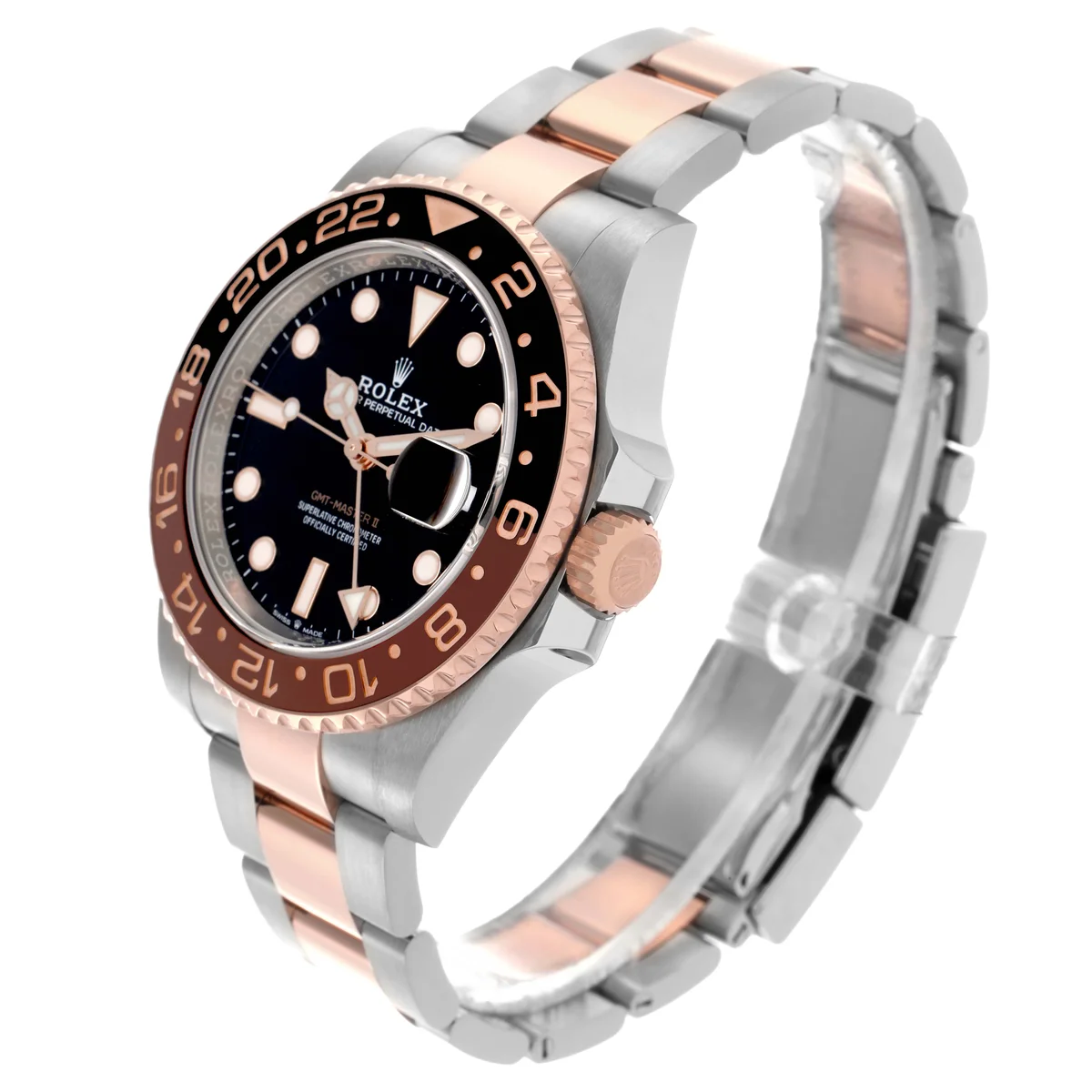
At 40mm wide and 12.2mm thick, the 126711CHNR wears really well under a cuff. This is one of the things I appreciate about the GMT-Master II compared to the dive watches in Rolex's lineup. The Submariner is slightly thicker, the Sea-Dweller is 43mm, and the Deepsea is a different conversation entirely. The Sky-Dweller is also substantially larger. The GMT sits in this sweet spot where it has enough presence on the wrist to be a proper sport watch but doesn't fight with your shirt sleeve. It's a travel watch, not a dive watch, and it wears like one.
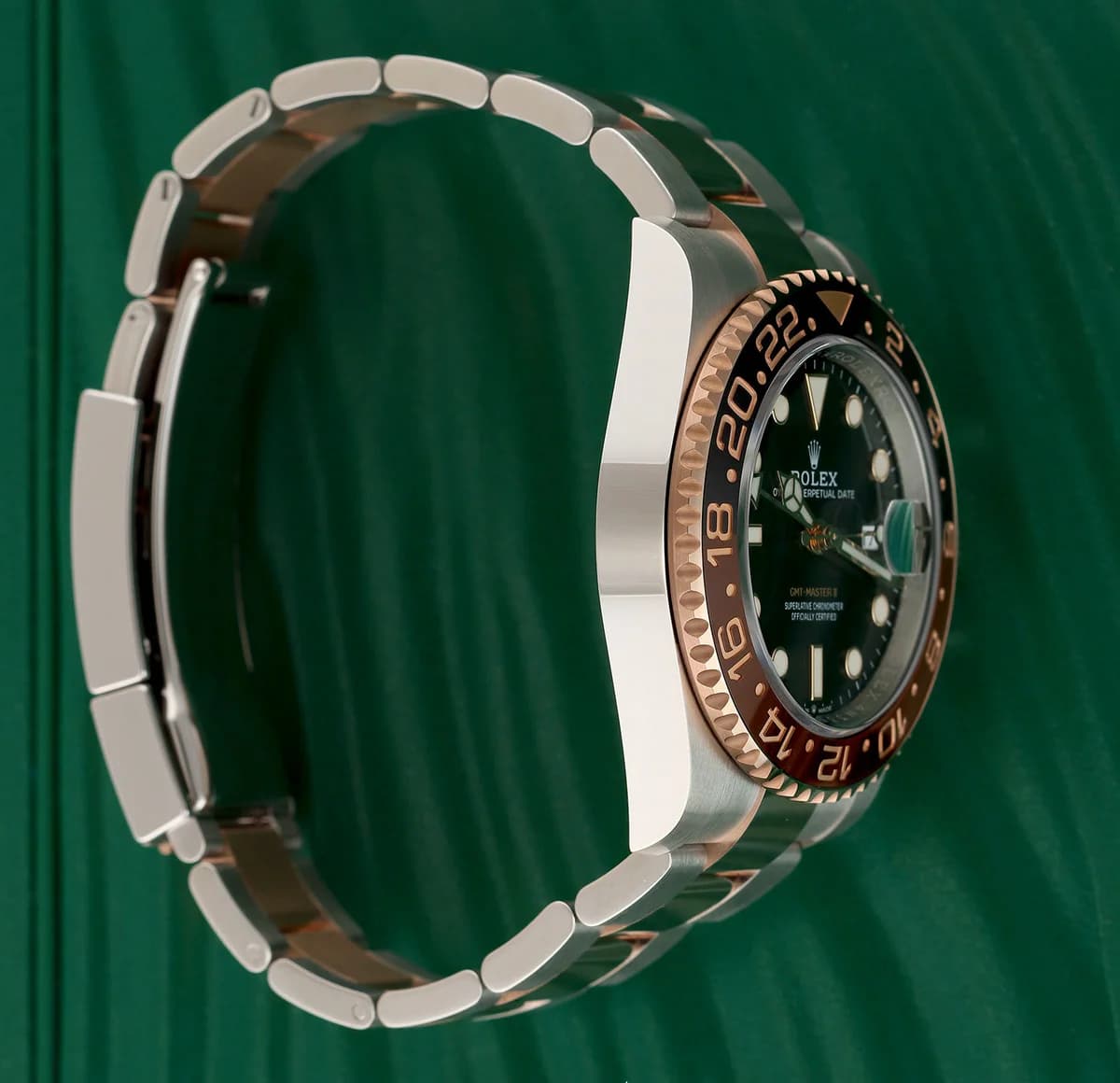
Styling is where this particular reference really shines for me. The GMT-Master II lineup has gotten increasingly wild over the years. You've got the Pepsi with its blue and red, the Batman and Batgirl in blue and black, the Sprite in green and black, and then the meteorite dial variants which are genuinely beautiful but they're conversation pieces. A meteorite dial is a slice of a real iron meteorite, billions of years old, with a Widmanstatten crystal pattern that's completely unique to each watch. That's incredible and I appreciate the engineering and the concept. But you're not exactly blending in at a business dinner with a meteorite dial on your wrist. The Rootbeer is the opposite end of that spectrum. The brown and black with Everose is the warmest combination in the entire lineup, and it just blends. It works with a charcoal suit. It works with a navy blazer. It works with a linen shirt and rolled sleeves. The warmth of the Everose gold against the brown Cerachrom creates something that doesn't clash with anything in your wardrobe. And on darker skin tones, this combination is genuinely phenomenal. The rose gold creates a rich contrast that looks effortless and sophisticated. Yellow gold can sometimes read as flashy depending on context, but Everose has this subtlety to it that just works. If I had to pick one GMT-Master II to wear with everything from E. Thomas to a weekend polo, this would be it.
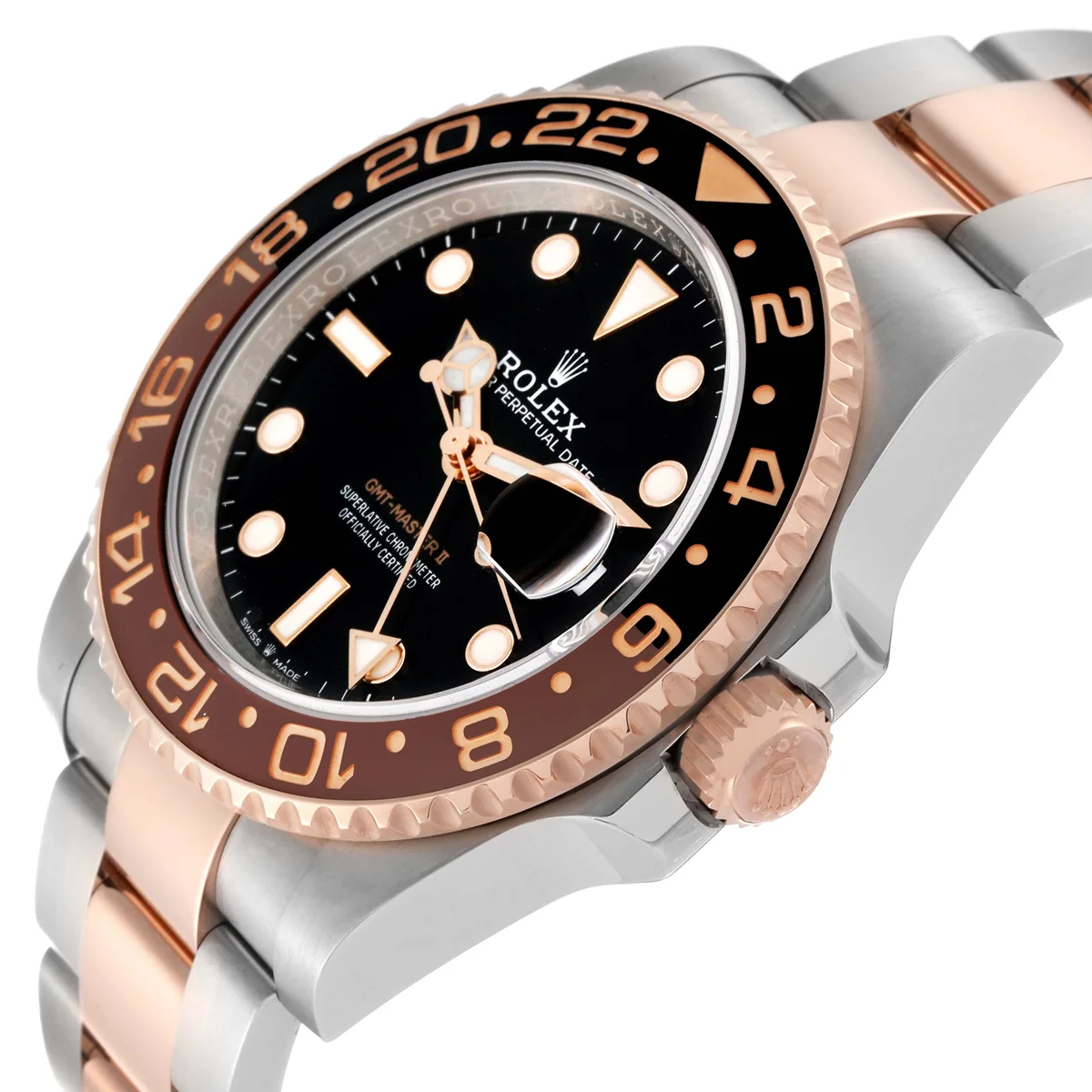
I do wish Rolex offered this reference on a Jubilee bracelet. The Batgirl (126710BLNR on Jubilee) proved how popular that combination is, and I think it's a big reason the Batgirl outsells the Batman. The Jubilee's five-link architecture dresses up better, and the brushed finishing on the Jubilee hides micro-scratches far better than the polished center links on the Oyster. When you're wearing a two-tone watch with Everose gold, you're already going to deal with scratches on the precious metal, that's just the nature of 18K gold at 2.75 Mohs hardness. Having a bracelet that compounds that by also showing every scratch on polished steel center links is not ideal for a daily wearer. I've seen people piece together Jubilee conversions on the Rootbeer and it looks incredible. But Rolex keeps this reference Oyster-only for now. The Oyster works, and you can absolutely wear it with a suit. But the Jubilee would take this watch to another level. Maybe someday.
The Rootbeer is often the easiest GMT-Master II to find at an authorized dealer, and I actually think that works in its favor rather than against it. The Pepsi was recently discontinued by Rolex in spring 2026 and demand for the remaining GMT references surged. The Batman/Batgirl and Sprite are all difficult to acquire. The Rootbeer has a genuinely better buying experience and the watch itself is arguably more interesting than the models everyone is fighting over.
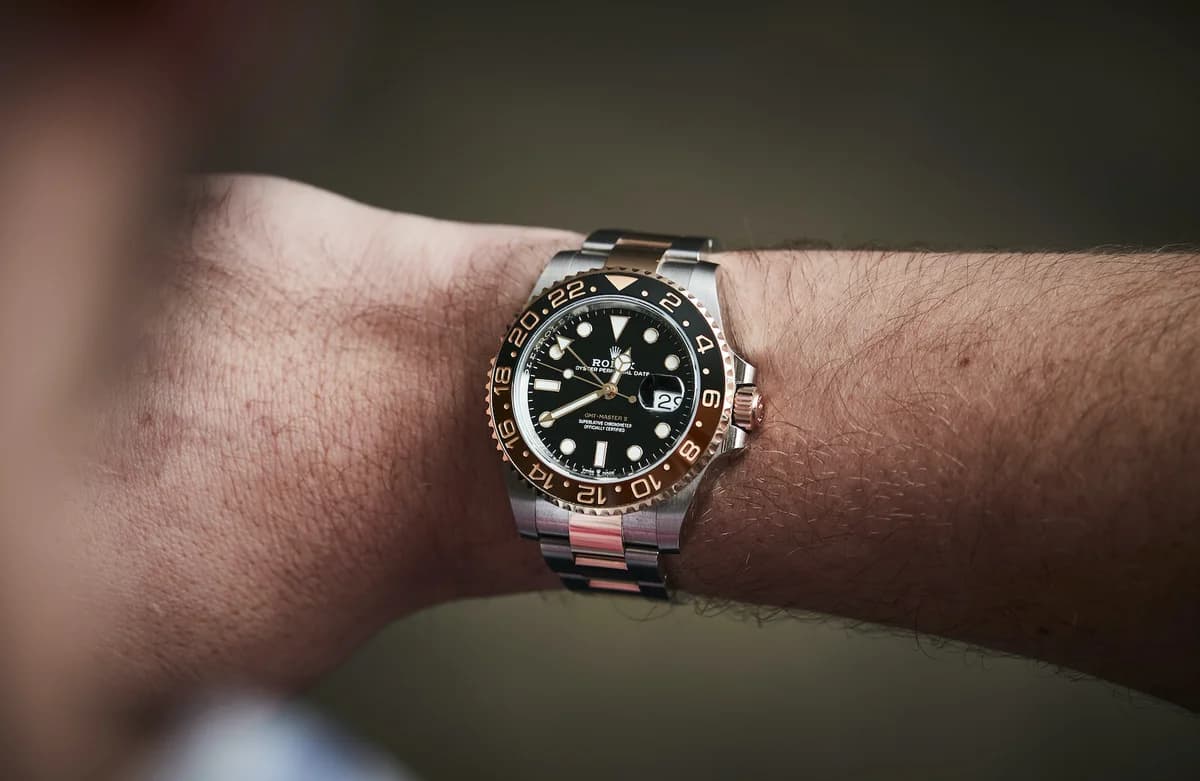
The history of this watch is fascinating when you step back and look at the full arc. From the 1675/3 in 1970 with its brown and yellow gold aluminum bezel, to Clint Eastwood making it iconic through two decades of films, through the dark years of the 1990s and 2000s when two-tone was out of fashion and Rootbeers traded at discounts, to the 2018 revival in Everose with Cerachrom. Rolex took a watch that had gone through a complete cultural cycle, waited for the market to come back around, and then relaunched it with materials that fixed every weakness of the original. The aluminum bezel that faded and scratched is now permanent ceramic. The yellow gold that looked dated is now modern Everose. The 48-hour movement is now 70 hours with better accuracy. They kept everything that made the Rootbeer special and upgraded everything that time had exposed as a limitation. That's product management at its best.
If there's one thing about the Rootbeer that catches people off guard, it's the weight. The Everose gold in the bezel ring, crown, crown guards, and center bracelet links adds noticeable heft compared to an all-steel GMT. It's not uncomfortable, and the Easylink 5mm comfort extension in the clasp helps with fit, but if you're coming from a lighter watch you'll feel the difference in the first week. After that you adjust and the weight becomes part of the character. It feels substantial. It feels like it's made of something. And honestly, for a two-tone Rolex, that is exactly what you want.
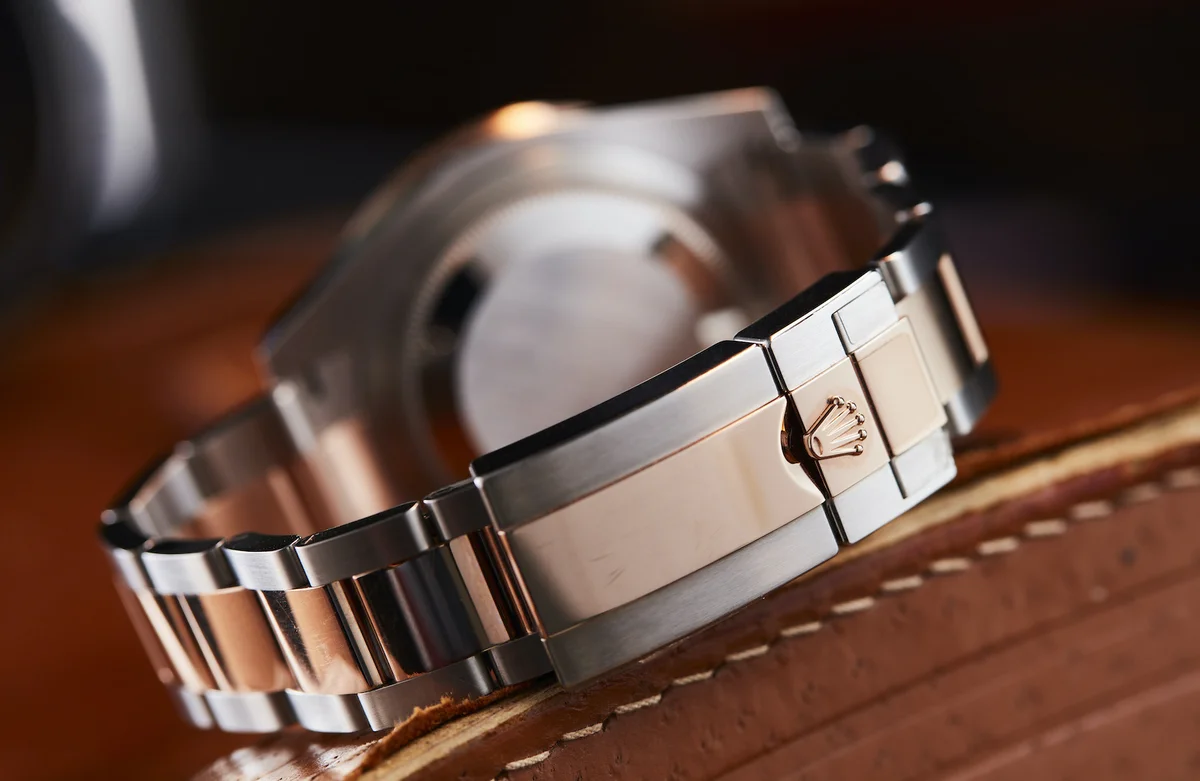
The Rootbeer doesn't get the same hype as the Pepsi or the Batgirl. It doesn't generate the same waitlist frenzy or the same Instagram posts. And I think that's exactly why it appeals to me. The colors are warm, the history is deep, the movement is genuinely impressive, and the Everose gold is an engineering achievement that no other brand has replicated. It's all class without trying to be loud about it. And that's a hard thing to find.
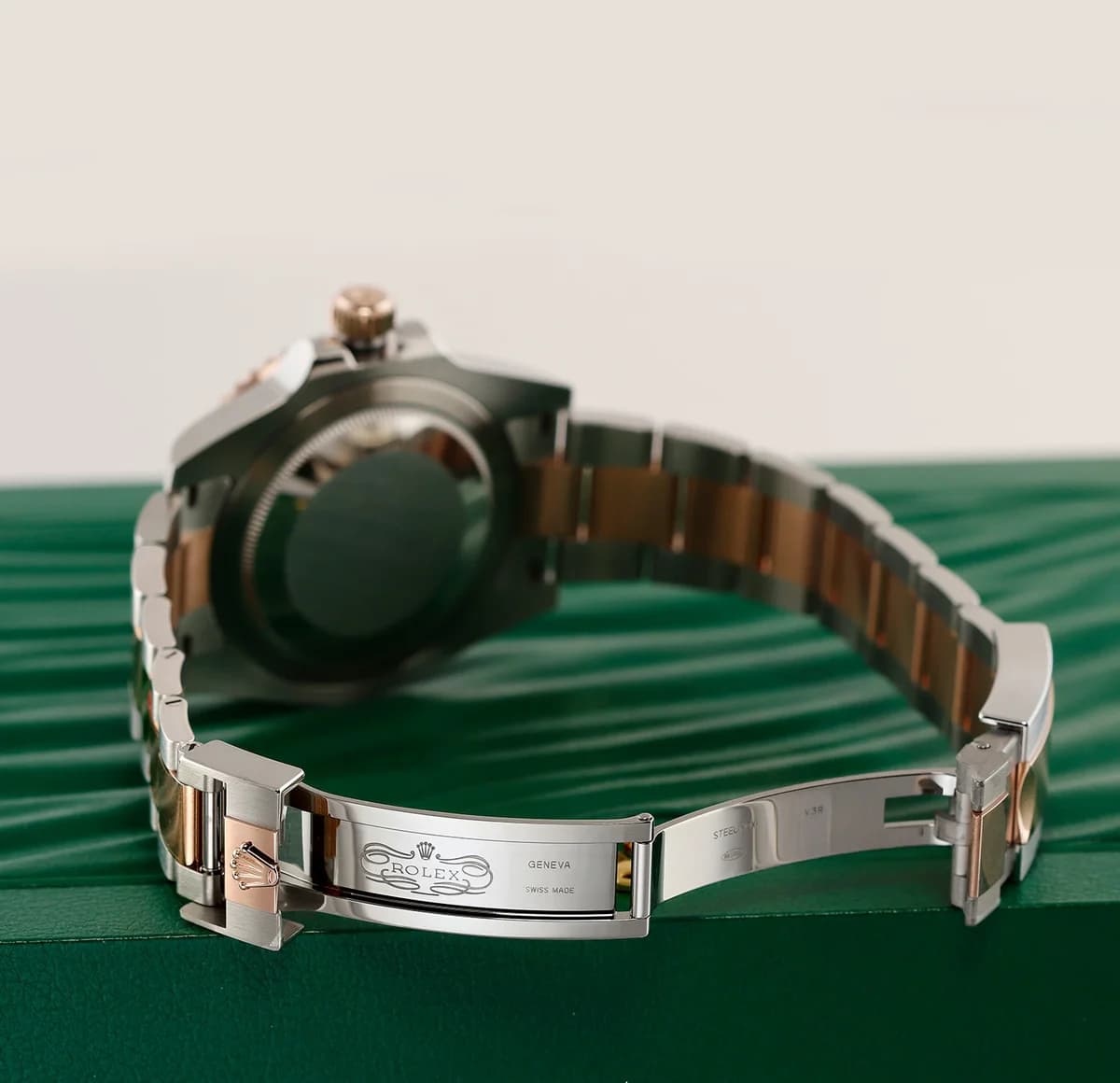
There is a practical dimension to the Rootbeer that I think about differently than most of what gets written about it. The 126711CHNR on the Oyster bracelet has a specific weight profile from the Everose gold in the bezel ring, crown, crown guards, and center bracelet links. It is heavier than an all-steel GMT. After a week, that weight stops registering as weight and starts registering as presence. The Easylink 5mm comfort extension in the clasp genuinely matters on a two-tone bracelet, because a half-link is always going to leave you between sizes during the day as your wrist expands with temperature and activity. The extension bridges that gap without having to remove links. It's one of those details that sounds minor until you've owned a bracelet without it.
The TripLock screw-down crown is the third element of Rolex's water resistance system alongside the Oyster case and the screw-down caseback. The TripLock uses three sealing points instead of the standard two, which is why the GMT-Master II holds 100 meters of water resistance while also carrying the Paraflex shock protection system inside. These are engineering decisions that most people never think about because they never need to, which is exactly the goal. The movement inside does not feel impacts because Rolex built multiple layers of protection between the world and the Caliber 3285. For a watch this expensive, that invisibility is what you're paying for as much as anything else.
The Pepsi discontinuation in spring 2026 changed the dynamic for the entire GMT-Master II lineup. When Rolex stopped producing the Pepsi, collector attention that had been diffused across multiple references concentrated. The remaining references, Batgirl, Sprite, and Rootbeer among them, each became more discussed and more examined. The Rootbeer has benefited from this simply by being there. Collectors who had never seriously considered the brown and black combination started looking at it again, and what they found is a watch that doesn't need the hype. The Everose ceramic combination is genuinely unique in the Rolex lineup. No other reference does the warm-metal-against-dark-ceramic the way the Rootbeer does. The Batgirl and Sprite both use steel bezels. The Rootbeer is the only GMT with Everose ceramic, and Everose is a proprietary alloy that no other brand has replicated.
If I'm recommending the Rootbeer to someone who already wears Canali or Cesare Attolini suiting, the conversation about the Oyster bracelet is worth having honestly. The Oyster on a two-tone watch shows every micro-scratch on the polished center links. 18K gold at 2.75 Mohs hardness is softer than steel, and polished gold links will develop character quickly. That character adds warmth over time rather than looking merely worn. The brushed sections resist scratching better and create the contrast that keeps the bracelet visually interesting. The answer is to understand what you're getting into rather than be surprised by it. The Rootbeer is a watch that ages in a way I find appealing. The gold wears in. The ceramic doesn't. The tension between those two materials is part of what makes this watch worth wearing. And the Everose that develops warmth over years of contact with skin is the kind of material interaction that no steel watch can replicate. It is a case for wearing the Rootbeer rather than keeping it. The watch improves in use. Not many things do.
Also in Sport Chronographs & GMT