
Rolex
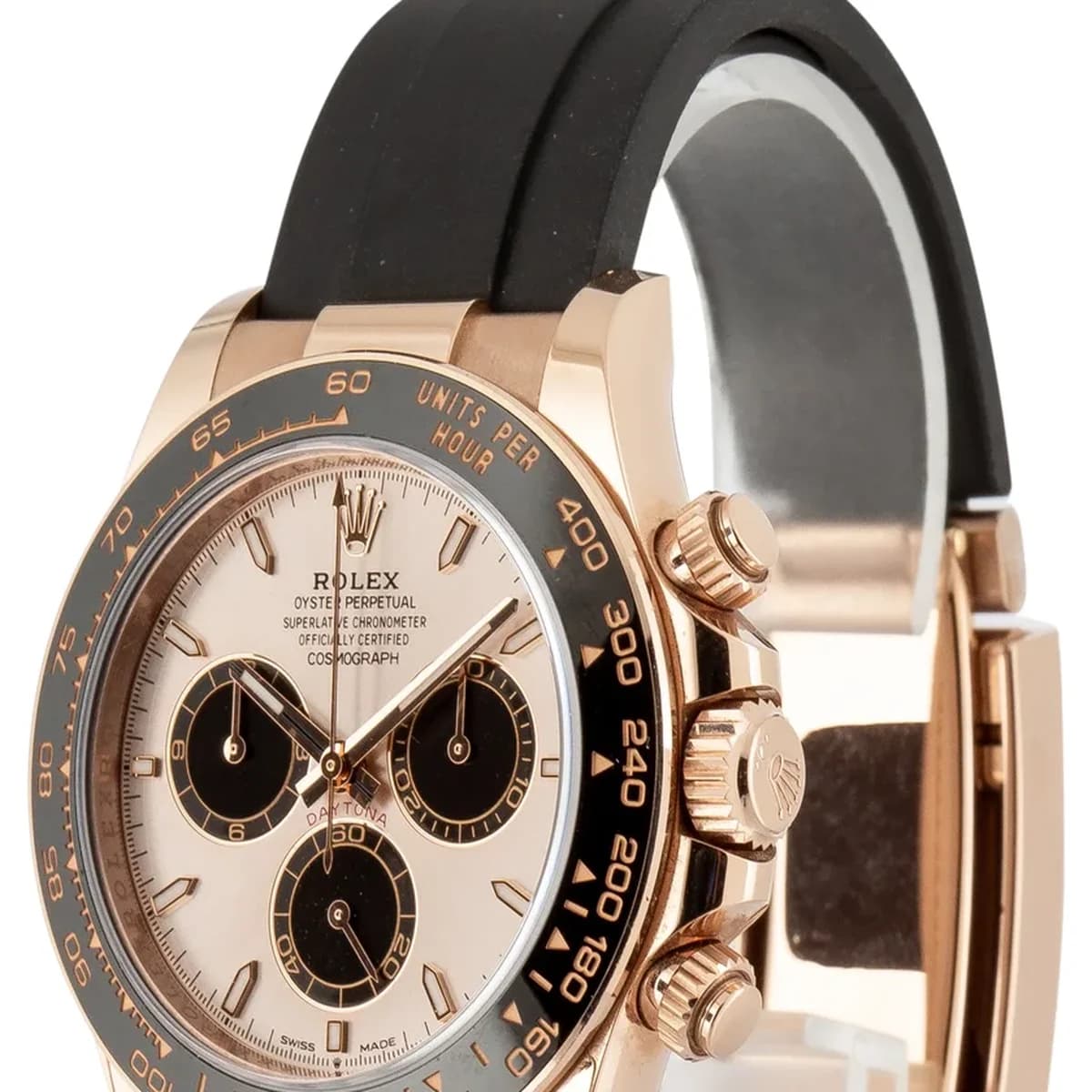
Daytona Oysterflex Everose "Sundust"
126515LN-0006
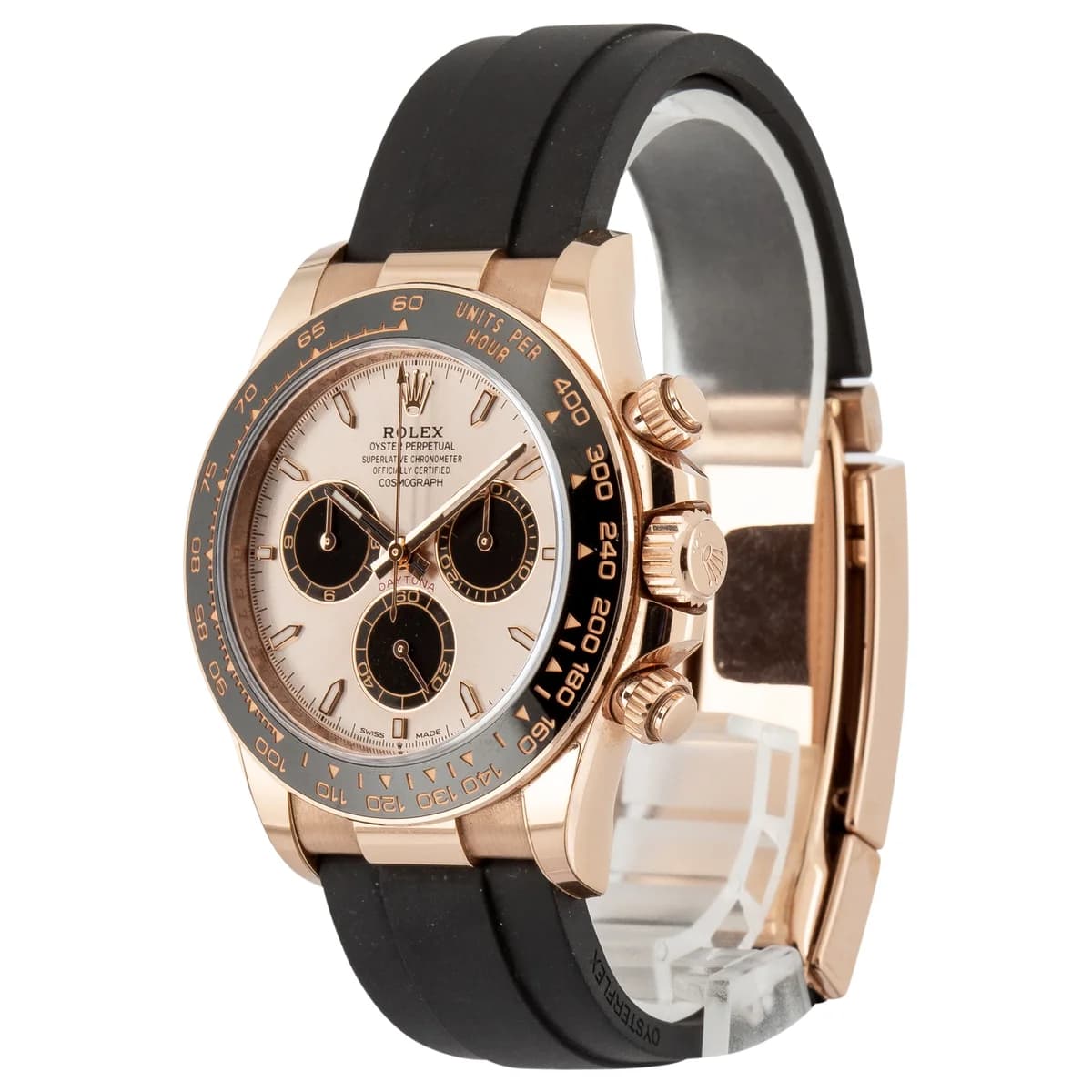
Gold chronographs have always carried a specific connotation. For decades, a gold Daytona meant an Oyster bracelet, a president bracelet, or a leather strap. It meant formality. It meant the kind of watch you wore with a double-breasted blazer and a pocket square, not with a linen shirt and rolled sleeves on a Saturday afternoon. The Cosmograph Daytona's lineage stretches back to 1963 and the Daytona International Speedway, through the Valjoux era, through Zenith, through the fully in-house Caliber 4130, and now to the 4131. I have written about that history in detail with the steel Godzilla. What I want to focus on here is different. The 126515LN in Everose on Oysterflex is the Daytona that broke the gold chronograph out of its dress code, and it did it through material science and a strap that should not exist.
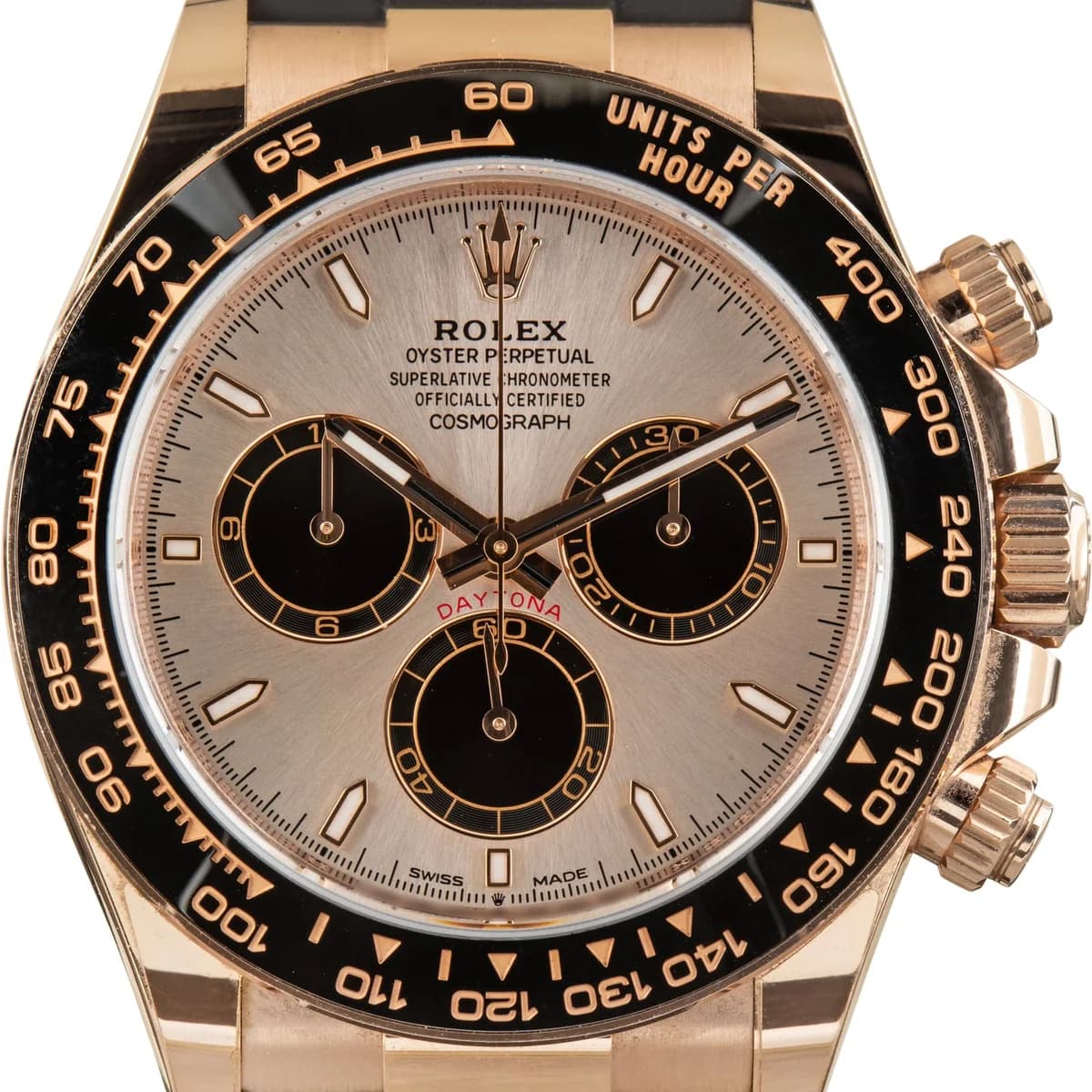
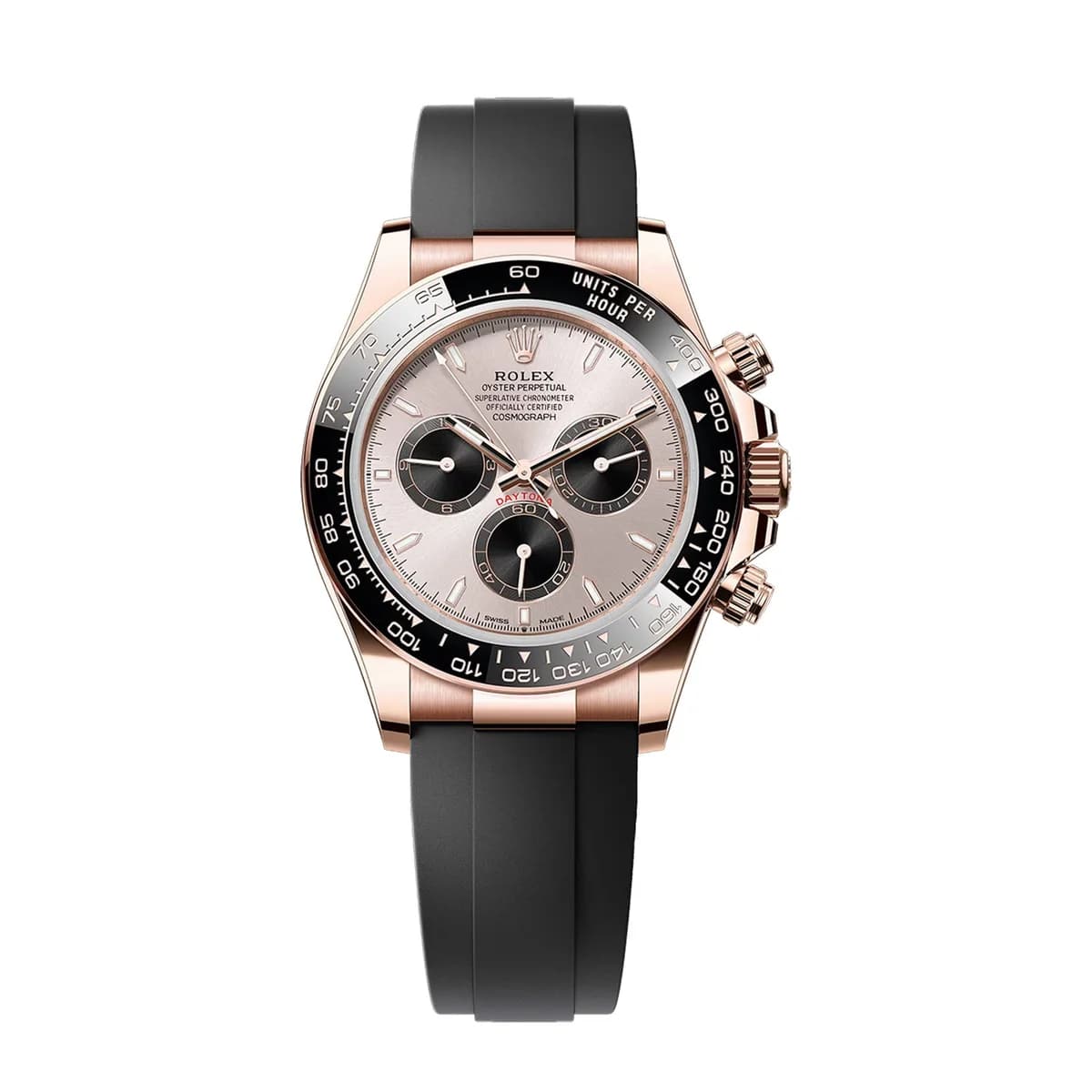
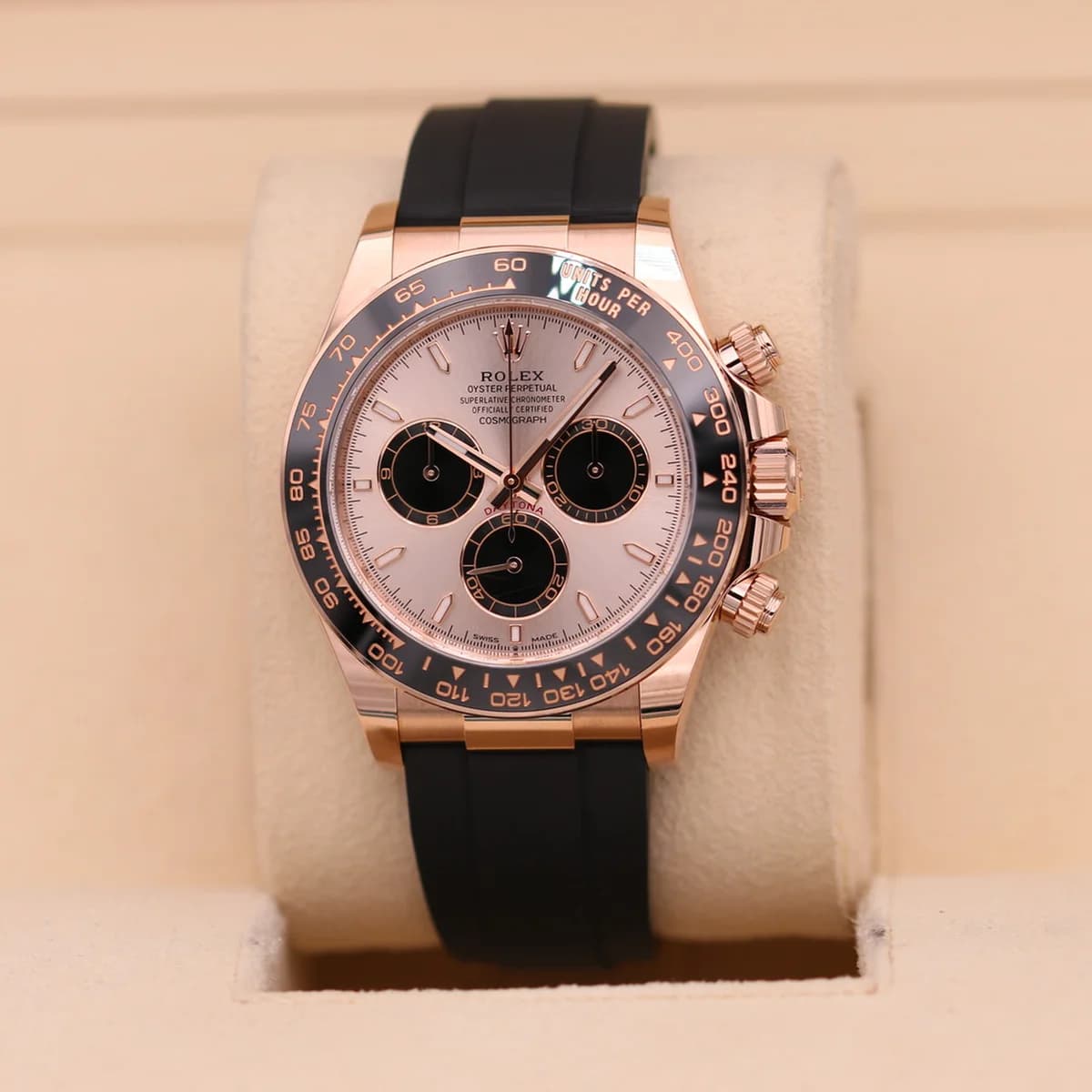
The argument this watch makes is specific and deliberate. Take a 40mm chronograph case. Cast it in a warm rose gold alloy that Rolex invented and patented. Give it a dial in a color that sits between champagne and rose, a color Rolex calls sundust that has no equivalent at any other brand. Then surround all of that warmth with black. A black Cerachrom ceramic bezel. A black Oysterflex strap. Black chronograph sub-registers. The warmth of the gold and dial against the darkness of the bezel and strap creates a tension that reads as modern sport rather than traditional luxury. This is not the gold Daytona that sits in a safe. This is the gold Daytona that goes surfing.
I find it genuinely interesting how one material choice can shift the entire personality of a watch. Put this same Everose case on the Oyster bracelet and it becomes a different proposition entirely. The full gold bracelet version of the Daytona is beautiful, but it announces itself. It reads as jewelry. The Oysterflex strips that away. The black rubber absorbs the visual weight of the case, and suddenly the gold feels incidental rather than intentional. It is still there. It still glows. But it does not lead with gold the way a full bracelet does. That is a design achievement worth appreciating.
Everose is Rolex's patented 18-karat rose gold alloy, and the story behind it is one of my favorite examples of Rolex solving a problem that everyone else just accepted. Traditional rose gold gets its pink color from copper in the alloy. The more copper, the warmer the tone. But copper oxidizes. Expose standard rose gold to seawater, chlorine, sweat, and time, and the pink fades. The copper degrades, and what was once a warm rose becomes a washed-out yellow. Every rose gold watch from every brand dealt with this reality until Rolex decided they did not want to.
Rolex filed European patent EP1512765 on September 4, 2003, with eight inventors listed. The patent specified an 18-karat gold alloy with 15 to 18 percent copper and 0.5 to 4 percent platinum. The insight was elegant. Platinum is the most noble of the precious metals. It resists oxidation and corrosion more effectively than any other element in the periodic table. By introducing a small percentage of platinum into the gold-copper alloy, Rolex created a galvanic shield around the copper. The platinum essentially prevents the electrochemical reaction that causes copper to degrade. The result is a rose gold that maintains its color indefinitely. Not for decades. Indefinitely.
Rolex introduced Everose in 2005, and the Cosmograph Daytona was the first watch to wear it. The alloy is manufactured in Rolex's own foundry, giving them complete control over the composition and quality. When I say the composition is at least 76 percent pure gold with slightly more than 2 percent platinum and the balance in copper, those numbers come directly from the patent specification and multiple independent analyses. Every Rolex model available in rose gold now uses Everose exclusively. No other brand can use this specific alloy. Omega developed Sedna Gold as their answer, using palladium instead of platinum as the stabilizing element. Tudor has no proprietary gold alloy at all. But Everose was first, and the patent protection means it remains unique to Rolex. The warmth of the tone is distinct too. Everose runs slightly pinker than most rose golds in the industry, closer to what the French call or rose than the yellow-leaning rose golds you see from some German and Japanese manufacturers. Under natural daylight, the pink is unmistakable. Under warm incandescent light, it deepens toward a rich copper that I find incredibly appealing.
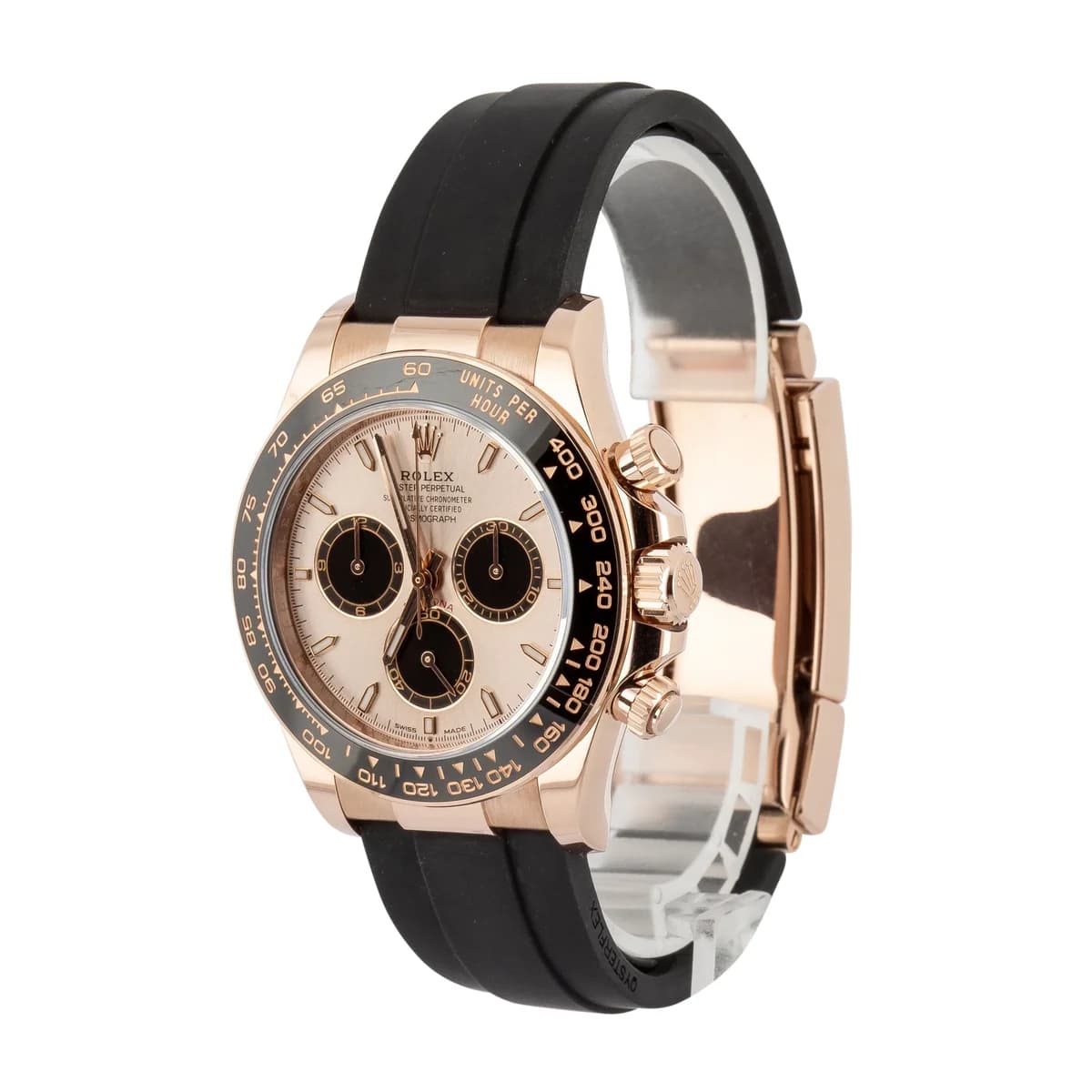
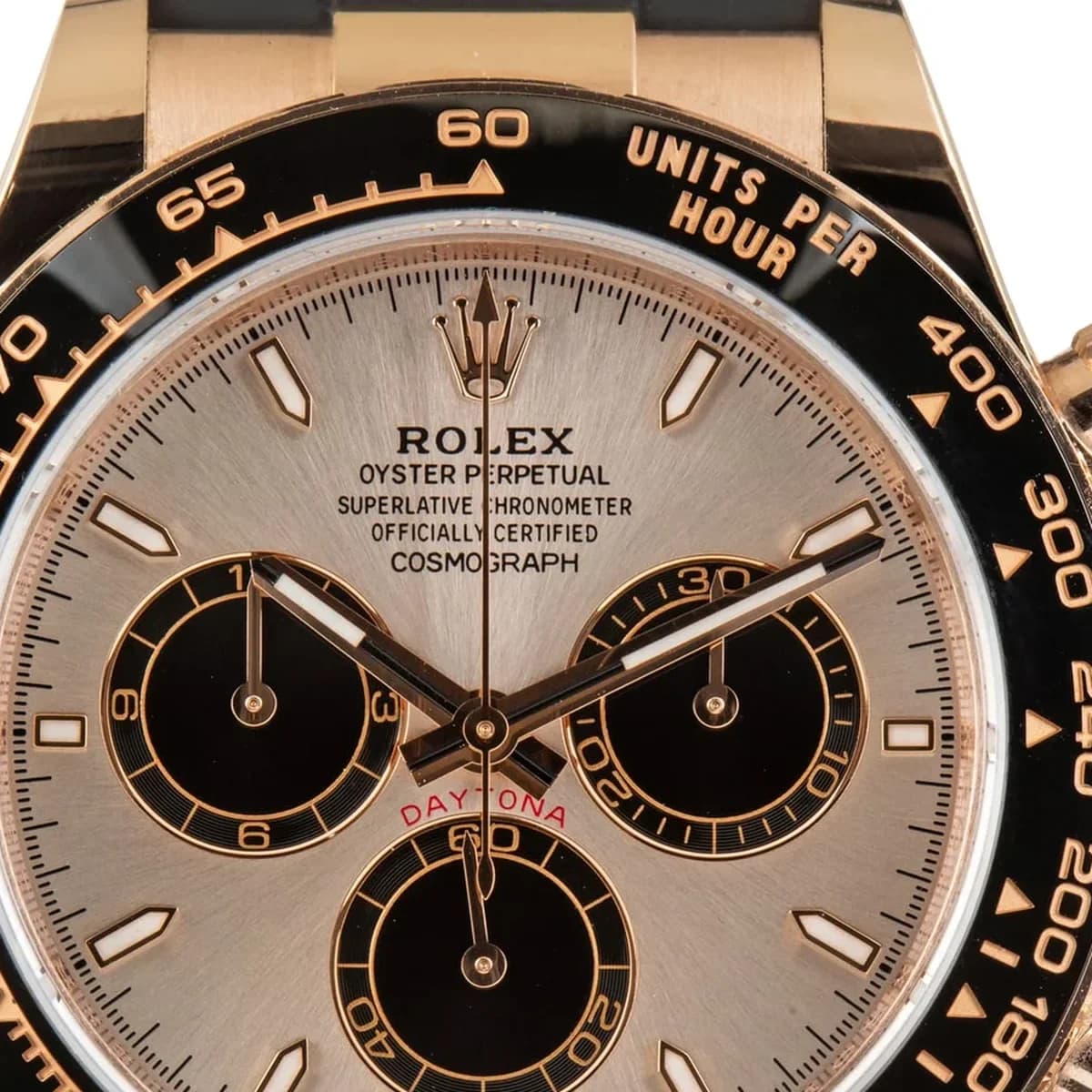
The sundust dial deserves its own discussion because I think it is the single most compelling reason to choose this specific reference over other Everose Daytonas. Sundust is Rolex's name for a warm, metallic tone that sits somewhere between champagne and rose. It has a sunburst finish, which means fine radial lines emanate from the center of the dial, catching and redirecting light as your wrist angle changes. In direct sunlight, the dial looks almost golden. In shade, it shifts toward a muted pink. Under warm artificial light, it picks up copper undertones that mirror the case material. In overcast daylight, a cooler lavender undertone emerges that I did not expect the first time I saw it. The dial is alive in a way that solid colors are not. It changes personality depending on the environment, and that quality gives the watch a different character every time you look at it.
What makes the sundust particularly effective in the 126515LN is how Rolex distributes it across the dial. The main dial field is a deep, lacquered black, and the three chronograph sub-registers at 3, 6, and 9 carry the sundust finish with a snailed texture. That arrangement creates a reversal of expectations. The warmth lives in the details rather than dominating the surface, and the black field gives the sundust registers room to glow. The applied hour markers and hands are 18-karat Everose gold with Chromalight luminescent material, and they pick up the same tone as the case and the sub-registers. Everything warm on this dial is in the same Everose color family. Everything dark is in the same black family. The result is a coherent composition that I find more visually interesting than a monochromatic dial.
The Oysterflex bracelet is a piece of engineering that changed what was possible on a Rolex sports watch. Before 2015, if you wanted rubber on a Rolex, you went to an aftermarket provider. Rolex simply did not put rubber straps on their watches. The perception was that rubber was too casual, too impermanent, too antithetical to what Rolex stood for. Then at Baselworld 2015, Rolex introduced the Oysterflex on the Yacht-Master reference 116655, and the conversation shifted overnight.
The construction is what separates the Oysterflex from every other rubber strap in watchmaking. At the core of each side of the bracelet sits a flexible blade made from a titanium-nickel superelastic alloy. This is the same family of alloys used in medical stents and orthodontic wires, materials engineered to flex repeatedly without fatigue or permanent deformation. These metal blades are then overmolded with high-performance black elastomer. The result is a strap that has the structural rigidity and shape memory of a metal bracelet while feeling like rubber against the skin. It does not stretch. It does not deform. It holds its shape exactly.
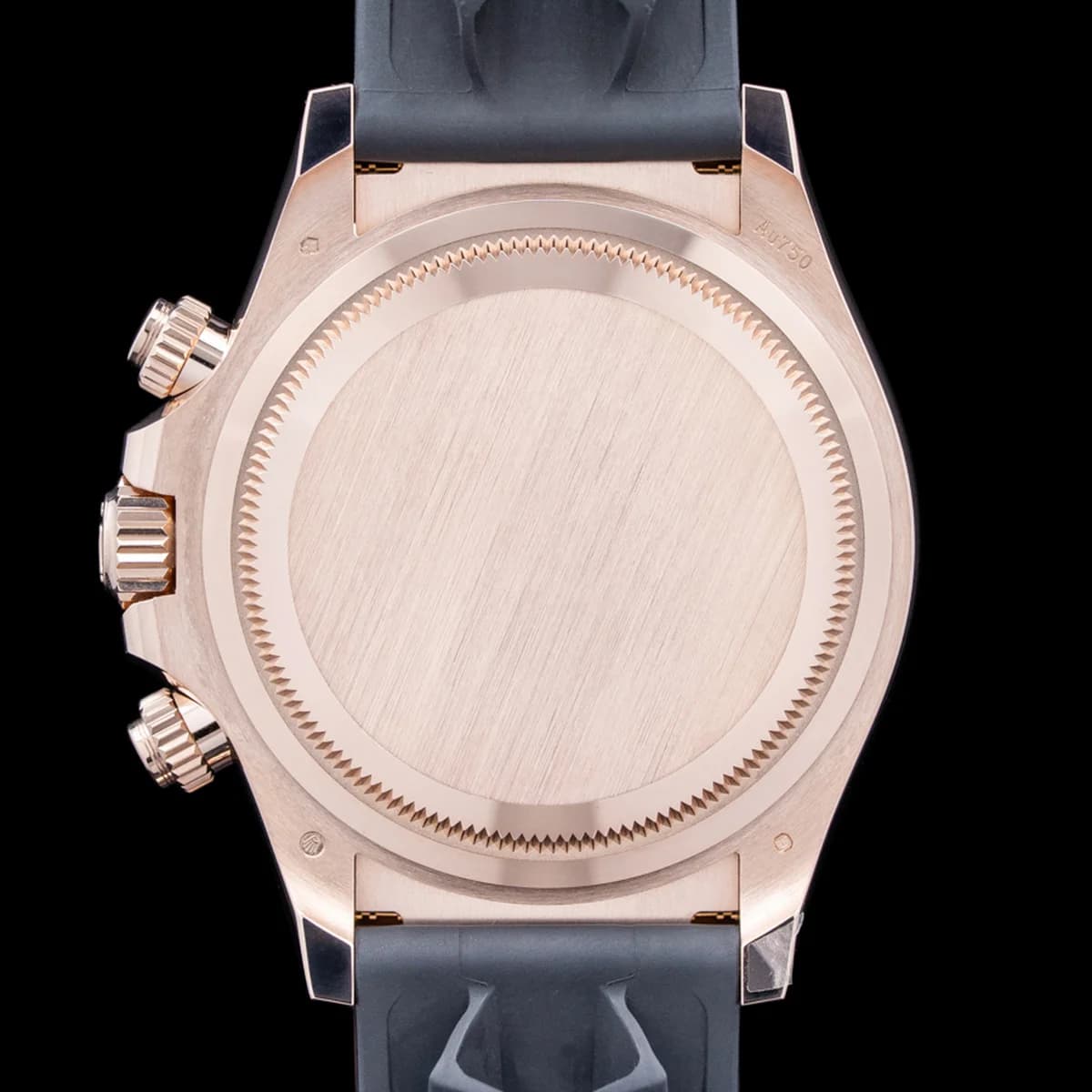
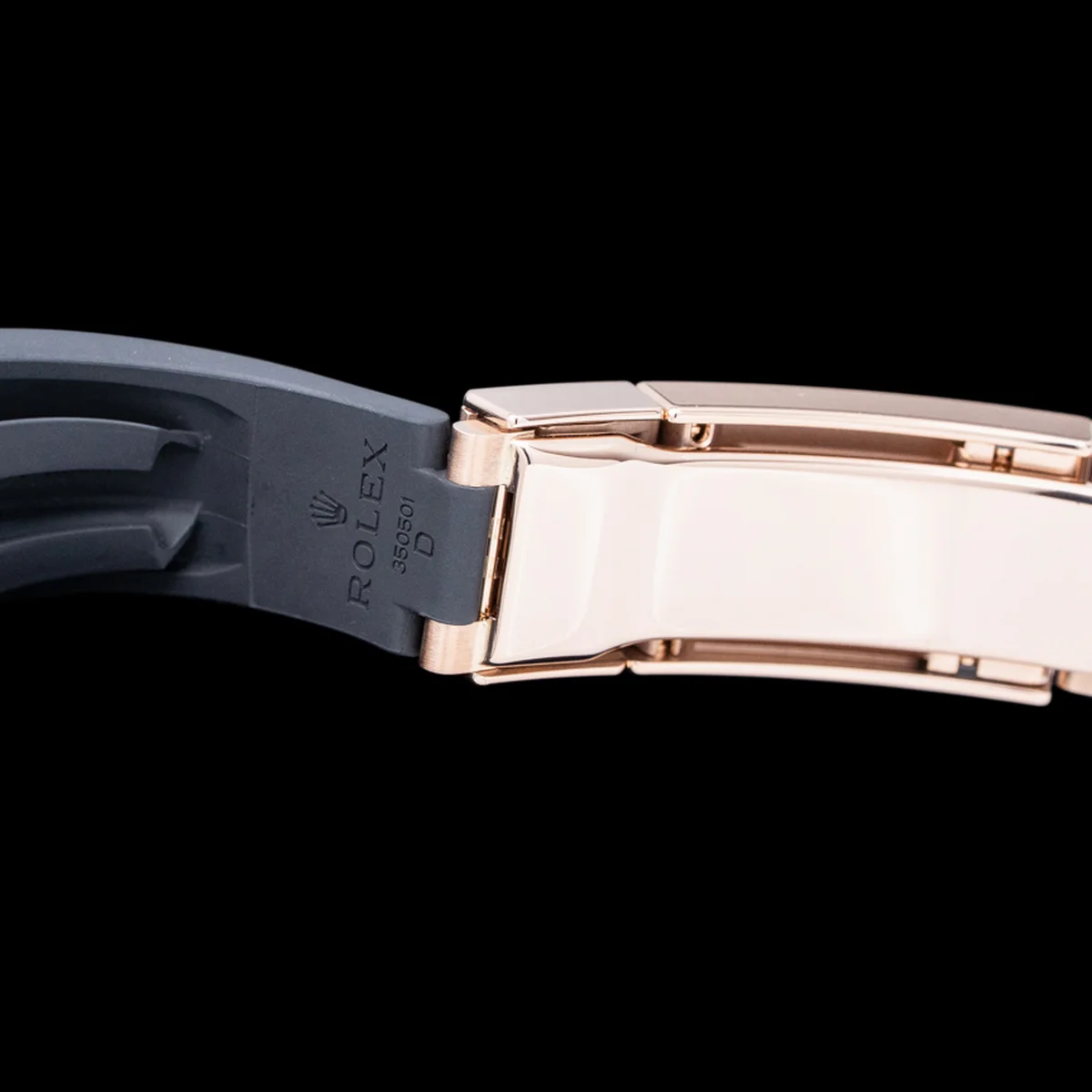
On the inside of each Oysterflex section, Rolex added a longitudinal cushion system. These are raised rubber pads that run along the length of the strap, creating air channels between the elastomer and your wrist. The cushions serve three purposes. They allow airflow so the strap does not trap sweat against the skin. They provide a softer contact surface than flat rubber would. And they stabilize the watch on the wrist by distributing pressure more evenly. Anyone who has worn a flat rubber strap in humid weather knows the discomfort of rubber suctioning against wet skin. The Oysterflex cushion system eliminates that entirely. I notice the difference immediately when I compare the Oysterflex to a standard aftermarket rubber strap. The Oysterflex does not slide. It does not rotate. The watch stays exactly where you put it.
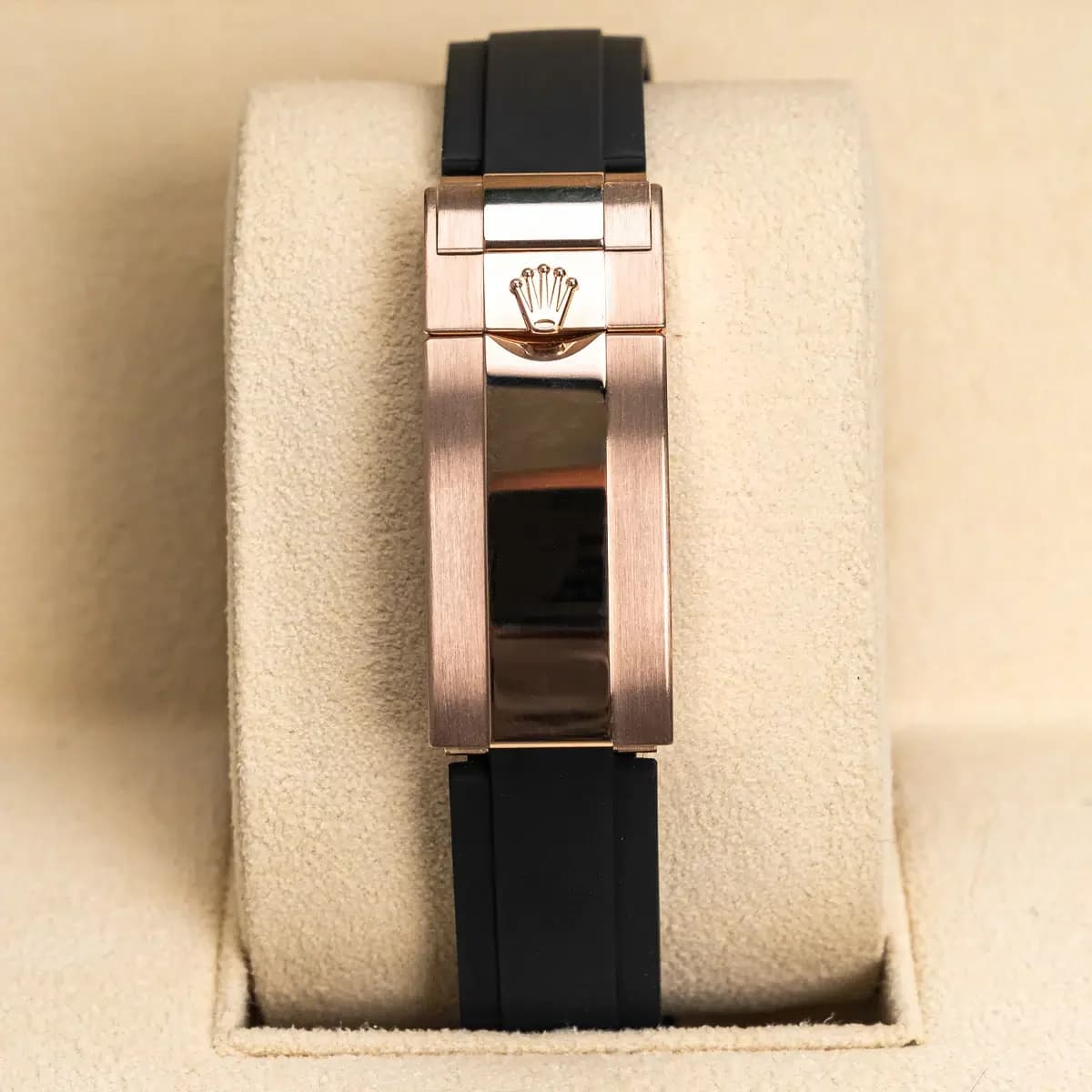
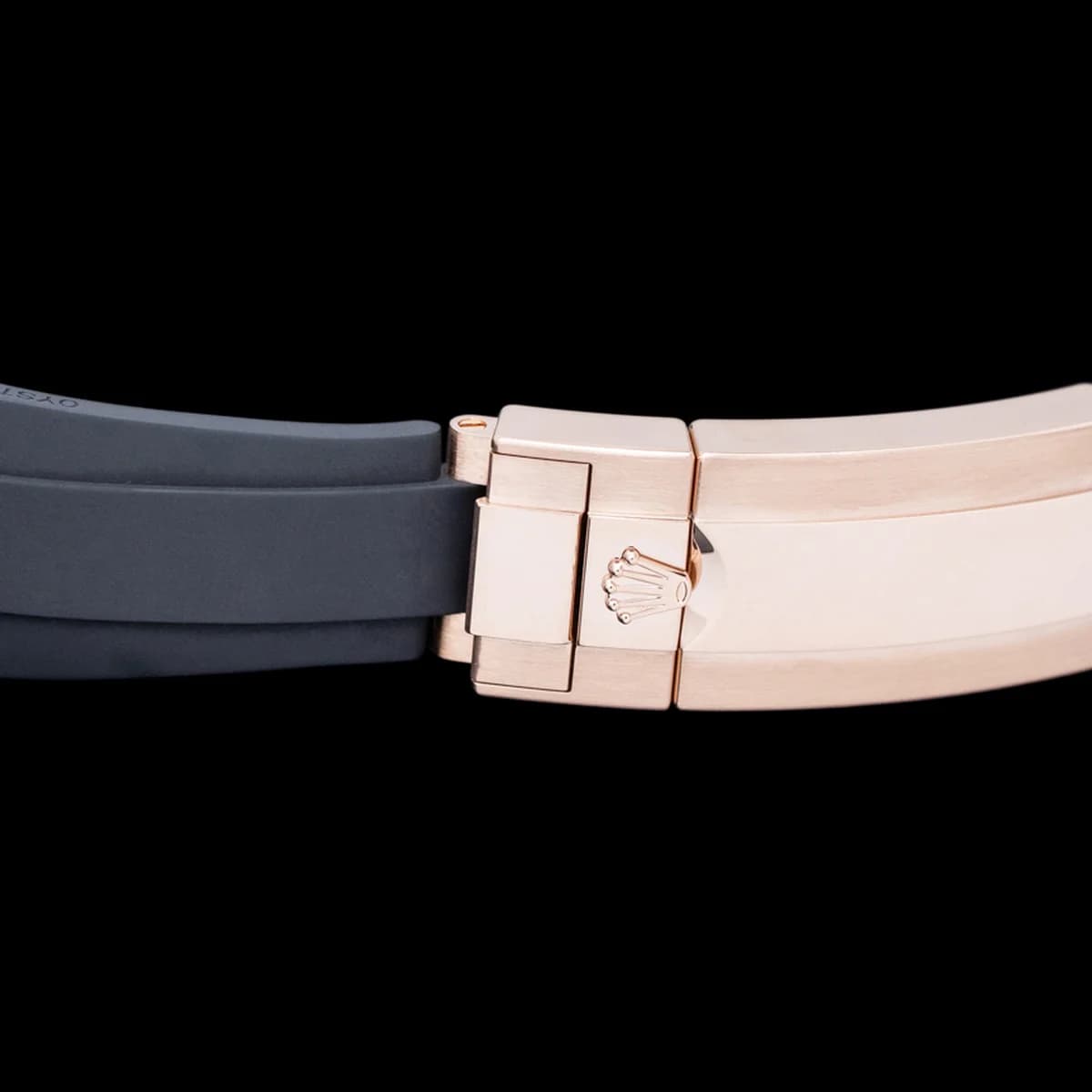
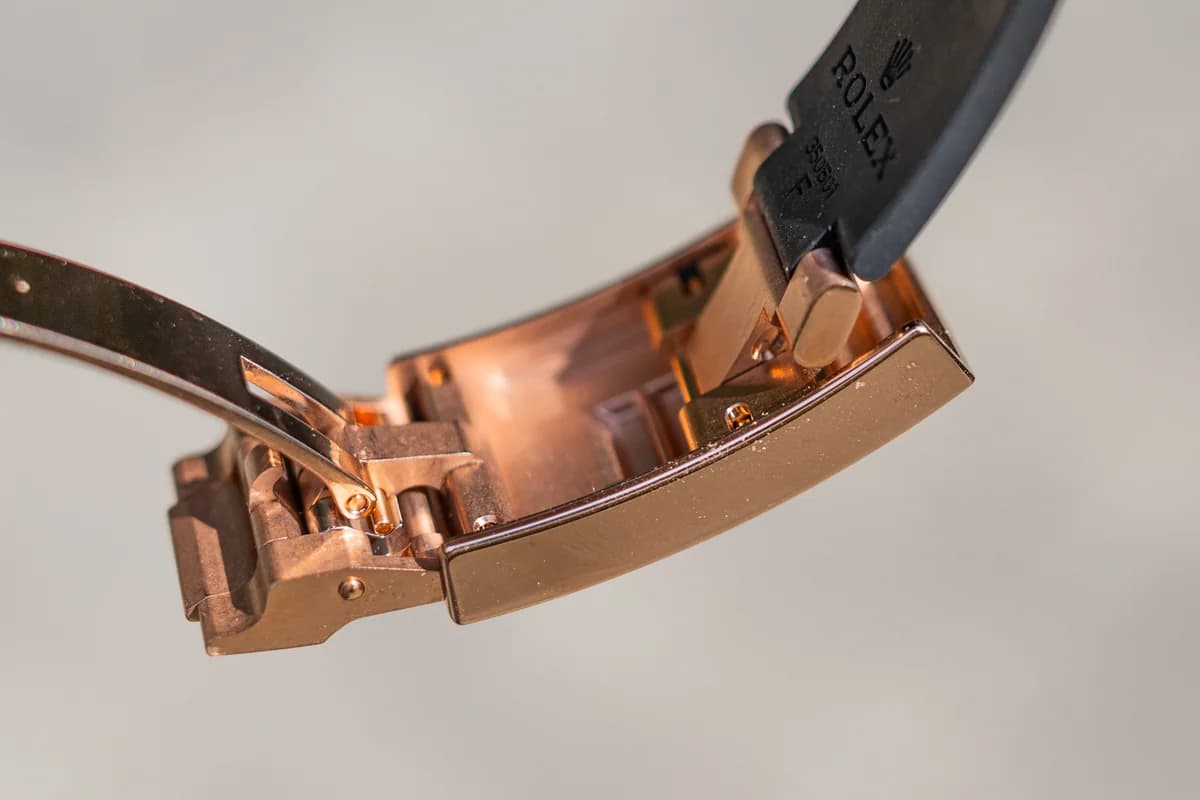
The sizing of the Oysterflex is done through Rolex's letter-based system rather than removable links, and the fit is adjusted at the point of purchase. The Oysterlock folding clasp is cast in Everose gold to match the case, and it includes the Rolex Glidelock extension system that allows approximately 15 millimeters of micro-adjustment. On a rubber strap, this matters. Rubber does not have the half-link or micro-adjust options of a metal bracelet. The Glidelock on the Oysterflex clasp means you can fine-tune the fit throughout the day as your wrist size changes with temperature and activity. It is a small detail that makes a real difference in daily comfort.
The Caliber 4131 inside the 126515LN is mechanically identical to the movement in the steel 126500LN. I covered the 4131 extensively in the Godzilla article, so I will keep this focused on what is relevant to the Everose context. The movement runs at 28,800 vibrations per hour, stores 72 hours of power, uses 44 jewels, and earns the Superlative Chronometer certification at minus 2 plus 2 seconds per day. The Chronergy escapement in nickel-phosphorus provides antimagnetic properties and approximately 15 percent greater energy efficiency than a traditional Swiss lever escapement. The vertical clutch delivers zero-lag chronograph starts. The column wheel provides clean, precise pusher feel.
What is worth noting in the Everose context is the rotor. The 4131 uses a skeletonized bidirectional rotor, and in the Everose models that rotor is finished in Everose gold. Since the 126515LN has a solid caseback, this is not something you will ever see without opening the watch, but it reflects Rolex's approach to precious metal models. Even the parts you cannot see are finished to match the case material. The bridges carry Rolex's proprietary Cotes de Geneve decoration, and the overall finishing on precious metal Daytonas receives attention that the steel versions do not, even though the movement architecture is identical.
The case dimensions of the 126515LN match the steel Daytona exactly. 40mm in diameter, 11.90mm thick, approximately 47.6mm from lug to lug, and 20mm lug width. The water resistance is 100 meters with screw-down pushers and a Triplock crown. Where it diverges is weight. The 126515LN on Oysterflex weighs approximately 142 grams. Gold is denser than steel, but the Oysterflex weighs substantially less than the Oyster bracelet. The net result is a watch that carries the density of gold in the case and the lightness of rubber on the wrist. At 11.90mm thick, it slides under a shirt cuff without catching. The 47.6mm lug-to-lug works well on wrists from about 6.25 inches up to 7.5 inches, which covers most people comfortably. On my 6.5-inch wrist, the Everose Daytona on Oysterflex sits perfectly flat with no overhang.
I want to be straightforward about the tradeoffs of this configuration because I think honest conversation about them is more useful than pretending they do not exist. The most obvious one is scratch susceptibility. 18-karat gold sits at approximately 2.75 on the Mohs hardness scale. For comparison, stainless steel is 5.5 to 6.5. That means the Everose case, the lugs, the crown, and the chronograph pushers will pick up micro-scratches in daily wear far more quickly than their steel equivalents. The raised bezel frame around the Cerachrom insert is particularly exposed. The ceramic bezel itself is nearly indestructible at around 9 on the Mohs scale, but the gold surrounding it will show evidence of life quickly. Some people love patina on gold. I appreciate it on vintage pieces. On a current-production watch, it is something to know going in.
The Oysterflex itself is not user-swappable. Unlike quick-release spring bars on watches from Cartier, IWC, or even Tudor, the Oysterflex is fitted by Rolex service centers. You cannot swap between rubber and a metal bracelet for different occasions without tools and expertise. The Oysterflex is a commitment to one wearing style. I wish Rolex would develop a proprietary quick-release system for the Oysterflex, because the watch would benefit enormously from the ability to swap to the Oyster bracelet for a formal dinner and back to Oysterflex for the weekend. That versatility would make an already compelling watch even more complete.
The other honest observation is that the Caliber 4131 is identical across the Daytona range. There is no horological premium in the Everose beyond finishing details. The movement accuracy, the power reserve, the chronograph function, all of it is the same as the steel Godzilla. What you are choosing is Everose, the Oysterflex, and the sundust dial. Whether that combination resonates depends entirely on whether those materials speak to you more than steel and a bracelet.
Styling is where this watch genuinely separates from the rest of the Daytona range, and it is also where the conversation about skin tone becomes relevant. On darker skin, warm gold creates a layered warmth that cool steel simply does not. The copper undertones in Everose sit in the same color family as melanin-rich complexions. The sundust dial amplifies that warmth. Against brown skin, this watch creates the same kind of harmonic resonance that I described with the Grand Lange 1 and the Zeitwerk. It is not just flattering. It is genuinely beautiful in a way that photographs rarely capture because the warmth only fully registers when the metal is against living skin in natural light.
For lighter skin tones, the contrast works differently but still well. The Everose reads as a warm accent against pale skin, and the black Oysterflex grounds the composition so the gold does not overwhelm. It is one of the few gold watches I have seen that looks equally compelling across a wide range of complexions, and I think the black bezel and strap deserve most of the credit for that.
The black Oysterflex adds to the versatility. A full Everose bracelet limits your wardrobe choices because the visual weight of all that gold needs to be balanced. The Oysterflex neutralizes that problem. The watch works with a charcoal Cesare Attolini cashmere sport coat. It works with a navy linen shirt. It works with a black t-shirt. The rubber disappears visually, and the Everose case becomes an accent rather than a statement. I notice that people who gravitate toward this configuration tend to dress with less formality overall. The Oysterflex Daytona is the gold watch for people who do not dress like they wear a gold watch.
The 126515LN in Everose with the sundust dial on Oysterflex is the Daytona that I find myself thinking about most. The steel Godzilla is more versatile. The platinum is more exclusive. The yellow gold is more traditional. But this configuration does something that none of the others do. It takes the warmth of rose gold, the engineering of a bracelet that should not exist, and a dial color that shifts with every angle of light, and it assembles them into a chronograph that feels contemporary in a way that gold watches almost never do. The Oysterflex was the key. Without it, this is just another gold Daytona. With it, it is the gold Daytona that a new generation of collectors actually wants to wear.
Also in Sport Chronographs & GMT