
Rolex
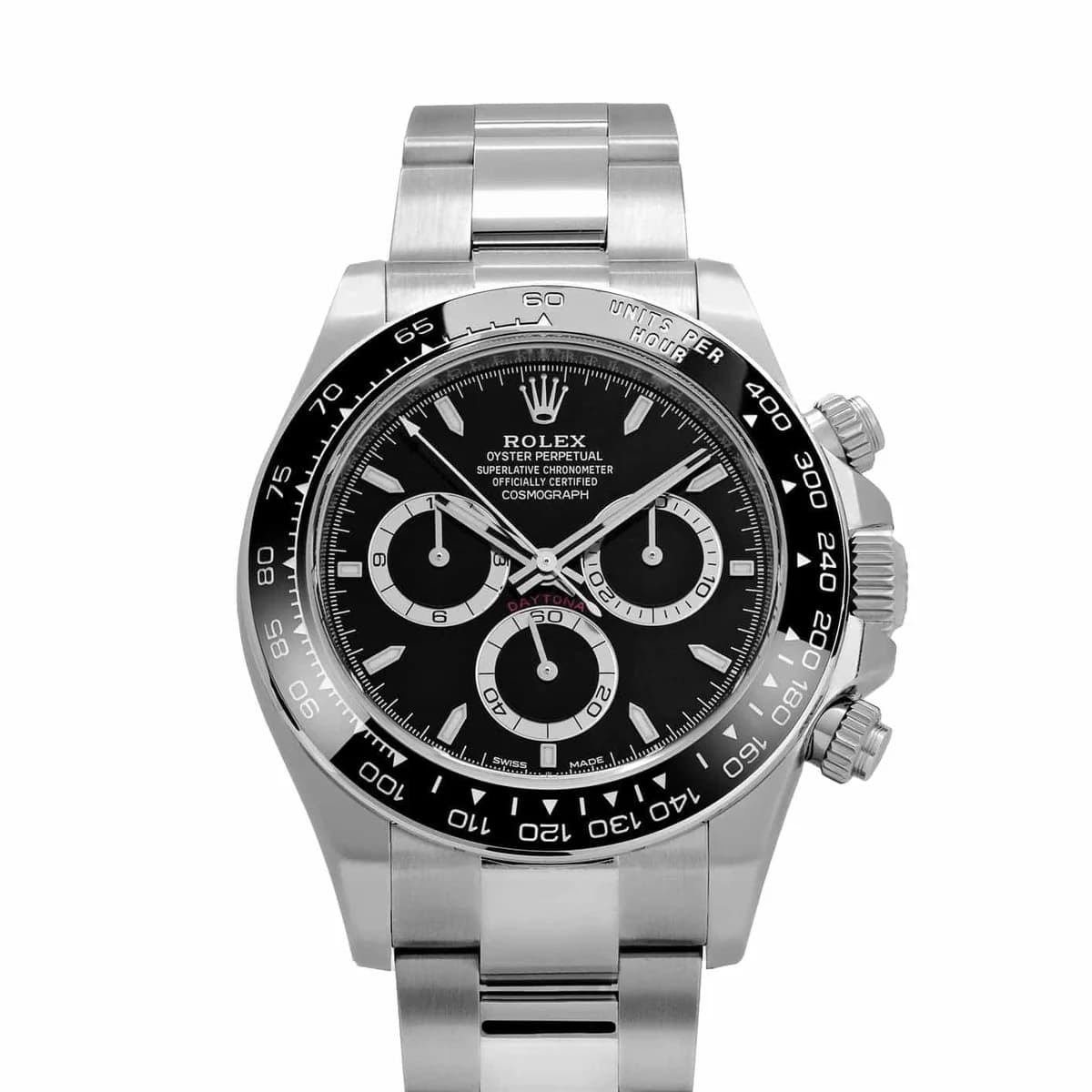
Daytona Steel Black Dial "Godzilla"
126500LN
The Cosmograph Daytona exists because of a racetrack. In 1962, Rolex became the official timekeeper of the Daytona International Speedway in Florida. The following year, in 1963, the first Cosmograph Daytona rolled out as reference 6239. It was a manually wound chronograph with a tachymetric scale on the bezel, designed specifically so racing drivers could calculate average speed over a measured distance by glancing at their wrist. Before the 6239, chronographs existed, but Rolex had never made one with a dedicated tachymeter. The Speedway partnership gave them the context and the name, and the Daytona was born.
To understand why the Daytona became what it is today, I think it helps to understand where it started. The reference 6239 was a 37mm manually wound chronograph with pump pushers, a Valjoux 72 based movement, and an acrylic crystal. It was not an instant hit. Early Daytonas sat in display cases. The exotic dial variants with contrasting sub-registers and art deco style numerals were particularly difficult to sell. Dealers discounted them. Nobody wanted the funky dials. Then Paul Newman showed up.
In 1968, Joanne Woodward gave Paul Newman a reference 6239 with one of those exotic dials and "Drive Carefully Me" engraved on the caseback. Newman had just discovered motorsport, and the gift was both a love note and a gentle warning. He wore that watch constantly for decades, racing in it, living in it, and the exotic dial became synonymous with his name. On October 26, 2017, that exact watch sold at Phillips in New York after a 12-minute bidding war that started at ten million and kept climbing. The exotic dial that dealers originally could not give away became the most valuable wristwatch ever sold at auction at the time. I find that story endlessly fascinating because it shows how completely unpredictable the watch market can be. The thing nobody wanted became the thing everybody wanted, and it took one person wearing it with genuine indifference to create that shift.
The Daytona's evolution through its references tells a story about Rolex's patience and precision. After the 6239 came a series of manual-wind references through the 1960s and 1970s. Screw-down pushers arrived with the 6263 and 6265, improving water resistance for the pushers themselves. But the real turning point was 1988 with the reference 16520. That was the first automatic Daytona, and Rolex did something unusual. They went to Zenith. The El Primero, one of the first automatic chronograph movements ever made in 1969, became the base for what Rolex designated the Caliber 4030. Rolex modified it heavily, reducing the frequency from 36,000 vph down to 28,800 vph for improved longevity, adding their own regulating components, but the architecture was Zenith's. The 16520 also moved the case to 40mm, added crown guards, and swapped the acrylic crystal for sapphire. It was a different watch in nearly every way.
Then in 2000, Rolex did what Rolex always eventually does. They brought it in-house. The reference 116520 debuted with the Caliber 4130, Rolex's first fully in-house chronograph movement. The 4130 was a clean-sheet design with a vertical clutch for zero-lag chronograph starts, a column wheel for precise pusher feel, and a layout that placed the chronograph mechanism on the dial side of the movement. That architectural decision reduced the total component count and made the movement thinner. The 4130 ran the Daytona for over two decades, which is remarkable longevity for a high-end chronograph caliber. In 2016, the reference 116500LN arrived with the same 4130 inside but added the black Cerachrom ceramic bezel that transformed how the Daytona looked. LN stands for Lunette Noire, French for black bezel.
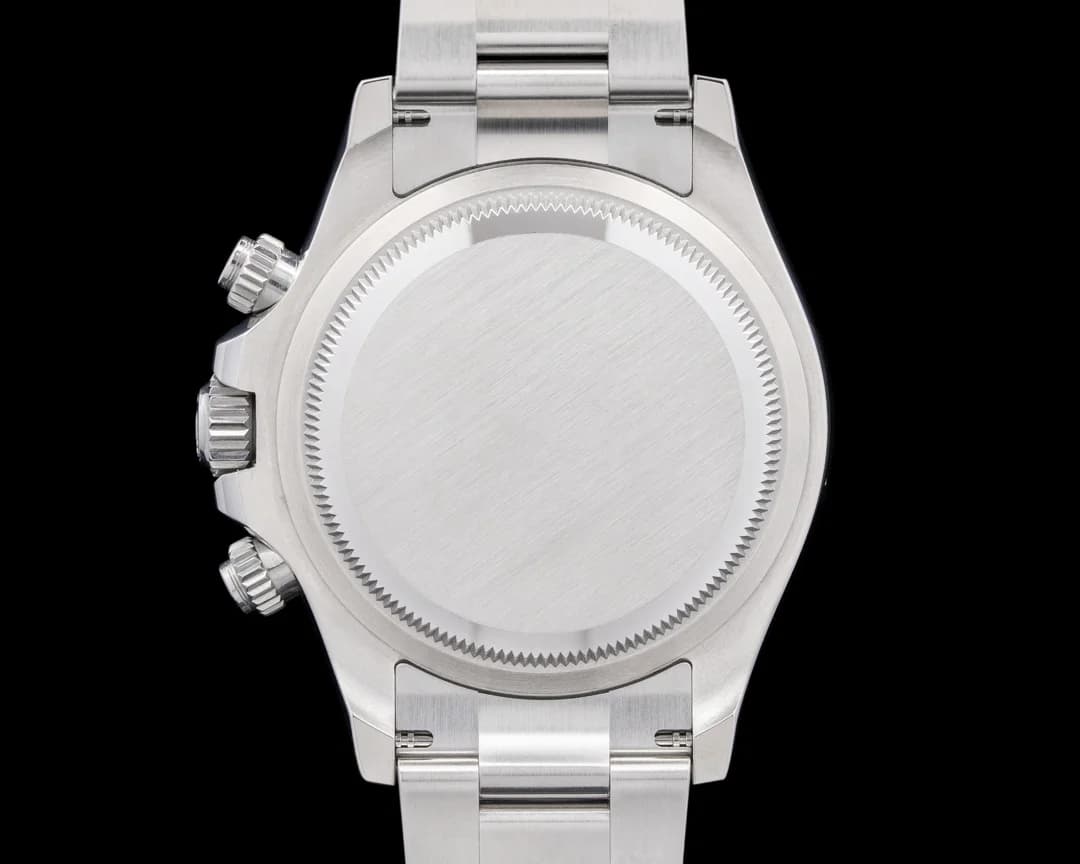
The 126500LN is the current chapter. Introduced at Watches and Wonders 2023 for the Daytona's 60th anniversary, it brought the Caliber 4131 and a redesigned case that changed more than most people realize at first glance. I want to spend some time on the movement because I think the 4131 is genuinely interesting in what it tells you about how Rolex thinks about mechanical evolution.
The Caliber 4131 is 30.50mm in diameter, beats at 28,800 vibrations per hour (4 Hz), stores 72 hours of power reserve, and uses 44 jewels. It replaced the Caliber 4130 that had been running since 2000, and the core philosophy of the upgrade was subtraction. Rolex reduced the total component count of the chronograph mechanism. Fewer parts means fewer potential failure points, simpler servicing, and in theory, greater long-term reliability. The Chronergy escapement, which Rolex developed for the 32xx series movements and then adapted here, is made from nickel-phosphorus. That material choice makes it completely insensitive to magnetic fields, which matters more now than it did twenty years ago because we carry magnets in our pockets all day in the form of phones. The escapement geometry delivers approximately 15 percent greater energy efficiency than a traditional Swiss lever escapement. That efficiency, combined with barrel architecture improvements, is how Rolex gets 72 hours out of a chronograph movement that runs at 4 Hz. Three full days. For a chronograph, that is genuinely impressive because the chronograph complication inherently consumes energy.
The movement uses a vertical clutch for the chronograph engagement, which means the seconds hand starts instantly when you press the top pusher with zero stutter or lag. A horizontal clutch, by contrast, can sometimes cause the chronograph seconds hand to jump slightly when activated. The column wheel controls the pusher interactions with mechanical precision. These are not new features. The 4130 had them too. But the 4131 refines the execution. The bridges now wear Rolex Cotes de Geneve decoration, which is Rolex's own take on Geneva stripes with polished grooves that catch light differently than the traditional version. The rotor is skeletonized and bidirectional, winding the mainspring in both directions of rotation for maximum efficiency. The Parachrom hairspring is manufactured by Rolex in a paramagnetic alloy, resistant to temperature variations and shocks, paired with Paraflex shock absorbers on the balance.
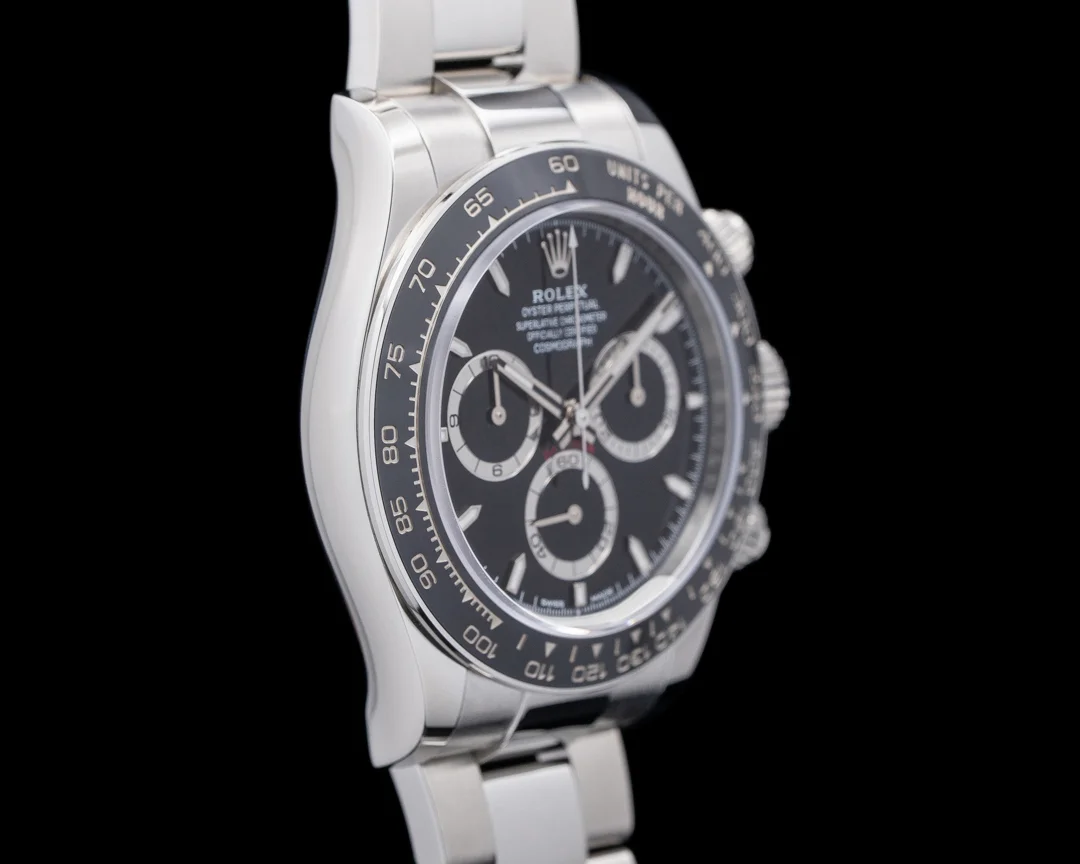
The case itself deserves attention because the changes are subtle but meaningful. At 40mm wide and 11.9mm thick, the 126500LN is roughly half a millimeter thinner than the outgoing 116500LN. Half a millimeter does not sound like much on paper, but on the wrist it translates to noticeably better cuff clearance. The lug-to-lug span is approximately 47.8mm, and the lugs themselves have been redesigned with a more aggressive downward curve that pulls the watch closer to the wrist. The previous generation had slightly asymmetric lugs because of the crown guard integration. The 126500LN balances the proportions more evenly. At roughly 143 grams on the bracelet, it carries real presence without being heavy. For perspective, a Submariner is heavier, a GMT-Master II is heavier, and the Sea-Dweller is in a different weight class entirely. The Daytona is the lightest of the Rolex Professional models, and it wears like it.
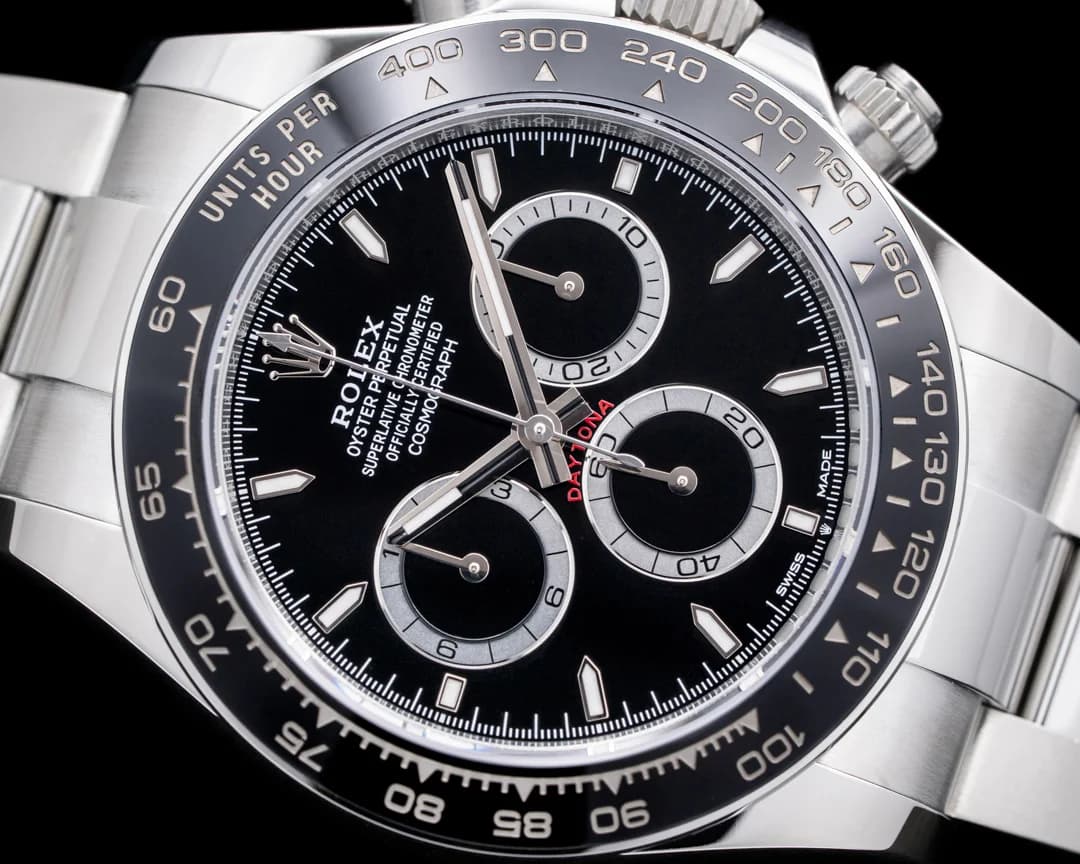
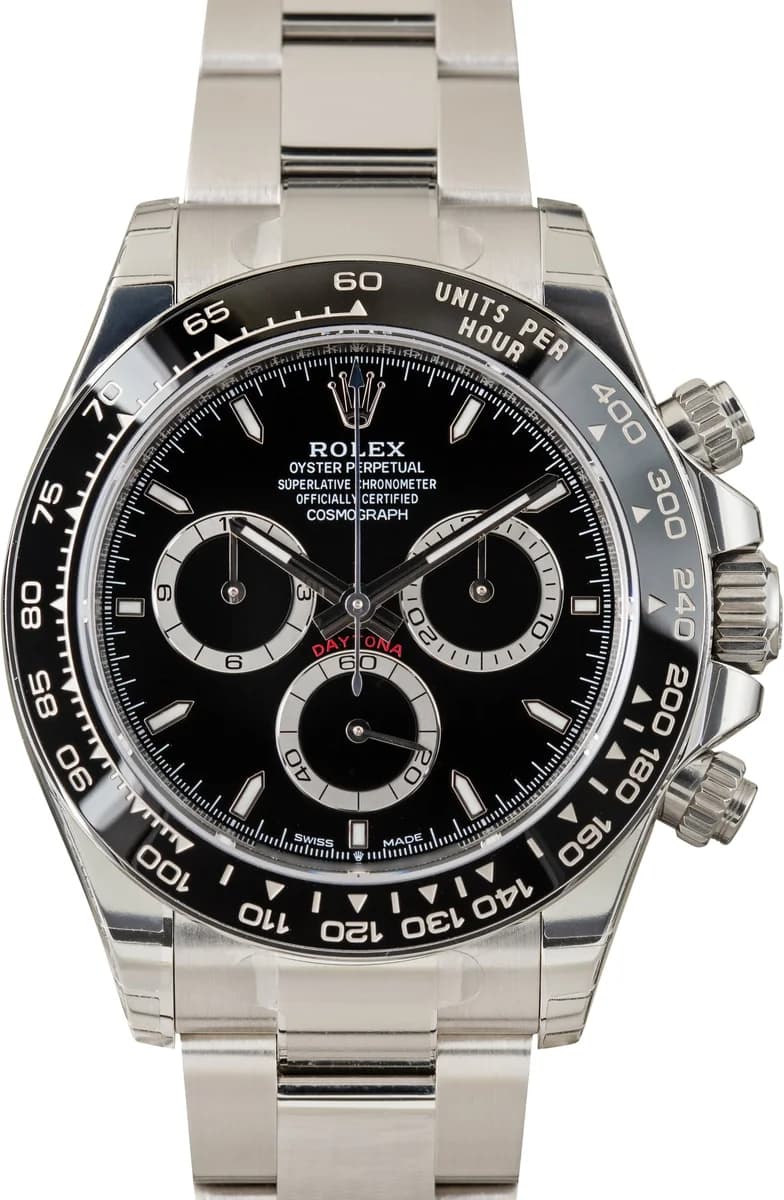
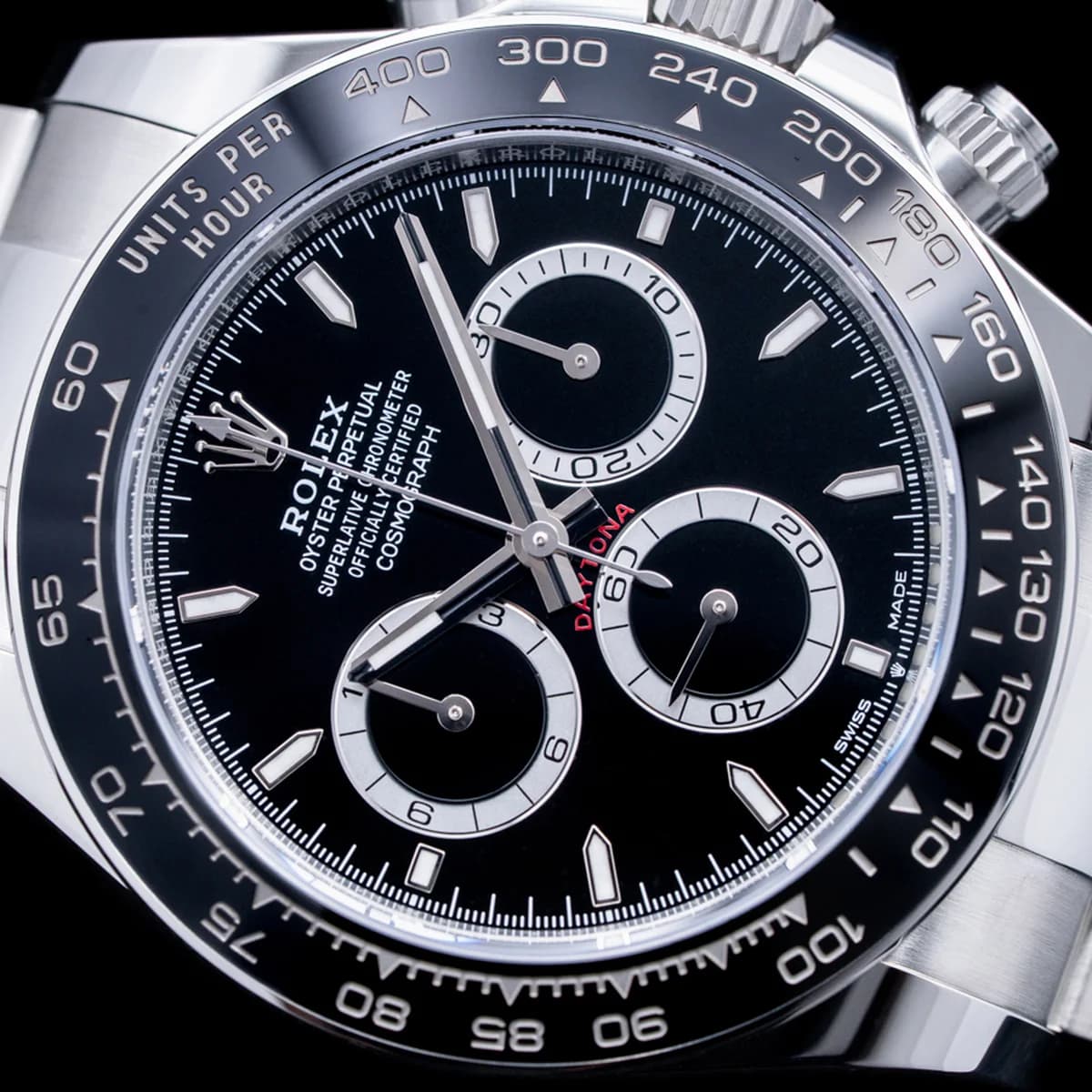
The Cerachrom bezel is one of my favorite things about the modern Daytona. The monobloc insert is manufactured from a single piece of ceramic. The tachymetric scale measures speeds up to 400 units per hour. The numerals and graduations are recessed into the ceramic and then coated with platinum via PVD (Physical Vapour Deposition), which gives them a clean metallic legibility against the matte black ceramic. Ceramic is essentially scratchproof in daily wear. It measures around 9 on the Mohs scale, harder than any steel or precious metal. UV radiation does not affect the color. The bezel will look identical in thirty years. The old aluminum bezels on vintage Daytonas would scratch, fade, and develop patina over decades. Some collectors love that patina on vintage pieces, and I understand the appeal completely. A faded bezel on a vintage 6263 tells a story about where the watch has been and what it has survived. But for a modern daily wearer, the Cerachrom is objectively permanent, and there is real value in knowing the watch will look the same in three decades as it does today.
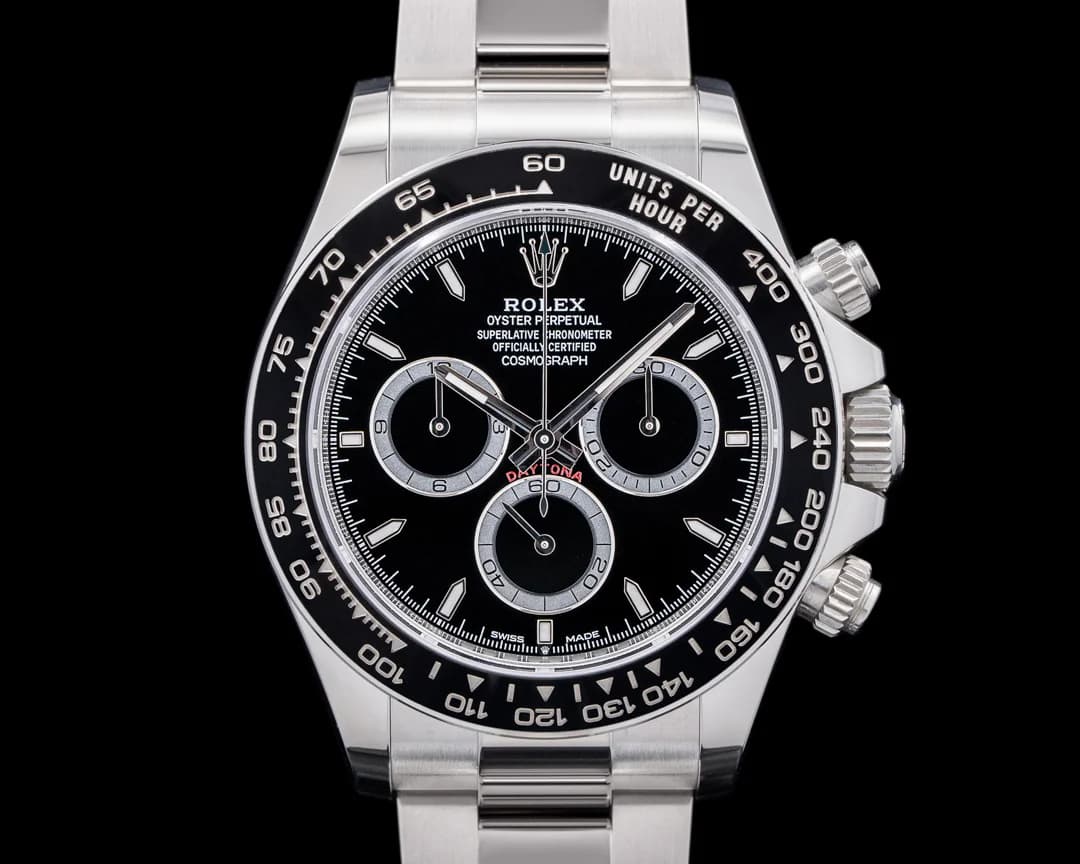
What distinguishes the 126500LN from the previous 116500LN in the bezel area is a band of polished Oystersteel that frames the Cerachrom insert. This steel frame edge serves two purposes. It protects the ceramic from direct impact against hard surfaces (ceramic is hard but brittle, it resists scratches but can crack under sharp impact), and it creates a visual detail that catches light and adds dimension to the bezel. I appreciate this kind of engineering because it solves a real problem without compromising the aesthetic. Rolex could have left the ceramic exposed and accepted the crack risk. Instead they engineered around it.
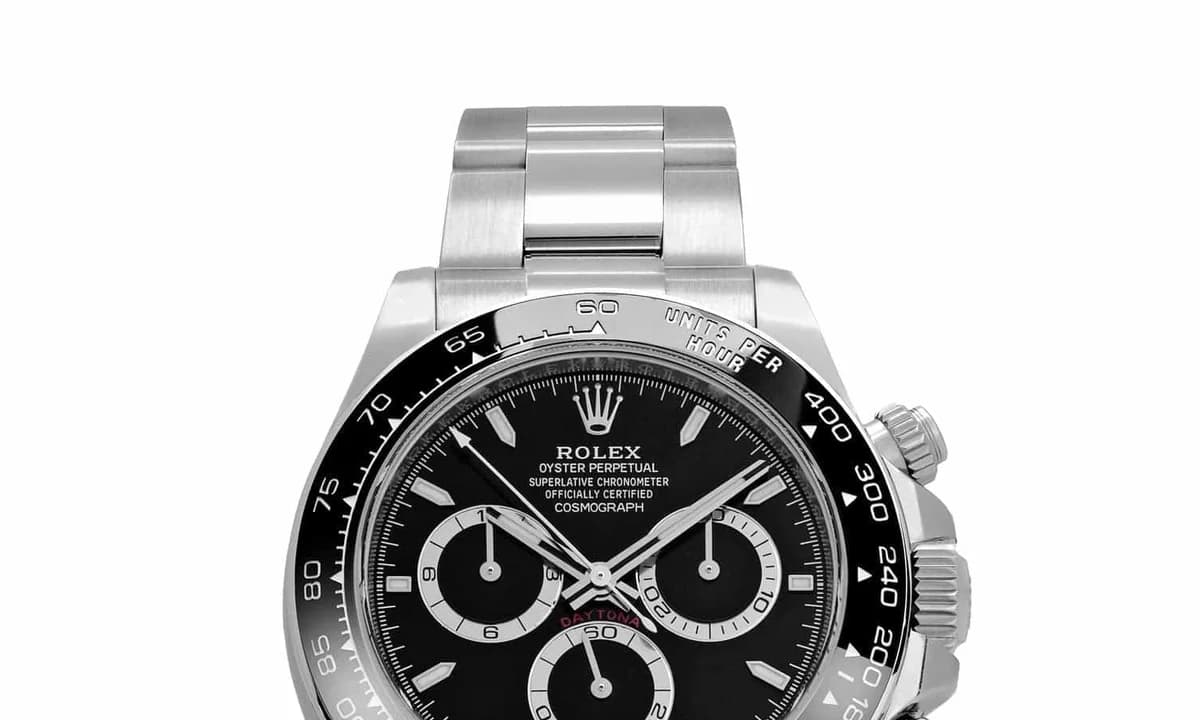
The case and bracelet are 904L Oystersteel. Rolex started experimenting with 904L in the 1980s after noticing corrosion in the case threads of dive watches returned for service. Standard 316L stainless steel, which the rest of the watch industry uses, is excellent for most purposes, but 904L has higher concentrations of chromium, nickel, and molybdenum, plus copper in the alloy. The result is superior corrosion resistance, particularly in saltwater and acidic environments, and it polishes to a higher luster than 316L. There is a brightness to Rolex steel that is subtle but visible when you put it next to a watch made from 316L. Rolex began the transition with the Sea-Dweller in 1985 and had migrated their entire steel range to 904L by the early 2000s. It is harder to machine than 316L, which is one reason other brands have not followed, but the result is a steel that genuinely looks and performs differently.
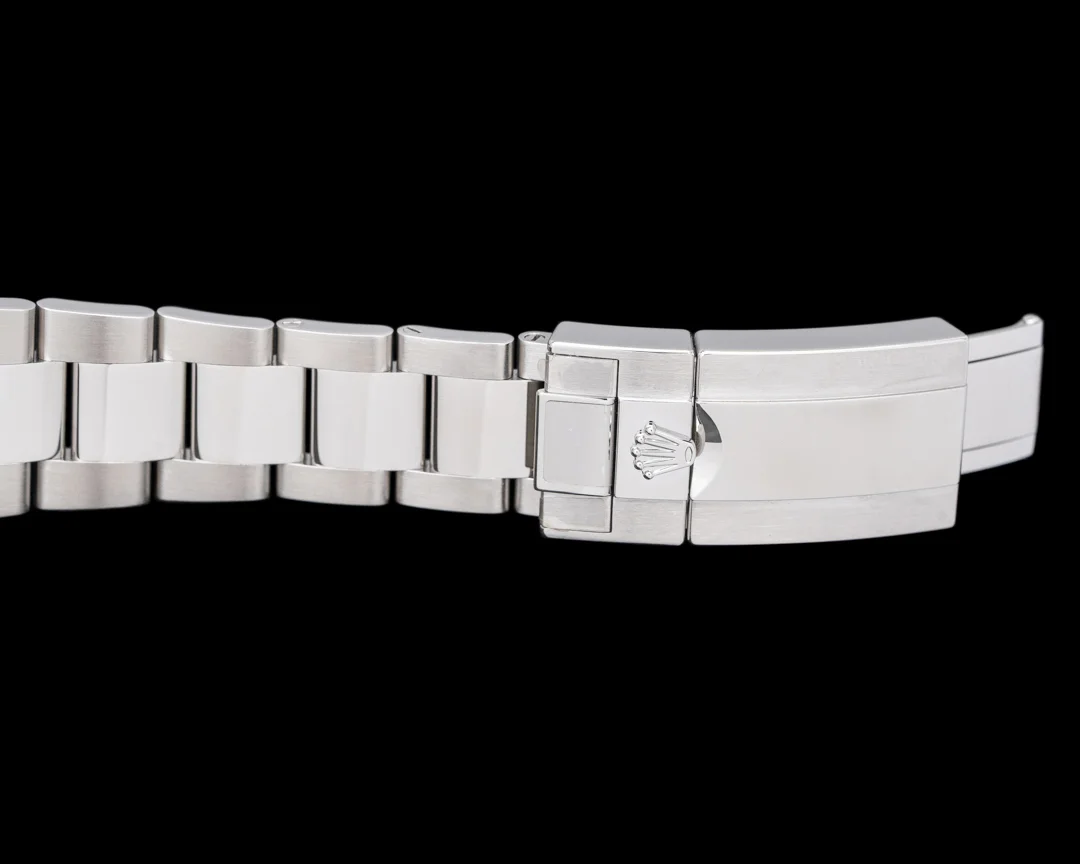
The three-link Oyster bracelet on the 126500LN (reference 78HA00) has polished center links and satin-finished outer links. The Oysterlock folding safety clasp includes the Easylink comfort extension, which gives approximately 5mm of on-the-fly adjustment. I notice the polished center links immediately on any Rolex because polished steel shows every micro-scratch. The satin-finished outer links hide wear far better. It is a design choice that prioritizes visual impact over practical longevity. On a daily wear piece, those polished links will show evidence of life within weeks. Some people love that lived-in look. Others find it frustrating. In my experience, a light buff with a Cape Cod cloth every few months keeps the polished links looking fresh without needing a professional polish, but it is something to know going in.
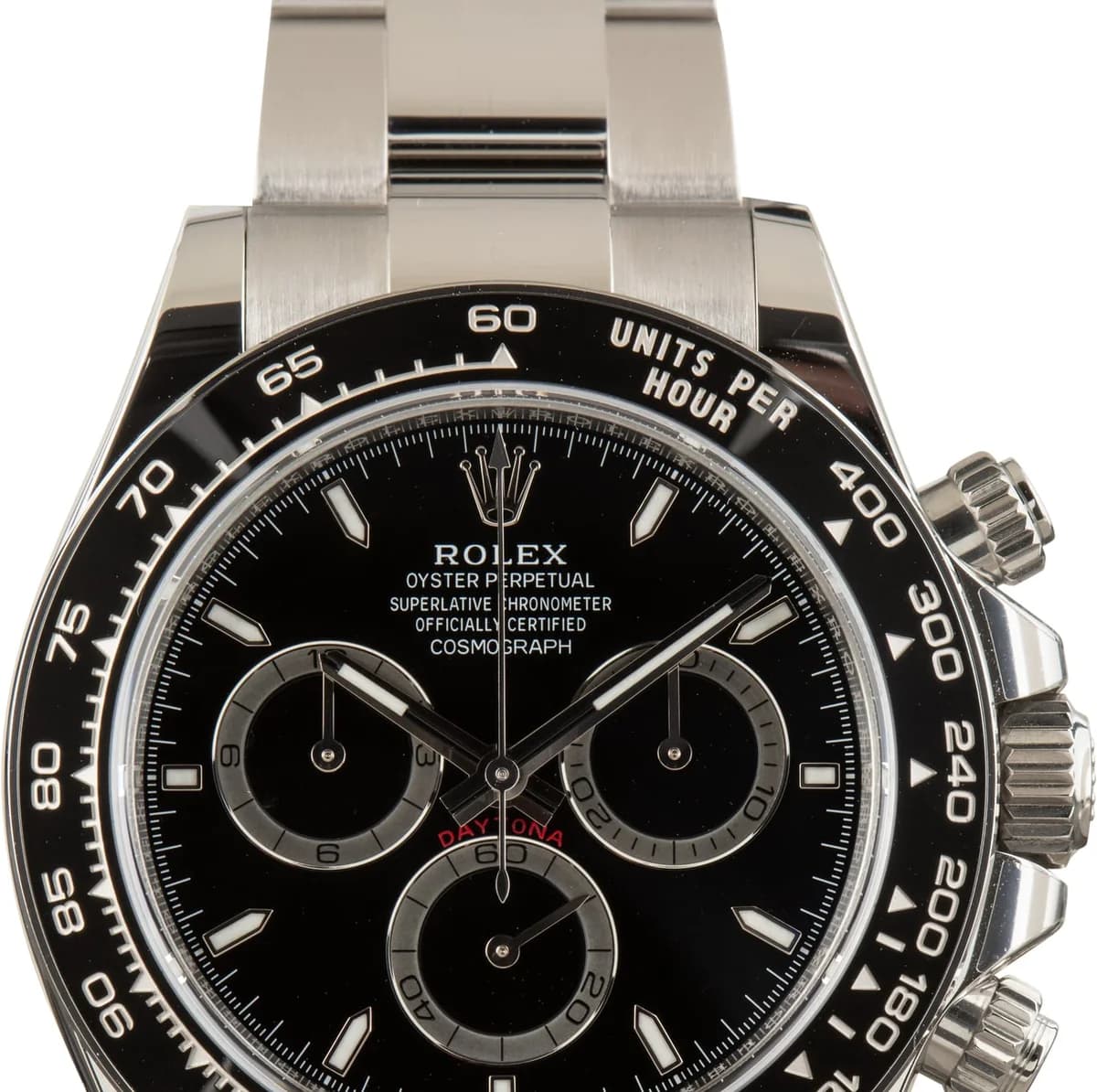
The black dial with white sub-registers is why collectors in Japan, China, and Hong Kong started calling this the Godzilla. The white dial version with black sub-registers is the Panda. Of the two, the Panda gets more attention in Western markets, but I find the Godzilla more compelling for daily wear. The black dial is more forgiving in different lighting conditions and pairs with virtually anything. The contrast between the black dial and the white registers creates exceptional timing readability, which is the entire point of a chronograph. The Chromalight lume on the hour markers and hands glows blue in darkness and lasts longer than standard luminescent material. Rolex claims up to eight hours of visibility after exposure to light.
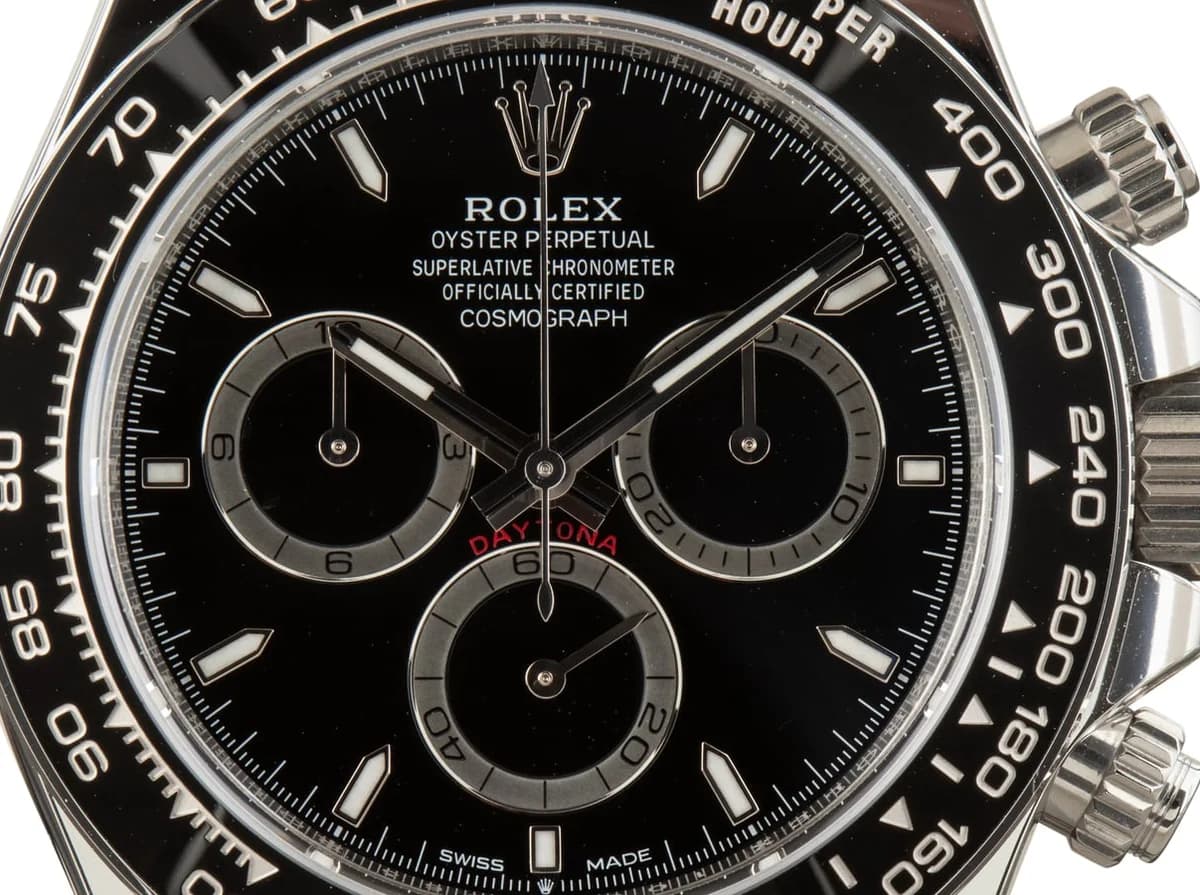
I want to be honest about the things that I wish were different. The water resistance is 100 meters. For a sport watch from Rolex in 2023, that is modest. The Submariner is 300 meters. The GMT-Master II is 100 meters too, so the Daytona is not alone, but when Omega's Speedmaster now has a manual-wind model rated to 50 meters and their automatic versions push higher, and when other chronographs like the Zenith Chronomaster Sport offer 100 meters as well, I sometimes wonder if Rolex could push this number without adding thickness. The screw-down pushers and Triplock crown already provide significant sealing. It is not a practical concern for most owners since nobody is diving with a Daytona, but for the engineering-minded, it feels like a spec that could be higher. The other thing I notice is the amount of text on the dial. Between "Oyster Perpetual," "Cosmograph," "Daytona," and "Superlative Chronometer Officially Certified," the dial carries a lot of printed words. Every word is there for a legal or branding reason, but visually, I think the dial would breathe better with less.
Styling is where the Godzilla quietly excels. A black dial chronograph on a steel bracelet is about as versatile as watches get. It works with a charcoal Isaia suit. It works with a navy linen blazer. It works with a weekend polo shirt. The 40mm case does not overwhelm a 6.5-inch wrist, and the 11.9mm thickness means it disappears under a cuff completely. On darker skin tones, the contrast between the polished steel and the black dial is clean and sharp. It does not compete with the warmth of your complexion the way some watches with lighter or warmer dials can. It just sits there and looks right.
The Daytona waitlist at authorized dealers remains the most discussed topic in the hobby. Multi-year waits are common, and many dealers have closed their interest lists entirely. It is not a chronological queue. It is a discretionary system managed by individual boutiques who prioritize existing clients and purchase history. Getting a steel Daytona requires either extraordinary patience, an existing relationship, or walking into the right boutique at exactly the right moment. Whether the wait is worth it is a personal question, and I think there is no universal answer. What I can say is that the 126500LN, when you finally hold it, is a watch that justifies the mythology around it. The finishing, the weight, the movement, the way it sits on the wrist. It all works.
The full arc of the Daytona is one of the best stories in watchmaking. From a manually wound chronograph that sat unsold in display cases in the 1960s, to the most famous watch auction in history, to a manually wound era, to Zenith, to fully in-house, to ceramic, to the current 4131. Six decades of continuous refinement. Every generation kept what worked and fixed what time exposed as a limitation. The acrylic crystal became sapphire. The pump pushers became screw-down. The Valjoux became Zenith became fully in-house. The aluminum bezel became ceramic. The case got thinner. The power reserve grew. And at every step, Rolex moved slowly and deliberately. They never rushed a generation to market. The 4130 ran for 23 years before they replaced it. In an industry where some brands refresh their movements every five or six years to generate press coverage, Rolex waited until the improvement was genuine, not cosmetic. That patience is not exciting, but it produces watches that feel finished in a way that few competitors match.
After spending real time with this watch, the thing that stays with me is how complete it feels. There is no single feature that makes me say this is the best chronograph ever made. It is the accumulation of a hundred small decisions, each one made correctly, that produces something where nothing feels missing and nothing feels excess. The Godzilla does not announce itself. It does not demand attention. It just works, at everything, all the time. Philippe Dufour, widely regarded as the greatest living watchmaker, wears a steel Daytona "Panda" ref. 116500LN as part of his daily rotation. When the man who hand-finishes every surface of a $500,000 movement reaches for a Rolex chronograph, it says something about what the caliber 4131 delivers. And for a tool originally designed to measure speed at a racetrack in Florida, that quiet competence sixty years later is the highest compliment I can give it.
Also in Sport Chronographs & GMT