
Rolex
GMT-Master II "Batgirl"
126710BLNR
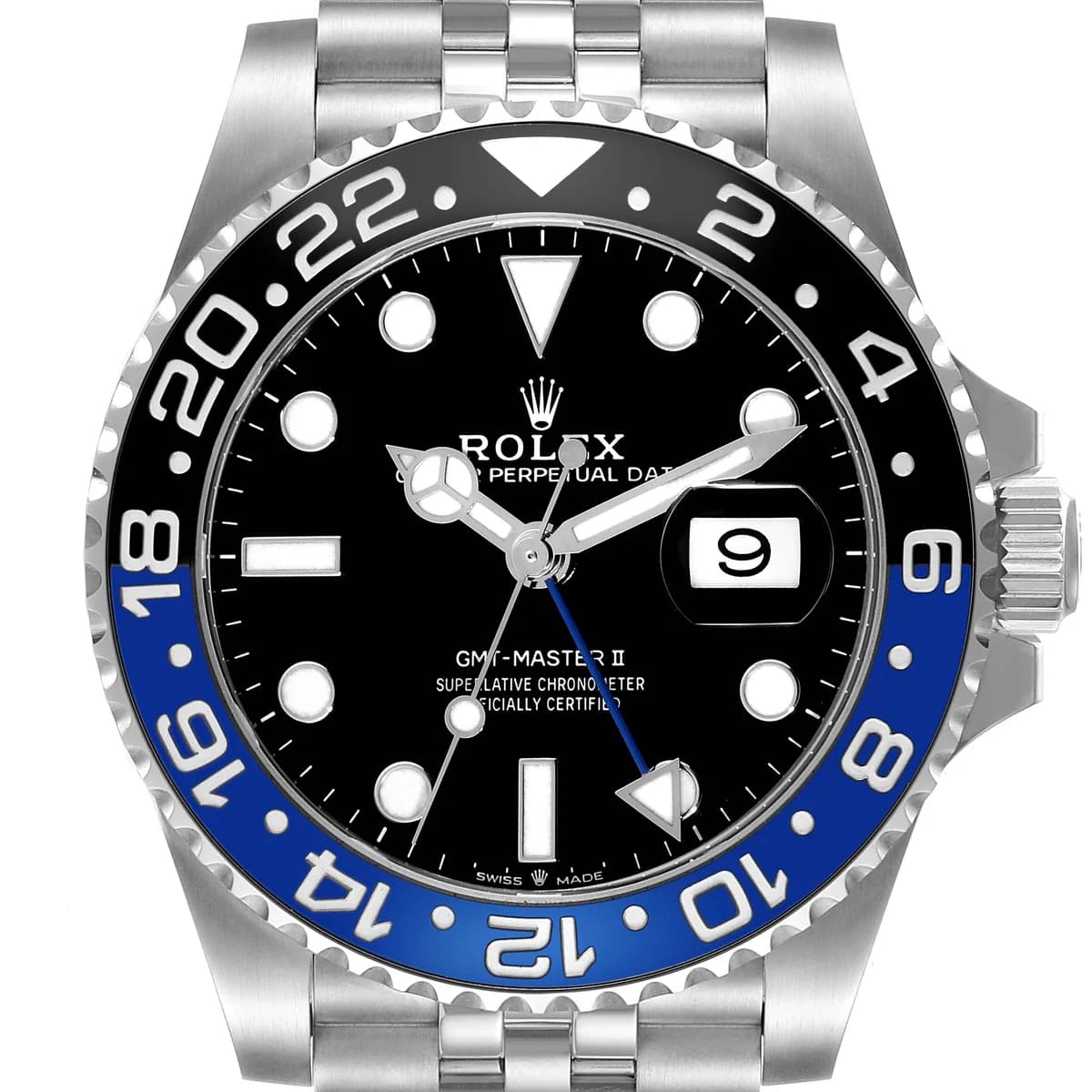
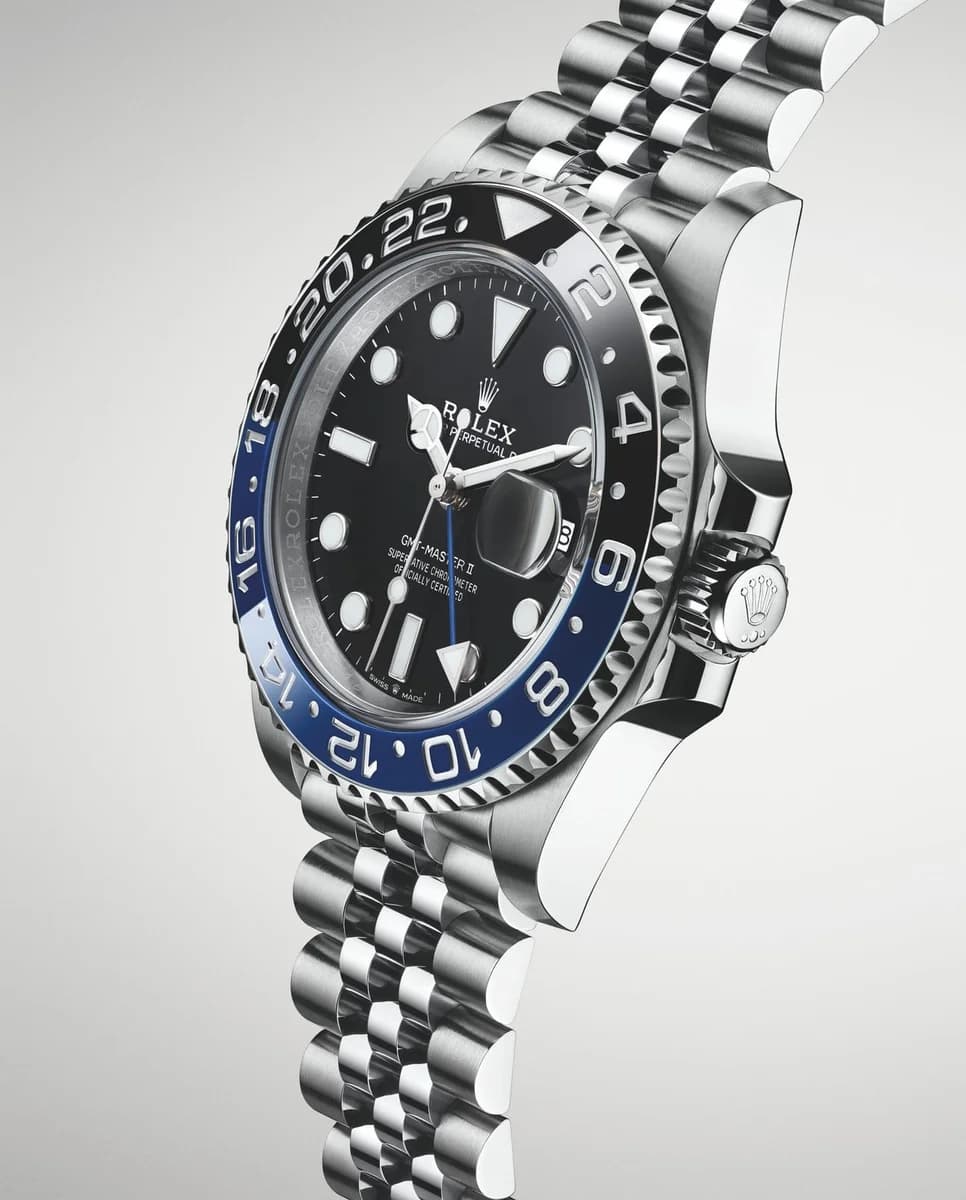
The Jubilee bracelet changed everything about the GMT-Master II. I know that sounds like an overstatement for a bracelet swap, but when Rolex debuted the 126710BLNR on the five-link Jubilee at Baselworld 2019, it fundamentally altered how the blue and black GMT reads on the wrist. The watch community recognized it immediately by giving the Jubilee version its own name. The Oyster version is the Batman. The Jubilee is the Batgirl. Same reference number, same case, same movement, same bezel. Different bracelet, different watch.
The Jubilee has history that goes deeper than most people realize. Rolex introduced it in 1945 specifically for the Datejust, a watch created to celebrate the brand's 40th anniversary. That is where the name comes from. Jubilee. The five-piece link construction was a deliberate departure from the three-piece Oyster that Rolex had been using since the 1930s. The two additional link elements per row create a tighter articulation that distributes weight more evenly across the wrist. Where the Oyster sits on top of the wrist with a defined presence, the Jubilee drapes. It conforms. The smaller links allow air between the bracelet and skin, and the flexibility means the bracelet moves with you rather than riding on you. First-time wearers are almost always surprised by how comfortable a Jubilee feels compared to what they expected from a steel sport watch.
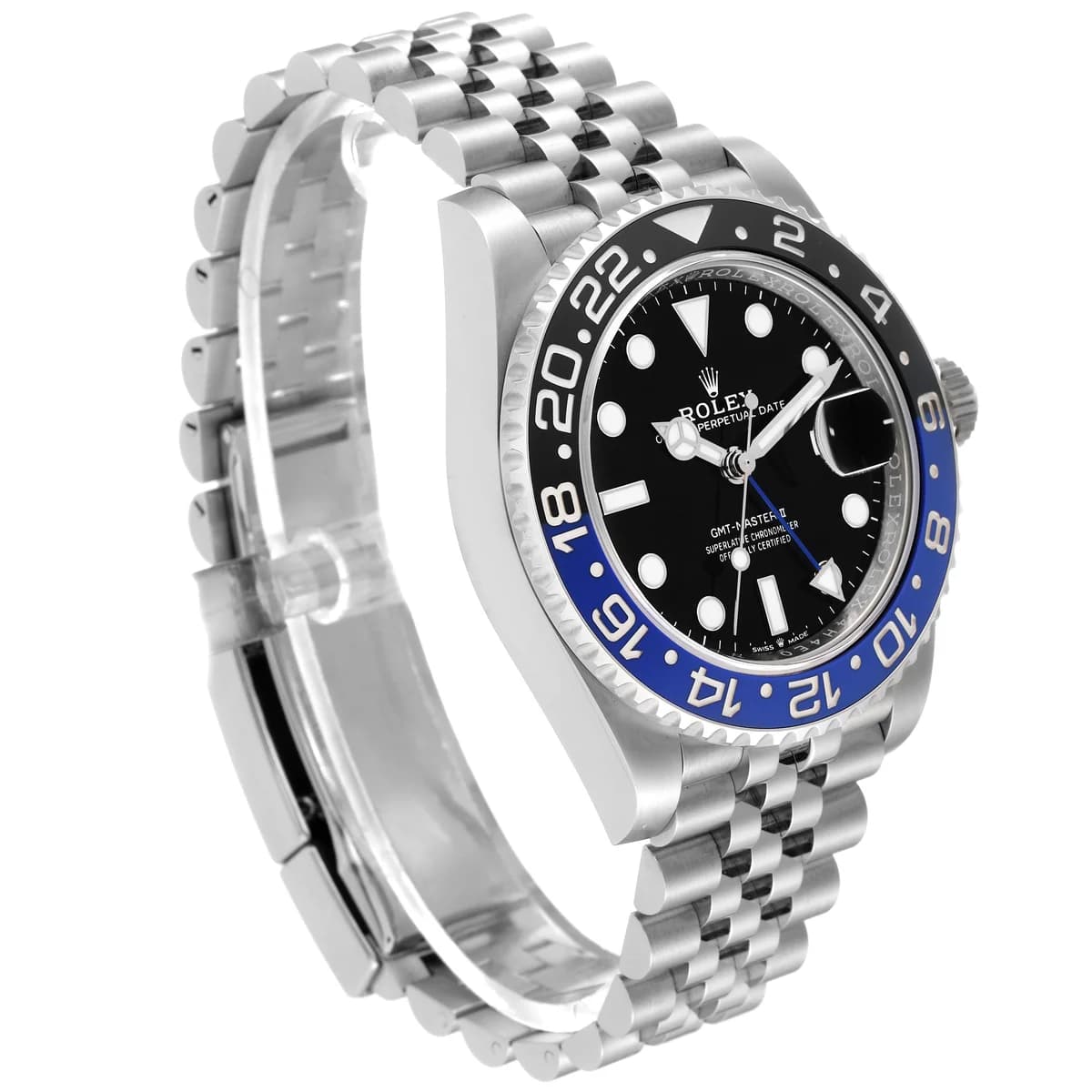
For decades, the Jubilee lived exclusively on dress watches. Datejusts, Day-Dates, the occasional gold GMT for the vintage market. Putting a Jubilee on a steel sports-specification GMT-Master II was a break from Rolex convention that raised eyebrows when the 126710BLNR launched. Sports watches got the Oyster. That was the rule. Rolex had already bent it slightly at Baselworld 2018 by launching the Pepsi GMT (126710BLRO) on a Jubilee, but the Pepsi was red and blue, festive, almost celebratory. The Batman colorway was always the serious one. Blue and black. Understated. The idea of pairing that serious color scheme with the dressier Jubilee bracelet seemed contradictory on paper. In practice, it turned out to be one of the best product decisions Rolex has made in the last decade.
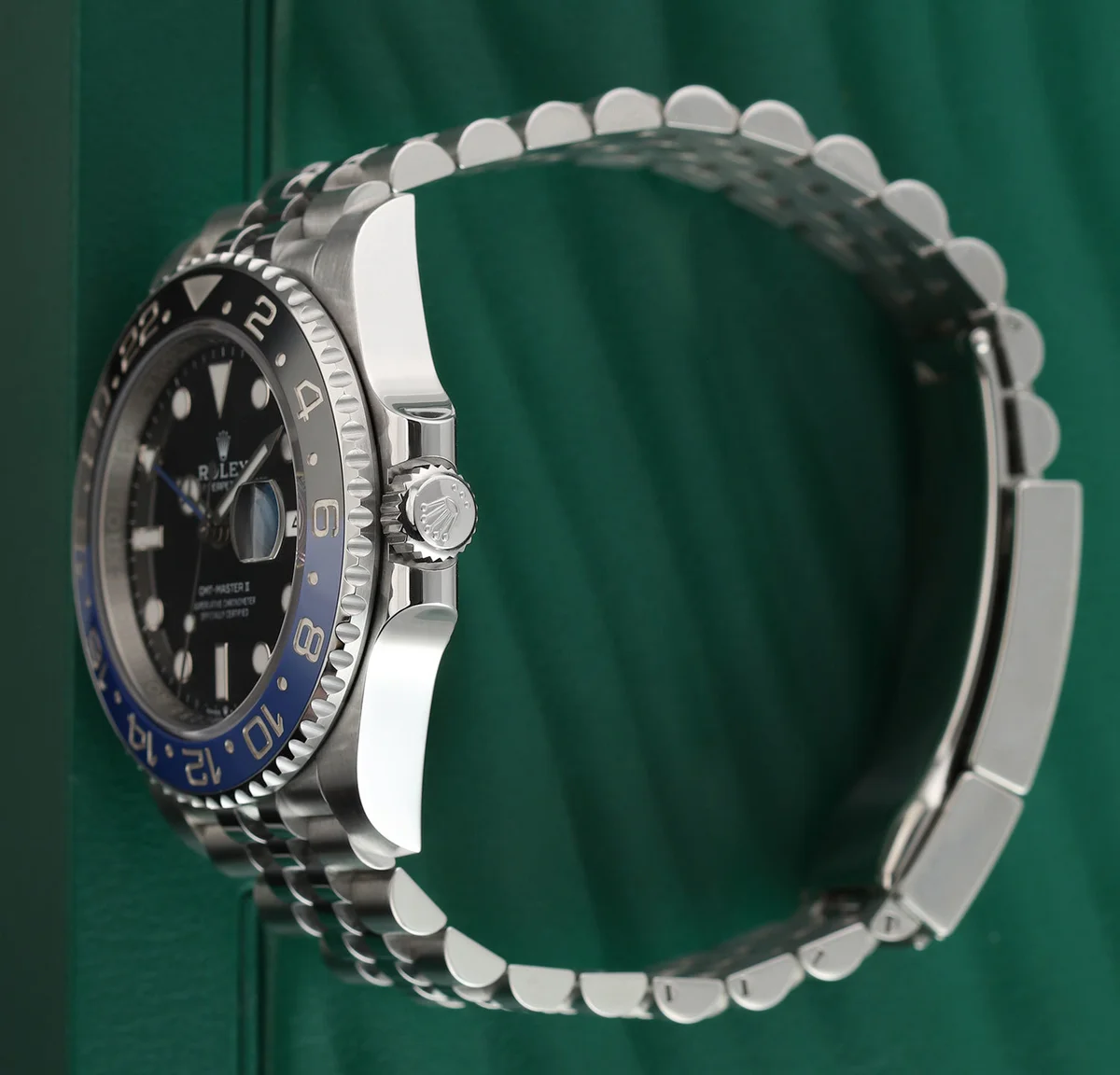
I think the reason the Batgirl works so well is that the Jubilee resolves a tension that has always existed in the GMT-Master II lineup. These are travel watches. They were designed for airline pilots and business travelers, not divers or mountaineers. A pilot in 1954 was wearing a suit in the cockpit. Pan American World Airways asked Rolex to build the original GMT-Master, reference 6542, because their pilots needed to track two time zones on intercontinental flights. That was the golden age of commercial aviation, when flying was formal and pilots dressed accordingly. The Oyster bracelet made sense for the Submariner, a dive instrument meant to take abuse underwater. But the GMT was always a professional's travel tool, and the Jubilee matches that original context better than the Oyster ever did. It dresses up naturally. It sits flatter under a shirt cuff. It catches light with a subtlety that the broader Oyster links cannot replicate.
The reference number tells you what you need to know about the bezel. BLNR stands for Bleu/Noir, French for blue and black. Rolex uses French designations for all their Cerachrom color combinations. The original blue and black GMT was the 116710BLNR, introduced at Baselworld 2013 with the Caliber 3186 and an Oyster bracelet. That was the Batman. It was also the first Rolex to feature a two-tone Cerachrom bezel. Before 2013, Rolex had been using single-color ceramic bezels on the Submariner and other models, and the industry assumption was that creating two distinct colors in a single piece of ceramic was not commercially feasible. Rolex proved otherwise, and the blue-black bezel became one of the most recognizable color combinations in modern watchmaking.
The 126710BLNR replaced the 116710BLNR in 2019 with a new movement, revised case geometry, and the Jubilee bracelet. For the first two years, the 126710BLNR was Jubilee only. In 2021, Rolex quietly reintroduced the Oyster bracelet as a second option, so today you can order the 126710BLNR on either bracelet. The Batman distinction (Oyster) and Batgirl distinction (Jubilee) persist in collector shorthand even though both share the same reference number. The -0002 suffix denotes the Jubilee configuration. The -0003 denotes the Oyster.
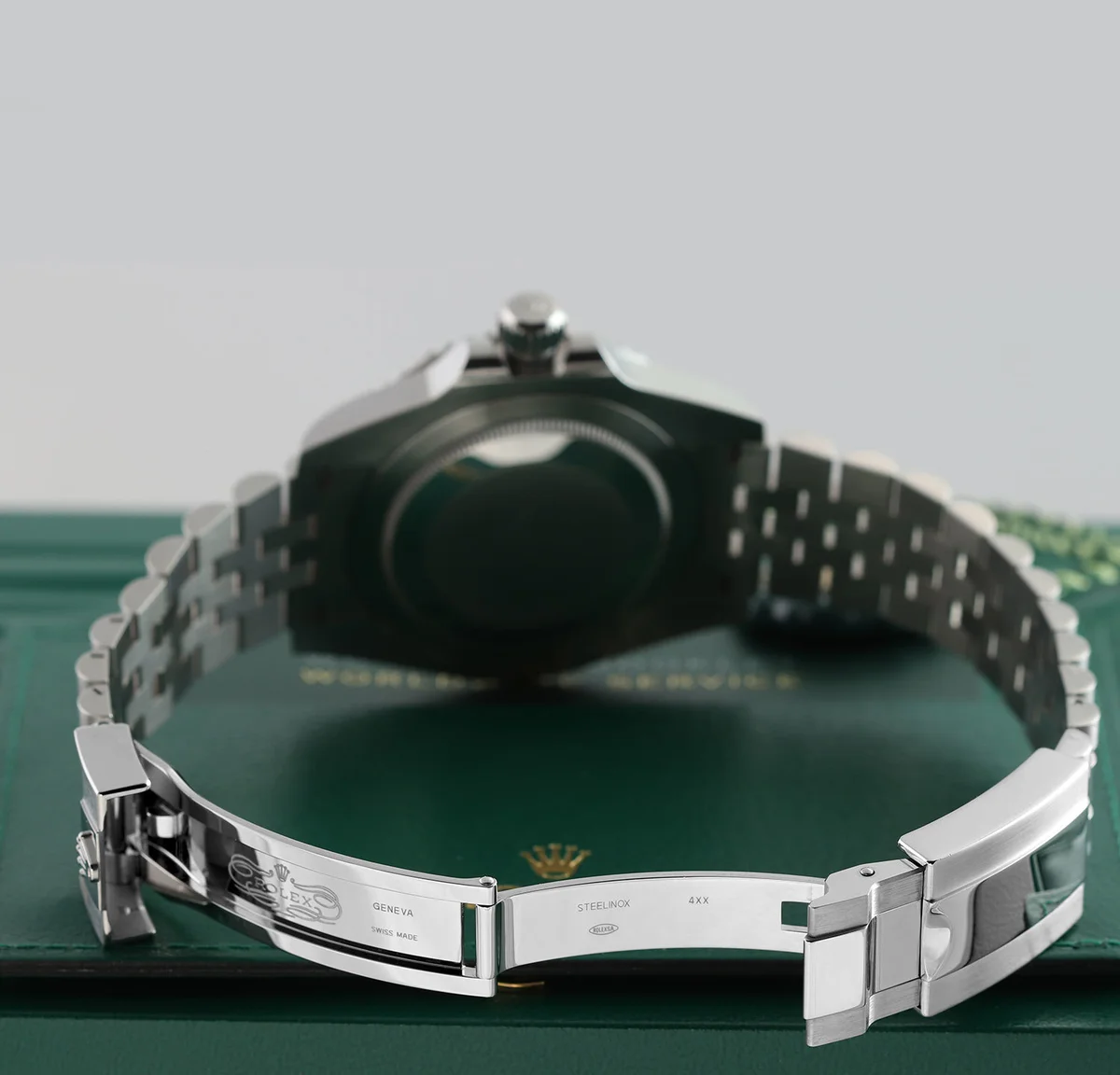
The Cerachrom bezel on both versions is the same two-color ceramic insert, and the manufacturing process behind it is genuinely impressive. The insert starts as fine alumina ceramic powder, particles less than one-thousandth of a millimeter. Rolex mixes the powder with pigments and a binding agent, then molds it into the bezel shape. One half receives selective chemical treatment with additional compounds to produce the second color. The entire piece is sintered at approximately 1,600 degrees Celsius. During sintering, the binding agents burn away and the ceramic densifies into its final form. The chemically treated half reacts to produce the blue tone while the untreated half fires black. The result is a single monolithic piece of ceramic with two distinct, stable colors separated by a crisp demarcation line. Not two halves glued together. One piece. And the material is virtually scratchproof, sitting around 1,500 on the Vickers hardness scale compared to roughly 200 for stainless steel. The colors are completely UV-resistant. They will look identical in 30 years. The aluminum bezels on the vintage 116710BLNR predecessor would fade, scratch, and develop patina. The Cerachrom is permanent.
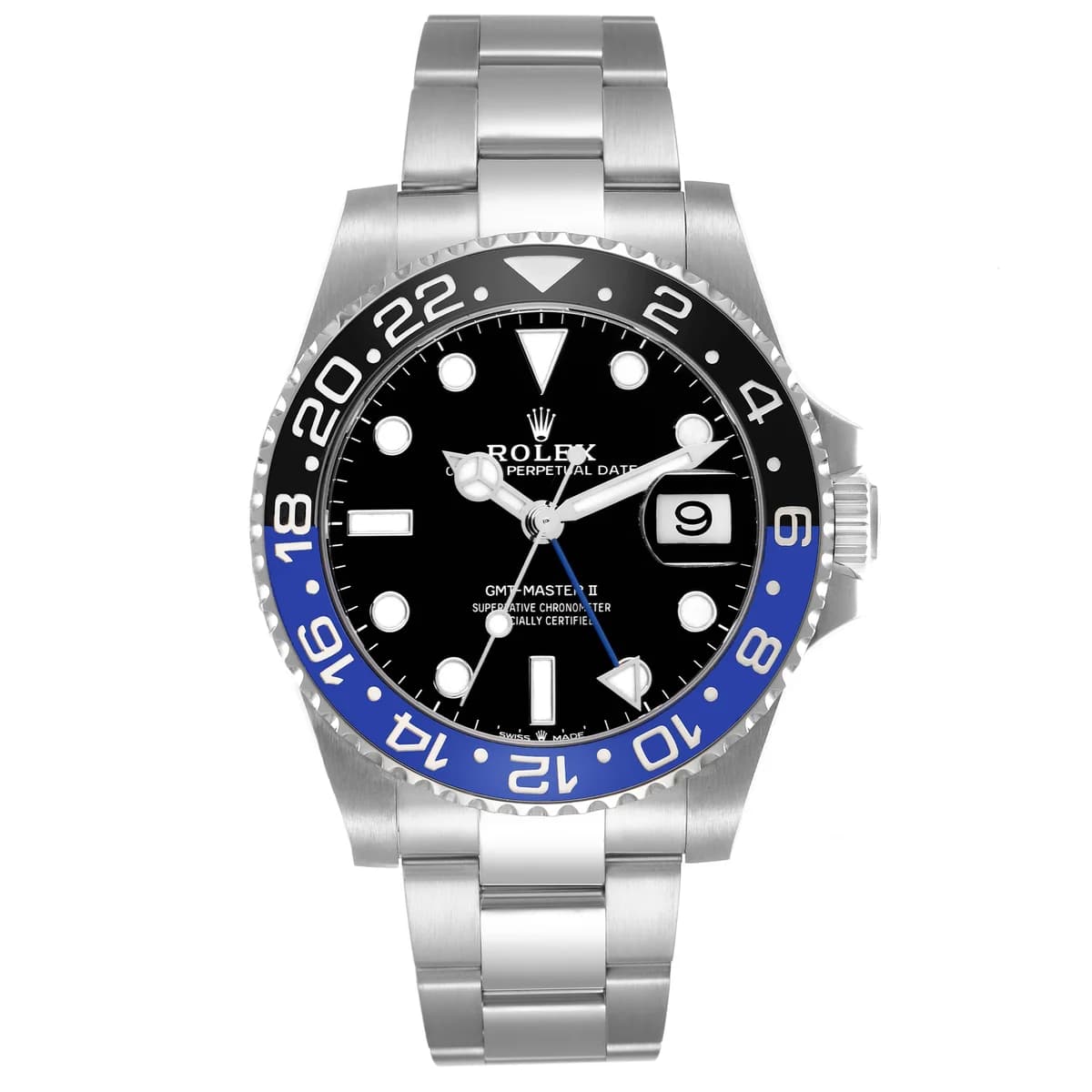
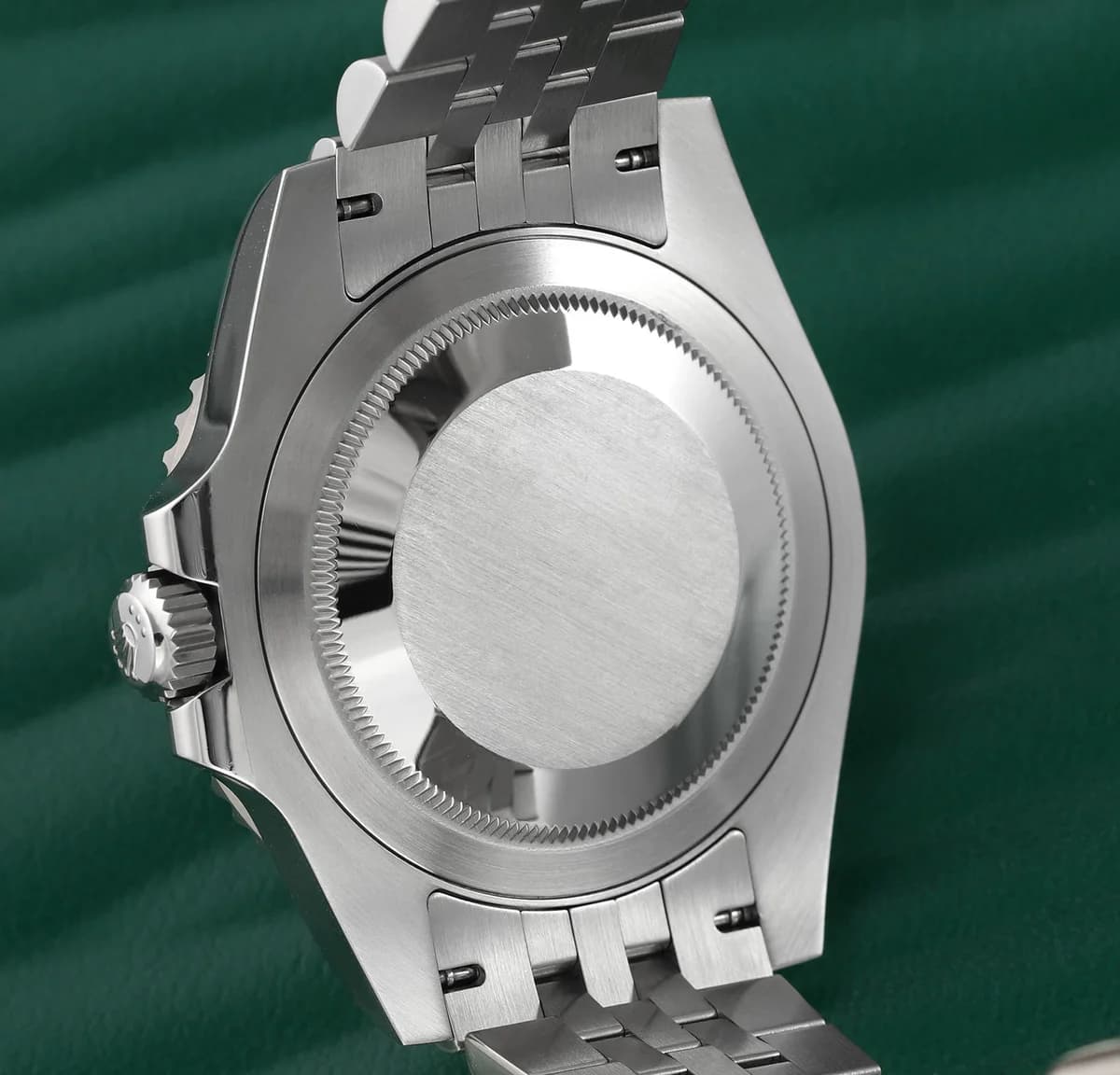
Inside is the Caliber 3285, which Rolex introduced in 2018 with 10 patent applications to its name. This movement replaced the 3186 and the improvements are meaningful across the board. The headline is the power reserve: 70 hours, up from 48 on the 3186. That is nearly three full days. I can take the watch off Friday evening and strap it on Monday morning and it is still running. The efficiency gain comes primarily from the Chronergy escapement, which Rolex patented and manufactures from nickel-phosphorus using LIGA technology (lithography, electroforming, and molding). The pallet fork geometry is redesigned with wider horns and a thinner impulse pin, reducing energy loss at each oscillation by approximately 15 percent compared to a traditional Swiss lever escapement. The nickel-phosphorus construction also makes the escapement completely insensitive to magnetic fields, which matters more today than it ever has. Phones, tablets, laptop speakers, handbag clasps, magnetic cabinet latches. We are surrounded by magnets that previous generations of watchmakers never had to worry about.
The Parachrom hairspring is another piece of proprietary Rolex technology that does not get enough credit. It is manufactured in-house from a paramagnetic alloy of niobium and zirconium. Rolex claims it is ten times more resistant to shocks than a conventional hairspring and virtually unaffected by magnetic fields or temperature variations. Combined with the Paraflex shock absorbers and the Chronergy escapement, the 3285 is a movement that is designed to maintain accuracy in conditions that would compromise older calibers. Philippe Dufour, the greatest independent watchmaker alive, wears a GMT-Master II "Pepsi" ref. 126710BLRO powered by this same caliber 3285. That is not an endorsement money can buy. Every watch is certified to Rolex's Superlative Chronometer standard after casing, which requires accuracy within plus or minus two seconds per day. That is substantially tighter than the COSC standard of minus four to plus six, and Rolex tests it on the finished watch rather than the bare movement, which adds real-world variables that COSC does not account for.
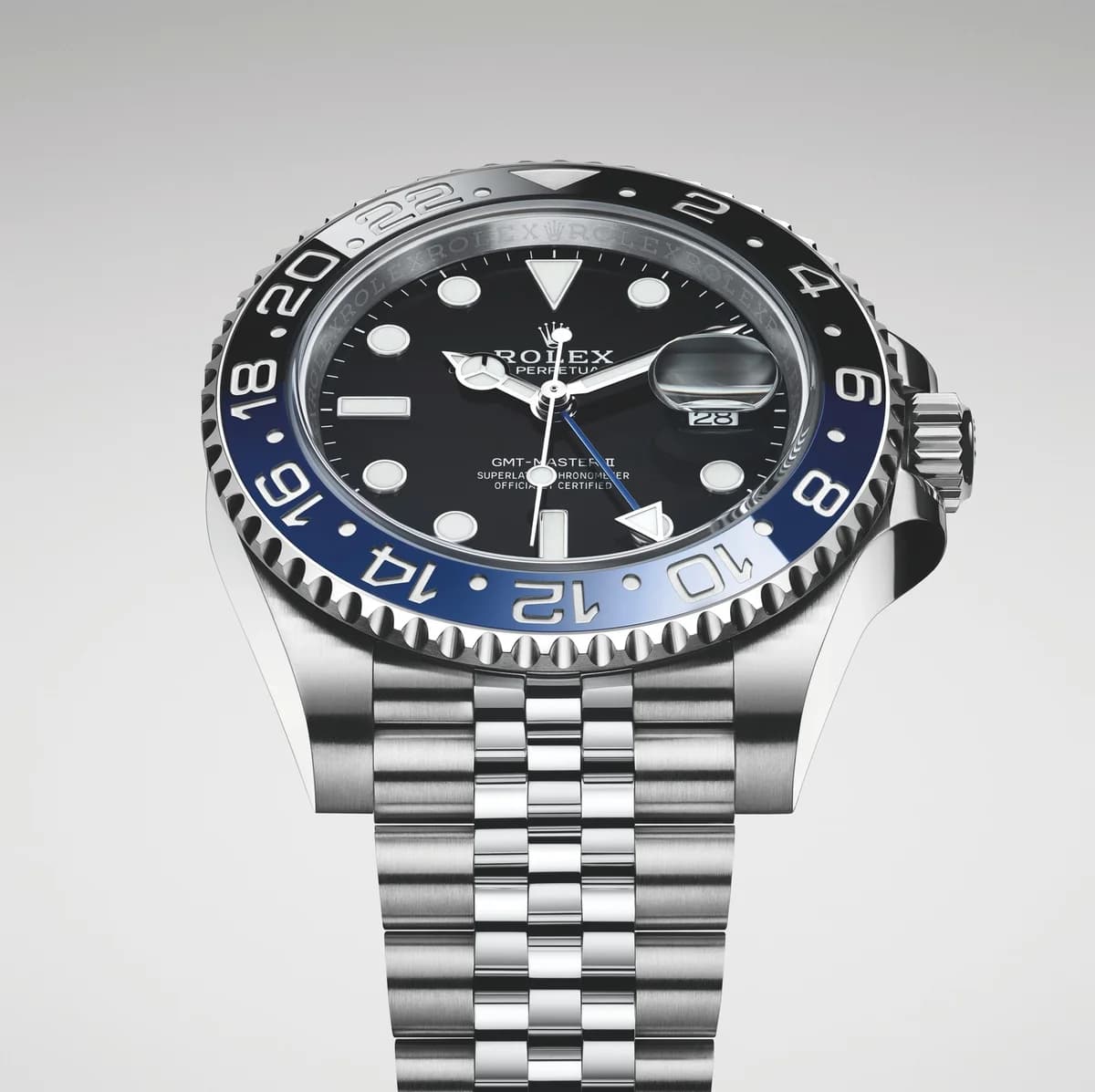
The GMT complication on the 3285 is what the industry calls a flyer GMT or true GMT. The local 12-hour hand can be independently adjusted in one-hour increments without stopping the movement or disturbing the minutes, seconds, or the 24-hour GMT hand. When I land in a new time zone, I pull the crown to the second position and click the hour hand forward or backward to the correct local time. The 24-hour hand stays locked to my home time zone, rotating once every 24 hours against the bidirectional bezel. Combined with the bezel's 24-hour graduation, I can actually track three time zones simultaneously. For anyone who travels across multiple time zones regularly, this is one of those complications that is genuinely useful rather than decorative. And once you get used to having it, a watch without a GMT hand feels like it is missing something.
At 40mm wide and 12.2mm thick with a 48mm lug-to-lug measurement, the 126710BLNR wears well on a wide range of wrist sizes. I have a 6.5-inch wrist and the proportions work. It has enough presence to feel like a proper sport watch without overwhelming the wrist. The 100 meters of water resistance is more than adequate for a travel watch, though it is worth noting that this is a GMT, not a dive watch. The Submariner goes to 300 meters. The GMT-Master II goes to 100. That is enough for swimming, rain, washing hands, and the occasional accidental submersion, but this is not a watch designed for the ocean floor. It is designed for airports. And it does that job better than almost anything else.
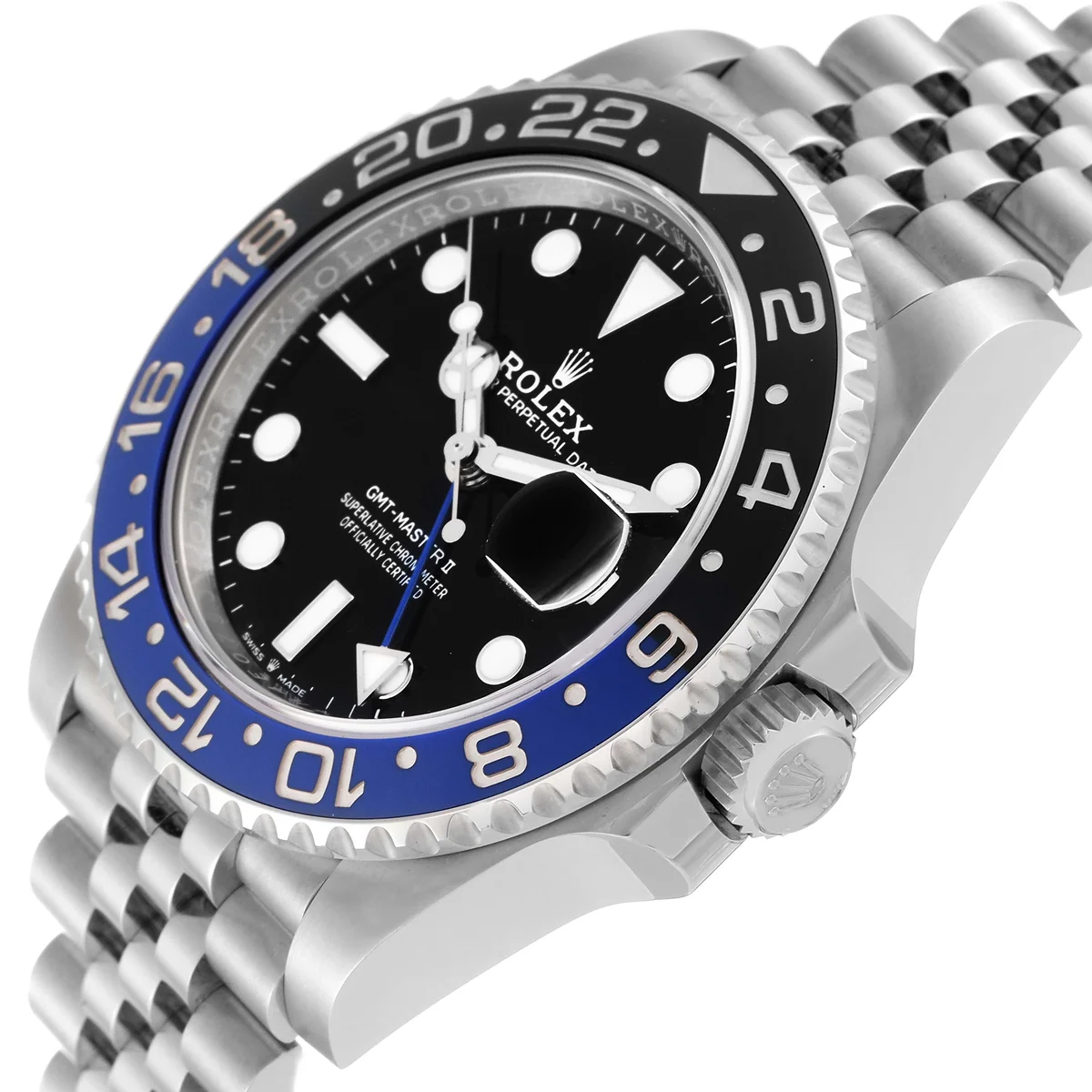
The case is Oystersteel, Rolex's branded version of 904L stainless steel. Higher percentages of chromium, nickel, and molybdenum compared to the industry-standard 316L, with copper as an additional alloying element. The result is a steel that resists corrosion more effectively and polishes to a higher luster. Rolex has used 904L since 1985 and sources it from their own foundry. The Triplock crown system uses three sealed zones for water resistance, and the sapphire crystal sits flush with a clean dome, and the Cyclops lens at 3 o'clock magnifies the date window 2.5 times. That is one area where I wish Rolex would offer a no-date GMT option, similar to what they do with the Submariner 124060. The no-date Submariner's dial is perfectly symmetrical, and a no-date GMT-Master II would achieve the same clean visual balance. But Rolex has never offered a no-date GMT, and given how the current lineup is structured, I do not expect one. The date is there, the Cyclops is there, and honestly, for a travel watch, having the date visible is more practical than not. I notice the asymmetry less on the GMT than I do on the Submariner Date, possibly because the 24-hour hand and the rotating bezel already give the dial more visual complexity. One more element does not disrupt the composition the way it does on a simpler dial.
The honest observation about the Batgirl is that the Jubilee bracelet's polished center links will show micro-scratches faster than the fully brushed Oyster. The five-link construction means three of the five links per row have polished surfaces that catch and reflect light beautifully when new, but those same surfaces show every contact mark. Oystersteel at 904L is harder than standard 316L, but it is still steel, and polished steel scratches. Within the first few weeks of daily wear, the center links will develop a fine haze of hairline marks that are visible in certain light. Some people find this devastating. I find it inevitable and ultimately character-building. A watched watch is a worn watch. But if micro-scratches genuinely bother you, the Batman on the fully brushed Oyster hides them far better. That is the tradeoff. The Jubilee looks more refined but shows its age faster. The Oyster looks more utilitarian but stays looking new longer. Knowing this going in makes the decision easier.
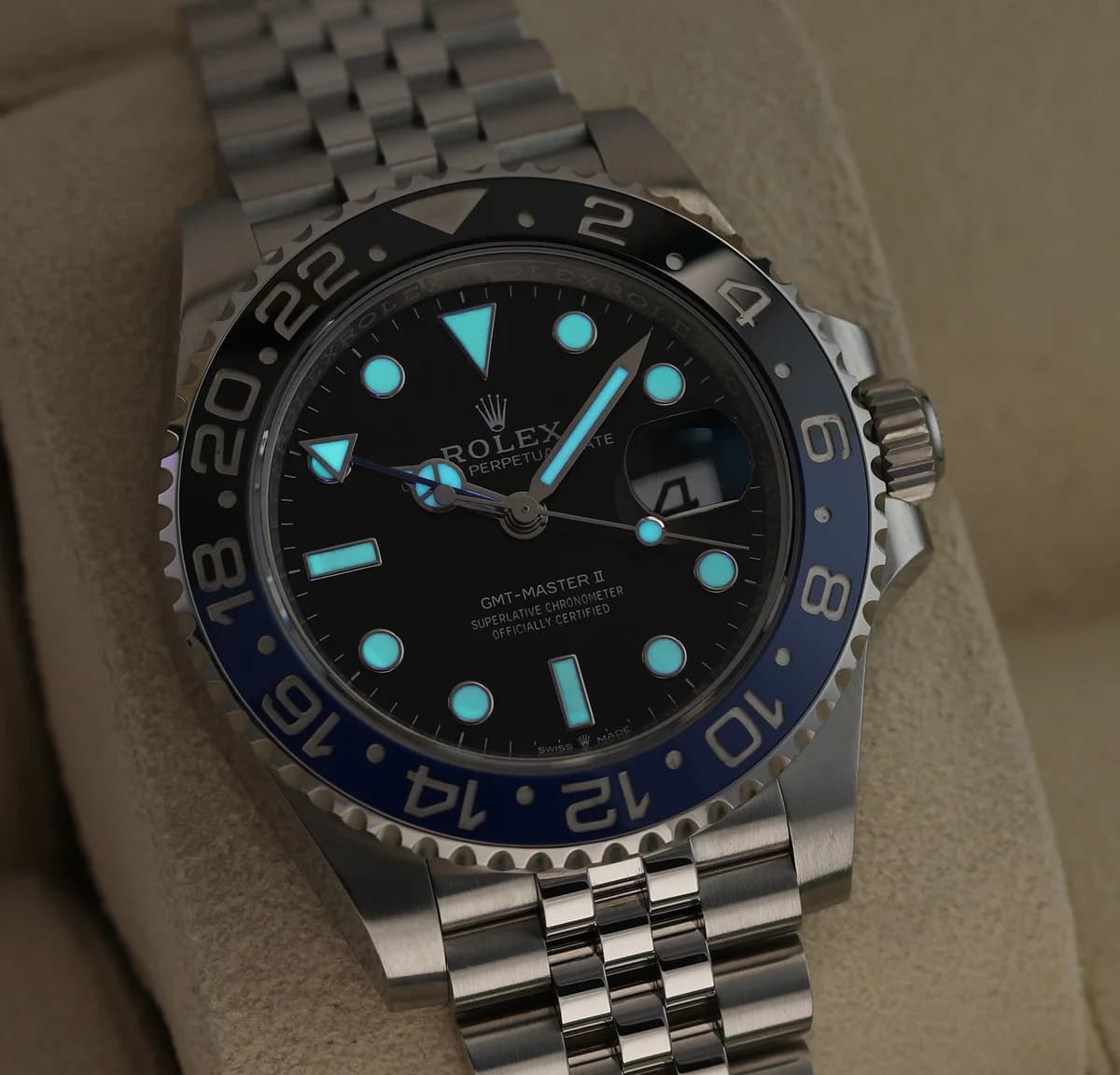
I also notice the Jubilee bracelet collects more dust and lint between the links than the Oyster does. The tighter articulation that makes it comfortable also creates more crevices where debris accumulates. It is not a problem, just something to be aware of. A soft brush or a rinse under water clears it out. But when I compare the Batgirl to a Submariner on an Oyster after a week of wear, the Submariner's bracelet is noticeably cleaner. Different tool for a different context.
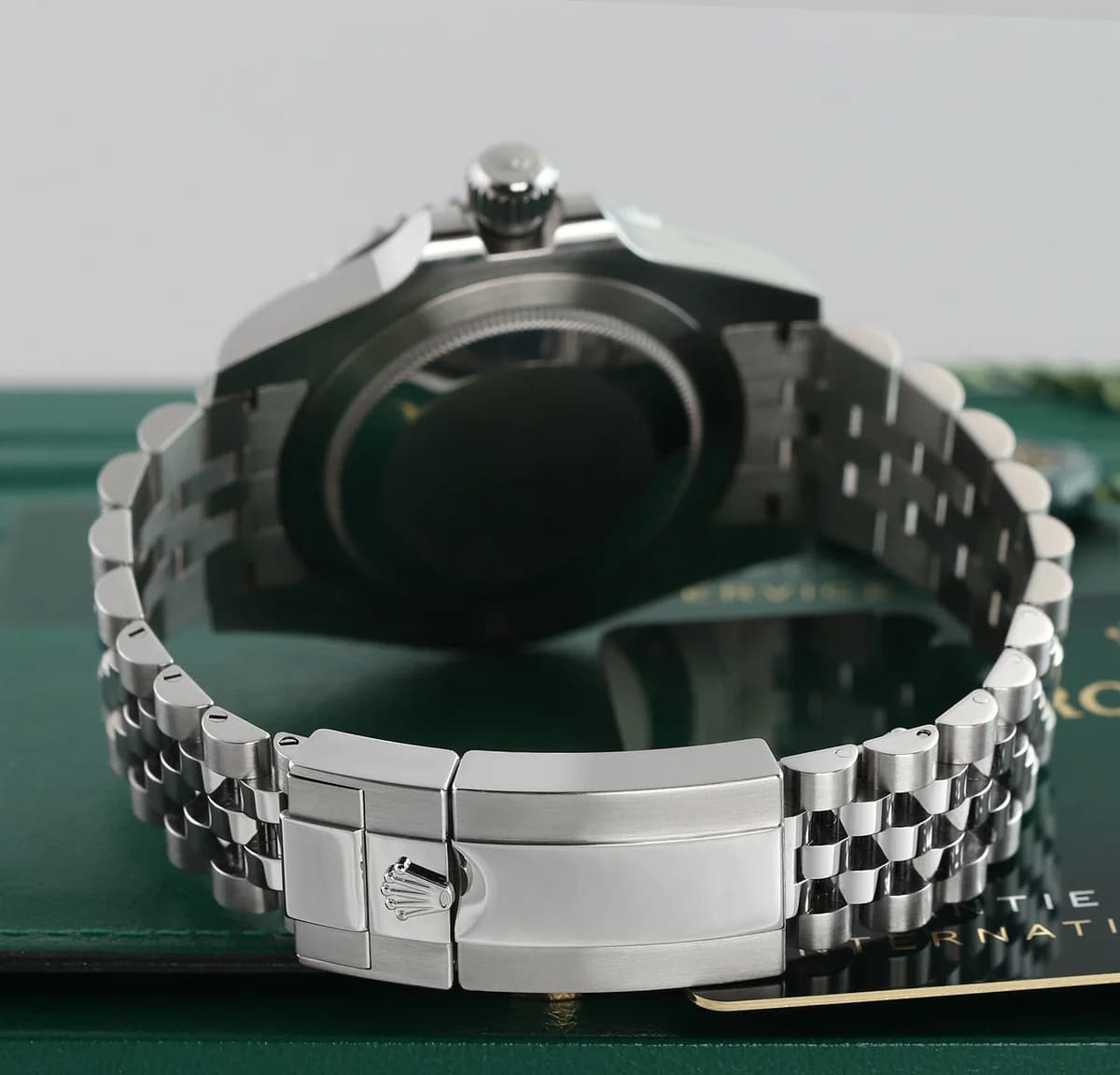
Styling is where the Batgirl quietly separates itself from the rest of the GMT-Master II lineup. The Pepsi (blue and red) is bold. The Rootbeer (brown and black in Everose gold) is warm. The Sprite (green and black) is the newest and still finding its identity. The meteorite dial variants are beautiful conversation pieces but they are not subtle. The Batgirl sits in a different space entirely. Blue and black is the most restrained two-tone bezel combination Rolex offers, and the Jubilee bracelet adds just enough refinement to bridge the gap between sport and dress without landing fully in either camp. I can wear this with a charcoal Fox Brothers flannel suit and it disappears under the cuff, catching light only when I move my wrist. I can wear it with a weekend polo and rolled sleeves and it reads as a sport watch. On darker skin tones, the blue Cerachrom catches light in a way that creates a striking contrast against the wrist, and the polished Jubilee links add warmth without the yellow or rose gold commitment. It is an all-steel watch that manages to feel less clinical than most steel sport watches, and I think that is entirely because of the bracelet.
The broader GMT-Master II family sits in an interesting position within the Rolex catalog. These are not dive watches. They are not dress watches. They are travel instruments that became cultural objects. The Pan Am origin story from 1954 gave the collection its purpose: track multiple time zones for international pilots. The nickname culture gave it personality. Pepsi, Coke, Rootbeer, Batman, Batgirl, Sprite. Every color combination earns a name because the community treats these watches as characters, not just references. That level of collector engagement does not happen with most product lines. People do not nickname Datejust configurations. They nickname GMTs. And within that family, the Batgirl occupies the sweet spot: serious enough for a business traveler, refined enough for a dinner, versatile enough that it does not demand a specific wardrobe.
Rolex discontinued the Pepsi GMT-Master II (126710BLRO) in spring 2026, and the ripple effect through the rest of the lineup was immediate. Demand shifted to the remaining references, and the Batgirl, already difficult to acquire at authorized dealers, became even harder to find. The waitlist dynamic is a reality of the current Rolex market that has nothing to do with the engineering. The Caliber 3285 does not care whether you waited six months or two years. It runs the same.
The weight of the 126710BLNR on the Jubilee is noticeable but not heavy. All steel, no precious metals adding heft. The Easylink comfort extension in the Oysterlock clasp provides 5mm of micro-adjustment, which matters more than most people expect. Wrists swell in heat and shrink in cold. Altitude changes during flights affect wrist size. For a watch specifically designed for travelers, having that quick adjustment built into the clasp is a practical detail that I appreciate every time I land somewhere warm after departing somewhere cold. No tools required. Lift, slide, close.
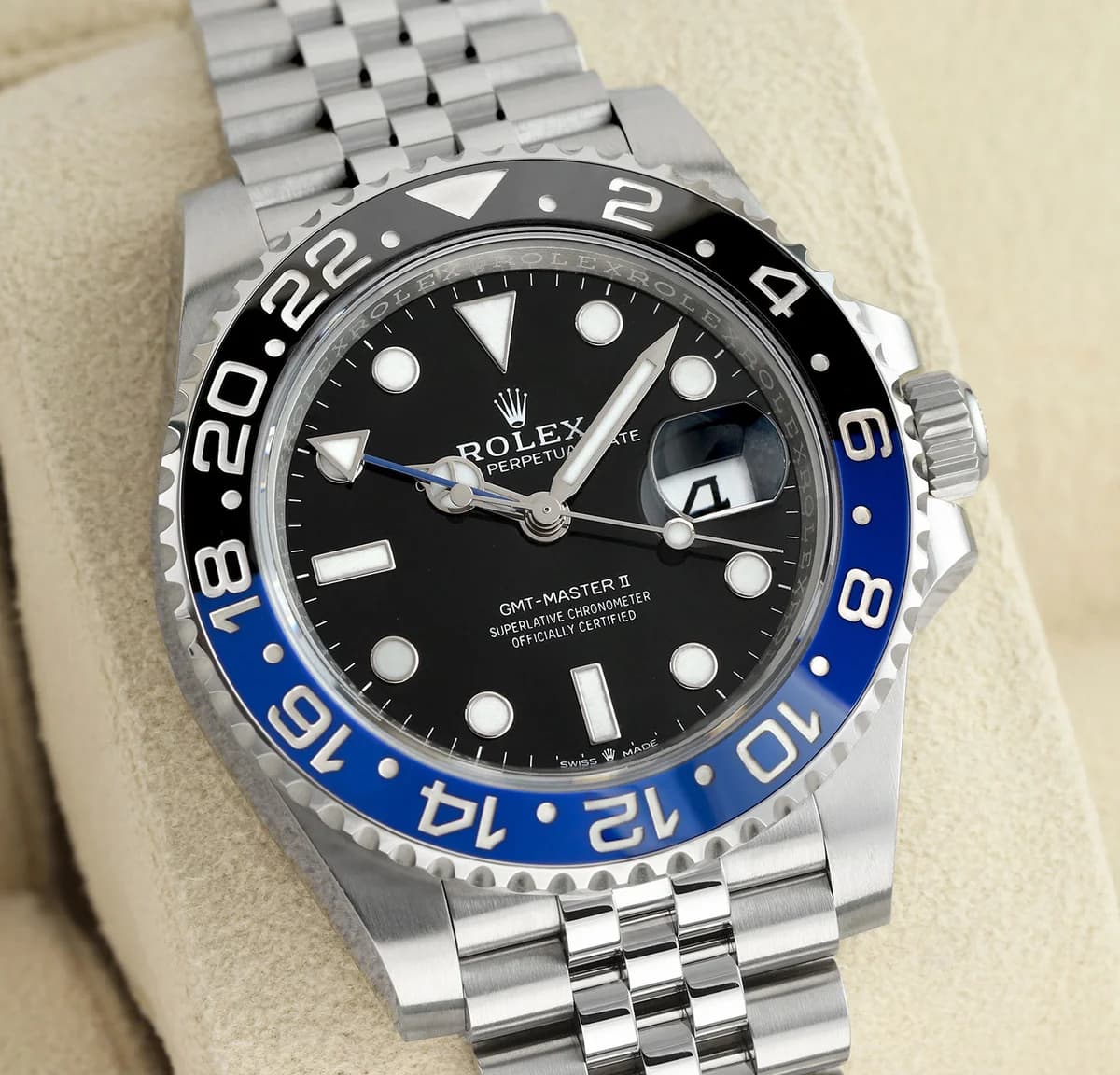
I keep coming back to the bracelet because it really is the defining characteristic of this watch. The 126710BLNR on the Oyster is an excellent GMT. On the Jubilee, it becomes something more. The light plays across those five-link rows differently at every angle, and the blue Cerachrom picks up that scattered light and shifts between deep navy and near-black depending on the environment. Under fluorescent office lighting, the bezel reads almost entirely black. In natural sunlight, the blue half comes alive. That interplay between bracelet and bezel, between the polished facets catching light and the ceramic absorbing or reflecting it based on angle, gives the Batgirl a visual depth that photographs do not fully capture.
The Caliber 3285 inside has a bidirectional self-winding rotor with 31 jewels beating at 28,800 vibrations per hour. The movement is hand-windable in the clockwise direction, and the hacking seconds function stops the balance wheel when you pull the crown to the time-setting position so you can synchronize to a reference signal. These are features that every serious mechanical watch should have, and the 3285 delivers all of them within a movement that Rolex manufactures entirely in-house.
Someone once told me that the best watch is the one that makes you stop thinking about watches. The Batgirl is not that watch. It is the watch that makes me think about why I love watches in the first place. The engineering is real. The history is deep. The bracelet is genuinely special. And the fact that a simple bracelet change transformed a tool watch into something that works across every context I put it in is a lesson in product design that I find endlessly interesting. Rolex took 74 years of GMT-Master history, looked at the one element nobody thought to change, and changed it. That is the kind of restraint and insight that separates great product decisions from ordinary ones.
Also in Sport Chronographs & GMT