
Rolex
Explorer 40mm
224270
On May 29, 1953, Edmund Hillary and Tenzing Norgay reached the summit of Everest. Rolex equipped members of the British expedition with Oyster Perpetual watches, and the Explorer was born from that connection. The historical reality is more complicated than the marketing story. Smiths was the official watch supplier to the expedition. Tenzing likely wore the Rolex on his wrist during the final push. Hillary likely wore a Smiths. Both brands were present on the mountain, and both have legitimate claims. But Rolex was genuinely there, and the Explorer name has carried the Everest association for over seventy years now. The marketing story worked because there was a real story underneath it. That matters. A lot of watch origin stories are complete fabrications. This one is just complicated.
I think about what it must have been like at 29,000 feet in 1953. No Gore-Tex. No satellite phones. No supplemental oxygen systems like today. The clothing was cotton and wool. The boots were leather. The oxygen apparatus weighed nearly 30 pounds and froze constantly. In those conditions, a watch was not a fashion choice. It was a survival instrument. If you cannot check the time, you cannot calculate your ascent rate. If you cannot calculate your ascent rate, you cannot manage your oxygen consumption. If you cannot manage your oxygen consumption, you die on the mountain. The 3-6-9 dial that defines every Explorer since was not a design decision made in a boardroom. It was a legibility solution born from altitude, blizzards, hypoxia, and the very real possibility that you might only be able to see part of the dial through a frosted glove cuff. Three oversized Arabic numerals at 3, 6, and 9 o'clock, baton indices at the remaining hours, and an inverted triangle at 12 create widely spaced anchor points that let you orient the dial instantly. Even a partial glimpse tells you the time. That is the entire point of the Explorer.
The first true Explorer is generally considered to be the reference 6350, released in 1953. It had the "Explorer" name printed on the dial, COSC certification, and a 35mm Oyster case with the Caliber A296. The reference 6610 followed in 1955 with the Caliber 1030. But the reference that defined the Explorer for an entire generation was the 1016, produced from 1963 to 1989. Twenty-six years of continuous production. That is an extraordinary run for any watch, and the 1016 is the one that most vintage collectors think of when they hear the word Explorer. It started with the Caliber 1560 at 18,000 vibrations per hour, moved to the 1570 at 19,800 vph around 1967, and gained hacking seconds in 1971. Water resistance doubled to 100 meters. Through all of that, the case stayed at 36mm and the dial stayed black with the 3-6-9 layout. A layperson would struggle to tell a 1016 from a modern Explorer. That kind of design consistency across six decades is rare in any industry.
The reference 14270 arrived in 1989 and brought the Explorer into the modern era. Sapphire crystal replaced acrylic. The case stayed at 36mm. The Caliber 3000 pushed the beat rate to 28,800 vph with a 42-hour power reserve. Applied indices replaced printed ones. The 114270 followed in 2001 with the Caliber 3130 and the Parachrom hairspring, a paramagnetic alloy that Rolex developed in-house for resistance to temperature variations and magnetic fields. Both of these references are still 36mm. The Explorer had been 36mm for nearly sixty years.
Then in 2010, Rolex released the reference 214270 at 39mm. The watch community lost its collective mind. Three millimeters does not sound like much, but on a watch with no bezel markings, no date window, and no sub-dials, every millimeter of case diameter changes the proportions of the entire dial. The 214270 also had a controversial design choice: the hour hand was too short for the larger dial. It did not extend to the minute track. Rolex quietly corrected this around 2016 with what collectors call the "Mark 2" dial, extending the hour hand and adding Chromalight to the 3-6-9 numerals. The earlier version had the numerals in white gold without lume, which defeated half the purpose of having oversized numerals in the first place. The 214270 used the Caliber 3132 with the blue Parachrom hairspring and Paraflex shock absorbers.
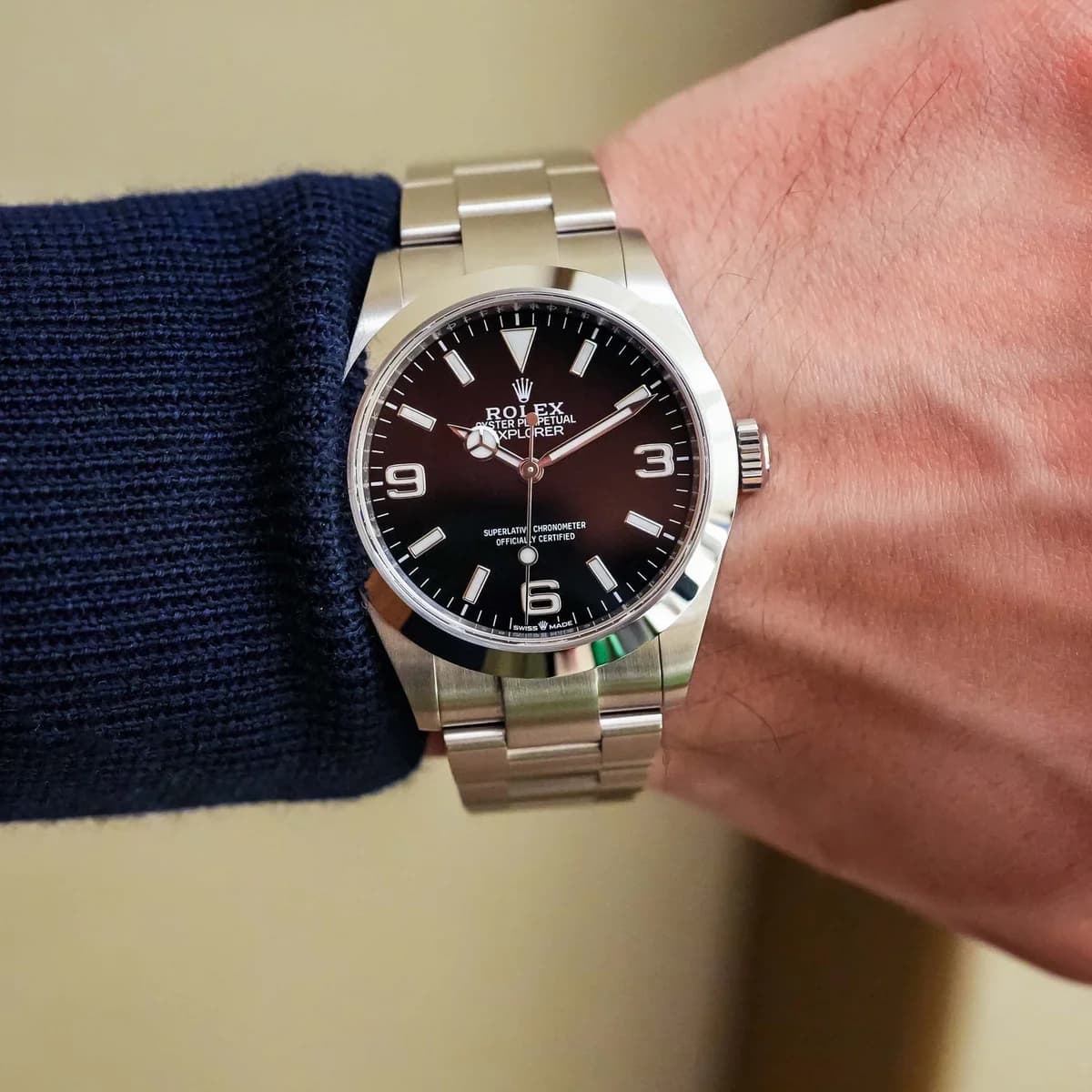
At Watches and Wonders 2021, Rolex brought the Explorer back to 36mm with the reference 124270. The crowd cheered. Purists were satisfied. But two years later, at Watches and Wonders 2023, Rolex introduced the reference 224270 at 40mm. The largest Explorer ever produced. And this time, instead of replacing the 36mm, Rolex kept both in the catalog. The 124270 at 36mm and the 224270 at 40mm coexist. I think that was the right call. It respects both camps without forcing anyone to compromise.
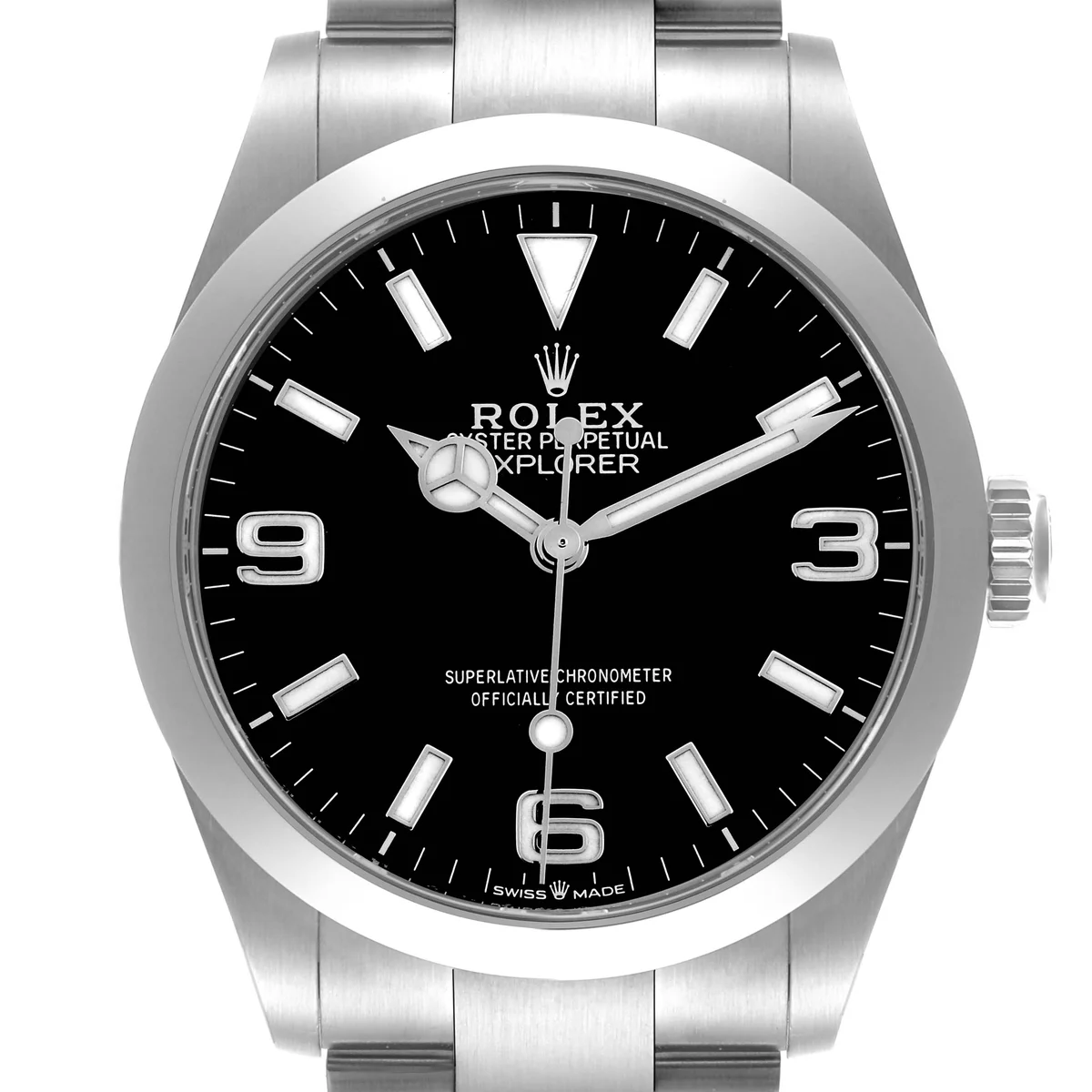
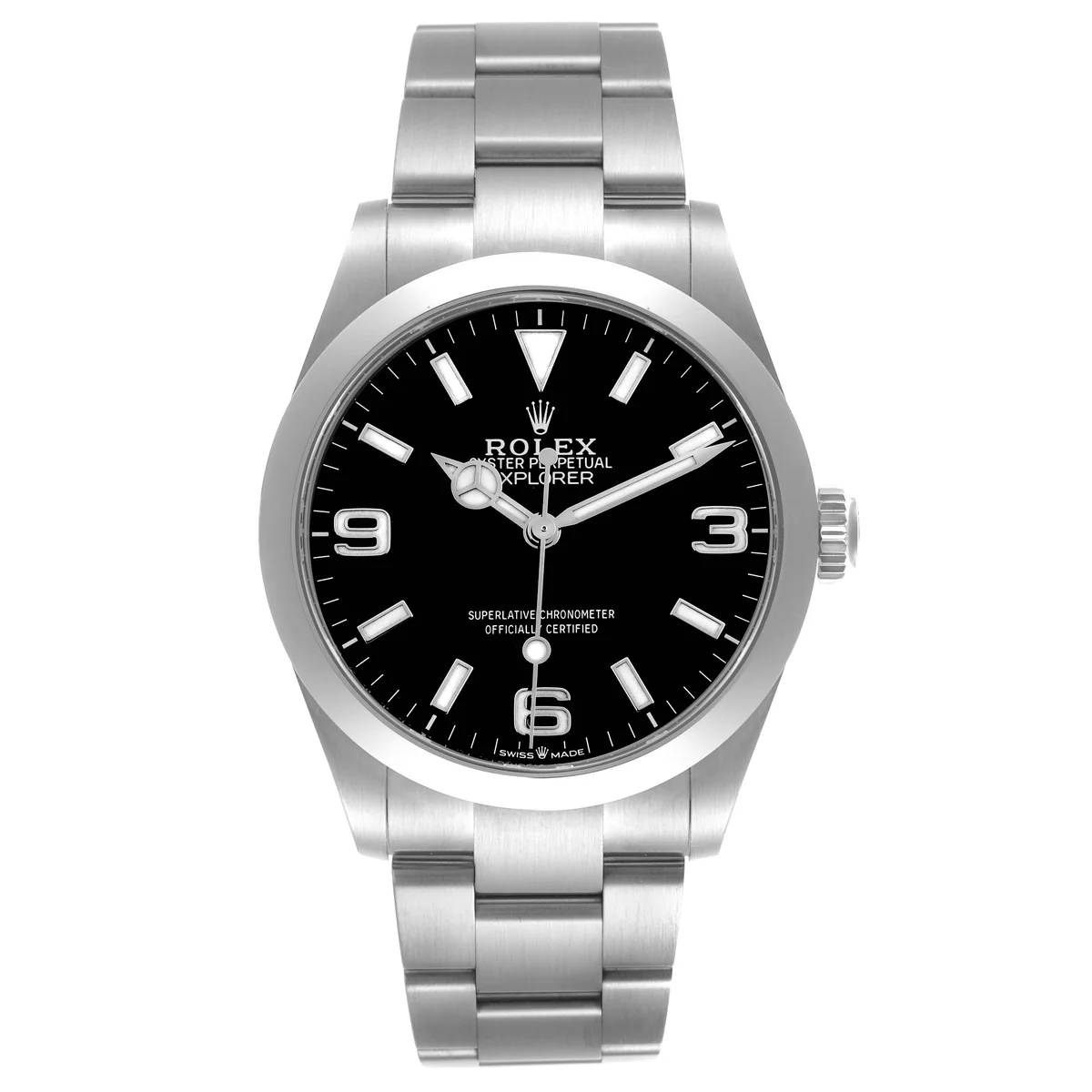
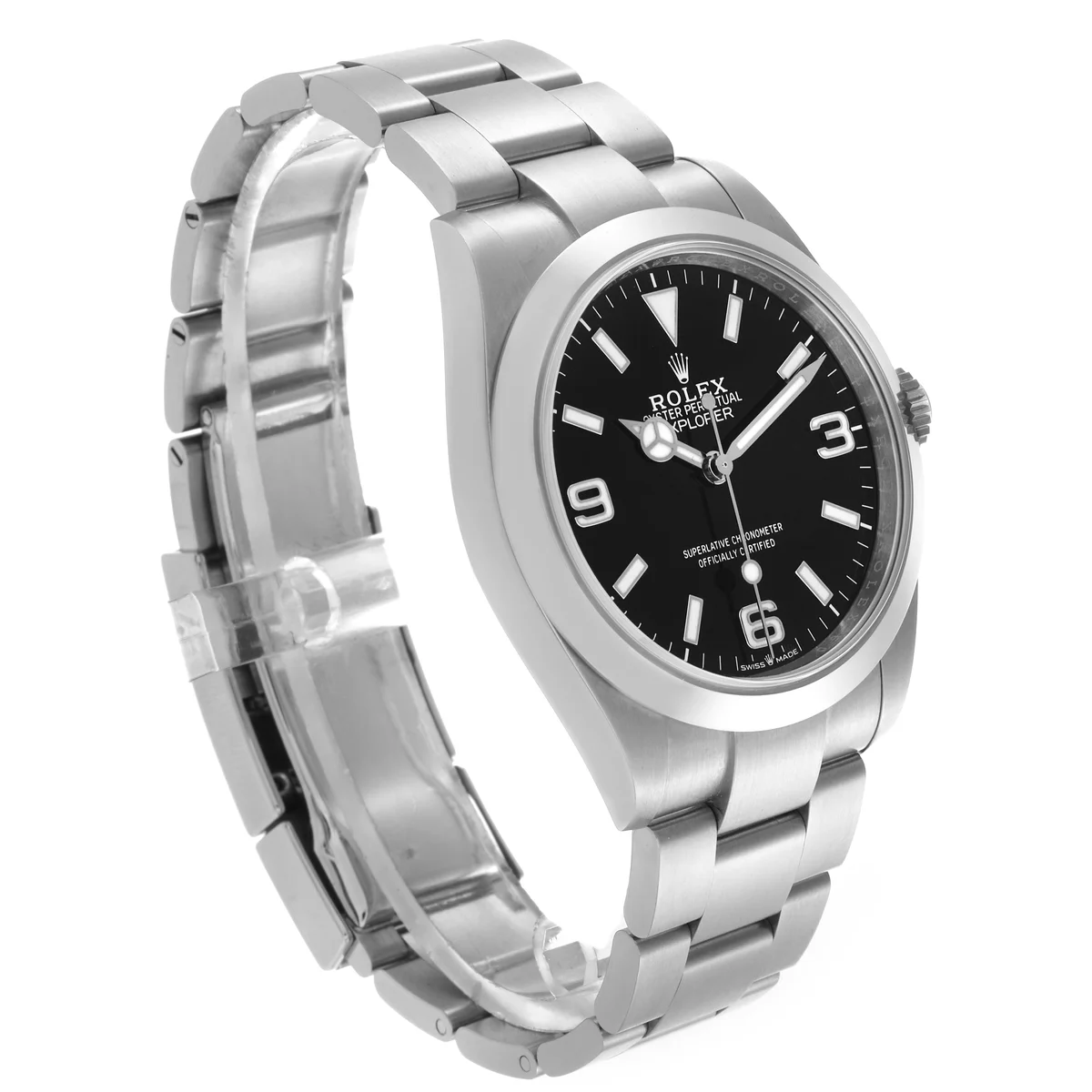
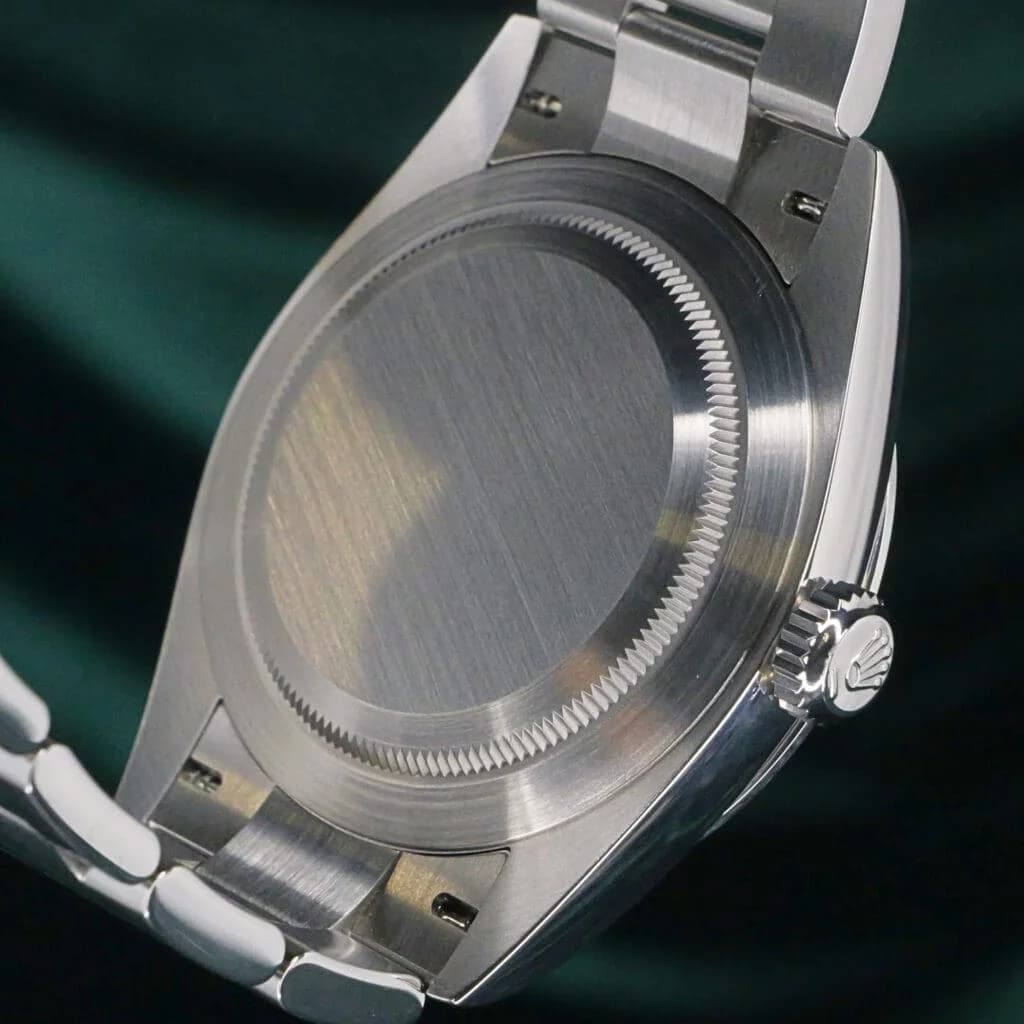
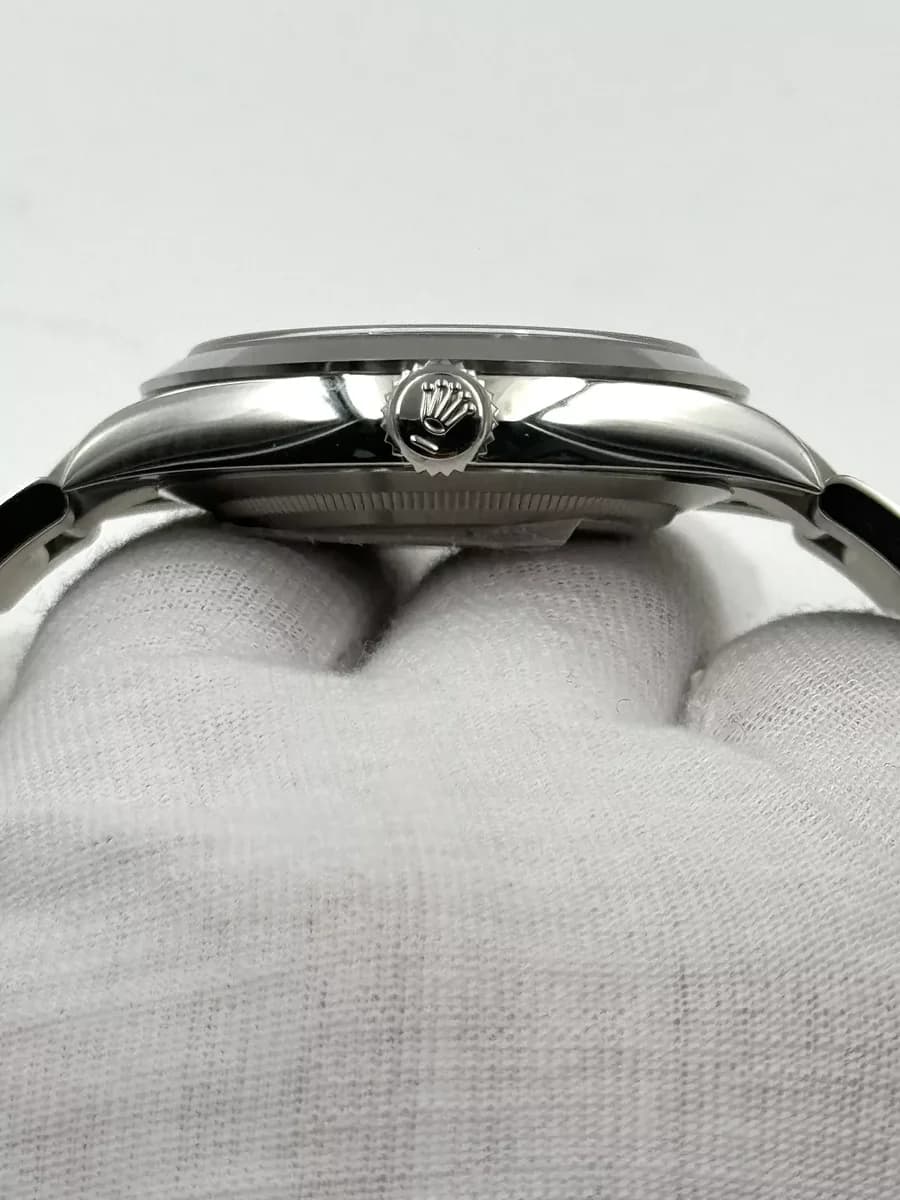
The 224270 is the watch I want to talk about. At 40mm in diameter, 11.6mm thick, and 46.5mm lug-to-lug, it sits comfortably in the modern sport watch range without feeling oversized. For reference, an Omega Speedmaster is 42mm and 13.54mm thick. A Tudor Black Bay is 41mm and approximately 13mm thick. The Explorer at 40mm and 11.6mm is leaner than both. The 21mm lug width fills the space between the lugs confidently, and the Oyster bracelet tapers to about 16mm at the clasp. That taper is subtle but it makes the bracelet drape around the wrist instead of sitting on top of it. The case is Oystersteel, which is Rolex's name for their proprietary 904L stainless steel alloy. Most watch brands use 316L steel. 904L is harder, more corrosion resistant, and takes a polish that 316L simply cannot match. It is the same alloy used in the chemical and aerospace industries. Rolex has been using it since 1985, long before anyone else in watchmaking thought to upgrade their steel.
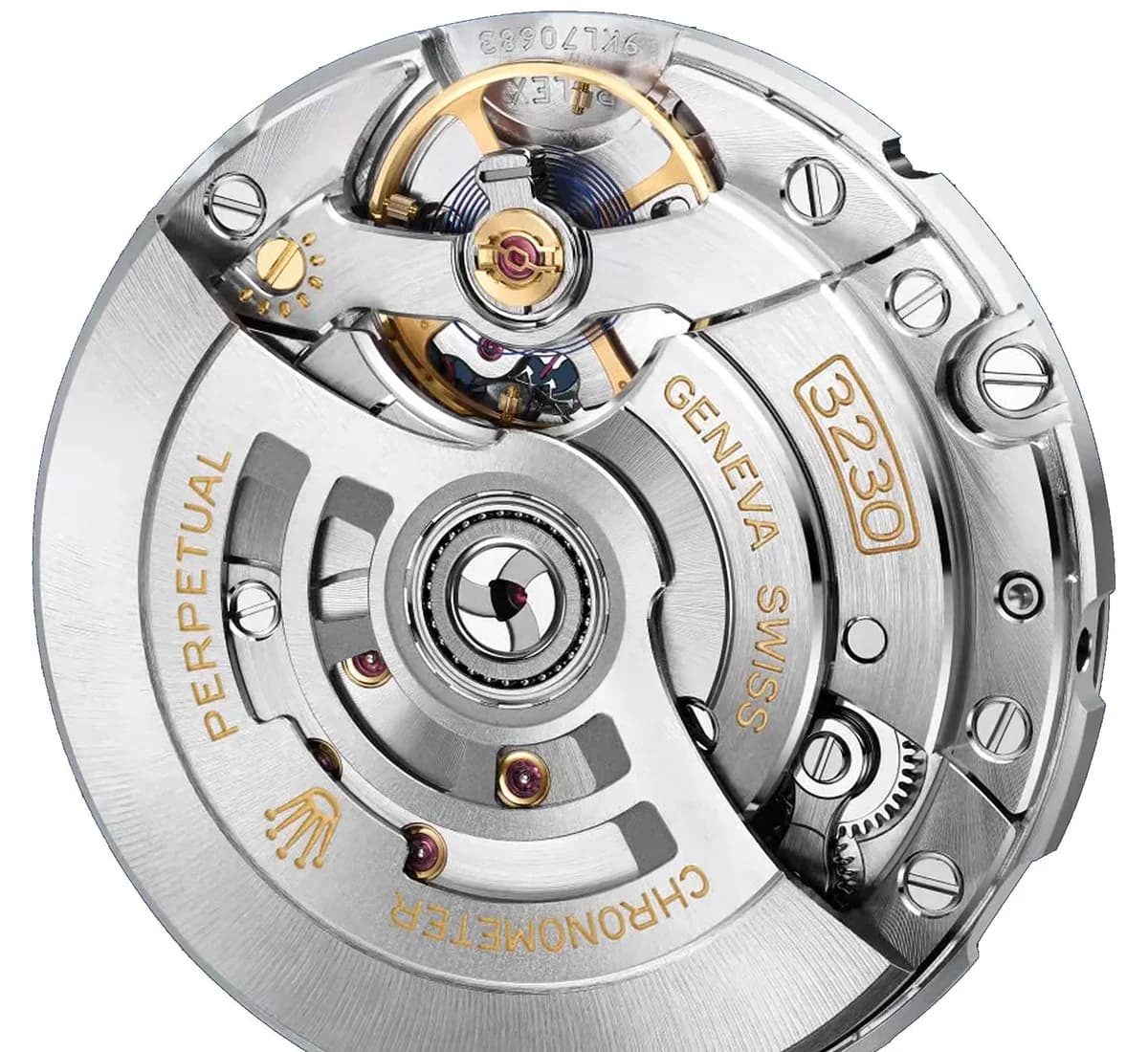
The Caliber 3230 inside the 224270 is not the most complicated movement Rolex makes, but it might be the most refined. 31 jewels, 28,800 vibrations per hour (4 Hz), and approximately 70 hours of power reserve. That last number is the one that matters in daily life. Seventy hours means I can take the watch off Friday evening and put it back on Monday morning and it is still running. The previous generation Explorer movements (the 3130 and 3132) offered around 48 hours. The jump to 70 hours came from the Chronergy escapement, a patented redesign of the traditional Swiss lever escapement that Rolex developed in-house. The pallet fork and escape wheel are made of nickel-phosphorus, which makes them paramagnetic (immune to magnetic fields). The geometry of the escapement has been redesigned so the pallet stones are half as thick as the previous generation, but the contact surfaces on the escape wheel have doubled. The anchor and balance wheel are offset to create greater leverage. The result is a 15 percent improvement in energy efficiency. That efficiency, combined with a longer mainspring in a redesigned barrel, is where the extra 22 hours of power reserve come from. The movement also has a Parachrom Blue hairspring (Rolex's proprietary paramagnetic alloy) and Paraflex shock absorbers. Rolex certifies the finished watch to their Superlative Chronometer standard, which guarantees accuracy of plus or minus 2 seconds per day. The standard COSC chronometer certification allows minus 4 to plus 6 seconds per day. Rolex tests the cased watch after the movement is installed, not just the bare movement. That matters because the case, crystal, crown, and gaskets all affect how the movement performs in the real world.
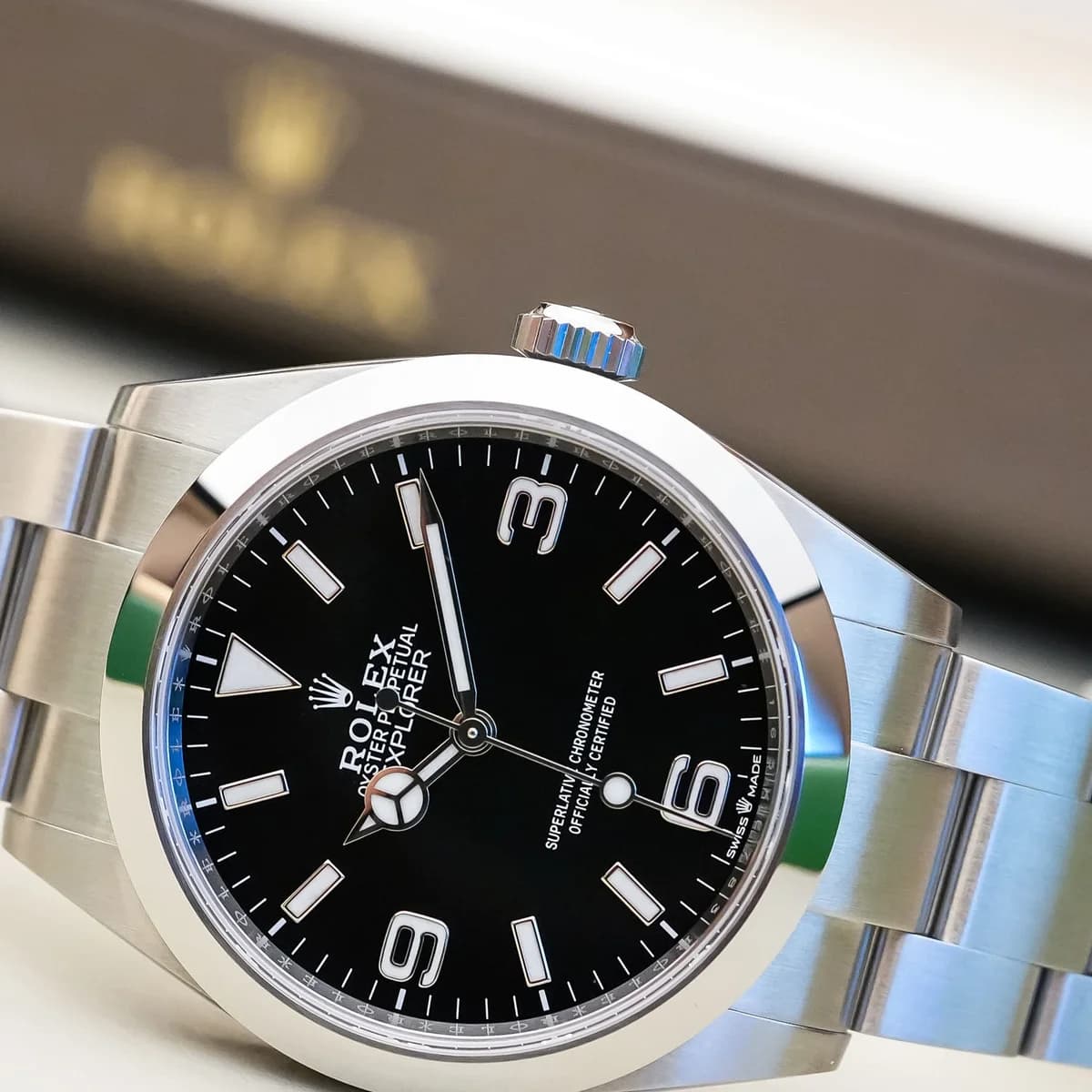
The dial on the 224270 is gloss black lacquer. Previous references used matte black. I love the gloss finish. Under direct light, it has a depth to it that matte cannot replicate. The 3-6-9 numerals are applied in 18K white gold and filled with Chromalight, Rolex's proprietary luminescent material that glows blue in darkness. Chromalight has a longer emission duration than standard SuperLumiNova. The hands are also white gold with Chromalight fill, and the signature Mercedes hour hand with its three-lobed circle is one of the most recognizable hand designs in watchmaking. Below the coronet at 12 o'clock, the dial reads "Rolex" then "Oyster Perpetual" then "Explorer" in progressively smaller text. Below center, it reads "Superlative Chronometer Officially Certified." At 6 o'clock, the small coronet sits between "Swiss" and "Made." There is no date window. No cyclops lens. No sub-dials. Just time. Hours, minutes, seconds. That is it.
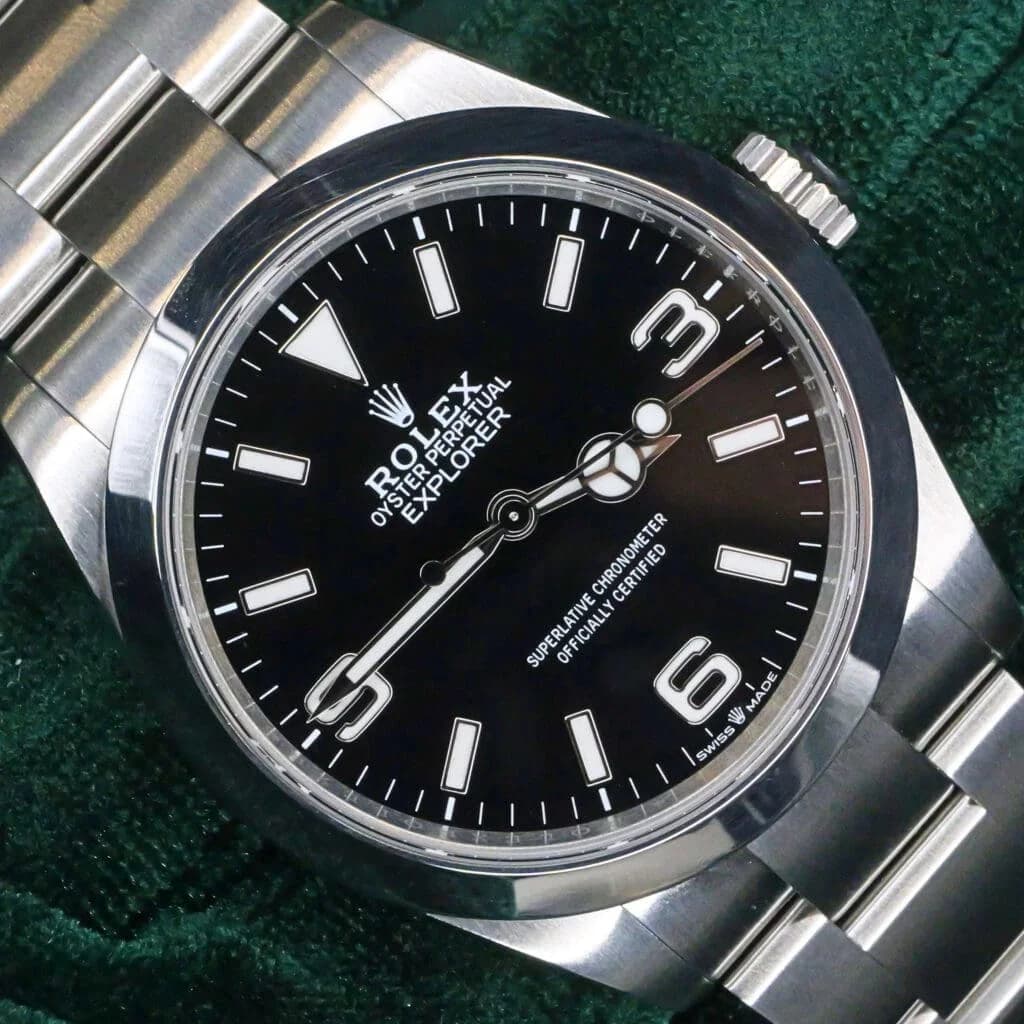
The smooth polished bezel is what makes the Explorer different from almost every other Rolex in the current catalog. No ceramic insert. No minute markings. No tachymeter scale. Just a clean ring of polished Oystersteel that catches light and frames the dial without competing with it. I appreciate how deliberate that choice is. Every other sport Rolex has something on the bezel (the Submariner has a dive scale, the GMT has a 24-hour track, the Daytona has a tachymeter). The Explorer has nothing. The bezel says nothing. The watch says nothing. And that restraint is exactly the point.
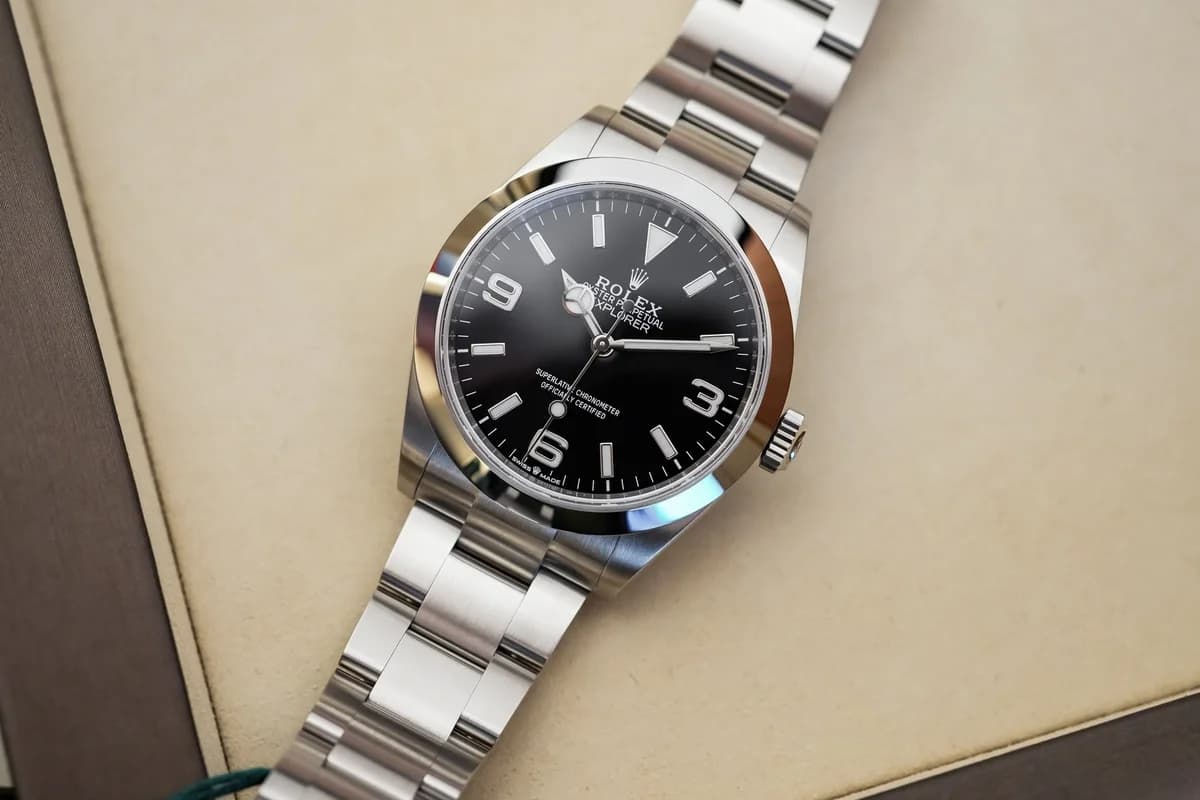
The sapphire crystal has anti-reflective coating applied to the inner surface. Not both surfaces. Rolex applies AR coating on the inside to reduce reflections without exposing the coating to external scratches. Some brands coat both sides. Some coat neither. Rolex's approach is a compromise that prioritizes long-term durability over maximum optical clarity on day one. I think it is the right tradeoff. The crystal reads clean in most lighting conditions and the coating will look the same in ten years because nothing touches it.
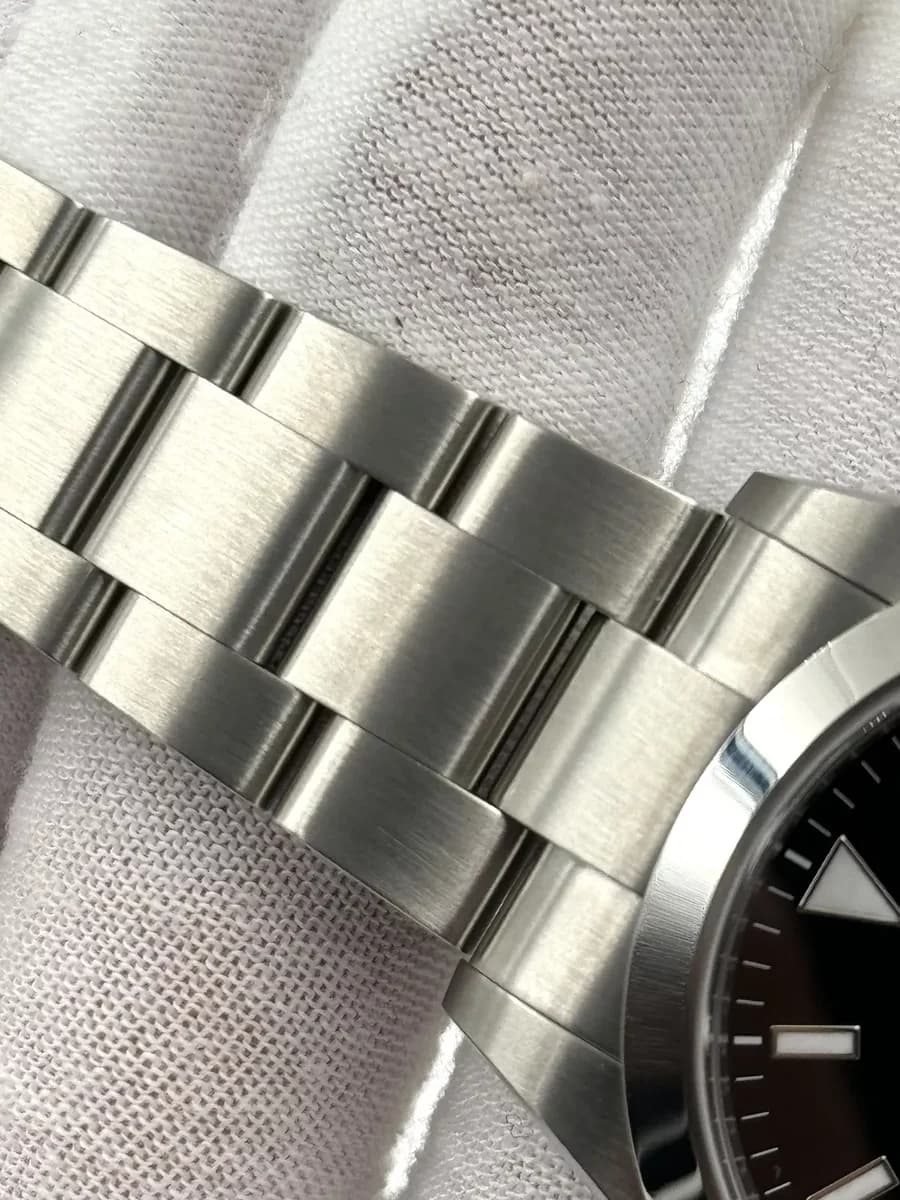
The Oyster bracelet is a three-link design with alternating brushed and polished center links. The finishing is excellent. Each link is solid Oystersteel (not hollow or folded). The Oysterlock folding safety clasp has a polished flip-lock cover with the Rolex coronet. Inside is the Easylink comfort extension, a single link that flips open to add 5mm of length. Here is my honest critique of this watch: I wish the Explorer had a Glidelock clasp instead of Easylink. The Glidelock on the Submariner and Sea-Dweller allows incremental adjustment in 2mm steps across a 20mm range. The Easylink gives you one option. 5mm. Either the bracelet fits perfectly, or it is 5mm longer. For most people in most conditions, that is fine. But on a hot day when the wrist swells slightly, the jump from "snug" to "5mm loose" can feel like too much. The Glidelock solves this problem completely. Rolex puts it on their dive watches but not on the Explorer. I suspect it is a thickness consideration. The Glidelock clasp is bulkier, and part of the Explorer's charm is how flat it sits. At 11.6mm thick, the case already hugs the wrist. Adding a thicker clasp might compromise that profile. So I understand the tradeoff. But I still wish for it.
The watch weighs approximately 133 grams on the bracelet. That is light. Noticeably light. A Submariner is around 155 grams. A GMT-Master is heavier still. The Explorer feels like the lightest serious Rolex you can put on your wrist, and after eight hours it disappears. I notice it when I first put it on, and then I forget about it. That is not something I can say about every watch in this collection.
For me, the Explorer is the most honest watch in the Rolex catalog. I notice it every time I look at the current lineup. Every other model has something extra, some feature that justifies its existence beyond telling time. The Explorer refuses to justify itself. I keep coming back to what the Explorer communicates when it is on the wrist. It communicates nothing. No diving depth. No GMT function. No chronograph. No precious metal. No colored dial. No flashy bezel. It is a steel watch with a black dial and a three-link bracelet. If someone across the table notices it, they notice it because they know watches. If they do not know watches, it is just a clean, well-made steel watch. That is a rare quality. Most watches announce themselves. The Explorer just shows up. Roger Smith, George Daniels' only apprentice and one of the greatest living watchmakers, wears a Rolex Explorer as his daily watch. His is a 36mm ref. 114270, the classic size, not the modern 40mm. When someone who could wear anything he builds chooses the Explorer in its most understated form, it tells you everything about what this watch communicates to the people who understand it best.
The 40mm case works beautifully under a shirt cuff. At 11.6mm thick, it slides under linen, wool, gabardine, anything. A Drapers tropical weight wool suit and the Explorer is the kind of pairing where neither the watch nor the suit is trying to be the loudest thing in the room. On darker skin tones, the contrast between the polished steel and the black dial is clean without being cold. Steel has a neutrality that works across the entire spectrum of what someone might be wearing. There is no warm-cool tension like you get with gold tones. It just works. Every time.
The Explorer family extends beyond the standard reference. Rolex introduced the reference 124273 in 2021, the first two-tone Explorer in history, combining Oystersteel with 18K yellow gold on the bezel, center links, crown, and dial numerals. It divided opinion. The Explorer has always been a pure tool watch, and gold felt like a departure from that identity. I understand both sides. But the existence of the two-tone option does not diminish the steel version. If anything, it reinforces the purity of the all-steel 224270. Rolex also makes the Explorer II (the reference 226570), which is a different watch entirely with a 24-hour bezel, date window, and GMT hand. The Explorer and Explorer II share a name but not a philosophy. The Explorer II is a tool for cave explorers and shift workers who need to track a second time zone. The Explorer is a tool for people who need to know the time and nothing else.
I think about what makes a product great, not just in watches but in any category. The best products are the ones where the designer had the discipline to say no. No to the date window. No to the bezel insert. No to the GMT hand. No to the precious metal upgrade (for the core reference). Each of those additions would have added a feature and a talking point and a reason for someone to buy it. And each one would have made the Explorer less itself. The 224270 is what happens when a company with every possible resource and every possible capability chooses to make the simplest watch it can. That is harder than it looks. Adding features is easy. Removing them takes conviction.
Seventy years of production. Seven major references. Three case sizes. And the watch that a layperson sees in 2023 looks fundamentally the same as the one that went up Everest in 1953. The case is bigger. The movement is better. The steel is harder. The lume lasts longer. But the philosophy is identical. Black dial, 3-6-9 numerals, Mercedes hands, smooth bezel, Oyster bracelet. I find that genuinely remarkable. Not because Rolex is incapable of change. They have changed everything about this watch over seven decades. Every component is better. But they changed it all while keeping the essential identity completely intact. Someone will put on a 224270 twenty years from now and say the same things I am saying right now. That is what good design does. It outlasts the conversation about it.
Also in Tool Watches