
Piaget
Altiplano Ultimate Concept
G0A45500
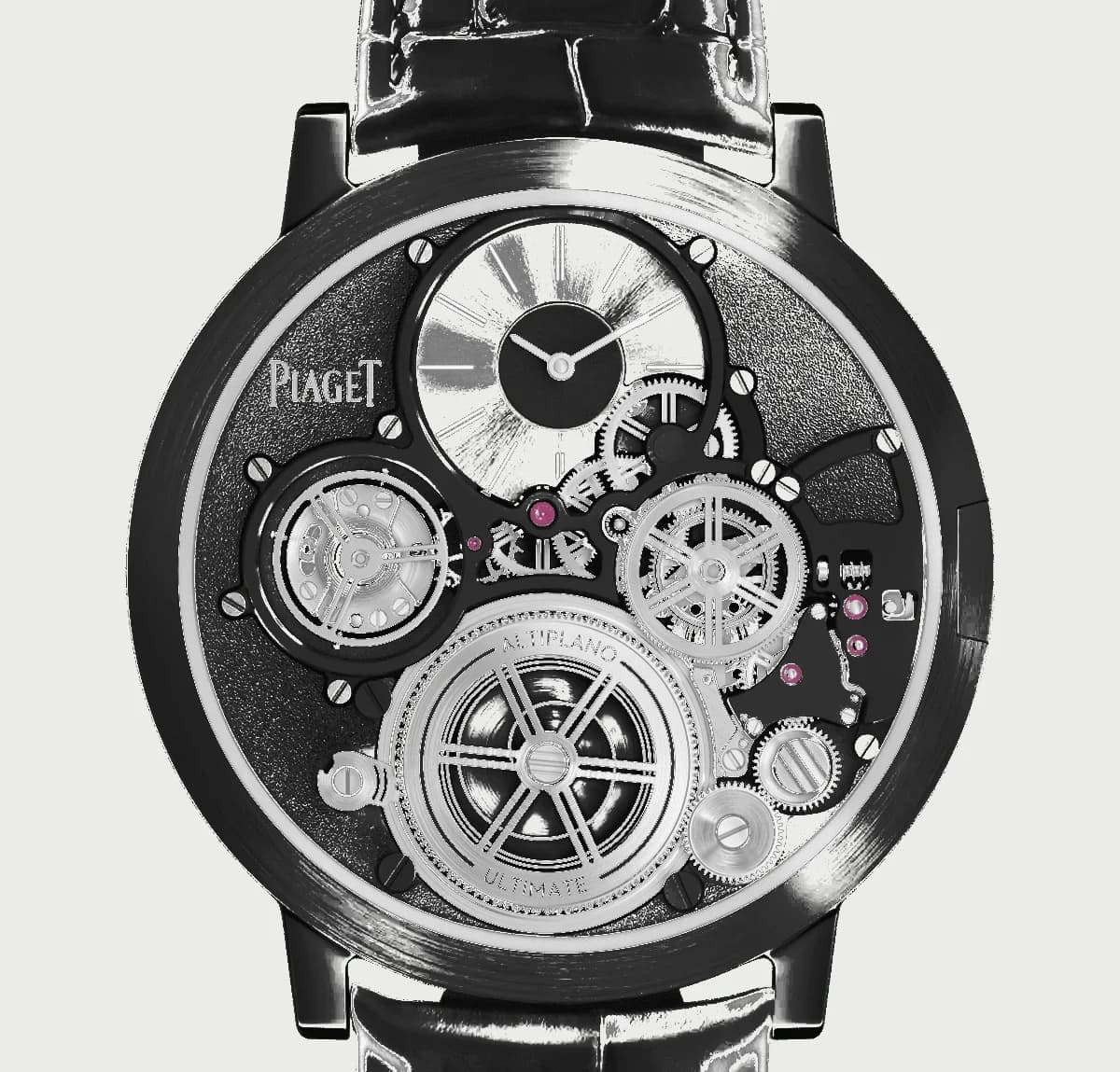
The Piaget Altiplano Ultimate Concept won the Aiguille d'Or at the 2020 GPHG and it did so by being 2mm thick. Two millimeters. The thinnest mechanical watch ever made. For context, the Breguet Classique 7147 is 6.1mm. The Patek Philippe Calatrava is approximately 8mm. A credit card is 0.76mm. The Altiplano Ultimate Concept is less than three credit cards stacked. The Aiguille d'Or is the top prize at the Grand Prix d'Horlogerie de Geneve, the closest thing watchmaking has to an Academy Award. It does not go to the prettiest watch or the most expensive. It goes to the watch that the jury believes represents the highest achievement in the art that year. In 2020, that was a watch you could slide under a closed door.
To understand what Piaget accomplished here, I think it helps to understand where they started. In 1874, Georges Edouard Piaget set up a workshop on his family's farm in La Cote-aux-Fees, a small village in the Swiss Jura mountains. The company spent its first several decades as a movement manufacturer, supplying calibers to other brands rather than selling watches under its own name. That changed in the mid-twentieth century, but the DNA of movement making, of understanding what happens inside a watch at the most fundamental level, never left. In 1957, Piaget introduced the Caliber 9P, an ultra-thin hand-wound movement measuring just 2mm thick with 18 jewels beating at 19,800 vibrations per hour. It had 89 parts and approximately 36 hours of power reserve. At the time, achieving 2mm in a movement alone was considered remarkable. There were no computer-aided design tools. No CNC machines. Components sometimes as thin as a human hair were designed and finished by hand. Three years later, in 1960, they followed it with the Caliber 12P, an automatic movement just 2.3mm thick with 30 jewels that used a 24-karat gold micro-rotor integrated within the movement itself. The micro-rotor concept allowed Piaget to avoid the thickness penalty of a conventional peripheral rotor. The problem with small rotors is that they do not have enough mass to spin effectively, so Piaget used solid 24-karat gold, one of the densest metals available, to compensate. The 12P was listed in the Guinness Book of Records as the thinnest self-winding movement in the world. Piaget did not stumble into ultra-thin watchmaking. They chose it as an identity and then spent the next six decades proving they meant it.
The lineage from 9P to the Altiplano Ultimate Concept runs through the 2014 Altiplano 900P, which at 3.65mm was the thinnest mechanical watch in the world at its introduction. The 900P was the first Piaget to use the case-is-movement architecture, integrating the movement baseplate with the caseback. Then came the Altiplano Ultimate Automatic 910P in 2017 at 4.05mm, the thinnest automatic watch. Each of these watches pushed the same idea further. But the Ultimate Concept, unveiled at SIHH in January 2018 as a concept piece and made available for production in 2020, pushed it to a place that most watchmakers thought was physically impossible.
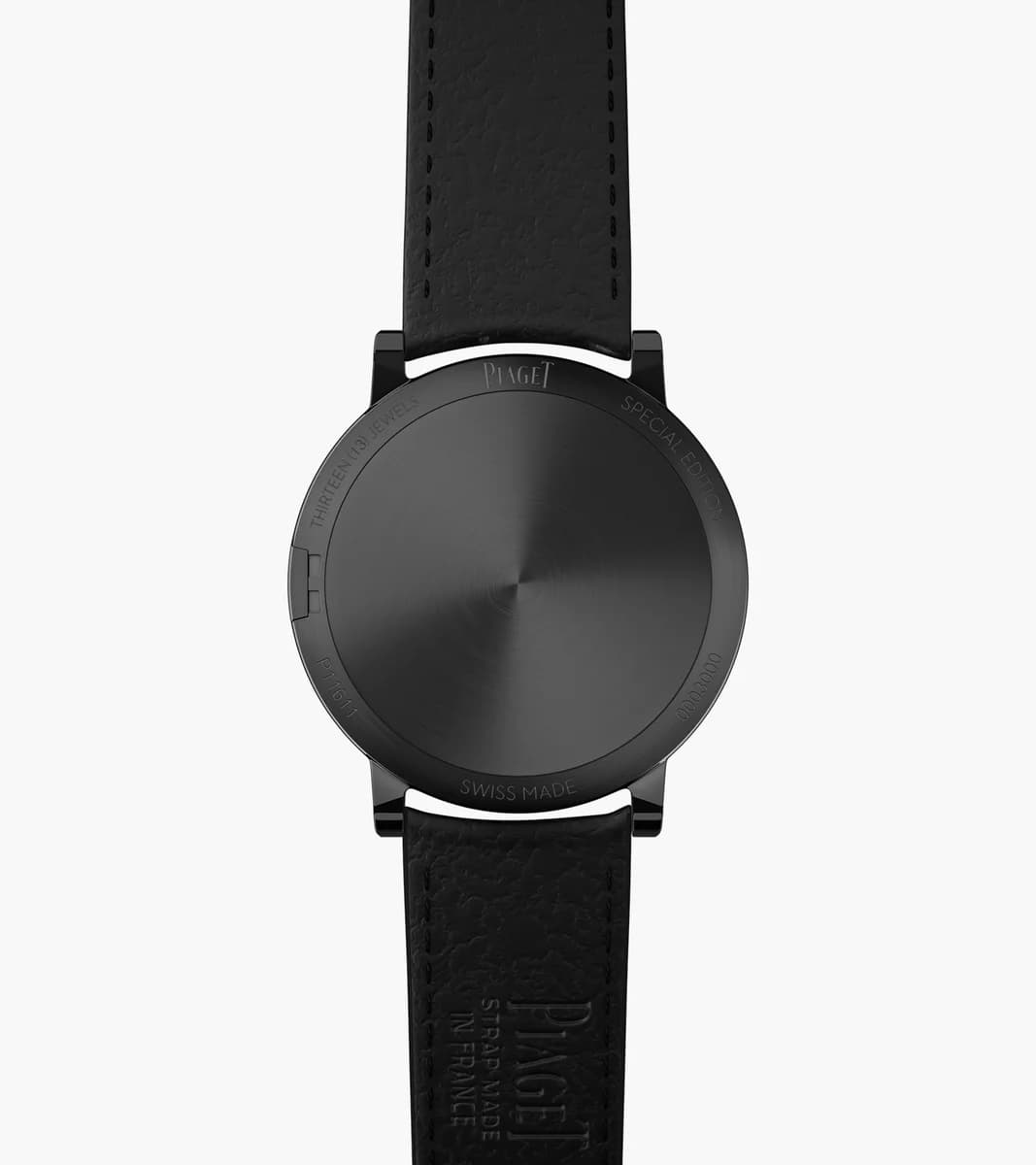
The Caliber 900P-UC is the movement inside the Altiplano Ultimate Concept, though calling it "inside" misrepresents what is actually happening. In a conventional watch, the movement is a self-contained mechanism that gets dropped into a case. The case protects it. The movement does not know what case it lives in, and in theory the same movement could live in a dozen different cases. The 900P-UC eliminates that separation entirely. The caseback is the mainplate. Every component of the movement, the barrel, the gear train, the escapement, the balance, is mounted directly to what you would normally think of as the back of the case. The case is the movement. The movement is the case. They are one monolithic structure. This is not a metaphor. It is a literal description of the construction.
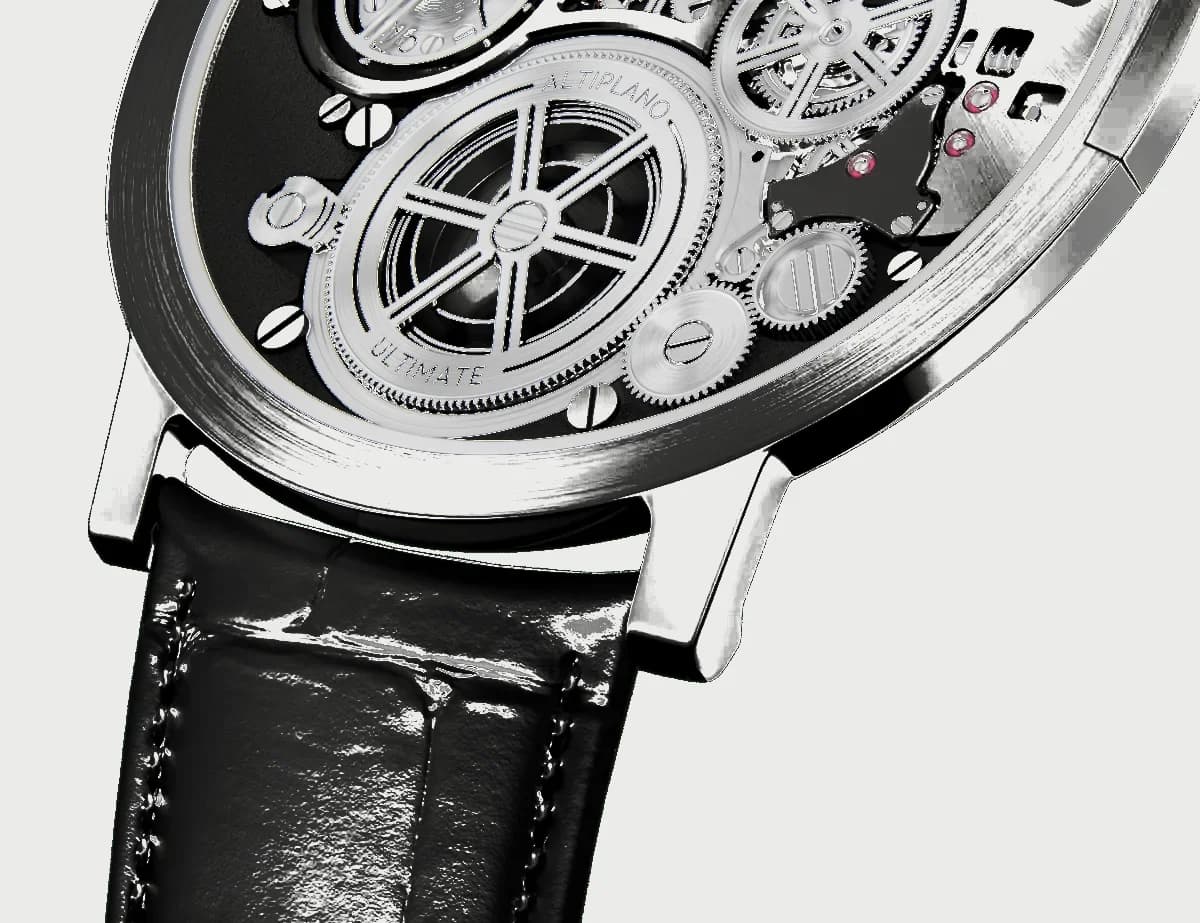
The numbers alone tell the story of what this required. The 900P-UC has 167 parts, 13 jewels, beats at 28,800 vibrations per hour (4 Hz), and delivers approximately 40 hours of power reserve. Those are modest specifications for a modern hand-wound movement. The Patek Philippe Caliber 215 has 18 jewels and 130 parts in a movement that is 2.55mm thick. But the 900P-UC achieves its specifications while being the entire watch, not just the movement. The 2mm includes everything. Case. Movement. Crystal. Dial. Hands. Crown. There is nothing else. Every millimeter has been accounted for and most of them have been eliminated.
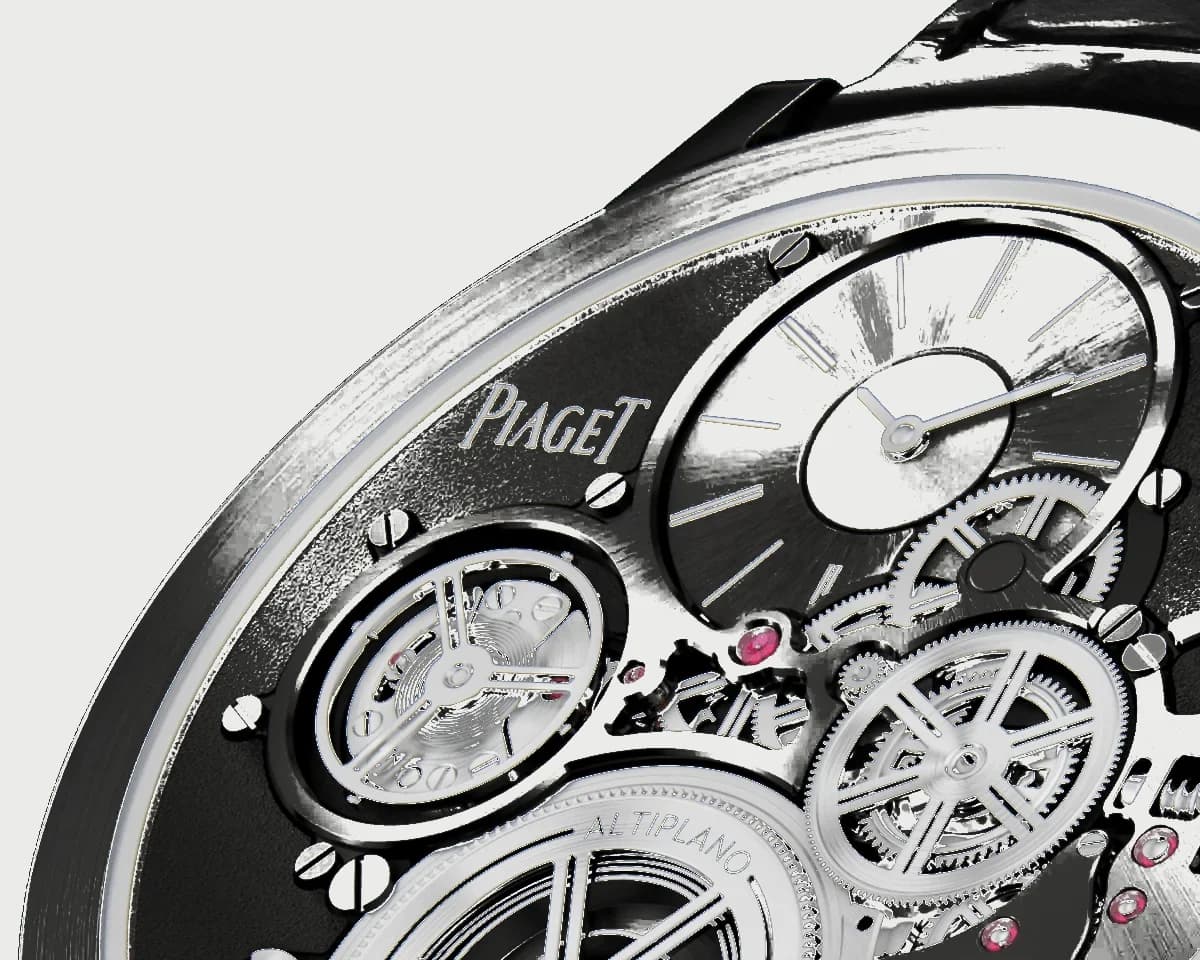
The engineering decisions that made this possible are fascinating individually and almost absurd when you consider them together. The gear train wheels were reduced from 0.20mm thick to 0.12mm. At that thickness, the rejection rate for pallet fork pivots hit 60 percent. Six out of every ten pivots manufactured did not pass quality control. The barrel uses an unconventional open design with ball bearings arranged in a slew-ring configuration, similar to a turntable, rather than being supported by a central pivot. This approach was inspired by Jean Lassale, a now-defunct brand that produced the Caliber 1200 in 1976 at a staggering 1.2mm thick. Jean Lassale used ball bearings to achieve that thinness, and Piaget licensed their intellectual property and patents as a foundation for their own ultra-thin development. The balance wheel is what watchmakers call a "hanging" construction. It is secured only on the mainplate side, with no balance cock above it. In a conventional movement, the balance is held between two points, the mainplate below and the balance cock above, like a spinning top held at both ends of its axis. The AUC removes the top support entirely. The balance hangs from one side. To compensate for the inherent instability, Piaget gave it a thick central shaft supported by a ball bearing embedded in the mainplate and used a free-sprung design with four inertial adjustment screws.
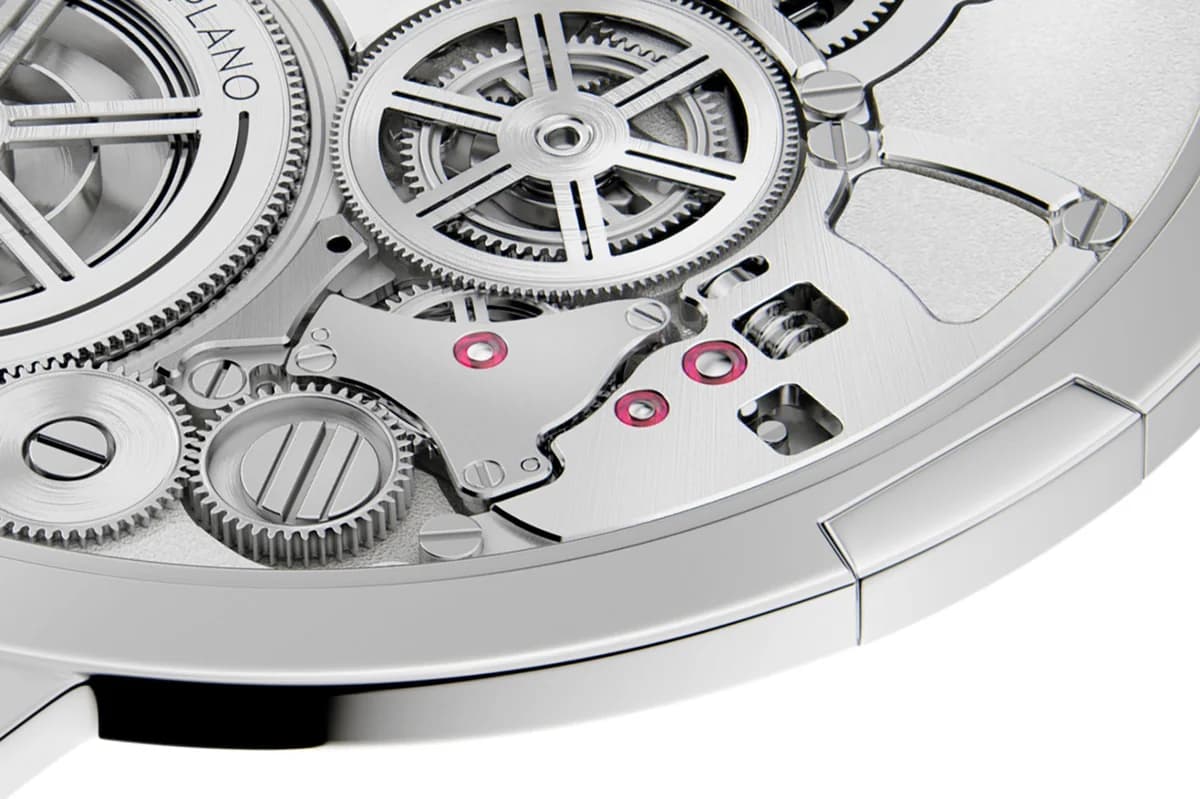
The keyless works, the mechanism that transfers the motion of the crown to the hands and the barrel, uses a worm gear that Piaget calls an "infinite screw." In a conventional watch, the keyless works operate on different planes. The crown shaft runs horizontally while the setting mechanism operates vertically. The AUC needed everything on the same plane to preserve thinness, and the worm gear enables lateral gear mating that solves this. One practical consequence is that winding the watch by hand is genuinely difficult. The crown is rectangular and recessed into the case band. It requires a small winding tool that Piaget supplies with the watch. This is not an oversight. It is a deliberate tradeoff. A conventional crown would protrude and add thickness to the profile.
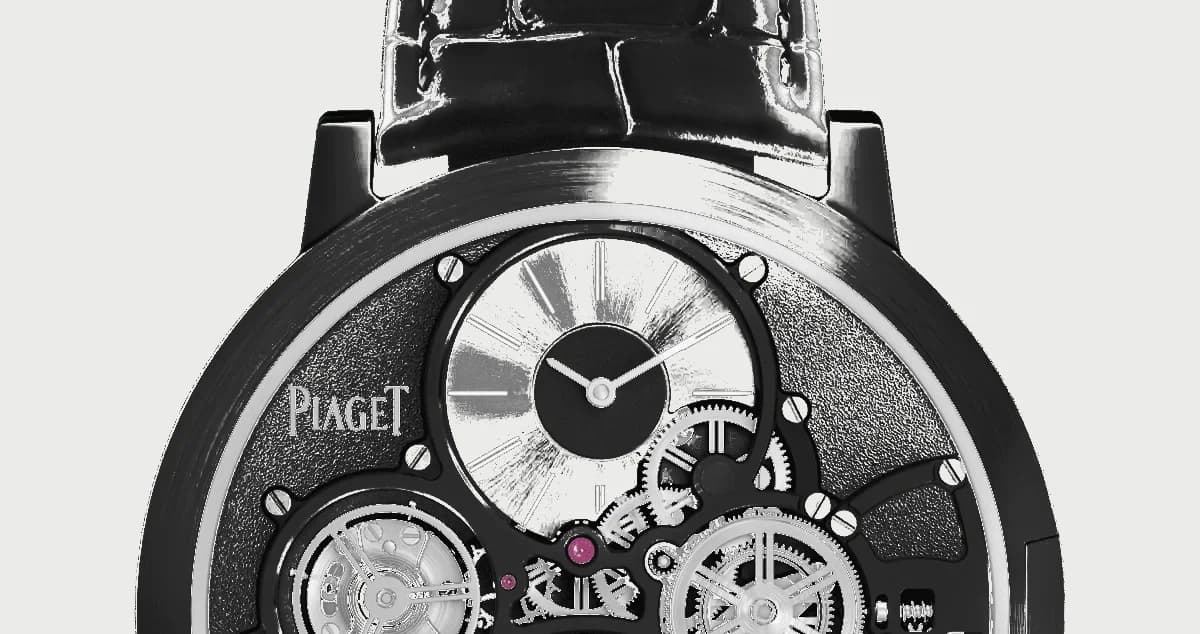
The sapphire crystal is 0.2mm thick. A standard sapphire crystal on a dress watch is typically around 1mm. The AUC's crystal is five times thinner. It cannot be gasketed because a gasket would add thickness. Instead, Piaget cements the crystal to the case using aerospace-grade adhesive. There is no traditional bezel holding the crystal in place. The crystal sits directly on the case band with tiny raised protective lips around the movement apertures to prevent flexing contact with the wheels beneath. Water resistance is 20 meters, which in practical terms means the watch should survive accidental contact with water but is not designed for any deliberate exposure. At 2mm thick with a cemented crystal, that 20 meters is itself an engineering achievement.
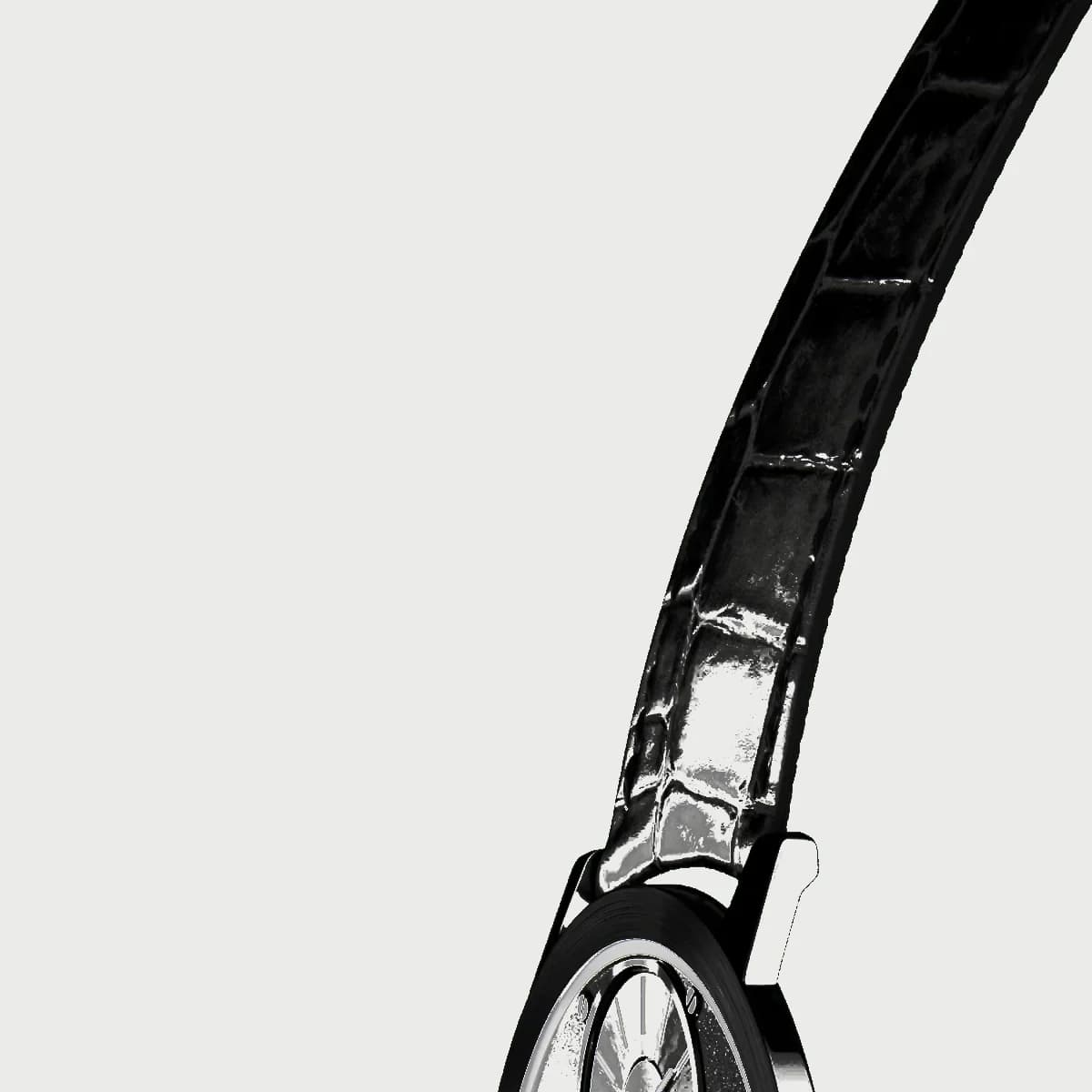
The case band is made from an alloy called M64BC, a cobalt-based material with approximately a third chromium and a meaningful amount of molybdenum. Cobalt alloys are used in aerospace and medical applications where strength-to-weight ratio matters at extreme scales. M64BC has roughly double the yield strength of stainless steel and is approximately 2.3 times stronger than gold. It is also hypoallergenic, similar to titanium. The internal sections of the case are machined to under 0.2mm thickness. Piaget applies a black PVD treatment to the baseplate and caseback with satin brushing, while the case sides receive a polish. The contrast between the two finishes is subtle but visible, and it gives the AUC a visual depth that you would not expect from something so thin.
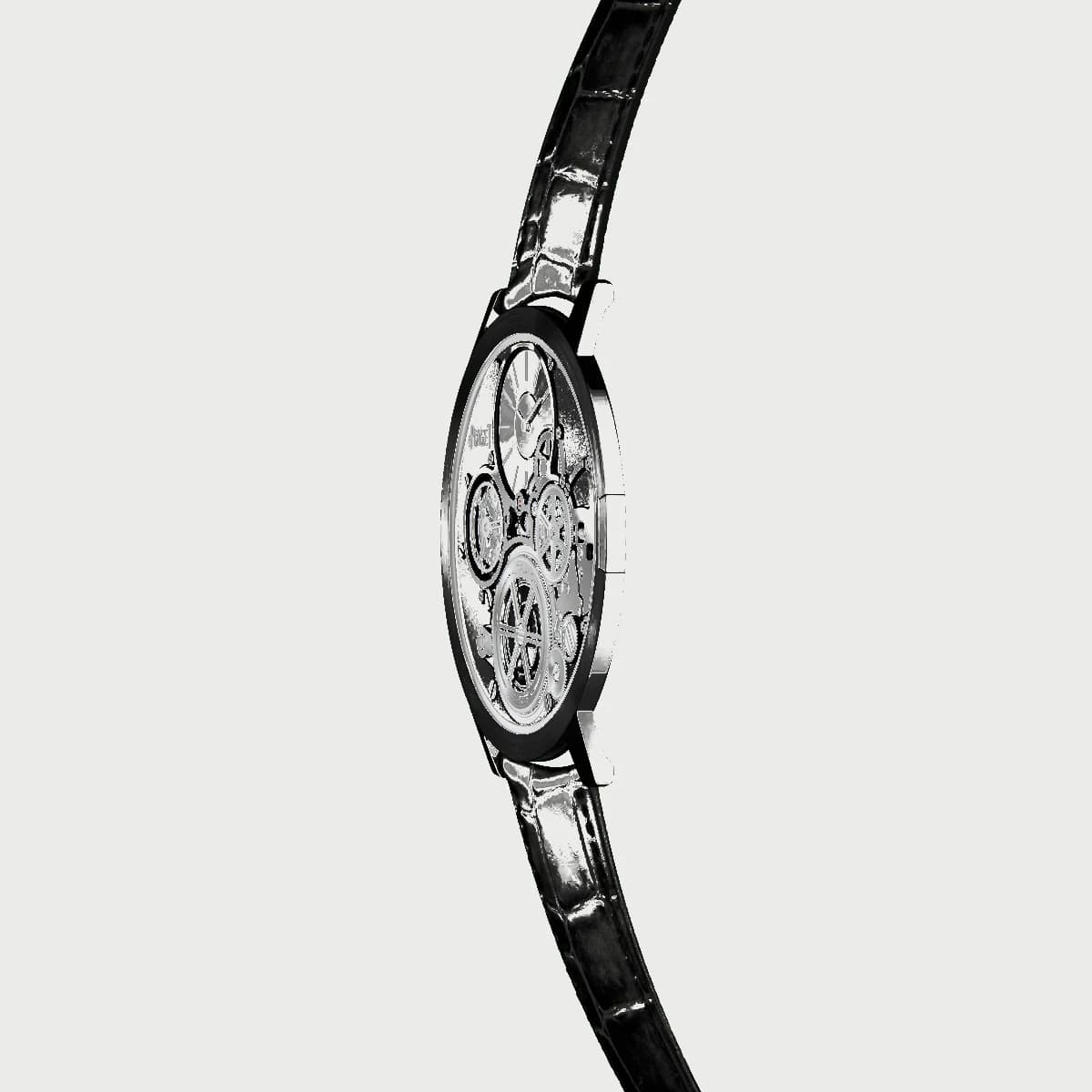
What strikes me about the display layout is how honest it is. The hours and minutes are offset toward 12 o'clock rather than centered on the dial. This is not an aesthetic choice. The barrel sits at the lower portion of the movement, and the dial indicators are positioned above it because that is where the gear train terminates. The dial itself sits beneath a bridge, which provides an additional layer of protection from crystal flex. Looking at the watch face on, you can see the barrel through the openworked construction, and if you look carefully you can gauge the remaining power reserve by how much mainspring is wound. It is a fully skeletonized barrel, functional transparency rather than decorative.
The whole watch, case and strap together, weighs 23 grams. For context, a Rolex Submariner on steel weighs roughly 155 grams. An Omega Speedmaster Moonwatch is around 80 grams. Even a Jaeger-LeCoultre Master Ultra Thin, one of the thinnest conventional watches you can buy, weighs about 55 grams. The AUC weighs less than a handful of coins. On the wrist, the 41mm diameter gives it a modern presence, but the 2mm height makes it essentially invisible under a shirt cuff. It does not sit on the wrist the way a normal watch does. It conforms to it. The alligator leather strap is itself only 2mm thick, with a Kevlar insert for structural integrity. Early prototypes tested 1.1mm Kevlar-core straps that were deemed impractical because they could not support the pin buckle.
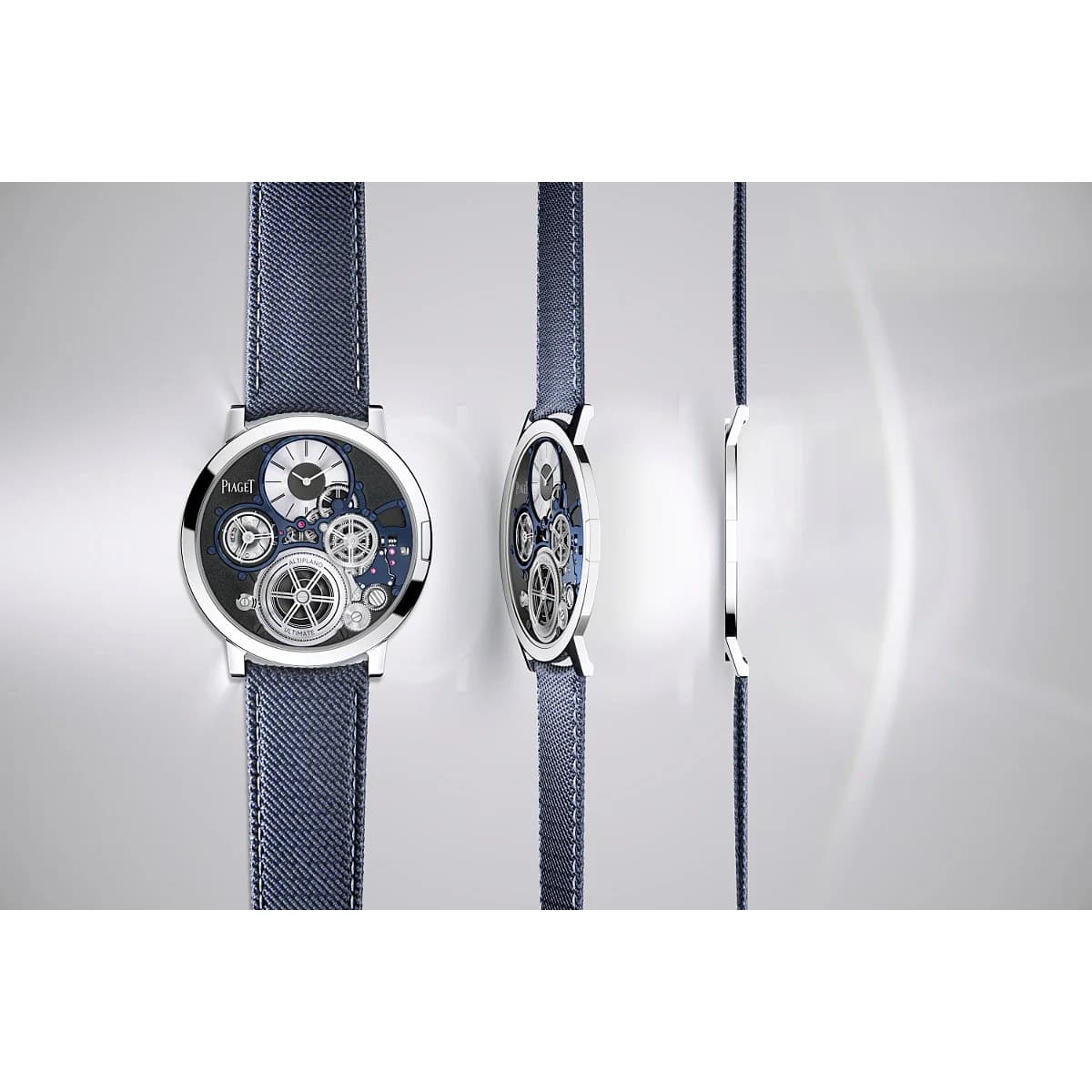
Piaget produces approximately five Altiplano Ultimate Concepts per year. Each one is fully customizable through a bespoke service with over 10,000 possible combinations of case color, plate finish, chapter ring, and dial configuration. This is not a mass-produced watch by any definition. The accuracy is regulated to negative five to positive fifteen seconds per day, wider than COSC chronometer standards, which is a direct consequence of the hanging balance construction and the extreme thinness. Piaget does not pretend otherwise. The AUC is not trying to be the most accurate watch. It is trying to be the thinnest. That is its entire reason for existing, and it succeeds at that single objective more completely than any mechanical watch in history.
The honest critique is the fragility, and Piaget themselves are transparent about it. At 2mm, with a 0.2mm sapphire crystal cemented to the case, the AUC cannot absorb the kind of impact that even a basic dress watch handles without concern. I would worry about bumping it on a doorframe. I would worry about setting it down on a hard surface. The cemented crystal means that if it does crack, the repair is not a simple crystal replacement. The crystal has to be carefully removed and re-cemented. The lack of a traditional crown means you need a separate tool to wind it. The 40-hour power reserve means winding every day, without the option of a quick wind with your fingers if you are running low. And the 20-meter water resistance, while technically adequate for splash protection, means this watch needs to come off before you wash your hands with any enthusiasm. These are not flaws. In my experience with watches that push a single parameter to its limit, there are always consequences. When you decide that 2mm is the goal and everything else serves that goal, these tradeoffs are inevitable. I respect that Piaget does not try to hide them.
Piaget sits within the Richemont group, alongside Cartier, IWC, Jaeger-LeCoultre, Vacheron Constantin, A. Lange and Sohne, and Panerai. Richemont acquired Piaget in 1988 through the Vendome Group, but the family's ultra-thin DNA preceded the acquisition by decades. The ultra-thin expertise at Piaget is distinct from anything else in the group. JLC has its own thin movement heritage, including the Caliber 849 at 1.85mm, but JLC's approach to thinness is about creating refined dress watches within conventional construction. Piaget's approach is about pushing the physics. Within Richemont, Piaget is the laboratory for extreme thinness the same way Lange is the laboratory for finishing and Cartier is the laboratory for design language. Each brand has its territory, and Piaget's territory is the vanishing point where a watch approaches the physical limits of mechanical construction. The Altiplano collection itself traces directly back to the 9P and includes references at 6.36mm, 5.25mm, and 4.05mm in addition to the 2mm Ultimate Concept. If you visit La Cote-aux-Fees in the Swiss Jura, the village where Georges Edouard Piaget started on his family farm, you begin to understand how deeply this pursuit is embedded in the brand. It is a quiet, small place, and the watches that come from it have that same quality of quiet intensity.
The development of the AUC took approximately six years from initial concept to the SIHH 2018 unveiling, and another two years before production pieces became available. Five patents were filed. The 900P-UC required new manufacturing techniques for nearly every component. The wheels are too thin for conventional stamping. The pivots are too delicate for standard turning. The crystal is too thin for traditional setting. The crown is too small for normal operation. At every step, the answer was not "find a better version of the existing solution" but "invent a new solution." Computer numeric machining paired with ceramic ball bearings that require no lubrication replaced the traditional jeweled pinion approach in several areas.
There is no lume on the hands or indices. At 2mm, there is no room for luminous material application, and the off-center subdial is too small for it to be practical. In low light, the polished hands catch ambient light well enough for basic legibility, but in true darkness this watch goes dark. This is not a concern for a watch of this nature. Nobody is checking the time at 3 AM with a watch that requires a tool to wind.
On my wrist, the AUC sits so flat that it disappears under a Caccioppoli tropical weight wool cuff without any resistance at all. There is no catching, no bump, no acknowledgment that a watch is present. On darker skin tones, the cobalt alloy case with its black PVD treatment creates a sleek, dark presence that reads more like a piece of sculpture than a traditional watch. It is not trying to catch light the way a polished steel or gold case does. It absorbs it. The visual effect is quieter, more architectural, and in person the thinness is genuinely startling. Photographs do not communicate it. When you see 2mm in the flesh, your brain has to recalibrate what it thinks a watch is supposed to look like.
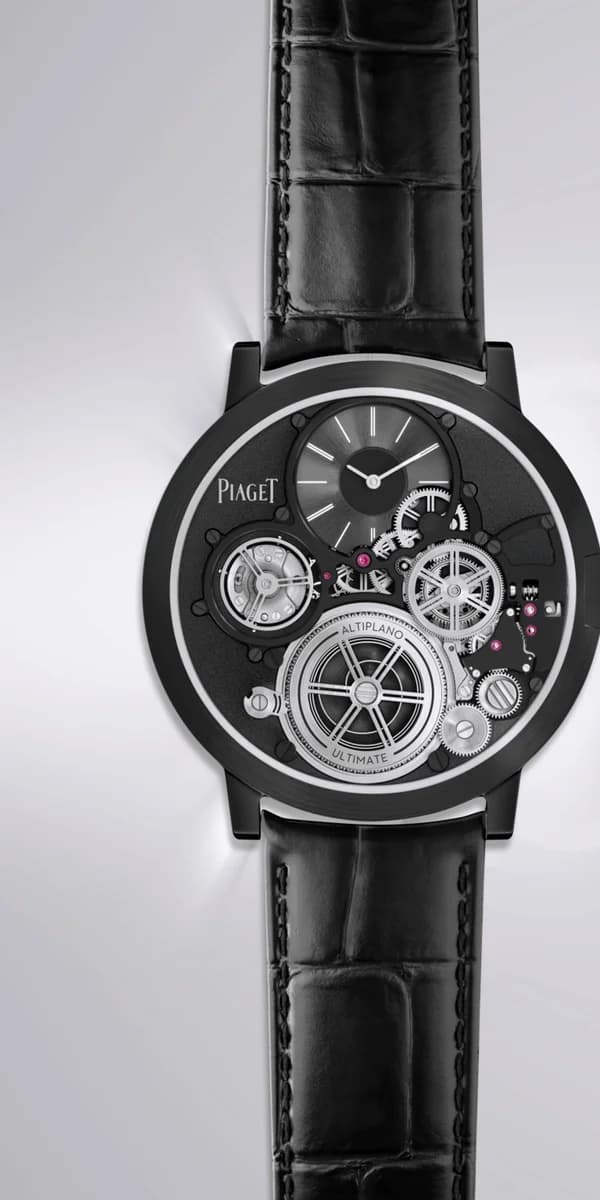
I include this watch because it represents the opposite approach from watches that add complexity. Some watchmakers demonstrate mastery by fitting 500 parts into a case, by stacking complications on top of complications, by making a watch do twenty things at once. Piaget demonstrates mastery by removing everything. Both approaches require extraordinary engineering. The difference is philosophical. One says "look what we can build." The other says "look what we can take away and still have a functioning mechanical watch." The Altiplano Ultimate Concept contains 167 parts in 2mm. Every single one of those parts was redesigned, re-engineered, and in many cases re-invented to exist at this scale. That is the kind of engineering that deserves the Aiguille d'Or.
Also in Design Icons