
Patek Philippe
Nautilus
5811/1G-001
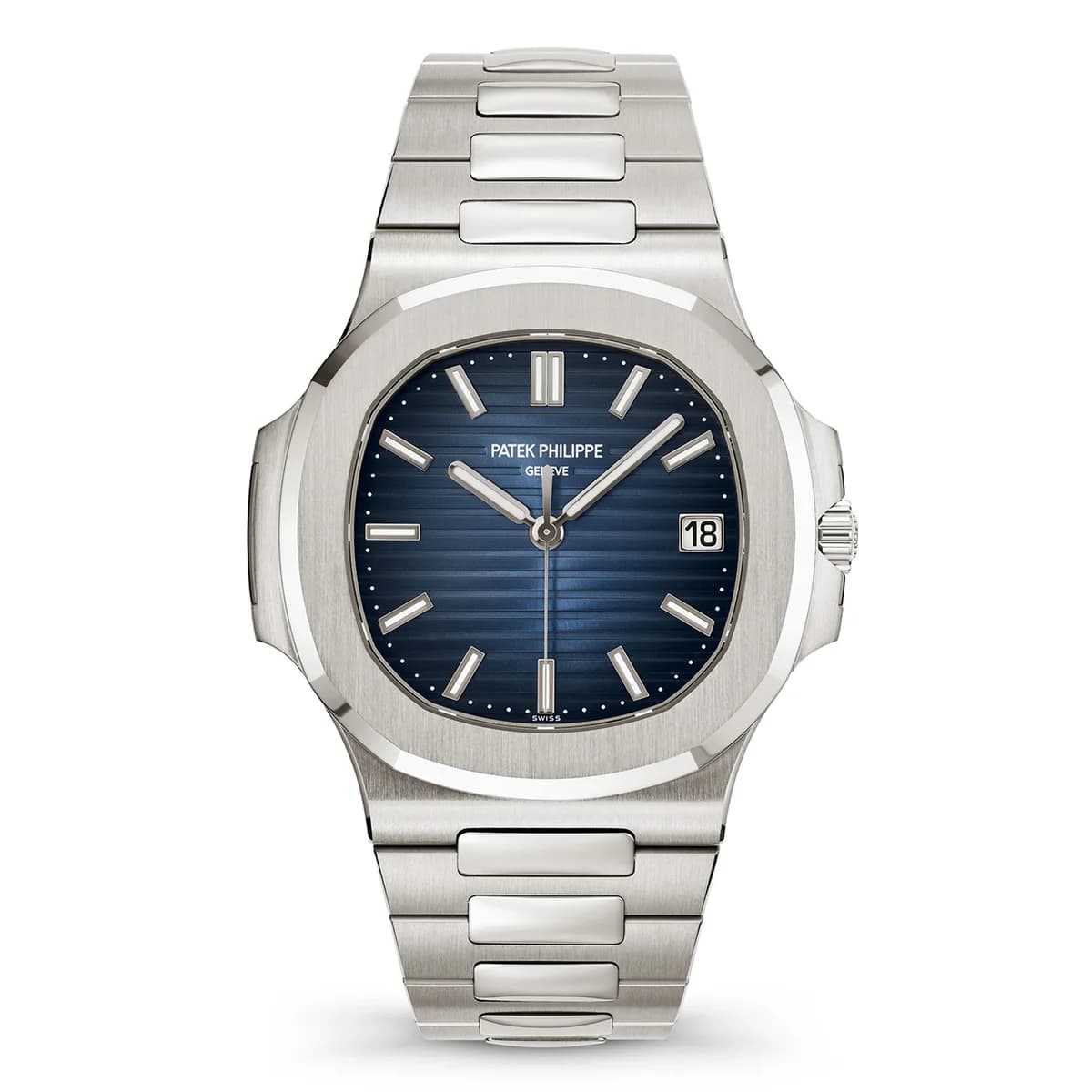
The story of the Nautilus starts the same way the story of the Royal Oak starts: with Gerald Genta, a pencil, and not enough time. Four years after sketching the Royal Oak overnight for Audemars Piguet, Genta found himself at the restaurant of a hotel, sitting alone at one end of the dining hall while a group of Patek Philippe executives sat at the other. He asked the head waiter for a piece of paper and a pencil, and in roughly five minutes he drew the watch that would become the Nautilus. The year was 1976, and the reference 3700/1A launched into a market that had absolutely no idea what to do with it. A stainless steel sports watch from Patek Philippe, the house of the Calatrava, the house of the perpetual calendar, the house that had spent over a century building its identity on dress watches in precious metals. The original print advertisement leaned into the absurdity of it: one of the world's most costly watches, made of steel. The same designer who had scandalized the industry with an octagonal steel sports watch at Audemars Piguet did it again at Patek Philippe, this time with a porthole. I wrote about the Royal Oak 15300OR in this collection, and what fascinates me about Genta is that both watches drew from the same well of inspiration, industrial shapes translated into luxury objects, but arrived at completely different personalities. The Royal Oak took the octagonal bolt pattern from a Royal Navy diver's helmet. The Nautilus took the rounded ears and integrated form of a ship's porthole. Both were steel, both were integrated bracelet designs, both were scandalously expensive for what people at the time considered a base material. And both changed the trajectory of watchmaking in ways that are still felt today. The porthole reference was not subtle. The two "ears" flanking the case at three and nine o'clock, the flat bezel pressing down onto the case like a hatch being sealed shut, the integrated bracelet flowing from the case as if the entire object had been forged from a single piece of metal. Everything about the shape communicated maritime engineering reinterpreted for the wrist.
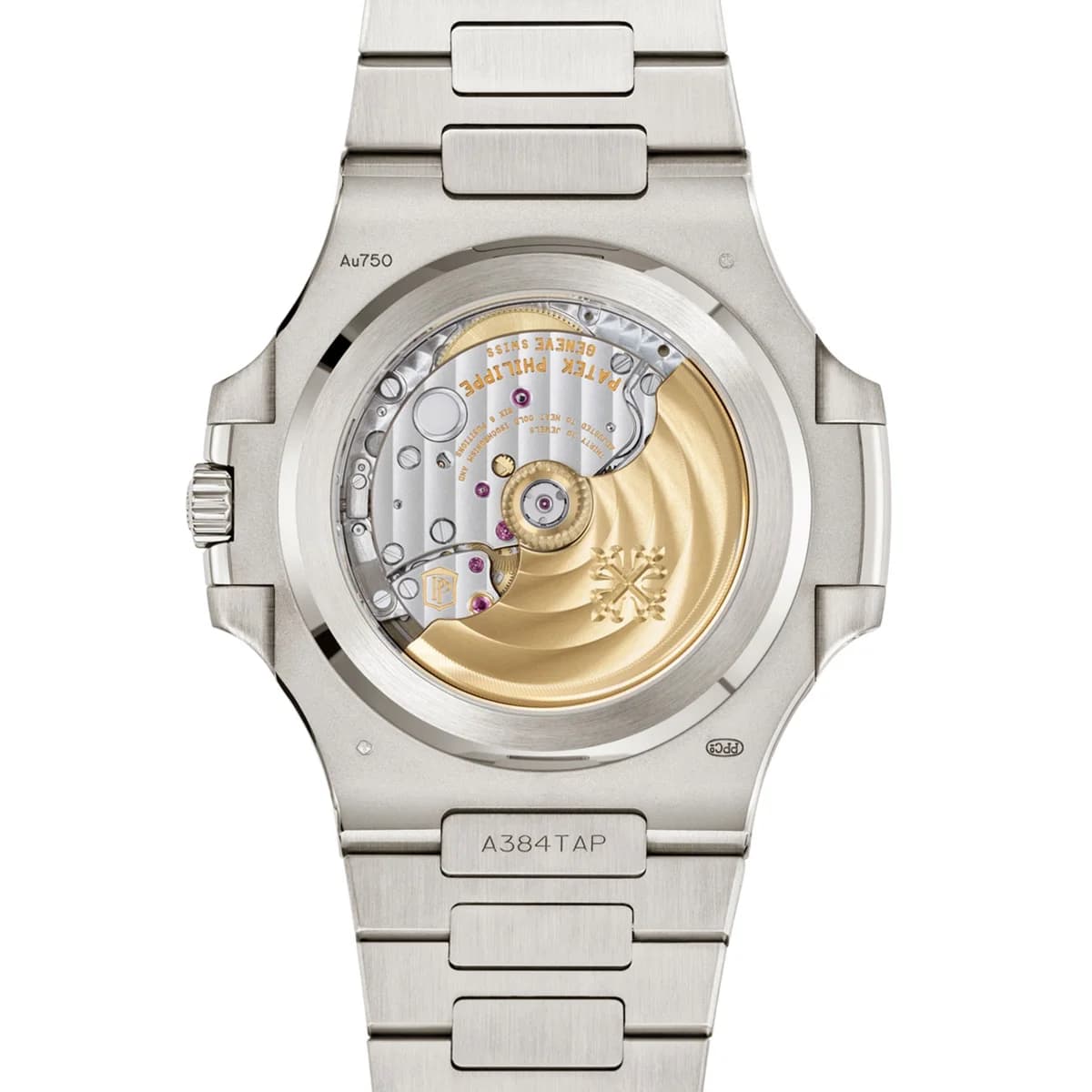
The lineage from the 3700 to the 5811 spans nearly fifty years, and each generation tells you something about where Patek Philippe's head was at the time. The original 3700/1A, nicknamed the "Jumbo," measured 42mm from ear to ear and used a two-part monobloc case where the mid-case and caseback were a single piece. You could only access the movement from the dial side. That was the original porthole concept, a sealed chamber entered from the front. It ran for about fourteen years before giving way to the 3800 in the late 1980s, which shrank the case to 37.5mm and added a date complication. Then came the 5711 in 2006, which grew the case to 40mm, introduced a modern three-part case construction where the movement entered from the back, and eventually received the Caliber 26-330 S C in its final production years. The 5711 became the single most sought-after sports watch in the world, and Patek discontinued it in 2021. What followed was a gap, about a year and a half where the Nautilus lineup had no time-and-date reference in the core collection. In October 2022, Patek Philippe introduced the 5811/1G-001, and the statement it made was immediate. The successor to the most famous steel sports watch in the world was not steel at all. It was 18K white gold. Where the 5711 had been the watch that everyone wanted, the 5811 was the watch that Patek Philippe wanted the Nautilus to be. A luxury sports watch that stopped pretending it belonged anywhere near the word "accessible." And in one of the more interesting engineering decisions, Patek returned the 5811 to the two-part monobloc case construction of the original 3700. The mid-case and caseback are again a single piece, with the movement entering from the dial side. To make this work with a modern crown mechanism, Patek developed a patent-pending pull-out piece lever system that replaces the split-stem design used in the 5711. The 5811 is not just the successor to the 5711. In its construction philosophy, it is a return to 1976.
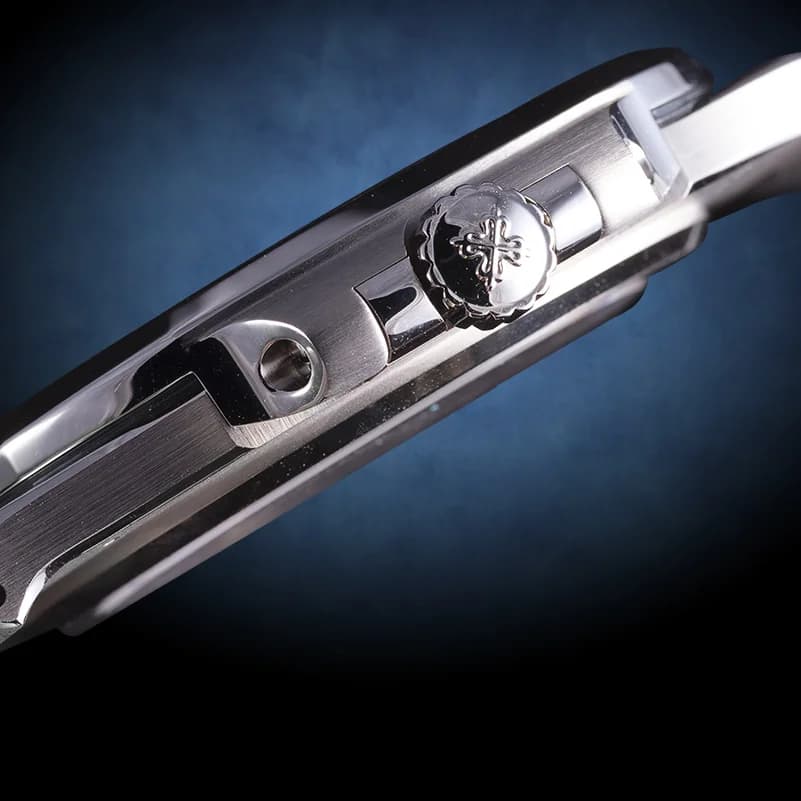
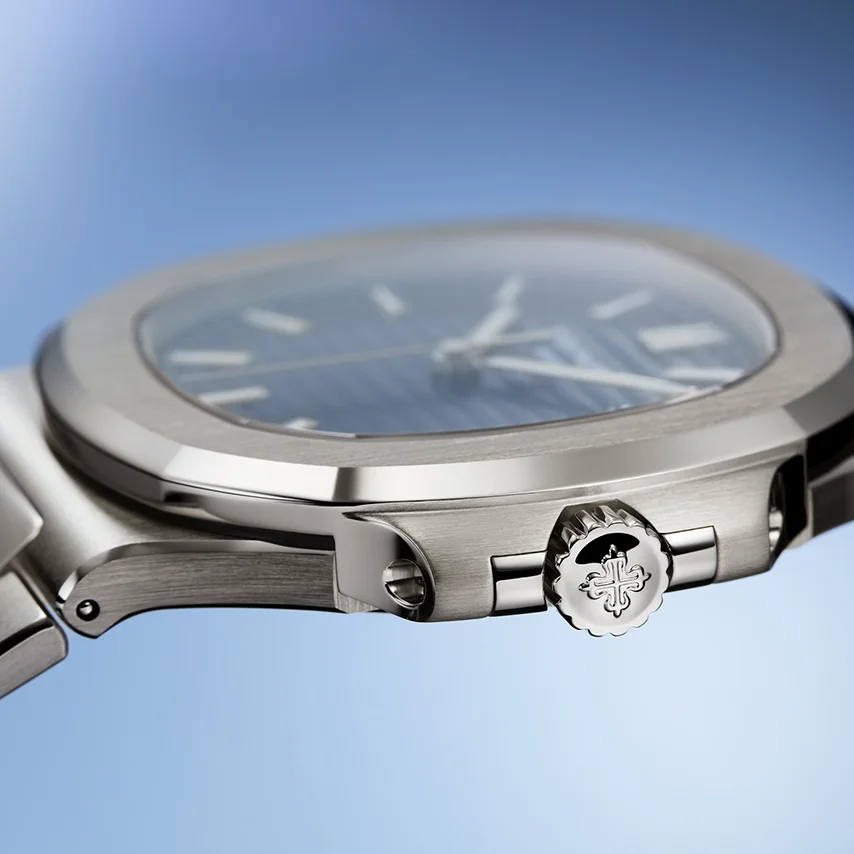
The choice of white gold is one of those decisions that reveals more about a brand's philosophy than any press release could. White gold looks like steel. In photographs, on the wrist, across a table, you cannot tell the difference by sight alone. The color is nearly identical, the satin brushing reads the same way, the polished surfaces catch light with the same character. But the moment you pick it up, the illusion ends. White gold is roughly twice the density of stainless steel. The 5811 carries a weight on the wrist that the 5711 never had, a heft that registers every time you move your arm. I love that tension between visual discretion and physical presence. You are wearing one of the most precious materials in watchmaking, and nobody around you knows it unless they feel the weight themselves. This is Patek Philippe telling you something about who they think the Nautilus is for. Not for someone who wants the world to know what is on their wrist. For someone who wants to know. The white gold case at 41mm with a thickness of just 8.2mm sits flat against the wrist with a density that grounds it. It does not float on the skin the way a steel watch can. It settles. There is an authority to it that has nothing to do with how it looks and everything to do with how it feels. The material also brings practical considerations. White gold is softer than steel, roughly 2.75 on the Mohs hardness scale compared to 5.5 for stainless. The polished bevels on the case and bracelet will pick up micro-scratches over time. Some people treat that as damage. I see it as the watch recording its own history, the same way I discussed with the Royal Oak 15300OR in rose gold. Precious metals patina. That is part of the experience of wearing them.
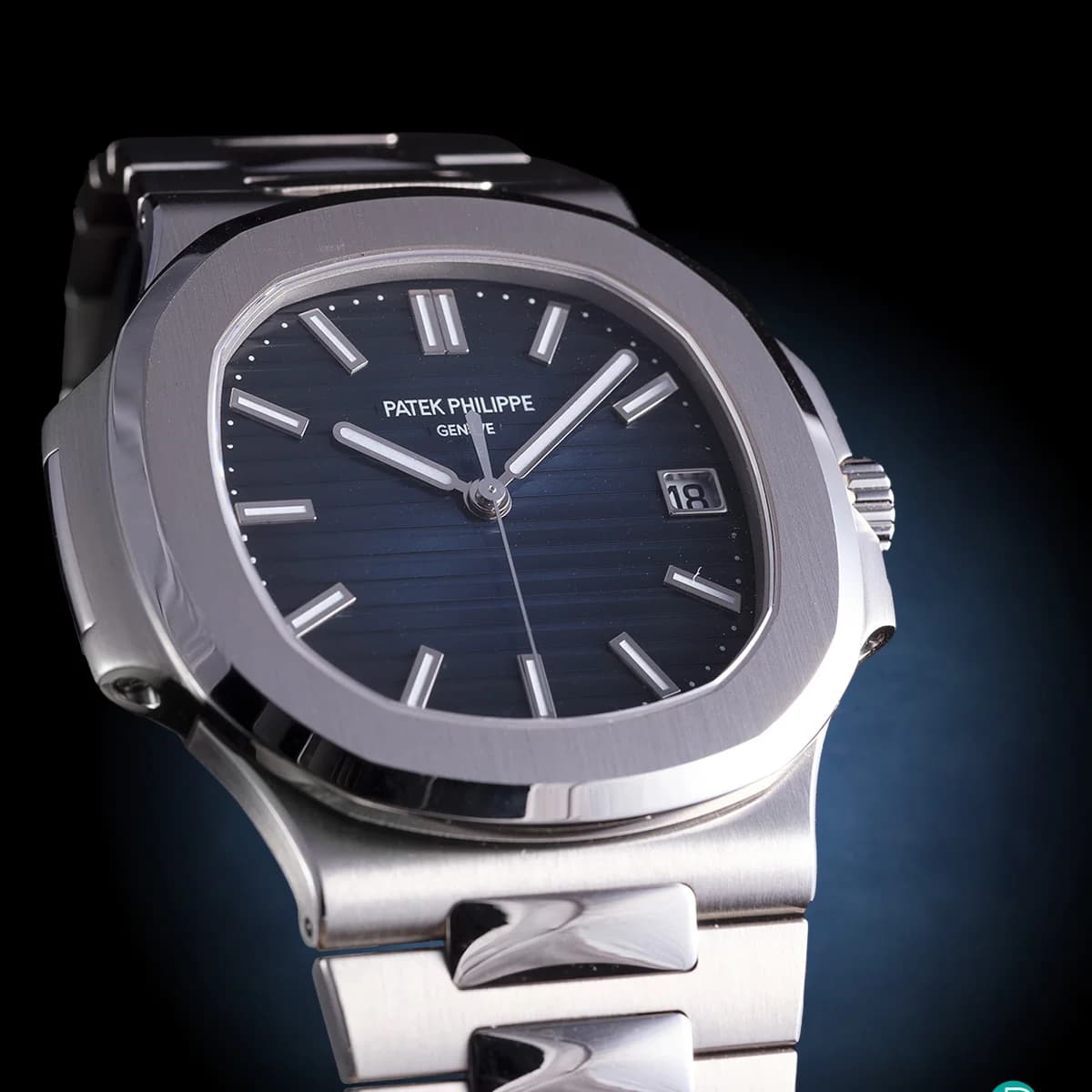
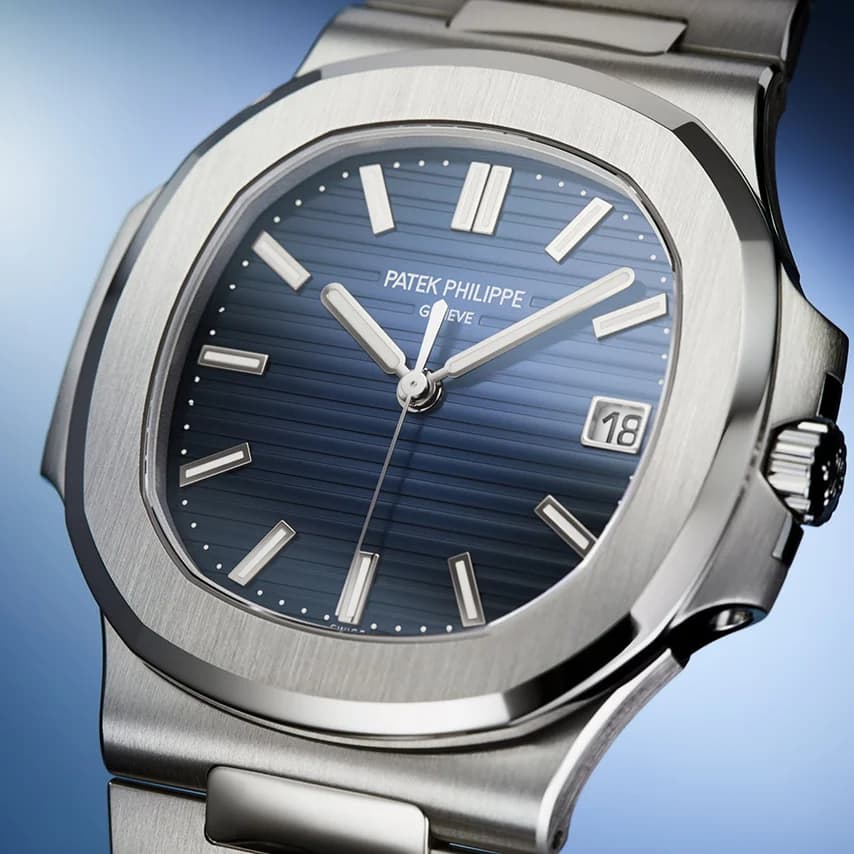
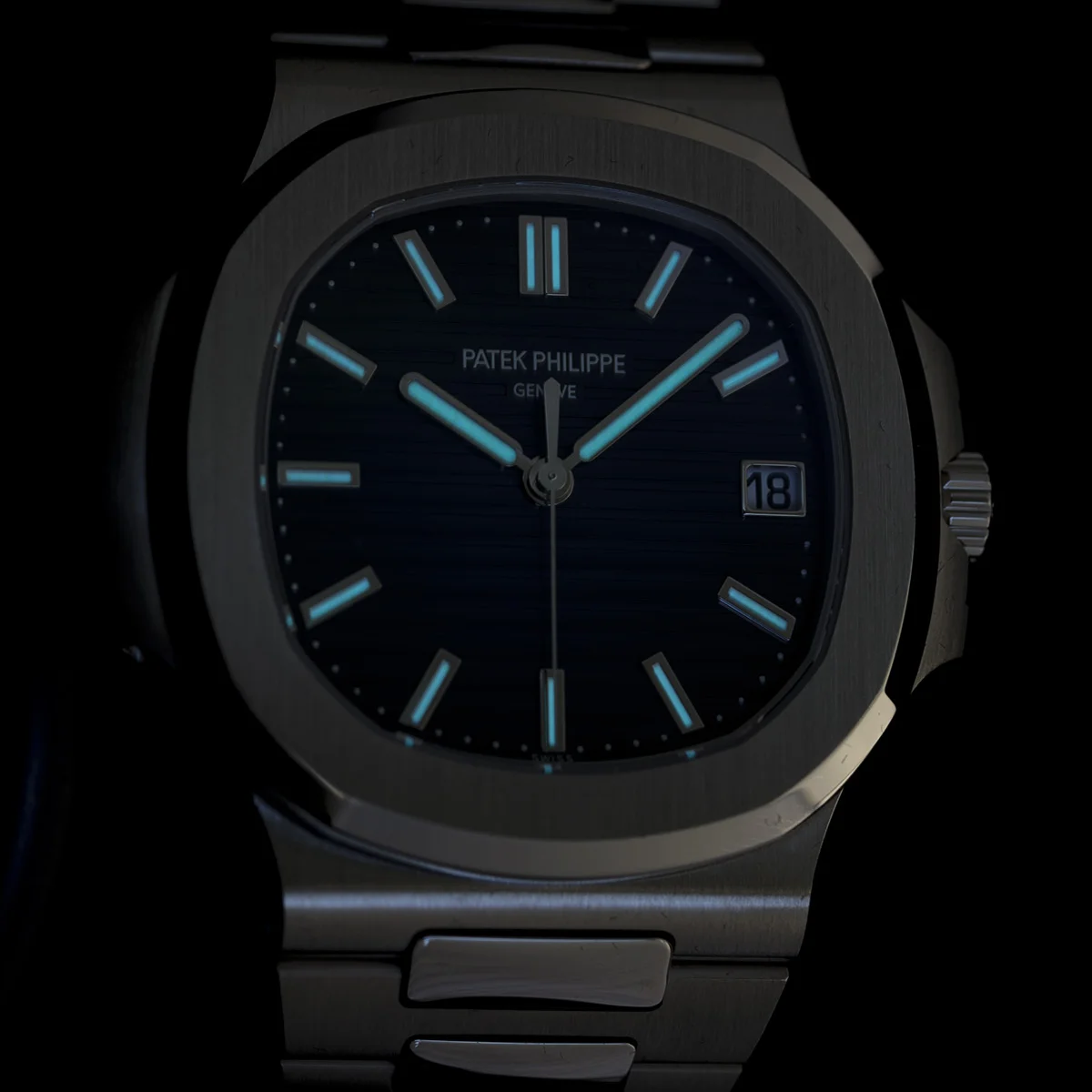
The dial is where the Nautilus earns its emotional pull, and the 5811 continues a tradition that has been evolving since 1976. The horizontal embossing is the signature. Raised ridges run across the entire dial surface, catching and releasing light as the angle shifts. Under direct overhead lighting, the pattern is almost invisible, just a smooth blue sunburst. But tilt the wrist, and the ridges emerge, casting micro-shadows that give the dial a three-dimensional texture no photograph fully captures. The blue itself is not one color. It is a gradient, darker at the periphery, lighter toward the center, with a sunburst finish underneath the embossing that shifts between navy, cobalt, and almost black depending on the light source. What strikes me about this dial is how it manages to be the most recognizable dial in sport watchmaking while also being impossible to pin down in a single description. Every time I see it under different light, it looks like a different shade. The applied hour markers in white gold sit against that blue with a quiet authority. The date window at three o'clock is integrated into the dial with the kind of restraint that Patek applies to everything. It does not dominate. It serves. There is a richness to that horizontal embossing that the Aquanaut's checkerboard grid does not quite achieve. The Aquanaut's embossed pattern, which I wrote about in the 5167R article, is a larger, more open grid that reads as modern and approachable. The Nautilus pattern is finer, tighter, and more architectural. It rewards closer inspection in a way that the Aquanaut's pattern does not demand. The interplay between the horizontal lines of the embossing and the radial burst of the sunburst base finish creates two competing textures on a single surface, and the way they resolve differently under every lighting condition is what keeps the dial from ever looking static.
The movement inside the 5811 is the Caliber 26-330 S C, and this is where the connection to the Aquanaut becomes technical rather than aesthetic. It is the same caliber. The 5167R Aquanaut that I wrote about in this collection uses the exact same movement, and I find that worth sitting with for a moment. Two watches with completely different identities, different case shapes, different dial treatments, different bracelets versus straps, and the mechanical heart is identical. The 26-330 S C is a self-winding movement with hours, minutes, sweep seconds, and a date function. It runs at 28,800 vibrations per hour, which is 4 Hz, the frequency that most modern luxury movements have settled on as the optimal balance between accuracy and power consumption. It contains 30 jewels and delivers a power reserve of 35 to 45 hours. The movement measures 27mm in diameter and stands just 3.3mm tall, which is critical because it allows the 5811 to maintain that 8.2mm case thickness despite being a 41mm sport watch. For context, a Royal Oak with the Caliber 3120 is 9.4mm thick. The Nautilus beats it by more than a millimeter. The winding rotor is 21K gold, and the regulating organ uses a Gyromax balance with a Spiromax hairspring made from Silinvar, Patek's silicon-based material developed in collaboration with the CSEM and Rolex. Silicon is non-magnetic, requires no lubrication, and maintains its elastic properties over time in ways that traditional metal hairsprings cannot. The entire movement carries the Patek Philippe Seal, which guarantees a rate accuracy of negative one to positive two seconds per day, tighter than the COSC chronometer standard of negative four to positive six. The Seal also covers finishing quality of every component, geometric fidelity of every part, and a lifetime service commitment for every watch Patek Philippe has produced since 1839. One improvement the 26-330 brought over its predecessor, the 324 S C, is a stop-seconds function. You pull the crown, the seconds hand stops, and you can set the time with precision. It also eliminated backlash in the seconds hand for a smoother sweep. These are incremental refinements, not revolutionary changes, but they reflect Patek's approach to movement development: iterate on what works, make it better in ways that matter to the person wearing the watch.
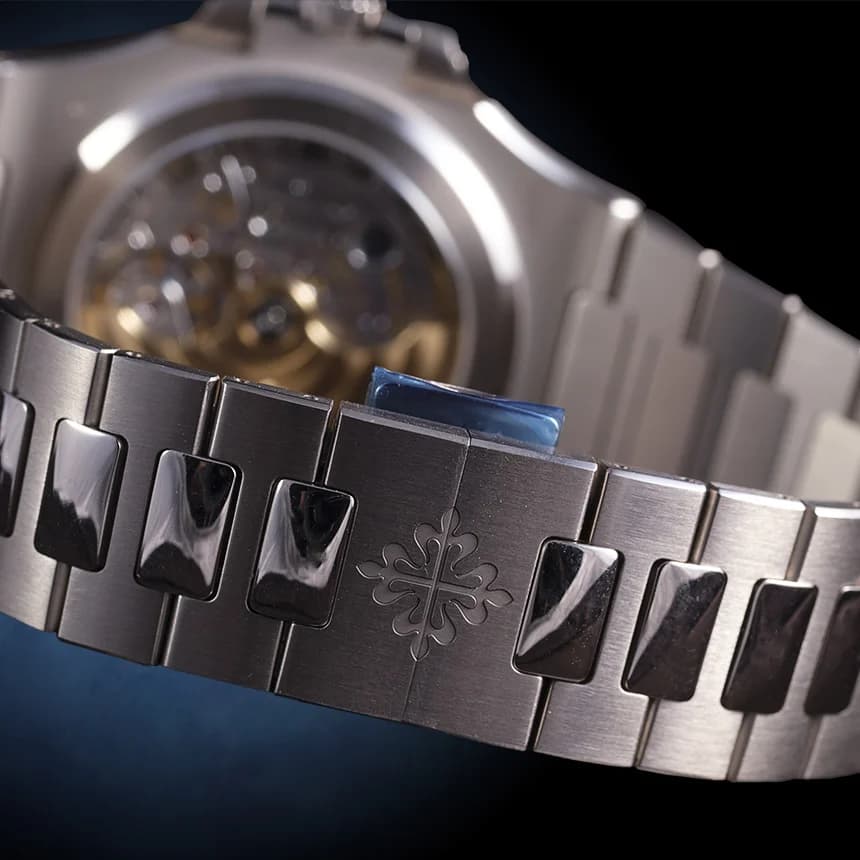
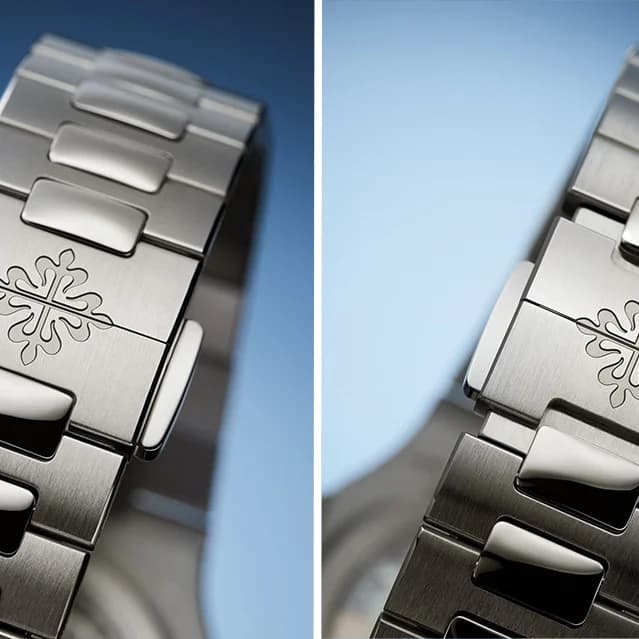
The bracelet on the Nautilus has always been as much a part of the design as the case and dial, and the 5811 refines it in ways that matter for daily wear. The horizontal links echo the horizontal embossing on the dial, creating a visual continuity that runs from the dial face through the lugs and down the wrist. The finishing alternates between satin-brushed surfaces and polished bevels on the link edges, and in white gold, those transitions between matte and mirror catch light in a way that gives the bracelet its own presence independent of the case. The fold-over clasp on the 5811 is a significant upgrade from the 5711. It is a butterfly-style deployant secured by four independent catches that release when you depress two push buttons on the sides of the joint. This clasp design first appeared on the Perpetual Calendar reference 5740, and Patek brought it to the Nautilus for the 5811. More importantly, the clasp includes a lockable comfort adjustment system. Small pushers on each end of the deployant allow you to extend the bracelet by approximately 2mm per side, giving you up to 4mm of total adjustment on the fly. That matters more than it sounds. Anyone who has worn a metal bracelet through a full day, from an air-conditioned office to a warm outdoor evening, knows that wrists change size. The difference between a bracelet that fits perfectly at 9am and one that feels slightly tight by 3pm is real, and most brands ask you to live with it or carry a tool. I appreciate that Patek addressed this without requiring tools, without half-links, without any of the workarounds that other brands force on their owners. The bracelet is what transforms the Nautilus from a good watch into a complete wearing experience. Without it, you have a beautiful case and dial. With it, you have a watch that wraps the wrist with a coherence that very few integrated designs achieve.
I want to be honest about where the 5811 falls short or at least where it creates friction. The white gold exclusivity is a deliberate choice, but it means there is no accessible entry point to the current Nautilus time-and-date collection. The 5711 in steel offered something that the 5811 in white gold does not, a version of this design that felt, at least in theory, within reach. Patek has made that choice intentionally, and I understand the logic, but it narrows the audience in a way that will matter to some collectors. The 41mm case is a millimeter larger than the 5711, and while that sounds trivial on paper, it pushes the watch into territory that can feel marginal on wrists under 7 inches. The integrated bracelet means you cannot put the 5811 on a strap to reduce the visual footprint. It is a bracelet watch, and it wears like one. The power reserve of 35 to 45 hours is honest but modest by modern standards. Take the watch off Friday evening and it may have stopped by Monday morning. Competitors have moved to 70 hours, and that gap is worth acknowledging. I also think the hype around the Nautilus, inherited from the 5711 era, sometimes overshadows the actual craft of the watch. People talk about the Nautilus in terms of desirability and scarcity more than they talk about the monobloc case construction, the movement finishing, or the dial work. That is not the watch's fault, but it is worth noting that the conversation around it has drifted from what makes it genuinely interesting as a piece of watchmaking.
The Nautilus 5811 occupies a specific position in how I think about watches, and it connects to several other pieces I have written about. The Aquanaut 5167R is its closest relative, sharing the same caliber and the same Genta-derived DNA, but the Aquanaut chose rubber over metal, brown over blue, curves over angles. The Aquanaut is the version of Patek's sport watch that proved the brand could put rose gold on a rubber strap and still be Patek Philippe. The Nautilus is the version that proved the brand could put steel on a porthole and create an entirely new category of luxury. The Royal Oak 15300OR, which I wrote about in this collection, sits on the other side of the Genta legacy. Same designer, same era, same radical idea, different house, different personality. Where the Royal Oak's tapisserie dial uses truncated pyramids to create a uniform grid of light and shadow, the Nautilus uses horizontal lines. Where the Royal Oak's octagonal bezel is angular and assertive with its exposed screws, the Nautilus softens its edges into curves. Genta designed both, but they are siblings with very different temperaments. The Calatrava 5196R lives in a different universe entirely, a 37mm hand-wound dress watch committed to restraint so completely that it does not have a date window. And the 5327R Perpetual Calendar represents the deepest expression of what Patek Philippe does when it is not being a sports watch brand. The Nautilus connects to all of these because it shows the range of a single house. A brand that can produce the 5196R and the 5811 and the 5327R, all to the same standard, all carrying the same seal, is a brand that understands something fundamental about watchmaking. The best work is not about choosing between tradition and innovation. It is about holding both at the same time. The Nautilus has been doing that since Genta put pencil to paper in that hotel restaurant, and the 5811 carries that tension forward into its next chapter with a quiet confidence that only white gold can provide.
Also in Design Icons