
Patek Philippe
Calatrava 5196R
5196R-001
Before the Calatrava existed, the idea of a dress watch did not really exist either. There were pocket watches, there were early wristwatches for military pilots and officers, and there were a handful of rectangular pieces from Cartier and others that served as jewelry more than instruments. But the concept of a round, thin, minimal wristwatch designed specifically to disappear under a shirt cuff and communicate nothing except quiet confidence, that concept did not have a template. Patek Philippe created it in 1932 with the reference 96, and every dress watch made in the ninety-four years since has been measured against it.
The context of 1932 matters. The Stern family had recently acquired controlling interest in Patek Philippe during a period of financial difficulty for the company. The watch industry was reeling from the Great Depression. And yet someone at Patek Philippe, whose identity has been lost to history (the popular internet attribution to an English illustrator named David Penney has been thoroughly debunked, as Penney was not even born until the 1950s and his drawings were celebratory illustrations for a 1988 book, not original design sketches), decided to apply the Bauhaus principle of form follows function to a wristwatch. The result was a perfectly round case, a clean white dial, applied hour markers, and absolutely nothing else. The reference 96 stayed in production for over forty years. Its design language became synonymous with the Calatrava cross itself, the emblem Patek Philippe adopted in 1887 from the Knights of Calatrava, a Spanish military order founded in 1158 to defend a castle on the border of Moorish territory. The cross represents independence and courage. I think the watch does too. It takes courage to present something this simple and say this is the best we can do.
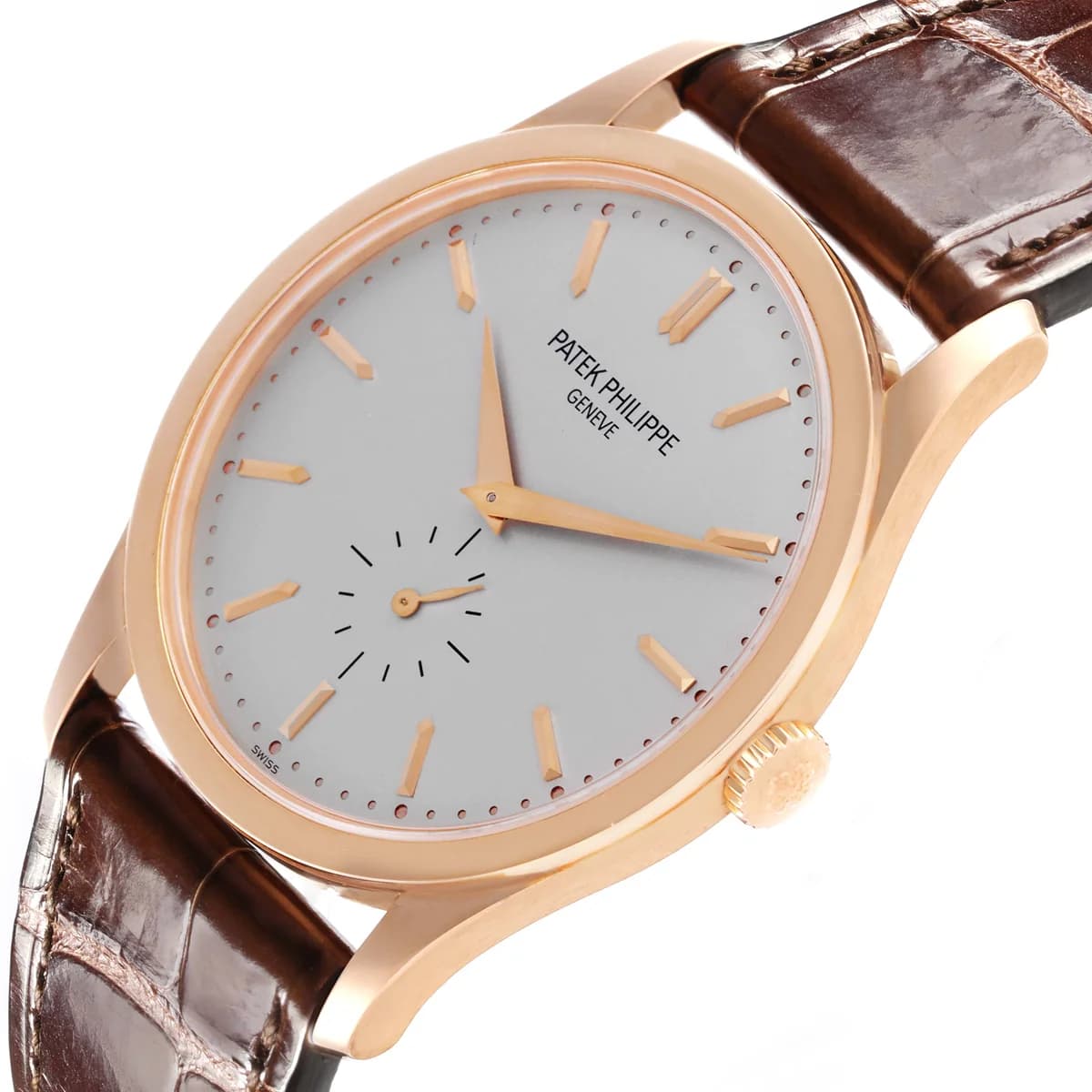
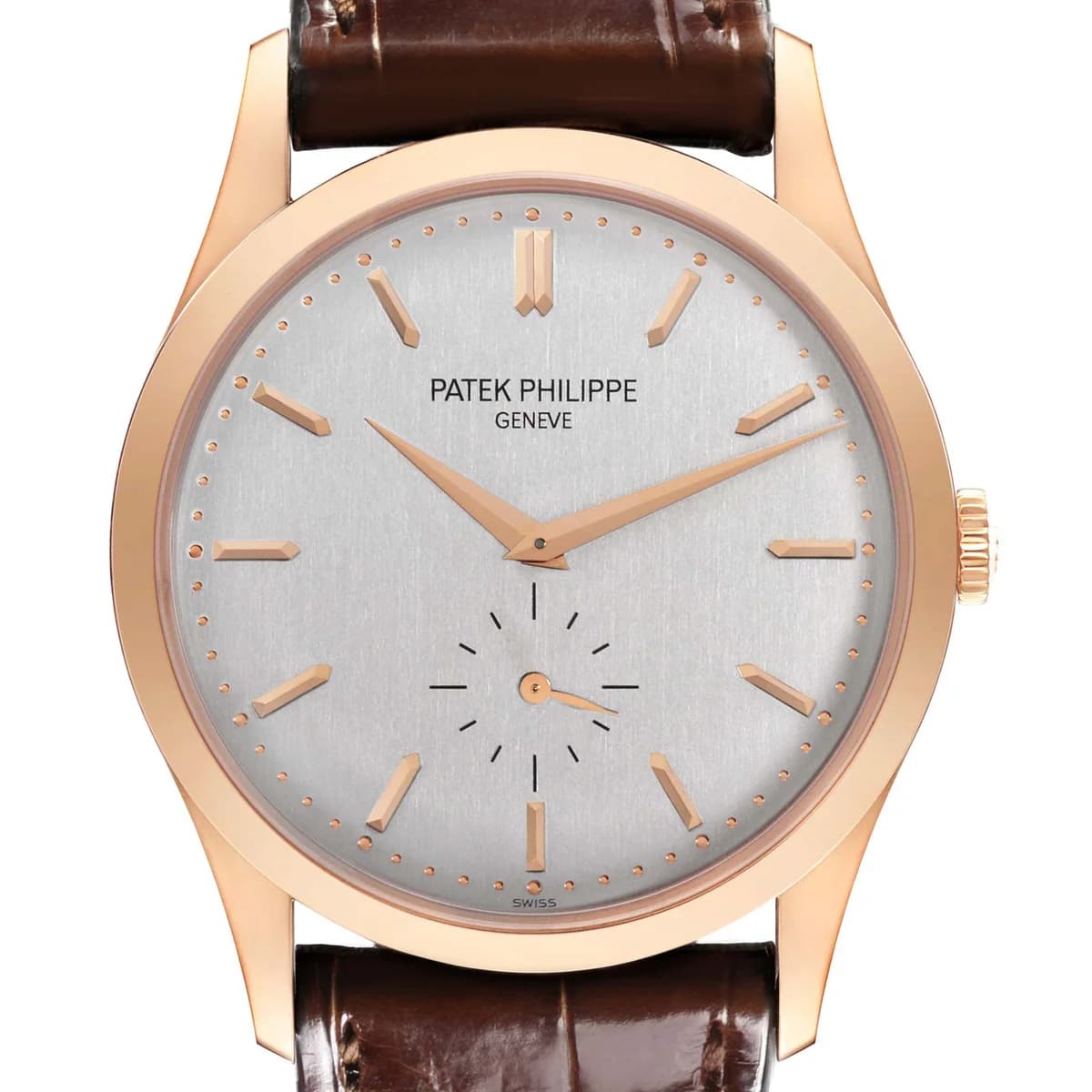
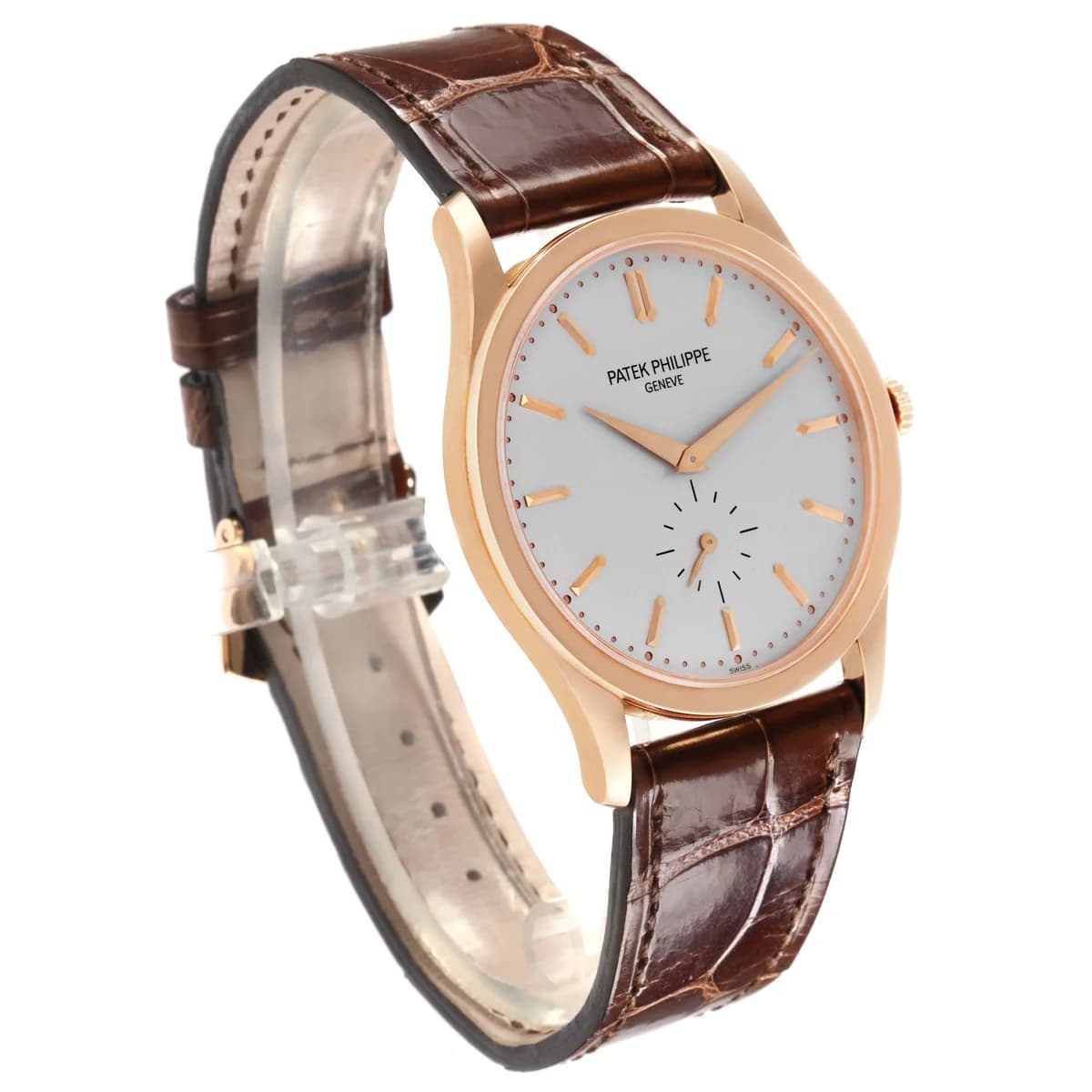
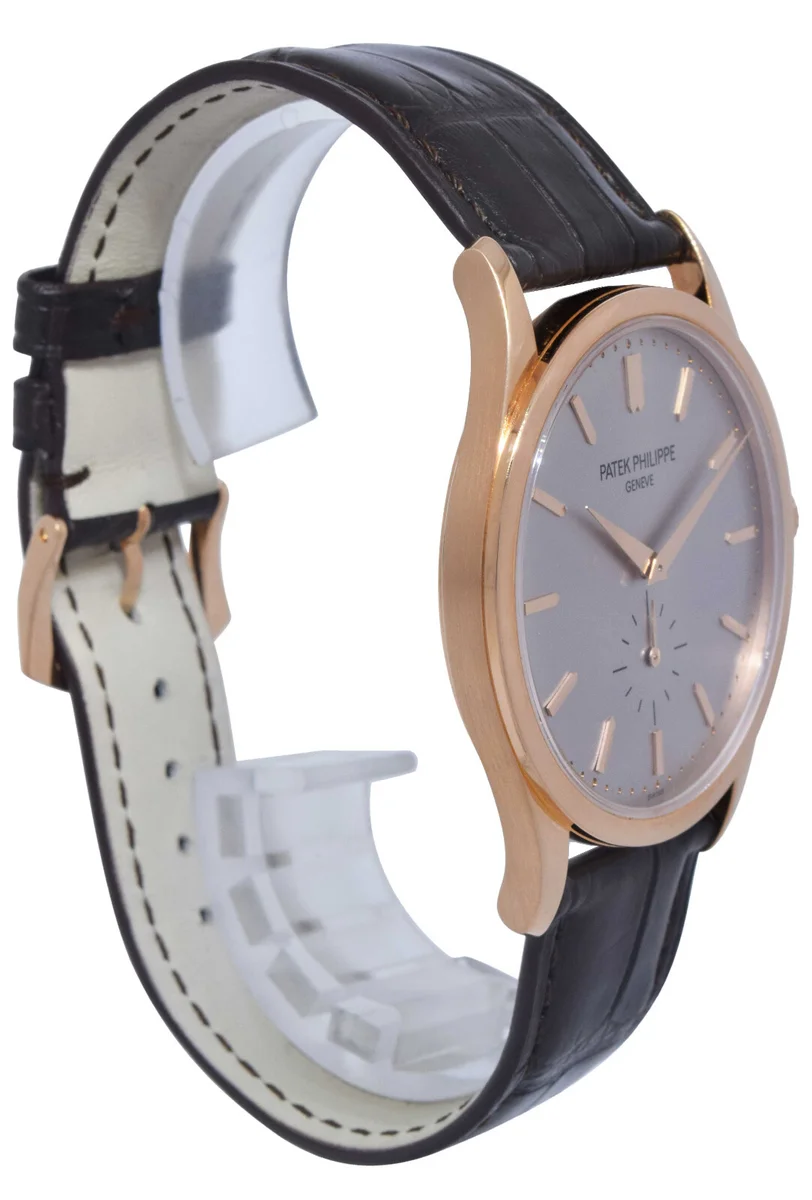
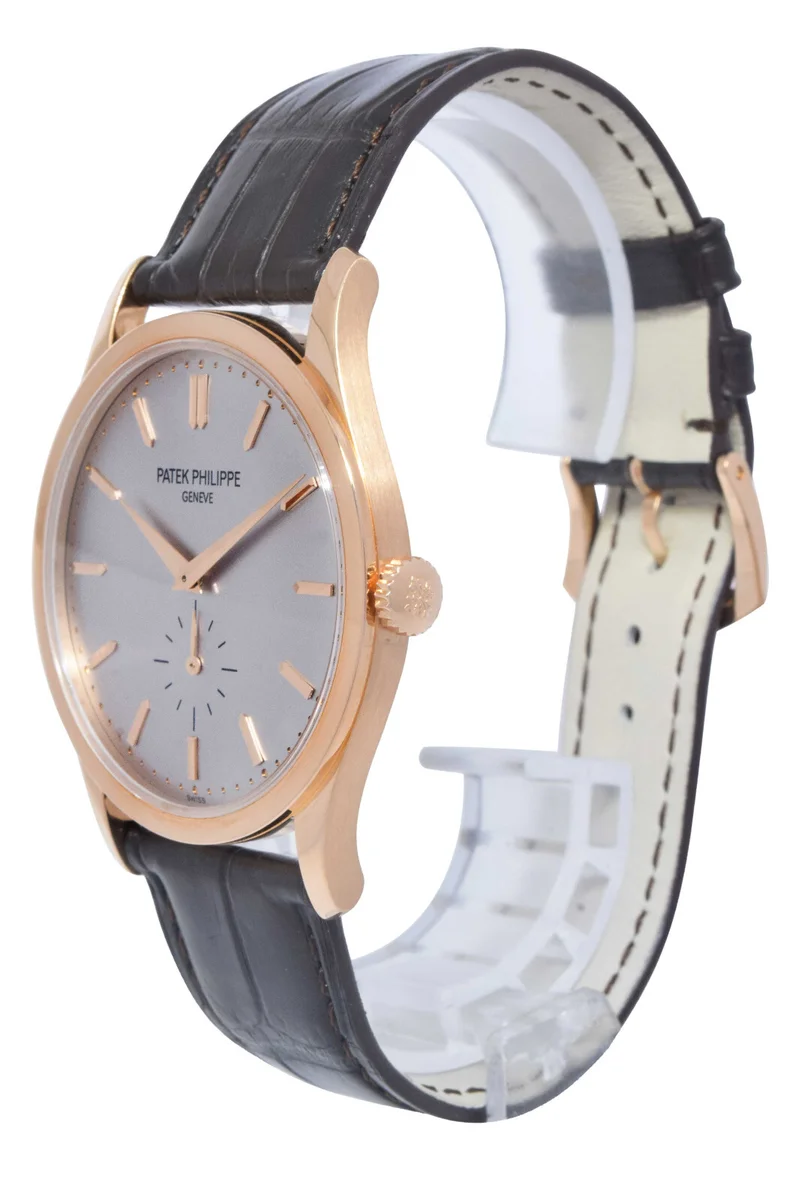
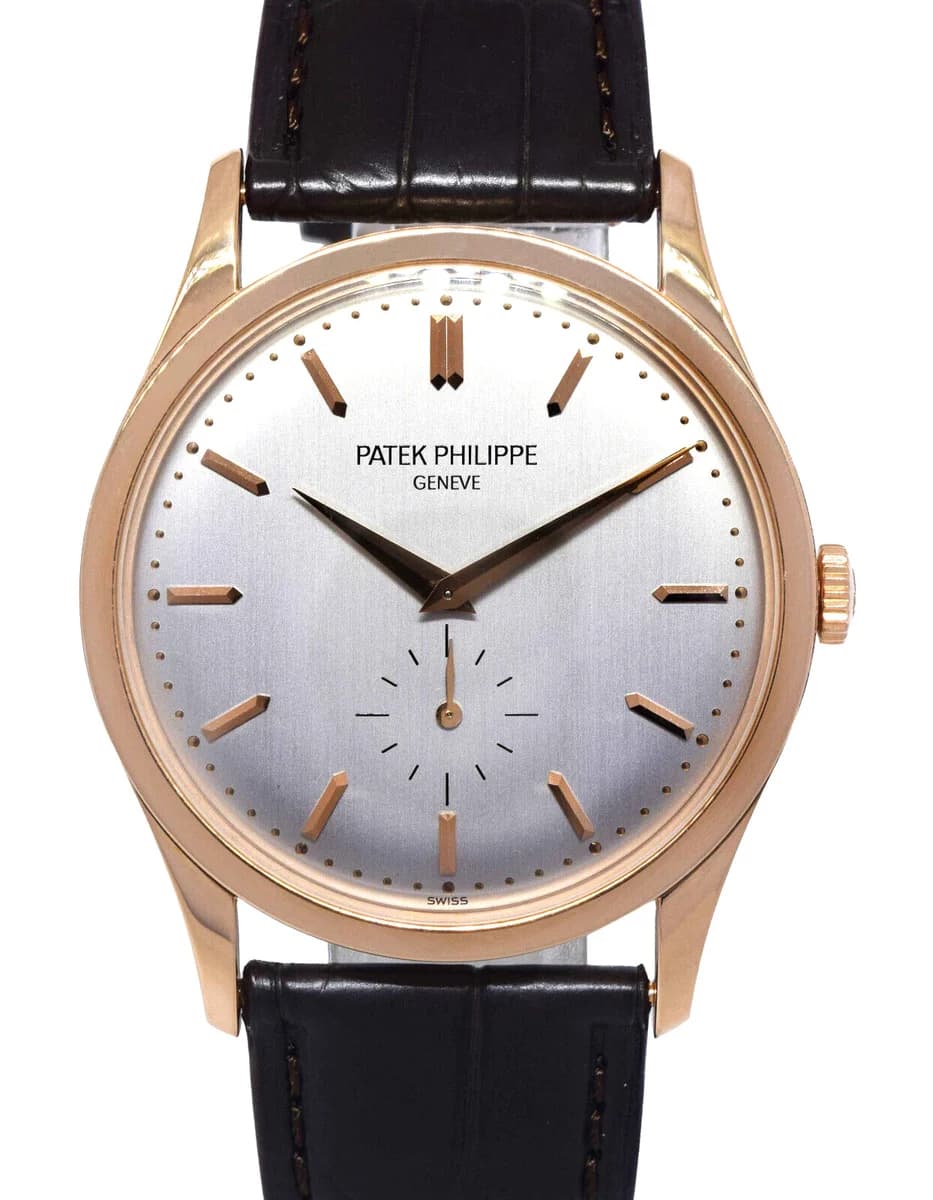
The 5196R is the modern descendant of that original reference 96. Patek introduced it at Baselworld in 2004 as part of the Calatrava collection, and it succeeded earlier references like the 3796 (which ran from 1982 to 1999 at a diminutive 31mm) while drawing directly from the proportions and aesthetic of the 1932 original. Where the 3796 felt like a vintage piece even when it was new, the 5196 found the modern sweet spot. The case is 37mm in 18K rose gold, and it feels right at 37. This is not a watch that needs to be 40 or 41. In an era where even dress watches have crept past 39mm, when Vacheron Constantin offers the Patrimony at 40mm and Lange makes the Saxonia Thin at 40mm, the 5196R stays committed to the original proposition. The concave lugs, sometimes called Calatrava lugs because Patek essentially invented this profile, curve inward toward the wrist and pull the watch flat against the skin. They taper and descend in a way that follows the natural curvature of a wrist rather than fighting it. The lug width is 20mm, which is a common enough size that aftermarket strap options are plentiful. The overall case thickness is 8mm. Under a shirt cuff, the Calatrava does not exist. You feel it. You do not see it. That is the point.
The silver opaline dial is where I find myself spending the most time. It has faceted rose gold index hour markers at every hour position, a small seconds subdial sitting just above 6 o'clock, and rose gold dauphine hands. No date window. No power reserve indicator. No complications of any kind. The pearled minute track around the periphery is a detail most people never notice, tiny raised dots individually applied around the dial's edge that catch light one at a time and give the surface a texture that a printed track cannot replicate. Under direct light the opaline finish shows a subtle vertical brushing, almost like the finest satin, and the rose gold indices throw warm reflections across it depending on the angle. The double baton marker at 12 o'clock is the only visual anchor that breaks the symmetry, and it does so deliberately. This is the level of finishing that Patek applies to a watch most people will never examine under a loupe. They do it because the standard demands it, not because anyone is checking.
The Caliber 215 PS is the movement that makes all of this possible, and I think it deserves more attention than it typically receives. It is a hand-wound caliber measuring 21.9mm in diameter (9 and three-quarter lignes in traditional Swiss sizing) and standing just 2.55mm tall. That height is the reason the 5196R can sit at 8mm on the wrist. For context, many automatic movements are 4 to 5mm tall before you add the rotor, which means an automatic dress watch will almost always be thicker than a manual one. The 215 PS has 18 jewels, beats at 28,800 vibrations per hour (4 Hz), and delivers 44 hours of power reserve. It contains 118 individual components. The movement succeeded Patek's earlier Caliber 12-120, and it has become one of the most important manually wound calibers in the company's current lineup, powering references across the Calatrava and Complications collections. For comparison, the Jaeger-LeCoultre Caliber 849 in the Master Ultra Thin is 1.85mm tall but only offers 35 hours of power reserve at a lower frequency. Getting 44 hours at 4 Hz from 2.55mm of vertical space is a genuine technical achievement that Patek does not market aggressively because the Calatrava is not a watch that sells itself on specifications.
What makes the 215 PS technically interesting is what Patek has done with the regulating organ. The Gyromax balance is Patek Philippe's patented balance wheel design, and it was actually first introduced in the Caliber 215 family. Instead of using traditional regulation via a regulator index (the small lever that most watchmakers use to fine-tune timekeeping by adjusting the effective length of the hairspring), the Gyromax uses small inertia-adjusting weights set into the rim of the balance wheel itself. Rotating these weights inward or outward changes the moment of inertia, which changes the rate. The advantage is that the hairspring breathes completely freely, without any contact from a regulator pin, which eliminates a source of positional error. The balance spring itself is a Spiromax, Patek's proprietary silicon hairspring produced using deep reactive ion etching. Silicon does not respond to magnetic fields, does not corrode, and maintains consistent elasticity across temperature changes. In practical terms, this means the 5196R is far more resistant to the everyday magnetic fields produced by phones, laptop speakers, and tablet cases than a traditional steel hairspring would be. The combination of Gyromax and Spiromax in a movement this thin is quietly remarkable engineering that never gets talked about because it lives behind a solid caseback.
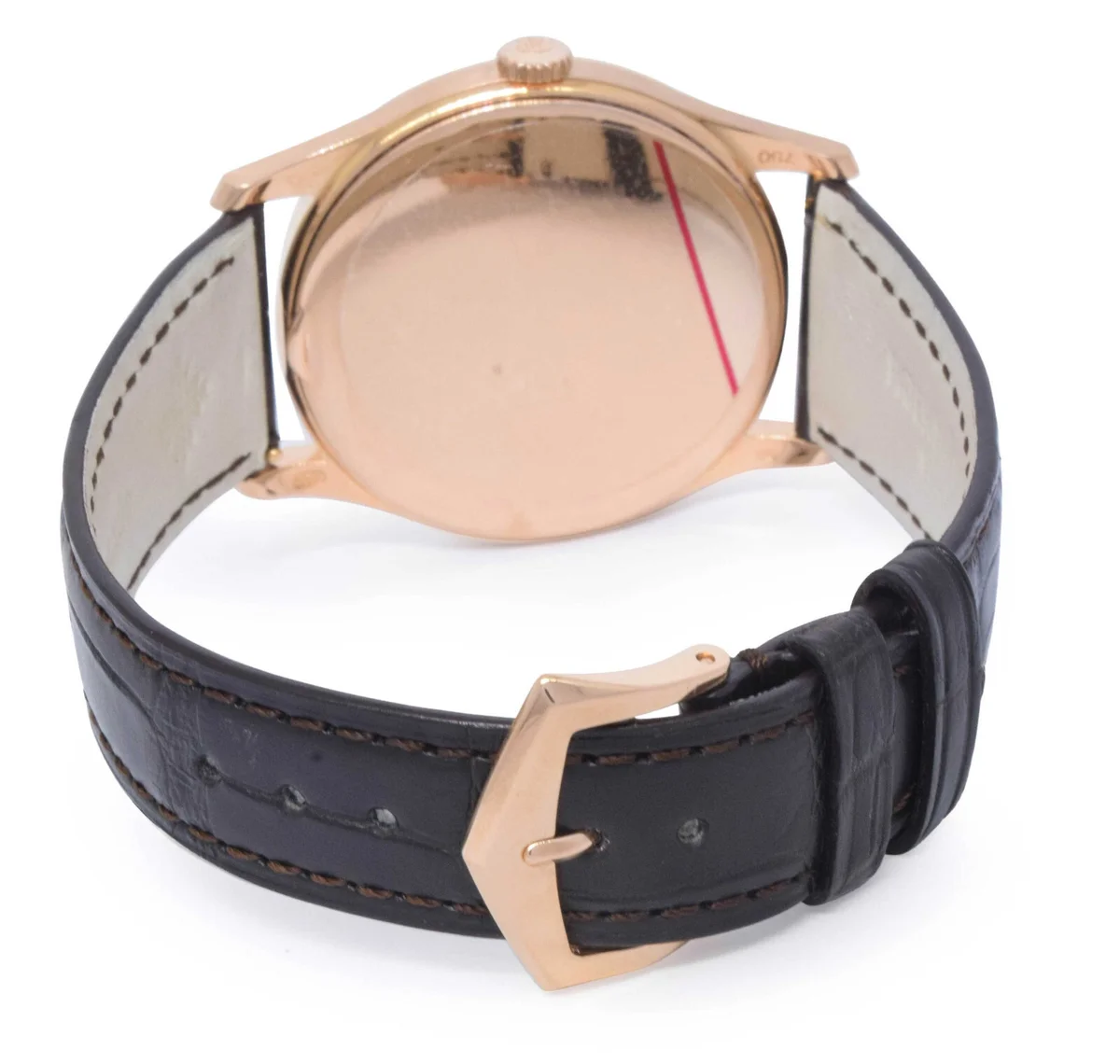
And that solid caseback is worth discussing. The 5196R has a smooth, polished 18K rose gold caseback with no sapphire display window. In an era where almost every watch at this level has a view of the movement, Patek made a deliberate choice to close the back. I find this fascinating. The Caliber 215 PS is beautifully finished with rhodium-plated plates decorated in fausses cotes, the decorative stripe pattern that Patek uses on their manually wound calibers. There is a straight-line lever escapement. There is careful beveling and polishing throughout. But the caseback is sealed. The watch does not ask to be admired from behind. It does not present itself for inspection at dinner. It does not need validation from someone flipping it over to see the movement. The finishing exists because Patek's internal standard requires it, not because anyone will see it through a window. For me, that commitment to invisible quality says more about the brand than any exhibition caseback could. If anything, the solid back contributes to the thinness. A sapphire display back requires a slightly thicker case construction to accommodate the crystal and its gasket, and on a watch where every tenth of a millimeter matters, that tradeoff was apparently not worth making.
The winding experience on the 5196R is something I appreciate every time I encounter one. The crown is modest in size, appropriately proportioned for a 37mm dress watch, with the Calatrava cross engraved on the face. When you wind it you feel each click of the ratchet wheel through the crown, a precise mechanical feedback that builds tension gradually until the mainspring is fully loaded. There is no automatic winding here, no rotor spinning away on your wrist. Every morning begins with this deliberate mechanical ritual. I have always appreciated that about manual watches. There is a connection to the mechanism that an automatic watch, however sophisticated, simply does not provide. The 44-hour power reserve means a full day and most of the next before the watch stops, which is reasonable for a movement this thin. Wind it when you put it on, take it off at night, and it keeps running through the next day without issue. The daily ritual of winding becomes part of the relationship with the watch, a conscious decision to engage with the mechanism rather than letting it run passively on your wrist. For me, that distinction matters.
The honest critique of the Calatrava starts with the caseback decision and circles around to water resistance. While I respect the philosophy behind the solid caseback, I do wish Patek had offered an officer's-style hinged back on the 5196R, the way they did with the later 5227. The officer's caseback gives the best of both worlds, a solid exterior that snaps closed for everyday wear and a sapphire window underneath for when the mood strikes to look at the movement. On a watch this refined, that option feels like a missed opportunity. The 30-meter water resistance rating is another point. Thirty meters is essentially splash-proof. It means rain and careful hand-washing, nothing more. I understand that a dress watch is not a dive watch and that sealing a case this thin to higher standards would compromise the dimensions. But a watch at this level going to a service center because of an unexpected encounter with water is a reality that 30 meters makes possible. There is also no lume on the 5196R. None. The rose gold dauphine hands and indices have no luminous material of any kind. In a dim restaurant or on an evening walk, this watch cannot be read without external light. For a watch designed to be worn at exactly the kind of events where lighting is deliberately low, cocktail hours and evening dinners and gallery openings, that is a real limitation. These are tradeoffs, and they are the price of 8mm on the wrist. I accept them because the watch is honest about what it is and what it is not.
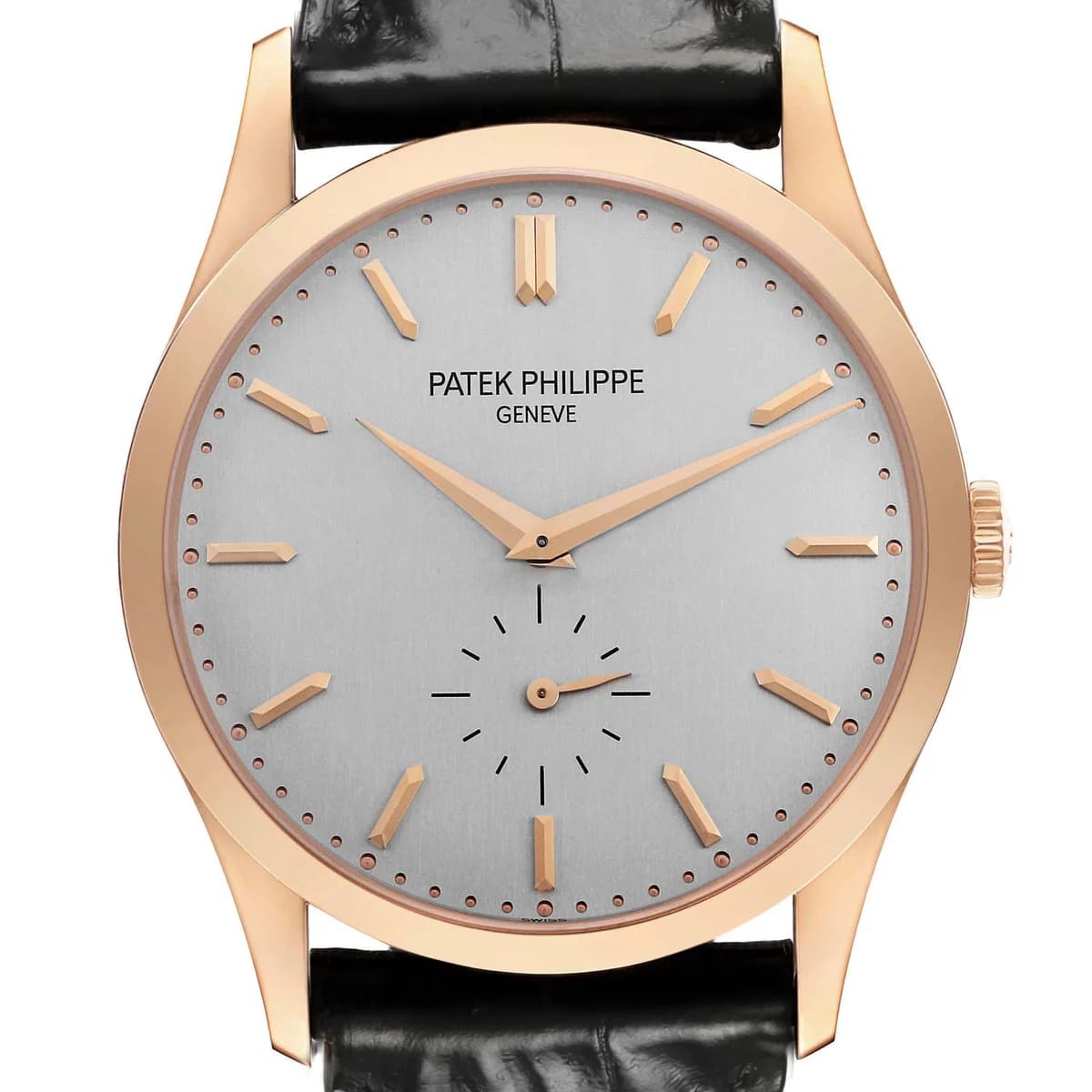
The 5196 sits within a broader Calatrava family that spans the entire history of Patek Philippe. The original reference 96 ran from 1932 into the 1970s. The reference 3919, launched in 1985 with its Clous de Paris hobnail bezel at 33mm, became the definitive modern Calatrava for roughly two decades and introduced the Calatrava name as an official collection designation. The 5119 followed with leaf-shaped hands and applied Breguet numerals. And then the 5196 arrived in 2004, returning to the faceted index markers and dauphine hands of the original reference 96. More recently, the 5227 introduced the officer's hinged caseback to the Calatrava line, and in 2025 the 6196P arrived as a platinum successor. The 5196 was offered in rose gold (5196R), white gold (5196G), yellow gold (5196J), and platinum (5196P), each with slightly different dial treatments. The Patek Philippe Museum in Geneva houses examples of the original reference 96 alongside its descendants, and walking through that collection, seeing how the proportions and philosophy carried faithfully across more than nine decades, is one of the most convincing arguments for continuity in design that I have encountered anywhere in watchmaking. The platinum version has a silvery grey dial with applied Breguet numerals instead of the faceted indices, distinguishing it visually from the gold variants. Patek Philippe is an independent manufacture, family-owned by the Stern family since 1932, and that independence is reflected in how the Calatrava has evolved. There is no corporate mandate to change the design every few years to drive sales. There is no conglomerate pushing quarterly targets. The updates are measured in details, not overhauls, and that patience shows in how coherent the Calatrava line remains after nearly a century.
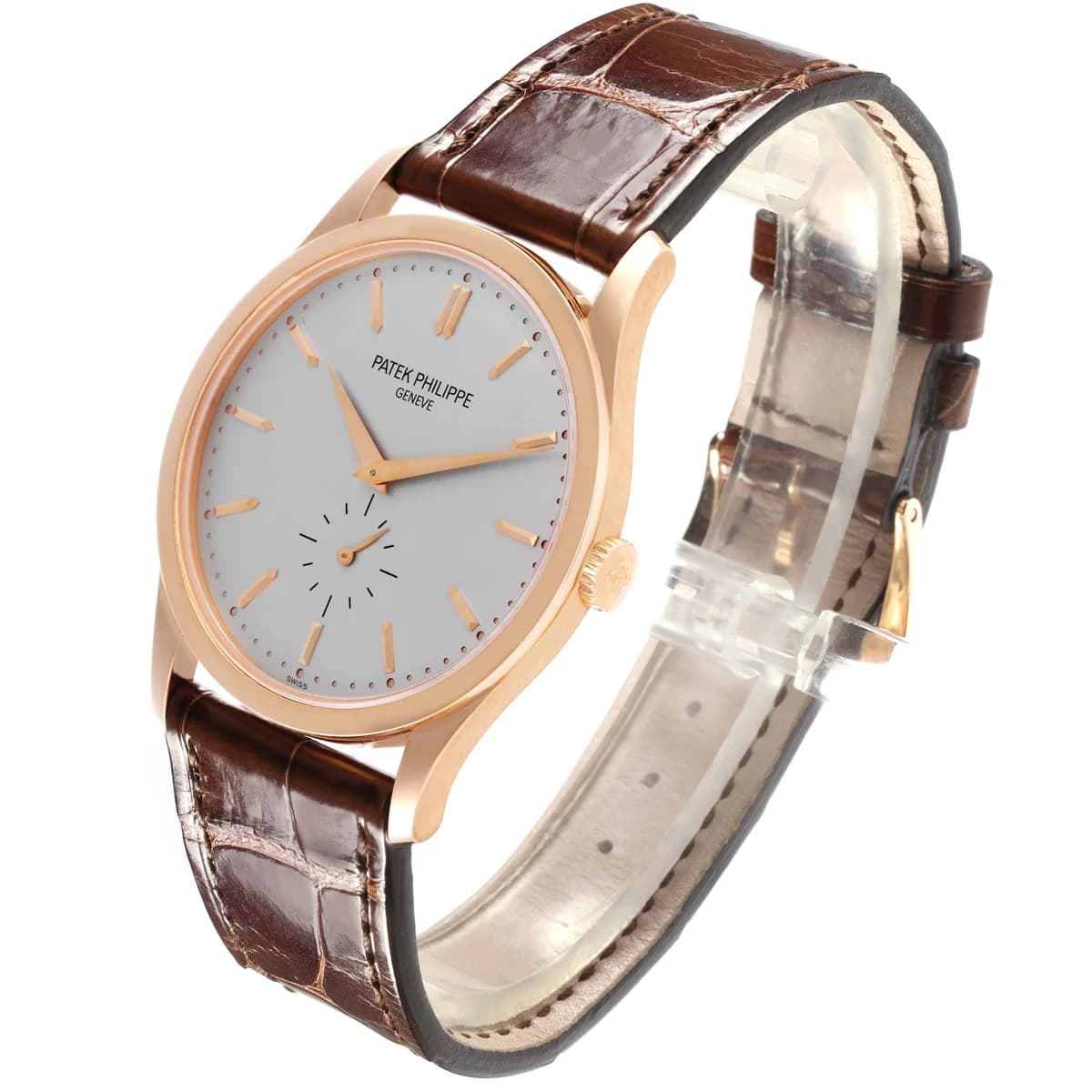
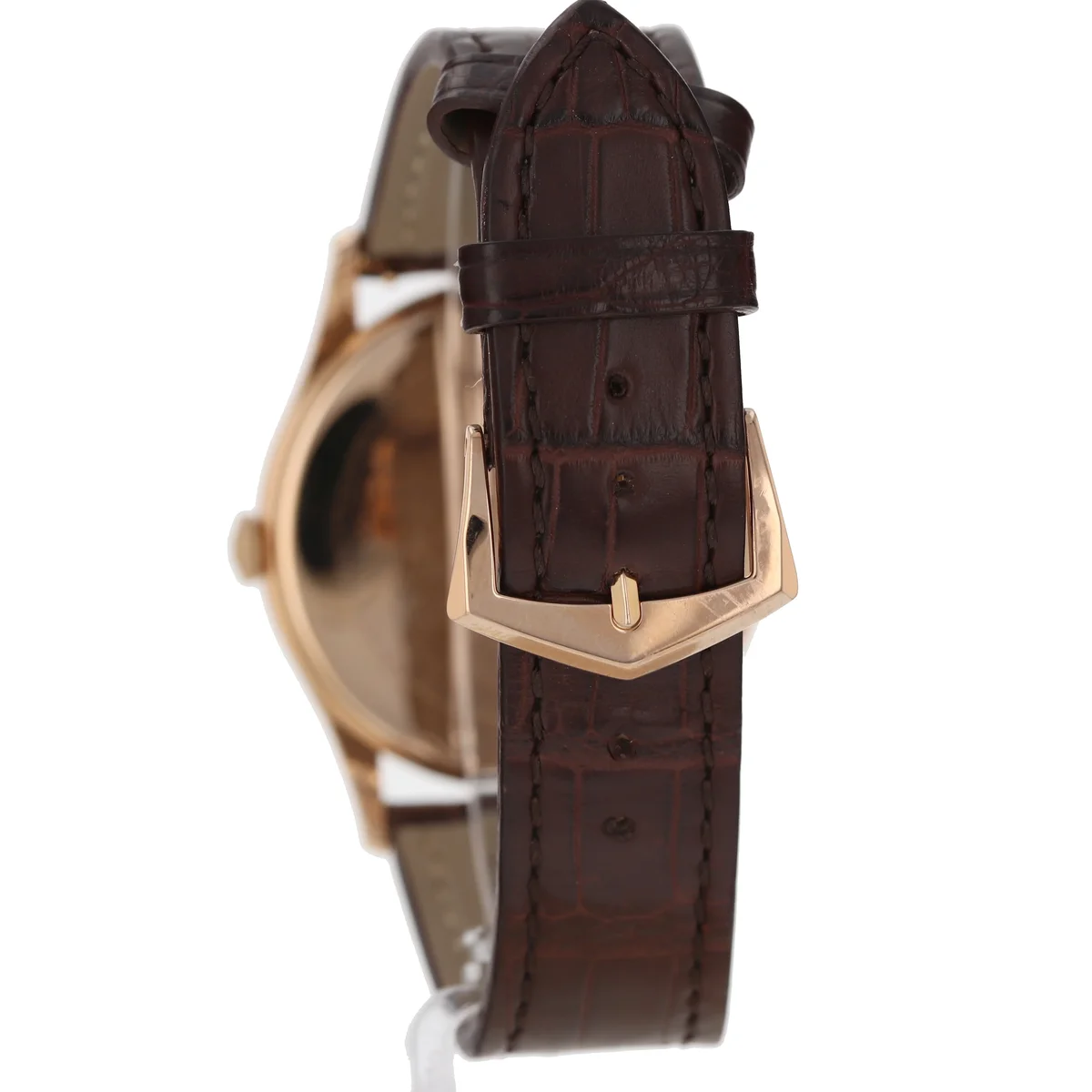
On the wrist, the 5196R in rose gold is particularly striking on darker skin tones. The warmth of the rose gold case against melanin-rich complexions creates a layered visual contrast that cooler metals like white gold or platinum do not achieve. The brown alligator strap, hand-stitched with square scales, complements the rose gold naturally. The 18K rose gold tang buckle is simple and correct, with a small Patek Philippe Calatrava cross stamped on the clasp tongue and nothing more. I find the Calatrava pairs best with tailored clothing where the watch disappears until it catches light at precisely the right moment. Scabal flannel in charcoal, a Cerruti tropical weight wool in navy, anything with structure and weight that creates a clean line from shoulder to cuff. The 5196R sits flat enough that even a close-fitting French cuff does not catch on it. This is a watch for deliberate dressing, for evenings where every detail is considered. It is not a casual piece. It does not pretend to be. On a 6.5-inch wrist, the 37mm case sits with perfect proportionality, neither too large nor too small, and the concave lugs follow the wrist contour so precisely that you forget the watch is there until a flash of rose gold catches the light at the end of a sleeve. That moment of discovery, when someone notices the Calatrava peeking out from a cuff, is the entire design philosophy made visible.
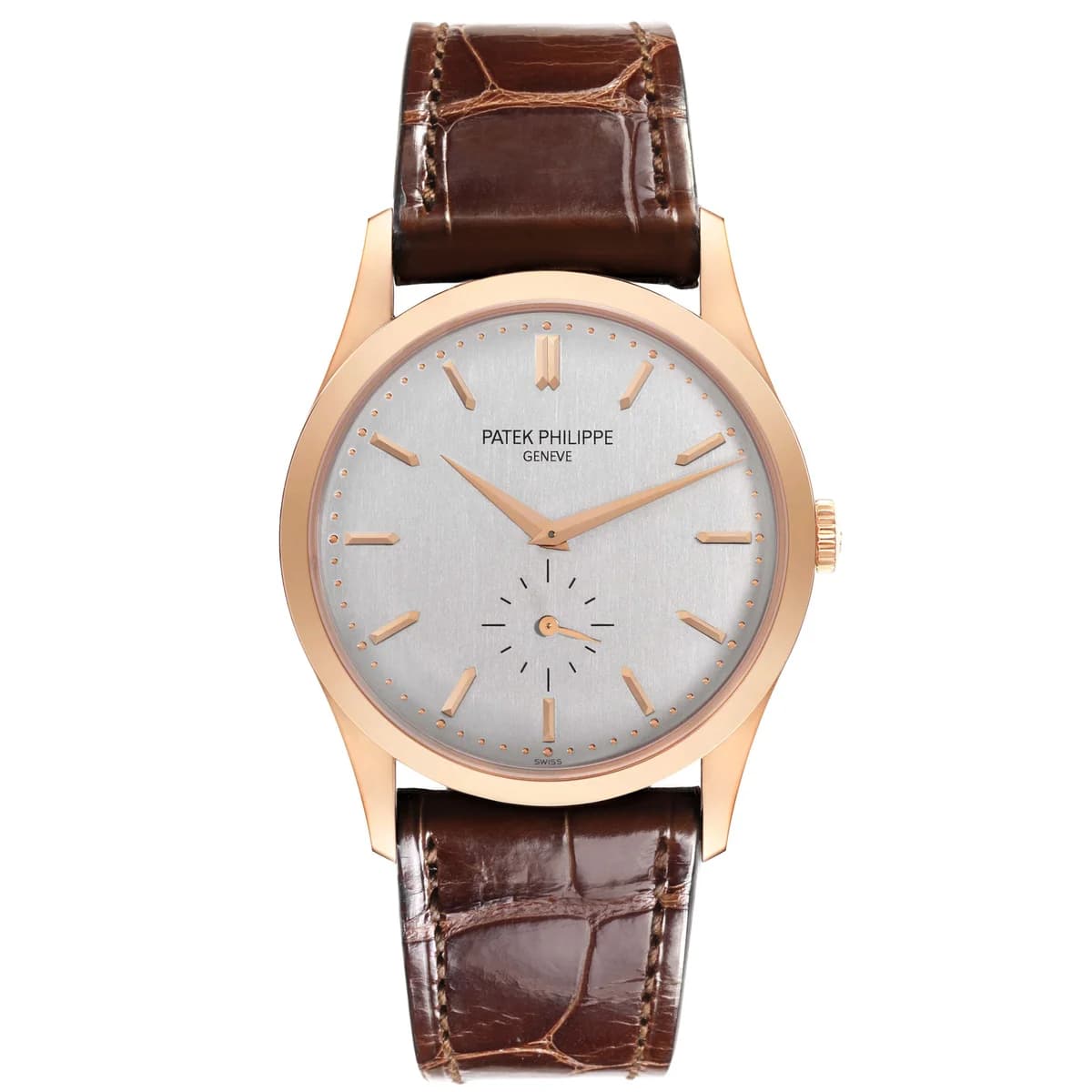
I include the Calatrava because it represents the opposite end of the spectrum from the Lederer and the Gronefeld and the Brette. Those watches are about innovation, about pushing the boundaries of what a mechanical movement can do. The Calatrava is about discipline. It is the watch that proves a manufacture does not need a remontoire or a central impulse escapement or a hand-engraved Battle dial to produce something at the highest level. It needs proportion. It needs restraint. It needs 118 components arranged in 2.55mm of vertical space, finished to a standard that no one will ever see through the solid caseback, driving a pair of dauphine hands across a silver dial with nothing else on it. I keep coming back to how difficult it is to design something this simple. Every proportion is exposed. There is nowhere to hide a miscalculation. The bezel width, the index length, the hand reach, the subdial diameter, every relationship between every element is visible and unforgiving. The Calatrava has survived ninety-four years because every one of those relationships is resolved. Patek Philippe presented a silver dial with gold hands in 1932 and said this is enough. Nobody has produced a convincing counterargument since.
Also in Haute Horlogerie