
A. Lange & Sohne
Datograph Up/Down
405.035
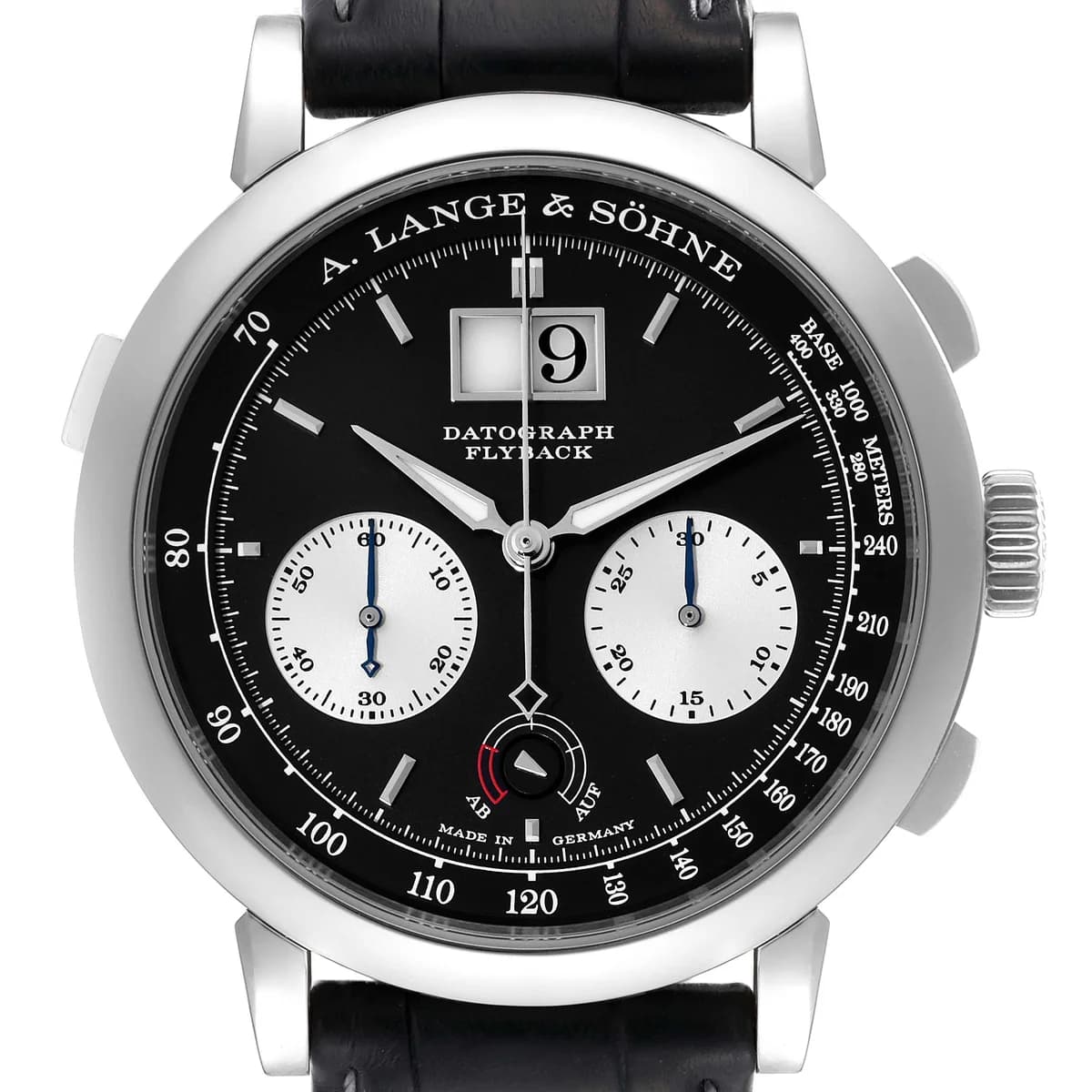
Philippe Dufour has repeatedly called the A. Lange & Sohne Datograph the best chronograph ever made. Let that sit for a moment. The man many consider the greatest living watchmaker, the person who finishes his movements to a standard that makes entire Swiss manufactures look careless, pointed at a watch from Glashutte and said that is the one. He did not name one of his own creations. He did not name a Patek Philippe. He named the Datograph. And then he went further. He bought one. Reference 403.031, pink gold with a black dial, produced between 2003 and 2005. Collectors call it the Dufourgraph. When Philippe Dufour puts his own money behind a chronograph from another brand, that tells you something that no specification sheet ever could.
To understand why that endorsement carries so much weight, I think it helps to understand what the chronograph landscape looked like in 1999. The vast majority of Swiss chronograph movements were outsourced. The Valjoux 7750, a perfectly competent automatic chronograph caliber designed in the early 1970s, powered everything from mid-range to supposedly high-end watches. Lemania-based movements appeared in Omega, Breguet, and others. Only a small handful of brands had genuinely in-house chronograph calibers. Patek Philippe had the CH 27-70, derived from a Lemania base. Zenith had the El Primero from 1969. And then A. Lange & Sohne, a brand that had only been revived five years earlier, walked into Baselworld 1999 and debuted a chronograph movement built entirely from scratch. The first new in-house chronograph caliber to come out of Germany in roughly two decades. From a brand most people in the watch world were still getting to know.
The people behind it deserve more recognition than they get. Reinhard Meis directed product development at Lange and designed the dial layout. He actually sketched a tonneau-shaped case in the early phases of the project before it was scrapped in favor of the round case we know today. Annegret Fleischer, a young woman in her twenties at the time, designed the chronograph mechanism itself. She spent roughly four years between 1995 and 1999 engineering the works that would become the Caliber L951.1. Helmut Geyer co-developed the movement alongside Fleischer. For me, the most remarkable part of this story is that the movement Philippe Dufour considers the finest chronograph ever made was engineered by someone in her twenties. These are names that should appear in every conversation about the Datograph, and they almost never do.
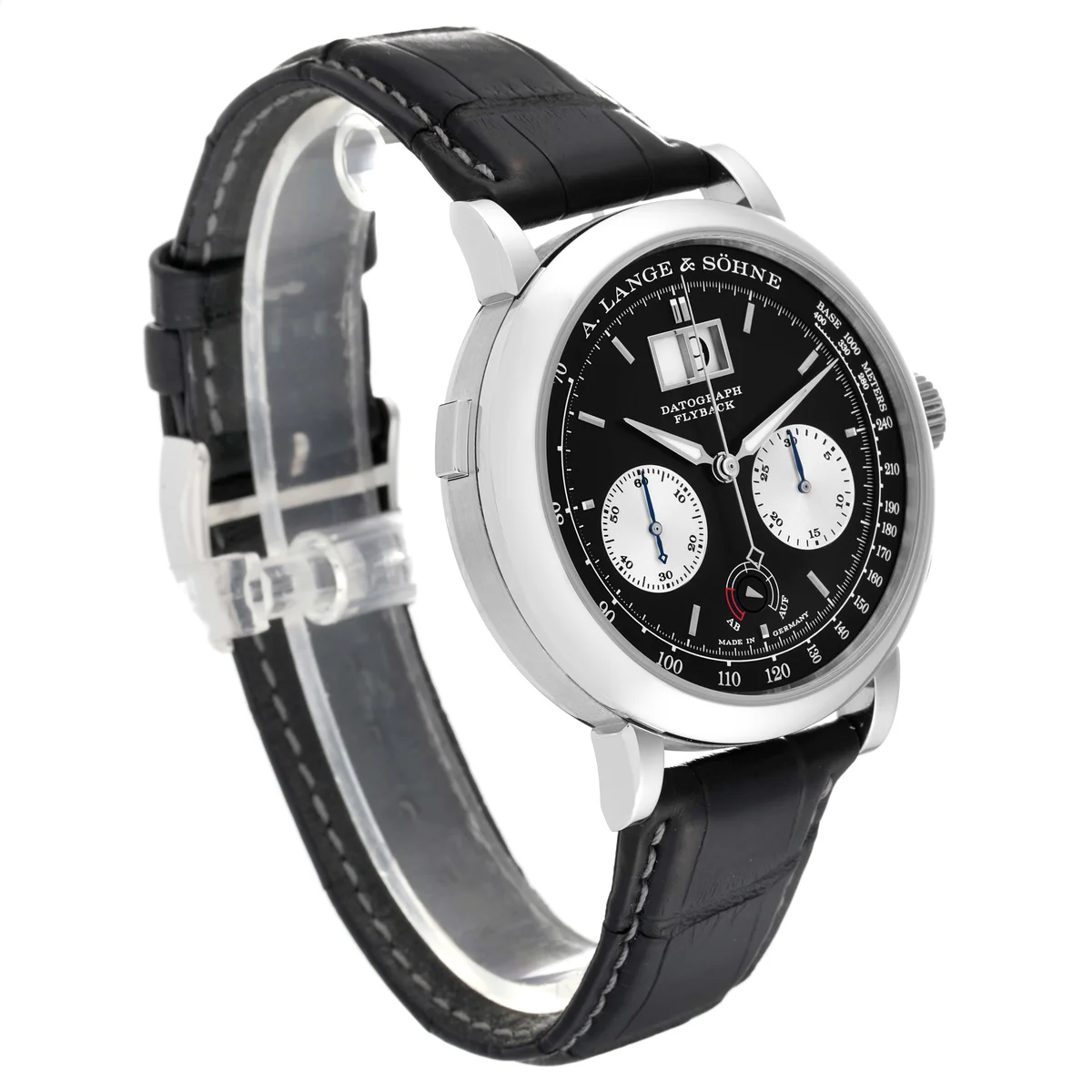
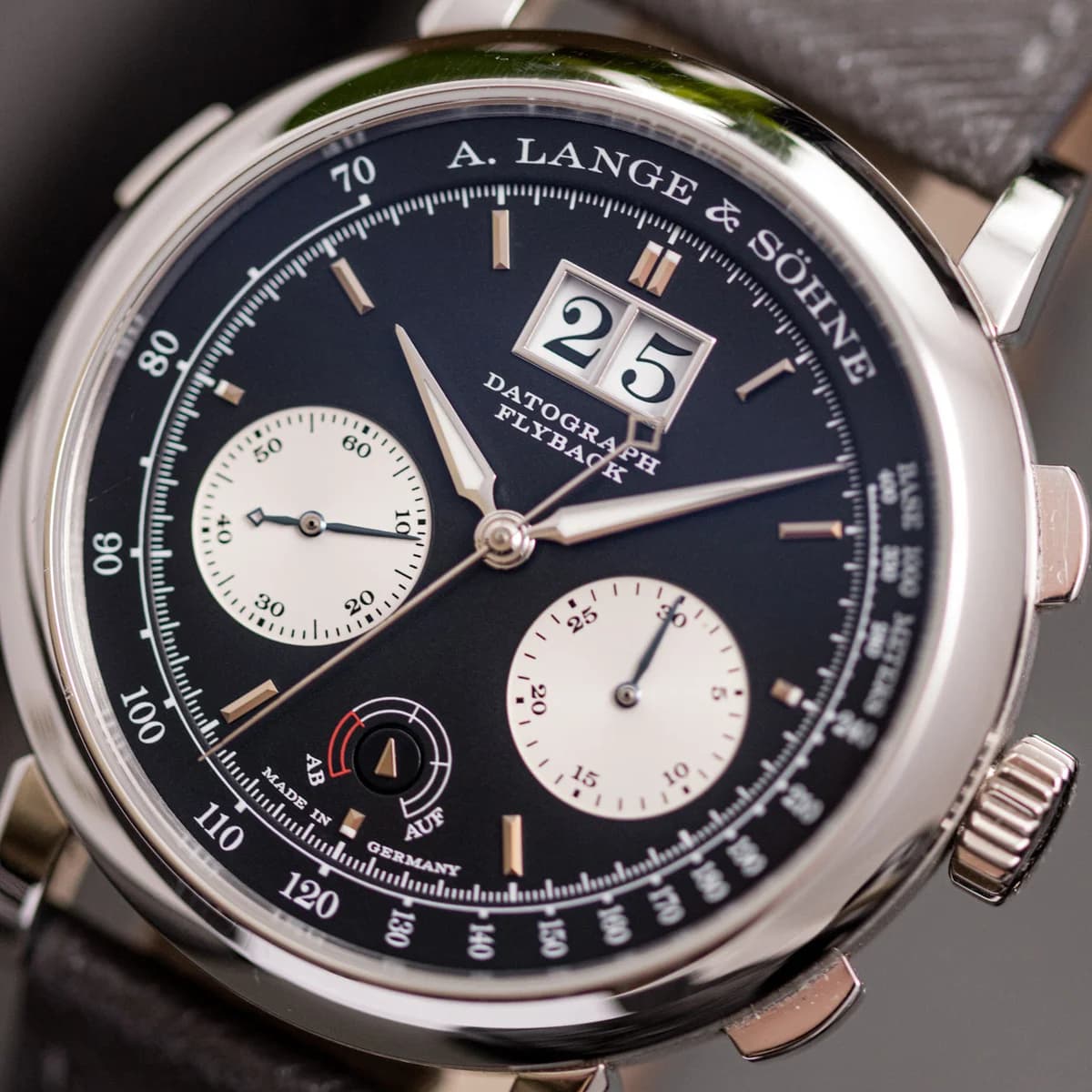
The dial layout is where the Datograph announces itself. Meis arranged the complications in an equilateral triangle: the outsize date at 12 o'clock, the subsidiary seconds at approximately 8 o'clock on the lower left, and the 30-minute counter at approximately 4 o'clock on the lower right. Both subsidiary dials are recessed into the main dial, creating genuine depth and shadow that shifts as the light changes. The center-sweep chronograph seconds hand runs from the middle. A tachymeter scale sits on the chapter ring. On the Up/Down version, the power reserve indicator lives at 6 o'clock, splitting the space between the two subsidiary dials. Everything has purpose. Nothing is decorative excess. The layout reads instantly, which is the entire point of a chronograph. If you cannot read elapsed time at a glance, the complication has failed its purpose regardless of how beautifully it is finished.
The Caliber L951.6 is the movement that powers the current Datograph Up/Down, introduced in 2012 as a significant evolution of the original L951.1. It is hand-wound, composed of 451 parts, and contains 46 jewels set in four screwed gold chatons. The movement beats at 18,000 vibrations per hour (2.5 Hz) and delivers 60 hours of power reserve from a larger mainspring barrel with a thicker spring than its predecessor. A free-sprung balance with an in-house manufactured overcoil hairspring replaced the original screwed Glucydur balance. The eight-gap column wheel coordinates the chronograph's start, stop, and reset functions. These are not specifications for the sake of specifications. The 2.5 Hz frequency is deliberately chosen. It divides each second into five equal parts, allowing the chronograph to measure elapsed time to one-fifth of a second with a smooth, visible sweep. The 60-hour power reserve means a full weekend away from winding, which the original 36-hour version could not offer.
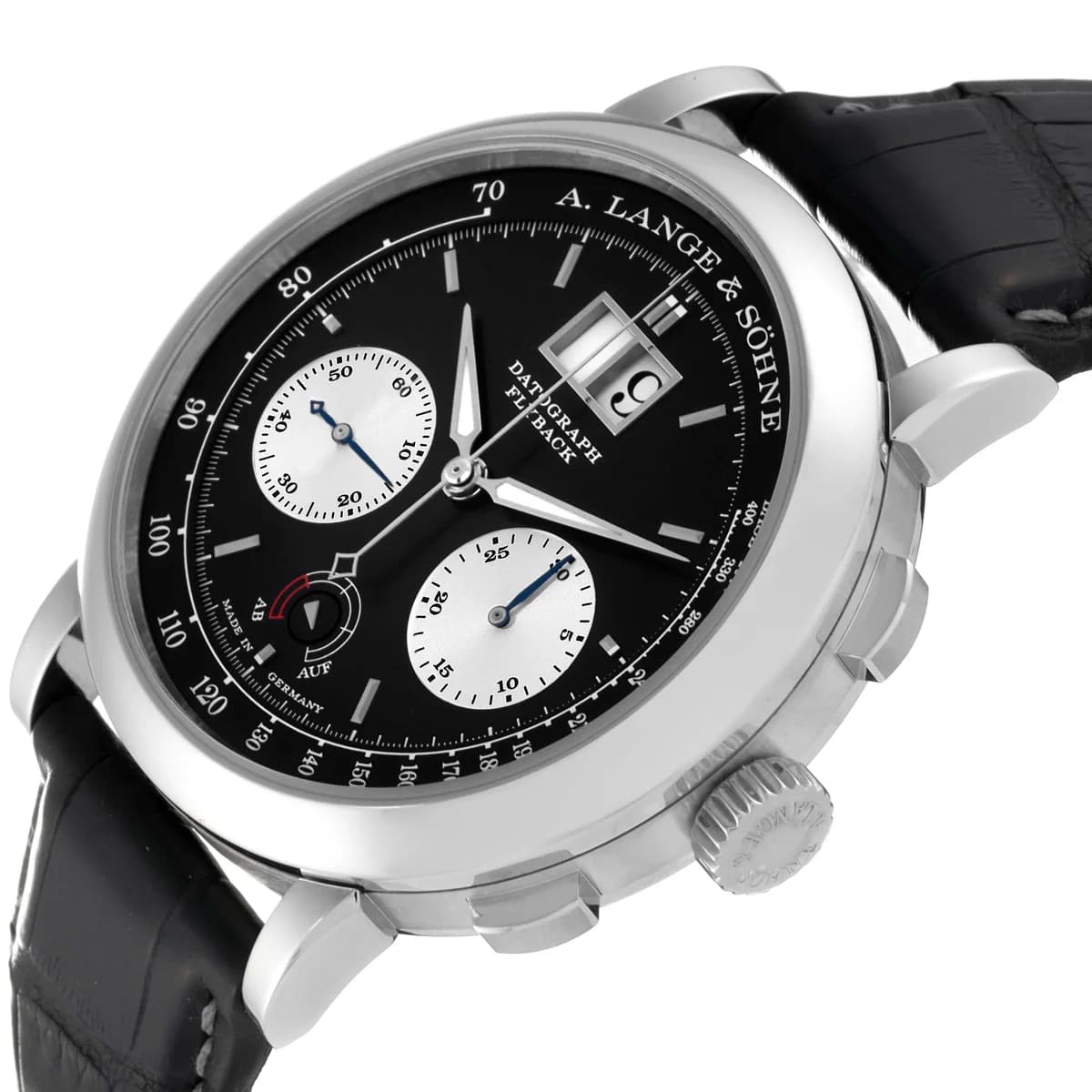
The precisely jumping minute counter is the detail that separates the Datograph from almost every other chronograph in production. On most chronographs, the minute counter either drags gradually or jumps with a slight delay after the seconds hand completes its revolution. There is a moment of ambiguity where you are not quite sure if 3 minutes and 58 seconds have passed or 4 minutes and 2 seconds. Lange's patented mechanism eliminates that entirely. The minute counter jumps at the exact instant the chronograph seconds hand crosses the 60-second mark. A patented adjustable switching lever allows the watchmakers to calibrate the precise timing of this jump without disassembling the movement. It sounds like a small thing until you actually use a chronograph in practice and realize how often that ambiguity bothers you. This is the kind of obsessive precision that separates a great chronograph from a perfect one.
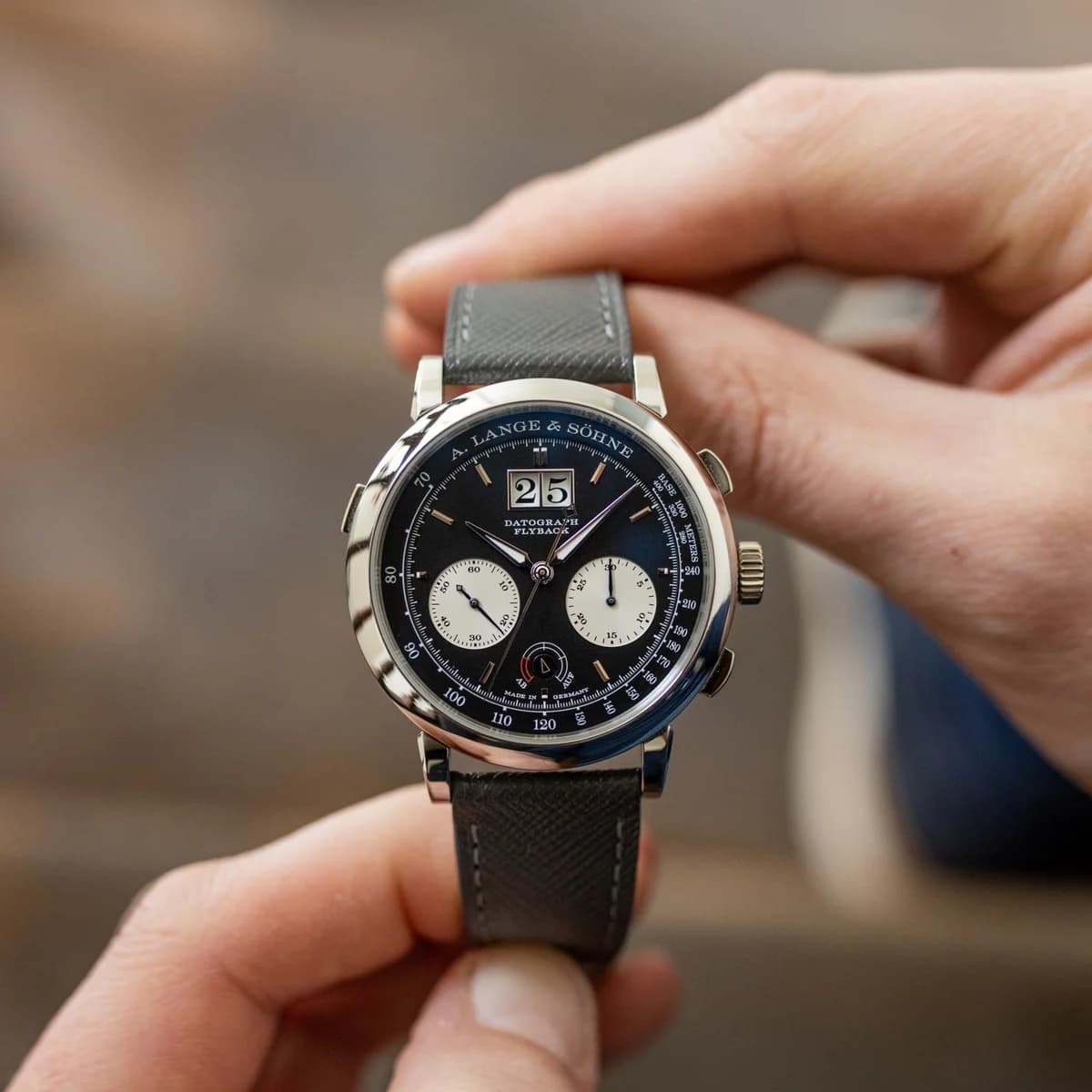
The flyback function adds another layer of practicality. On a standard chronograph, timing successive intervals requires three steps: stop, reset, start. Three button presses. The flyback allows you to press a single pusher to reset the seconds hand to zero and immediately restart timing in one motion. The column wheel coordinates this seamlessly. For anyone timing laps, splits, or repeated intervals, the difference between three presses and one press is the difference between a tool you tolerate and a tool you actually enjoy using. The Datograph's column-wheel flyback is mechanically elegant in a way that cam-actuated chronographs simply are not. Column wheels are more expensive to manufacture, require tighter tolerances, and take longer to assemble. They also engage and disengage with a precision and smoothness that you can feel through the pushers.
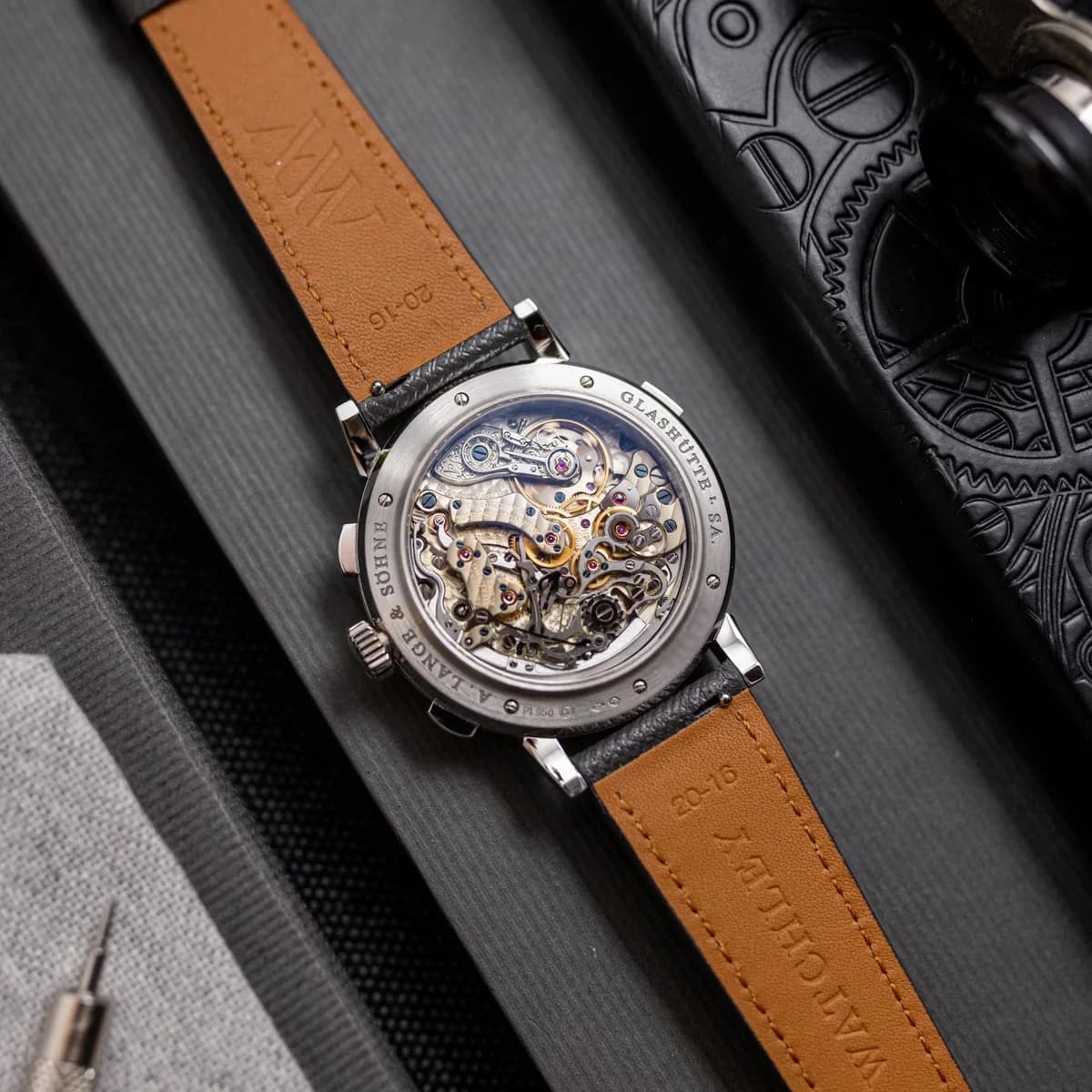
The movement finishing is Lange at its absolute best, and I say that knowing I have already written about Lange finishing in the Grand Lange 1 and Zeitwerk articles. The three-quarter plate is untreated German silver, an alloy of copper, zinc, and nickel that will develop a warm golden patina over decades of exposure. The balance cock is hand-engraved by a single artisan using a burin under magnification, and no two Lange balance cocks are identical. Every one is freehand. Four gold chatons are secured with thermally blued screws, heated to exactly 290 degrees Celsius to achieve that specific cornflower blue. Every bridge surface carries Glashutte ribbing. Every edge is hand-chamfered and polished. The finishing on the L951.6 is the argument for the watch. Flip it over and look through the sapphire caseback, and you understand why Dufour pointed at this movement. It is not just well-finished. It is finished to a standard that challenges the viewer to find a single imperfection.
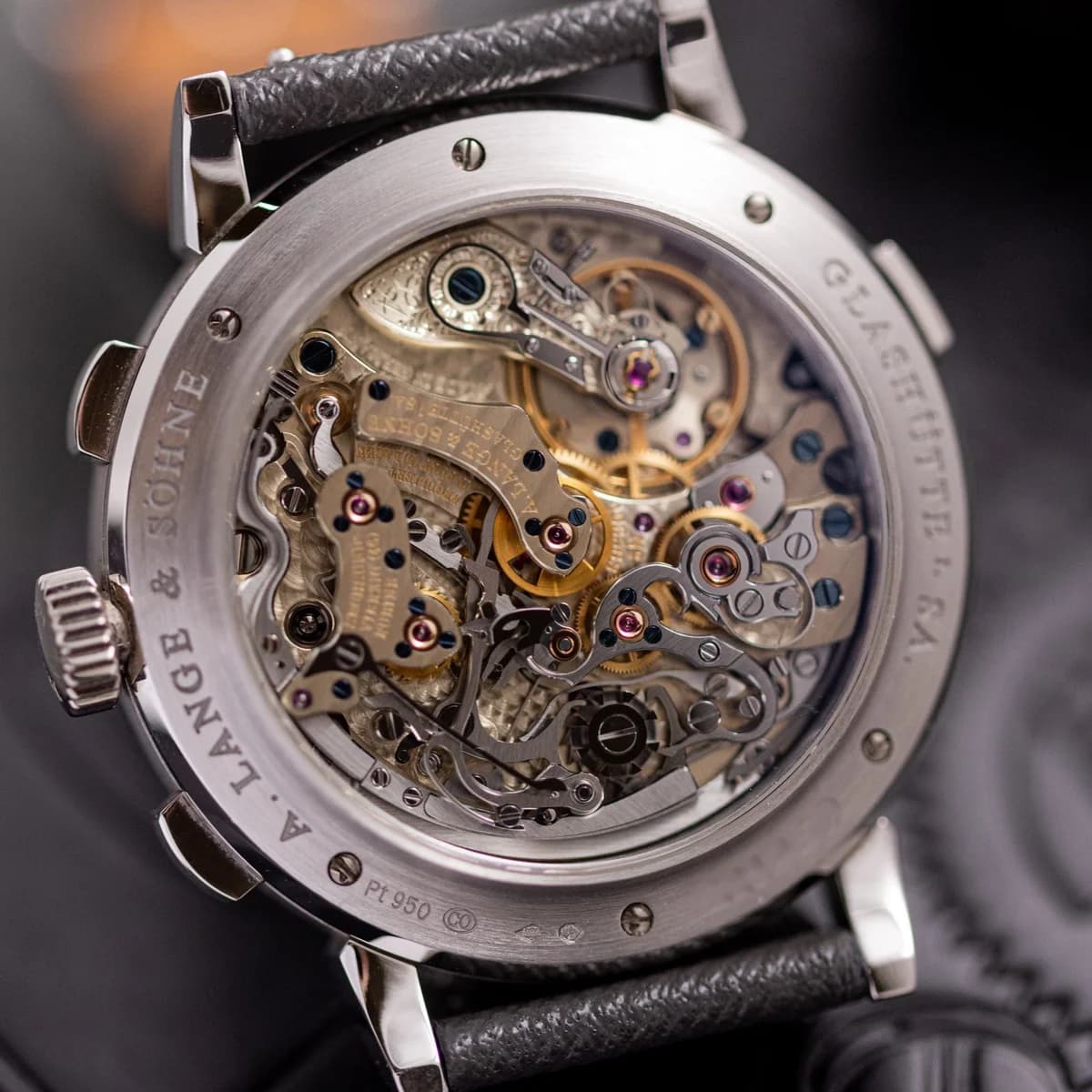
The double assembly process is something I have written about before, but it matters enough to revisit here. Every A. Lange & Sohne movement is assembled twice. All 451 components go together the first time for fitting, regulation, and functional testing. The movement is run through its paces, adjusted, verified. Then the entire thing is completely disassembled. Every part is cleaned. Temporary screws are replaced with flawless thermally blued steel screws. Gold chatons receive their final mirror polish. All delicate finishing is applied without the risk of tool marks or fingerprints from the functional testing phase. Then the movement is reassembled permanently. The reason this exists is the German silver. It is so sensitive that even a single fingerprint during the first assembly would leave a permanent mark on the plates. The first assembly ensures the movement works. The second ensures it looks the way it should. No other manufacture does this at this scale.
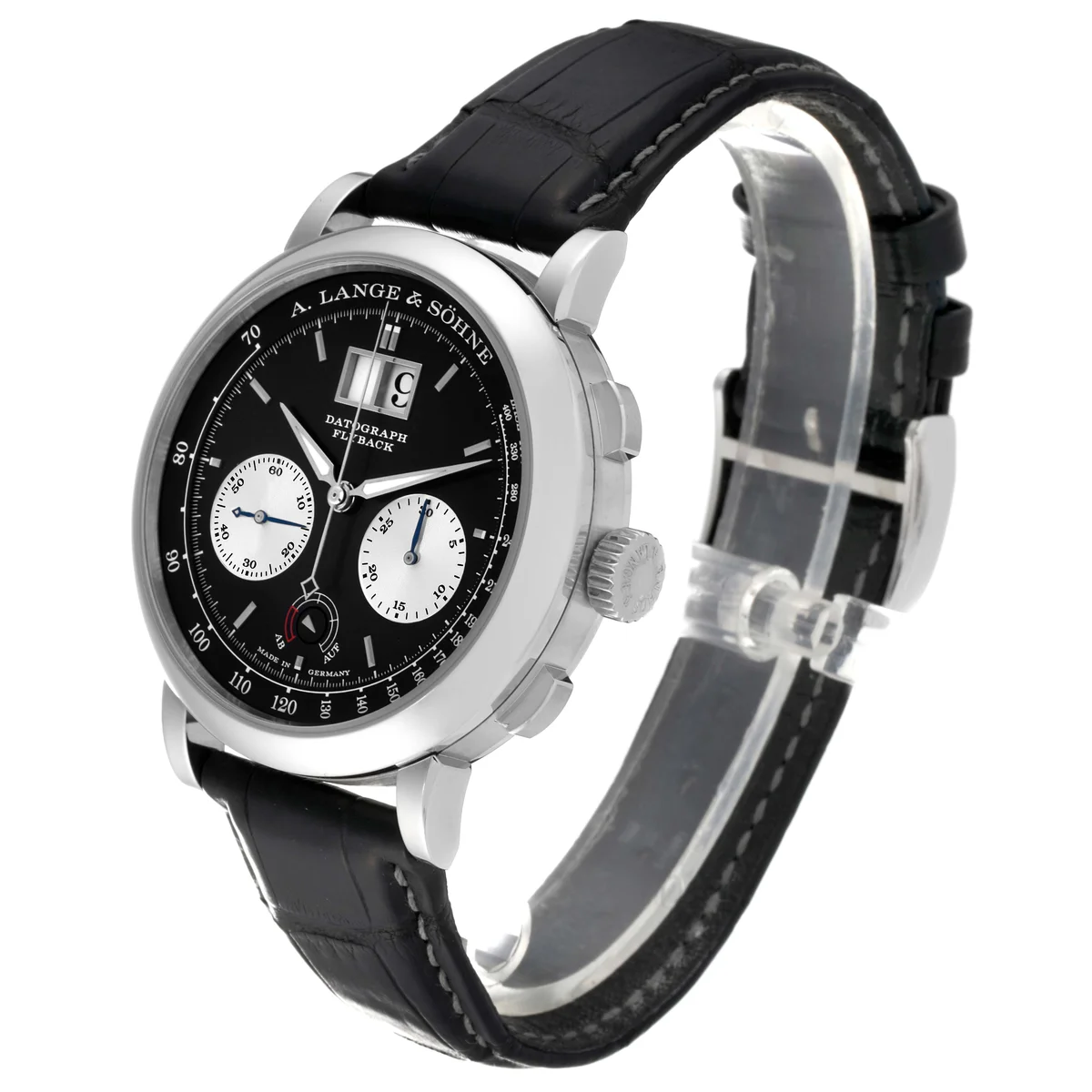
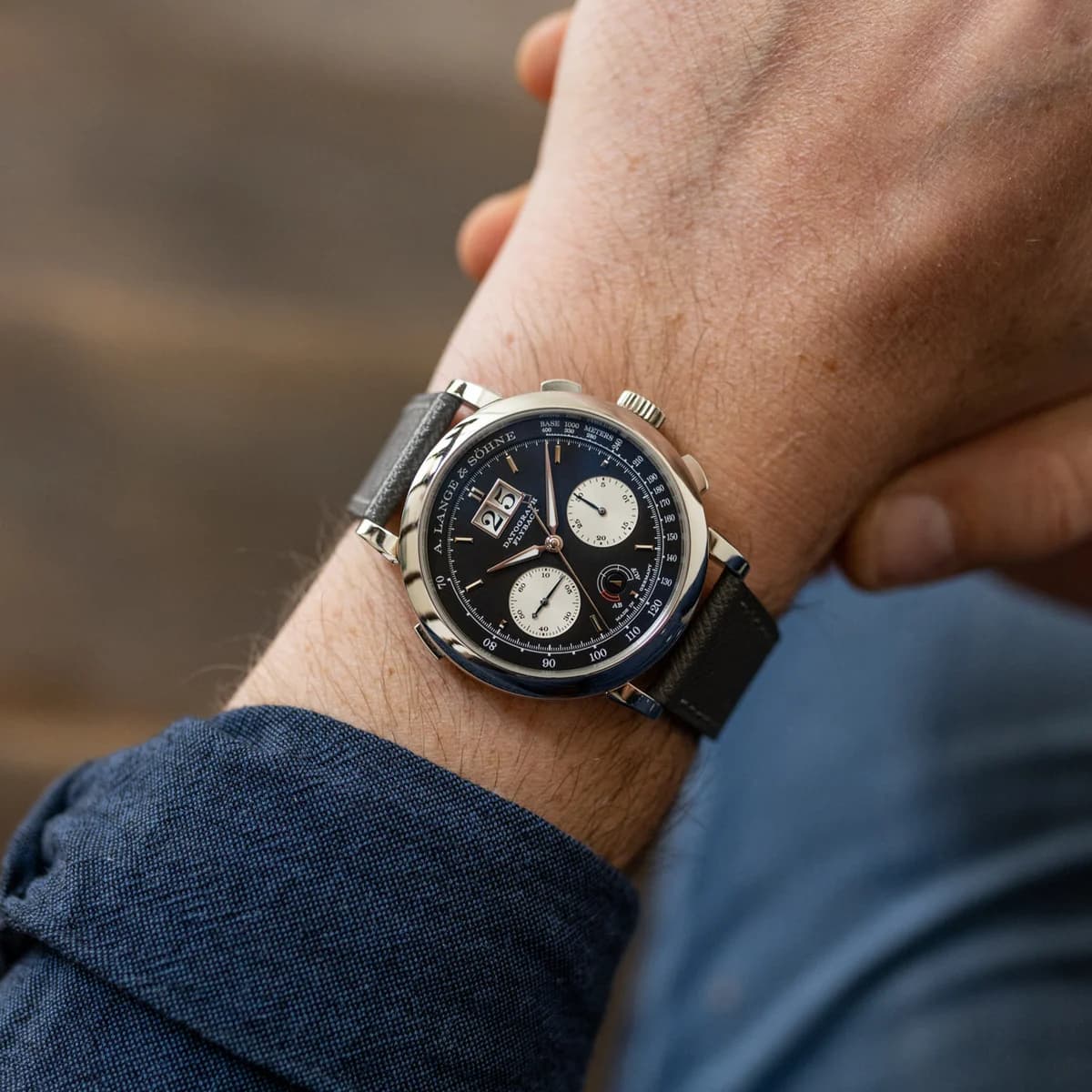
The case measures 41mm in diameter, 13.1mm thick, with a 48.3mm lug-to-lug span and a 20mm lug width. It comes in 950 platinum (reference 405.035) or 18K pink gold (reference 405.031). Sapphire crystal on top, sapphire exhibition caseback below, and water resistance rated to 3 bar, which is 30 meters on paper but effectively means splash-proof. The platinum version is dense in a way that photographs do not communicate. Platinum is roughly 60% heavier than gold per equal volume, and on the wrist, the 405.035 has a constant, substantial presence that never lets you forget it is there. At 13.1mm, this is not a slim chronograph. It sits higher on the wrist than a Patek 5170 (which measures around 11mm) or most other manual chronographs in this class. But the thickness is the price of engineering. The outsize date mechanism, the column-wheel chronograph, the flyback, the precisely jumping minute counter, the power reserve indicator, all of that has to live somewhere inside the case.
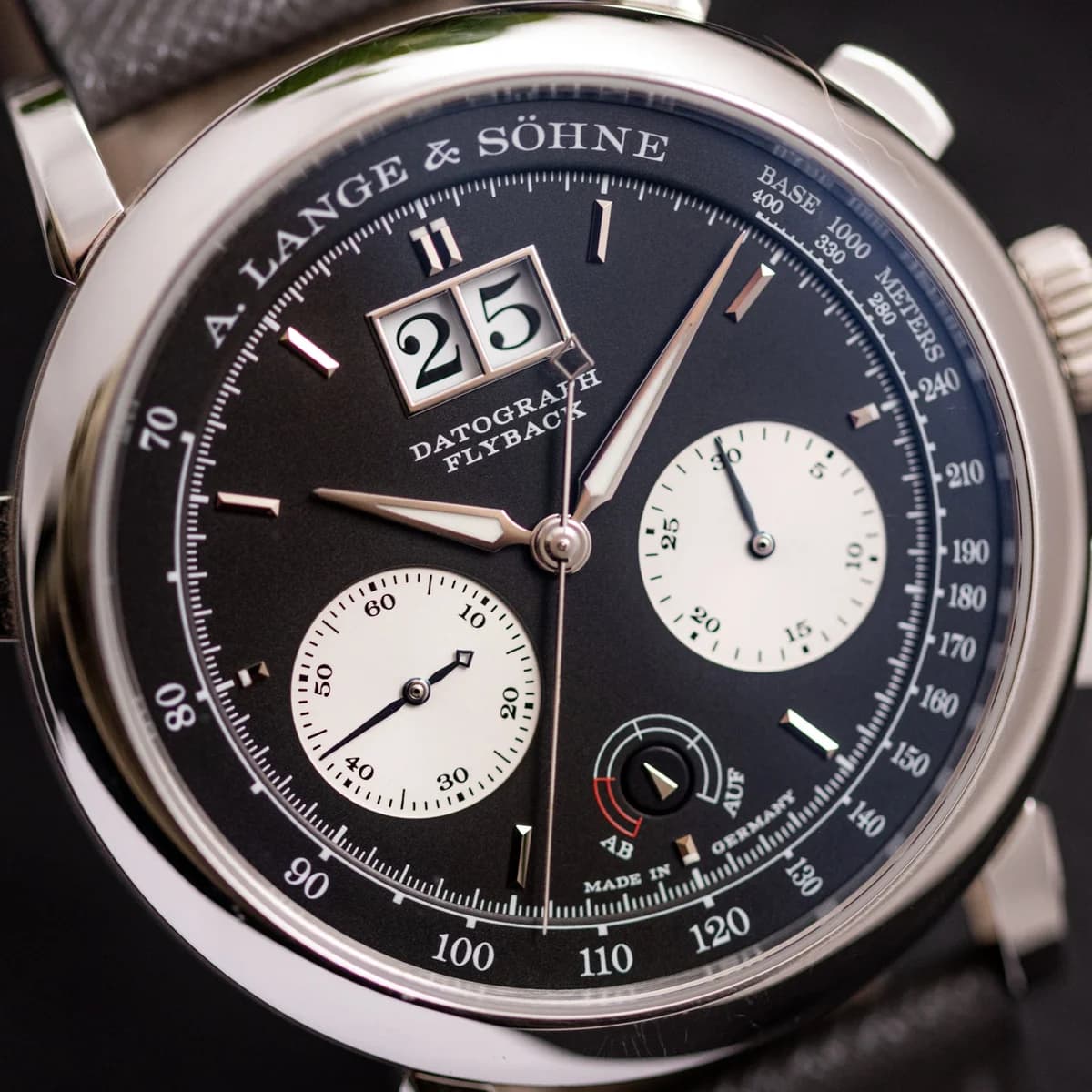
The evolution from the original Datograph to the Up/Down tells a story of refinement without reinvention. The original 1999 model used the Caliber L951.1 with 405 parts, 40 jewels, a screwed Glucydur balance, and 36 hours of power reserve in a 39mm case. The 2012 Up/Down grew to 41mm, adopted the L951.6 with its 451 parts, 46 jewels, free-sprung balance with in-house overcoil hairspring, and 60 hours of power reserve. The power reserve indicator at 6 o'clock is the visible difference that gives the watch its Up/Down name (Auf/Ab in German). A larger mainspring barrel with a thicker spring accounts for the nearly doubled power reserve. The character of the watch did not change. The architecture did not change. It just got better in the ways that matter to someone who actually wears and winds the thing every day.
The Datograph has grown into a family. The 405.035 in platinum and the 405.031 in pink gold are the current production references. The 405.034 is the Lumen edition, limited to 200 pieces, with a semi-transparent sapphire dial that allows luminous elements beneath to charge and glow in darkness, solving the standard model's legibility problem after sunset. The 405.028 is the 25th anniversary edition from 2024, white gold with a blue dial, limited to 125 pieces. Beyond the Up/Down, the Datograph platform spawned the Datograph Perpetual (adding a perpetual calendar) and the Datograph Perpetual Tourbillon. And then there is the original 403.031 in pink gold, 2003 to 2005, the Dufourgraph. That short production window and the Dufour association make it one of the most collectible Lange references in existence.
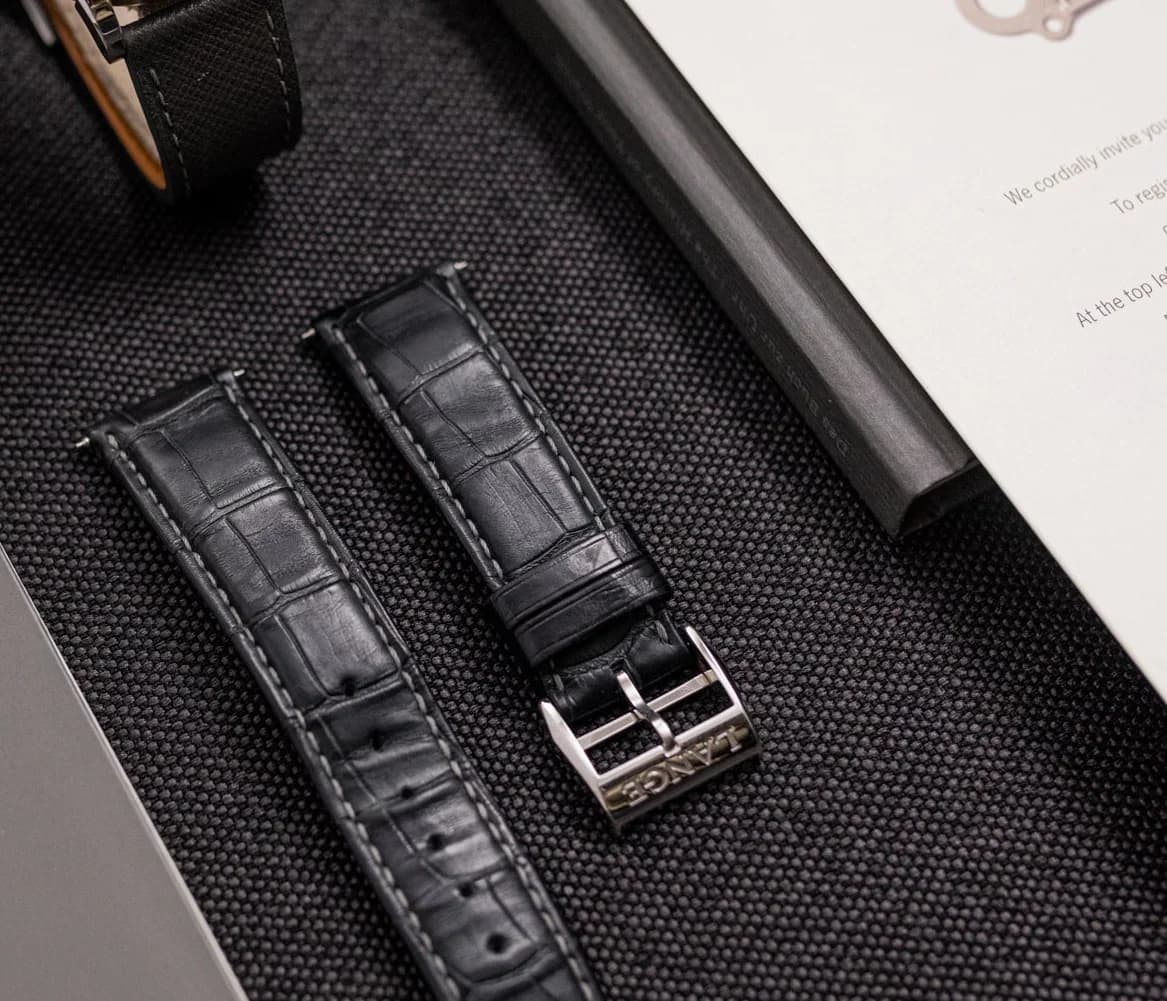
On the wrist, the platinum Datograph is an experience in density. It is not heavy the way a large steel diver is heavy. It is heavy the way a solid bar of precious metal is heavy. Concentrated. Constant. The 13.1mm case height means it sits above the wrist line enough that shirt cuffs notice it. I would strongly recommend the deployant buckle over the standard tang for the platinum version. That much weight on an alligator strap with a tang buckle puts stress on the strap holes and the watch can shift on the wrist. A deployant distributes the weight more evenly and keeps the watch stable. The 20mm lug width is standard enough that aftermarket strap options are plentiful if you want to change things up. Standard models have no lume, which means this is a daytime watch. In dim restaurants or evening settings, you are reading the time by feel or by the light of your phone. The Lumen edition addresses this directly, but the standard Datograph is honest about what it is: a watch built for visual beauty in good light, not for reading time in the dark.
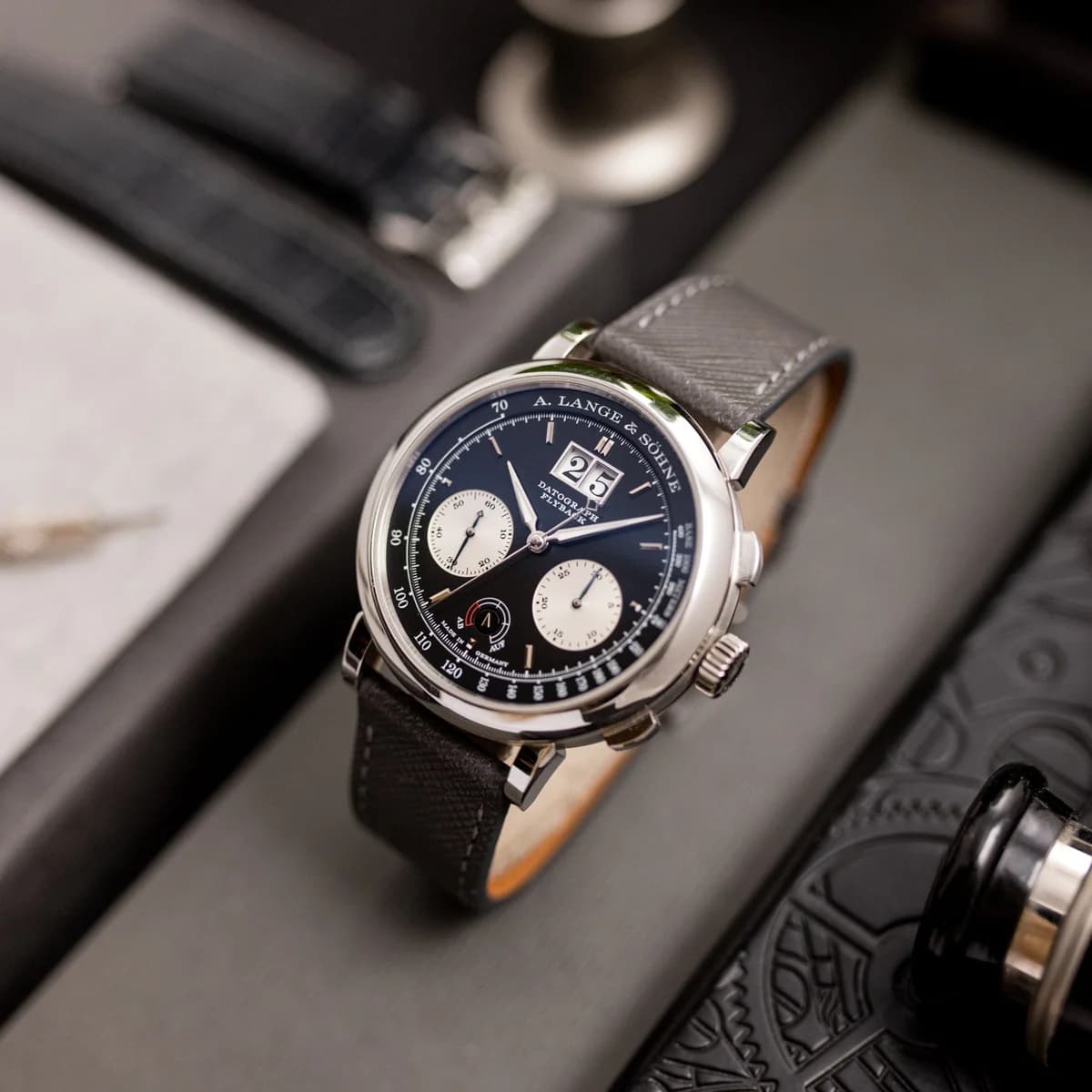
The pink gold 405.031 on darker skin tones is genuinely striking. The copper content in Lange's rose gold formulation gives it warmth that creates a layered contrast against melanin-rich complexions. The black dial with silver subsidiary dials, the rose gold case catching light, the dark alligator strap. There is a visual coherence to that combination that cool-toned metals like white gold or platinum do not achieve on warm skin. This is a watch for Holland & Sherry flannel, for evenings that matter, for the kind of occasions where you dress with intention and the watch is part of that intention. The manual winding ritual every morning is the same meditative act I described in the Grand Lange 1 article. You wind it, you feel the mainspring tension build, and you start your day with a deliberate mechanical interaction that no automatic watch can replicate.
The honest critique starts with thickness. At 13.1mm, the Datograph Up/Down is thick for a hand-wound chronograph. The Patek Philippe 5170, which is a manual chronograph with similar aspirations, measures around 11mm. That is a meaningful difference on the wrist. Water resistance at 3 bar is barely splash-proof, and while I understand the sapphire caseback and the case construction prioritize display over water sealing, it does mean you take this watch off before washing your hands if you are cautious. Servicing costs are substantially higher than comparable Swiss competitors, and the turnaround time for a full service can be longer than what Patek or Vacheron owners experience. Standard models lack lume entirely, which is a genuine limitation for a watch at this level. These are real tradeoffs, and they are the price of what lives inside the case. The outsize date plus the chronograph plus the power reserve plus the jumping minute counter need vertical space. Something has to give, and in the Datograph, what gives is case height and water resistance.
In the competitive landscape, the Datograph occupies a position that is genuinely its own. The Patek Philippe 5270 is a perpetual calendar chronograph, thinner and from the most prestigious name in Swiss watchmaking, but it is a different class of complication entirely. The Zenith El Primero beats at 36,000 vibrations per hour and has automatic winding, a fundamentally different philosophy. The Rolex Daytona is the most recognizable chronograph on earth, but it uses a different architecture and serves a different purpose. None of them are assembled twice. None of them have Glashutte finishing at this level. None of them have a hand-engraved balance cock that is unique to each individual watch. The Datograph is not competing with these watches on specifications. It is competing on execution. And on execution, it stands alone.
I wrote about Glashutte in the Grand Lange 1 article, the small town in the forested valley south of Dresden where Ferdinand Adolph Lange started his workshop in 1845. The Datograph comes from the same manufacture, the same town, the same tradition of untreated German silver, double assembly, and hand-engraved balance cocks. But it is a different side of that tradition. The Grand Lange 1 is about proportions and mathematical beauty. The Zeitwerk is about mechanical audacity. The Datograph is about the chronograph, the most common complication in all of watchmaking, executed at the highest level anyone has achieved.
Philippe Dufour makes watches alone in his atelier in the Vallee de Joux. He finishes his movements to a standard that most manufactures with hundreds of employees cannot match. He has spent his entire career at the absolute ceiling of what a human hand can achieve with a watch movement. And when asked what the best chronograph ever made is, he pointed at the Datograph. He did not point at it casually. He bought one. That tells the whole story.
Also in Haute Horlogerie