
A. Lange & Sohne
Grand Lange 1
137.033
You have to understand what happened in Glashutte to understand this watch. In 1845, a watchmaker named Ferdinand Adolph Lange walked into a struggling mining town in Saxony, about 30 kilometers south of Dresden, and started a workshop. He had a government loan of 7,800 Thalers and a mandate to train 15 apprentices. That workshop became the foundation of an entire industry. Lange's apprentices went on to found their own companies. Within decades, Glashutte was Germany's watchmaking capital, the German answer to the Swiss Jura Valley. Multiple manufacturers, hundreds of skilled craftsmen, an entire town built around the art of precision timekeeping.
Then it all disappeared. In 1945, Soviet forces occupied Glashutte after the war, dismantled the factories, and shipped the equipment to the ussr. By 1948, A. Lange & Sohne was expropriated and nationalized. The brand simply ceased to exist. The name, the legacy, 100 years of accumulated knowledge and craftsmanship, gone. Glashutte continued making watches under state-owned entities, but the soul of the thing was different. The name Lange became a historical footnote.
Forty-four years later, on December 7, 1990, a 66-year-old man named Walter Lange registered a new company called A. Lange & Sohne GmbH. Walter was the great-grandson of Ferdinand Adolph Lange. The Berlin Wall had fallen just over a year earlier, and Walter had been waiting his entire adult life for this moment. But he could not have done it alone. Gunter Blumlein, who ran IWC and Jaeger-LeCoultre within the Mannesmann group, provided the financing, the strategic vision, and the systematic investment in infrastructure and training that made the revival possible. Without Blumlein, this story ends differently. He is the person who turned a family dream into a world-class manufacture. He died in 2001. I wish more people knew his name.
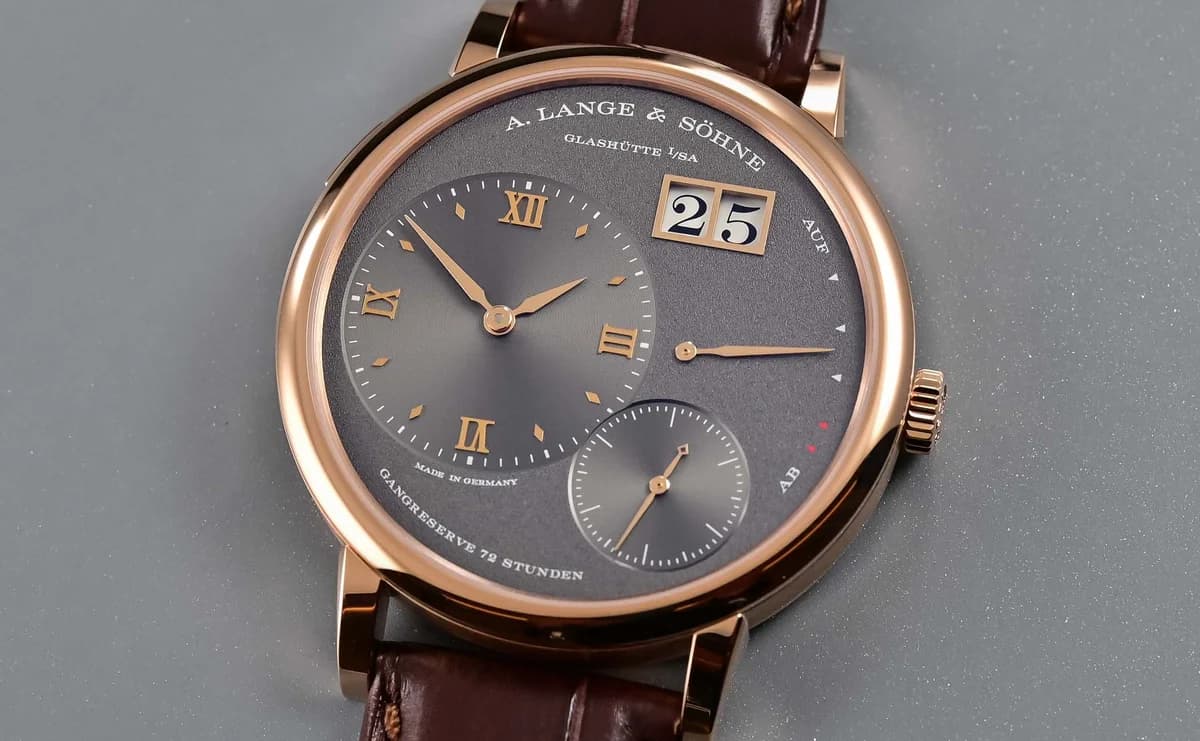
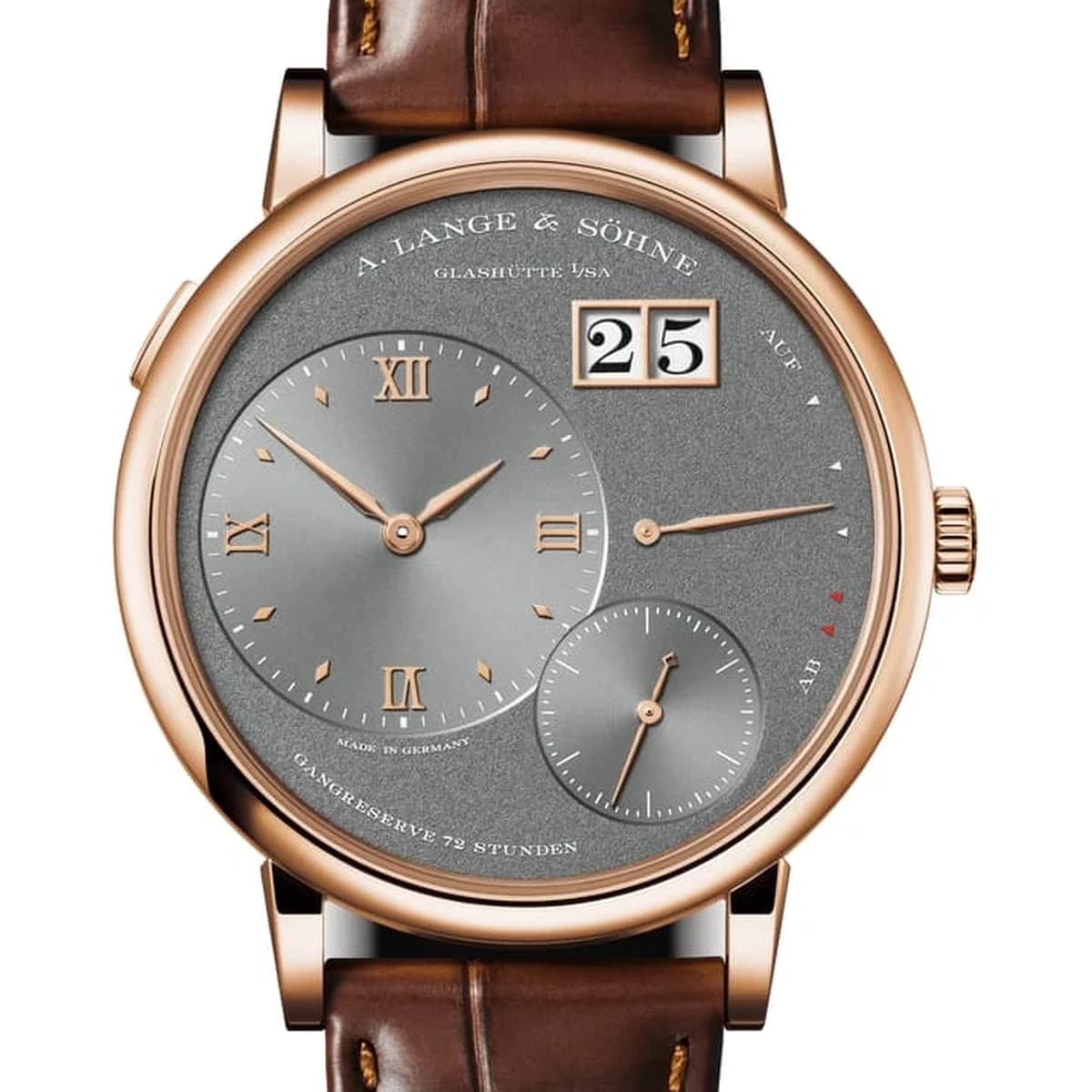
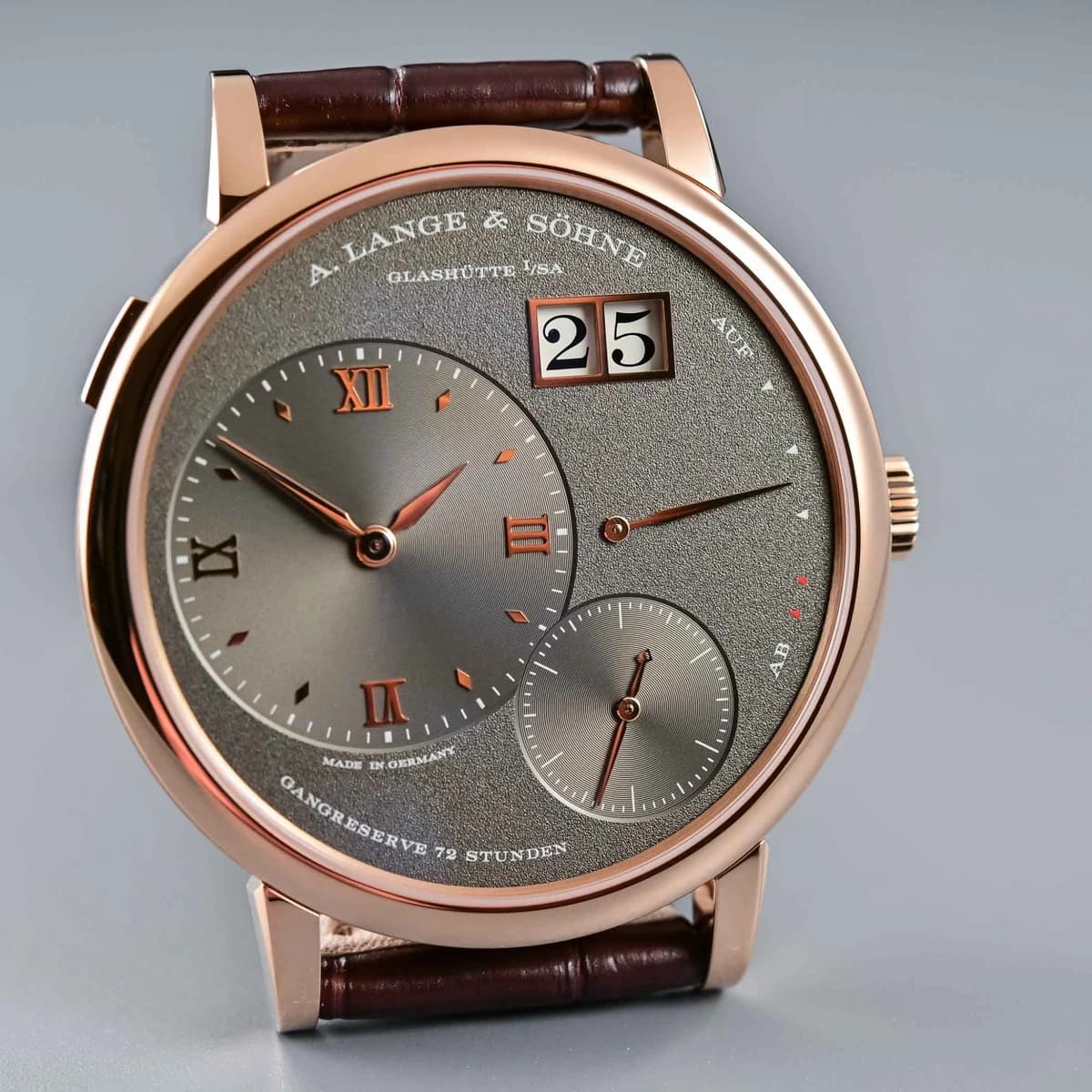
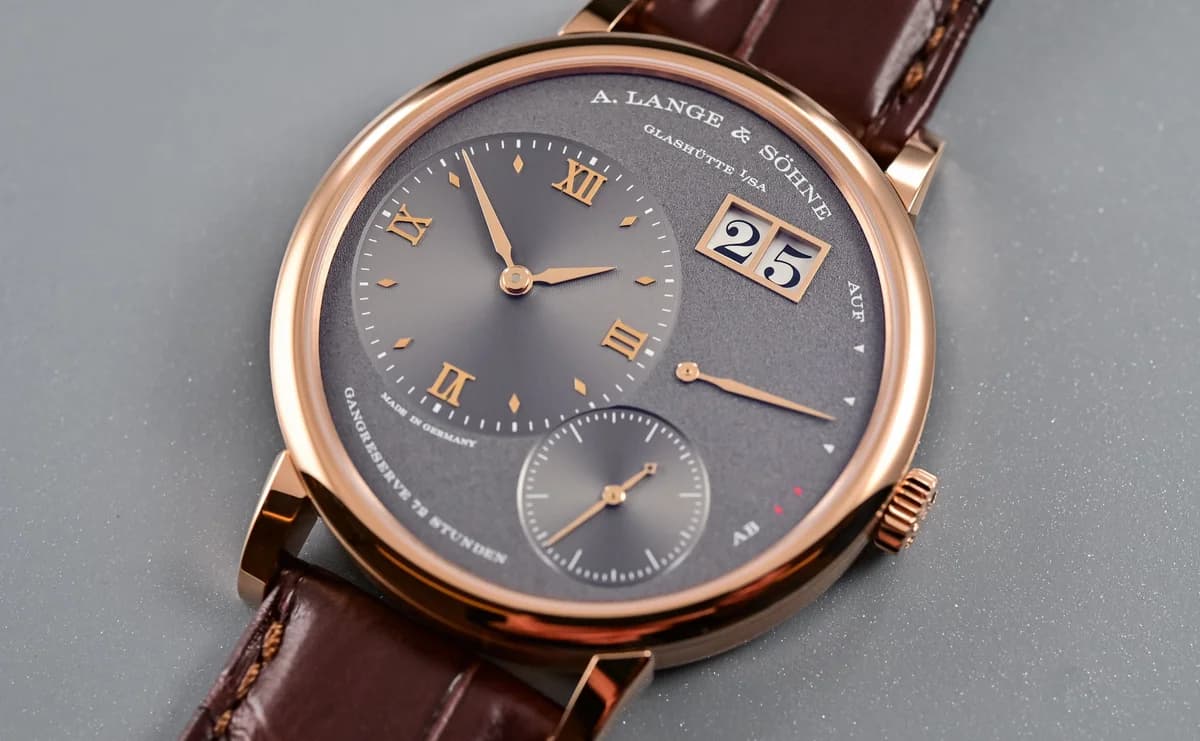
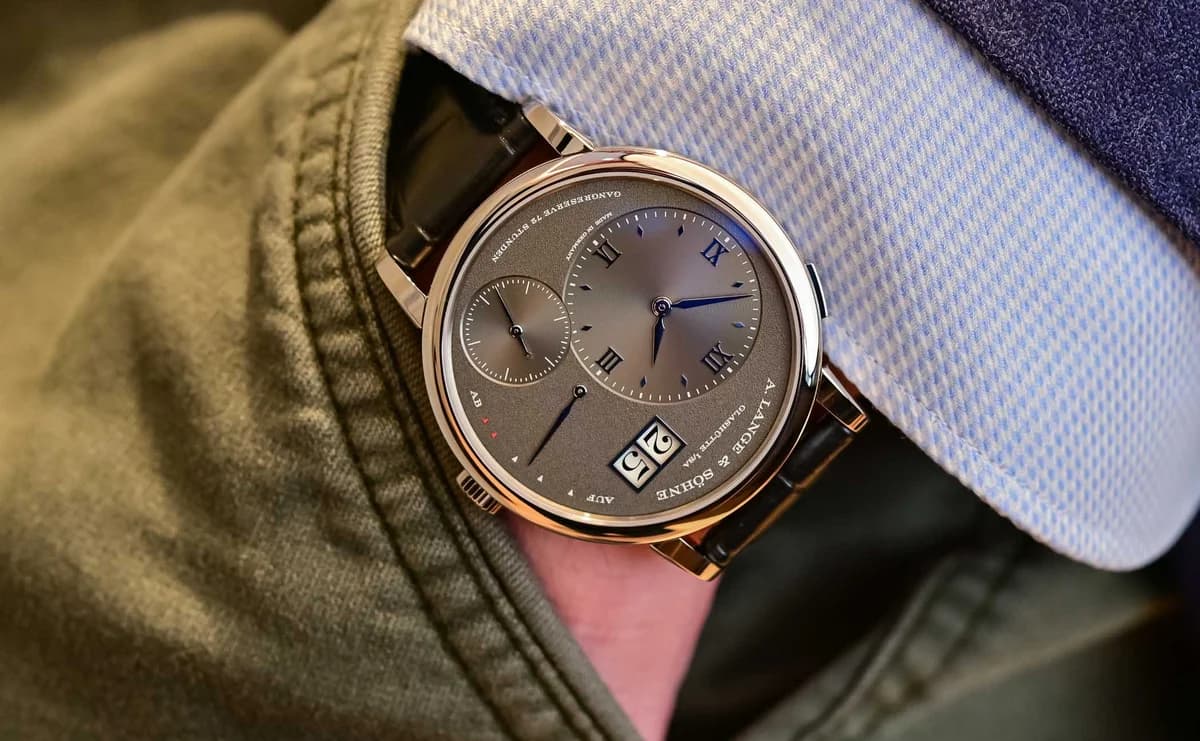
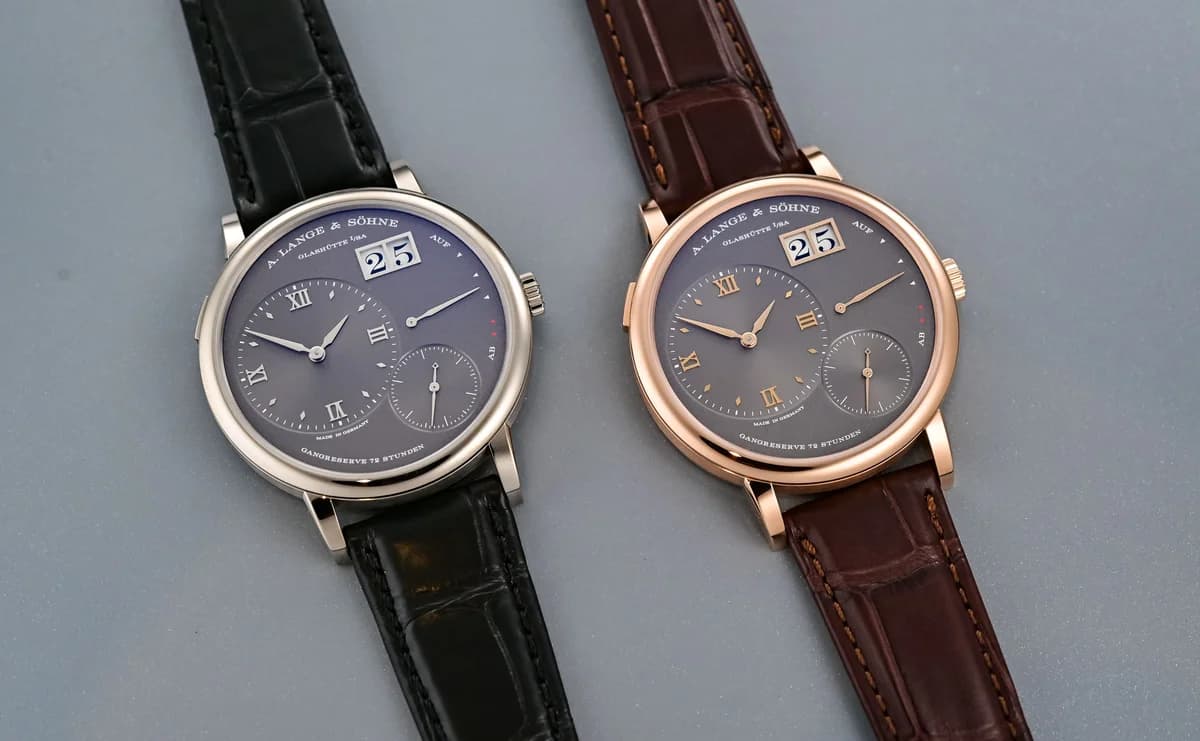
On October 24, 1994, Walter Lange presented four watches to the world. The brand had been dead for nearly half a century. One of those four watches was the Lange 1, and it changed everything. Not because it was complicated. Because it was different. Every other dress watch on the market had a centered dial with symmetrical sub-dials. The Lange 1 had an asymmetric layout with the hours and minutes offset to the left, a small seconds and power reserve stacked vertically on the right, and an oversized date display at roughly one o'clock. It looked wrong. Until you stared at it for ten seconds and realized it looked exactly right.
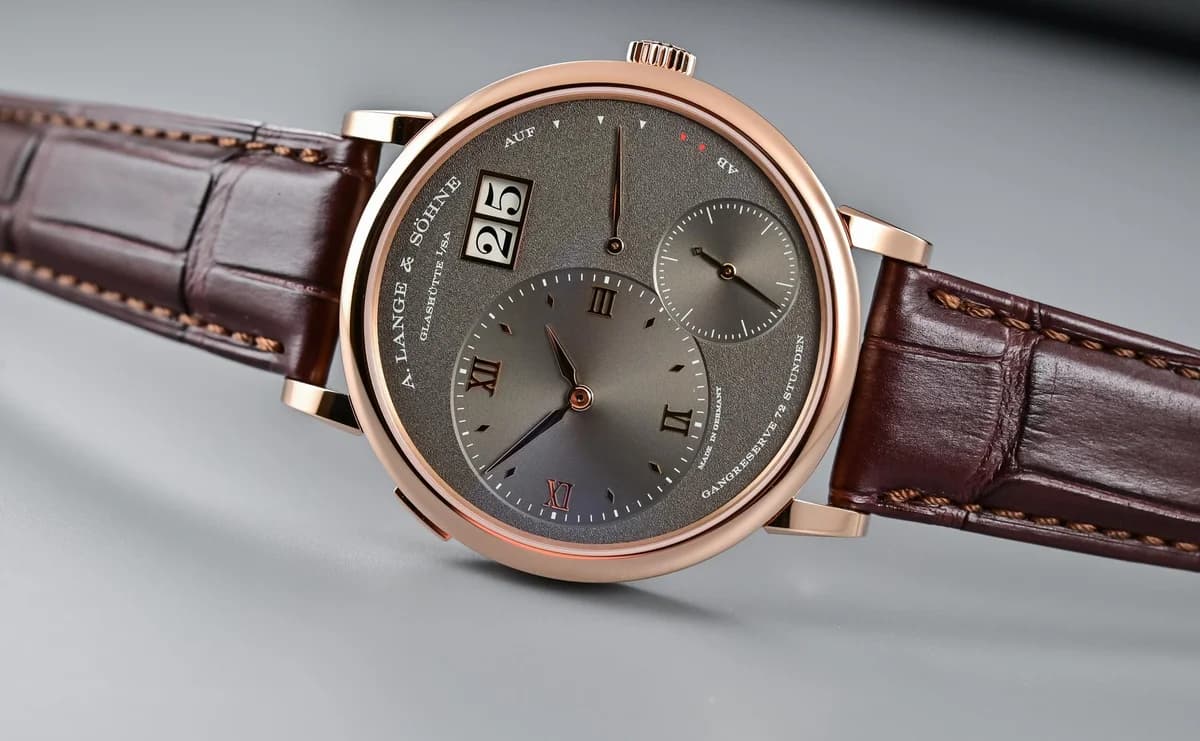
The reason it looks right is mathematics. The proportions of the Lange 1 dial are built on the golden ratio. Phi. 1.618. The ratio between the full dial diameter and the hour circle follows this proportion. The three right-side displays are arranged along an isosceles triangle based on the Kepler triangle. The outsize date aperture follows the same proportional system. This is why an asymmetric layout feels harmonious instead of chaotic. It is not a coincidence or an aesthetic accident. It is engineered balance. I love how the off-center dial forces your eye to read the time differently than any centered layout. The same mathematical principle that shows up in the Parthenon, in Renaissance painting, in nautilus shells. Applied to a watch dial in Glashutte, Saxony.
This is personal for me because I learned the golden ratio through photography. The rule of thirds is the simplified version, but phi is the real thing. You learn to compose a frame using that proportion. You see it in the spiral of a nautilus shell, in the branching of trees, in the way a coastline curves. Once you start seeing it, you cannot stop. And the fact that a watchmaker in Glashutte used the same principle to lay out a dial means that two things I care deeply about, photography and horology, align on the same fundamental rule of aesthetics. There is something beautiful about wearing that on your wrist every day. It is not just telling time. It is a daily reminder that beauty has structure, and that structure shows up everywhere if you know where to look.
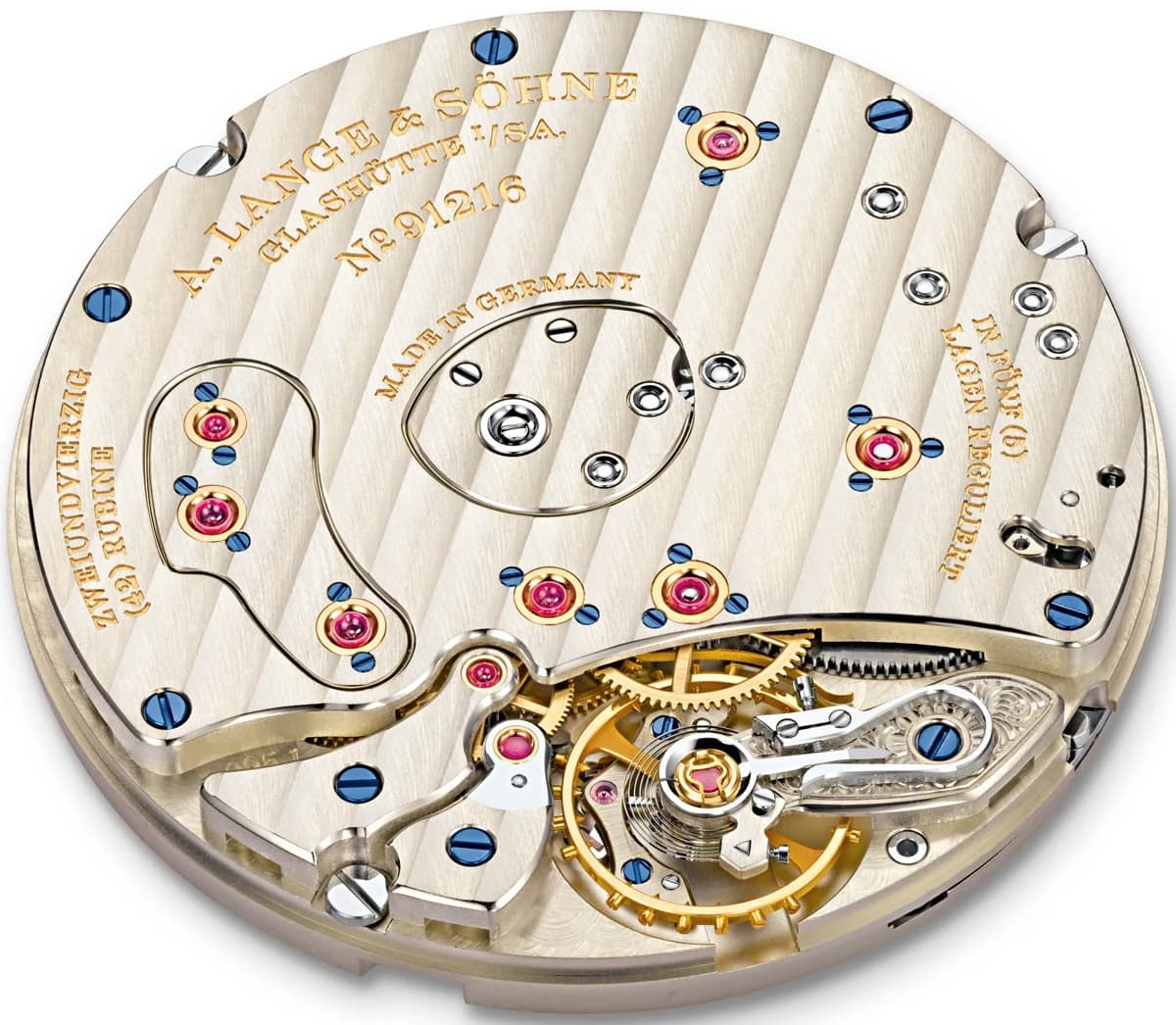
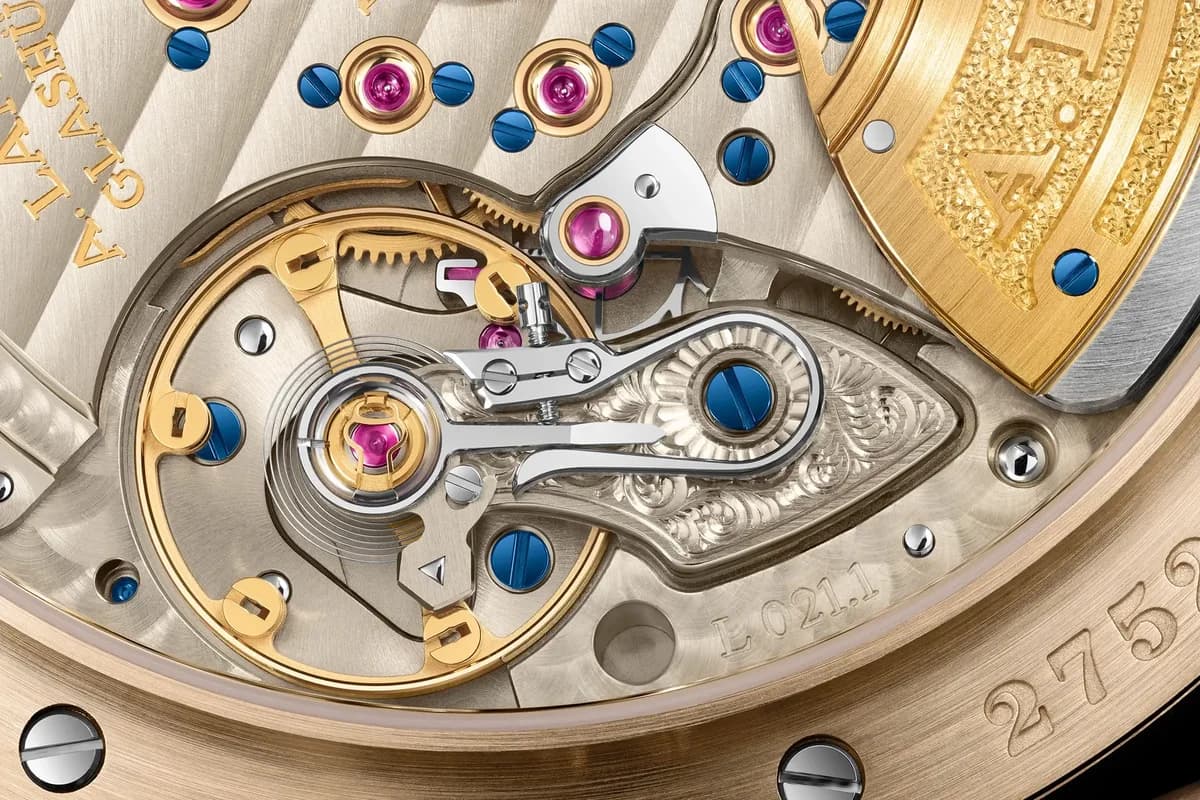
The other thing about this watch is that there is no bad angle. The dial is one experience. The caseback with the hand-engraved balance cock and the German silver three-quarter plate is an entirely different experience. The rose gold case catching light on your wrist is another. Even the clasp. It is simplistic in design, but when you actually hold one in your hand, there is a quality to it that photographs do not convey. From every direction, there is something to appreciate. That is rare. Most watches give you one great view, the front, and everything else is functional. The Grand Lange 1 gives you something remarkable from every angle you look at it.
The Grand Lange 1 is the larger expression of this idea. Introduced in 2003 at 41.9mm, it has been refined through three generations. The current third generation, reference 137.033 in pink gold, measures 41mm wide and just 8.2mm thick. That thickness is remarkable. The standard Lange 1 at 38.5mm is actually thicker at 9.8mm. The Grand is bigger in diameter but slimmer on the wrist. This is because the Grand Lange 1 received its own dedicated movement in 2012, the Caliber L095.1, engineered specifically for the larger case rather than simply scaling up the original. The L095.1 stands 4.7mm tall, contains 397 components, 42 jewels with 7 set in screwed gold chatons, beats at 21,600 vibrations per hour, and delivers 72 hours of power reserve from a single large-diameter barrel containing two stacked mainsprings. That is three full days of power from a hand-wound movement.
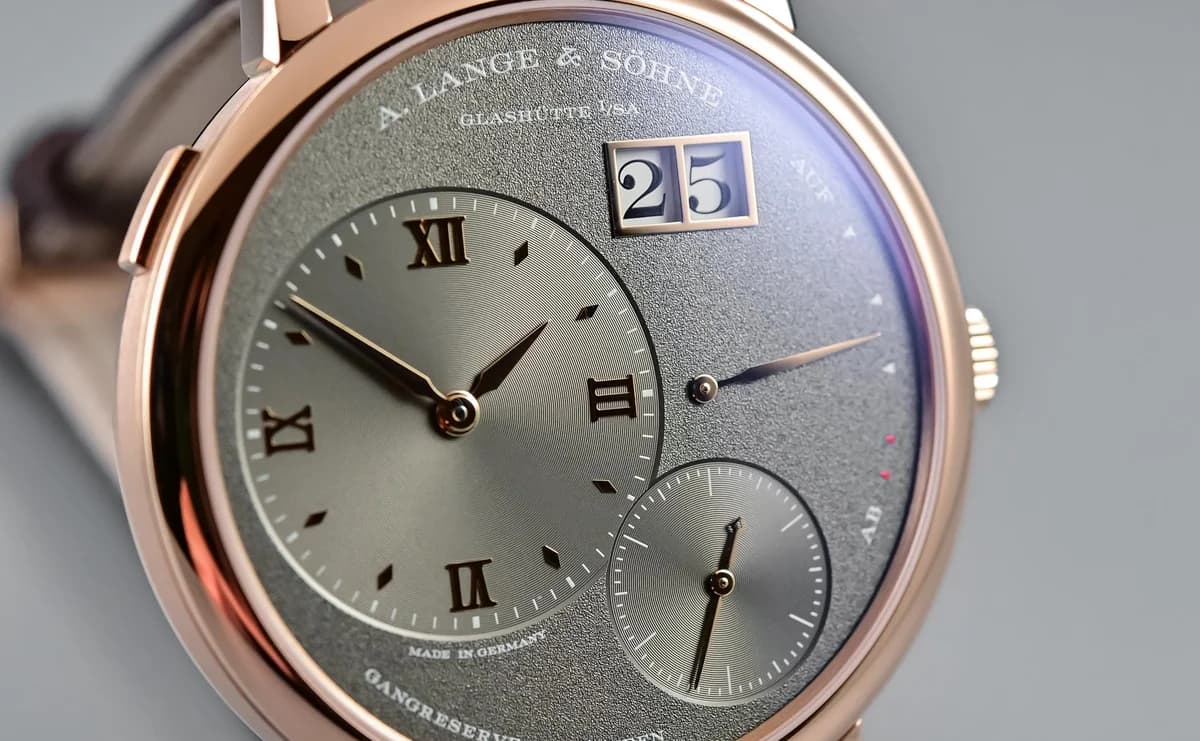
The outsize date is the feature everyone notices first, and once you understand how it works, you appreciate it even more. Lange calls it the Grossdatum, and it was inspired by the five-minute clock at the Semper Opera House in Dresden. Two separate display elements create the large numerals: a ring-shaped units disc showing digits 0 through 9, and a tens cross showing 1, 2, 3, and one blank field. The two discs revolve one above the other with only 0.15 millimeters of clearance. Each disc has its own program wheel with teeth of varying length to coordinate the complex changeover sequence. The units disc advances once per day. The tens cross advances every ten days, except after the 31st when it rotates to the blank field for the return to 01. The result is date numerals approximately three times larger than a conventional date window. It sounds simple in description but the mechanical coordination required to make two independent discs change in perfect synchronization, every single day, with sub-millimeter clearance, is genuinely impressive engineering.
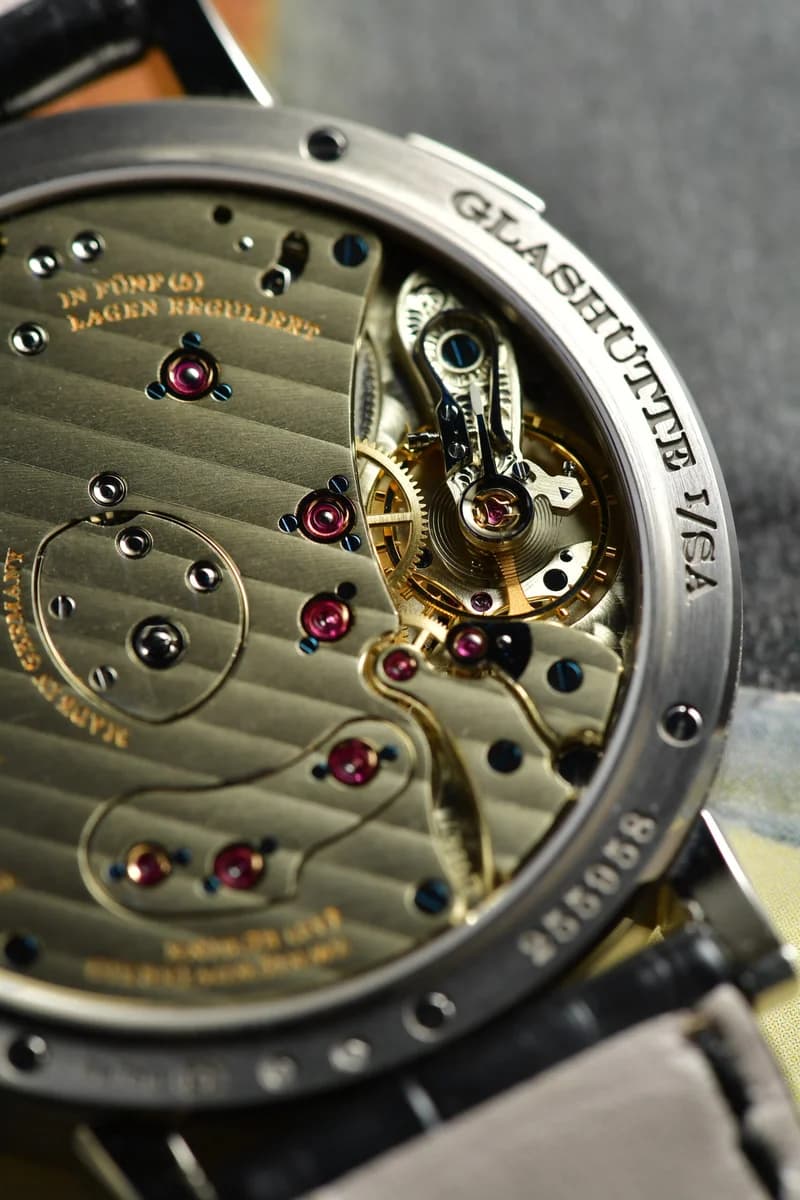
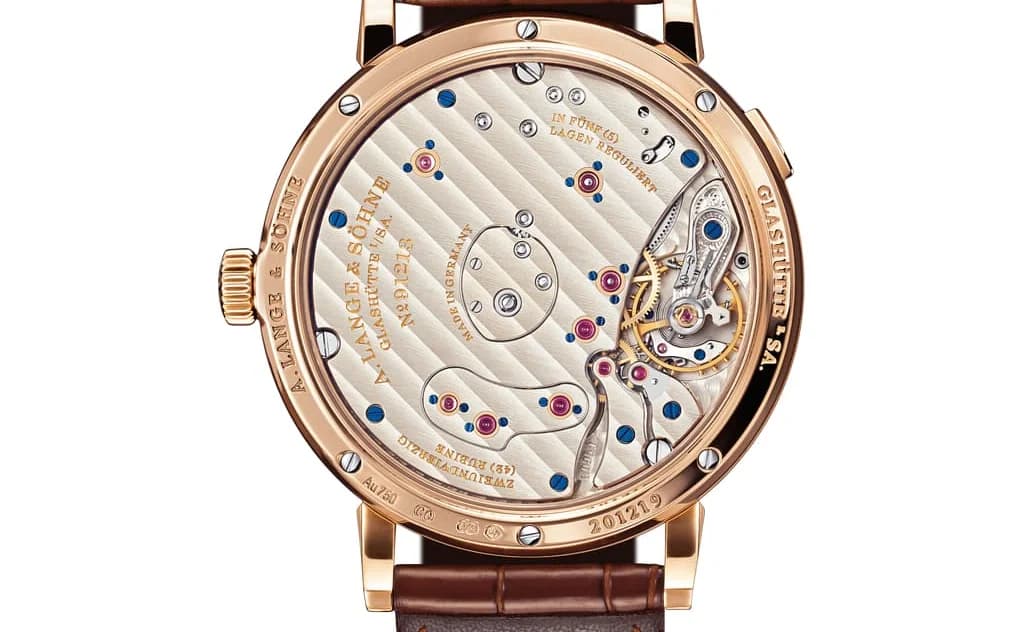
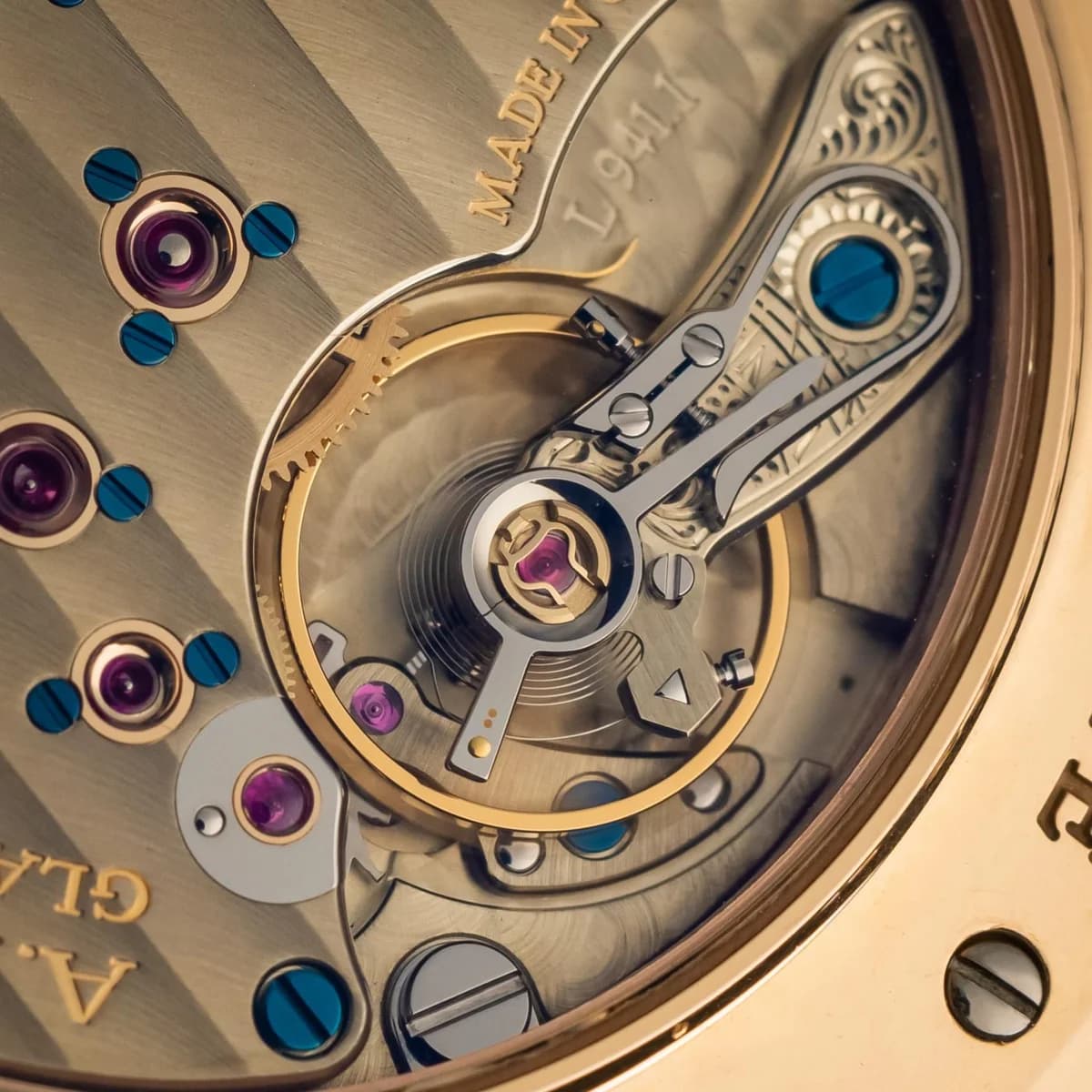
Then there is the movement itself, and this is where Lange separates from almost everyone else in watchmaking. The three-quarter plate. This is a signature Glashutte construction where a single large plate covers most of the movement, providing superior structural rigidity and a large canvas for decoration. The plate is made of untreated German silver, which is an alloy of copper, zinc, and nickel. Unlike Swiss movements that are typically rhodium-plated for a uniform silver finish, Lange leaves the German silver raw. Over years and decades, it develops a warm golden patina that is unique to each individual watch. Your movement will age differently than every other Grand Lange 1 in existence. That is not a defect. It is intentional.
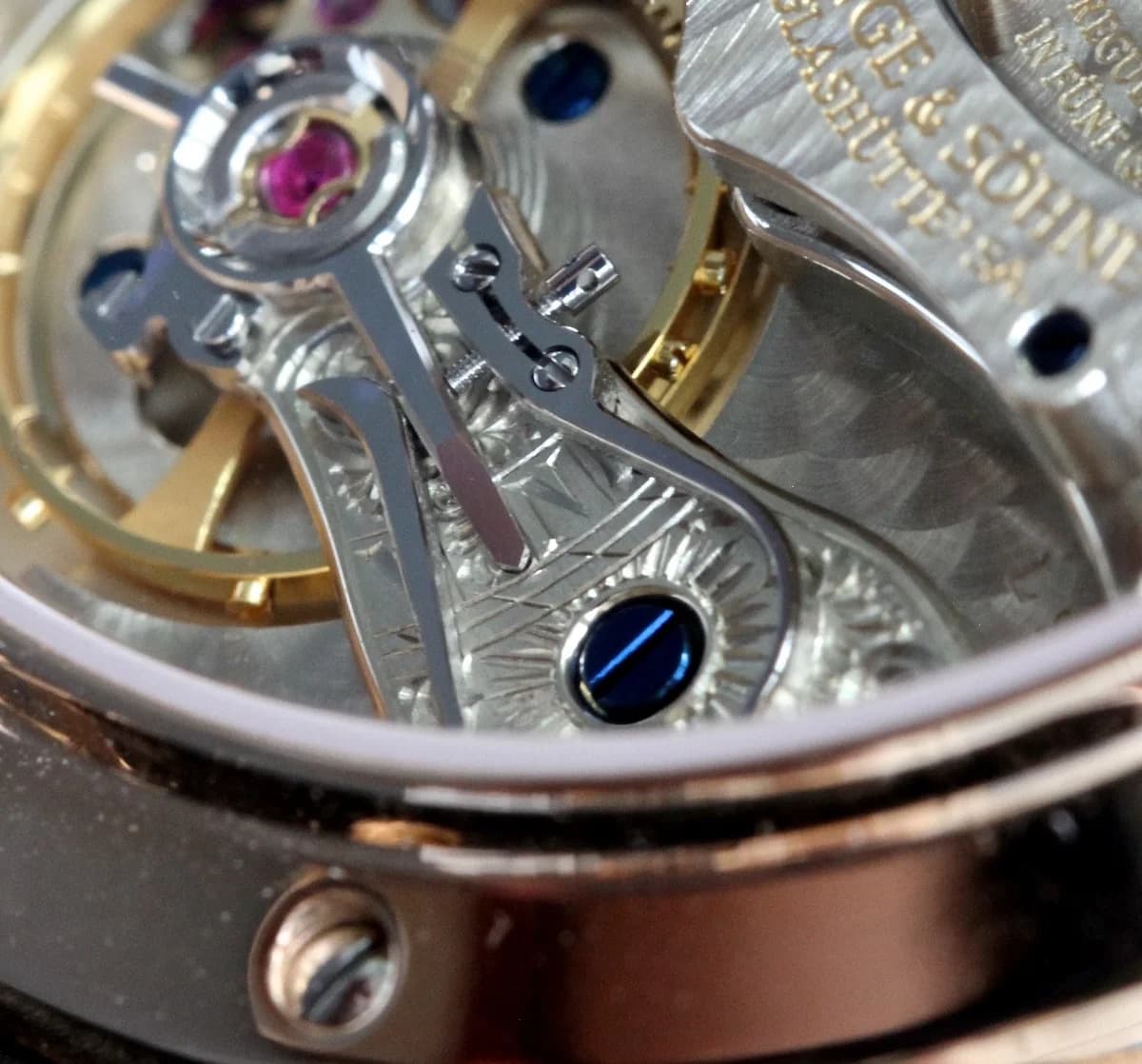
The hand-engraved balance cock is the detail that every serious watch reviewer points to, and rightfully so. Every single one is individually engraved by a master engraver at the Glashutte manufacture. No two are identical. The floral pattern is freehand, not machine-guided, not laser-etched, not CNC-milled. A human hand with a burin, cutting into German silver under magnification. When you flip this watch over and look through the exhibition caseback, you are seeing work that is literally one of a kind. The seven screwed gold chatons holding the ruby jewels are mirror-polished. The screws are thermally blued, not painted, which means they were heated to exactly 290 degrees Celsius to achieve that specific cornflower blue color. The Glashutte ribbing across the plates. Every surface hand-finished. Black polishing, beveling, perlage. It is, honestly, one of the most beautiful movements in production watchmaking.
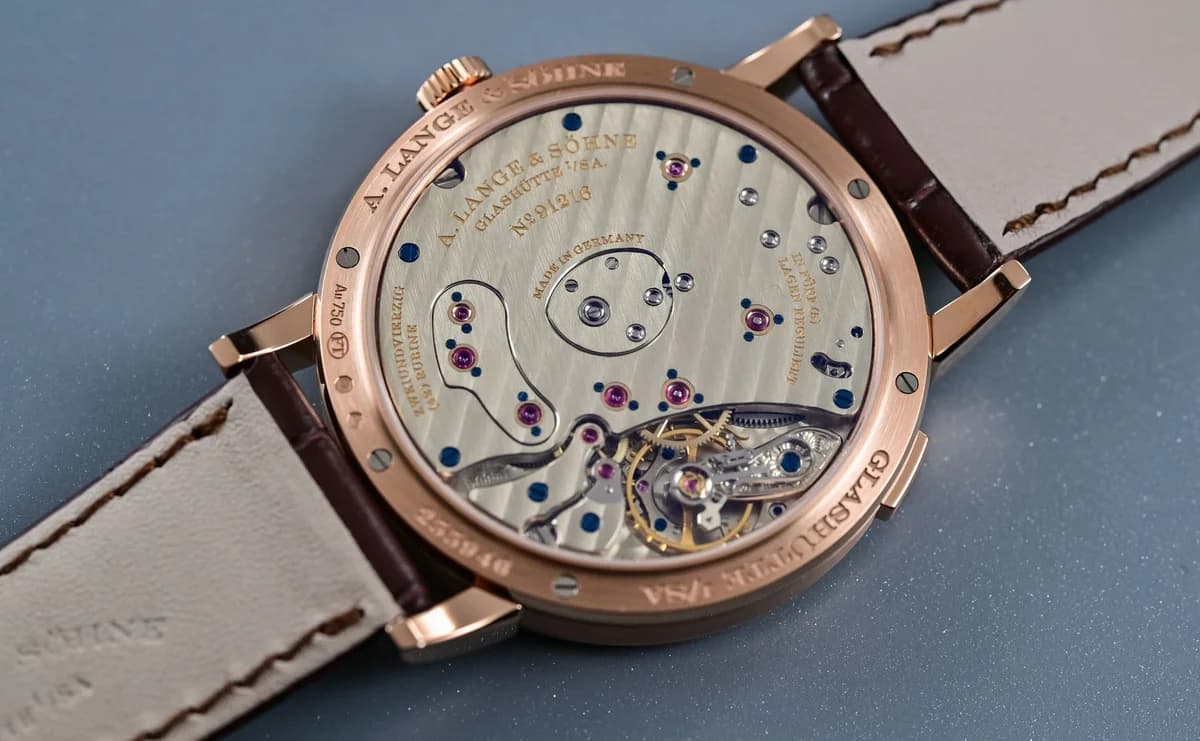
The thermally blued screws and the mirror-polished gold chatons are details that catch my eye every time, but the hand-engraved balance cock is the one that holds it. Knowing that each one is freehand, cut by a single engraver with a burin, and that no two are identical, changes how you look at it.
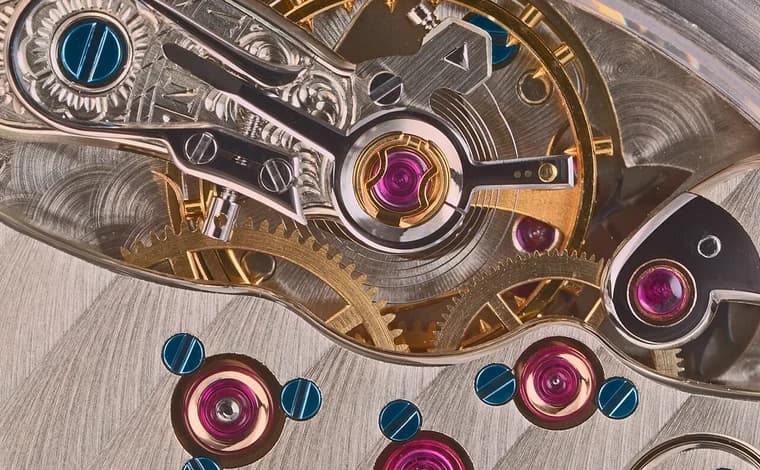
And then there is the double assembly. Every A. Lange & Sohne movement is assembled twice. All 397 components go together the first time for fitting and regulation. The movement is tested, adjusted, run through its paces. Then the entire thing is completely disassembled down to the last wheel. Every part is cleaned. Temporary screws are replaced with flawless thermally blued steel screws. Gold chatons receive their final mirror polish. All delicate finishing is applied. Then the movement is reassembled permanently. No other brand does this. The reason is the German silver. It is so sensitive that even a fingerprint or a tool mark during the first assembly would leave a permanent blemish on the plates. The first assembly ensures mechanical perfection. The second ensures cosmetic perfection. It doubles the labor. It doubles the time. And it is why, when you look at a Lange movement through the caseback, you cannot find a single flaw. Not one.
If you have ever been to Glashutte, you understand why the watches feel the way they do. It is a small town in a forested valley. Quiet. Focused. The manufacture is right there where Ferdinand Adolph Lange started it in 1845. The concentration of watchmaking talent per square kilometer is probably the highest in the world. A. Lange & Sohne, Glashutte Original, NOMOS, Moritz Grossmann, Tutima. All in this one town. There is something about the place that gets into the work. The same way Le Sentier in the Vallee de Joux has a quality that you can feel in JLC's watches, Glashutte has a quality you can feel in Lange's. If you find yourself in Germany, it is worth the drive from Dresden.
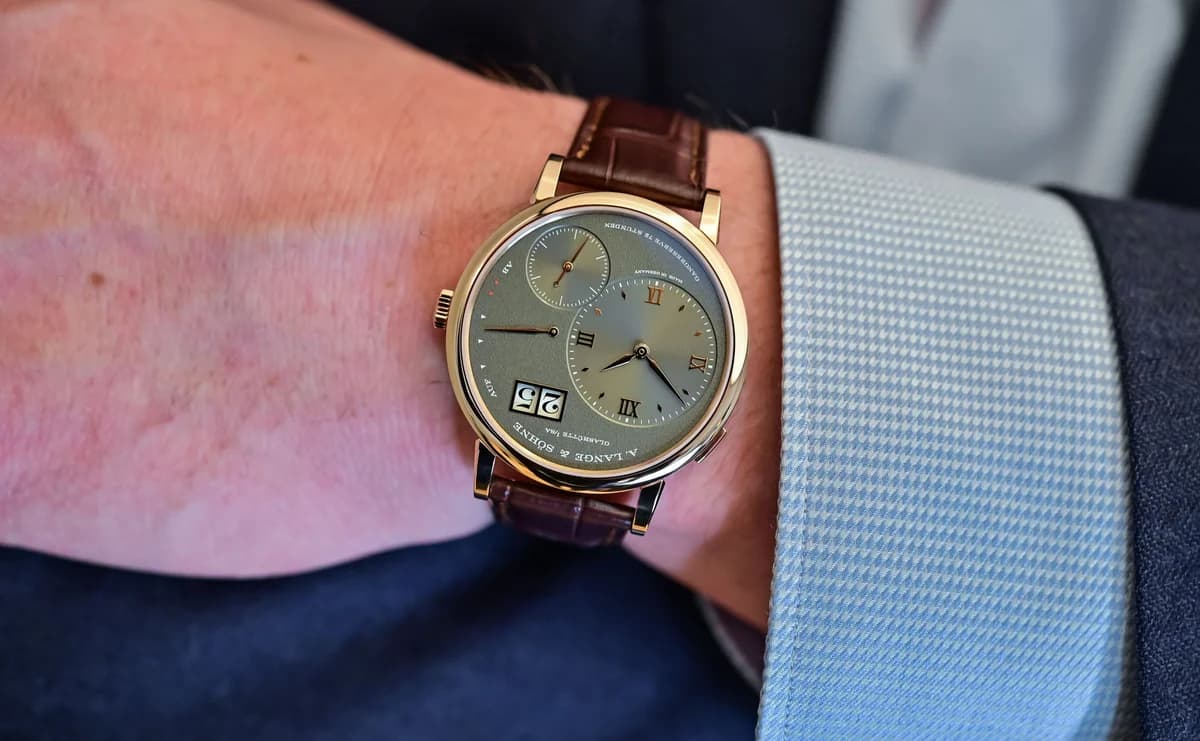
On the wrist, the Grand Lange 1 at 41mm and 8.2mm sits beautifully under a cuff. The pink gold case has a warmth that works exceptionally well with darker skin tones. The grey solid silver grained dial on the current generation catches light in a way that shifts between cool silver and warm grey depending on the angle. On a 6.5-inch wrist, 41mm is right at the upper limit of what I consider balanced for a dress watch, but the thin profile and the relatively short lug-to-lug of roughly 49mm keep it from feeling oversized. It wears smaller than the number suggests. This is a watch for E. Thomas wool, for Cesare Attolini tailoring, for evenings where the details matter. Manual winding means you interact with it every morning. There is a ritual to that. You wind it, you feel the mainspring tension, you set it down and watch the seconds hand sweep. Some people want automatic convenience. This watch rewards people who prefer the deliberate act of winding.
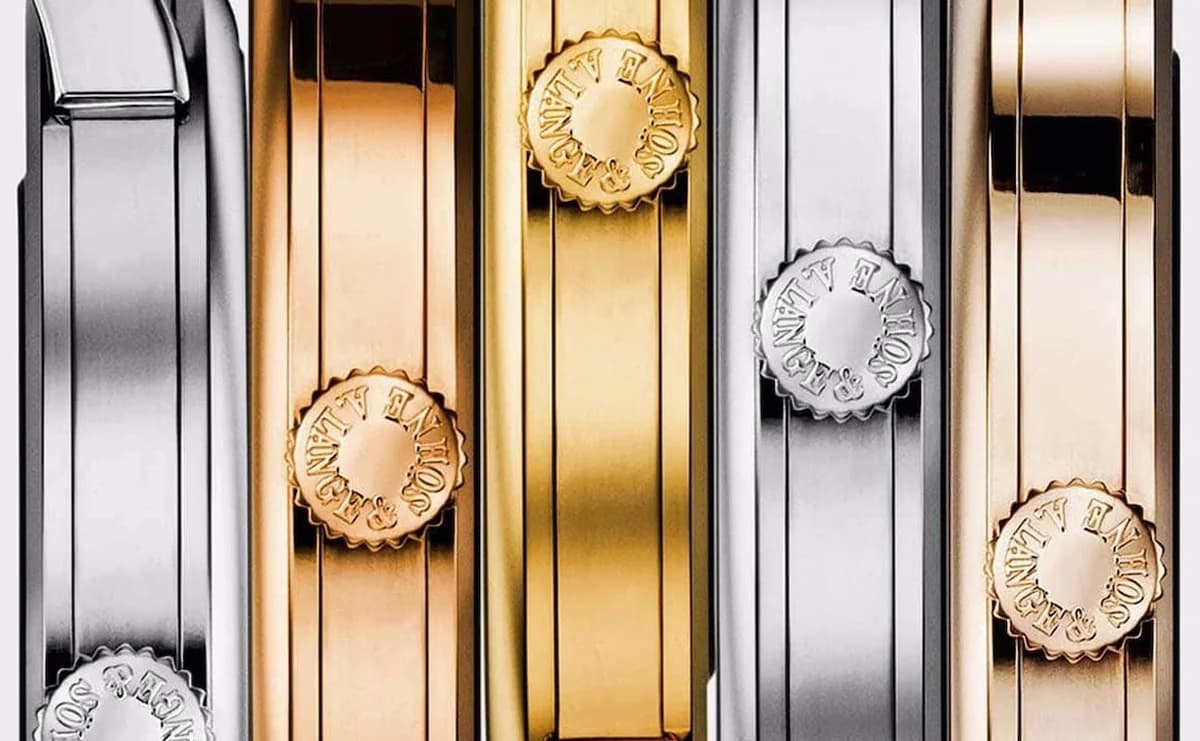
This is something almost nobody in watch media talks about, so I will. On darker skin, the pink gold Grand Lange 1 is extraordinary. The 18K pink gold case is not just a color choice. Lange's rose gold uses a traditional formulation with copper that gives it warmth and depth, and when you send it in for service, they do something that almost nobody else does at this level. Their case restoration department is staffed by goldsmiths and professionals from the dental industry, not watchmakers, and they use laser welding to add precious metal back to scratched or worn areas. A 0.1mm diameter thread of matching 18K gold is applied by hand under magnification, building up the surface before polishing. Traditional case polishing grinds material away. Every time you service a traditional watch, the case gets a little thinner, the lugs a little rounder, the edges a little softer. Lange's approach preserves the original dimensions. You get back exactly what you paid for on day one. For people who worry about scratching a gold watch, this is significant. The copper undertones in the rose gold create a contrast against darker complexions that highlights both the watch and the skin. It is not just flattering. It is genuinely beautiful in a way that cool-toned metals like white gold or platinum do not achieve on warm skin. The grey dial plays off the rose gold, and the rose gold plays off the skin, and you get this layered warmth that photographs cannot fully capture. Now, Lange makes a proprietary alloy called Honey Gold. It is 18K gold with copper and zinc subjected to a special thermal treatment that brings the hardness to roughly 300 Vickers, about 58% harder than standard rose gold. The color sits between pink gold and yellow gold, a deep amber warmth without the overt pinkness of rose gold or the brightness of yellow. Lange has never made a Grand Lange 1 in Honey Gold. It exists in limited editions of the standard Lange 1 and a few other references, always in tiny production runs of 20 to 250 pieces. But if they ever did, the deeper golden tone against dark skin would be something special. Rose gold is the most universally flattering gold for warm complexions. Honey Gold would take that another level deeper. I think about that combination more than I probably should.
The honest critique is servicing. Lange's service costs are substantially higher than Patek, JLC, or Vacheron for comparable complications, and multiple owners on forums cite this as the one thing that gives them pause. The turnaround time can also be longer than Swiss competitors. Water resistance is only 30 meters, which is splash-proof at best. These are tradeoffs worth knowing about, but they do not diminish the movement.
Compared to the usual dress watch competitors, the Grand Lange 1 occupies its own space. The JLC Master Ultra Thin Date is thinner at 7.8mm, costs roughly a third of the price, and offers genuinely exceptional value. The Vacheron Constantin Patrimony is the thinnest of all at 6.79mm and carries the Vacheron name. The Patek Philippe Calatrava has the strongest brand recognition and But none of them have the outsize date. None of them have the asymmetric golden-ratio dial. None of them are assembled twice. None of them have a hand-engraved balance cock that is unique to each individual watch. And none of them are made in a small town in Saxony by people whose grandparents watched the Soviets dismantle their factories and ship them east. The Grand Lange 1 is not competing with those watches. It is doing something they are not even attempting.
A. Lange & Sohne is part of the Richemont group, alongside Cartier, IWC, JLC, Vacheron, Panerai, and Piaget. Richemont acquired Lange in 2000 in a transaction that also included IWC and JLC. Despite the corporate ownership, Lange operates with significant autonomy. All production remains in Glashutte. The German identity is not a marketing angle. It is the actual operating reality.
Walter Lange died in 2017 at the age of 92. He spent 44 years waiting for the Wall to fall so he could rebuild what the Soviets destroyed. He registered the company at 66. He presented the first watches at 70. The Grand Lange 1 you can buy today in 2026 is a direct descendant of what he and Gunter Blumlein built from nothing in a reunified Germany. When I look at the golden ratio layout of the dial, the double-assembled movement, the hand-engraved balance cock, I see something that goes beyond watchmaking. I see an act of restoration. A family legacy that survived expropriation, division, and half a century of dormancy, and came back making some of the finest watches on the planet. That story is in every Grand Lange 1 that leaves Glashutte.
Also in Haute Horlogerie