
Patek Philippe
Aquanaut
5167R-001
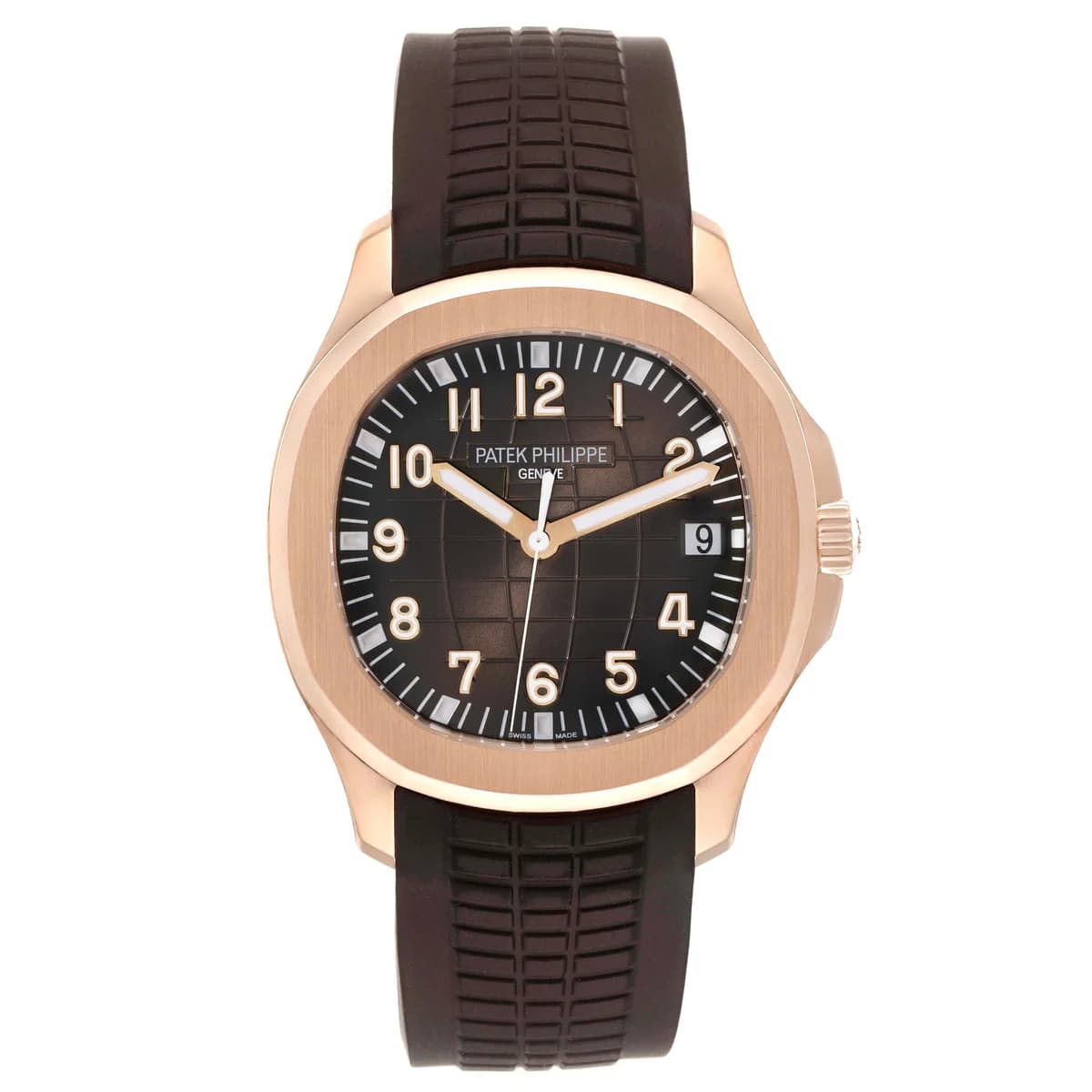
There is a version of Patek Philippe that most people think they know. It is the version built on tradition, on dress watches, on the Calatrava cross, on the idea that a proper watch disappears under a shirt cuff and says nothing louder than it has to. That version is real. I have written about the 5196R Calatrava and the 5327R Perpetual Calendar in this collection, and both of those watches belong entirely to that world. But in 1997, Patek Philippe did something that did not fit the script. They put a watch on a rubber strap and told the world it was a Patek. The Aquanaut was not a quiet evolution of existing ideas. It was a deliberate break from the brand's own identity, and the fact that it worked, that it became one of the most recognized sport watches in the world, tells you something about how thoughtfully it was designed.
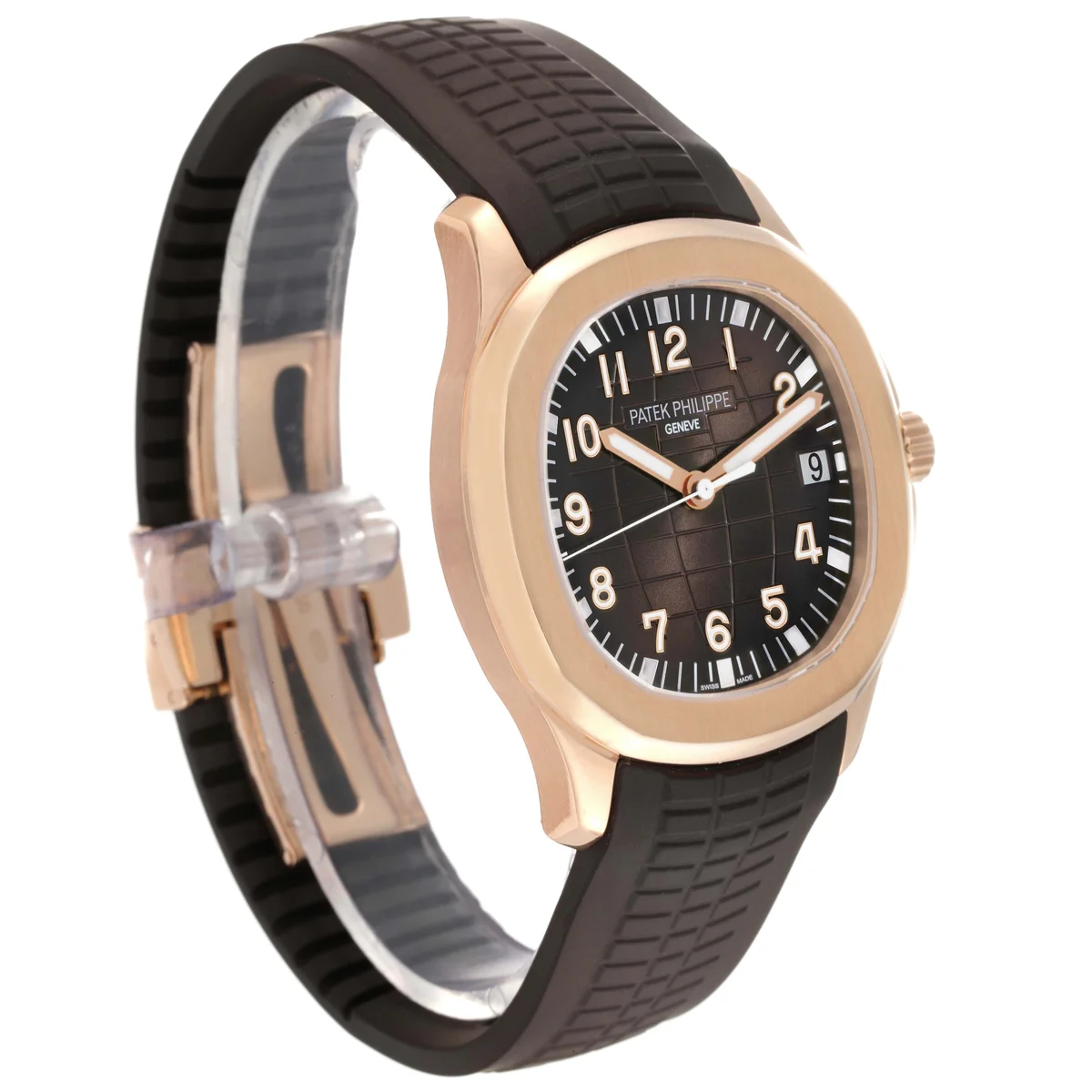
The context of 1997 matters. The Nautilus, designed by Gerald Genta and introduced in 1976, had been Patek Philippe's only real sport watch for over two decades. But the Nautilus was struggling commercially by the mid-1990s. It was expensive, it was large, and it carried a seriousness that did not always connect with younger collectors. Philippe Stern, who was then president of Patek Philippe, wanted something that could reach a different audience. The result was the Aquanaut, launched initially as the reference 5060, a limited edition of 1,000 pieces each in stainless steel and yellow gold, sized at 36mm. It borrowed the rounded octagonal bezel shape from the Nautilus but softened it. Where the Nautilus had sharp, angular transitions between its flat sides, the Aquanaut smoothed those corners into curves. The overall silhouette felt more approachable, more modern, less aggressive. And then there was the strap.
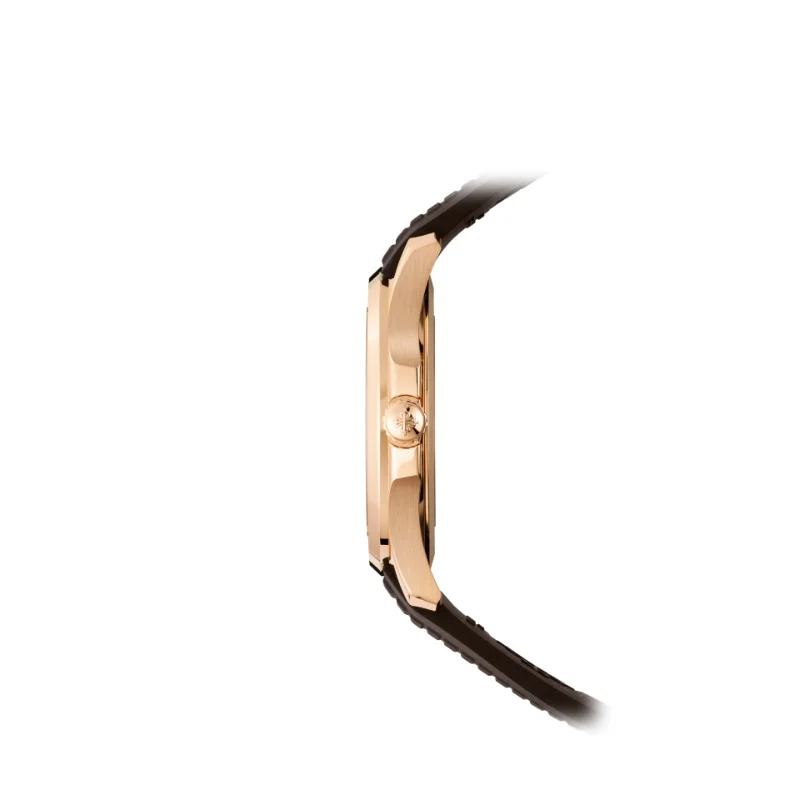
The decision to launch the Aquanaut on what Patek called a "Tropical" strap was genuinely radical for this brand. In 1997, the idea of a Patek Philippe on a rubber strap was almost contradictory. This was a company that had been making watches since 1839, a company where everything was about permanence, heritage, and materials that would outlast the person wearing them. Leather, gold, platinum. Those were Patek materials. But the Aquanaut's Tropical strap, made from a composite elastomer, was designed for a completely different kind of life. It was resistant to salt water, ultraviolet radiation, and the kind of daily wear that would destroy a traditional leather strap in months. It was hypoallergenic, supple, and flexible in a way that made the watch comfortable on the wrist in ways that a metal bracelet or stiff leather never quite achieves. The embossed pattern on the strap mirrored the checkerboard motif on the dial, creating a visual continuity between the two surfaces that felt intentional and considered rather than decorative. This was Patek acknowledging that a younger generation of collectors did not want to treat their watches like museum pieces. They wanted to wear them. Actually wear them. To the beach, on the boat, through the kind of day where you do not think about what is on your wrist because it can handle whatever you are doing.
The demand for the 5060 was immediate, and in 1998 Patek responded with the reference 5065A, which grew the case to 38mm, added a sapphire case back, and shifted from a limited edition to a regular production model. The 5065 is the reference that established the Aquanaut as a permanent part of Patek's collection rather than a one-time experiment. It ran for nearly a decade.
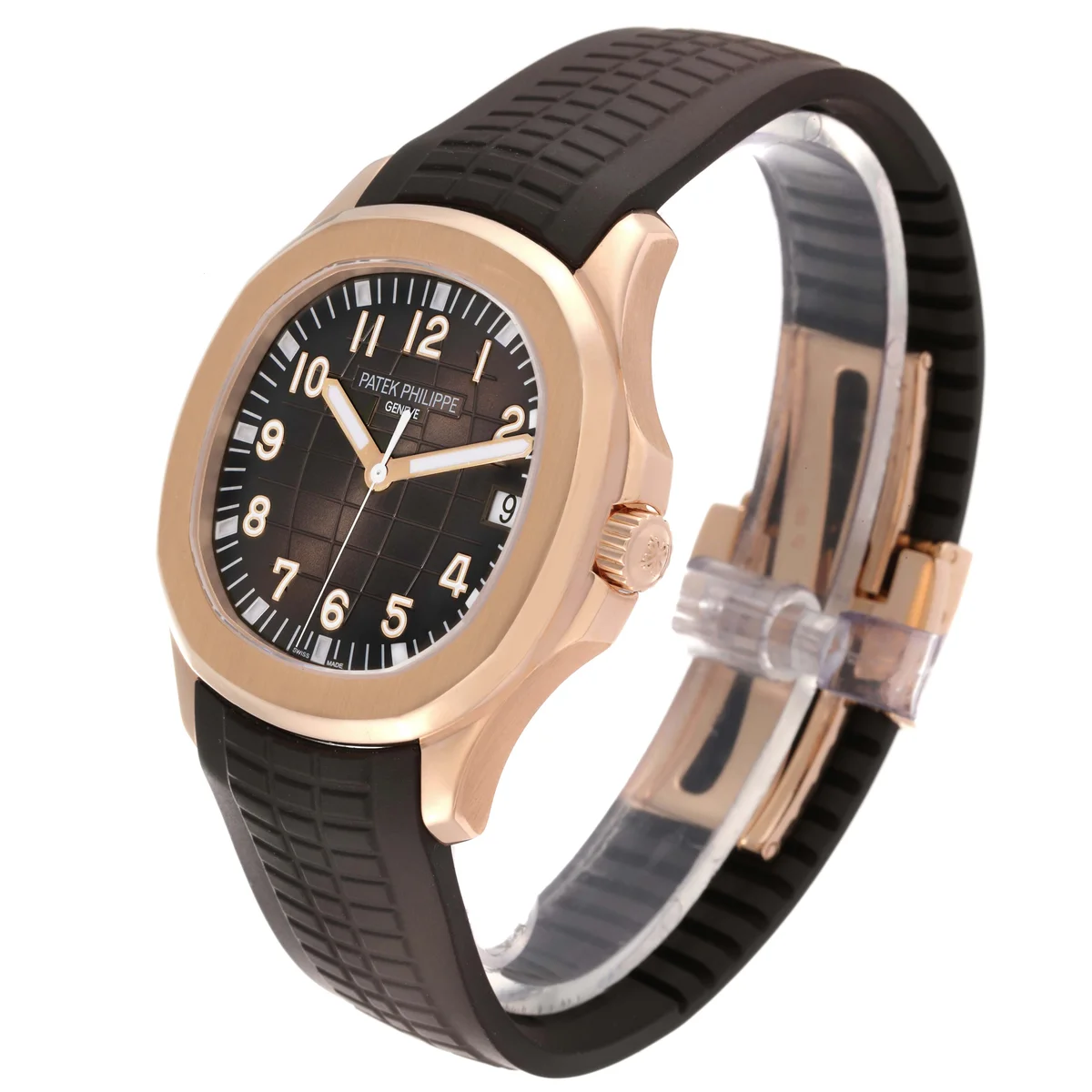
The 5167 generation arrived in 2007, introduced at Baselworld to mark the Aquanaut's tenth anniversary. It was a meaningful update. The case grew to 40mm (officially 40.8mm measured from 10 to 4 o'clock), the movement was upgraded from the Caliber 315 to the 324 S C, and the strap integration was refined to flow more naturally from the case. The clasp mechanism was improved, and the overall proportions were tightened to give the watch a more modern presence on the wrist. The 5167A in steel became the reference that most people associate with the modern Aquanaut. But the 5167R in rose gold, introduced in 2016, is the one that stopped me.
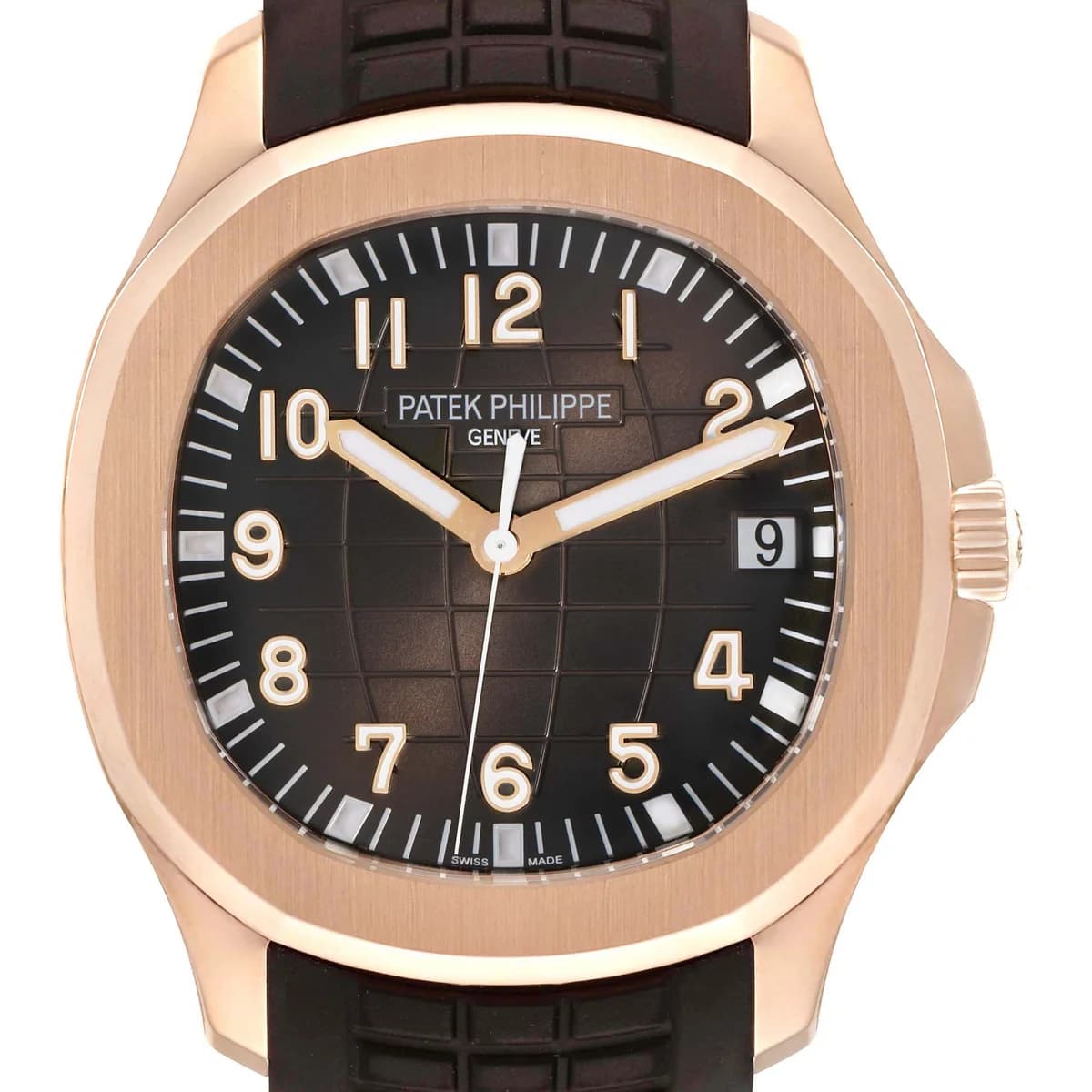
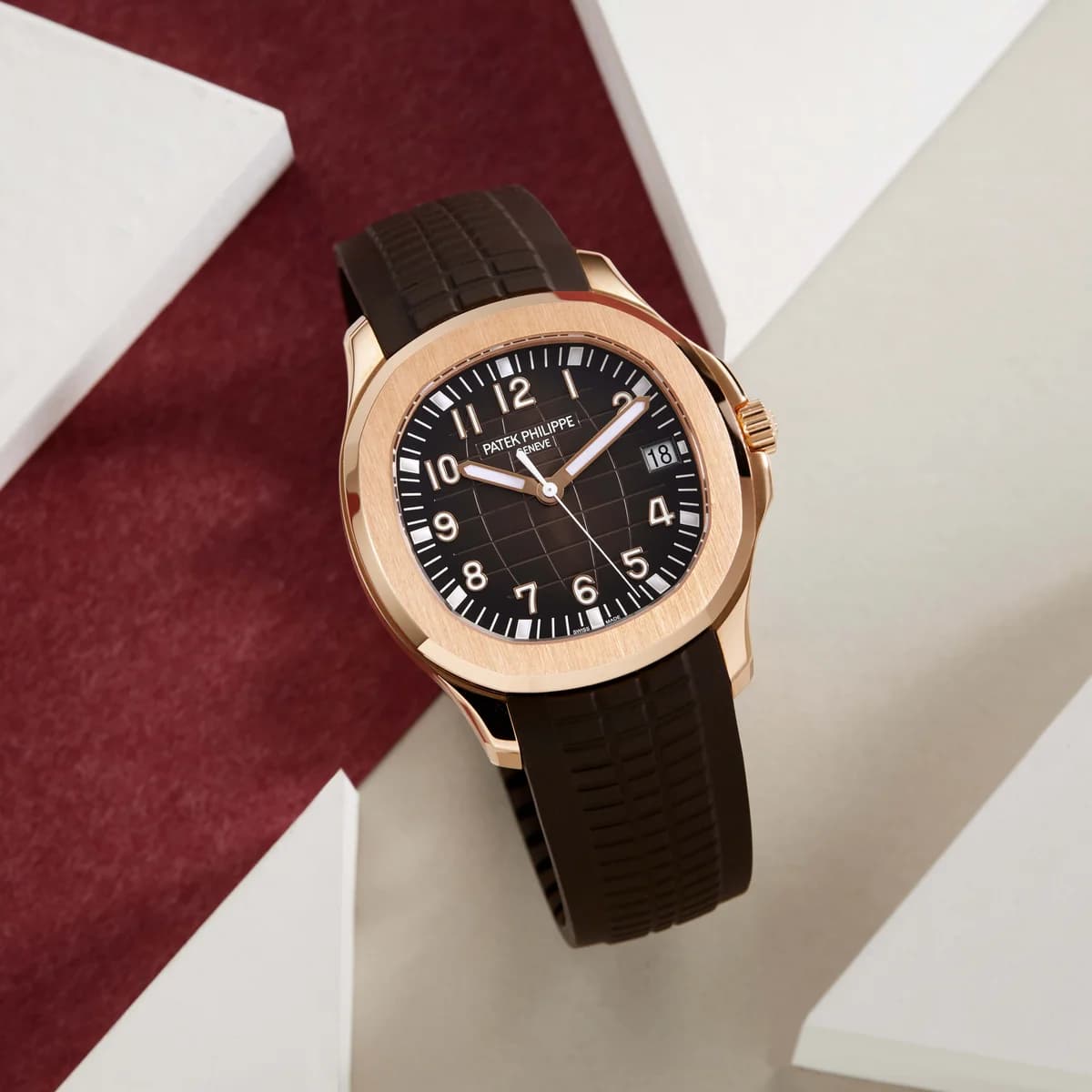
I love the colorway of the 5167R. That is the simplest way to say it. The combination of 18K rose gold with a brown embossed dial and a chocolate brown Tropical strap creates a tonal warmth that is unlike anything else in Patek's current lineup. Rose gold on its own can read cold or overly formal depending on the dial it is paired with. A white dial under rose gold feels dressy. A black dial under rose gold feels sharp and modern. But brown under rose gold creates something different entirely. The colors belong to the same family. The warm copper tones of the case bleed into the chocolate tones of the dial, and the strap picks up that same warmth and carries it around the wrist. The applied gold Arabic numerals sit against the brown dial with a quiet contrast that does not shout. There is a cohesion to the whole piece that feels like someone sat down and thought about how every surface would relate to every other surface. That kind of tonal harmony does not happen by accident.
What I appreciate about this colorway specifically is how it reads on darker skin. This is something that almost nobody in watch media talks about, and it matters. Warm metals and warm dial tones against darker skin create a richness that cooler combinations simply do not achieve. A steel Aquanaut on a black strap looks good on anyone. But the 5167R in brown and rose gold against darker skin has a warmth that feels natural, like the watch was always supposed to be there. The brown does not compete with the skin tone the way a stark white or bright blue dial sometimes can. It complements it. Paired with a brown linen jacket or a tobacco-toned suit from a house like Brunello Cucinelli, the whole thing reads as one continuous statement of warmth and texture. Under the right light, the rose gold catches and throws soft reflections across the embossed dial pattern, and those reflections shift as the wrist moves. It is the kind of thing you notice when you are sitting across a table from someone and the sun comes in at an angle.
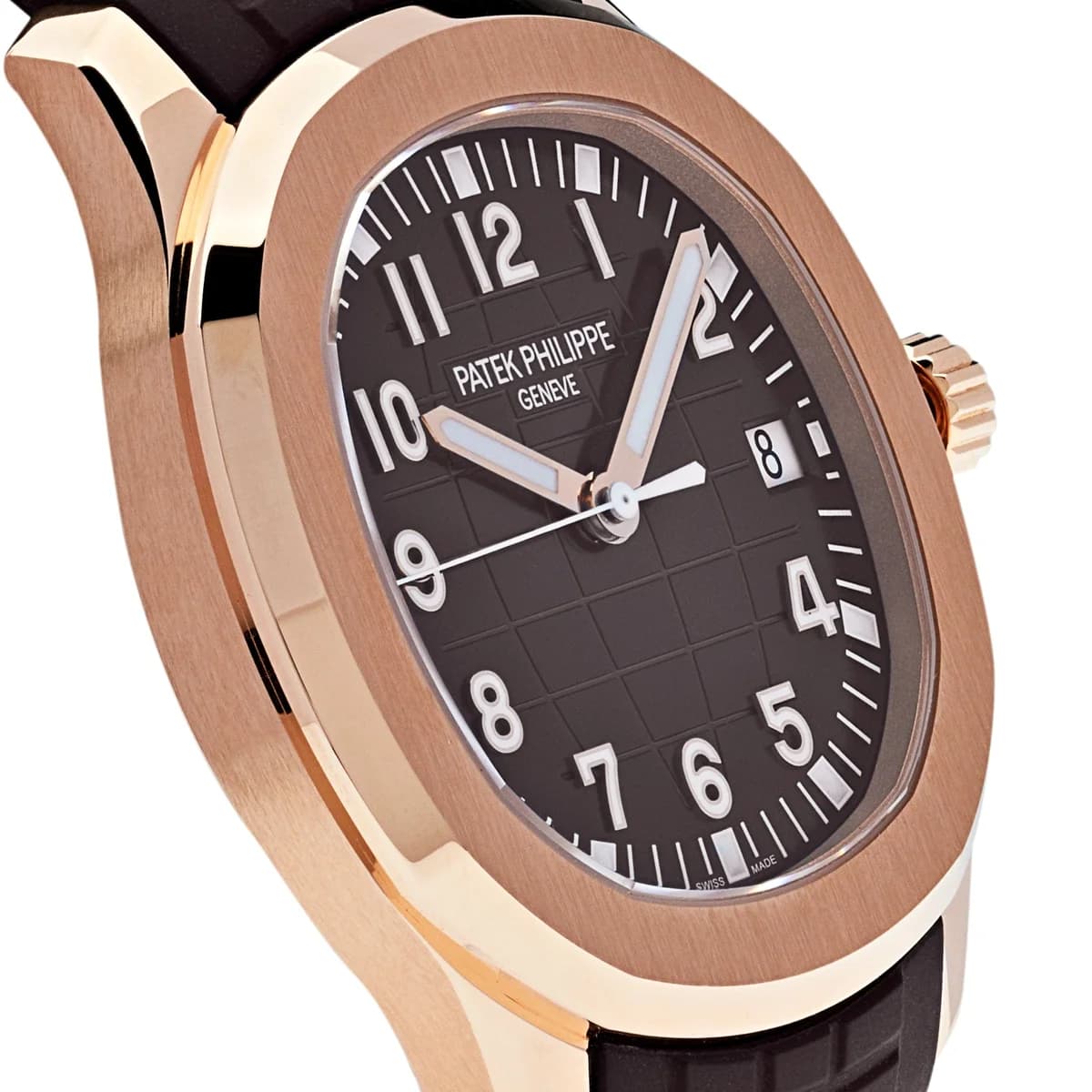
The embossed dial pattern itself deserves attention. It is derived from the same grenade-style pattern found on the Nautilus, but the Aquanaut version is a larger, more open grid. The raised lines create a three-dimensional texture on the dial surface that changes depending on the light angle. Under direct overhead light, the pattern is subtle, almost invisible. As the angle shifts, the lines catch shadows and the pattern becomes more pronounced. I find this endlessly interesting because it means the dial never looks the same way twice. Some collectors do not love the embossed pattern, and I understand that position. It is busier than a clean opaline or sunburst dial, and there are people who prefer the simplicity of the 5196R Calatrava for exactly that reason. The embossed grid is a stylistic choice that polarizes, and that is fine. Watches that try to offend nobody tend to interest nobody either.
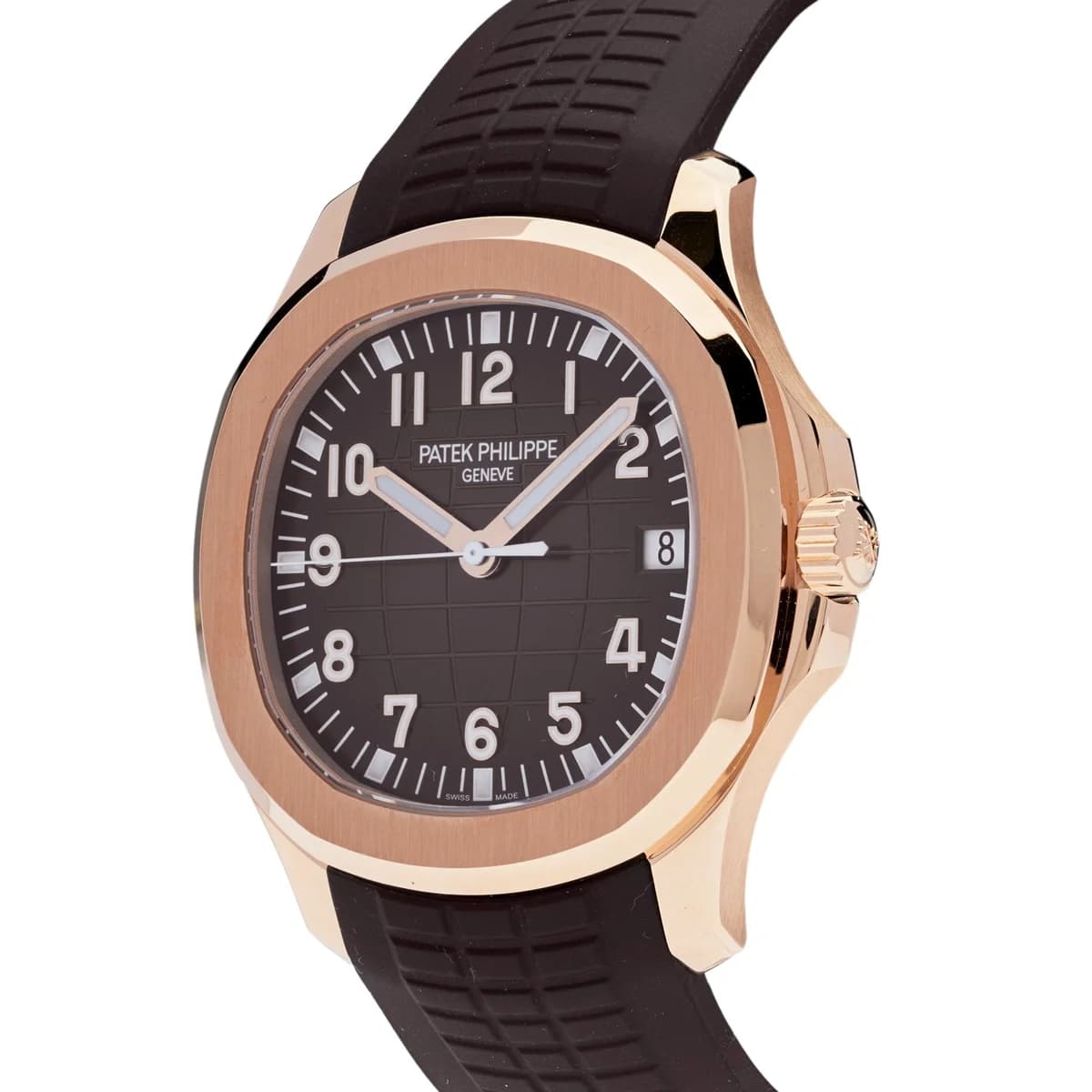
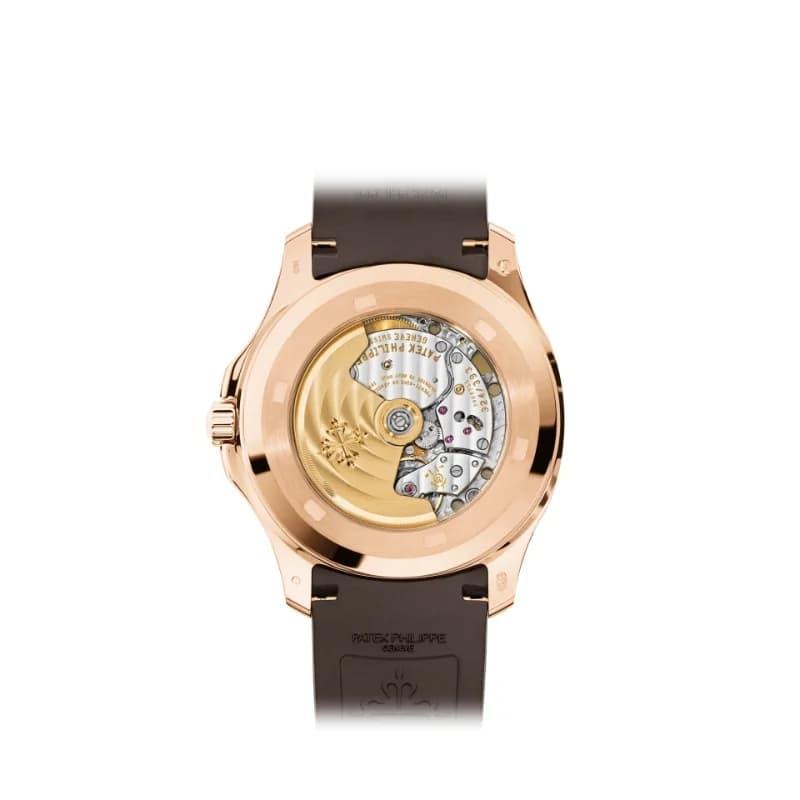
The movement powering current examples of the 5167R is the Caliber 26-330 S C, which succeeded the 324 S C with incremental but meaningful improvements. The architecture is fundamentally similar: a self-winding caliber with central rotor winding, hours, minutes, sweep seconds, and a date function. But the 26-330 introduced a stop-seconds (hacking) function that the 324 lacked, which allows you to pull the crown and stop the seconds hand for precise time setting. It also added a mechanism to the fourth wheel that eliminates backlash in the seconds hand, resulting in a smoother sweep. The movement runs at 28,800 vibrations per hour (4 Hz), contains 30 jewels, and delivers a power reserve of 35 to 45 hours. The winding rotor is 21K gold and winds in one direction. The 26-330 measures 27mm in diameter and stands 3.32mm tall, which is one of the reasons the 5167R can maintain an overall case thickness of just 8.1mm despite being a 40mm sport watch with 120 meters of water resistance. For context, a Royal Oak is 10.4mm. A Nautilus 5711 is 8.3mm. At 8.1mm, the Aquanaut sits flatter on the wrist than almost any sport watch at this size.
The Gyromax balance and Spiromax hairspring are worth understanding because they represent Patek's approach to accuracy at the component level. The Gyromax balance uses adjustable inertia blocks rather than the traditional screw weights found on most balance wheels. This allows the watchmaker to fine-tune the rate of the balance without adding or removing mass, which preserves the balance's aerodynamic profile and reduces potential positional errors. The Spiromax hairspring is made from Silinvar, a silicon-based material developed by Patek Philippe in collaboration with the CSEM and Rolex. Silicon does not respond to magnetic fields, does not require lubrication, and maintains its elasticity over time in ways that traditional metal hairsprings cannot match. These are the kinds of details that the Patek Philippe Seal guarantees. The Seal holds every watch to a rate accuracy of negative one to positive two seconds per day, which exceeds the COSC chronometer standard of negative four to positive six. And the Seal covers more than accuracy. It guarantees the finishing quality of every component, the geometric fidelity of every part, and a lifetime service commitment for every watch Patek Philippe has produced since 1839.
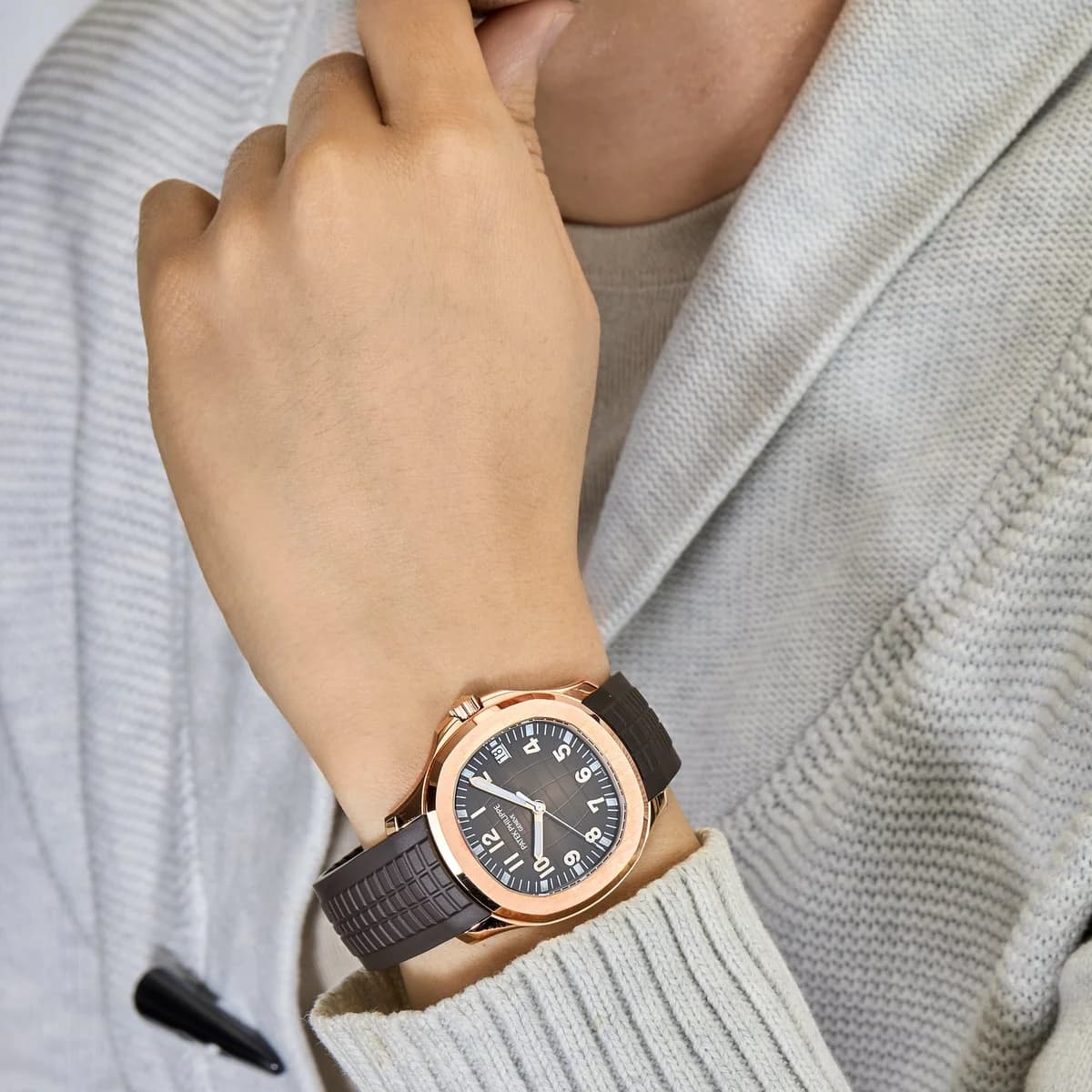
On the wrist, the 5167R wears in a way that 40mm does not fully describe. The rounded octagonal case shape, with its smoothed corners and integrated lug design, means the watch sits closer to the wrist and covers less surface area than a round 40mm watch would. The lug-to-lug measurement is 47mm, which is manageable on wrists from about 6.5 inches upward. The lug width is 21mm. Because the Tropical strap is soft and flexible from the first wear (no break-in period like leather), the watch conforms to the wrist immediately. There is no stiffness, no standing away from the skin, no need to fidget with the fit during the first few days. The fold-over clasp in rose gold sits flat against the underside of the wrist and does not add meaningful thickness. The screw-down crown at 3 o'clock is flush enough that it does not dig into the back of the hand during normal wrist movement.
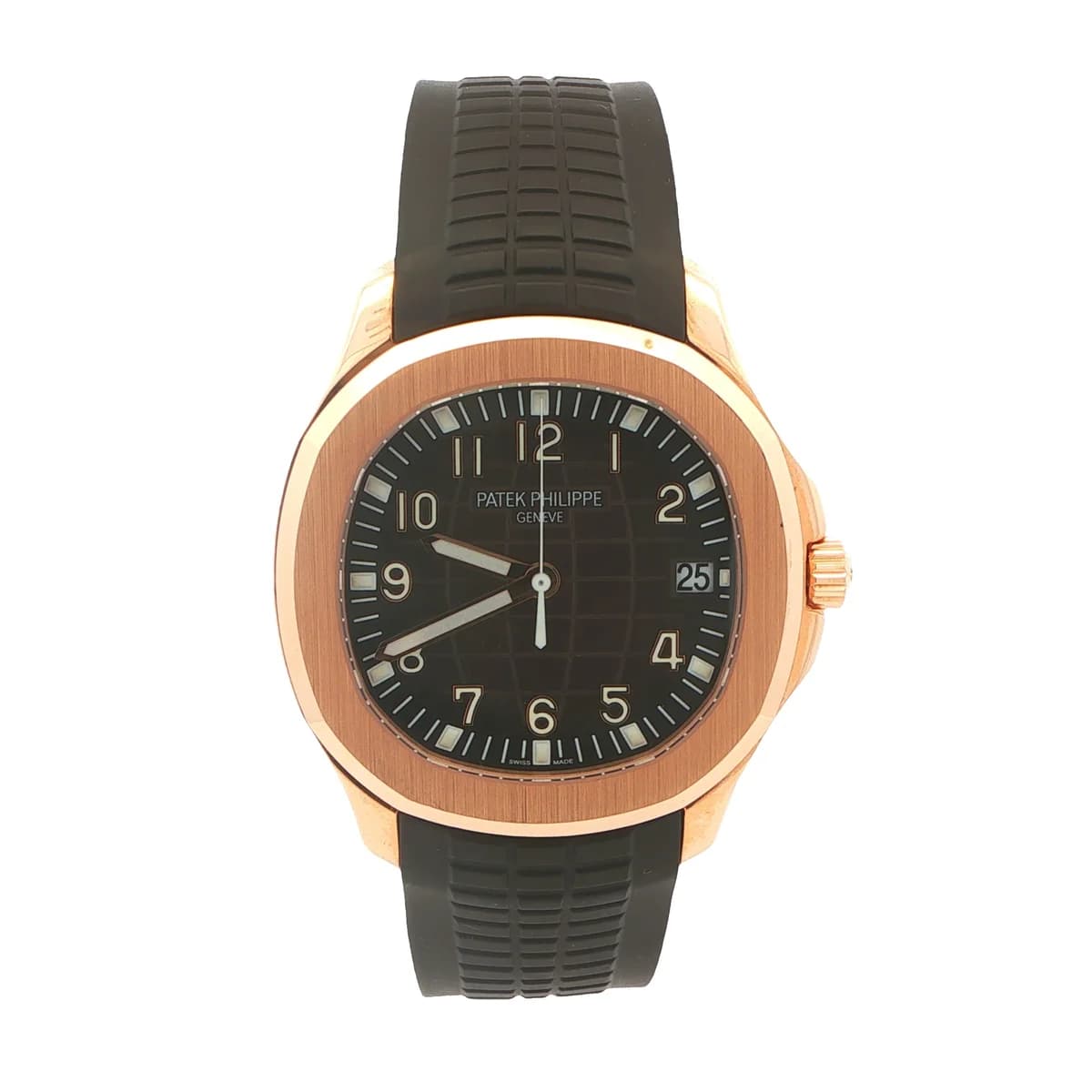
The styling versatility of the 5167R is something I think about often. The brown and rose gold combination might sound like it belongs exclusively in a warm-weather, casual context, but it works across more situations than you would expect. With a navy merino crewneck and rolled sleeves, the brown strap and warm case sit perfectly against the forearm. With a charcoal flannel suit from a house like Kiton, the rose gold catches enough ambient light to make a quiet statement without being loud. The Tropical strap helps here because rubber does not snag on fabric the way a metal bracelet can. Linen, wool, cashmere, gabardine, it slides under and out of a cuff without catching. I have noticed that people who wear metal bracelets with tailored fabrics, especially lighter weaves like tropical weight wool, sometimes deal with micro-snags on the clasp or bracelet link edges. The composite strap eliminates that entirely. It is a small thing, but it is the kind of detail that matters when you dress in different fabrics throughout the week. The applied numerals on the dial have a luminescent coating, which means the watch maintains legibility in low light, though I would not call it a lume monster. It gives you enough to read the time in a dim restaurant or a dark theater, which is really all you need from a watch in this category.
There are things I would note honestly about this watch. The Tropical strap, for all its comfort and chemical resistance, does age. With regular wear, the composite material shows visible wear at the fold points near the clasp after three to five years, and exposure to sunscreen or chlorine can accelerate that degradation. Replacing it means going through Patek, which is neither fast nor inexpensive. The power reserve of 35 to 45 hours is honest but modest. If you take the watch off Friday evening and do not put it back on until Monday morning, it may have stopped. Modern competitors from Rolex deliver 70 hours, and even some micro-brands have moved to 60 or 65. The embossed dial, as I mentioned, divides opinion. And while 8.1mm is thin for a sport watch, the 40.8mm case diameter combined with the octagonal bezel means the watch can feel larger on smaller wrists than the number suggests. None of these are deal-breakers. They are the realities of living with the watch, and knowing them going in is better than discovering them after the fact.
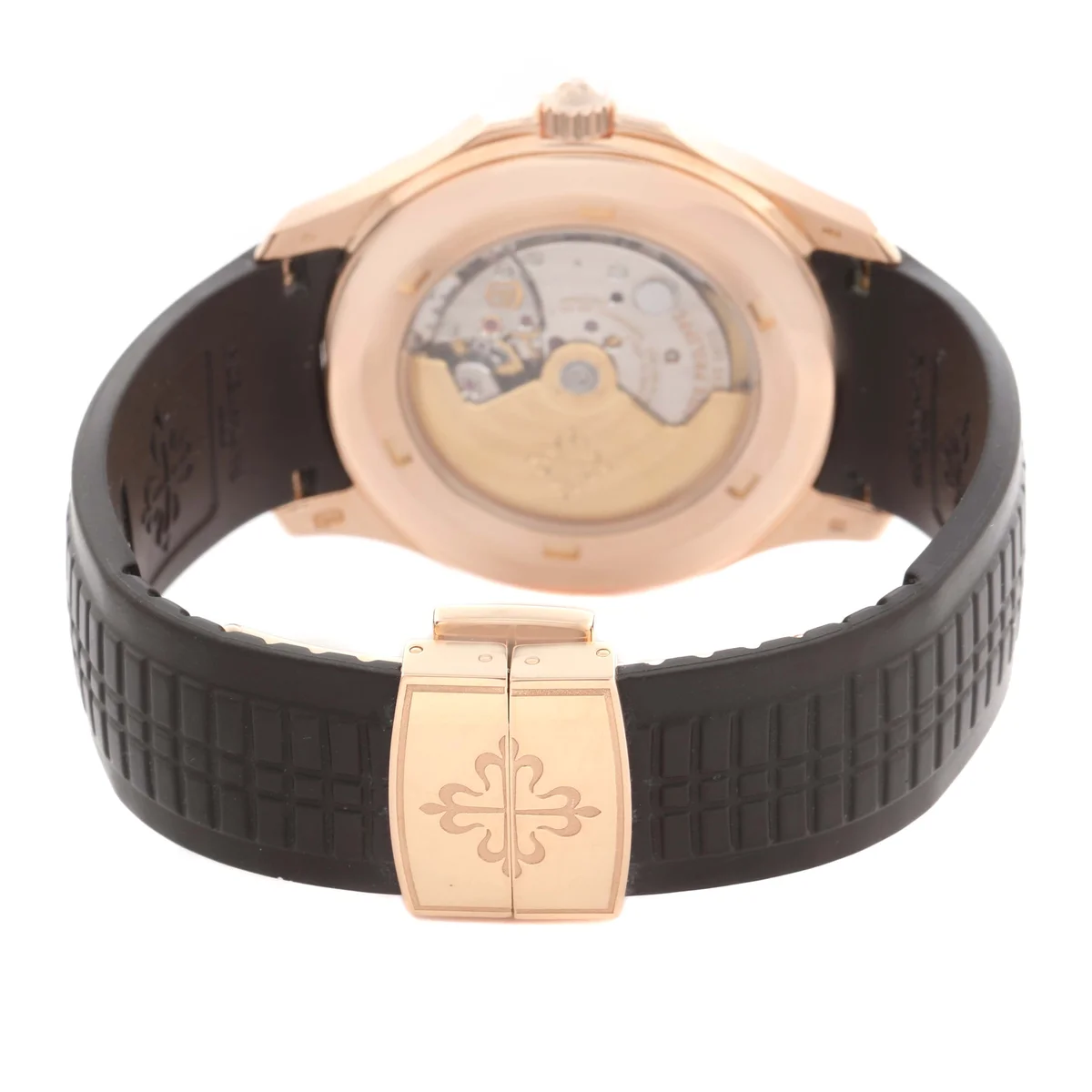
The sapphire case back on the 5167R reveals the movement in full, and this is where the rose gold rotor becomes part of the visual experience. The 21K gold rotor is decorated to Patek's standards, with Cotes de Geneve striping on the bridges and chamfered edges that catch light when the watch is turned over. Seeing the movement through the sapphire crystal adds a dimension that the solid case backs on many sport watches do not offer. Most sport watches from other brands give you a stamped steel case back and nothing to look at. The 5167R invites you to flip it over. It is a reminder that what you are wearing is not just a well-designed case and dial. There is real mechanical architecture underneath, and Patek wants you to see it.
What strikes me about the Aquanaut 5167R is where it sits in the broader conversation about what Patek Philippe is and who it is for. I have written about the 5327R Perpetual Calendar, a 39mm rose gold watch that represents the deepest expression of Patek's complication heritage, a mechanical device that tracks the Gregorian calendar without human intervention until the year 2100. I have written about the 5196R Calatrava, a 37mm dress watch powered by a hand-wound movement standing 2.55mm tall, a watch so committed to restraint that it does not even have a date window. The Aquanaut 5167R is neither of those things. It is a sport watch on a rubber strap with an embossed dial and a screw-down crown rated to 120 meters. And yet all three watches carry the Patek Philippe Seal. All three are finished to the same standard. All three are built in the same workshops in Geneva by people who hold themselves to the same specifications. The Aquanaut is the watch that proved Patek Philippe could be something other than what it had always been without becoming something less than what it had always been. It expanded the definition without diluting it. That is harder to do than most people realize, and the fact that it happened with a rubber strap and a checkerboard dial makes it even more interesting.
Also in Design Icons