
Panerai
Luminor Marina PAM111
PAM00111
In 1860, a man named Giovanni Panerai opened a watchmaking shop on the Ponte alle Grazie in Florence. It was a shop and a school, and it became the official supplier of precision instruments to the Italian Royal Navy. That relationship with the Regia Marina is where the entire Panerai story begins. In 1916, the company patented a radium-based luminous material called Radiomir for use on naval instruments and gun sights. By 1936, the Italian Navy needed a watch that frogmen could read underwater in the dark, and Panerai built the prototype. The cases came from Rolex, specifically the Ref. 3646 cushion-shaped case produced by Rolex's Oyster case division in Geneva. The movements were Rolex Caliber 618, based on a Cortebert 618 hand-wound ebauche that Rolex modified and cased. The dials came in two configurations: the Type A with full luminous Arabic numerals, and the famous California dial, a Rolex-patented 1942 design that split the dial between Roman numerals on top and Arabic numerals on the bottom. The luminous material came from Panerai. The result was a 47mm dive watch that was classified as a military secret. Fewer than 80 of these wartime pieces are documented to exist.
The watches were issued to the Decima Flottiglia MAS, Italy's elite frogman unit. These were the divers who rode human torpedoes into enemy harbors and attached limpet mines to the hulls of warships. The Raid on Alexandria in December 1941, where Italian frogmen sank two British battleships in the harbor, was carried out wearing Panerai watches. When Germany occupied Italy in 1943, the Kampfschwimmer, the German navy's combat swimmers, seized Panerai watches and used them for their own operations. For the next 50 years, Panerai produced watches exclusively for military use. No civilian had ever bought one. In 1993, Panerai launched three models for public sale aboard the Italian destroyer Durand de la Penne at the La Spezia naval base. The Luminor, the Luminor Marina, and the Mare Nostrum. That was the beginning of Panerai as a luxury brand.
Then Stallone happened. The popular story is that Sylvester Stallone wandered into a vintage watch shop in Rome and discovered Panerai by accident. That story is not true. Former Panerai executives Bruno Latini and Dino Zei went on record in 2012: a man named Monty Shadow introduced Stallone to Panerai in September 1995. Stallone received approximately 68 free watches from the brand. He wore a Panerai Luminor in the 1996 film Daylight, and he commissioned custom editions including the "Slytech" pieces. The effect on the brand was immediate and enormous. Before Stallone, Panerai was a niche Italian military curiosity. After Stallone, it was a luxury status symbol. Arnold Schwarzenegger followed, wearing a Luminor Marina in the 1996 film Eraser. Stallone gave Schwarzenegger a gold Panerai prototype at a Planet Hollywood event in Berlin on September 24, 1996. Jason Statham wore Panerai in at least five films. The Rock followed. Panerai did not just ride the big watch trend of the late 1990s. Panerai started it.
In 1997, the Vendome Group acquired Panerai. Vendome became Richemont, and the brand scaled into full luxury production. The crown-protecting bridge device, patented in 1955, became the most recognizable design element in the lineup. It is a lever-actuated bridge that locks the crown against the case, preventing accidental unscrewing underwater. The mechanism is simple, solid, and visually distinctive. You can identify a Luminor across a room because of that bridge. The Radiomir line, without the bridge, has its own following, and the Submersible was spun off as a standalone collection in 2019. But the Luminor with the bridge device is the Panerai that people picture when they hear the name.
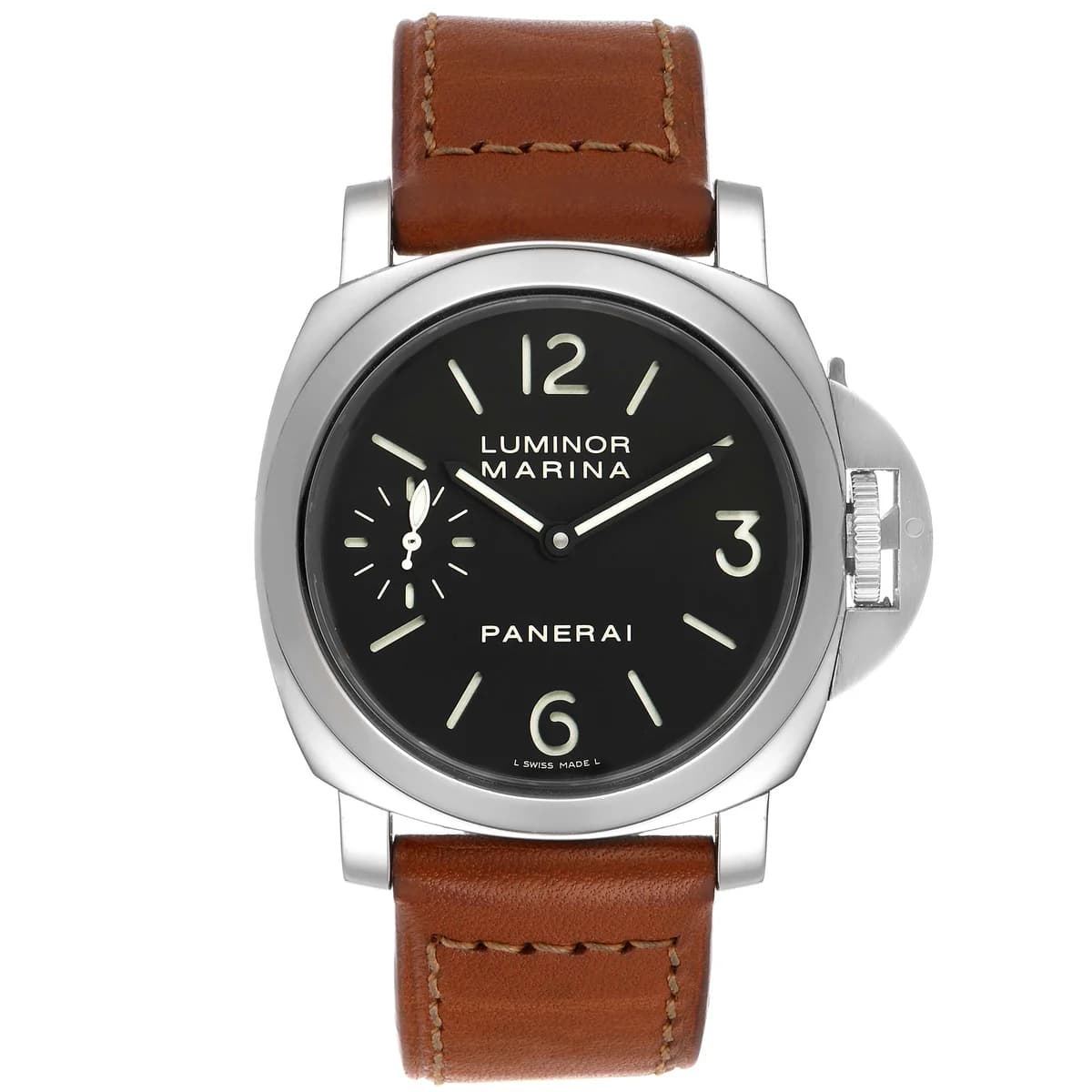
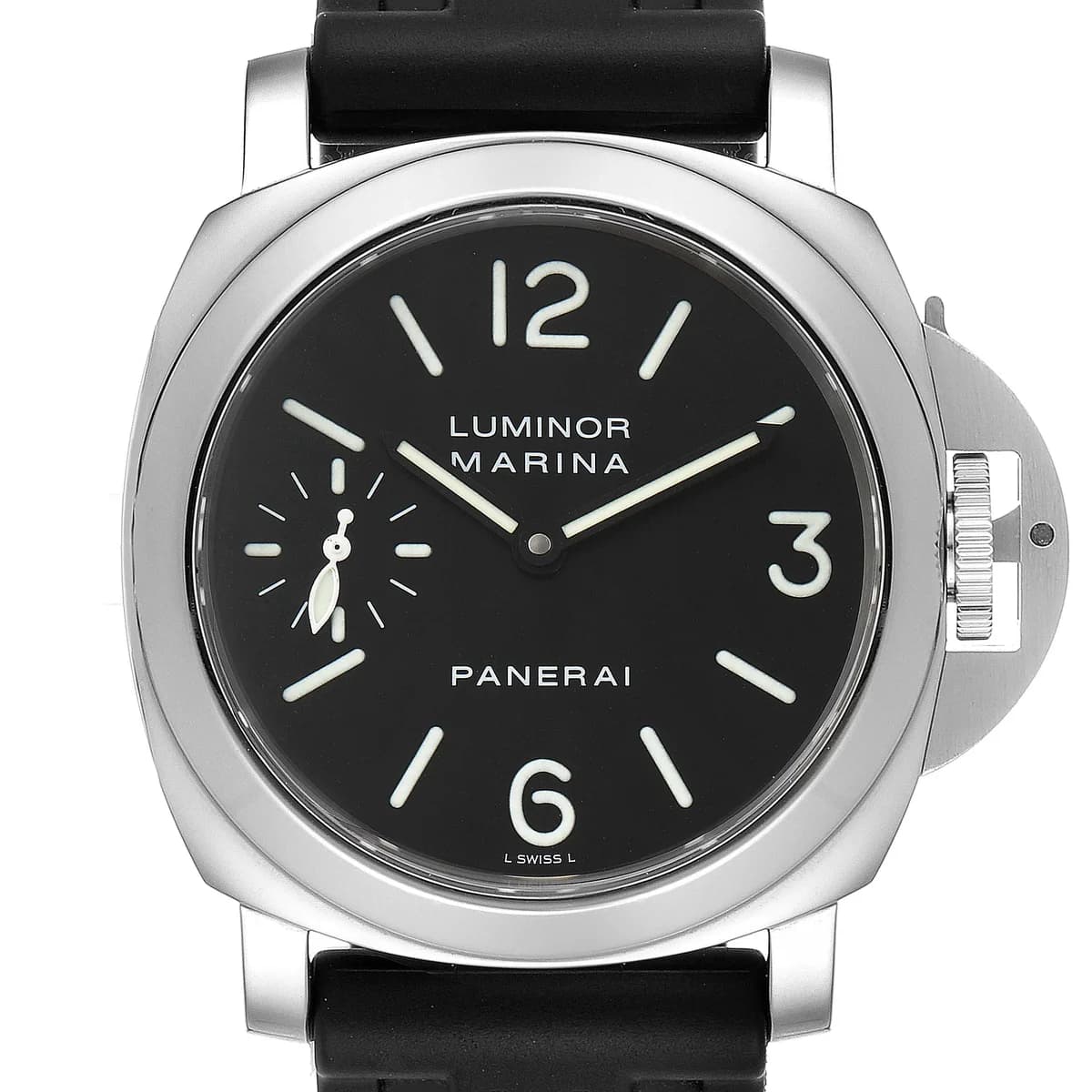
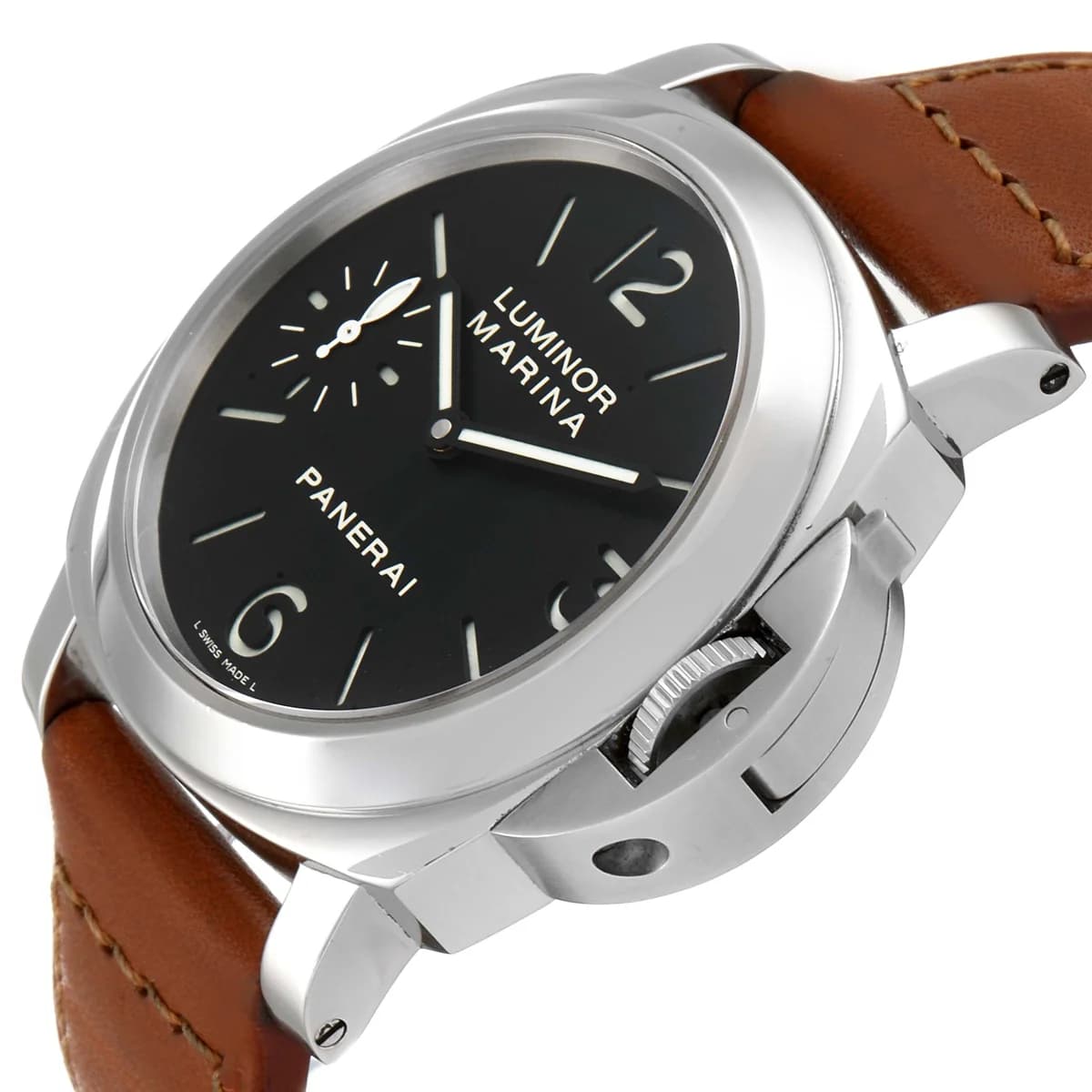
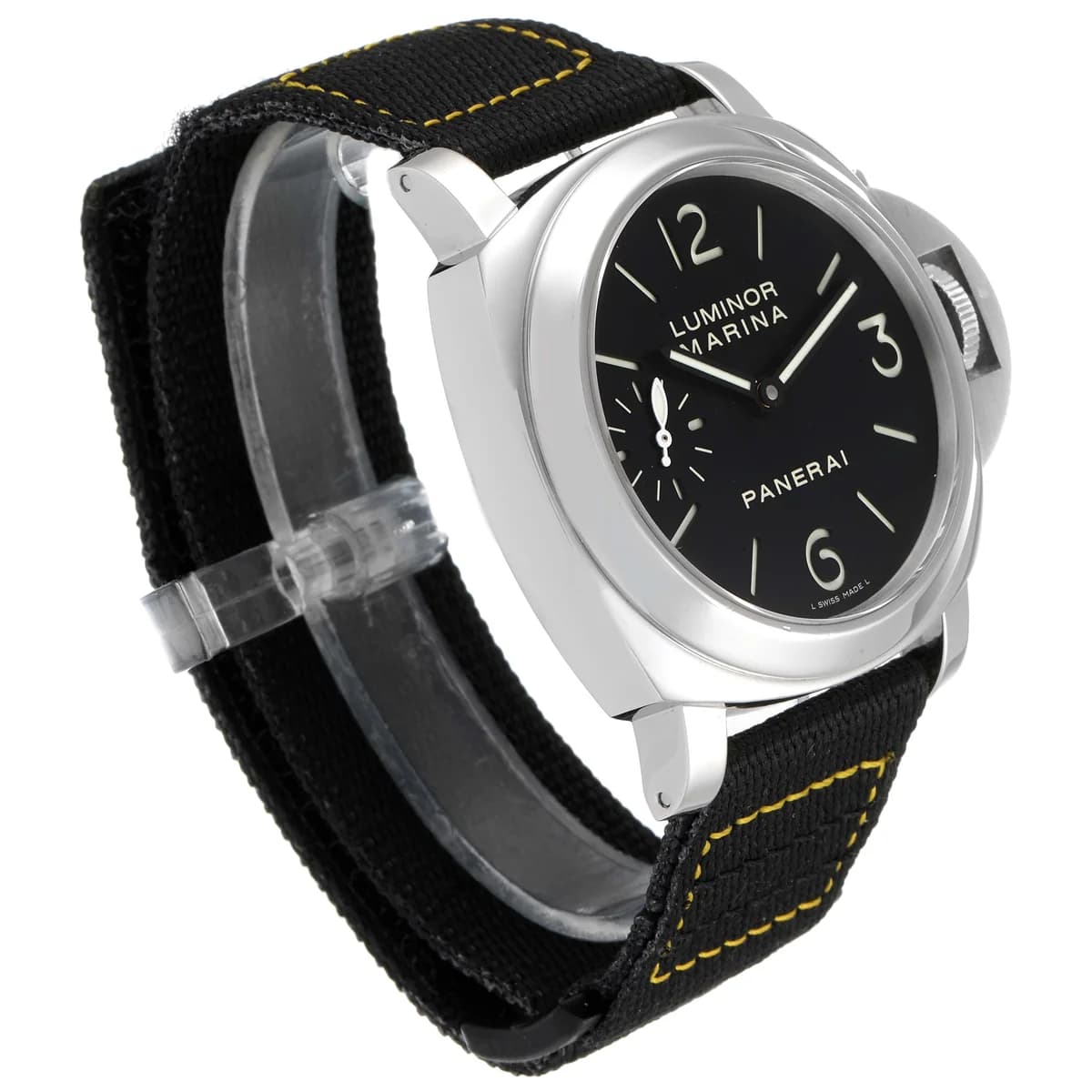
The PAM111 is the purist's Panerai. 44mm. Hand-wound. No date. No chronograph. No GMT. No power reserve indicator. Just hours, minutes, small seconds at 9 o'clock, and the crown bridge. The sandwich dial has two layers: the top layer is black with cutout numerals and indices, and behind it sits a second disc coated in Super-LumiNova that glows through the cutouts. This construction was designed so that frogmen could read the time in dark water. The base movement in the PAM111 is the OP XI caliber, derived from the Unitas 6497, a large manual-wind workhorse that Panerai adapted. It is not in-house. It is not complicated. It is honest. You wind it every morning, it runs for 56 hours, and it tells the time. That simplicity is the entire point.
Historical context
3 images· tap to view
The PAM000 is Panerai distilled to nothing. Hours, minutes, and nothing else. No seconds hand. No date. No complications. The dial carries the Officine Panerai OP logo at 12 o'clock instead of text, which is why collectors call it the Logo. It uses a sausage dial, where luminous material is applied directly onto the surface rather than layered behind a sandwich plate. The visual difference is subtle but collectors notice it immediately. The PAM000 was discontinued in 2016, and Panerai's replacement, the PAM01000, was widely considered a downgrade: reduced water resistance, snap-on caseback instead of screw-down, spring bars instead of screws. The botched replacement made the original PAM000 more desirable than ever. For a watch with zero complications from the brand that started the big watch movement, the PAM000 remains the definitive expression of what Panerai is.
The PAM029 is a completely different animal. Collectors call it the Tuxedo, and when you see the dial in person you understand why. It does not use a sandwich construction. The dial is a single layer with fine parallel vertical grooves machined into the surface, a striee finish that runs top to bottom like the pinstripes on a formal shirt. When light hits the dial straight on, the grooves appear as a uniform dark surface. As the angle changes, alternating ridges catch light while adjacent grooves stay dark, creating a shimmering striped effect that gives the dial visual depth and movement. It is genuinely beautiful and completely unlike anything else in the Panerai lineup. The PAM029 adds a GMT function with an independently adjustable 24-hour hand, a date window, and a 24-hour rotating bezel. The movement is an ETA 2893-2 automatic with COSC certification. It was first produced in 1998, and the earliest A-series examples with tritium lume are now the most collectible. A 2010 limited re-edition of 1,000 pieces brought the tuxedo dial back for modern collectors. The rare A-series tritium pieces are now the most collectible of the Tuxedo variants. I have always gravitated to the PAM029 because the way light interacts with those vertical grooves is something you have to see in person to appreciate. Photographs capture it. Reality is better. The Mare Nostrum, based on a 1943 prototype chronograph originally made for Italian Navy deck officers, was reissued as the PAM716 with an in-house movement. The Bronzo editions, starting with PAM382 in 2011, introduced the first bronze luxury watch case in the industry. Panerai has since explored Carbotech, a carbon fiber composite, and BMG-Tech, a bulk metallic glass. The Luminor Due thinned the case for dress-watch wearability. The Radiomir California dial, with its half Arabic, half Roman numeral layout, references a 1942 Rolex patent that Panerai used on its wartime dials. The brand has never stopped experimenting with materials and complications while keeping the core Luminor identity intact.
The Paneristi community is one of the most passionate in all of watchmaking. The forum Paneristi.com was founded in 2000 by Guy Verbist and has over 30,000 members. They invented modern strap culture. Before Panerai, nobody was changing straps on luxury watches as a lifestyle activity. The 24mm and 26mm lug widths on Panerai watches, combined with the simple pin-and-buckle attachment, made strap swapping easy and addictive. A cottage industry of custom strap makers grew up around Panerai. The community has its own language. Pre-V means pre-Vendome, the military-era watches made before 1997. Fiddy refers to the 47mm models. Destro means left-handed, for the models with the crown on the left side. Panerai owners do not just wear watches. They collect straps, swap them daily, and post the combinations online. It is a culture, not just a product.
I love the PAM111 because it is pure. No date window breaking the dial. No complication fighting for attention. Just the sandwich dial, the bridge, the crown, and the seconds hand sweeping at 9 o'clock. It is 44mm and approximately 15mm thick, which means it does not hide. This is not a watch you wear under French cuffs to a boardroom. This is a watch you wear with a leather jacket, with a Carlo Barbera cashmere sweater, with rolled sleeves on a Saturday. It says something different from the Lange or the Laurent Ferrier. Those watches whisper. The PAM111 talks. Not loudly. Not aggressively. But it has presence that you feel on your wrist and that other people notice across the table.
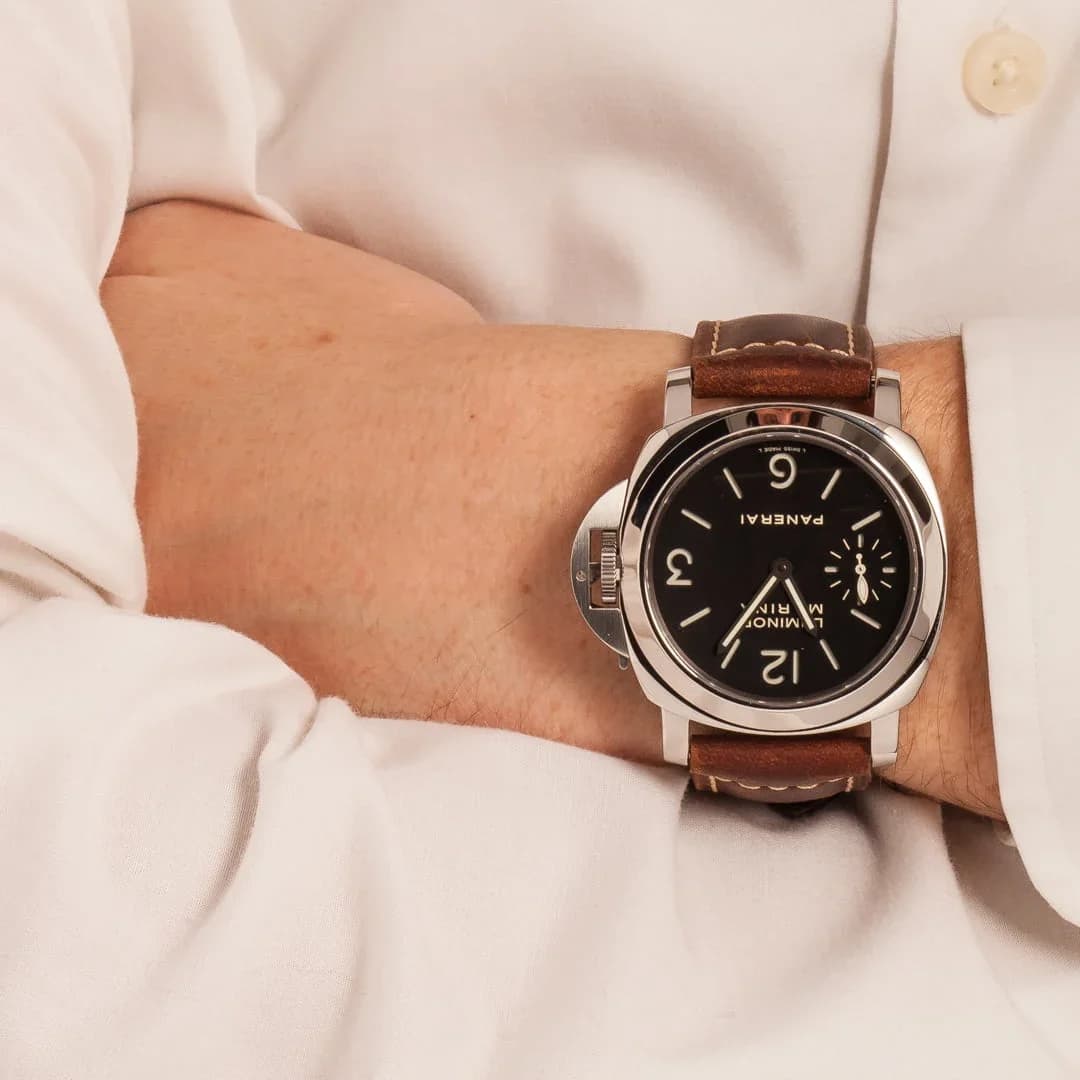
The actual wrist experience of a 44mm Panerai is something I want to be honest about, because reviews often either dismiss the size or pretend it doesn't matter. It matters. On a smaller wrist, 44mm hangs over the edge, and the 15mm thickness makes it sit high. On a wrist of 6.5 inches or more, it fills the space in a way that feels deliberate rather than excessive. The cushion case shape distributes the size differently than a round case would. The curved sides tuck into the wrist more than an equivalent round dial would. The wire lugs hold the strap close to the case. The result is a watch that wears more comfortably than the specs suggest, without hiding what it is. It still lands with presence. You feel it there. After a few hours, the weight becomes the watch. You stop noticing it as an imposition and start noticing it as a companion.
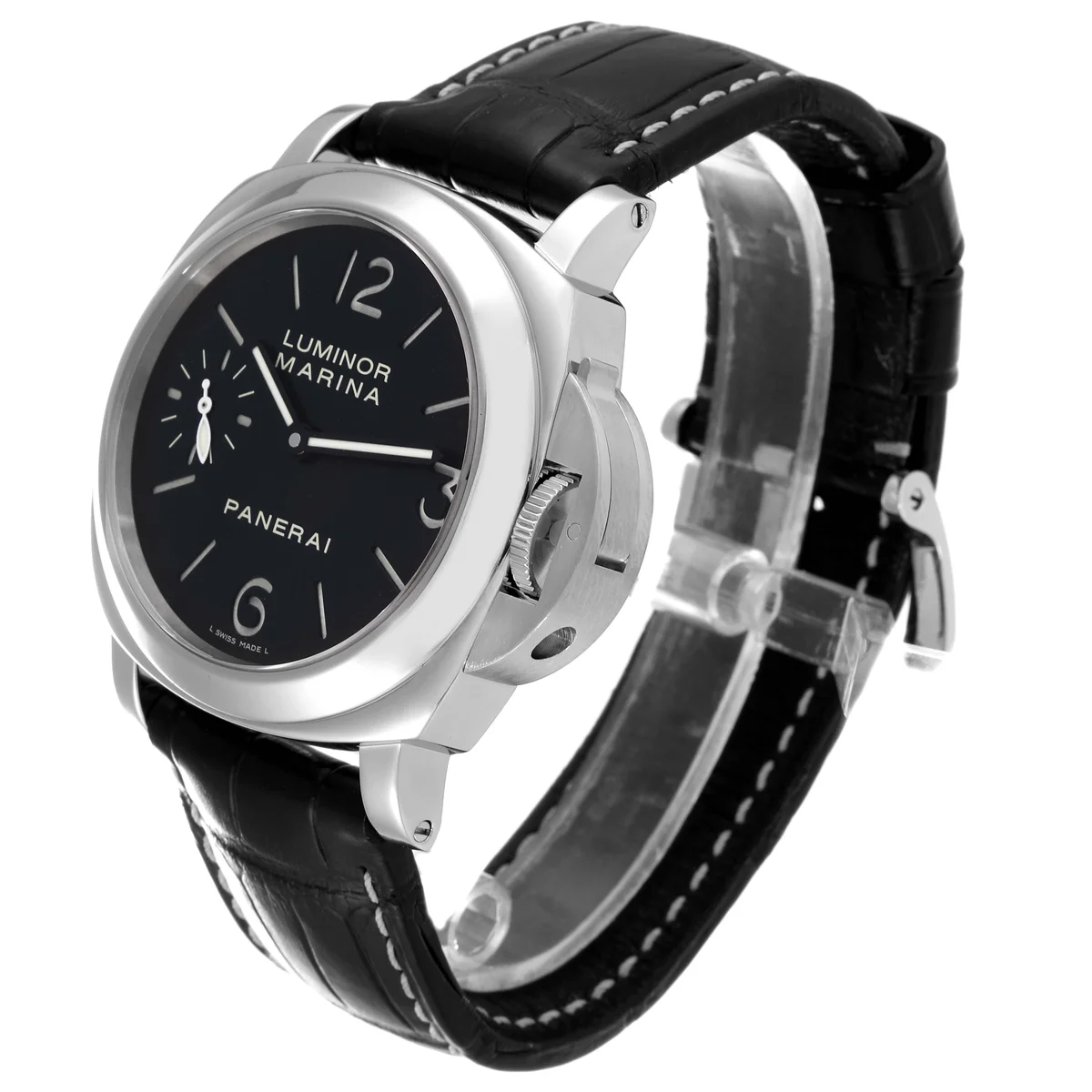
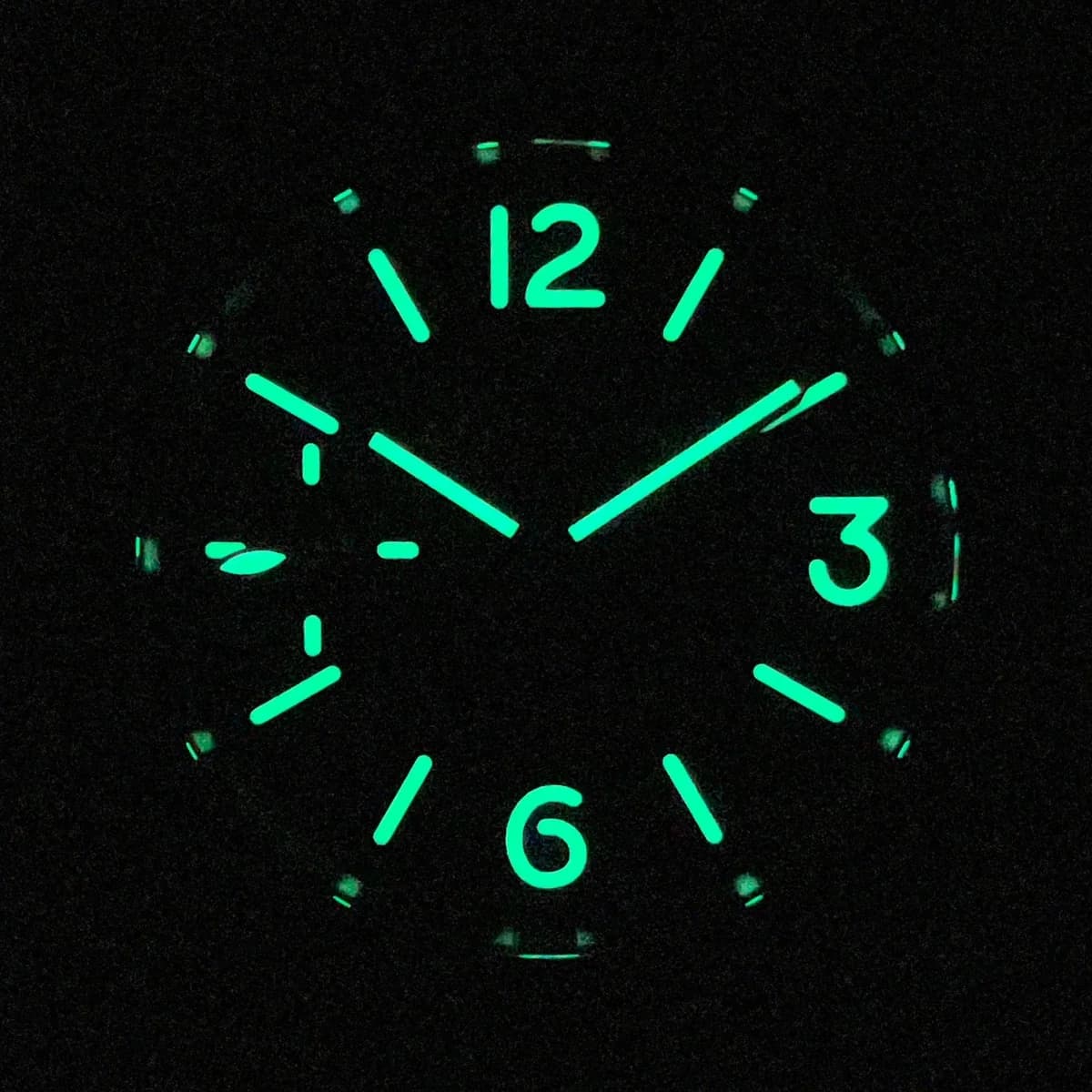
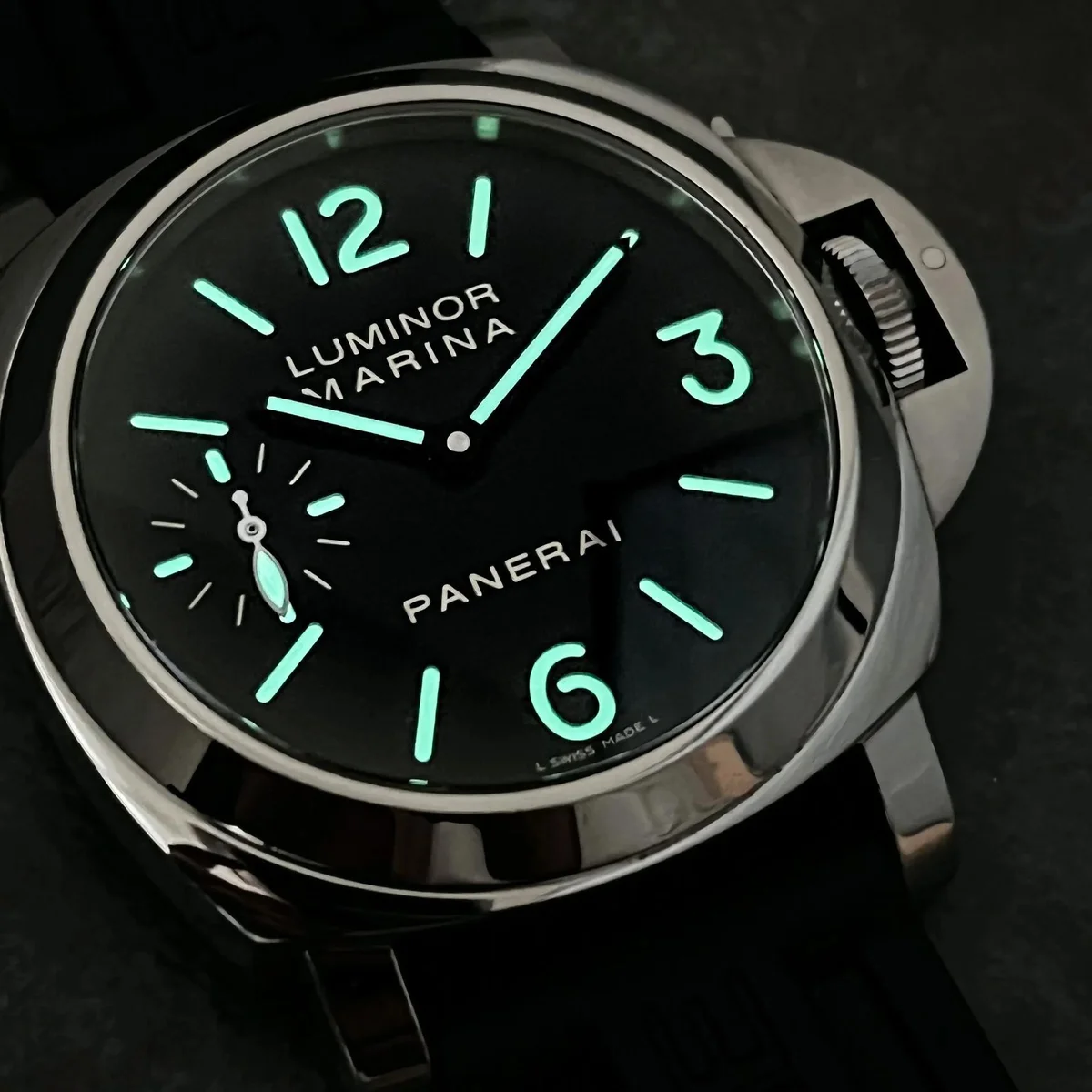
The sandwich dial is the detail that rewards attention. The top layer is black with cutout numerals and indices, and the bottom layer sits behind those cutouts, coated in Super-LumiNova. In daylight, the cutouts appear as luminous material visible below a black surface, giving the numerals a dimensional quality that flat painted dials don't have. The indices don't look painted on. They look like they have depth. In the dark, the lume glows through the cutouts with a consistency that is harder to achieve with a single-layer dial, because the luminous material is protected behind the top plate rather than exposed on the surface. This construction was developed for Italian Navy frogmen who needed to read depth gauges and timing in dark water. It works for that purpose exactly. It works as well on a Saturday afternoon because good engineering doesn't stop working when the context changes.
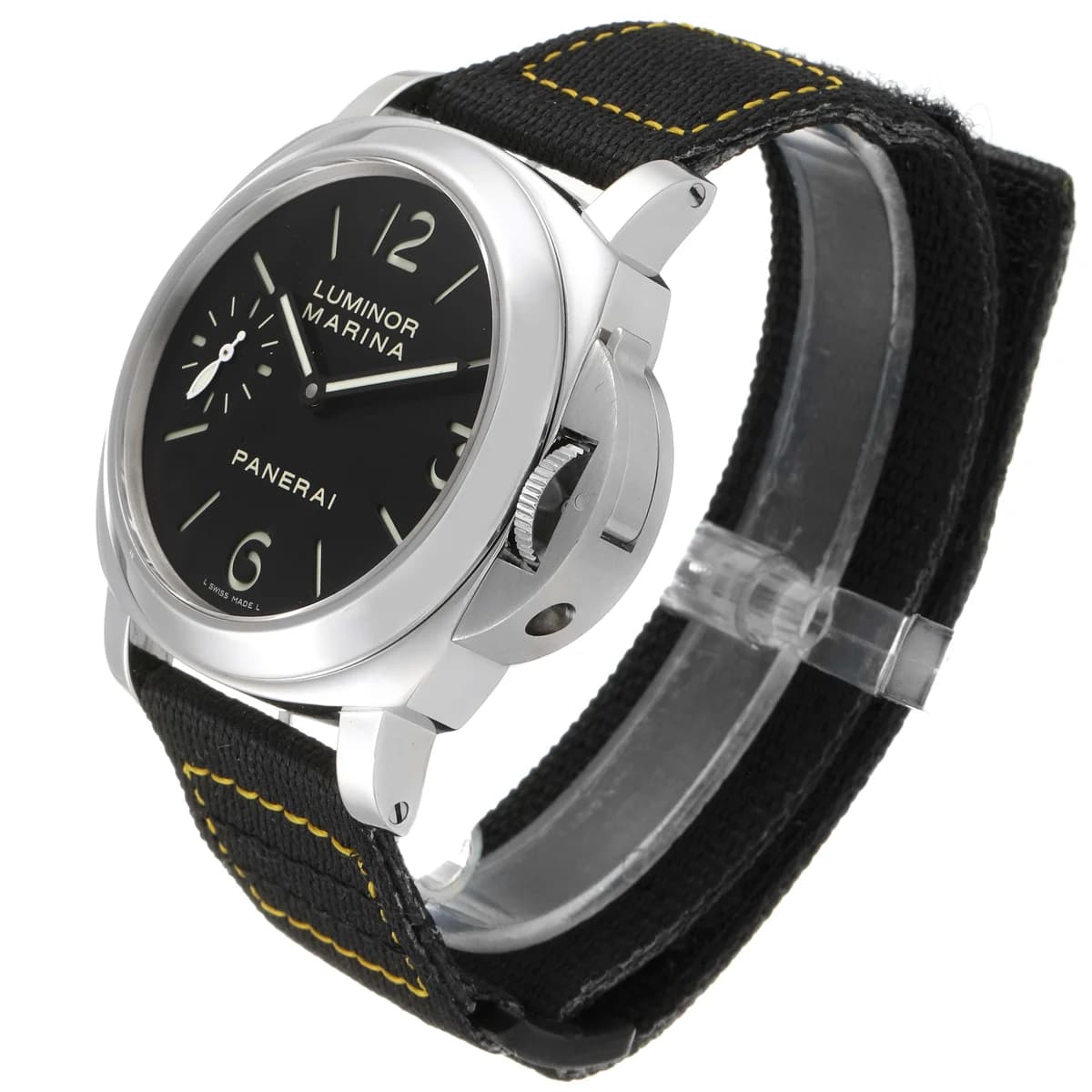
Strap changes on the PAM111 deserve more attention than they usually get. The watch uses a standard pin-and-buckle attachment via screw-through pins rather than spring bars. Panerai included a dedicated screwdriver with early watches specifically to make strap changes a DIY activity, before they formalized this with the Interchangeable Strap System in 2006. Before that system existed, the Paneristi community had already built an entire ecosystem of custom straps: tobacco leather, vintage military canvas, alligator, rubber, and leather sourced from genuine World War II military surplus. That culture of strap swapping didn't emerge from a marketing campaign. It emerged organically from owners who found that a watch this large needed a strap that matched the occasion, and that the dial and bridge changed personality completely depending on what was underneath. A tan vintage leather strap on the PAM111 reads completely differently from a black rubber strap. Neither is wrong. Both are the same watch.
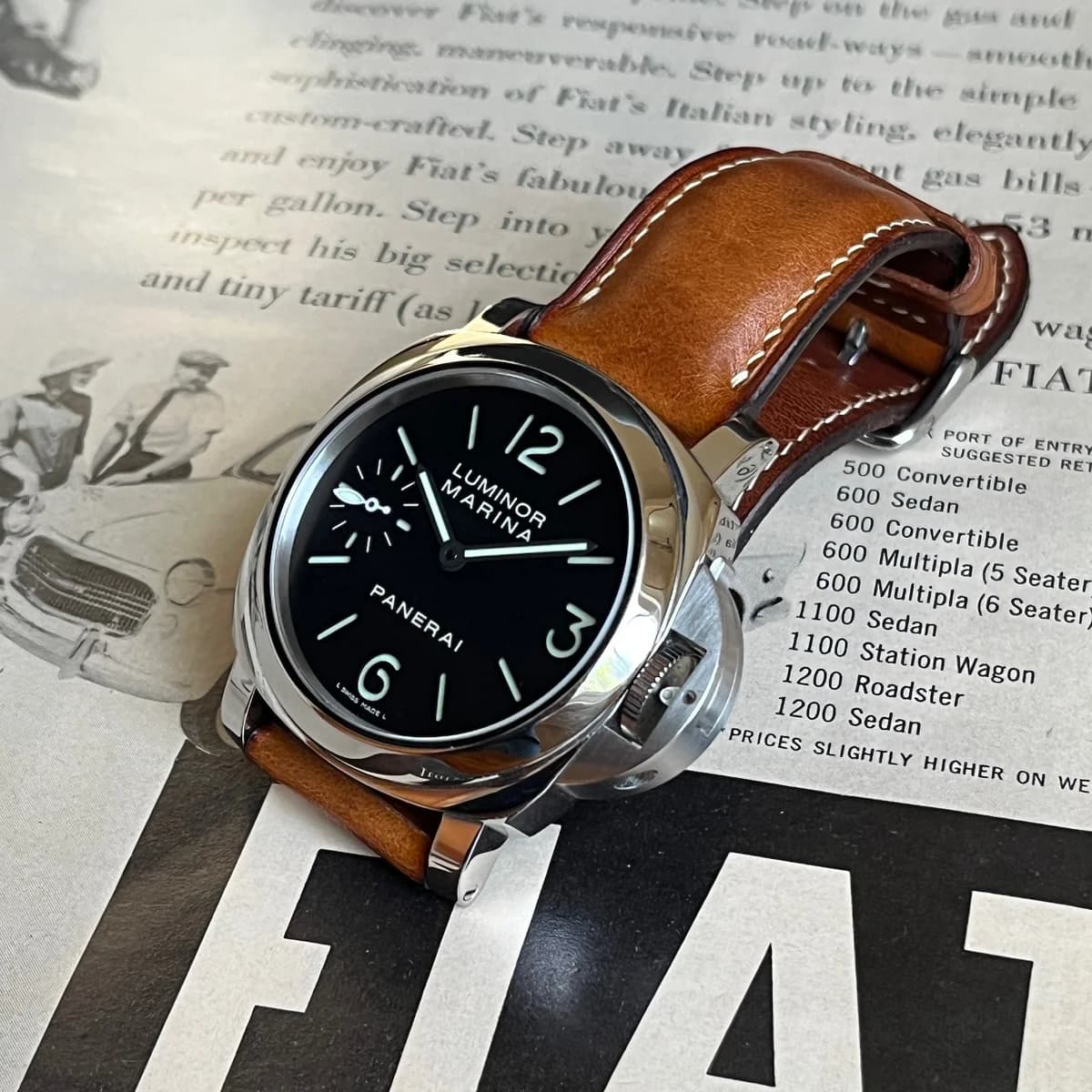
What strikes me about the PAM111 specifically, compared to the broader Panerai lineup, is its resistance to feature creep. Panerai produces complicated pieces with 8-day manual wind movements, tourbillons, and diving complications. The PAM111 never tried to be any of those things. No date. No power reserve indicator. No GMT. No complications of any kind beyond the small seconds. It sat in the catalog for years exactly as it was, which is unusual for a luxury brand that makes its commercial case partly through novelty. The fact that it remained unchanged for so long, and that collectors still seek it out rather than its more complicated siblings, says something about the value of restraint. Sometimes the right answer is to make the pure version well and leave it alone.
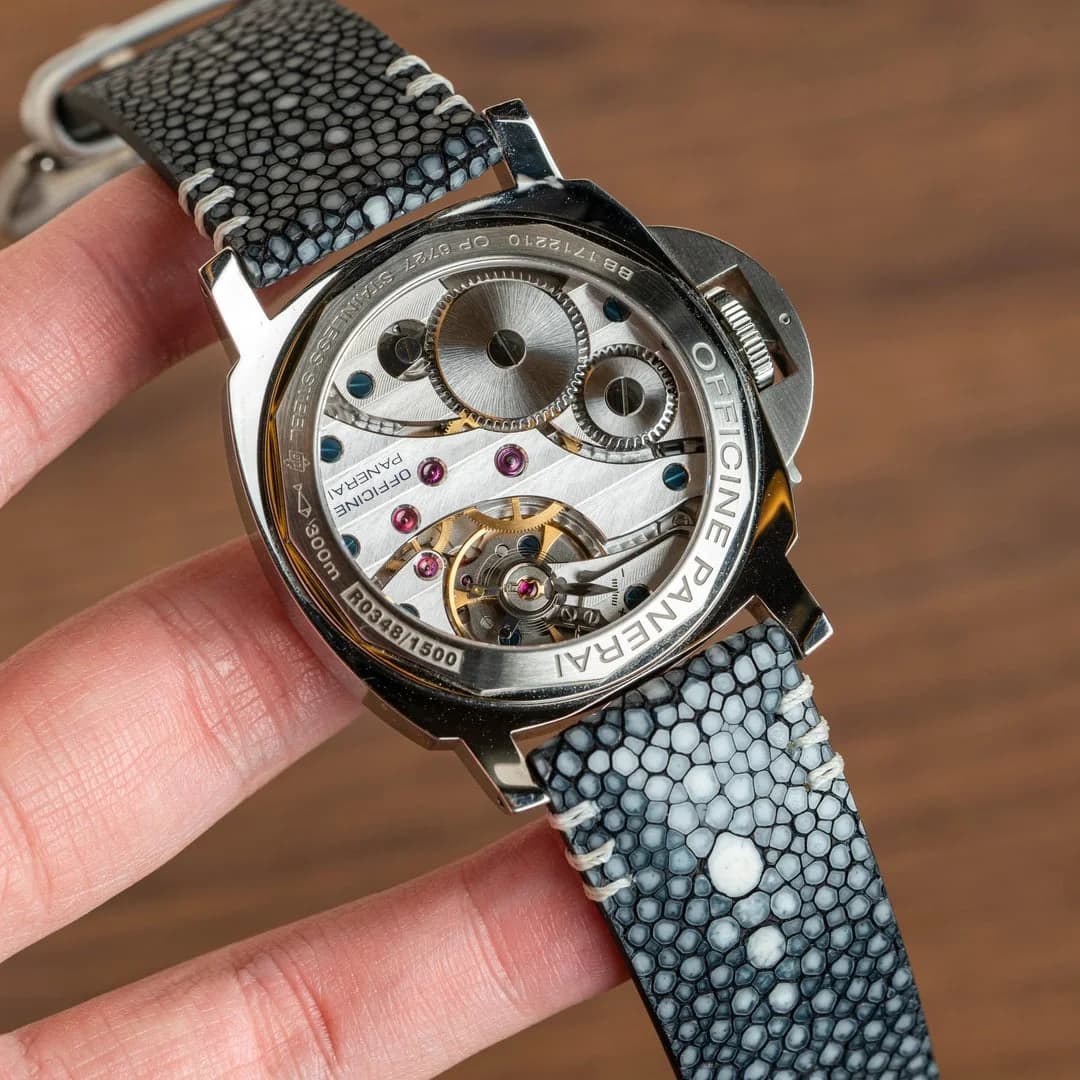
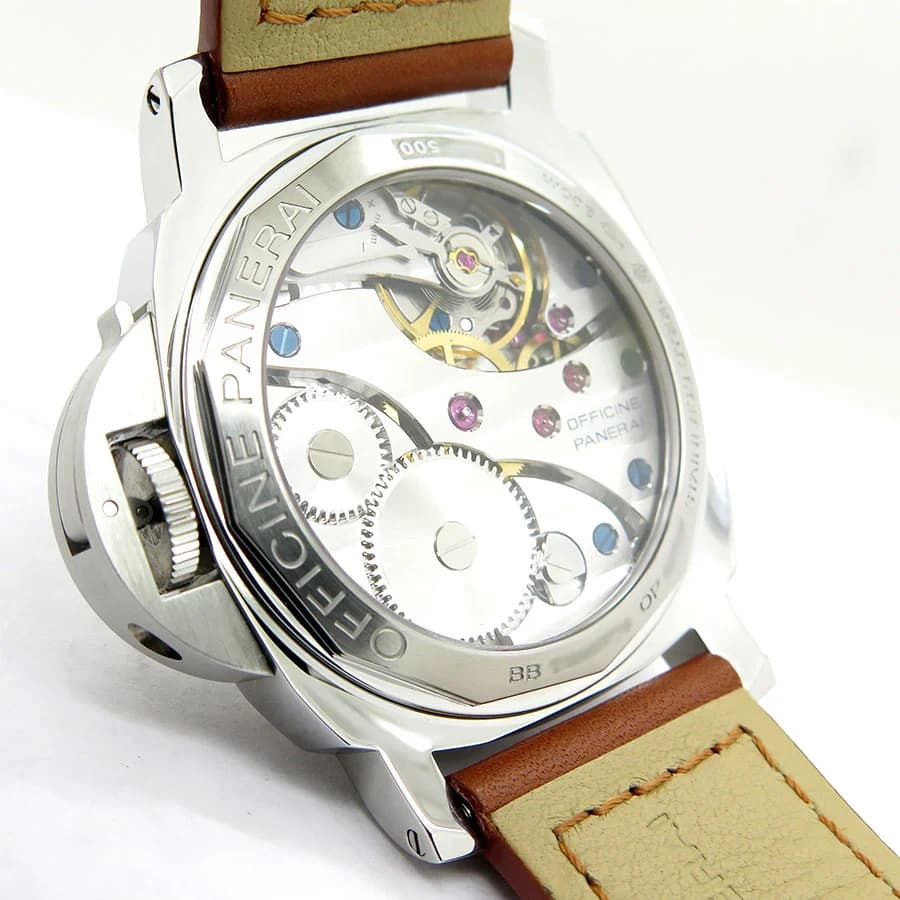
The honest critique is the movement. The OP XI in the PAM111 is not in-house. It is based on the ETA/Unitas 6497-2, a large manual-wind workhorse that Panerai modified with a swan's neck regulator, redesigned bridges, Geneva striping, and COSC certification. Through the exhibition caseback, you can see all of this, and it is honestly better looking than it has any right to be for a movement that started life as an industrial ebauche. The 56-hour power reserve is adequate but not exceptional in an era where 72 hours is becoming standard. And at 44mm, it genuinely does not fit under many shirt cuffs. These are not dealbreakers. They are the trade-offs of a watch that was designed for Italian frogmen, not Swiss finishing competitions. The movement works. It is reliable. It is serviceable by any competent watchmaker. And the caseback has the engraved Panerai logo and patent information that connects every PAM111 back to the 1955 crown bridge patent.
If the 44mm PAM111 is too much watch for your wrist, the Quaranta PAM01372 is the modern answer. Quaranta is Italian for forty, and the 40mm case takes everything the PAM111 established and puts it in a size that works on more wrists without losing the identity. The crown bridge is there. The sandwich dial is there. The luminous Arabic numerals are there. Small seconds at 9, date at 3, the same Luminor case architecture. But the P.900 caliber inside is genuinely in-house, automatic with 72 hours of power reserve from a single barrel. That is a significant upgrade over the PAM111's modified ETA 6497 with 56 hours. The Quaranta also adds Panerai's Click Release System for quick strap changes, something the Paneristi community will appreciate given that strap-swapping is half the culture. At 40mm with sharply downturned lugs, it wears comfortably on wrists as small as 6.5 inches. You are getting an in-house movement, modern materials, and the peace of mind that comes with current production and full warranty. I think of the Quaranta as the watch you recommend to someone who loves what Panerai represents but lives in a world where 44mm does not fit under a shirt cuff. The DNA is all there. The size is right for 2026. The PAM111 is the classic. The Quaranta is the future.
The PAM111 carries all of that with the fewest distractions. No date. No complications. Just the bridge, the dial, and the time. That is why it is the one I keep coming back to. The PAM111 proves that point every time someone picks one up after years away and feels immediately at home. The bridge, the dial, the crown. Nothing extraneous. Nothing missing.
Also in Tool Watches