
Omega
Seamaster 300M 2531.80
2531.80.00
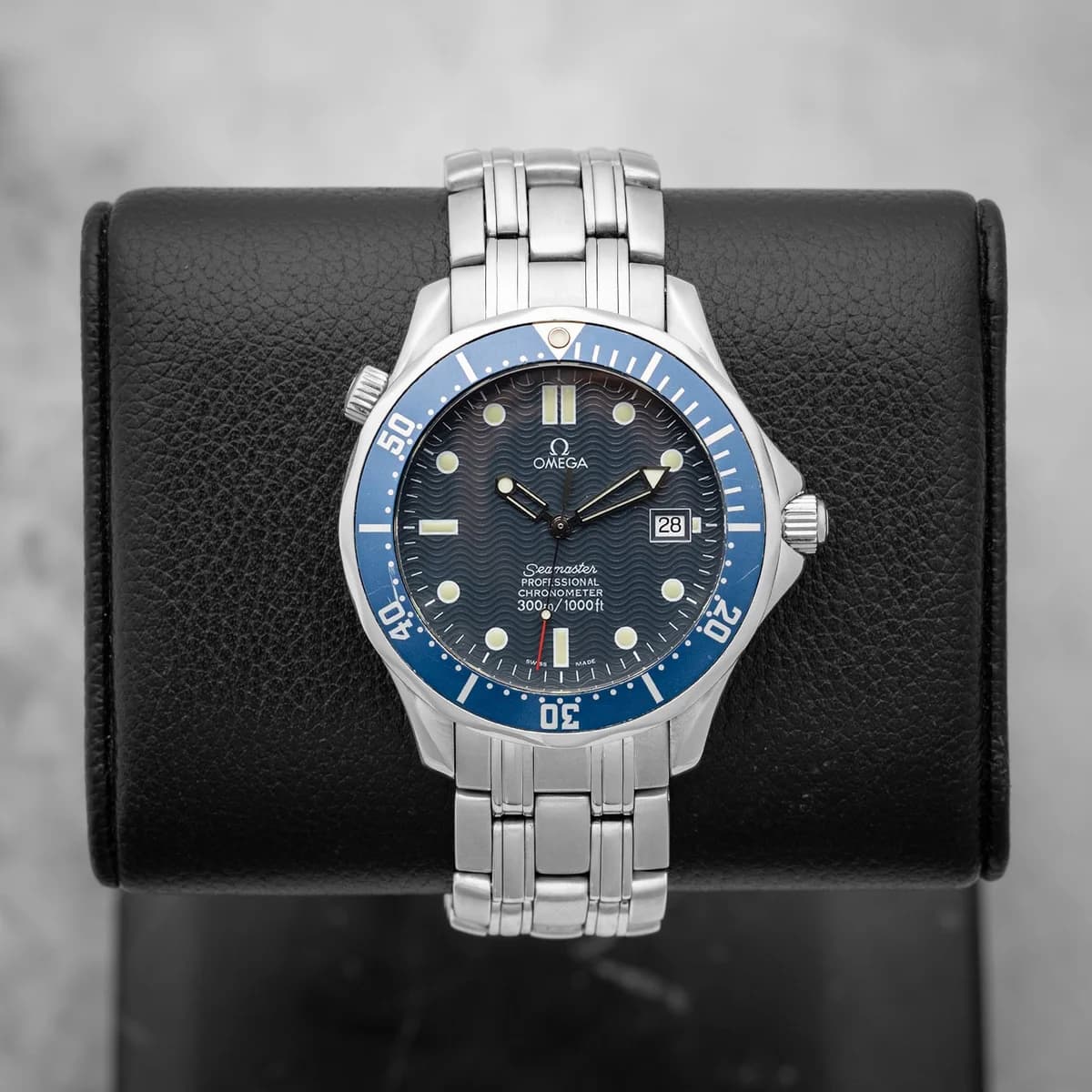
In 1995, costume designer Lindy Hemming, who won the Academy Award for Topsy-Turvy, was tasked with building a new James Bond from the ground up. Pierce Brosnan was replacing Timothy Dalton. Everything about the character needed to be reconsidered, including the watch. Bond had worn a Rolex Submariner in the novels and on screen for decades. Hemming rejected it. She chose an Omega Seamaster Professional 300M with a blue wave dial. Her reasoning was simple and specific: Commander Bond is a naval officer, a diver, and a discreet gentleman. The Seamaster was the watch a real Royal Navy Commander would wear. Omega had supplied Seamaster 300 dive watches to the British Royal Navy in the late 1960s. The connection was authentic, not manufactured. That decision changed both the Bond franchise and Omega's commercial trajectory permanently.
I grew up in these watches. The Seamaster 300M was the watch of my time when I was getting deep into the industry in the late 1990s. I have handled both the quartz and the automatic versions, the chronograph, the titanium variants, every color and configuration Omega offered. I spent days with these on the bench, on the wrist, in conversations with other collectors. Some of the best friendships I have started because of this watch. It is a conversation starter in a way that nothing else has been since. There is something about the blue wave dial and those skeleton hands that people recognize instantly, even people who do not know watches. They know this watch. They have seen it somewhere. And that is always the beginning of a good conversation.
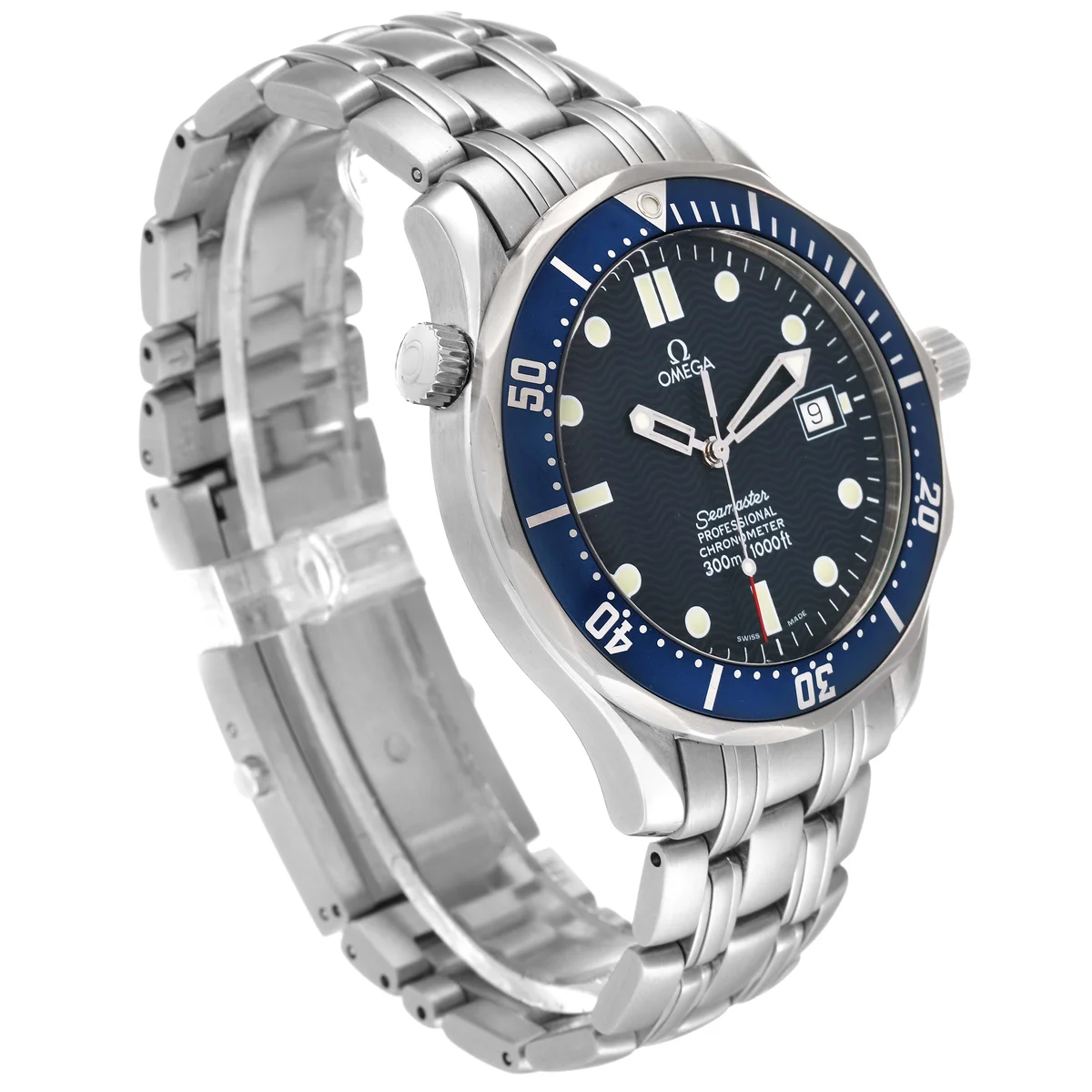
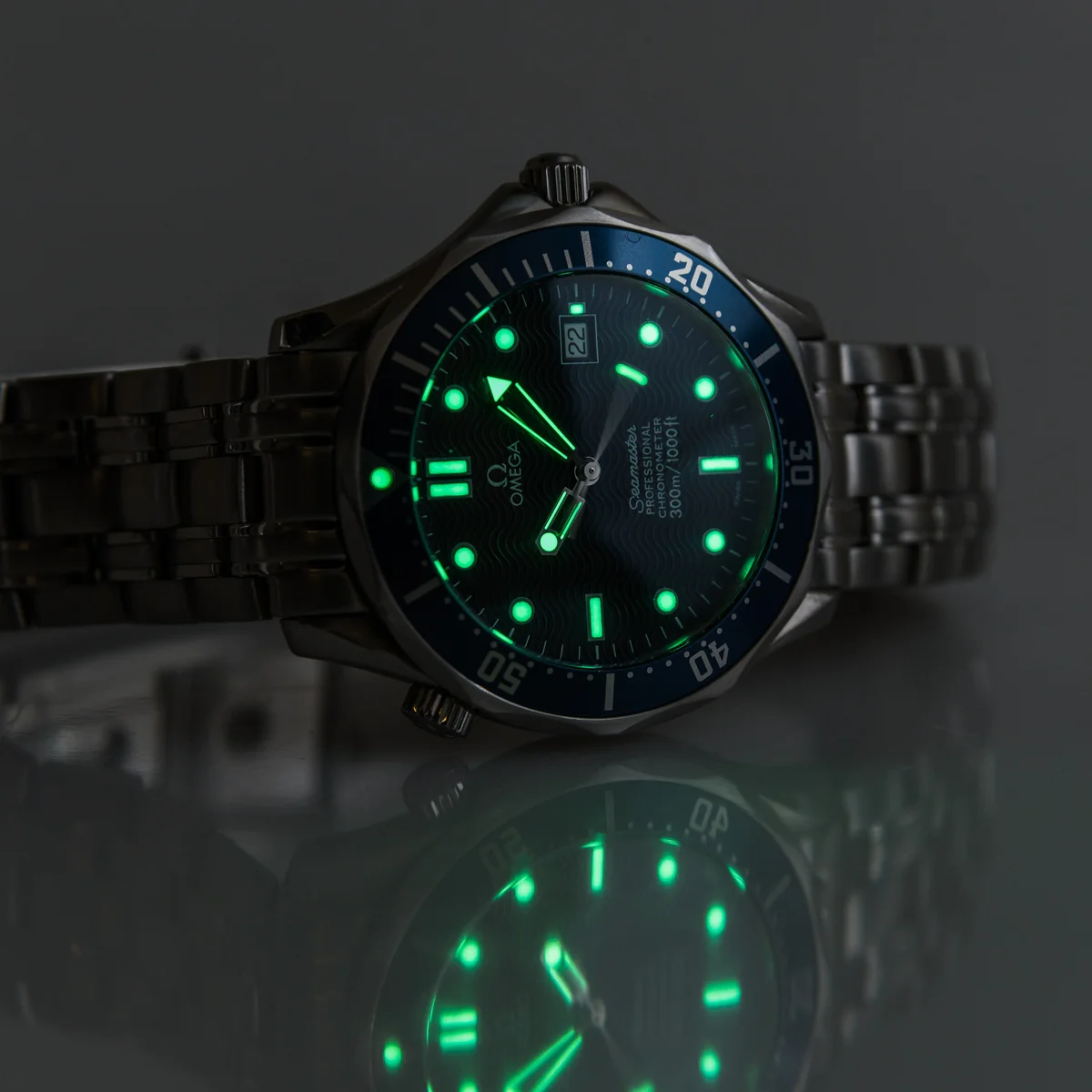
The dial was always the main thing for me. The blue wave pattern against the polished steel is cold. Silver and blue. Then there is the seconds hand with that small red lollipop tip at the counterbalance. That single point of warm color against an entirely cool palette is what makes the dial work. On aged examples the red fades to orange or even white depending on sun exposure, which is how you can roughly date a 2531.80 from across the room. Without it, the watch would be clinical. With it, the whole thing warms up. It is one of the most effective uses of a contrast accent I have seen on any watch face. The modern Seamaster 300M has evolved the dial beautifully with ceramic and laser-engraved waves, and I think Omega has done something rare by making the modern version genuinely as appealing as the original. Usually the classics win. In this case, I think both generations hold up. Omega has always been good at reading what people want and keeping the design accessible without dumbing it down. That is harder than it sounds. The current lineup has expanded in ways I genuinely appreciate. The grey dials, the black with gold accents, the sedna gold on rubber. Some people think Omega has diluted the line with too many variants. I disagree. I have enjoyed working with those pieces and seeing how the design language translates across different materials and color combinations. The NATO strap options opened up a whole different way of wearing the 300M. Some of the vintage-inspired looks, the throwback patina bezels and the faded color palettes, are calling back to the generation I grew up with and doing it with a self-awareness that shows Omega understands its own history. They are not just making more watches. They are making more interpretations of the same idea, and the good ones land. The green dial in particular stands out to me. When you look at a green Seamaster, you do not immediately think diver. Your mind goes somewhere else. Forest. Trees. Something terrestrial. Omega released a green dial variant in what they call Bronze Gold, and it is genuinely beautiful. The warm bronze-gold case against that deep green creates a combination that reads more like nature than ocean. It is hard to explain until you see it in person, but the feeling is completely different from the blue. Blue is the sea. Green is the land. Same watch, different emotional register. That range is what makes the 300M line so durable. It can be anything.
Omega's proprietary alloys deserve their own conversation. Sedna™ Gold is their patented 18K rose gold, introduced in 2012. Over 75% gold, more than 20% copper for the fiery red warmth, and more than 1% palladium to prevent the color from fading. Standard rose gold oxidizes and loses its pink over decades. Sedna™ Gold does not. The palladium locks the color permanently. Canopus Gold™ is their proprietary 18K white gold, introduced in 2015, named after the star that is 10,000 times brighter than our sun. It is whiter and brighter than standard 18K white gold because of the specific platinum-group additions. Moonshine™ Gold is their 18K yellow gold from 2019, a paler hue than traditional yellow that resists fading. Bronze Gold is a 9K alloy, 37.5% gold with roughly 50% copper as the dominant secondary metal, plus silver, gallium, and trace palladium for color stability. The copper gives it the warm bronze tone. The gold and gallium prevent the tarnishing that actual bronze develops. And O-MEGASTEEL is their proprietary stainless steel. These are not marketing names. They are trademarked, patented formulations developed by Omega's in-house metallurgists. The 300M has been produced in both, and the result is a dive watch in precious metal that does not compromise on the material science.
There is a baguette-set variant right now with jewels along the bezel that I would never pay that kind of number for on a 300M, but I respect that Omega is not afraid to take creative license with an iconic design. Some brands would never touch their flagship diver with diamonds. Omega does it because the 300M's design language is strong enough to absorb it without losing identity. The same confidence shows in the all-black ceramic version. Black ceramic case, black ceramic dial, black ceramic bezel. No steel visible anywhere. As a daily wear proposition, ceramic is exceptional. It does not scratch the way steel does. Omega's ceramic is zirconium oxide based, rated approximately 1,200 on the Vickers hardness scale versus roughly 200 for stainless steel. Six times harder. The tradeoff is brittleness under sharp impact. Ceramic resists surface abrasion better than any metal used in watchmaking but it can crack or chip if struck hard against a sharp edge. For desk diving and daily life, ceramic is arguably the best case material available. For actual impact risk, steel remains more forgiving. Omega has also used tantalum on the 300M, a rare metal that is denser than steel, highly corrosion resistant, and has a distinctive blue-grey color that cannot be replicated by coating or plating. Tantalum is one of the most chemically inert metals on the periodic table. It does not react with most acids, it does not tarnish, and it has a warmth on the wrist that comes from its density. It feels substantial in a way that is different from gold or steel. The fact that Omega puts tantalum, ceramic, Sedna gold, Canopus gold, titanium, and Bronze Gold on a single dive watch platform shows how far the 300M has come from a single blue dial on a steel bracelet in 1993. There is even a white ceramic version for anyone drawn to an all-white aesthetic. White ceramic on a dive watch sounds impractical until you realize the ceramic does not stain or yellow. It stays white. Permanently.
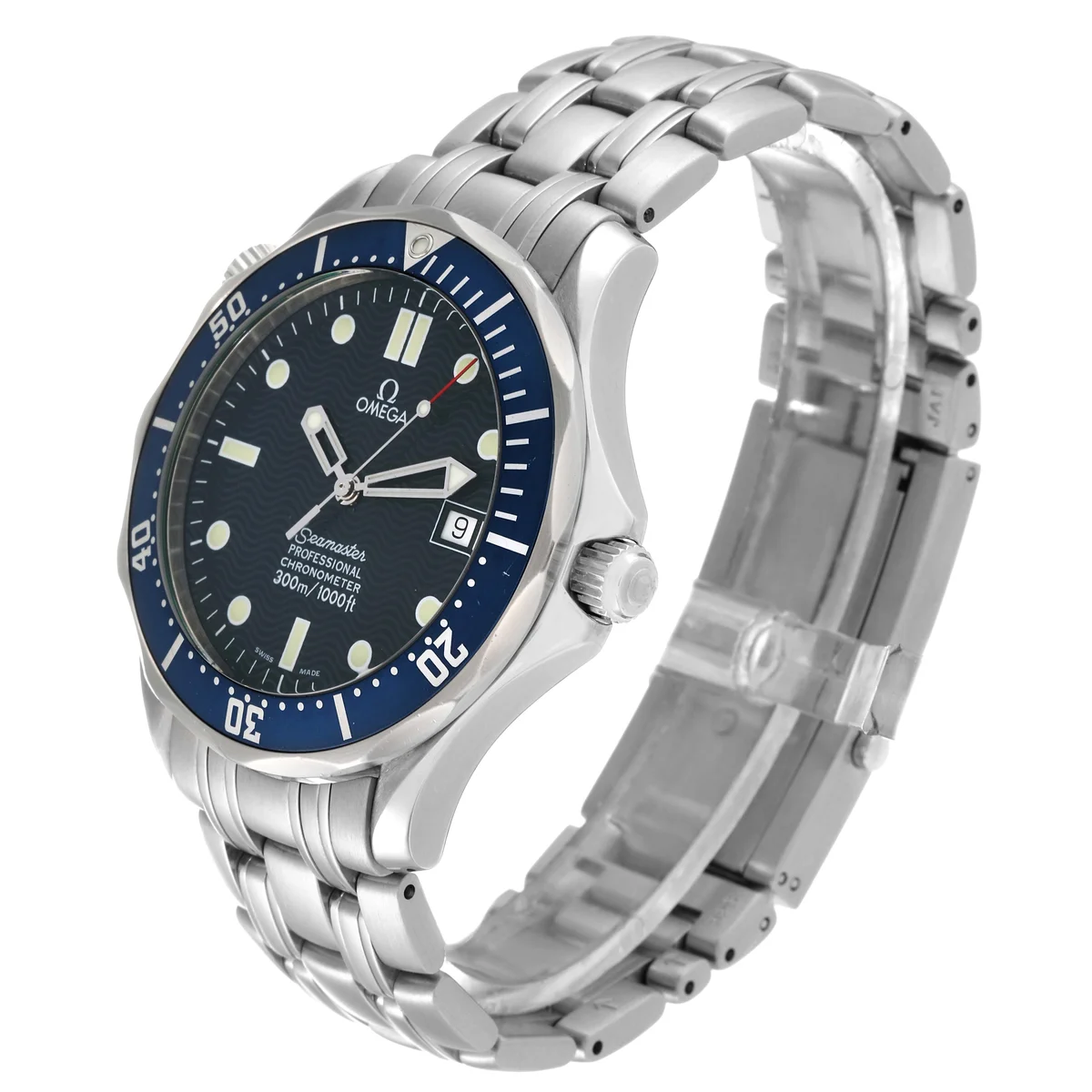
Right now the Omega website lists roughly sixty variants of the Seamaster Diver 300M. Sixty. Steel, titanium, ceramic, Sedna gold, Canopus gold, Bronze Gold, tantalum. Blue, black, green, grey, white, two-tone. Bracelet, rubber, NATO. Chronograph, GMT, time-and-date. Who would have thought a single dive watch launched in 1993 would spawn sixty concurrent models. That is not dilution. That is an ecosystem. The design is strong enough to hold all of it.
The Planet Ocean 600M deserves a mention here because it exists in the space the 300M created. The Planet Ocean doubled the depth rating to 600 meters, went to a larger case, and introduced features like the liquid metal ceramic bezel. It is not a variant of the 300M. It is a different model entirely, built for a more extreme use case. But the DNA is clear. The wave dial concept, the helium escape valve, the skeleton hands, the scalloped bezel. The Planet Ocean is what happens when you take the 300M's philosophy and push it toward the professional end of the spectrum. The 300M remains the daily wear. The Planet Ocean is the tool.
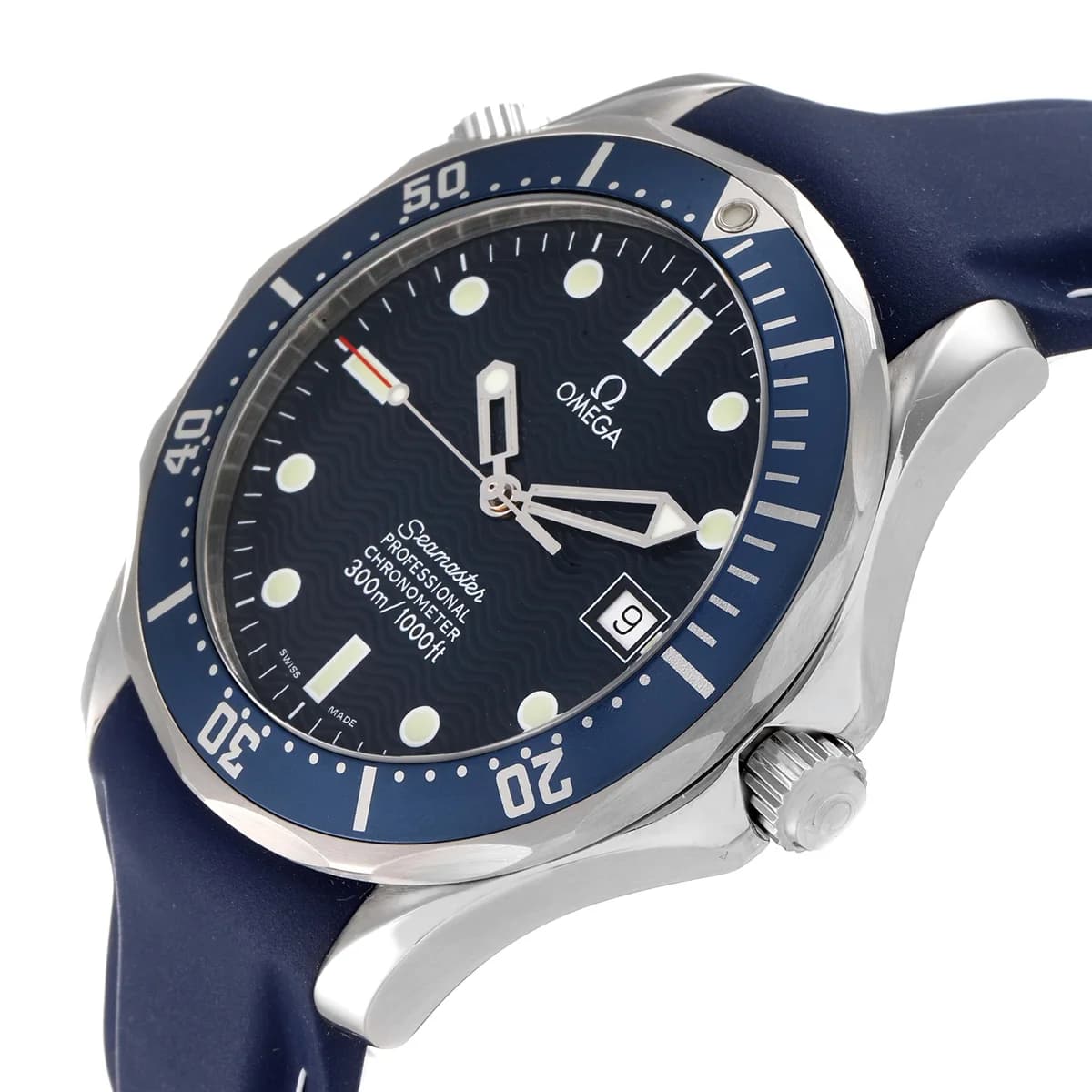
The reference Brosnan wore in GoldenEye was the 2541.80, the quartz version powered by the Caliber 1538. For Tomorrow Never Dies in 1997, the production switched to the automatic 2531.80 with the COSC-certified Caliber 1120, and Brosnan wore it through The World Is Not Enough and Die Another Day. The visible difference between the two is a single line of text on the dial. The automatic reads four lines: Omega, Seamaster, Professional Diver 300M, Chronometer. The quartz has three lines, no Chronometer designation. That is how you tell them apart at a glance. The automatic is the one most collectors want because it is the one that appeared in three of the four films and because mechanical movements carry different weight than quartz in the collector world.
The Caliber 1120 is based on the ETA 2892-A2 but heavily modified by Omega. 23 jewels versus the base movement's 21. 28,800 vibrations per hour at 4 Hz. 44 hours of power reserve. COSC chronometer certified. The 2892-A2 is one of the most respected automatic movement platforms ever produced. Thin at 3.6mm, reliable, accurate, and used as a base by dozens of brands across the industry. Omega's modifications earned the chronometer certification that the stock ETA does not carry. The Cal. 1120 was eventually replaced by the Cal. 2500 with the co-axial escapement when the 2220.80 succeeded this reference in 2006.
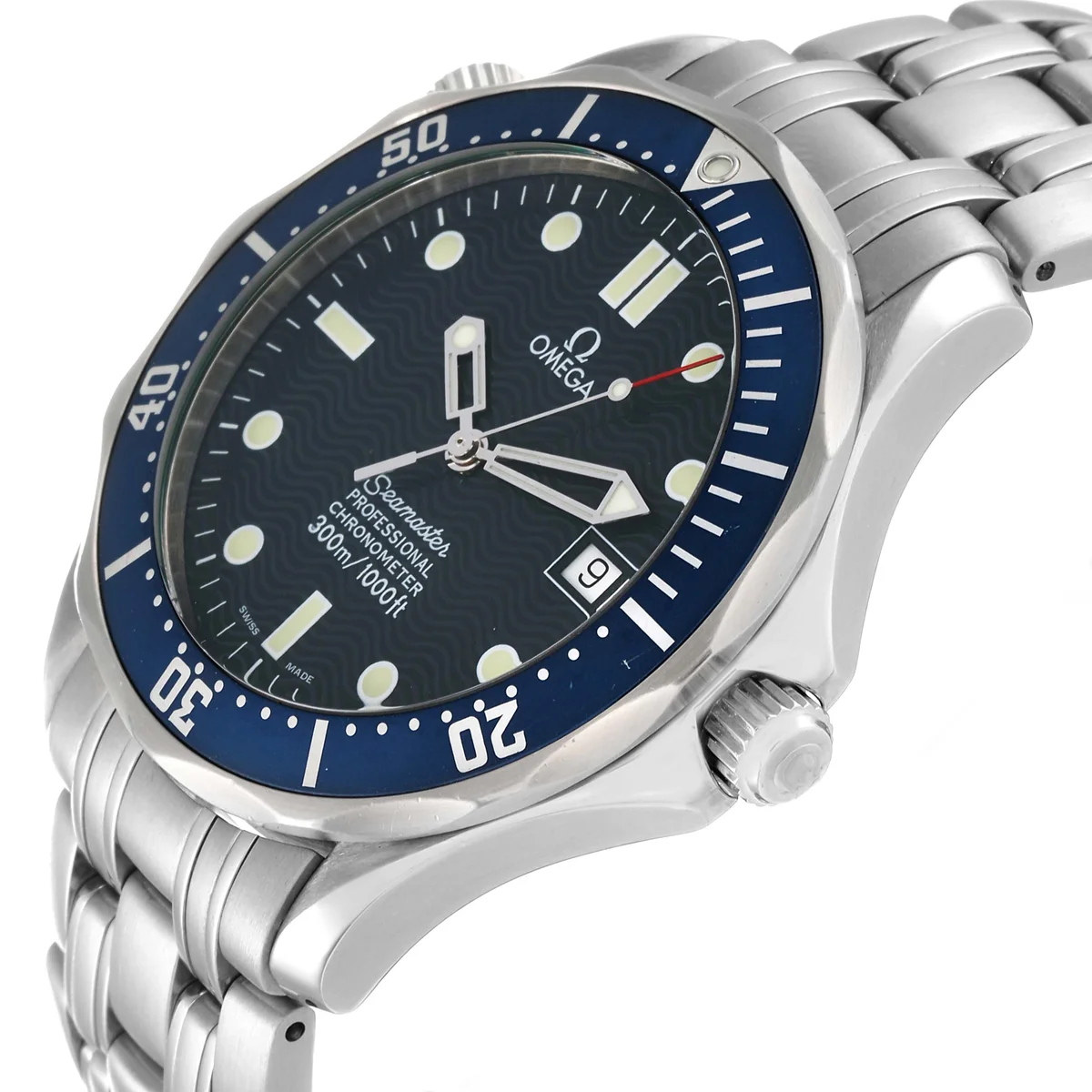
The blue wave dial is the signature. A deep metallic blue with a fine wave pattern printed across the entire surface. The pattern represents ocean waves and has been the Seamaster 300M's visual identity since 1993. The hour markers are printed dots and batons filled with Super-LumiNova on later examples, or tritium on watches produced before roughly 1997. The skeleton sword hands are the design element that most people remember. Hollow centers filled with lume, a broad hour hand and a longer minute hand, both with that distinctive sword profile. The seconds hand has a lollipop counterbalance at the tail. The date window sits at three o'clock.
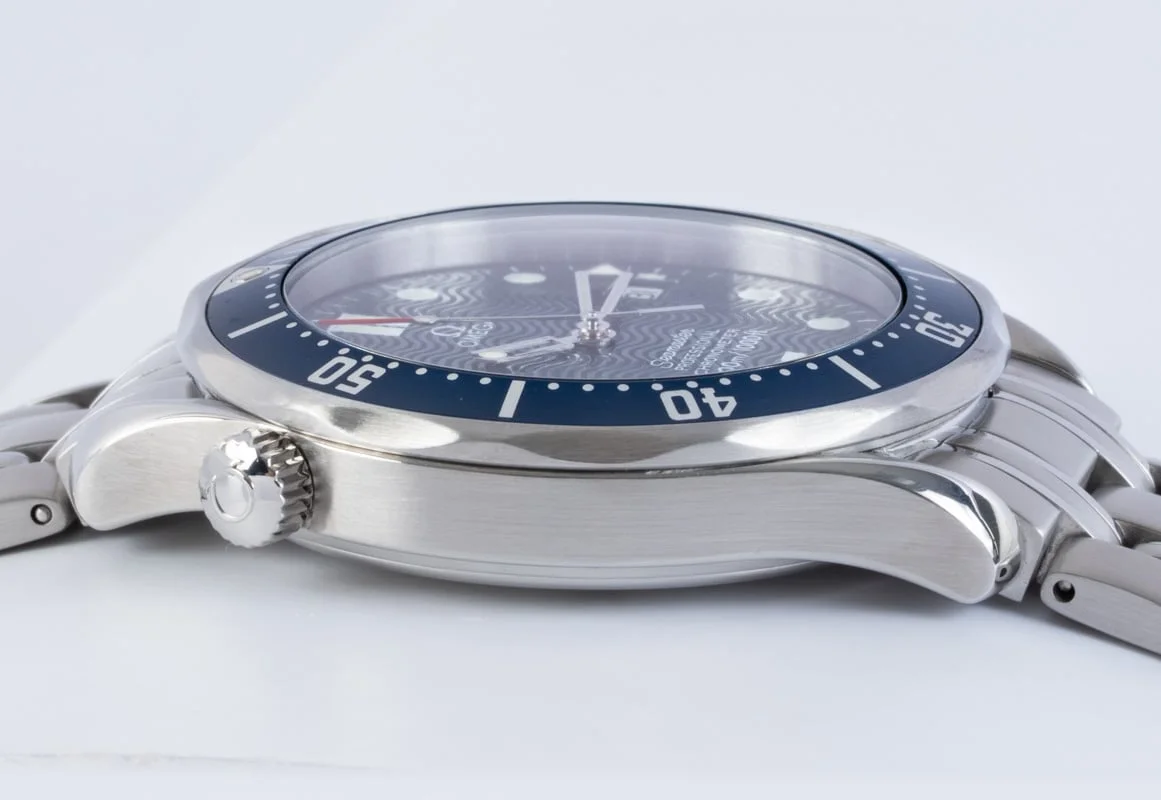
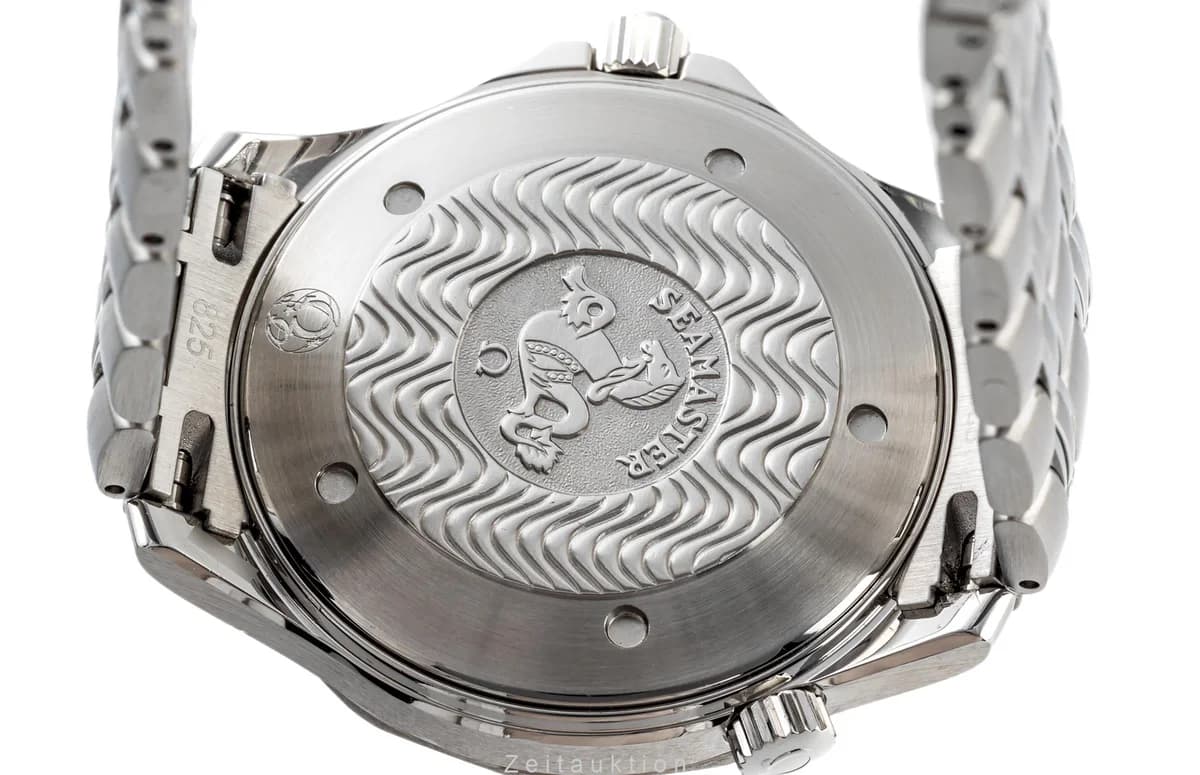
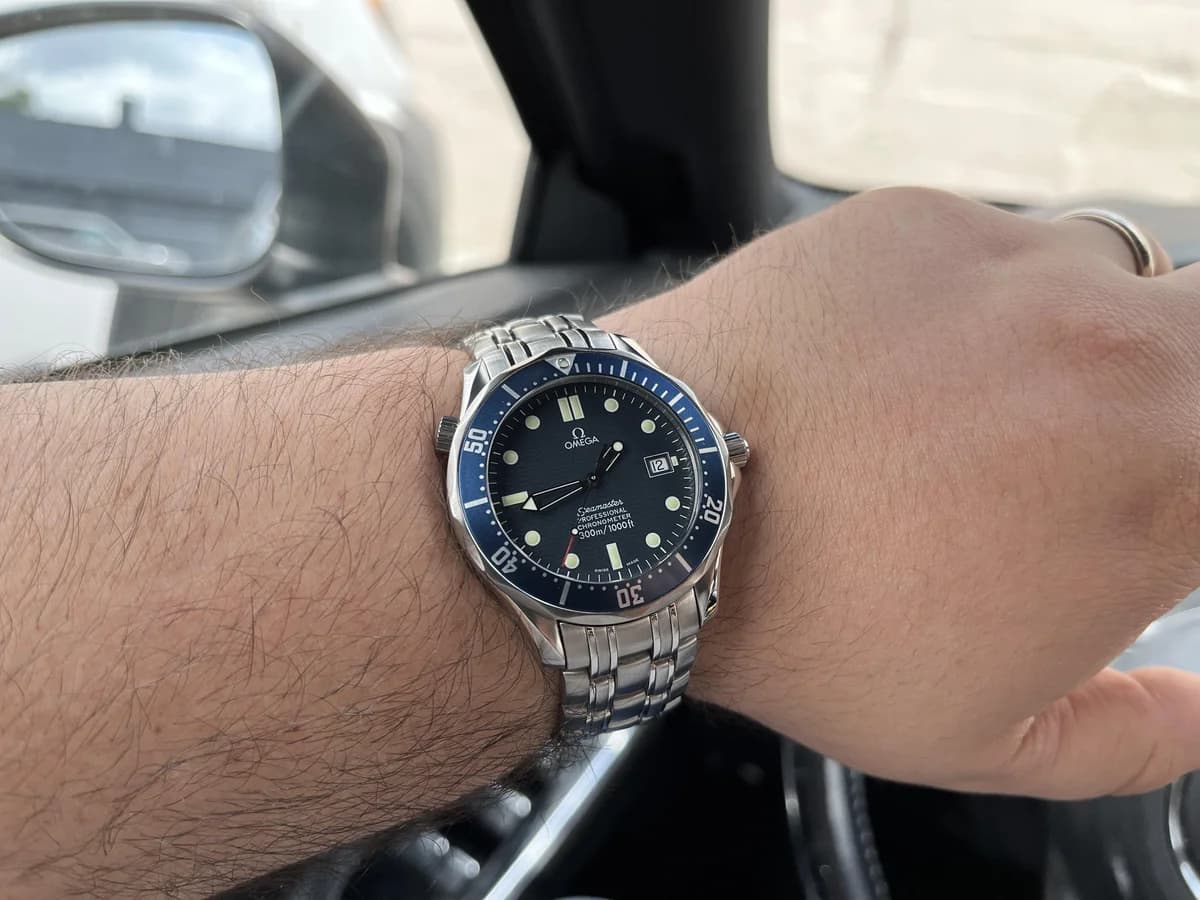
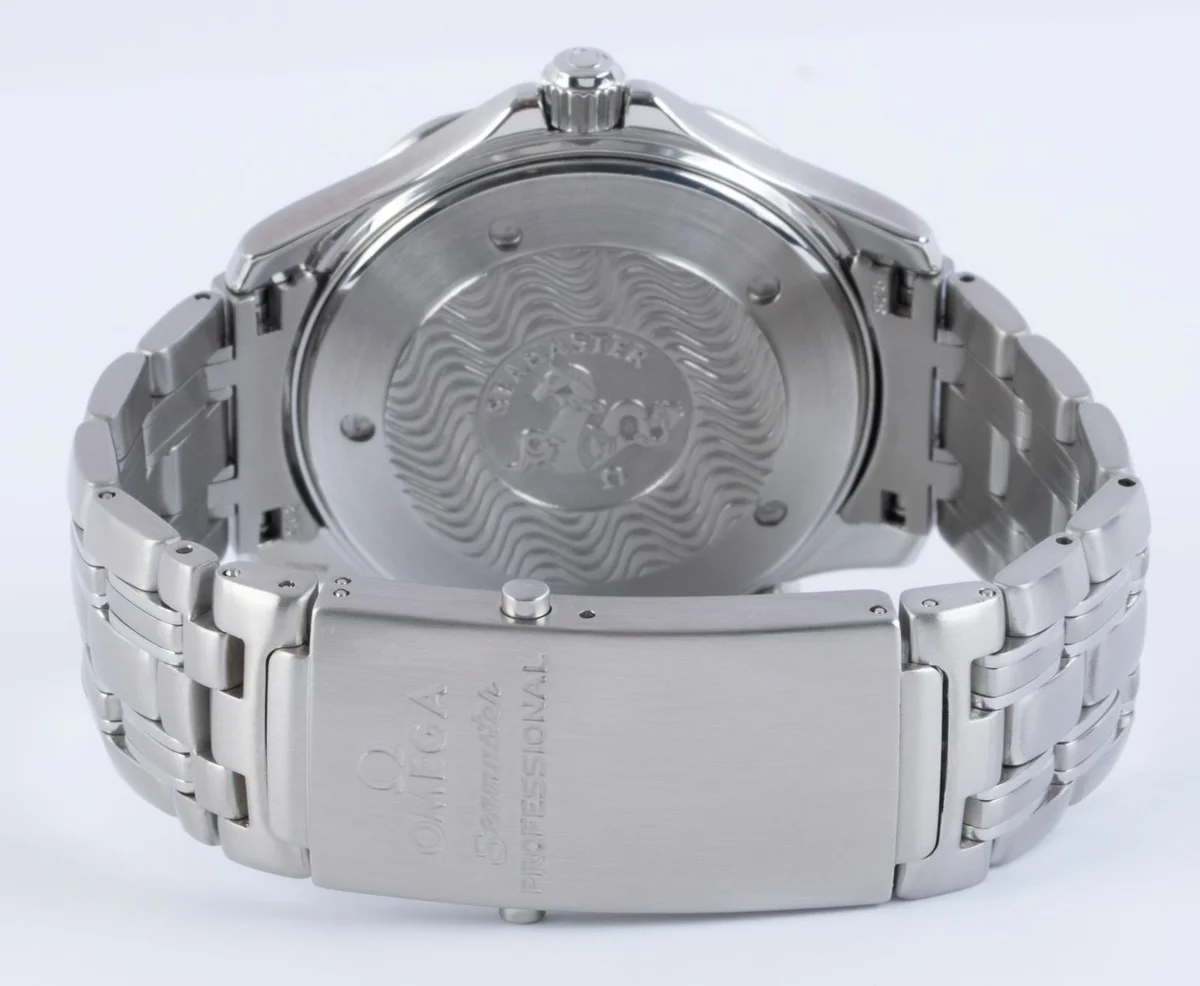
One thing I will say honestly is that this is a big watch and it is heavy. 41mm does not sound large on paper, but the 2531.80 wears larger than the number suggests. The lug-to-lug is 47mm and the thickness is approximately 12mm. At roughly 165 grams on the steel bracelet, you know it is there. Pierce Brosnan pulled it off on screen because he is a large man in a perfectly fitted suit. On smaller wrists, this watch can overwhelm. It is not a criticism. It is a fact of the design. The 300M was built as a dive instrument, not a dress watch, and it carries that heft. The case is 41mm in stainless steel with a screw-down crown and a solid caseback engraved with the Seamaster seahorse. The helium escape valve at ten o'clock is a manual screw type, designed for saturation diving. During prolonged exposure to pressurized helium-oxygen mixtures at depth, helium molecules permeate the case. The HEV allows that helium to escape during decompression so the crystal does not blow off. In Die Another Day, the scriptwriters turned the HEV into a remote bomb detonator. The bezel is unidirectional with a blue anodized aluminum insert graduated to 60 minutes with the first 15 minutes subdivided. The dodecagonal shape with large notches exists so divers can grip and rotate it in gloves. The domed sapphire crystal sits above the bezel line.
The Seamaster Professional 300M was introduced in 1993 and the 2531.80 was produced until approximately 2006. It was not a descendant of the original Seamaster 300 from 1957, the reference CK2913, which was a completely different watch with Broad Arrow hands, a bidirectional bezel, and 200 meters of resistance. The 300M Professional was a new design for 1993 that shared the Seamaster name and diving heritage but had its own visual language. The wave dial, the skeleton sword hands, the scalloped bezel, the twisted lyre lugs. All of it was new.
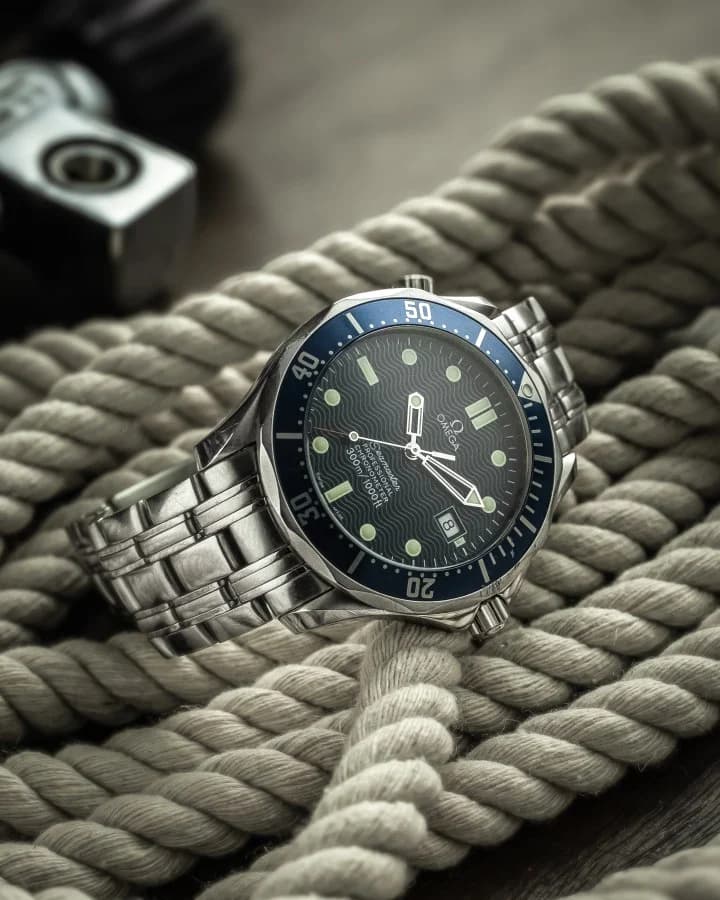
The 2531.80 was not the only variant worth knowing. The reference 2598.80 was the chronograph version of the same family. Same blue wave dial, same skeleton sword hands, but with chronograph subdials and a Caliber 1164 based on the ETA 7750. The chronograph added thickness but the visual balance worked. Omega also produced titanium variants that were noticeably lighter on the wrist, a difference you felt immediately going from steel to titanium. The titanium had a matte grey tone instead of polished steel and attracted less attention visually, which some people preferred. All of these variants shared the same DNA: wave dial, skeleton hands, scalloped bezel, HEV at ten.
The current Seamaster 300M, reference 210.30.42.20.03.001, runs the in-house Caliber 8800 with co-axial escapement, 55 hours of power reserve, and Master Chronometer certification. The bezel insert is ceramic instead of aluminum. The dial is ceramic with laser-engraved waves instead of printed metal. The case grew to 42mm. It is objectively a better watch in every measurable specification. But the 2531.80 has something the current generation does not. It has the wave dial that started it all, the printed texture that catches light differently from laser-engraved ceramic, the 41mm case that sits slightly flatter on the wrist, and the fact that when you see it, you see Brosnan adjusting his cuff in a tuxedo. That association lives in the design itself. The franchise moved from Rolex to Omega and never went back. Sean Connery wore a Rolex Submariner ref. 6538 in Dr. No in 1962. Roger Moore had a Submariner and later a Seiko. Timothy Dalton wore a TAG Heuer and a Rolex across his two films. The watch rotated with the actor until Hemming locked in Omega permanently with Brosnan.
In 1995, the Seamaster 300M was competing directly against the Rolex Submariner Date ref. 16610. Same 300 meters of water resistance. Similar case size. Both COSC-certified automatics. The Submariner was and still is the most recognized dive watch in the world. But the Seamaster offered the wave dial, the skeleton hands, the helium escape valve, and a visual identity that was distinctly not Rolex. For a lot of collectors in that era, if the Submariner was out of reach or out of stock, the Seamaster 300M was where they landed. And many of them stayed. It was not a consolation prize. It was a different philosophy. Rolex built a tool that happens to be elegant. Omega built something elegant that happens to be a tool. Both approaches work. They attract different people.

Daniel Craig took over in Casino Royale in 2006 and brought a new generation of Seamasters with him. The Planet Ocean, the Aqua Terra, and the 300M with ceramic bezel and ceramic dial. Omega produced dedicated Bond limited editions for every Craig film. The No Time to Die Seamaster in titanium with the tropical brown aluminum bezel became one of the most discussed Bond watches ever. The franchise has now been wearing Omega for thirty years across two actors and nine films. The Seamaster is as much a part of Bond's identity as the Aston Martin.
But the current Seamaster is Daniel Craig's watch. The 2531.80 is Pierce Brosnan's. Both are legitimate. They represent different eras of the same character.
Omega produced a limited edition for Die Another Day in 2002, the reference 2537.80, limited to 10,007 pieces. The dial features small 007 gun logo motifs scattered across the wave pattern, with the gun barrel logo above six o'clock and an engraved caseback commemorating the 40th anniversary of the Bond franchise. It is the only official Brosnan-era limited edition Seamaster.
The honest critique is the bracelet. The original bracelet on the 2531.80 is known for stretching over time. The end links can develop play, and the clasp is not as refined as what Omega produces today. A service and bracelet tightening addresses it, but it is a known characteristic of watches from this era. The other critique is the aluminum bezel insert. Aluminum scratches. Ceramic does not. But aluminum develops a character that ceramic never will. The scratches and the slight fading of the blue anodizing over decades of wear is part of what gives a well-worn 2531.80 its personality.
This is the watch that replaced the Submariner on the wrist of the world's most famous fictional spy. That is not a small thing. Lindy Hemming made a decision based on authenticity, not sponsorship, and the watch earned its place on screen through four films and nearly a decade of cultural dominance. The blue wave dial, the skeleton sword hands, and the 41mm case are as recognizable today as they were in 1995. Some watches become famous because of marketing. This one became famous because a costume designer thought a naval officer should wear a naval watch. I have handled hundreds of watches over the years. The Seamaster 300M is the one that made me understand why people care about watches in the first place. Not because of the movement or the materials or the specifications. Because of what it represents. A moment in time when a blue dial and a pair of skeleton hands became the most recognizable watch in the world.
Also in Tool Watches