
Incredible MovementsLesson 7 of 10 · 3 min read
Remontoire: Constant Force
A tiny spring that rewinds every few seconds so the escapement never knows the mainspring is running down
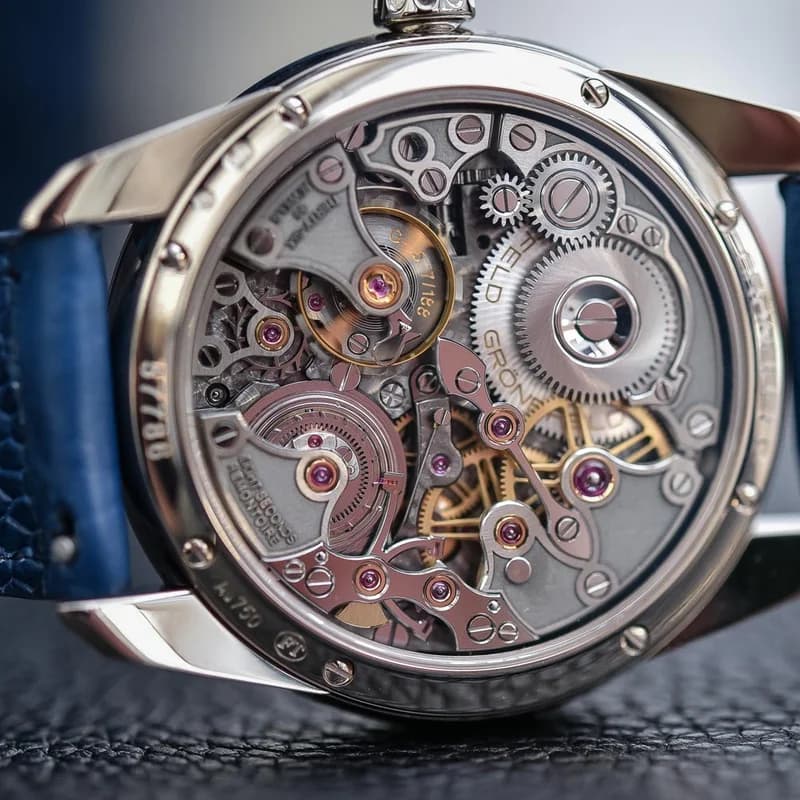
The mainspring's torque curve is a fundamental problem in mechanical watchmaking. The slipping mainspring addresses it partially, but even in the usable middle range of the spring, torque still varies. For most watches, this variation is small enough that it does not matter. For watchmakers obsessed with chronometric precision, it is unacceptable.
How a Remontoire Works
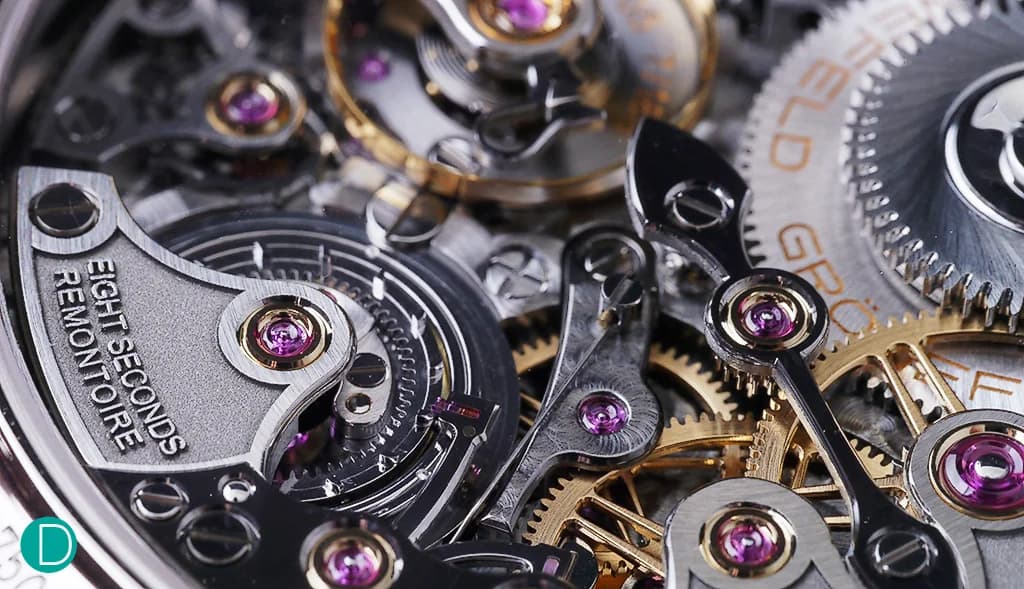
A remontoire solves this completely. It is an intermediary spring, much smaller than the mainspring, positioned between the barrel and the escapement. The mainspring periodically rewinds this small spring at fixed intervals (usually every one to eight seconds), and the small spring is the one that actually delivers energy to the escapement. Because the remontoire spring is rewound before it can unwind very far, the force it delivers to the escapement is essentially constant. The escapement never knows whether the mainspring is fully wound or nearly depleted.
Journe's Insight
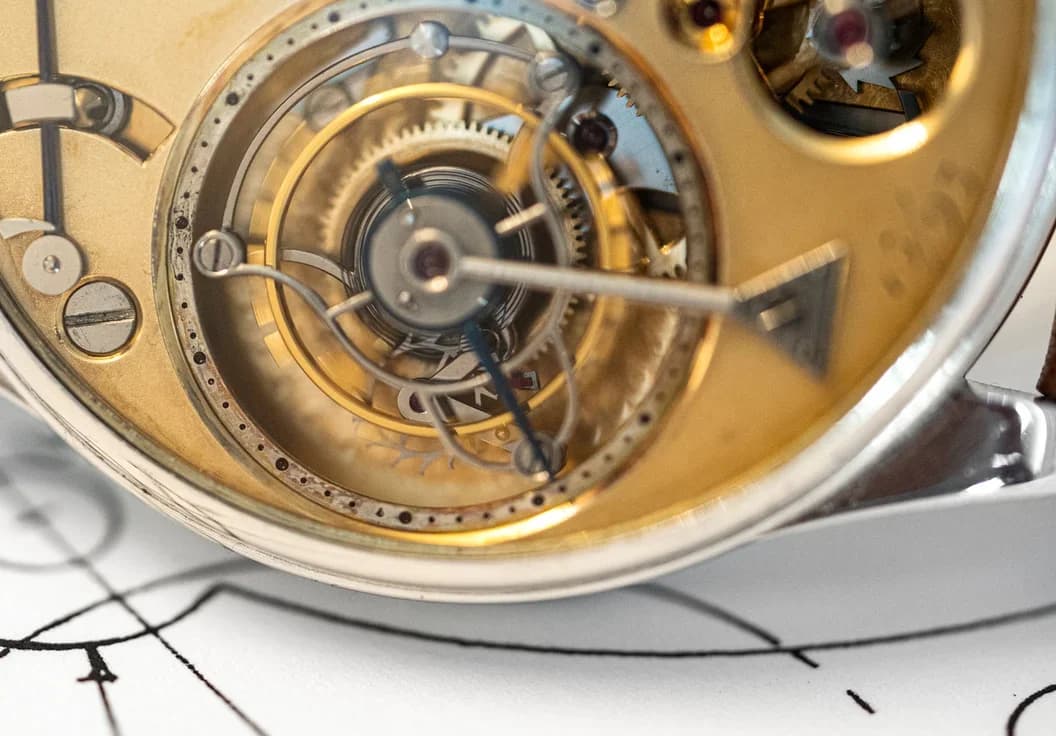
F.P. Journe introduced the remontoire to wristwatches with his very first creation, the Tourbillon Souverain in 1999. His logic was elegant. A tourbillon is supposed to average out positional errors by rotating the escapement through all positions. But if the force driving the escapement varies with mainspring tension, the tourbillon cannot do its job properly because the amplitude changes. The averaging only works if the energy input is constant. So Journe added a remontoire to guarantee constant force, which allows the tourbillon to actually deliver on its theoretical promise. It was the insight of an engineer, not a decorator.
The Gronefeld 1941
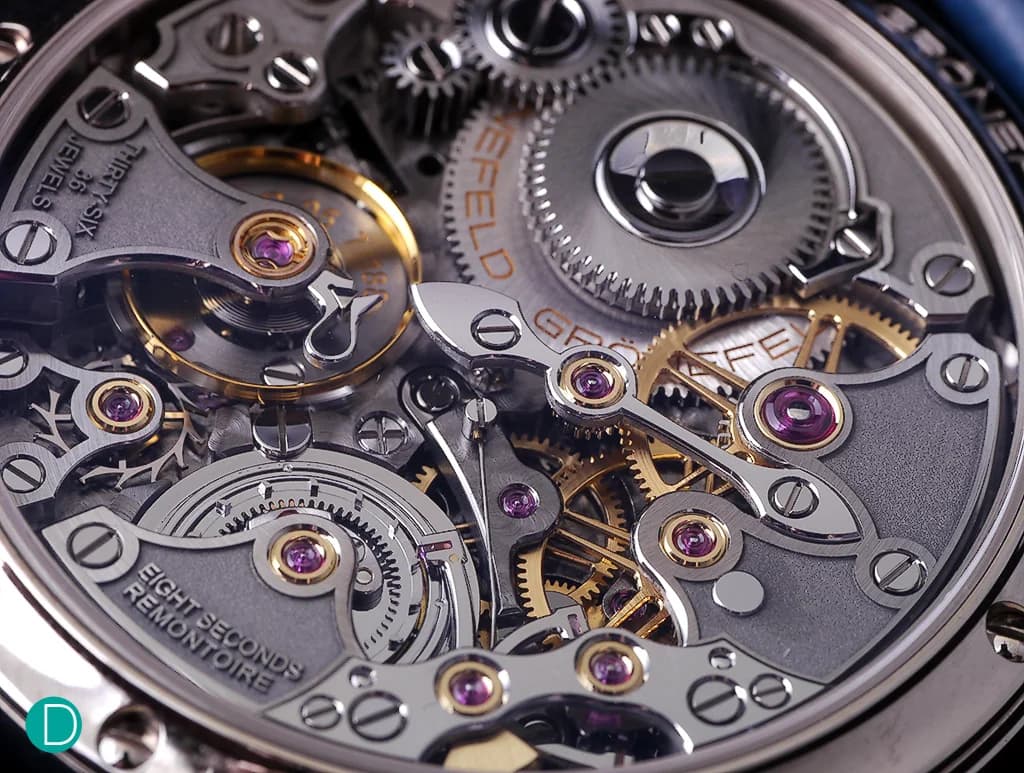
The Gronefeld brothers, Bart and Tim, in the Netherlands built the 1941 Remontoire with an eight-second constant force cycle. Every eight seconds, the mainspring rewinds the tiny remontoire spring, and that spring delivers perfectly consistent energy to the escapement for the next eight seconds. Most remontoire systems use a one-second cycle, but the Gronefelds chose eight seconds because it reduces the stress on the mechanism and allows for a more elegant visual indicator. You can see the small seconds hand advance in tiny, perfectly regular steps. It is mesmerizing.
Measurable Results
The 1941 Remontoire won the Grand Prix d'Horlogerie de Geneve (GPHG) in 2016 for Best Men's Watch. It is a significant piece because it demonstrates that constant force is not just a theoretical improvement. You can measure the difference. A movement with a remontoire maintains more consistent amplitude across the entire power reserve, which translates directly to more consistent timekeeping.
Elegant Physics
Constant force mechanisms are rare because they add substantial complexity and cost to a movement. They require additional wheels, springs, and locking mechanisms that must be precisely calibrated. But for watchmakers who believe that mechanical precision still matters in a world of atomic clocks and GPS, the remontoire is one of the most elegant solutions ever devised. It does not fight the physics of the mainspring. It works around them.