
Incredible MovementsLesson 2 of 10 · 3 min read
A. Lange & Sohne: The Double Assembly
Why Glashutte's finest builds every movement twice
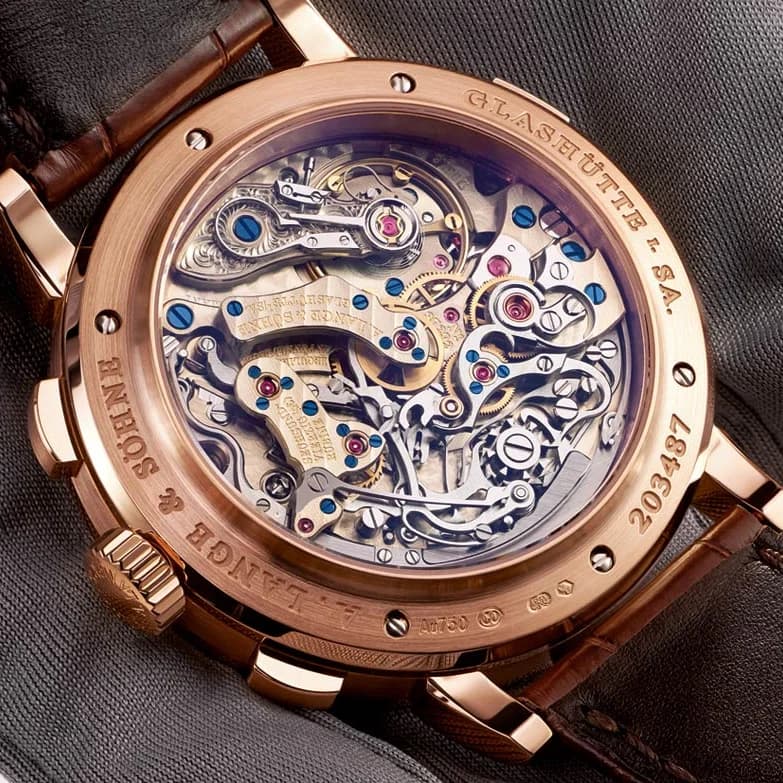
In Glashutte, a small town in Saxony that exists because of watchmaking, Lange assembles every single movement twice. Not just the complicated ones. Every one. The first assembly is functional. The watchmaker puts every component together, adjusts the movement, tests it for accuracy. Then they take the entire thing apart. Every wheel, every spring, every screw. They clean every component, apply the final decorative finishing, and assemble it a second time.
The Process
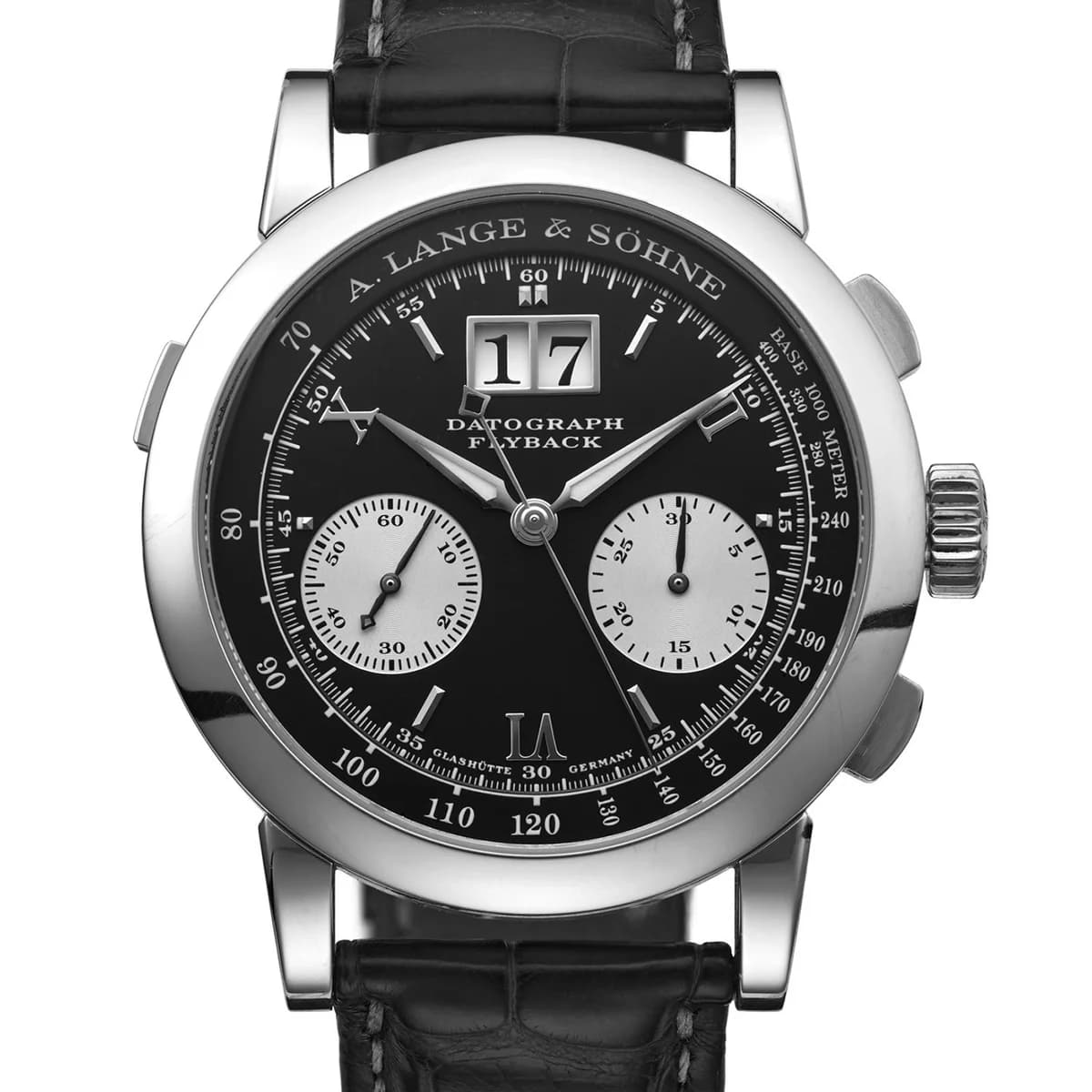
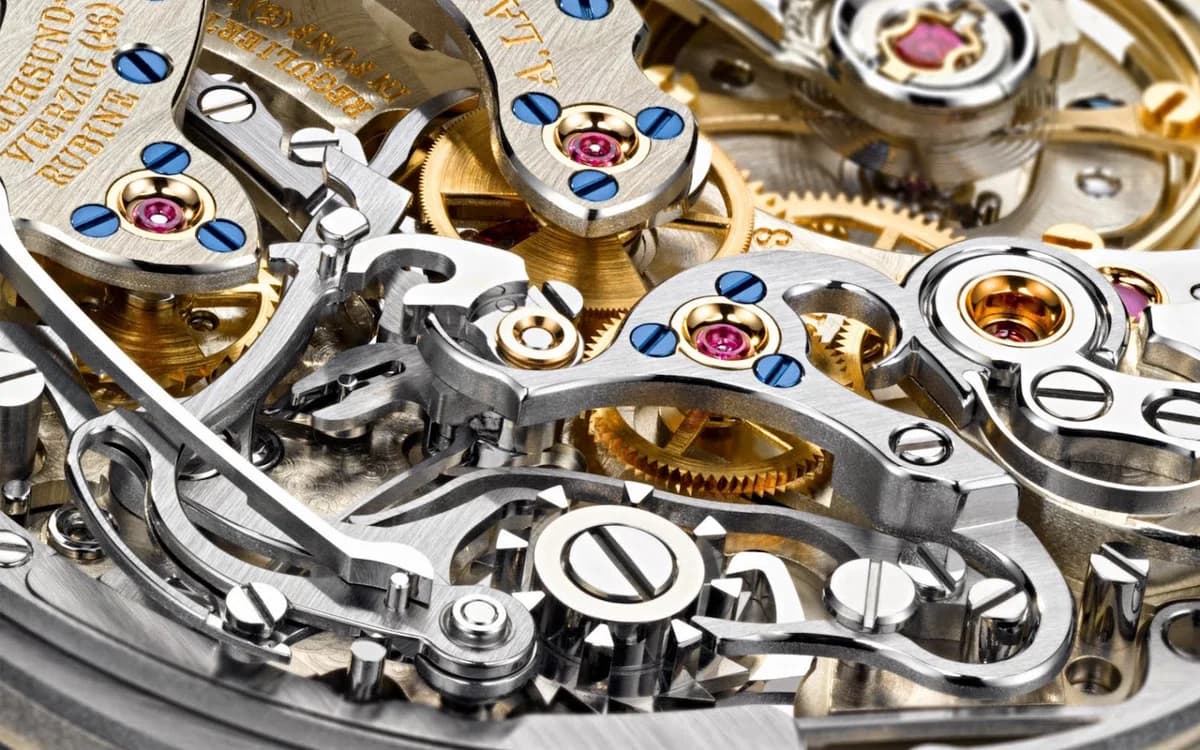
The L951.6 in the Datograph is 451 parts. A watchmaker assembles all 451 parts, gets the movement running within spec, disassembles all 451 parts, and starts again from zero. That second assembly is where the finishing happens: untreated German silver plates (not rhodium-plated like most Swiss brands, so the surface develops a subtle patina over decades), hand-engraved balance cocks (each one unique because no two hands engrave identically), heat-blued screws, and gold chatons holding the jewels. The flat surfaces get Glashutte ribbing. Every edge gets hand-chamfered and polished until it catches light like a mirror.
Why Double Assembly
Why do it this way? Because you cannot apply the final level of surface finishing to a fully assembled movement without risking damage to adjacent components. And you cannot know if the movement runs within spec until you assemble it. So you do both. It is the watchmaking equivalent of building a house, verifying the structure is sound, tearing it down, painting every board individually, and rebuilding it.
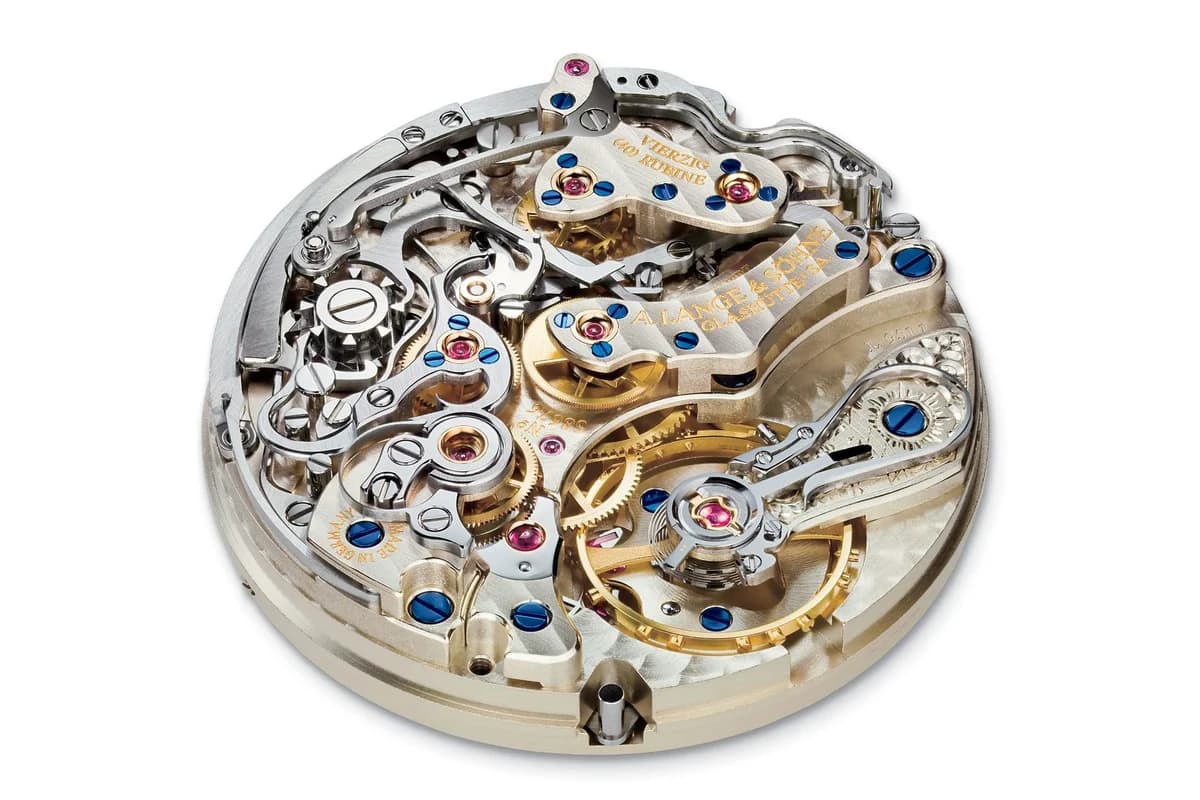
Nobody else does this at scale. There are independent watchmakers who hand-finish parts before assembly, but they are building 10 or 20 watches a year. Lange produces thousands. Every single one goes through this double assembly process. Every single one has a hand-engraved balance cock that looks different from every other one that came before it.
The L951.6 Caliber
The L951.6 itself is a manually wound column-wheel chronograph with a flyback function and jumping minute counter. It beats at 18,000 bph (2.5 Hz), which gives it that deliberate, slow tick that you can actually hear. The power reserve is 60 hours from a single barrel. The balance uses a free-sprung system with six adjustable poising weights and a swan-neck fine adjustment regulator.
A Philosophy of Work
I find it compelling because it is a philosophy, not just a technique. The double assembly is Lange saying that the finished appearance of a movement is as important as its mechanical function, and they are willing to do twice the work to achieve both. The instinct is always to ship the first version and move on. Lange ships the second version. Every time.