
The FundamentalsLesson 1 of 10 · 8 min read
The Architecture of a Mechanical Watch
Five systems, 250 years of engineering, zero software updates
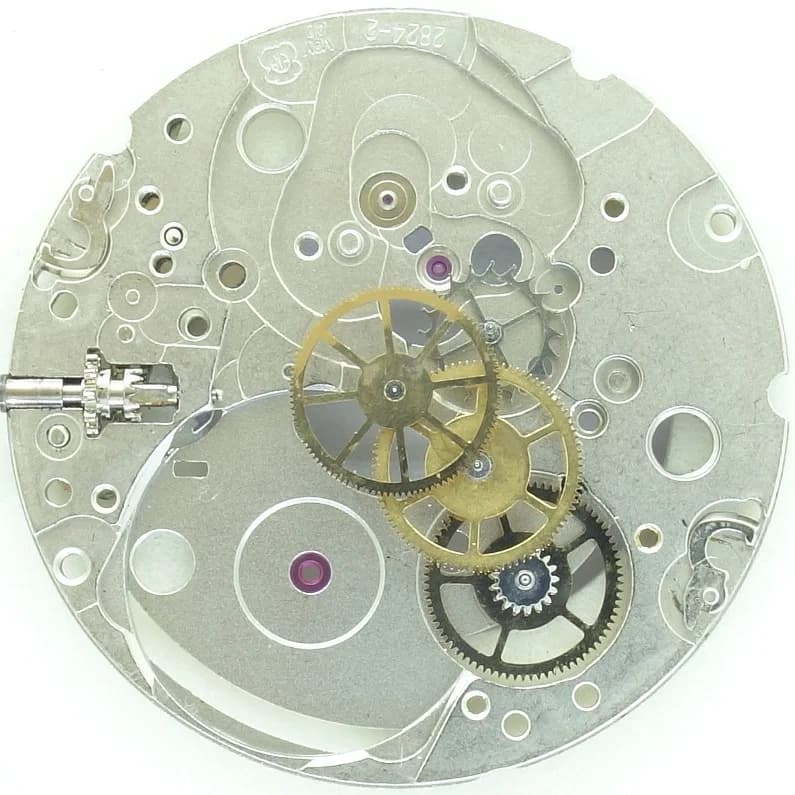
I build and manage technology systems for a living. Servers, networks, databases, APIs, thousands of moving parts that have to coordinate in real time. When I look inside a mechanical watch, I see the same thing. Except instead of code and silicon, it is steel and brass, and the architecture was designed 300 years before the first computer existed.
A mechanical watch is a machine that does one thing: it stores energy, releases it in precisely controlled increments, and uses that energy to move hands around a dial. That is it. No battery, no circuit board, no software updates. Just physics and craftsmanship. And somehow, the best ones lose less than two seconds a day.
Every mechanical watch, from a Seiko 5 to a Philippe Dufour Simplicity, uses the same five systems. The execution is different. The materials are different. The finishing is in a different universe. But the fundamental architecture has not changed in over 250 years.
The Mainspring
Everything starts with the mainspring. This is a long, thin strip of special steel coiled tightly inside a cylindrical drum called the barrel. When you wind a manual watch by turning the crown, you are coiling this spring tighter. When you wear an automatic watch and move your wrist, a weighted rotor spins and winds it for you. Either way, the mainspring is the battery. It stores mechanical energy as tension.
As the mainspring unwinds, it pushes on the barrel wall, and the barrel rotates. That rotation is what drives everything else. Here is the problem though. A fully wound mainspring delivers more force than one that is half unwound. That means if you did nothing to regulate it, the watch would run fast right after winding and slow down as the spring lost tension. This is called the torque curve, and solving it is one of the oldest challenges in watchmaking.
The standard solution is a slipping mainspring. The outer end of the spring is not rigidly attached to the barrel wall. Instead, it has a small bridle that allows it to slip once the spring is wound past a certain point. This caps the maximum torque and gives you a flatter, more predictable power curve in the middle range where the watch actually runs. The first and last turns of the mainspring are essentially thrown away. Only the middle portion delivers useful, consistent energy.
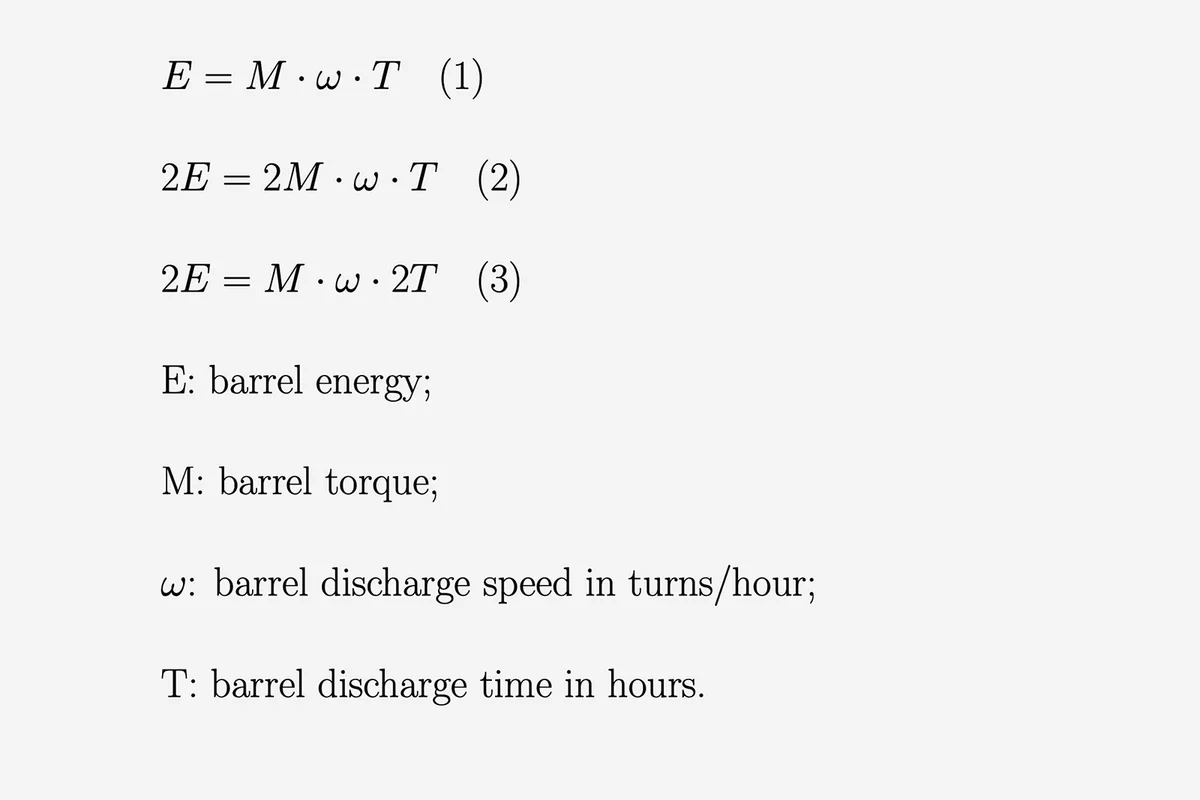
Modern mainsprings are made from alloys like Nivaflex, which resist fatigue and corrosion far better than the carbon steel springs of a century ago. A typical mainspring in a three-hand watch might be 25 to 35 centimeters long, about half a millimeter wide, and deliver 40 to 80 hours of power reserve depending on the caliber.
The Gear Train
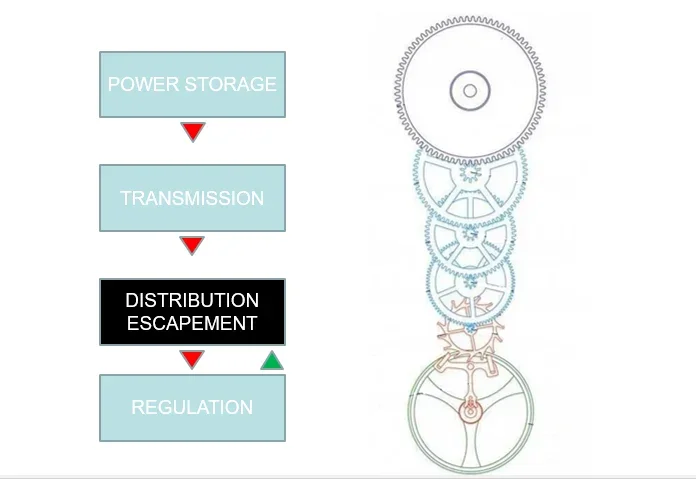
The barrel rotates once every six to eight hours. The seconds hand needs to rotate once every 60 seconds. The gear train is the system of wheels and pinions that bridges that gap. It is a series of progressively smaller gears, each spinning faster than the last, stepping the rotation up from barrel speed to seconds-hand speed.
The typical layout is four wheels. The center wheel sits on the same axis as the minute hand and rotates once per hour. The third wheel is an intermediate step. The fourth wheel sits on the same axis as the seconds hand and rotates once per minute. And then the escape wheel, which is the last wheel in the chain before energy reaches the escapement.
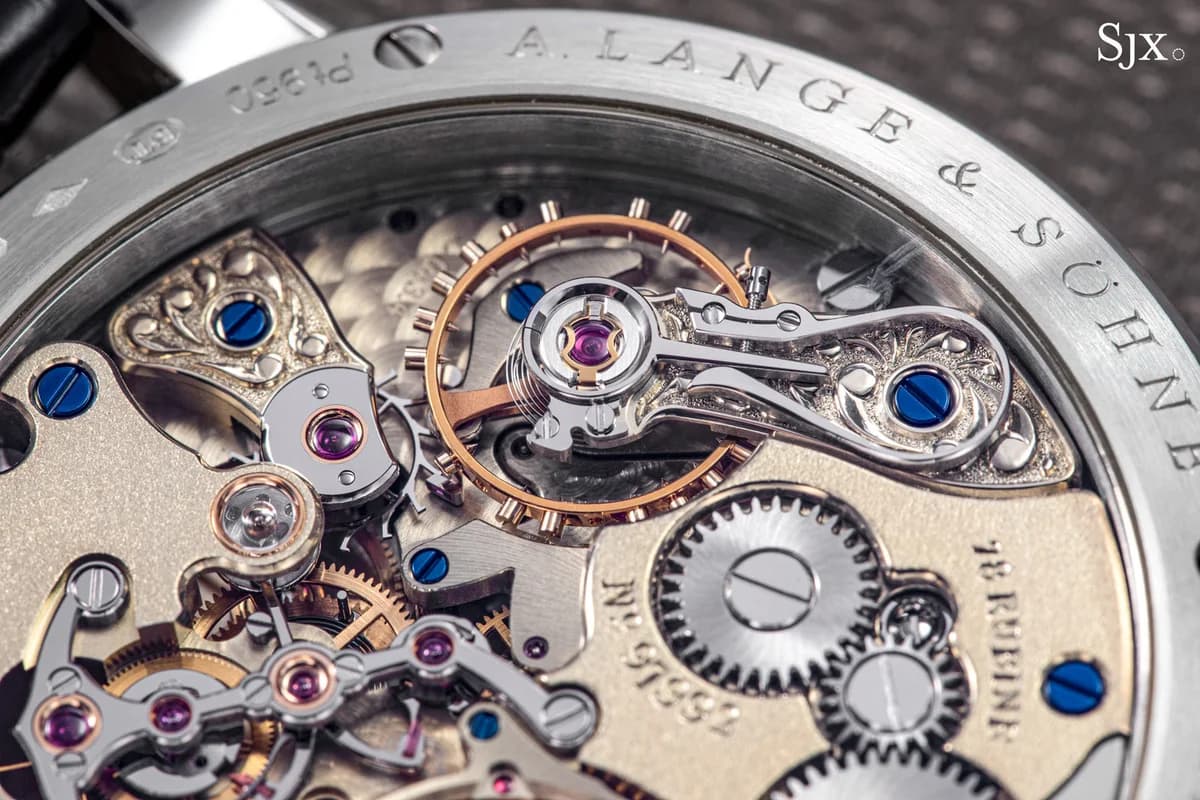
What makes this interesting from an engineering perspective is the tolerances. These wheels are typically 0.15 to 0.2 millimeters thick. The teeth are cut to micrometer precision. The pivots that the wheels rotate on are thinner than a human hair, running in synthetic ruby jewels that reduce friction to nearly zero. Those little red dots you see on a movement are functional. They are synthetic corundum (aluminum oxide, the same material as sapphire), and they have been used as bearings since the early 1700s because they are incredibly hard, smooth, and do not deform under pressure the way metal bushings would.
The jewel count you see in specifications, like "25 jewels," tells you how many of these bearing surfaces the movement uses. A basic automatic needs around 21 to 25. A chronograph might need 30 to 40. After about 30, additional jewels usually serve marginal functions.
The Escapement
If you only understand one thing about how a mechanical watch works, make it the escapement. This is the component that transforms the continuous unwinding of the mainspring into the discrete, measured ticking that we associate with a mechanical watch. Without it, the mainspring would just spin the hands around uncontrollably until the spring ran down.
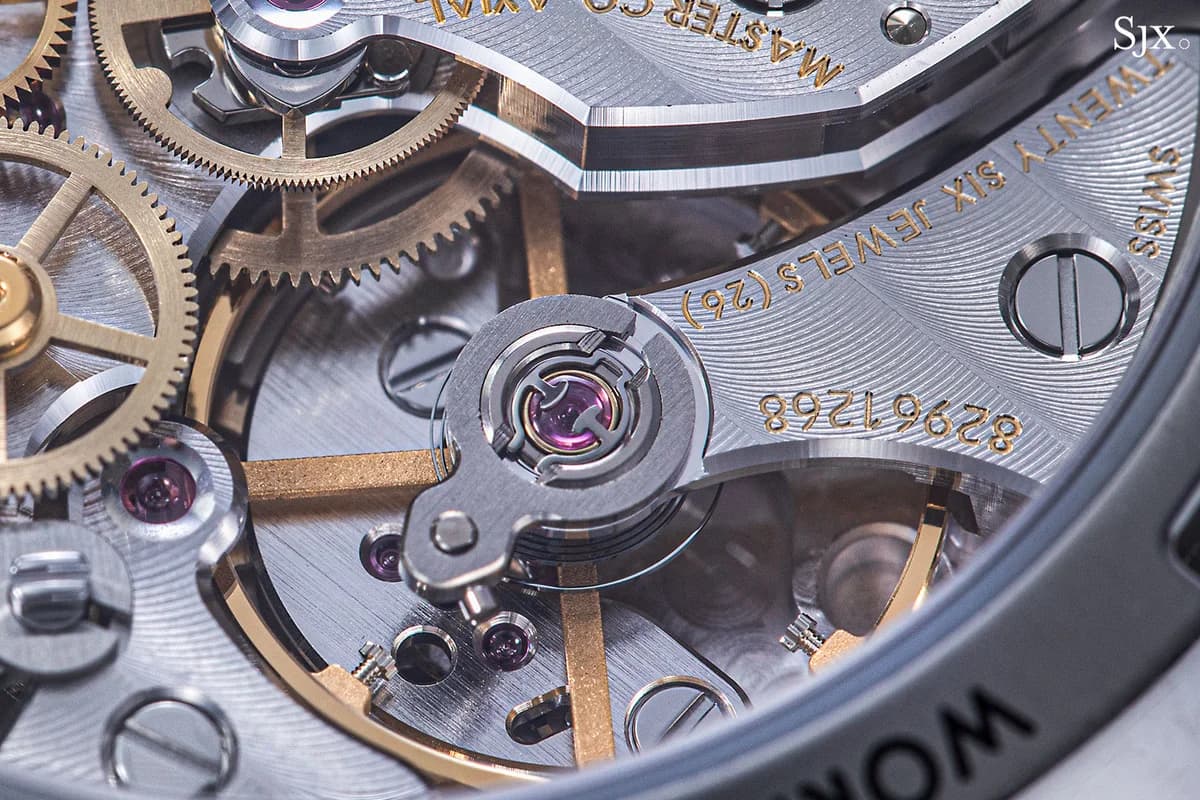
The Swiss lever escapement has been the industry standard for over two centuries. The escape wheel is the last gear in the train, with specially shaped teeth, usually 15 or 20 of them. A lever called the pallet fork sits between the escape wheel and the balance wheel. The lever has two jewels at its tips, called pallet stones, that alternately lock and release the escape wheel teeth.
When the balance wheel swings in one direction, a pin on it (the impulse pin) hits the pallet fork and pushes it to one side. This releases one tooth of the escape wheel, which advances slightly and gives the balance wheel a tiny push of energy before the next tooth locks against the other pallet stone. The balance swings back, hits the fork the other way, releases the next tooth, gets another push. Back and forth. That is the tick-tock.
The frequency of this back-and-forth is measured in beats per hour or hertz. 18,000 bph is 2.5 Hz, or 5 ticks per second. This is what Lange uses in the Datograph. 28,800 bph is 4 Hz, 8 ticks per second, the most common modern frequency. 36,000 bph is 5 Hz, used by Zenith in the El Primero and some Grand Seiko Hi-Beat movements. Higher frequency generally means better timekeeping because the balance wheel has more momentum and is harder to disturb. But higher frequency also means more friction, more wear, and typically a shorter power reserve.
The Balance Wheel
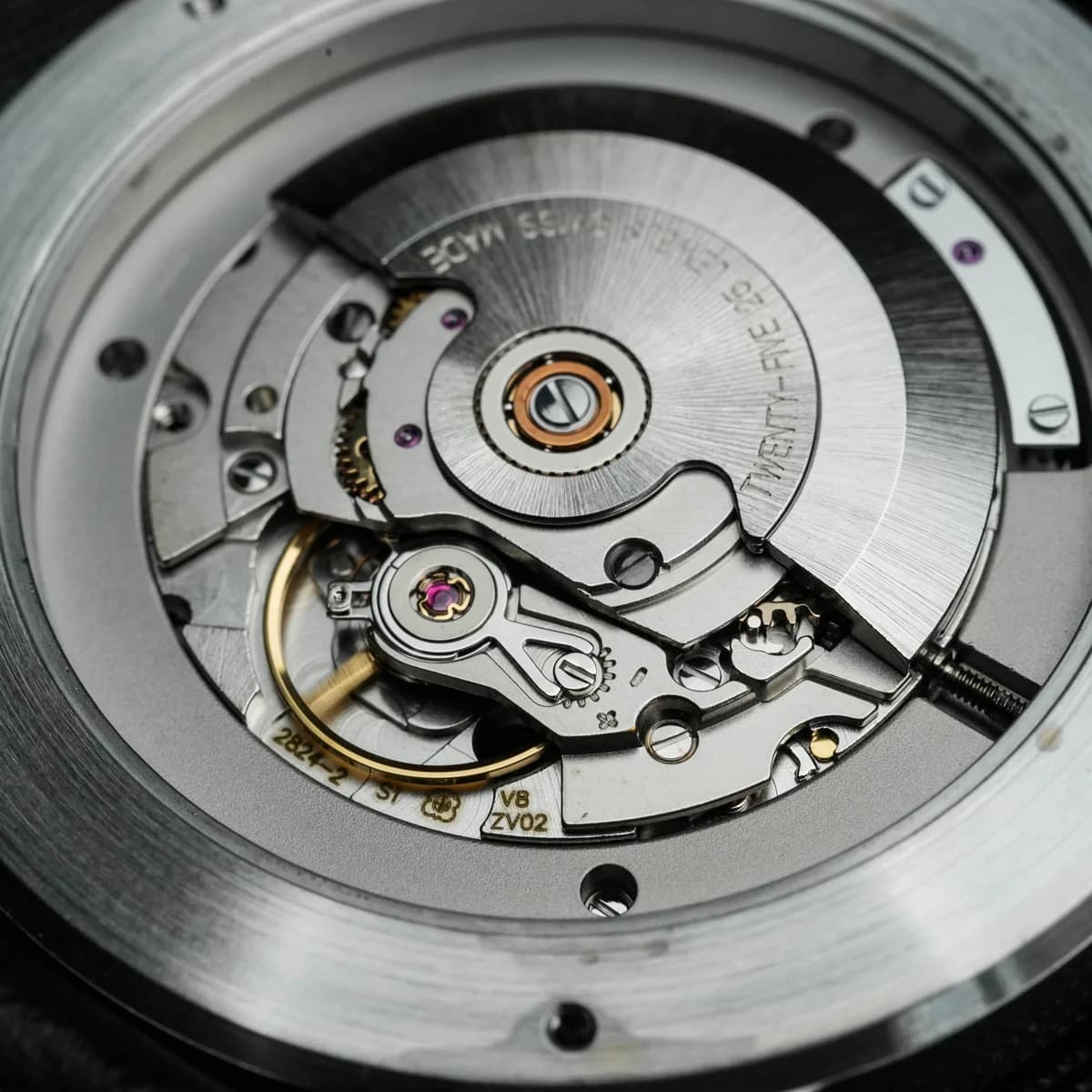
The balance wheel is the heart of the watch. It is a small weighted wheel, usually about 8 to 10 millimeters in diameter, that oscillates back and forth at a precise frequency. Attached to it is the hairspring, an impossibly thin coiled spring (sometimes 0.02 millimeters thick) that provides the restoring force. The balance swings out, the hairspring pulls it back. That oscillation is what divides time into equal intervals.
Isochronism is everything. An isochronous oscillator swings at the same frequency regardless of how far it swings. In the real world, no balance wheel is perfectly isochronous. When the mainspring is full, the balance swings through a wider arc (higher amplitude, maybe 300 degrees). When the spring is nearly unwound, the amplitude drops to maybe 200 degrees. If the frequency changes with amplitude, the watch gains or loses time depending on how wound it is.
Abraham-Louis Breguet figured out in the late 1700s that adding a raised terminal curve to the outer end of the hairspring (called a Breguet overcoil) allows the spring to breathe concentrically, which dramatically improves isochronism. Many high-end movements still use this today. Philippe Dufour uses a Breguet overcoil in the Simplicity. Lange uses it in many of their calibers.
Materials and Regulation
Modern balance wheels are typically made from glucydur, a beryllium-copper alloy that is non-magnetic and resistant to temperature changes. Some manufacturers, like Rolex and Omega, have moved to silicon or nickel-phosphorus hairsprings, which are paramagnetic and do not need lubrication. Patek Philippe developed the Spiromax silicon hairspring with a specially designed terminal curve. These material innovations are some of the biggest advances in the last 20 years.
Free-sprung versus regulated is another distinction. A regulated balance has a small lever that effectively shortens or lengthens the active portion of the hairspring to adjust the rate. A free-sprung balance has no regulator. Instead, the watchmaker adjusts the rate by moving tiny weights on the balance wheel rim, which changes the moment of inertia. Free-sprung is harder to adjust but more stable once set, because nothing touches the hairspring that could shift position from a shock. Rolex, Omega, Patek, and Lange all use free-sprung balances.
Automatic Winding
An automatic watch adds a weighted rotor on the back of the movement that spins when you move your wrist. The rotor connects to the mainspring barrel through reduction gears and a reversing mechanism, so the mainspring winds regardless of which direction the rotor spins. The rotor is typically a half-circle of tungsten (19.3 g/cm3, nearly as dense as gold), mounted on a ball bearing. Some manufacturers use mini-rotors that sit flush within the movement for thinner cases, though smaller rotors have less winding efficiency.
The reversing mechanism varies by manufacturer. Rolex uses their Perpetual rotor with a red wheel reverser. IWC uses the Pellaton winding system with paired pawls and a cam. Seiko developed the Magic Lever, a brilliantly simple two-finger mechanism that is inexpensive to produce and remarkably efficient. Every approach solves the same problem: converting bidirectional rotor spin into unidirectional mainspring winding.