
Incredible MovementsLesson 3 of 10 · 3 min read
F.P. Journe: Acoustic Resonance
Two balance wheels, one shared plate, and 350 years of theory finally proven on the wrist
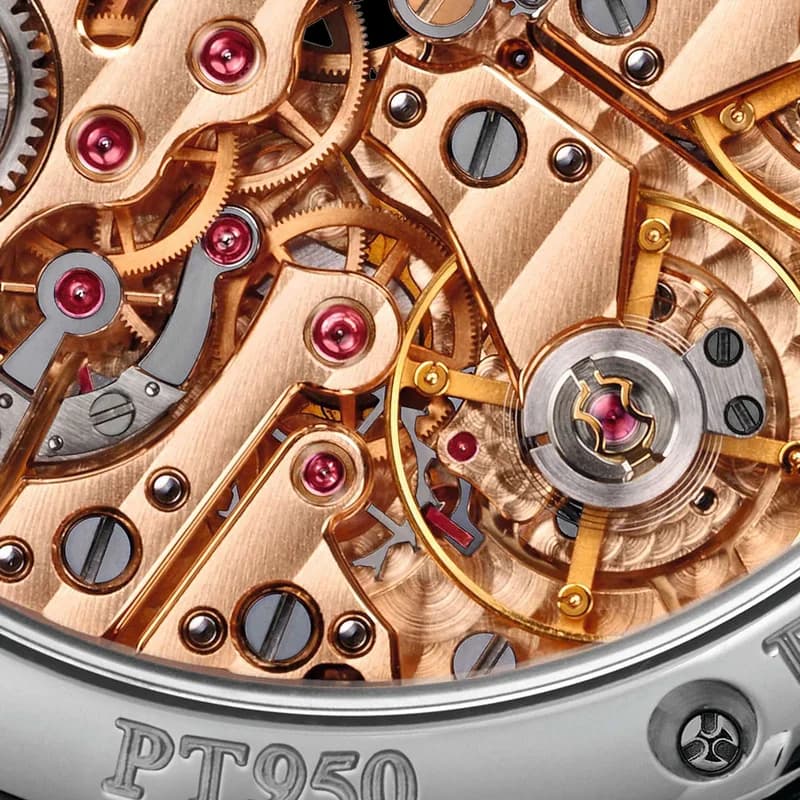
In 1665, Christiaan Huygens noticed something strange. Two pendulum clocks mounted on the same wall would eventually synchronize their swings, even if they started at different times. The vibrations traveling through the shared wall coupled the two oscillators together. He called it sympathetic resonance. Abraham-Louis Breguet and Antide Janvier experimented with resonance in clocks in the 18th and 19th centuries. Nobody had ever done it in a wristwatch.
The Resonance Principle
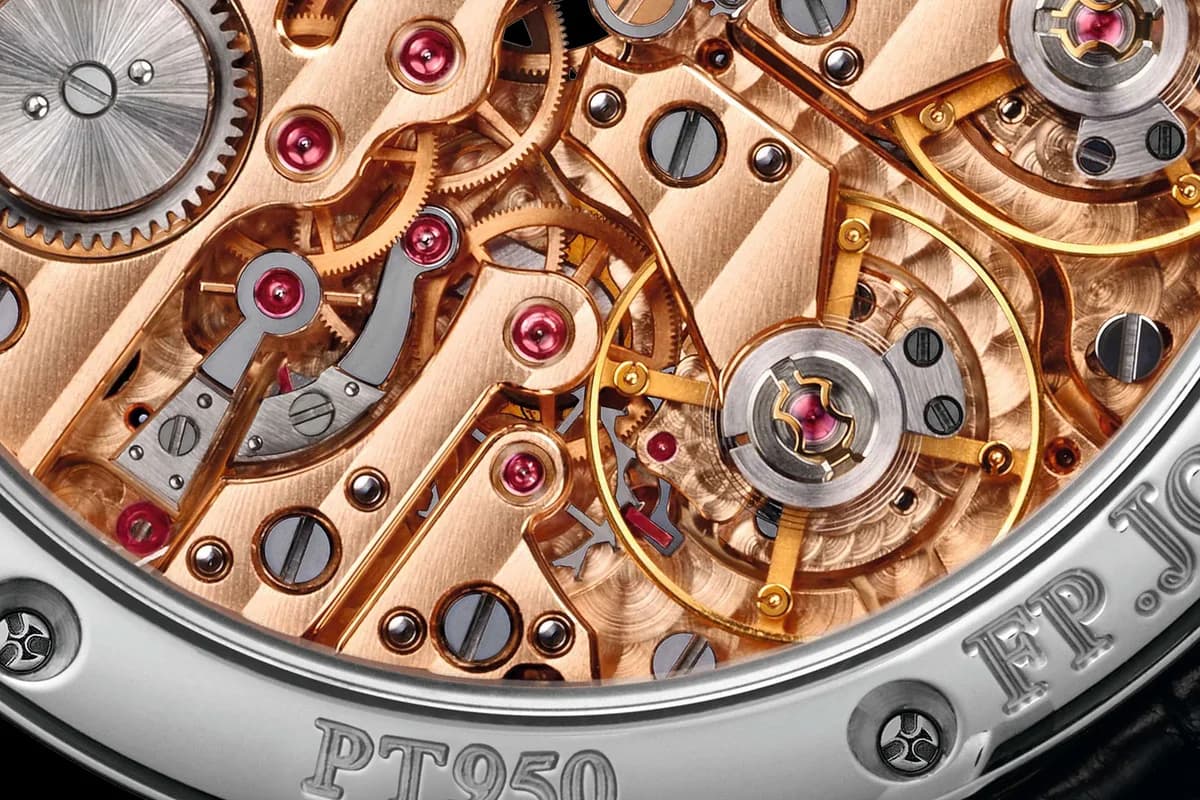
Francois-Paul Journe did it. The Chronometre a Resonance, caliber 1499.3, has two complete gear trains, two escapements, and two balance wheels, built on a single 18k rose gold mainplate. The two balance wheels are positioned close enough that acoustic energy couples between them through the shared plate. Each balance alternately acts as exciter and resonator. When one speeds up, the other slows down by the same amount. The errors cancel.
Self-Correcting Motion
What makes this particularly clever for a wristwatch is how it handles wrist motion. If you move your arm suddenly, one balance wheel gets pushed faster and the other gets pushed slower. The resonance coupling pulls them back into sync. The disturbance is self-correcting. It is a mechanical system that actively compensates for the most unpredictable variable in wristwatch timekeeping: the person wearing it.
Movement Specifications
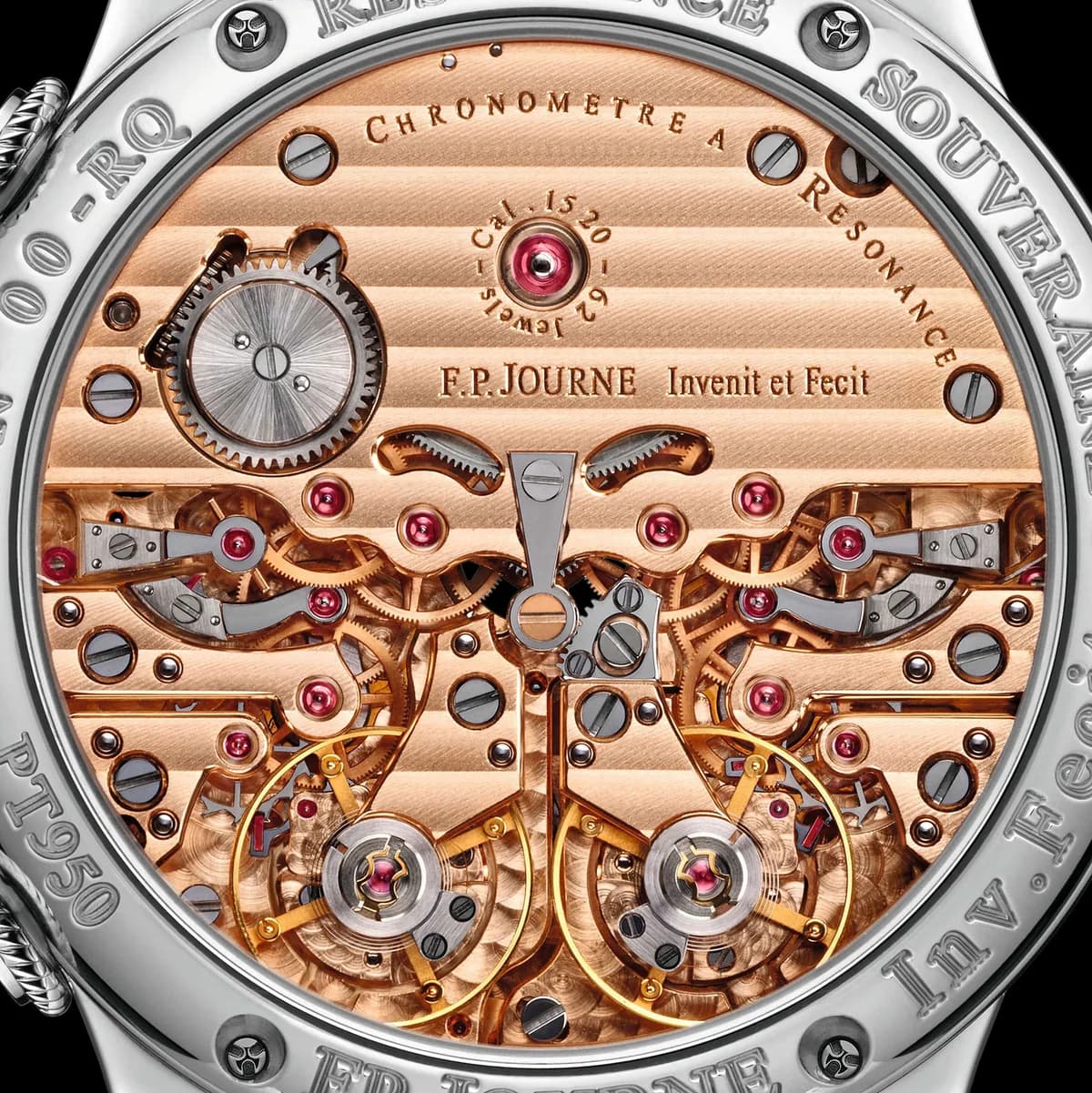
The movement runs at 21,600 vph (3 Hz), uses 36 jewels, and features a straight-line lever escapement with a monometallic four-arm balance and self-compensating free-sprung flat balance spring. The twin gear trains are completely independent. Each has its own barrel, its own train, its own escapement. The only connection between them is acoustic, through the shared plate.
Gold as Pragmatism
Journe builds his movements in 18k rose gold rather than brass or German silver. Not because it is expensive, but because gold does not tarnish. A brass movement will oxidize over decades and eventually need replating. Gold will look the same in 100 years as it does today. The pragmatic reason happens to also be the beautiful one.
Engineering the Impossible
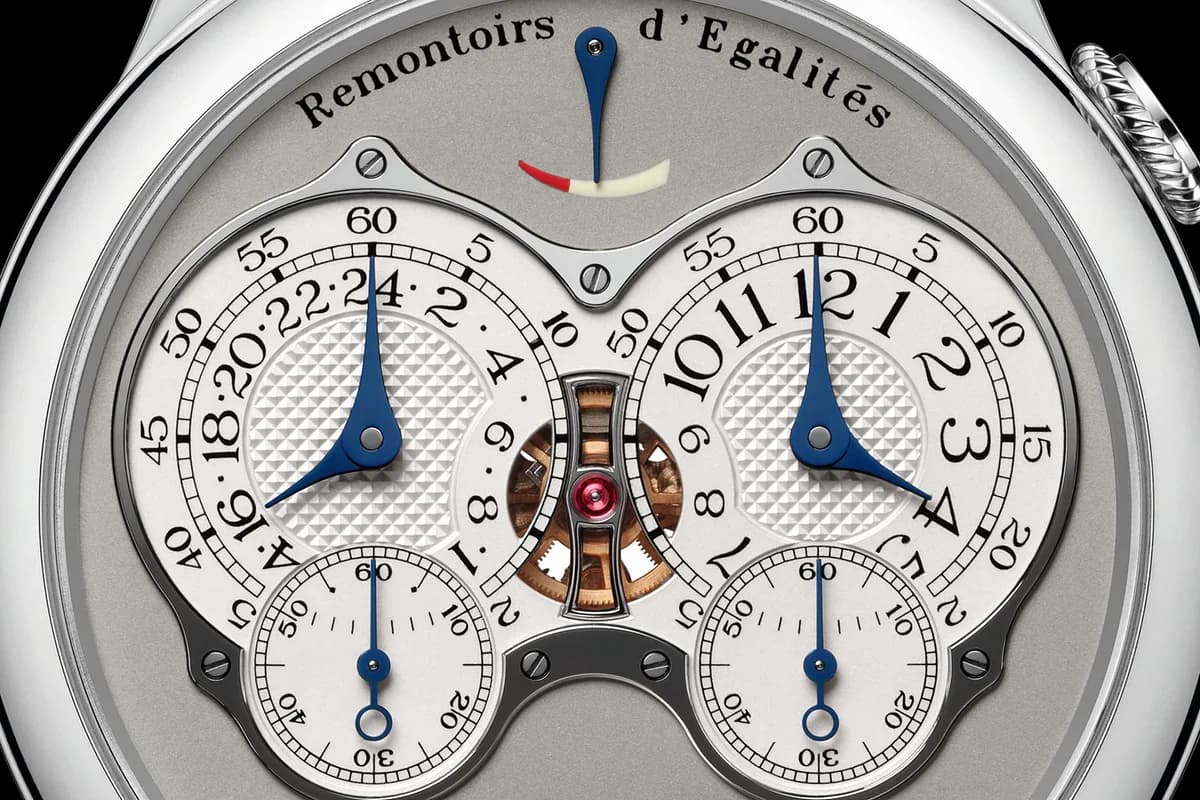
The Resonance is one of those watches where the more you understand about watchmaking, the more impossible it seems. Getting two balance wheels to couple acoustically through a plate is not just difficult. It requires the plate material, the distance between the balances, the oscillation frequency, and the amplitude to all be precisely calibrated. Change one variable and the resonance does not happen. Journe got it to work. Consistently. In a production wristwatch. That is extraordinary.