
Kurono Tokyo
Anniversary Reiwa 2024
Limited Edition
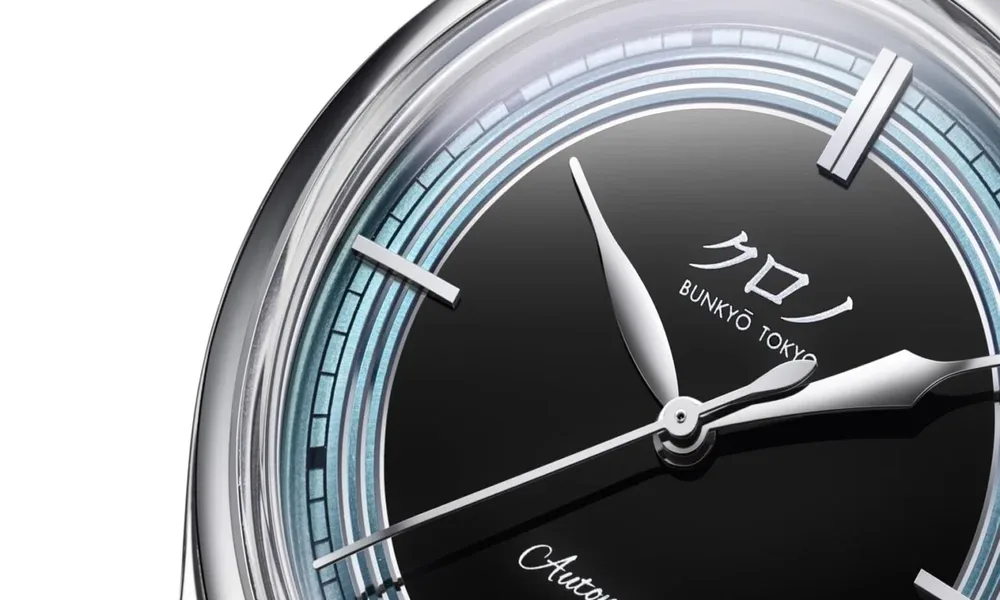
Most independent watchmakers follow the same path. They apprentice under a master, spend years at a bench in Switzerland or Germany, earn their credentials, and eventually strike out on their own. Hajime Asaoka did none of that. He was born in 1965 in Kanagawa Prefecture and studied fine arts at Tokyo University of the Arts, graduating in 1990. He spent years running a design consultancy. At 40 he picked up George Daniels' textbook on watchmaking, bought machinery on eBay, and started teaching himself. Within seven months he had built a tourbillon prototype. By 2009 he completed Japan's first domestically produced in-house wristwatch tourbillon movement. In 2015 the AHCI, the Academie horlogere des createurs independants, admitted him as the first Japanese member. That is the same academy that counts names like Francois-Paul Journe, Kari Voutilainen, and Vianney Halter. Asaoka earned his seat by doing what the establishment said could not be done from a workshop in Tokyo. His atelier is on the ground floor of a residential building in Shibuya, minutes from Harajuku. Inside is the exact precision lathe model that George Daniels used, bought on Daniels' recommendation from the book that started everything. He has a CNC machine for bridges and movement plates. He makes his own tools. The balance wheels in his personal pieces are manufactured in-house using stainless steel, paired with Nivarox balance springs. He describes the relationship between those materials as symbiotic. Dial paints are mixed by hand. Fonts are individually created and lettered by him. No measurements are taken for the lacquer layers. Five coats, adjusted purely by feel based on humidity and temperature. This is a man who learned watchmaking from a book and YouTube, then built a workshop that would make any Swiss atelier jealous. His signature innovation in the personal pieces is replacing traditional ruby jewel bearings with precision ball bearings throughout the movement train, including some of the smallest ball bearings ever used in watchmaking. The movement plates and bridges are machined from maillechort, the German silver alloy favored by the finest Swiss and German independents. Every Kurono dial reads Bunkyo Tokyo in small text beneath the Kurono katakana. Bunkyo literally translates as capital of literature. It is the ward where the University of Tokyo anchors an entire neighborhood of intellectual and craft tradition. The publishing and printing industries that grew around the university created generations of precision tradespeople. A master craftsman choosing Bunkyo for his workshop is not incidental. He is placing himself in a centuries-old lineage of people who work with their hands to produce things of cultural value. The inscription is not branding. It is an address. It tells you exactly where the watch was designed.
His personal pieces under the Hajime Asaoka name are among the rarest objects in modern watchmaking. He produces fewer than 20 per year, each one finished entirely by hand. Before Kurono existed, he had completed only 19 watches total over the course of his career. Every single one was made with salvaged vintage movement components, taking months to build. These are watches that collectors wait years to acquire. They are not available through any dealer. You contact Asaoka directly, and if he has time, he builds one for you. His Tsunami serial number 001, a manual-wind with a 15mm balance wheel and Art Deco tuxedo dial, and his first tourbillon, the watch that earned him the AHCI seat, are both in the hands of collectors who understood what they were getting before the rest of the world caught on. Fewer than 50 personal pieces exist in the world.
Then in 2019 he did something unexpected. He launched Kurono Tokyo, initially sold domestically as Chrono Tokyo. The name itself tells you something if you speak Japanese. Chrono becomes kurono when filtered through Japanese phonetics. The katakana on every dial, クロノ, reads ku-ro-no. It is the same word, just spoken the way Tokyo speaks it. When Asaoka took the brand international a year later, he kept the Japanese pronunciation rather than the Western spelling. That choice was deliberate. The watch is Japanese. The name should be too. The idea was radical for an AHCI-level watchmaker. Take the design sensibility that commands six figures, strip the hand-finished movement, use a reliable Japanese automatic caliber, and offer the result at a fraction of what his personal work commands. No dealers. No retail partners. No authorized distributors. Direct sales only through kuronotokyo.com. Every release sells out in minutes, sometimes seconds. The system works through online lotteries. Each release is a small batch, typically 150 to 300 pieces per colorway, announced a few days in advance. The entry window stays open for 48 to 72 hours. Every release since launch has been oversubscribed by 10 to 50 times. This is not a click war where you need fast internet. It is a lottery where the odds are genuinely against you. Winners pay retail directly. The 2023 GMT received finalist status at the Grand Prix d'Horlogerie de Geneve in the Challenge category. The GPHG Challenge category is reserved for accessible watches, and the independent jury selected the GMT 1 from the entire global field at that level. For a direct-to-consumer Japanese independent with no retail network, that validation carries real weight.

The Anniversary Reiwa 2024 is the final edition of the watch that started it all. Reiwa means Beautiful Harmony. It is the name of the current Japanese imperial era, which began in 2019, the same year Kurono launched internationally. The original Reiwa was the brand's fifth anniversary piece. For 2024, Asaoka resurrected the concept one last time and elevated it to Grand Series status, then permanently retired the line. There will not be another Reiwa. The dial complexity made continued production unsustainable.

The original Reiwa launched in 2019 as the brand's second release. Its dial was a warm copper-brown with a black center, a more subdued palette than the 2024 Anniversary. Where the original whispered, the Anniversary shouts. The lapis-green metallic periphery against the deep black mirrored center is a dramatic evolution. The cylindrical dial construction is the same, but the two-tone color scheme on a curved surface is what pushed the rejection rate from manageable to 95%. Asaoka has said the contrast between the green and black on a curved surface created manufacturing problems the original brown never had. The original Reiwa is what proved the concept. The 2024 Anniversary is what killed the line by perfecting it.
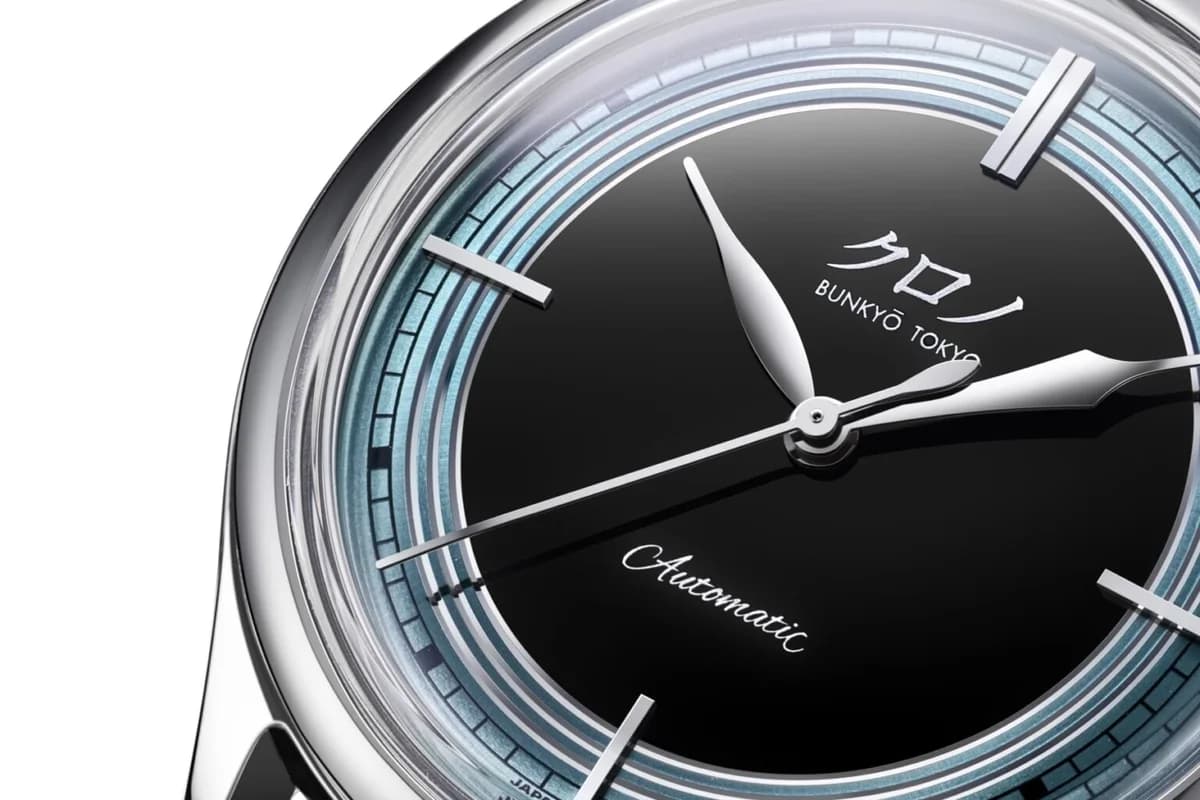
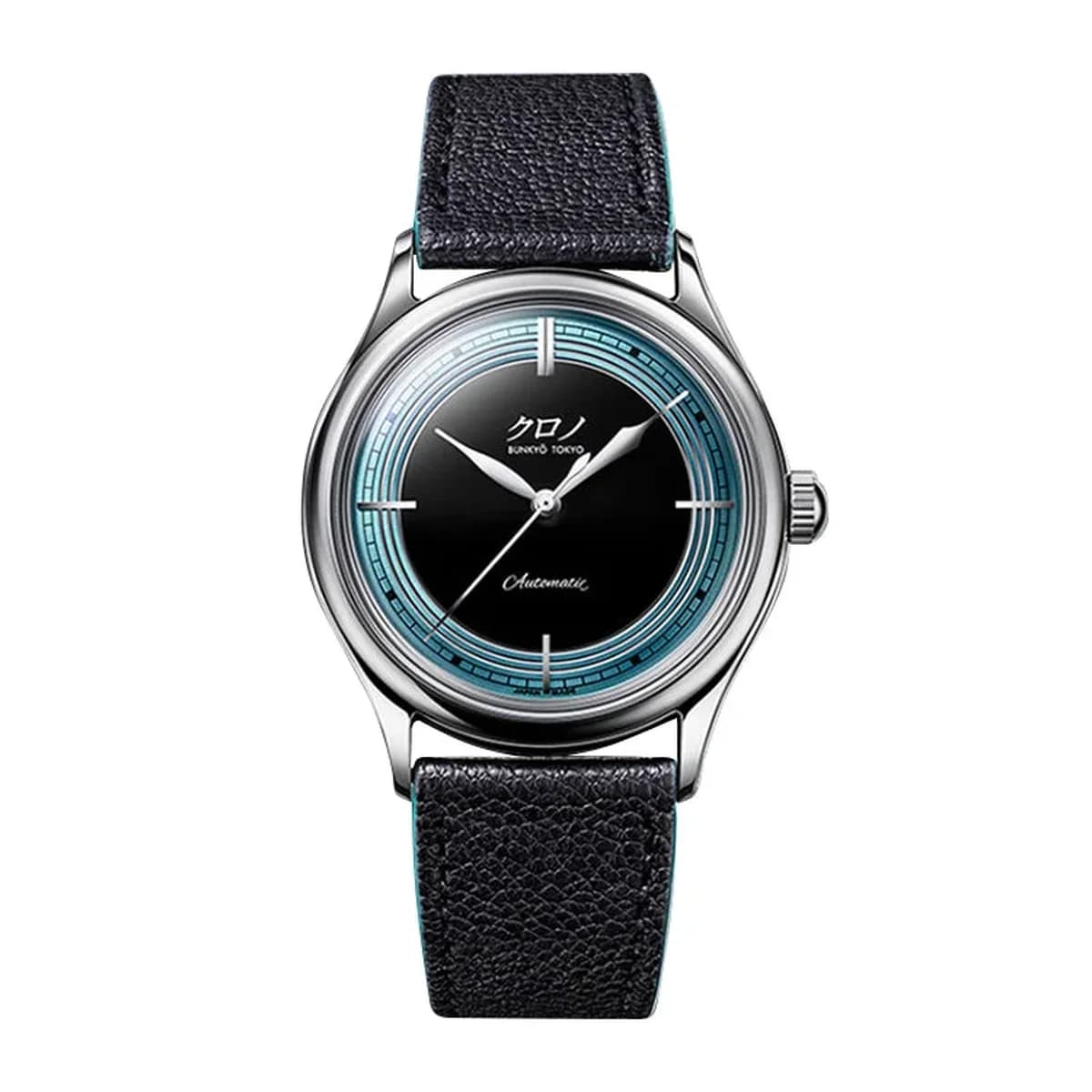
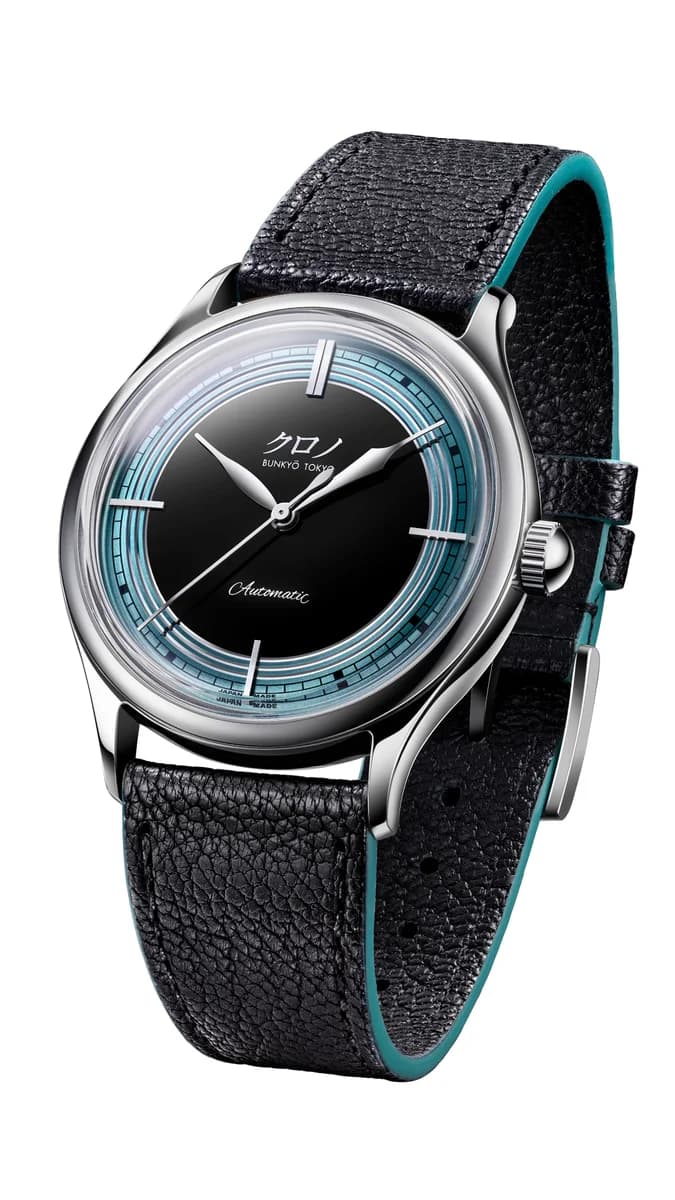
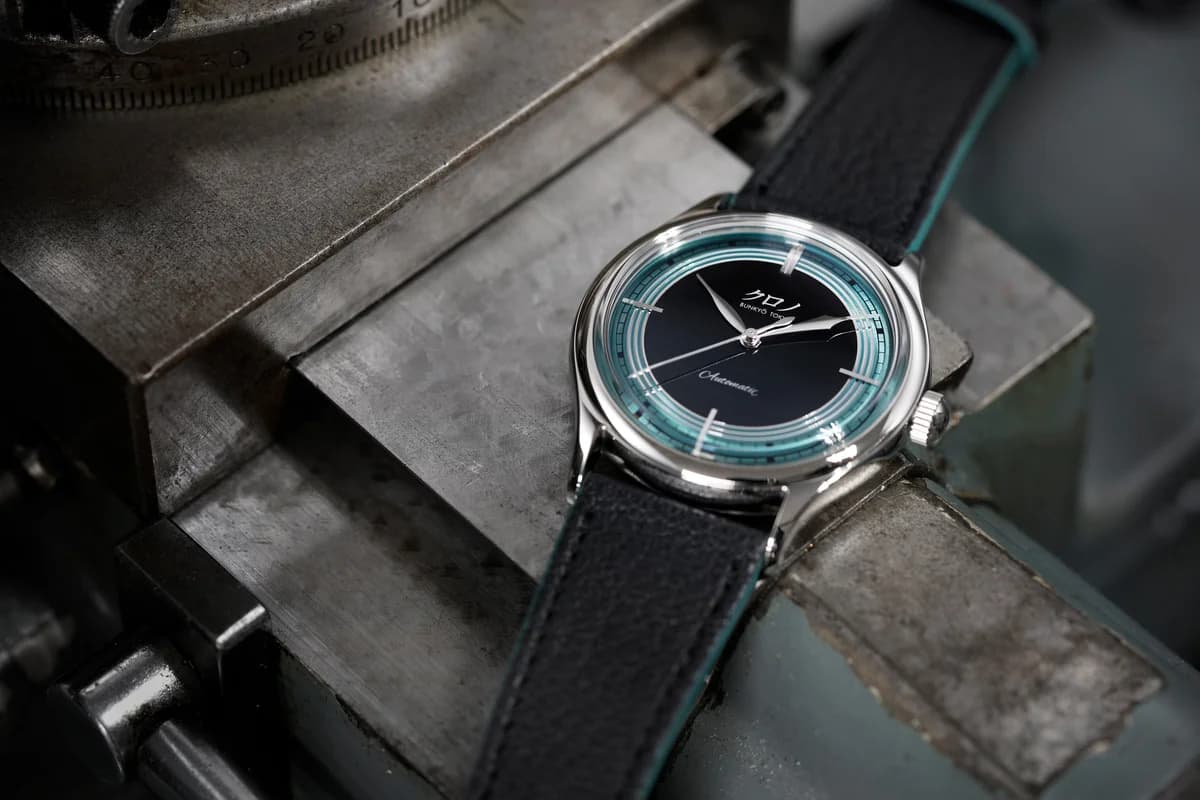
The dial itself is what makes this watch almost impossible to manufacture. It is a single cylindrical plate, cut so that it curves steeply at the edges like the inside of a quiet bowl. The design blends a lapis-green metallic periphery with a deep black mirrored center, inspired by Ruri-Numa in Fukushima. Ruri-Numa is one of the five volcanic lakes in the Goshiki-Numa landscape, and sunlight and weather cause its waters to shift through blues, greens, and teals throughout the year. The lakes formed when Mount Bandai erupted on July 15, 1888, destroying dozens of villages and killing approximately 500 people. The eruption released minerals into the newly formed lakes, particularly allophane, a compound of aluminum and silicic acid. These minerals scatter light as colloidal particles in the water, creating colors that no pigment could reproduce. Goshiki-Numa means Five Colored Ponds. Each lake is a different hue. Ruri-Numa is sometimes called the most beautiful of the five. Ruri means lapis lazuli in Japanese. The pond sits at roughly 800 meters elevation, is 9 meters deep, and does not freeze in winter because warm groundwater feeds it continuously from below. In winter, when every surface around it is white with snow, the deep blue water stays liquid and exposed. The allophane nanoparticles scatter and reflect light differently under overcast skies than under direct sun. Counterintuitively, the colors are more vivid on cloudy days. Diffuse light saturates the blues and greens in a way that direct sunlight washes out. Asaoka wanted to preserve that ephemeral beauty in a watch dial. The two-tone color scheme on a curved surface is where the manufacturing nightmare begins. Since production started in January 2024, only an average of 5 out of every 100 dials have been accepted. A 95% rejection rate. Asaoka has said publicly that this is by far the most challenging watch Kurono has ever produced, and the rejection rate is what ultimately killed the Reiwa line.
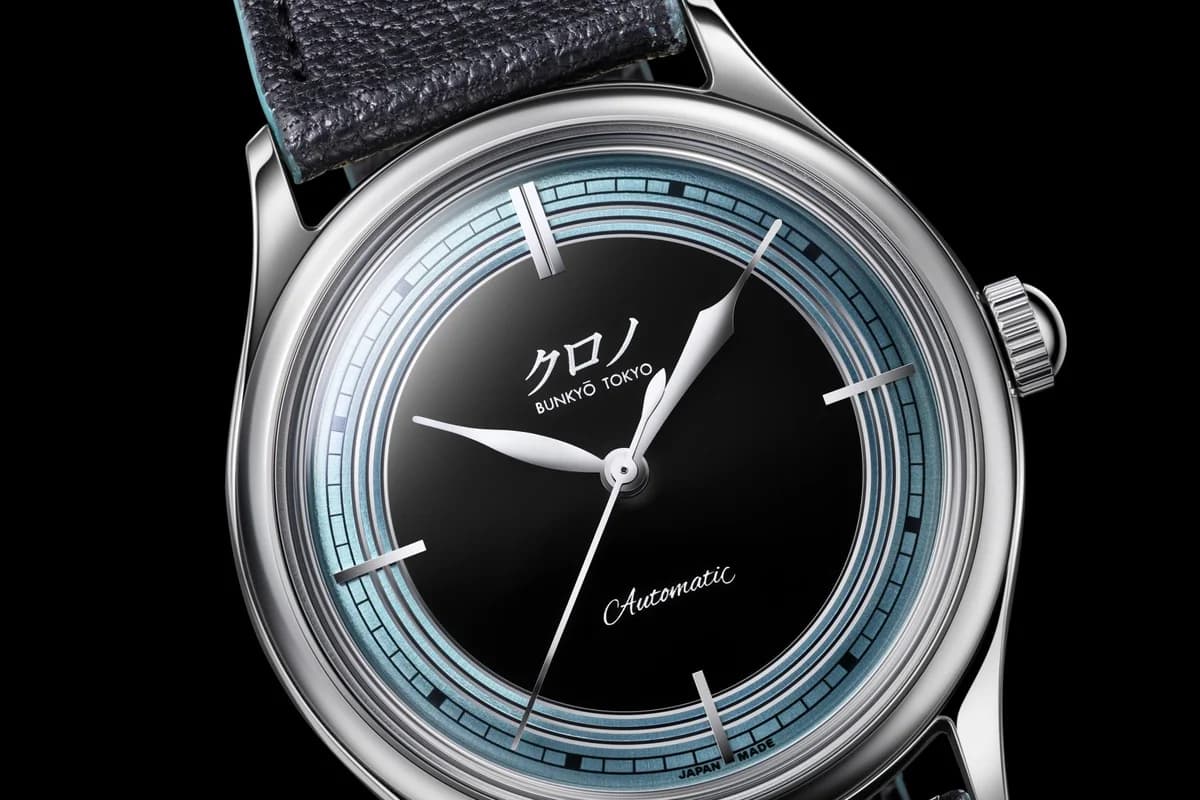
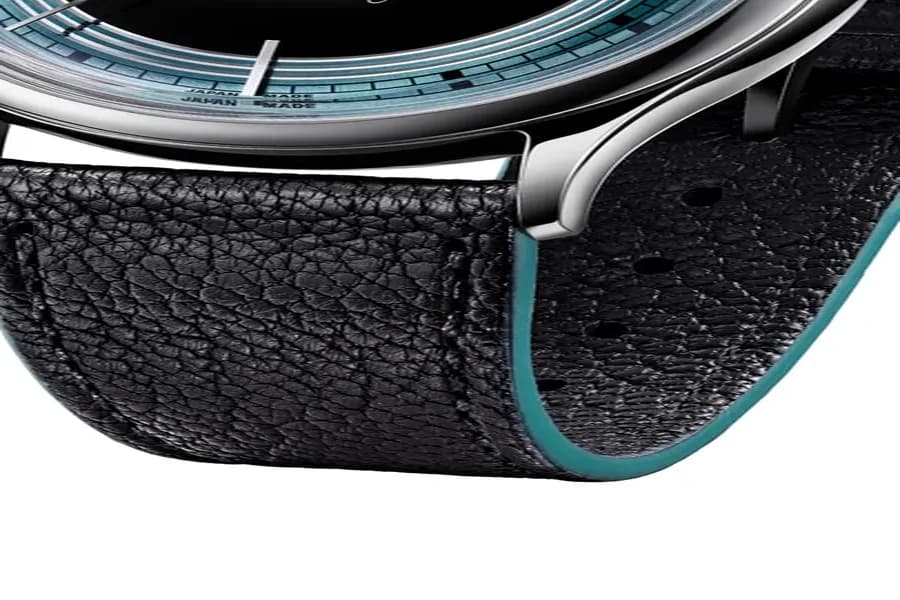
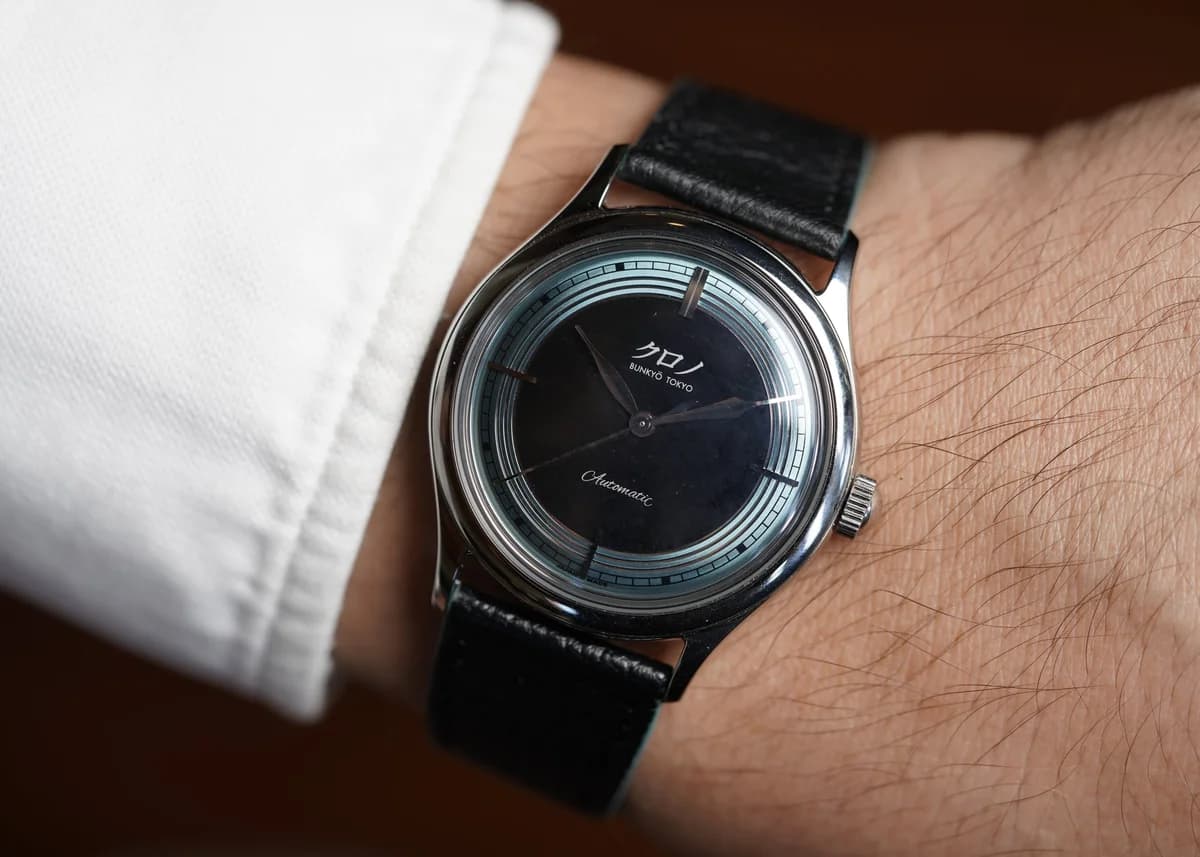
The hands are hand-bent to follow the cylindrical curvature of the dial. If they were flat, they would hover above the outer edge and crash into the center. Bending them by hand to match the exact contour of each individual dial is the kind of detail that separates this from anything else at this level. The box sapphire crystal is a deliberate design choice. Unlike a flat sapphire that sits flush with the bezel, box sapphire has straight vertical sidewalls that rise from the case before transitioning to a flat top. This is the same profile that acrylic crystals had in the 1950s through 1970s. The vertical walls create edge distortion when the watch is viewed from the side. The dial appears to bend and compress at the periphery, which is the warmth and character that vintage collectors associate with watches from that era. Sapphire rates 9 on the Mohs scale, so you get the vintage silhouette with none of the scratch sensitivity. Asaoka reportedly specs his box crystals 0.15mm taller than standard, exaggerating the raised profile intentionally. At 37mm diameter, 7mm thick, and 42.75mm lug-to-lug with 20mm lug width, it wears like a classic dress watch from the 1960s. On a 6.5-inch wrist it sits perfectly. No overhang, no awkward gap between the lugs. The polished 316L stainless steel case catches light the way only high-polish can, and the black calf leather strap with green-embellished sides is a thoughtful detail that ties back to the dial's lapis-green border.
Inside is the Miyota 90S5, a Japanese automatic movement beating at 28,800 vibrations per hour with a 42-hour power reserve and hacking seconds. This is not an in-house caliber. It is a pragmatic choice, and Asaoka has been transparent about why. An in-house movement would put this watch in an entirely different category. The entire point of Kurono is accessibility. The 90S5 is accurate, reliable, and serviceable by any competent watchmaker. Every resource saved on the movement goes into the dial. That is where the craft lives. The movement is the engine. The dial is the art. The 90S5 is the no-date variant of the Miyota 9015, introduced in 2020. It runs 24 jewels at 3.9mm height with a stop-second device for precise time setting. The base plate has a cutout that exposes the balance wheel on the dial side, which is why you can see the oscillating balance through the open heart on some Kurono models. The 90S5 also has a higher level of finishing on the dial-side plate compared to the 9015. Miyota is a subsidiary of Citizen, based in Miyota, Nagano Prefecture. The 90S5 also offers 5,000G of shock resistance, up from 4,000G on the 9015. The town of Miyota in Nagano Prefecture is named after the factory. Citizen established the wristwatch assembly plant there in 1959, and the town grew around it. The irony is not lost on anyone that a Citizen subsidiary movement powers an AHCI member's watches. But Asaoka chose this movement deliberately because it is made in Japan, serviced in Japan, and keeps the entire supply chain Japanese. The honest tradeoff with any Miyota 9-series is rotor noise. The bearing generates an audible rattle in quiet environments. It varies by case construction, and some owners never notice it, but in a small 37mm polished steel case there is nowhere for the sound to hide. If you have spent time with Swiss movements from ETA or Sellita, the Miyota rotor is louder. That is the cost of keeping the entire watch Japanese at this number.
Water resistance is 3 ATM, which means it will survive hand washing and rain but nothing more. This is a dress watch. If you are looking for a dive bezel and 200 meters, Kurono is not for you. The 3 ATM rating is a deliberate choice that keeps the case thin and the proportions right. Adding water resistance means thicker gaskets, a screw-down crown, and a thicker caseback. All of that adds millimeters. Asaoka chose to keep the watch at 7mm instead.
Now I need to talk about what happens when you go deeper into the Kurono world, because the Reiwa is just the entry point. The real soul of this brand lives in the urushi dials.
The Reiwa is just one chapter of the Kurono story. The real depth of Asaoka's craft lives in the Grand Series urushi dials and the Special Projects line, where he experiments with materials like meteorite, malachite, and guilloché fan patterns. Those are their own stories.
The salon is worth the trip regardless of whether you buy anything. It is on an unassuming residential street in Kita-Aoyama, about four minutes from Gaienmae Station. You walk past homes and people going about their day. There is nothing announcing what is inside. It feels like visiting someone's residence, not a watch boutique. That is deliberate. Asaoka personally designed the salon, and the understated approach is exactly what I appreciate about it. A few chairs at a bench. That is the whole operation. But the people there treat you like a fellow enthusiast, not a customer. I have spent hours at that bench asking questions about the urushi technique, the lacquer work, how the dials are made, what Hajime-san is thinking about for the next collection. They share behind-the-scenes details that are not public knowledge. They talk about the artisans in Kyoto, the rejection rates, the specific challenges of each dial variant, and they do it because they can tell when someone has genuine curiosity versus someone who is just passing through.
They have shown me how the urushi is applied, explained the layering and curing process step by step, and let me handle pieces up close. I have been trusted with items that the public has not seen. Things from personal collections. I will not describe them here because the trust that comes with that access matters more than the content. What I will say is that the level of care and transparency at the salon is something I have not experienced at any other brand, Swiss or otherwise. I have been to Geneva, I have been to Glashutte, I have spent time at manufacture workshops across Europe, and nothing compares to the intimacy of sitting at that bench in Aoyama. Every visit feels like Christmas morning. The fact that they share what they share, with the understanding that some things stay in the room, is exactly why I keep going back. It is one of my favorite things to do.
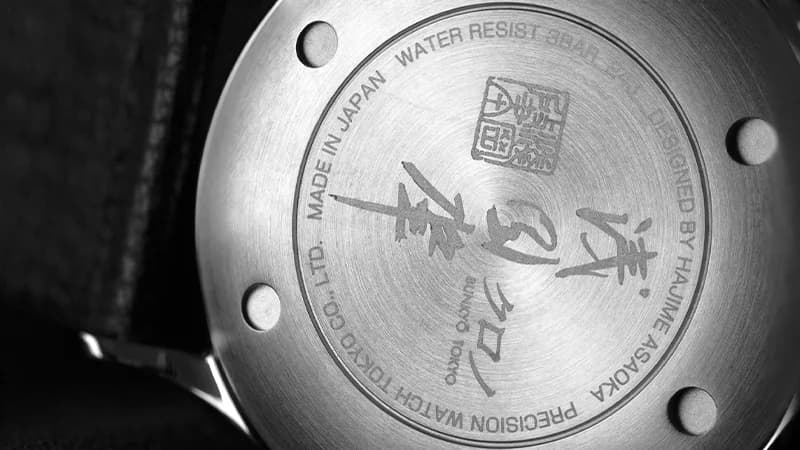
There is an honest tradeoff to talk about. The Miyota 90S5 is a fine movement, but it is not a decorated movement. The caseback on every Kurono is solid, not exhibition. You will never see the movement. For some collectors that matters. They want to turn the watch over and see finishing, beveled edges, blued screws, Geneva stripes. Kurono gives you a solid caseback with Asaoka's signature instead. The argument Asaoka makes, and I think he is right, is that the art is on the dial side. The urushi is the movement equivalent. Where a Lange puts hundreds of hours into movement finishing that you see through a sapphire caseback, Kurono puts months of artisan work into a dial you see every time you check the time. Both approaches are valid. One is German, one is Japanese. They reflect different philosophies about where the craft should live.
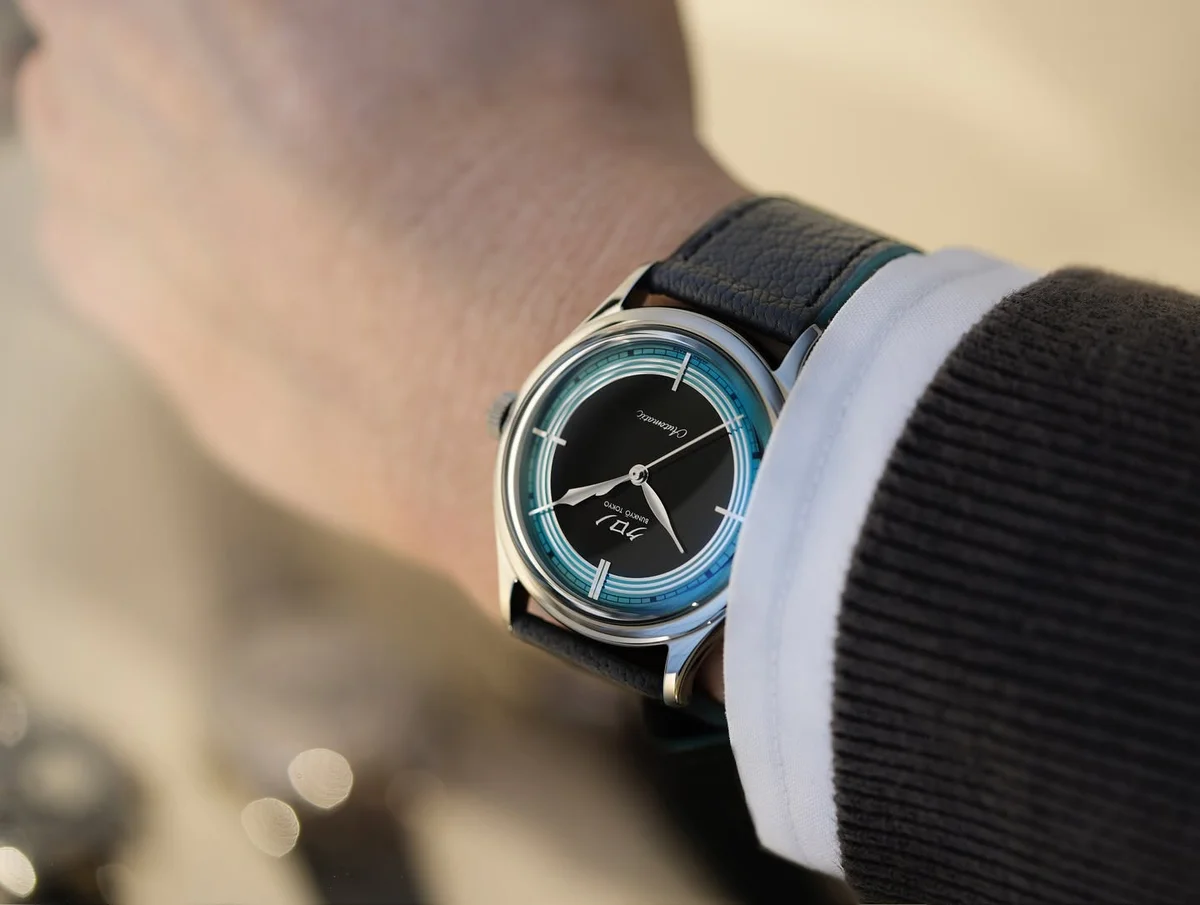
On the wrist, the 37mm case sits low and flat. Under a shirt cuff it disappears completely. The polished case works equally well with a navy Canali suit or rolled sleeves on a weekend. The lapis-green dial catches light in a way that draws attention without screaming. On darker skin tones, the green-black contrast is striking. It reads as sophisticated rather than flashy, which is exactly the line Asaoka walks with everything he designs.
The real significance of the Anniversary Reiwa is that an AHCI-member watchmaker designed something this intentional, this connected to a thousand-year craft tradition, and made it accessible to a first-time collector. Asaoka did not have to do this. His personal brand already commands six figures. Kurono exists because he believes great design should be experienced, not just admired from behind museum glass.
That philosophy, combined with the urushi lacquer traditions of Kyoto and the monozukuri discipline of Japanese craft, the belief that the spirit and method of the maker is inseparable from the object made, makes Kurono Tokyo something entirely different from anything coming out of Switzerland. The Swiss have centuries of watchmaking heritage and an infrastructure that produces some of the most remarkable mechanical objects on earth. What they do not have is urushi. They do not have artisans in Kyoto who inherited a technique from the Tang Dynasty. They do not have a self-taught watchmaker who built a tourbillon from eBay parts and earned an AHCI seat on merit alone. That combination does not exist anywhere else. It is singular. And the fact that you can participate in it at all is, I think, one of the most compelling stories in modern watchmaking.
Also in Artisan Craft