
Grand Seiko
Snowflake
SBGA211
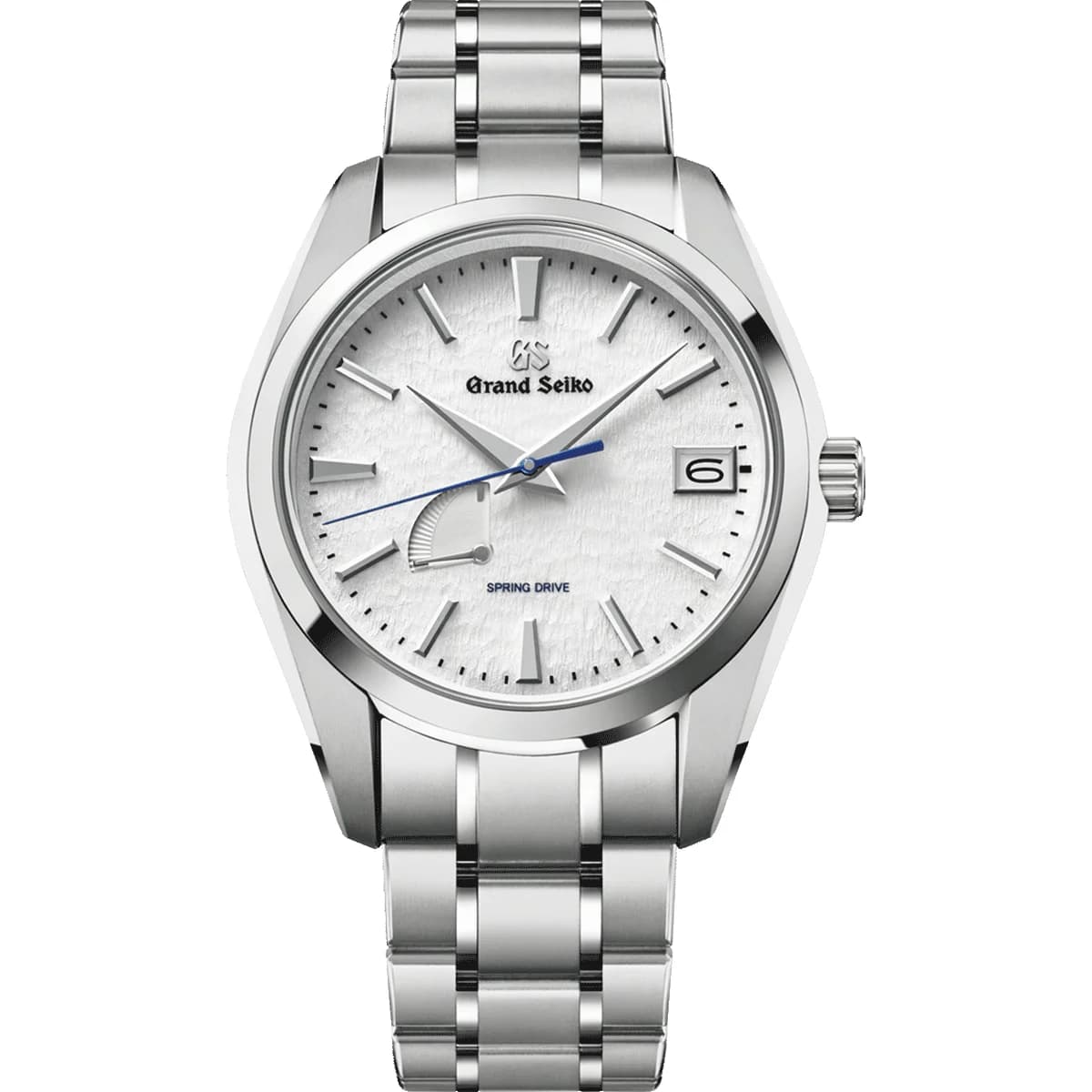
In 1977, an engineer named Yoshikazu Akahane sat at his desk at Suwa Seikosha in Nagano Prefecture and asked a question that nobody in the watch industry was asking. What if you could build a watch that used a mainspring for power but a quartz crystal for accuracy, with no battery? The Swiss were busy refining their mechanical movements. Seiko had just changed the world with quartz. Akahane wanted something that was neither. He wanted the soul of a mechanical watch with the precision of quartz, delivered through a seconds hand that glided rather than ticked. It took 22 years, and Akahane did not live to see it. He died in 1998 at the age of 52, one year before Spring Drive reached commercial production. The Grand Seiko Snowflake is the watch that made his invention famous.
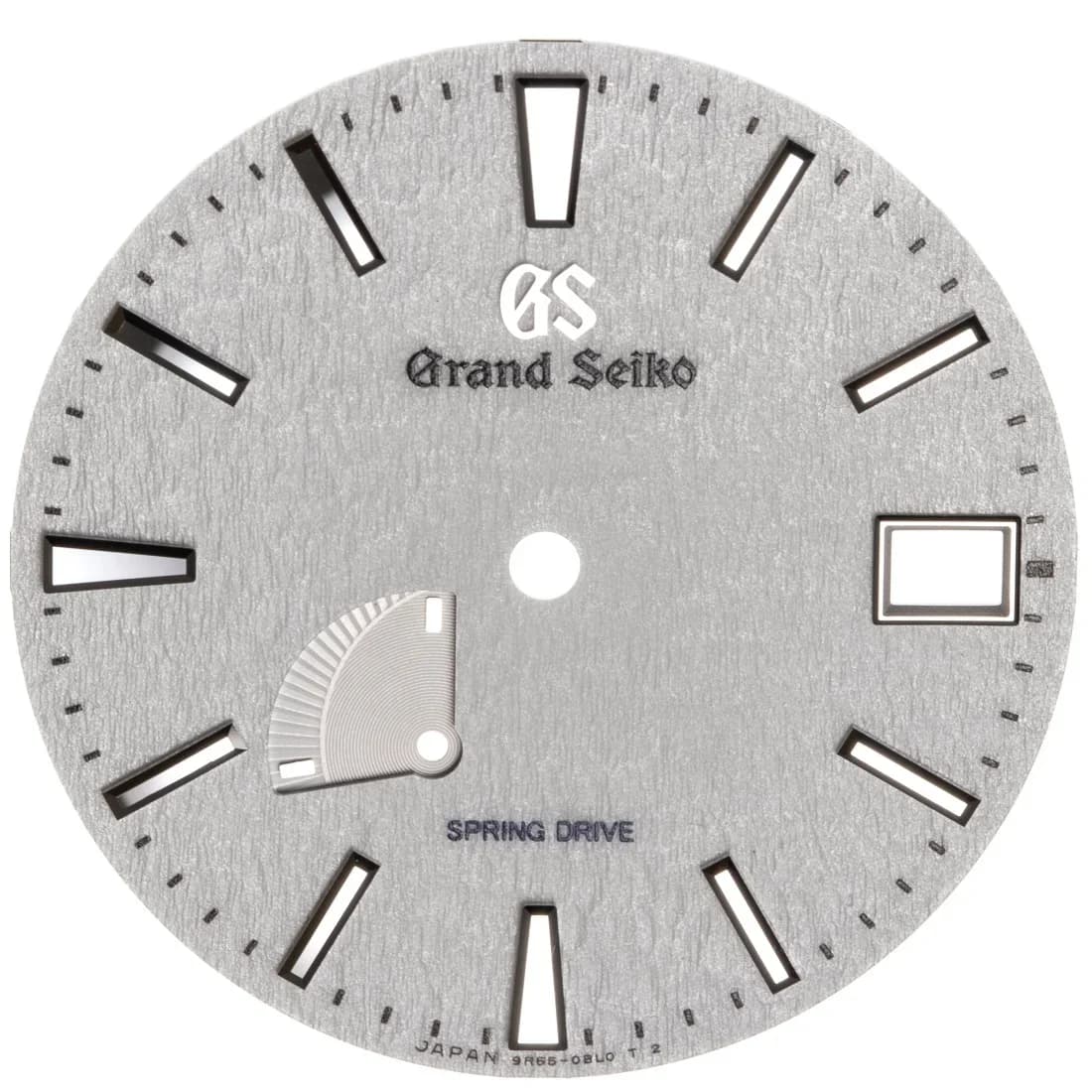
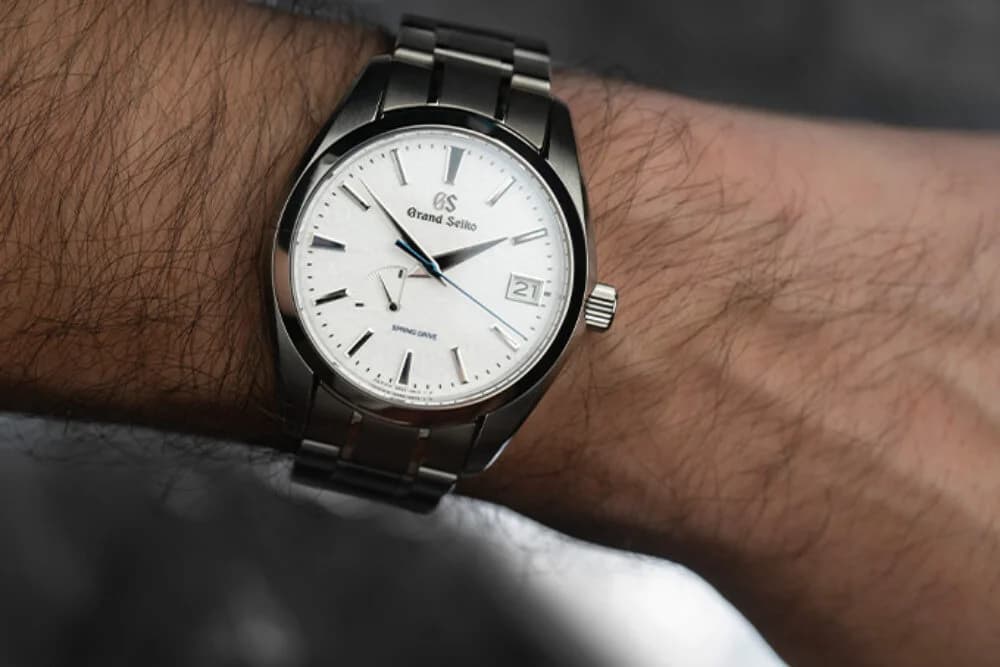
The first thing I notice every time I look at this dial is that it does not behave like a white dial. It is not painted white. It is not enameled. It is not lacquered. The dial starts as a stamped brass plate, pressed with 200 metric tons of force to create a three-dimensional texture. Then it is silver-plated through a process that Grand Seiko developed specifically for this watch. Silver has the highest visible light reflectance of any metal, and the plating is pure silver, applied to tolerances of one micron. The team tested different plating solutions, varied the electrical current, and adjusted immersion times until the silver captured light the way fresh powder snow does on the Hotaka mountains visible from Grand Seiko's Shinshu Watch Studio in Shiojiri. Over 80 separate steps go into making a single Snowflake dial. The reason they chose silver plating over white paint is that paint would fill in the textured surface and smooth it out. Silver follows every contour. The result is a dial whose total surface area is larger than a flat dial because of the texture, which means it receives and reflects more light from more angles. Under direct sun it reads pure white. Under softer light it shifts to silver. Under magnification it looks like a landscape. No Swiss brand produces a dial like this because no Swiss brand has developed this specific technique. I have seen hundreds of white dials and nothing looks like a Snowflake.
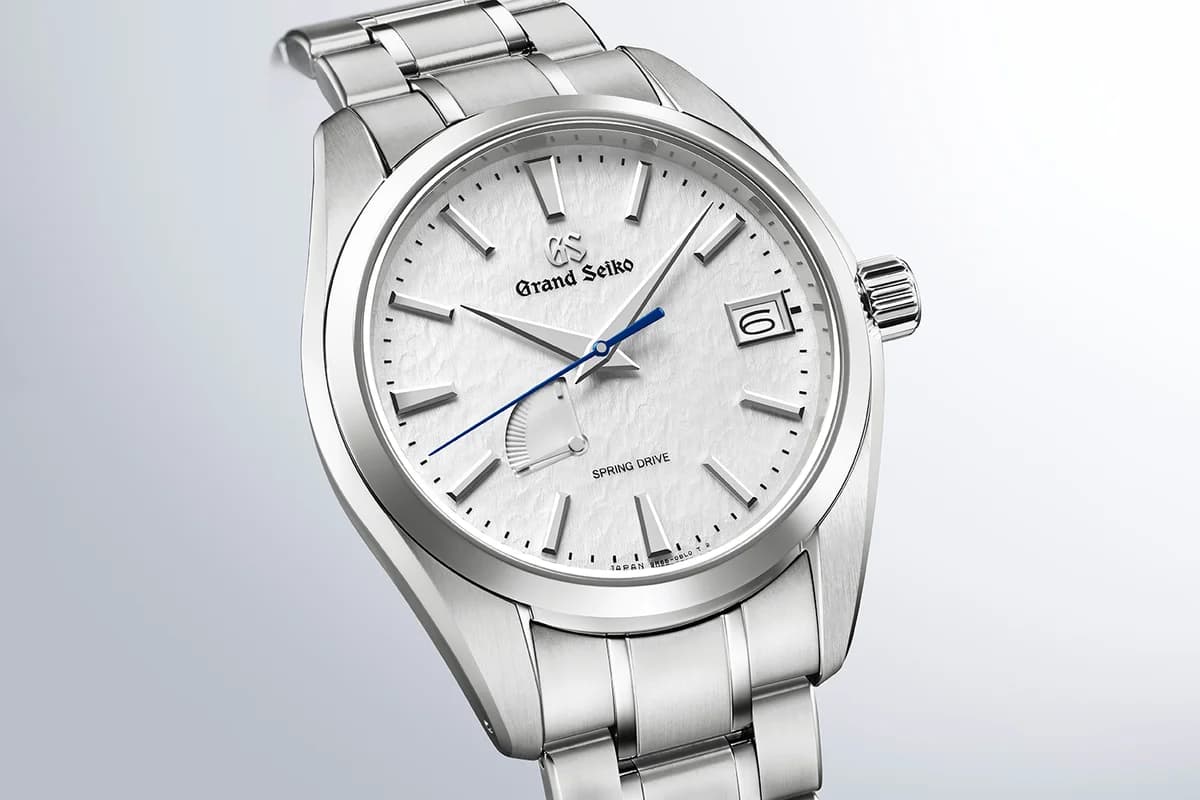
The SBGA211 runs Spring Drive, and I genuinely believe it is the single most important movement technology developed outside of Switzerland. Spring Drive is neither mechanical nor quartz. It uses a mainspring for power and a traditional gear train for transmission, exactly like a conventional mechanical watch. But where a mechanical watch uses a balance wheel and escapement to regulate timekeeping, Spring Drive uses what Seiko calls the tri-synchro regulator. The name comes from the three forms of energy it harnesses: mechanical energy from the mainspring, electrical energy generated by a tiny rotor at the end of the gear train, and electromagnetic energy that brakes the glide wheel. A quartz crystal oscillating at 32,768 Hz provides the timing reference. The integrated circuit compares the rotation speed of the glide wheel against the quartz signal and applies electromagnetic braking to keep it precise. The result is a seconds hand that sweeps continuously with no ticking. The glide motion is hypnotic. Once you have seen it, every ticking seconds hand looks crude by comparison. Accuracy is plus or minus one second per day, or plus or minus 15 seconds per month. For context, a Rolex Superlative Chronometer is rated to plus or minus two seconds per day. Spring Drive is twice as accurate.
Akahane's inspiration came from watching a bicycle descend a hill at constant speed using its brake. He reasoned that a similar braking concept applied to a watch movement could produce smooth, continuous motion without the start-stop oscillation of a balance wheel. He built his first prototype in 1982, but the integrated circuit technology of the early 1980s was not efficient enough to run on the tiny amount of electricity generated by the movement. The project was shelved. It was not until 1993, when low-power ICs finally caught up, that Seiko restarted development. In 1997, Akahane took over leadership of the watch development division and made Spring Drive the priority. He died one year later, and the first Spring Drive watch reached the market in 1999. Twenty-eight years from concept to commercial reality. That kind of patience does not exist in most industries.
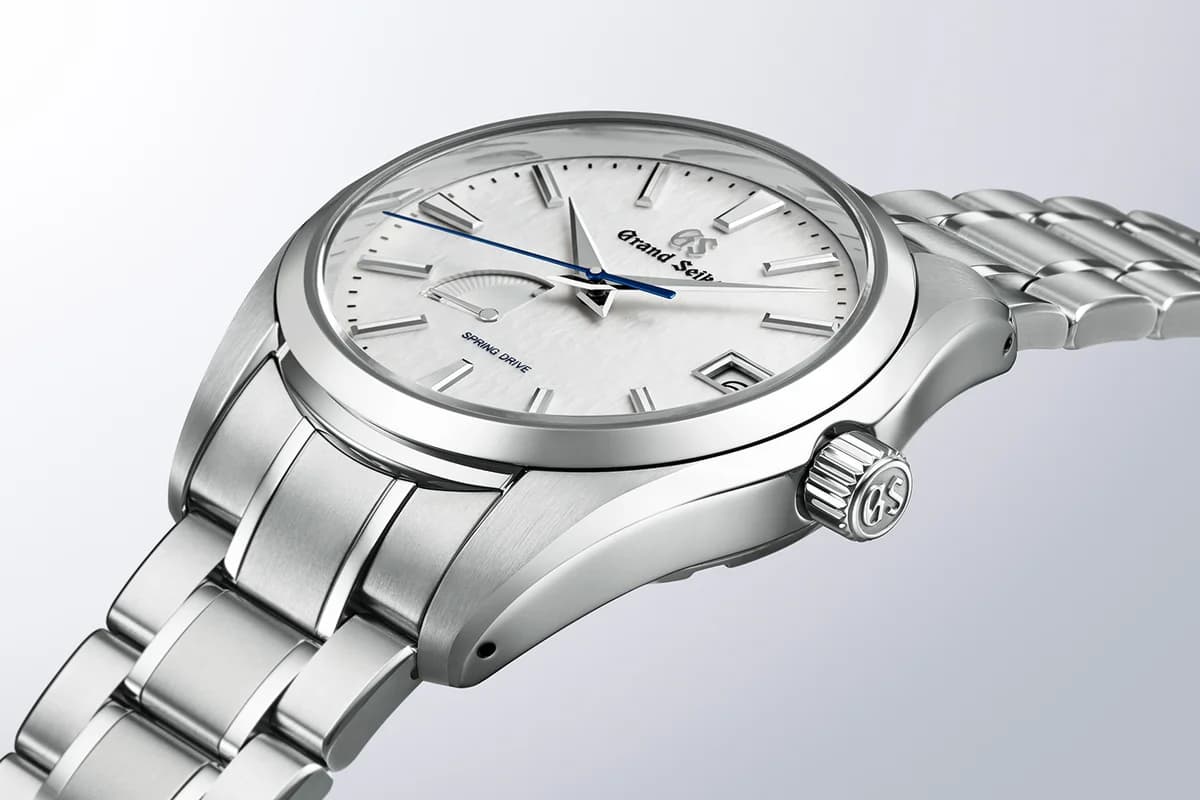
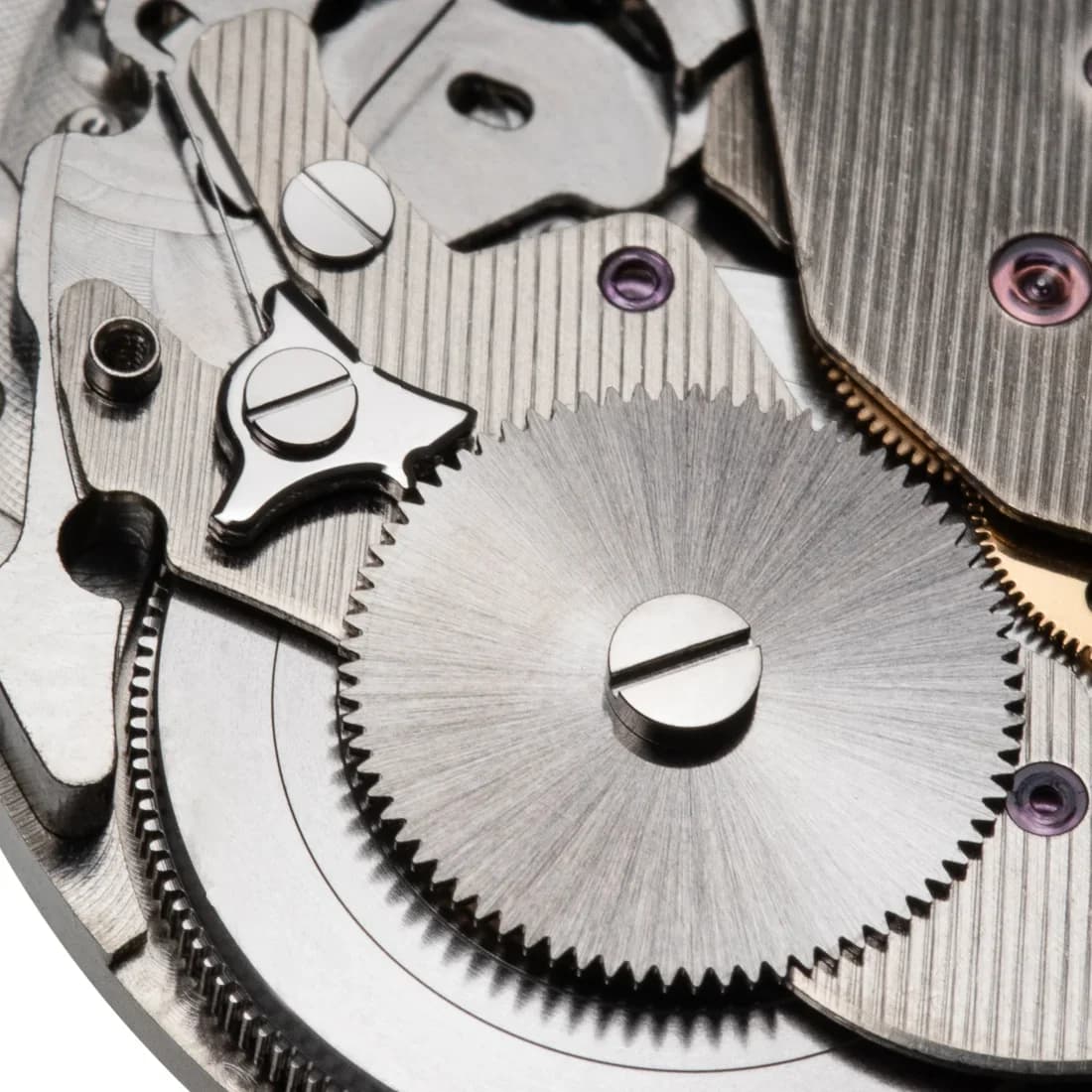
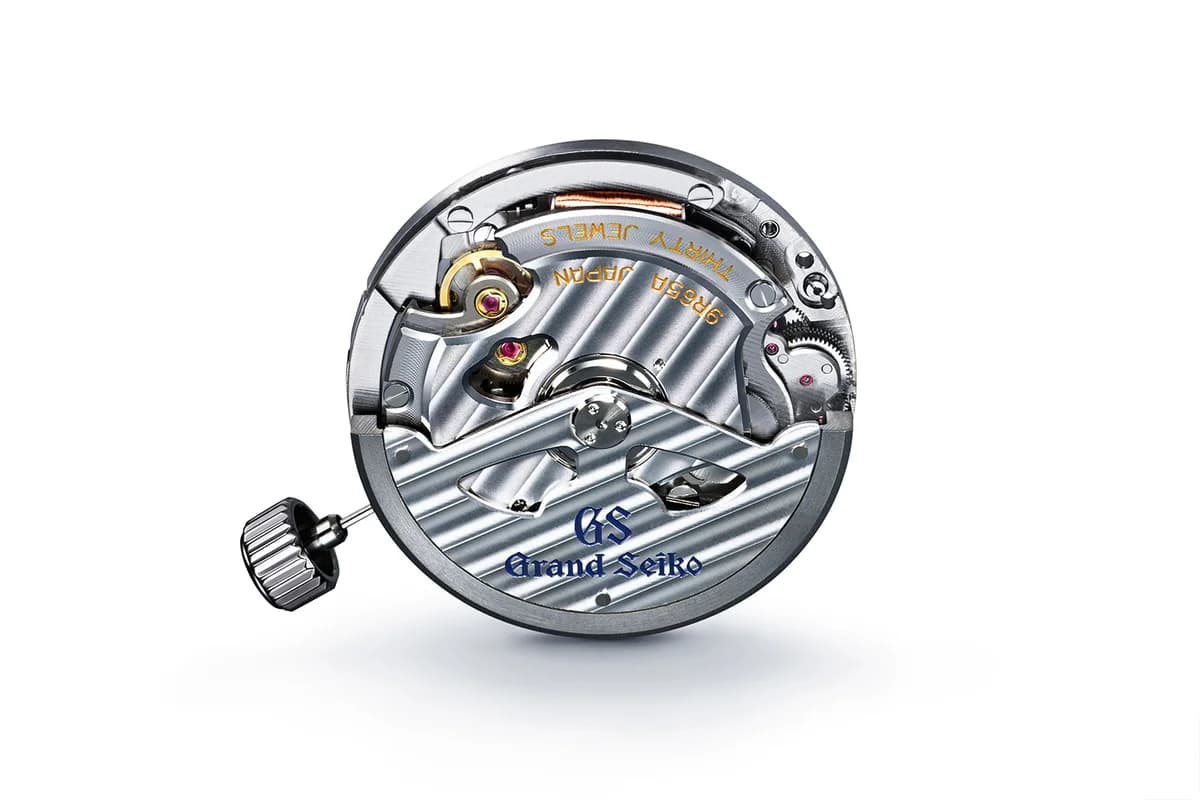
The Caliber 9R65 inside the Snowflake has 30 jewels and delivers approximately 72 hours of power reserve, displayed by a small indicator between the 7 and 8 o'clock positions. I appreciate that the power reserve indicator is there, but it is one of the subtler implementations I have seen. It is a narrow aperture with a single hand, and in certain light it can be easy to miss. Some owners wish it were more prominent. I think Grand Seiko made the right call keeping it understated because the dial is the star and anything more assertive would compete with the texture. The caseback is exhibition, sapphire crystal, and through it you can see the 9R65's striped bridges, interior anglage, and the continuation of that beautiful finishing. For a watch at this level, having an exhibition caseback is the right move. The movement is worth showing.
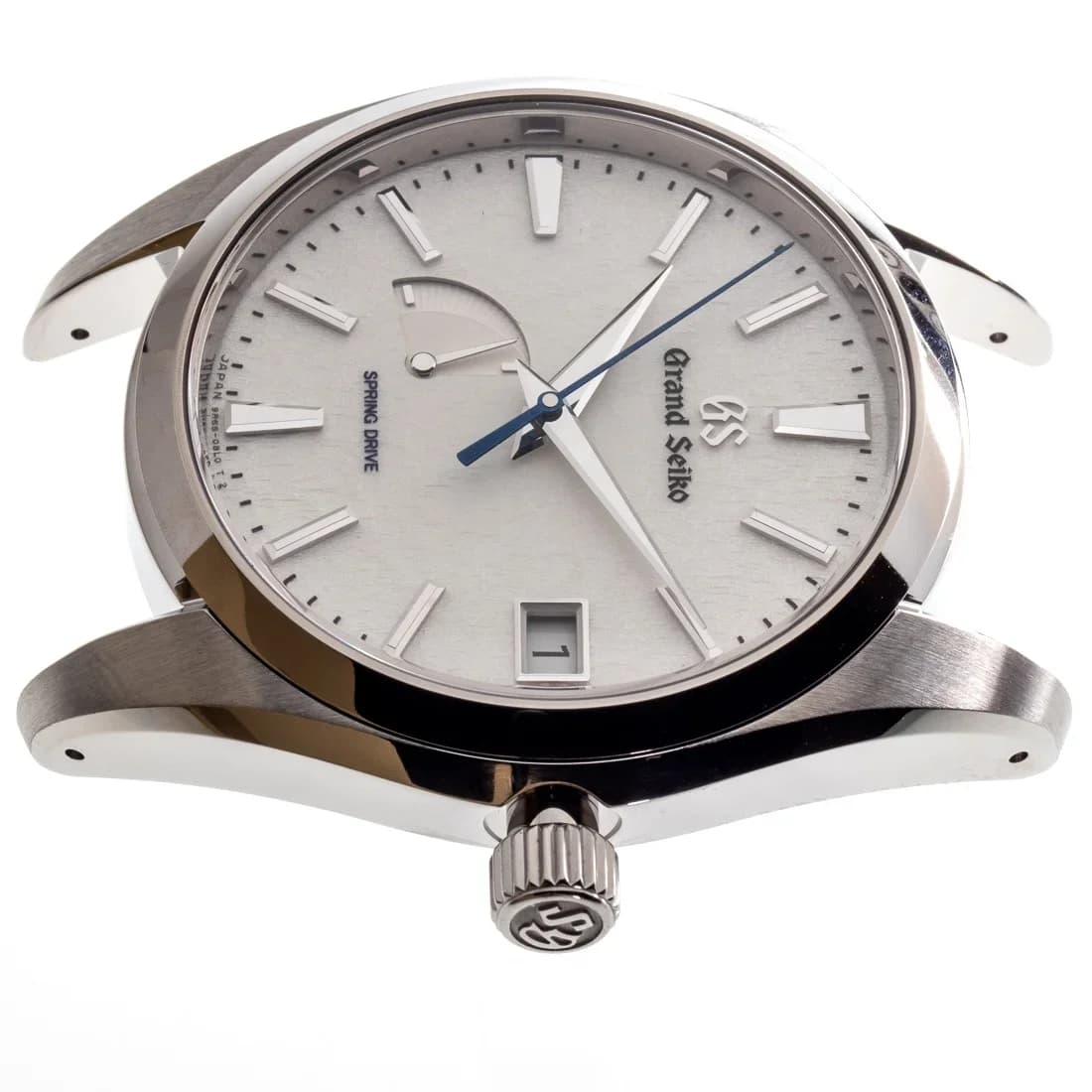
The case and bracelet are high-intensity titanium. The entire watch weighs 100 grams. For context, a Rolex Submariner on steel weighs roughly 155 grams, and an Omega Seamaster 300M is around 170 grams. The Snowflake is a 41mm watch that feels like it is not on your wrist. High-intensity titanium is harder than standard titanium and approximately 30 percent lighter than stainless steel, which gives you a case that wears large but carries almost no weight. The case is 12.5mm thick with a 49mm lug-to-lug measurement, so it has real wrist presence without being heavy. Water resistance is 10 bar, which is 100 meters. For a dress-adjacent watch with an exhibition caseback, that is more than adequate.
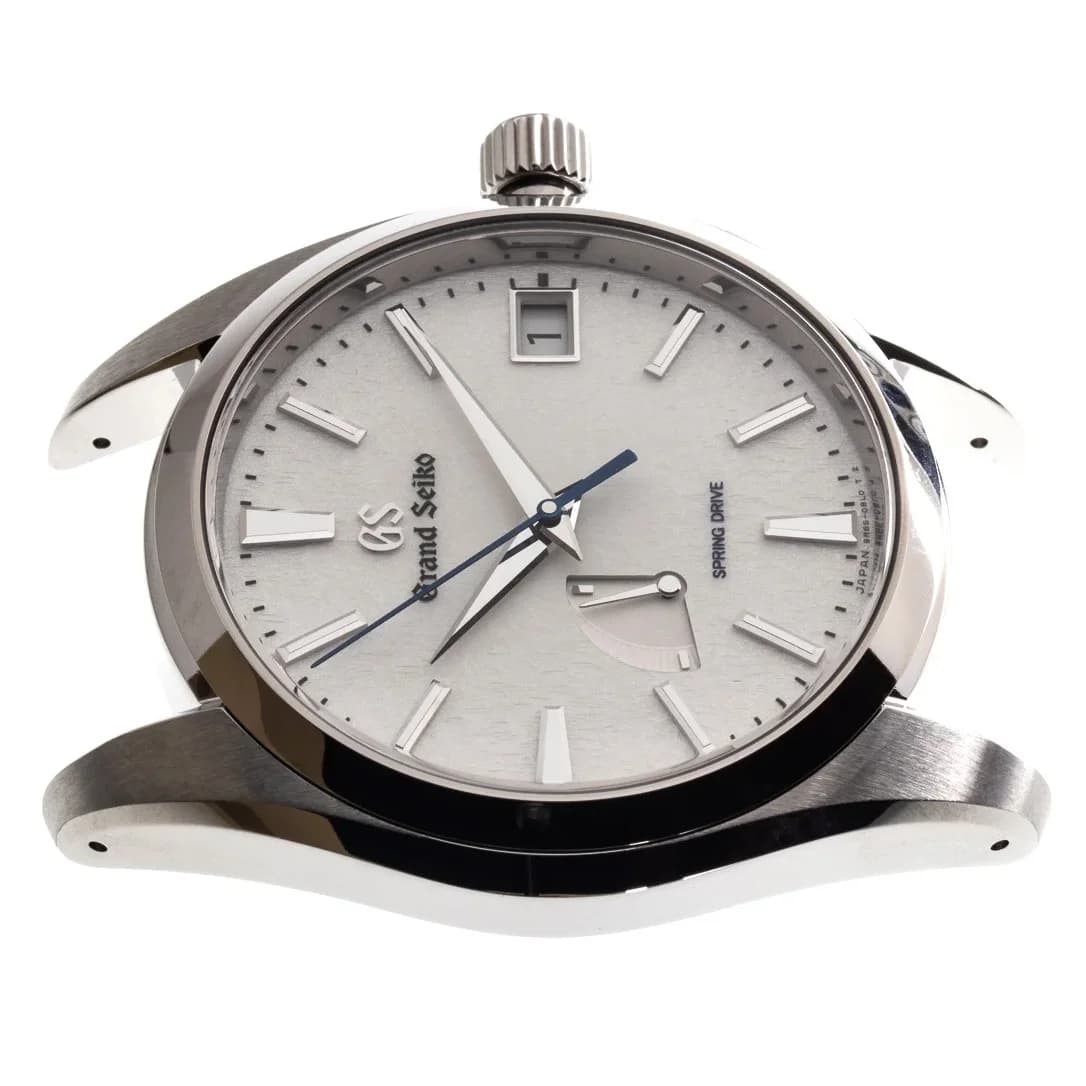
The finishing on the case is where Grand Seiko separates itself. The technique is called Zaratsu polishing, and the real story behind the name is more interesting than the myth that usually gets repeated. The common claim is that Zaratsu derives from traditional Japanese sword polishing. It does not. In the 1950s, Seiko purchased a polishing machine from a Swiss company called Gebruder Sallaz, the Sallaz Brothers. The machine was stamped with "Gebr. Sallaz" and the workers at Seiko's facility began calling the polishing technique "zaratsu," which is a Japanese phonetic adaptation of "Sallaz." The name stuck. What makes Zaratsu distinctive is not the machine itself but how Seiko's craftspeople use it. The polishing is done by hand, one case at a time, using the side of the polishing wheel rather than the front. The operator judges pressure, timing, and position entirely by feel and sight. The goal is to create distortion-free mirror surfaces with edges so sharp they look cut by a blade. The contrast between the hairline-brushed flat surfaces and the Zaratsu-polished edges defines the Grand Seiko aesthetic. It is a level of case finishing that competes with anything from the Vallee de Joux. The fact that a Swiss machine ended up defining a distinctly Japanese finishing technique is one of those details that I find genuinely charming.
The original Snowflake was the SBGA011, launched in Japan in 2005. It was not available internationally until 2010, and even then, Grand Seiko was still operating under the Seiko umbrella. The dial of the SBGA011 carried the Seiko logo at 12 o'clock with "Grand Seiko Spring Drive" at 6 o'clock. In 2017, Grand Seiko made a significant move by establishing itself as an independent brand, separate from Seiko. The SBGA211 replaced the SBGA011 with one meaningful change: the dial now reads "Grand Seiko" at 12 o'clock with a GS applied logo, and simply "Spring Drive" at 6 o'clock. The Seiko name is gone. Everything else about the watch stayed the same. That branding decision was a signal. Grand Seiko was stepping out from Seiko's shadow and declaring itself a peer of the Swiss luxury houses, not a subsidiary of a Japanese conglomerate. The collectors who knew Grand Seiko before 2017 understood the quality was already there. The branding just caught up.
Grand Seiko itself was born in 1960 at Suwa Seikosha, the predecessor to Seiko Epson, in Nagano Prefecture. The original goal was to create the best watch in the world. Not the most complicated. Not the most expensive. The best. That philosophy still drives everything Grand Seiko does. The Shinshu Watch Studio, where the Snowflake is produced, sits within Seiko Epson's facility in Shiojiri. The studio is surrounded by the Jonen and Hotaka mountain ranges, and the landscape is the literal inspiration for the Snowflake dial. Spring Drive and quartz Grand Seiko watches are assembled at Shinshu, while the mechanical models come from the Grand Seiko Studio Shizukuishi in Iwate Prefecture. Two studios, two traditions, both producing work at a level that forces the Swiss to pay attention.
I love watching videos of the Spring Drive seconds hand because it illustrates something fundamental about what Akahane was chasing. In a mechanical watch, the seconds hand advances in discrete steps, typically 6 or 8 per second depending on the frequency. In a quartz watch, the seconds hand ticks once per second. In a Spring Drive, the seconds hand moves in a perfectly smooth, continuous sweep. No steps. No ticks. Just motion. It is the smoothest seconds hand in all of watchmaking. The visual difference is immediately obvious to anyone, even someone who knows nothing about watches. I have shown the glide motion to people who have never cared about a watch in their life and they all have the same reaction: they stare at it. The sweep is mesmerizing. It is the kind of detail that Teddy Baldassarre always points out when he reviews Spring Drive watches, and he is right to. It is the single most distinctive visual feature any movement technology has ever produced.
The bracelet is titanium with a folding clasp and push-button release. It is comfortable and lightweight, consistent with the rest of the watch. However, there is no micro-adjustment on the clasp. For a watch at this level, that is a legitimate gap. A Rolex Oyster bracelet has Easylink, which gives you 5mm of on-the-fly adjustment. An Omega has a push-pin micro-adjust system. The Snowflake bracelet requires you to add or remove half-links, and if you need a size between two half-link positions, you are stuck. On a hot day when your wrist swells slightly, or on a cold day when it contracts, you feel the difference. Some owners send their watches to Grand Seiko for resizing, which means weeks without the watch. For a brand that executes at this level on every other detail, the lack of micro-adjustment is a genuine wish-list item. I think it is the most common critique you will find in owner forums, and it is valid.
The other thing owners discuss is the titanium's scratch behavior. High-intensity titanium is harder than standard titanium, but it is not stainless steel. It will pick up micro-scratches, particularly on the polished surfaces. Those Zaratsu-polished edges that look so sharp and clean out of the box will soften over time with daily wear. Some people find this adds character. Others find it frustrating because the contrast between brushed and polished surfaces is what makes the case finishing so striking, and scratches blur that line. This is not a flaw. It is a material reality. Titanium gives you 100 grams on the wrist. Steel would give you scratch resistance but also 50 to 60 percent more weight. Grand Seiko chose lightness. That is a tradeoff I respect, but it is a tradeoff.
There is also no lume on the hands or indices. In low light, the silver dial and polished hands remain legible because of how much light the textured surface reflects, but in true darkness this watch goes dark. Again, this is a design choice. Luminous material would require filling the indices and applying compound to the hands, which would change the clean, refined look of the dial. Grand Seiko chose aesthetics over low-light functionality. If you need to read your watch at 3 AM without turning on a light, the Snowflake is not designed for that.
On the wrist, the 41mm case with its 49mm lug-to-lug sits beautifully on a 6.5-inch wrist. The lugs curve gently, and the titanium weight distribution means the watch does not slide or shift. Under a shirt cuff it disappears. The case is thin enough to slip under a Reda wool suit jacket without catching, and casual enough with a t-shirt and jeans on a weekend. On darker skin tones, the pure white dial creates a striking contrast that catches attention without being loud. The titanium bracelet has a matte warmth that pairs well with both silver and gold tones in other accessories. It reads as sophisticated and intentional, which is exactly what Grand Seiko is going for.
The dual-curved sapphire crystal with its anti-reflective coating on the inner surface deserves mention. The curve follows the contour of the dial and creates a subtle distortion-free viewing experience from off-axis angles. AR coating only on the inside means the top surface maintains a slight reflective quality that gives the crystal depth rather than making it invisible. For me, this approach is better than the fully AR-coated crystals that some brands use, which can look like there is no crystal at all and sometimes show a purple tint from certain angles.
Grand Seiko sits within the Seiko Group, alongside Seiko proper, Seiko Epson, and various other entities. They are not part of Richemont, LVMH, or the Swatch Group. They are independent in the way that Rolex is independent, answering only to their own organization. This gives them the freedom to pursue technologies like Spring Drive without having to justify them against a portfolio of competing sister brands. When a Richemont brand develops something, the group considers how it fits alongside Cartier, IWC, Jaeger-LeCoultre, and Vacheron Constantin. Grand Seiko only has to answer to Grand Seiko. That independence shows in how singular their products are. No other company makes Spring Drive. No other company makes this dial. No other company does Zaratsu this way. Everything they do is proprietary, developed in-house, and impossible to source from anyone else.
The honest reality of the Snowflake is that it asks you to accept a different set of priorities. If you come from the Swiss tradition and expect a movement with a balance wheel, a decorated rotor visible through the caseback, a beat rate measured in vibrations per hour, and a bracelet with micro-adjustment, the Snowflake will challenge you. It does not play by those rules. It replaces the escapement with electromagnetism. It replaces weight with air. It replaces the tick with silence. And it replaces the standard white dial with something that looks like a Japanese winter morning. Either that resonates with you or it does not.
I put the Snowflake in the artisan craft category because it is a completely different philosophy from the Swiss and German approach. Grand Seiko does not compete on heritage. They were not founded in 1755 or 1839. They compete on execution. The dial texture that takes 80 steps. The Zaratsu polishing done one case at a time. The Spring Drive glide that nobody else can replicate. The titanium lightness that makes the watch feel weightless. Every element is something that no other brand offers because no other brand has developed these specific techniques. Japan has its own watchmaking tradition, and the Snowflake is its finest expression. Yoshikazu Akahane spent his career chasing a movement that existed between two worlds. He died before he could see the Snowflake, but what he built is inside it. That seconds hand sweeping silently across a pure silver dial is exactly what he imagined in 1977. It just took the rest of the world a while to catch up.
Also in Artisan Craft