
Jaeger-LeCoultre
Master Ultra Thin
Q1238420
In 1833, a man named Antoine LeCoultre started a workshop in Le Sentier, a small village in the Vallee de Joux in the Swiss Jura mountains. He wasn't a watchmaker by training. He was a metalworker who had learned metallurgy in his family's forge, worked with music box components, and helped establish the razor-blade industry in the region. What drew him to watchmaking was a machine he invented to cut watch pinions with a level of precision that hadn't been possible before. That machine was the beginning. In 1844, he went further and created the Millionometre, the first instrument capable of measuring to one micron, one-thousandth of a millimeter. Think about that for a second. In 1844, before the light bulb, before the telephone, this man built a tool that could measure to a millionth of a meter. That instrument became the precision standard for everything the workshop produced for the next fifty years, and it tells you something fundamental about the DNA of this brand. JLC doesn't just make watches. They make the tools that make the tools that make the watches.
By 1866, Antoine and his son Elie had united every watchmaking craft under one roof, creating the first fully integrated manufacture in the Vallee de Joux. Before that, Swiss watchmaking was dispersed across hundreds of cottage workshops, each specializing in a single component. LeCoultre brought everything together: movement design, component manufacturing, assembly, finishing, case making, dial making, all in one facility. By 1888 they had 500 employees. Today the manufacture occupies 25,000 square meters with 82 workshops and roughly 1,200 employees in a valley of 6,000 people. The workshop is quite literally the economy of the region. I find myself thinking about what it means for a single company to anchor an entire valley's economy for nearly two centuries. That kind of continuity is almost unheard of in any industry, let alone one as specialized as watchmaking. When I look at a JLC movement, I see layers of institutional knowledge that have been passed down through generations of watchmakers who grew up in that same valley, apprenticed in those same workshops, and refined techniques that their predecessors invented. That accumulated knowledge is the real asset. You cannot replicate it. You cannot buy it. You can only build it over decades, and JLC has had nearly two centuries to do exactly that.
The Vallee de Joux is worth visiting if you find yourself in Switzerland. It's different from Geneva or La Chaux-de-Fonds or Schaffhausen. It's a high mountain valley in the Jura, remote and quiet, surrounded by forests. JLC's manufacture sits in Le Sentier right where Antoine started it in 1833. The isolation is part of the identity. There's a focused, almost monastic quality to the place. You can visit the Espace Antoine LeCoultre museum and if you arrange it in advance, see parts of the manufacture. It's the kind of place where you understand why the watches feel the way they do. In my experience, visiting a manufacture changes how you think about the watches that come out of it. I walked away from the Vallee de Joux with a deeper appreciation for what JLC accomplishes in that building. The fact that they produce everything from the hairspring to the finished case, all under one roof, in a mountain valley that feels like it hasn't changed much since the 1800s, gives their watches a coherence that assembled-from-outsourced-parts brands simply cannot match.
Then there's the part of JLC's history that I think most people don't fully appreciate. In 1903, a Paris-based watchmaker named Edmond Jaeger challenged Swiss manufacturers to produce ultra-thin movements of his design. Nobody wanted the job. Jacques-David LeCoultre accepted. That partnership eventually gave the company its full name, Jaeger-LeCoultre, formalized in 1937. But the ultra-thin movements they produced together didn't just stay inside JLC watches. In 1967, JLC created the Caliber 920, and this movement ended up powering the Audemars Piguet Royal Oak and the Patek Philippe Nautilus. Two of the most iconic watches in history, the watches people pay six figures for, running on a JLC movement inside. That is what "the watchmaker's watchmaker" means. The brands everyone flexes with used JLC engineering as their foundation. Over 190 years, JLC has produced over 1,300 unique calibers and registered more than 430 patents. Those numbers are hard to match.
Historical context
1 image· tap to view
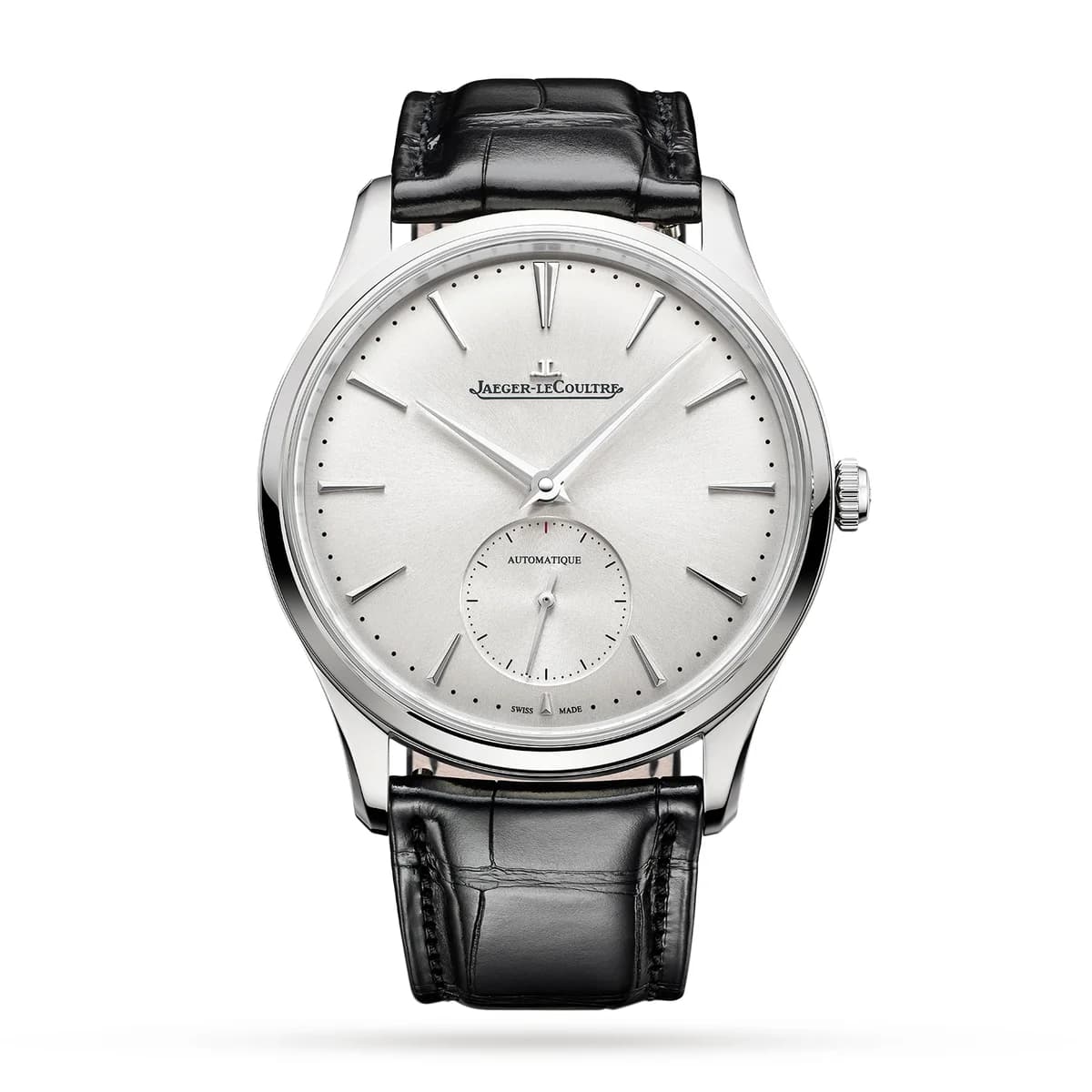
The Master Ultra Thin is where JLC's obsession with thinness reaches its purest expression, and this is where my engineering appreciation really kicks in. Making a watch thin is the hardest engineering constraint in mechanical watchmaking. Adding complications is challenging, but adding a complication means adding more space, more components, more volume. Thinness is the opposite. You're removing space. Every component, every bridge, every barrel, every rotor has to be redesigned to fit within a smaller vertical envelope. The mainspring has to be flatter, which means less stored energy, which means shorter power reserve. The structural rigidity decreases as components get thinner. The tolerances get tighter because there's less margin for error. A movement that's 3mm tall has fundamentally different engineering challenges than one that's 5mm tall, and the difference shows up in how the watch feels on your wrist.
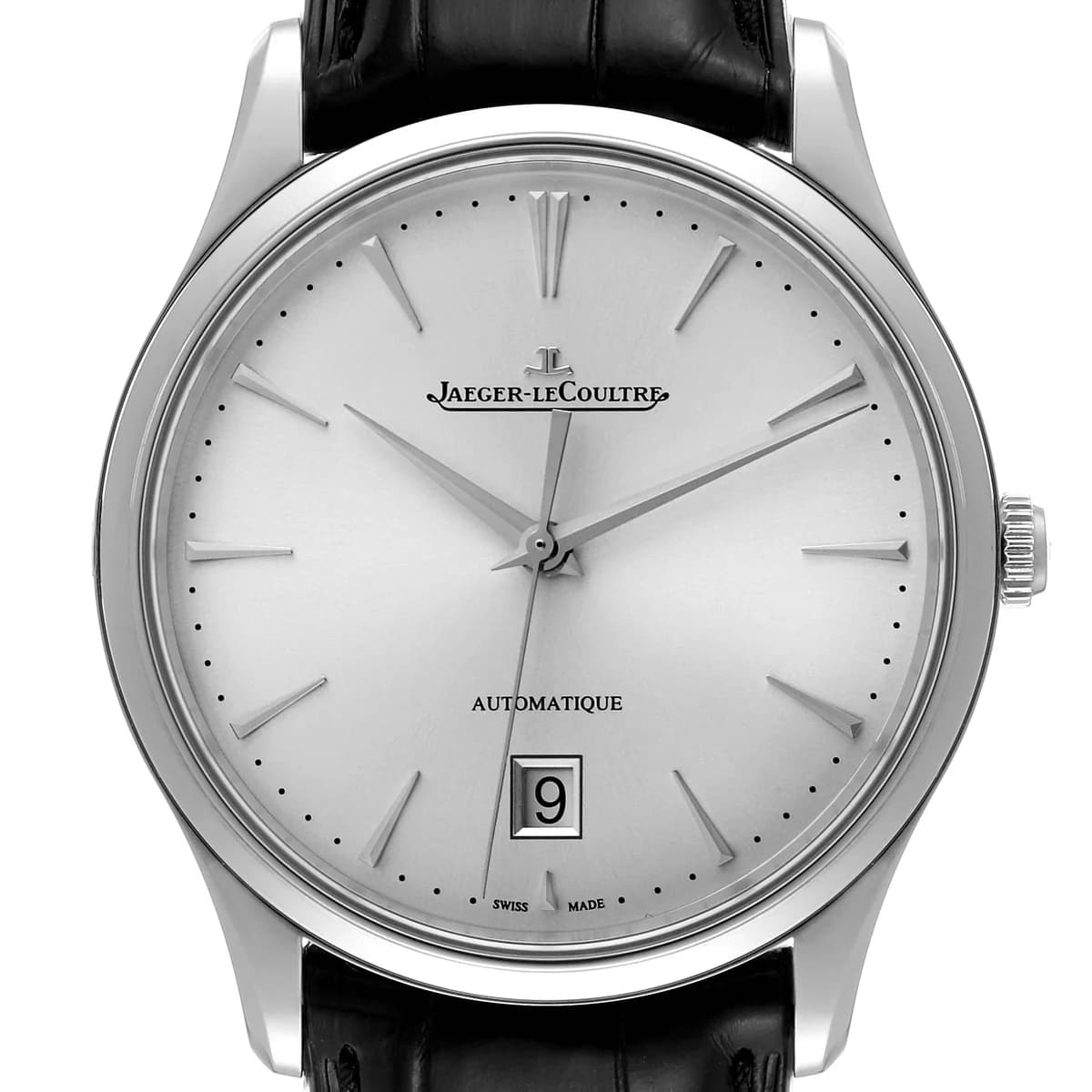
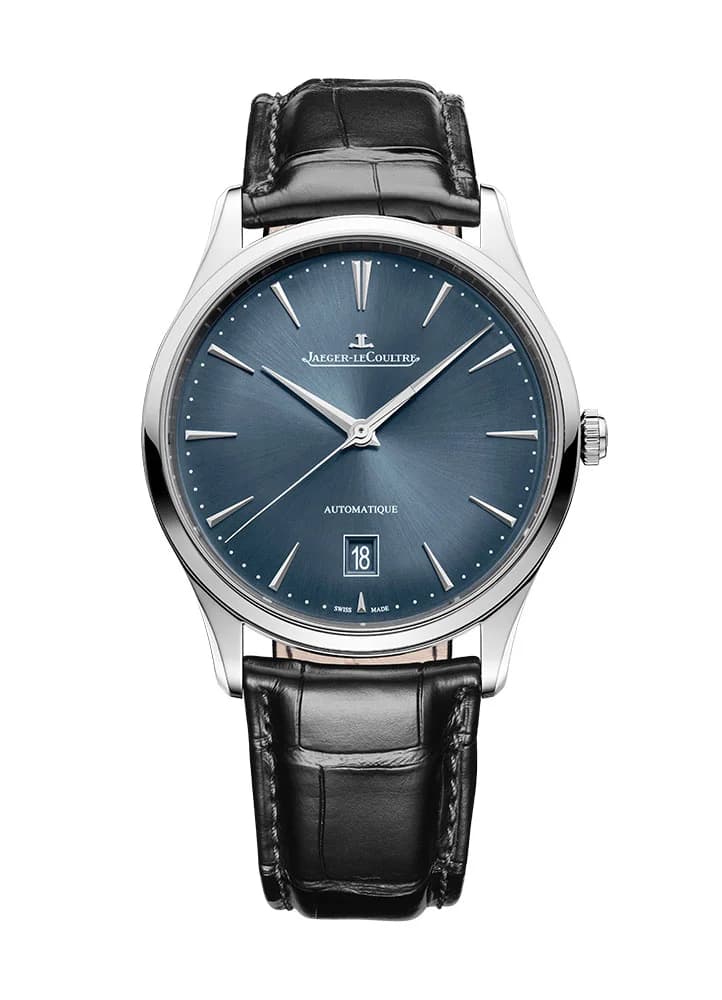
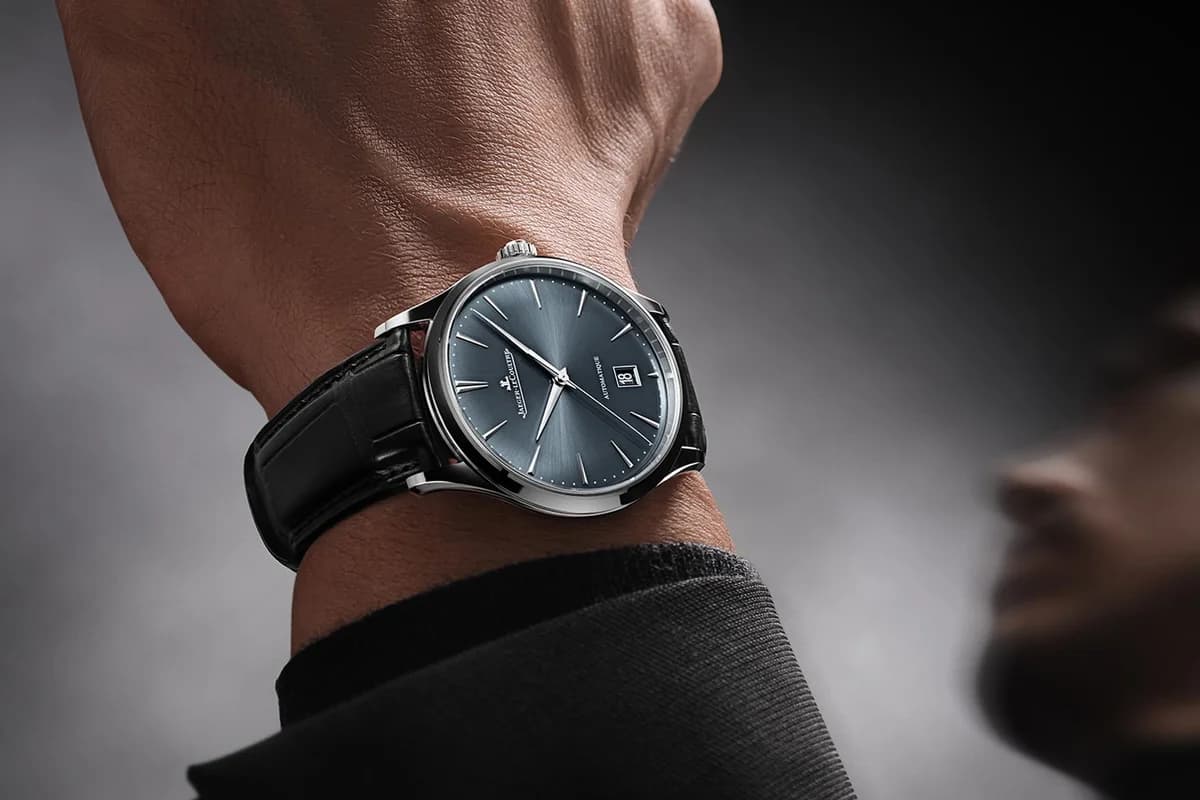
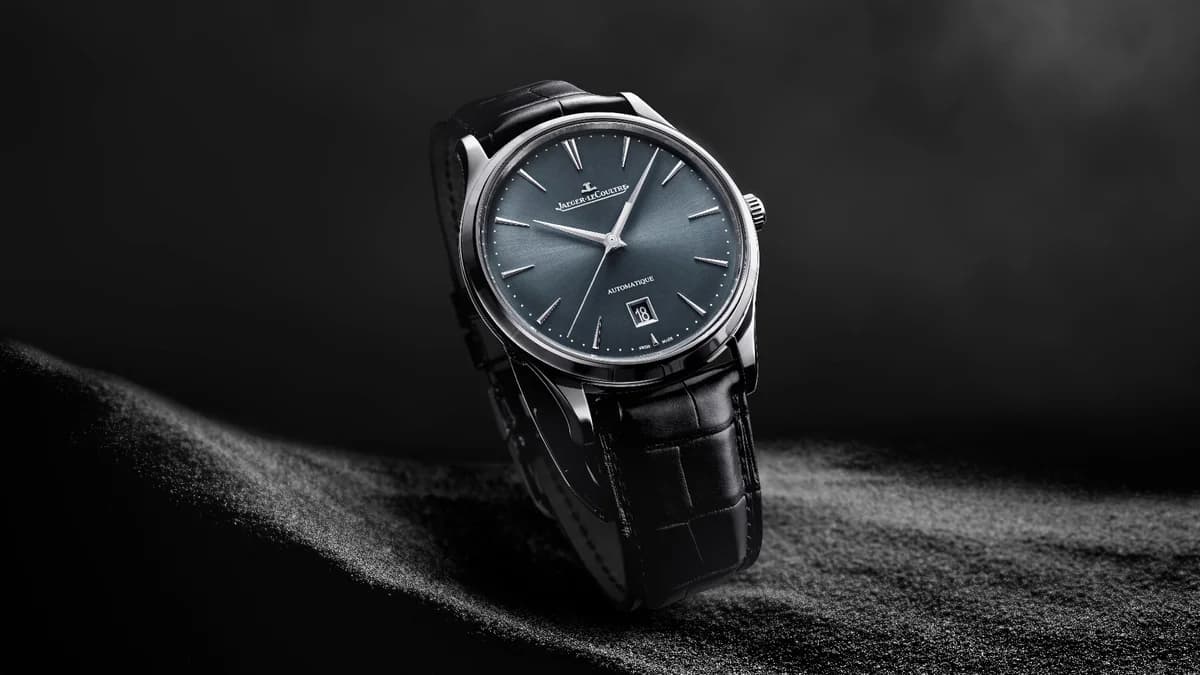
The Caliber 899/1 that powers the Master Ultra Thin Date stands 3.3mm tall. 32 jewels, 219 components, beating at 28,800 vibrations per hour with approximately 38 hours of power reserve. It's entirely in-house. The complete watch, reference Q1238420, measures 39mm wide and just 7.8mm thick. For comparison, the Patek Calatrava is around 8mm, the Vacheron Patrimony is similar, and most sport watches sit between 10 and 13mm. At 7.8mm, the Master Ultra Thin doesn't just sit under a shirt cuff. It disappears. You forget it's there. That's not a limitation. That's the entire point.
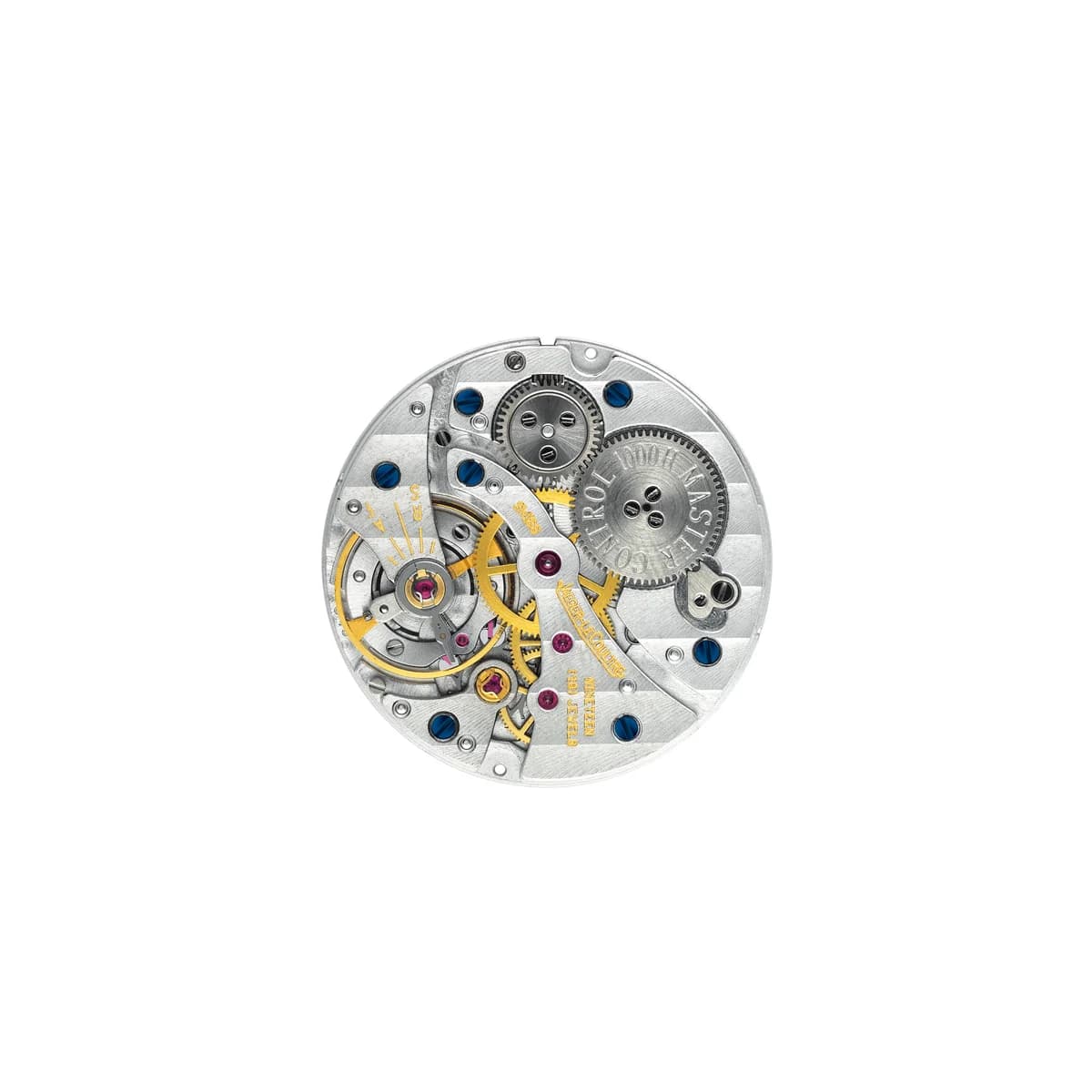
The finishing of the movement is visible through the exhibition caseback, and it's genuinely worth spending time looking at. JLC subjects every Master Ultra Thin to their 1000 Hours Control, an internal testing protocol they introduced in 1992. The fully assembled watch is tested for 42 days across 6 positions. This preceded the Patek Philippe Seal by 17 years and the Omega Master Chronometer by 23 years. JLC was doing full whole-watch testing before anyone else made it a standard. The 1000 Hours Control isn't a marketing label. It's a rigorous functional test of the complete watch, not just the movement. What strikes me about the 1000 Hours Control is the philosophy behind it. Most certifications in the watch industry test the movement in isolation. COSC tests a bare movement on a timing machine. The Patek Philippe Seal tests the finished watch but came along much later. JLC decided in 1992 that the only meaningful test was the complete watch, case and crystal and crown and gaskets and all, because that is what the owner actually wears. The movement might run perfectly on a timing machine and then lose accuracy once it is cased due to magnetism, pressure, or case resonance. JLC's approach catches those issues. I appreciate that they did this quietly, without turning it into a marketing campaign the way some brands have done with their testing programs. They just started doing it and kept doing it for over three decades.
The movement finishing itself deserves a closer look. The bridges receive Cotes de Geneve striping, applied by hand with a rotating pad. The rotor is decorated with a guilloched pattern and the JLC emblem. Beveled edges on the bridges are finished by hand, a process called anglage that is one of the most time-consuming finishing techniques in watchmaking. Each interior angle requires a different tool and a steady hand. The screws are blued, not painted. The bluing comes from heating the steel to a precise temperature, around 290 degrees Celsius, which produces that distinctive deep blue oxide layer. These are all details you see through the caseback, and they tell you something about JLC's standards. A brand that finishes invisible surfaces to this level is not cutting corners anywhere.
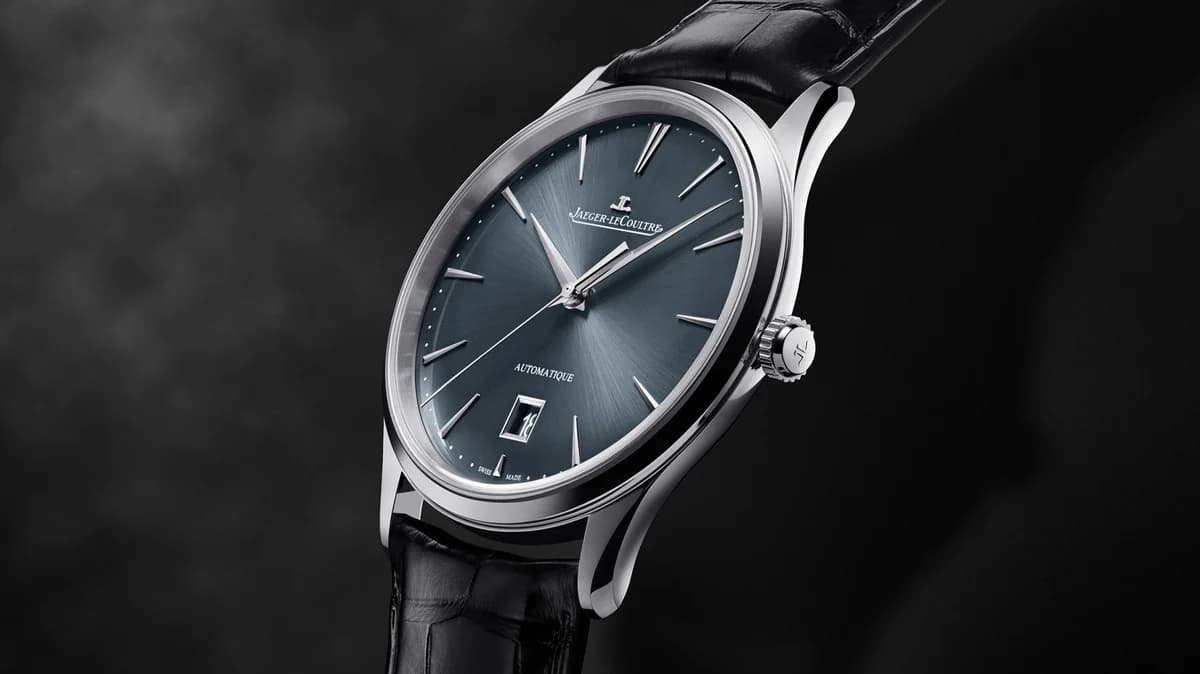
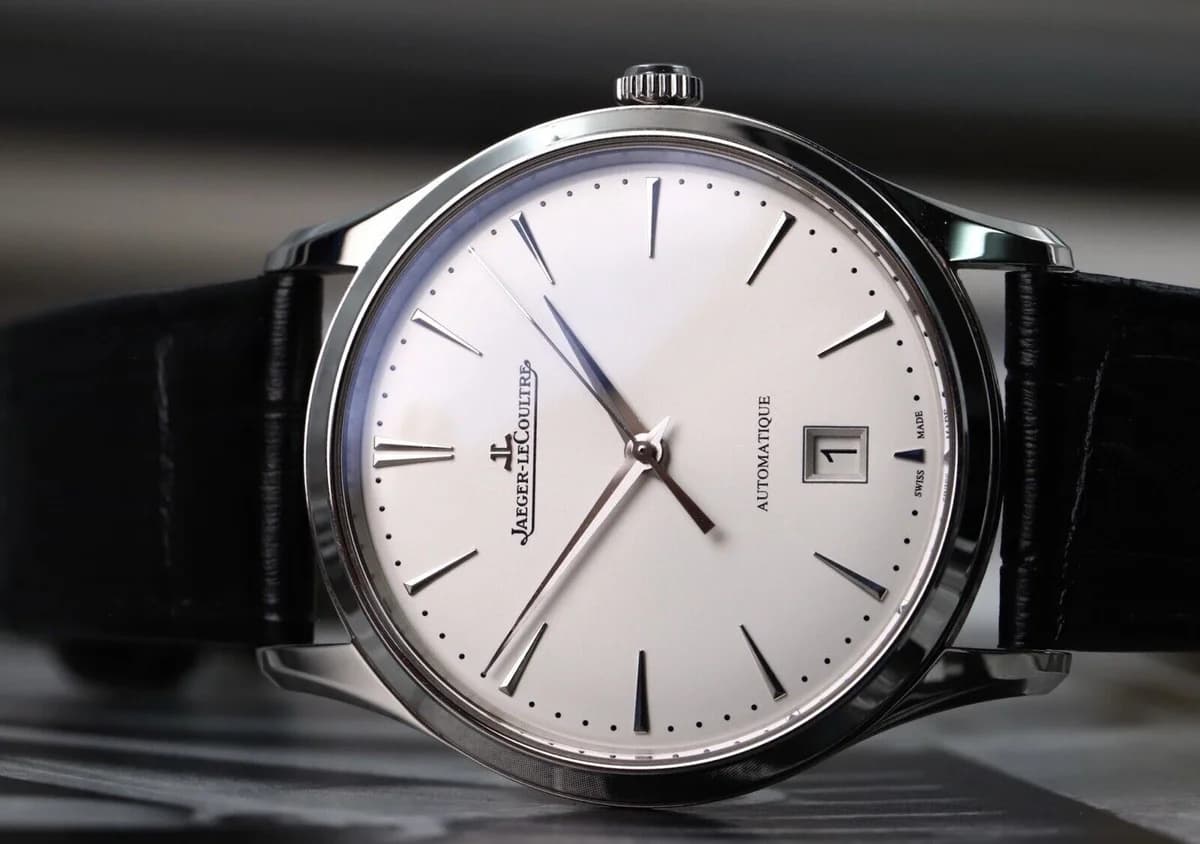
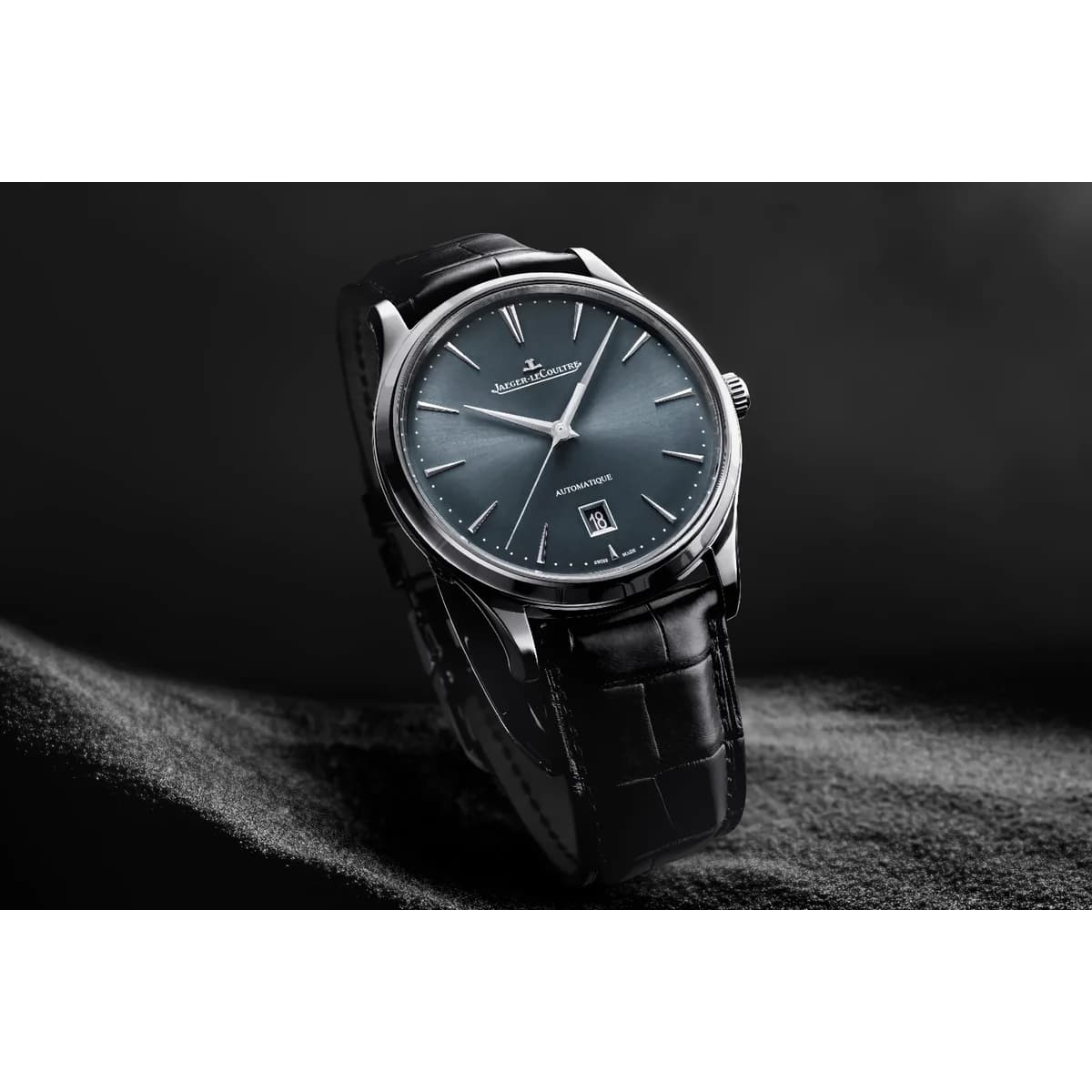
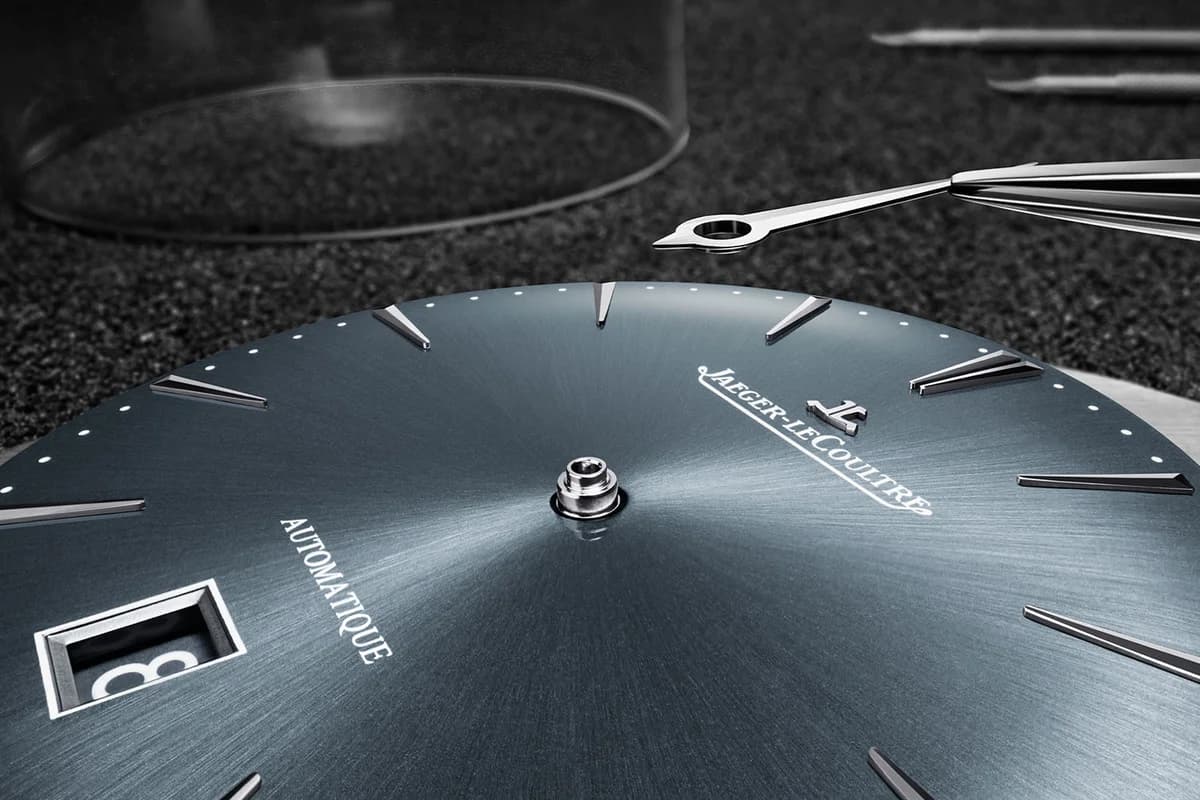
The dial on the Master Ultra Thin Date is clean in a way that feels effortless. Sunray-brushed silver finish that catches light and shifts tone depending on the angle. Faceted dauphine hands with alternating brushed and polished surfaces that create a play of light as the hands move. Applied trapezoidal indices, each individually attached to the dial. A date window positioned just above 6 o'clock. No complications, no sub-dials, no visual noise. The simplicity is the point. When a dial has this few elements, every single one has to be perfect because there's nothing to distract from a flaw. That's the engineering of restraint.
I have handled JLC pieces and the finishing consistently punches above its weight class. The movement quality, the finishing, the heritage, the 1000 Hours Control, it is all at the same level as brands that carry far more name recognition. You are getting a watch from a brand that has made over 1,300 calibers and supplied movements to Patek and AP. The people who know watches understand this. JLC is the insider's brand. I wore a Master Ultra Thin to a dinner last year and the only person who commented on it was a retired watchmaker sitting two seats away. He spotted it immediately. That interaction told me everything about who this watch is for. It is not for the person who wants strangers to notice their wrist. It is for the person who wants the right people to notice.
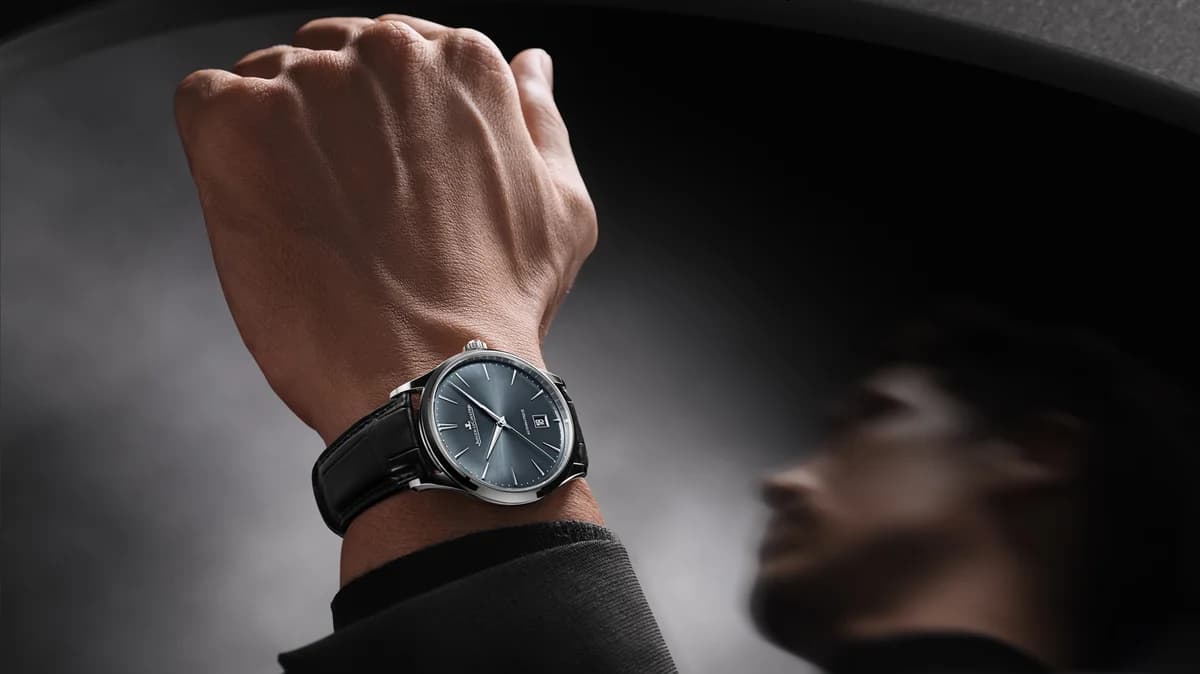
I think there is something genuinely rare about a brand that has this depth of history and this level of technical capability but does not feel the need to announce itself. JLC's marketing has always been quieter than its competitors. You see Rolex on every billboard. You see Omega at every sporting event. JLC is at Watches and Wonders with a new caliber and a press release, and then they go back to the valley and keep working. That restraint in marketing mirrors the restraint in their design, and both come from the same confidence. When you have made 1,300 calibers and supplied movements to the houses that everyone else considers the pinnacle, you do not need to be loud.
This is the watch I'd reach for with a proper suit, and I want to be clear about something. This is a dress watch. It's not a watch you dress down. It's not doing double duty as a casual weekend piece. Some watches can cross between a boardroom and a barbecue. The Santos can. The Rootbeer can. This one lives in the business setting. Tailored suits, Savile Row fabrics, Reda wool, Fox Brothers cashmere. That's where it belongs. Designed from the ground up to be worn under a proper cuff and never fight for attention. At 7.8mm thick on a 6.5-inch wrist, it wears like almost nothing is there. The weight is light. The alligator strap with deployant clasp is comfortable for full-day wear. And the 39mm case hits that sweet spot where it has enough presence to be noticed when you want it to be, but it's quiet enough to disappear when that's what the occasion calls for.
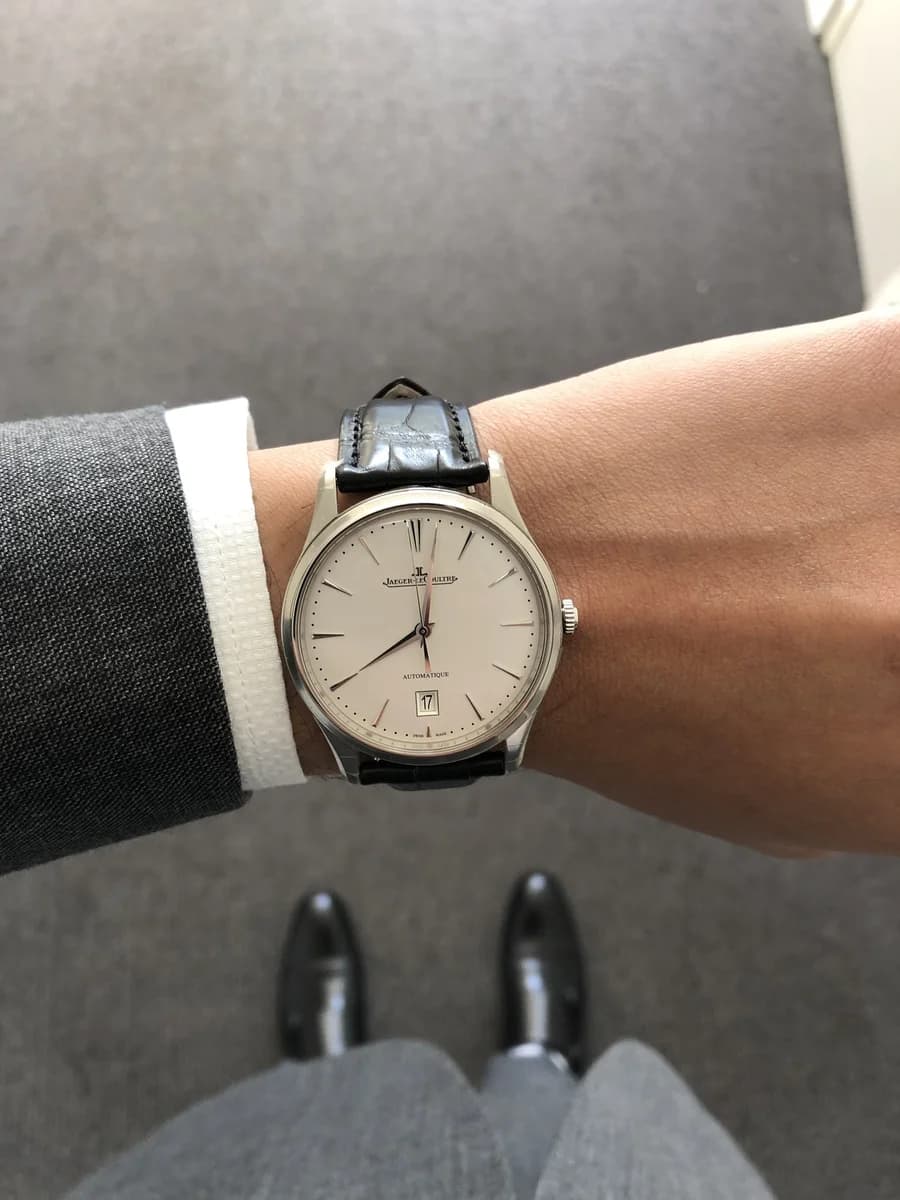
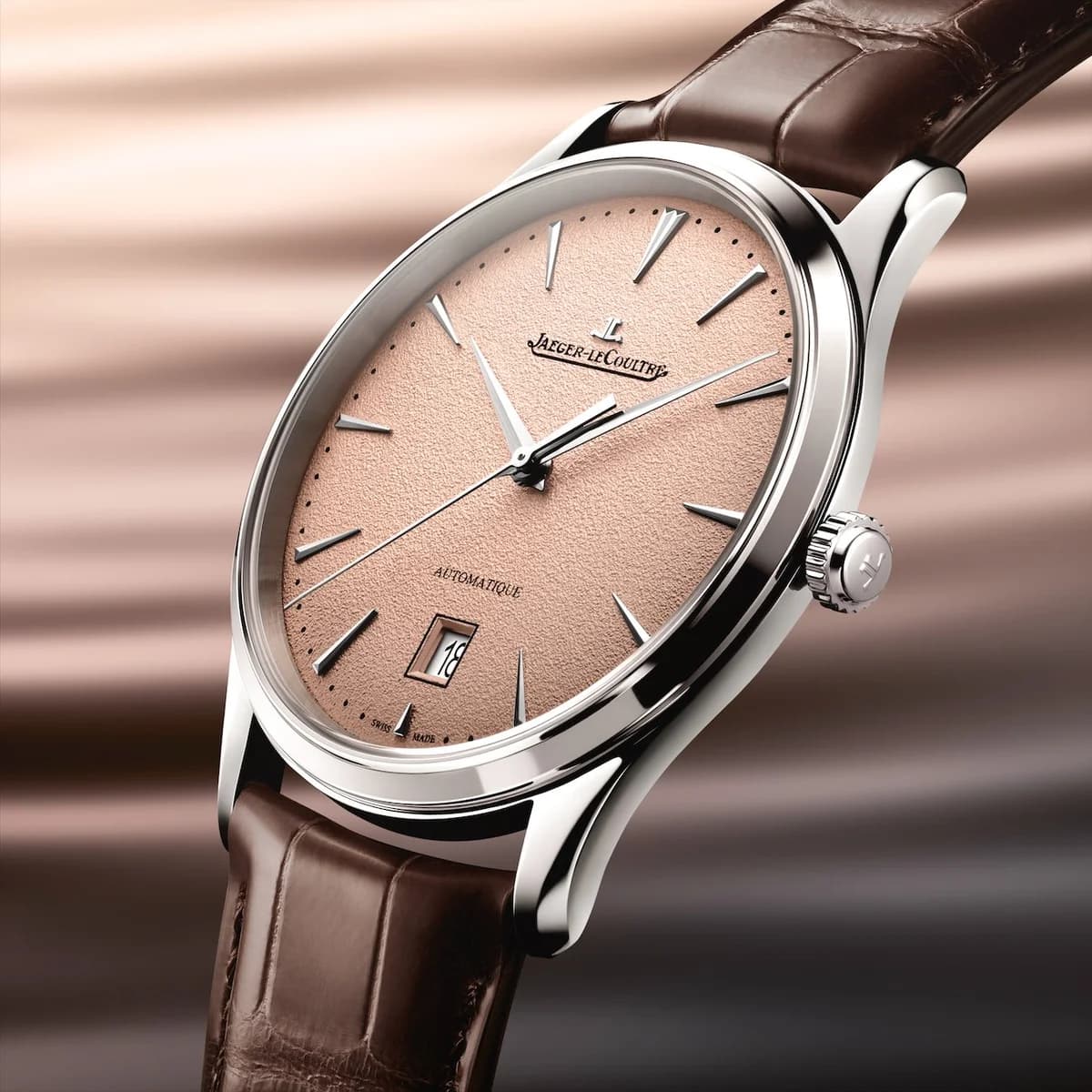
On darker skin tones, the silver sunray dial against steel creates a refined, cool contrast. JLC also offers the Master Ultra Thin in rose gold, and for warmer complexions that combination is genuinely beautiful. The 2025 copper dial limited editions are interesting too, a warmer, more unusual tone that I haven't seen on many dress watches. But the silver on steel is the classic for a reason. It goes with everything, it never dates, and the sunray finish gives it just enough life to keep it from being sterile. I have tried several strap options on JLC dress watches, and the alligator leather that ships with the Master Ultra Thin is genuinely excellent. The grain is tight, the edges are finished cleanly, and the deployant clasp operates with a satisfying precision that matches the watch itself. Some brands treat the strap as an afterthought. JLC clearly does not. On my wrist, the combination of the thin case profile and the supple strap creates a wearing experience that is closer to a bracelet than a traditional watch. It conforms to the wrist rather than sitting on top of it, and that distinction matters more than most people realize until they have experienced it.
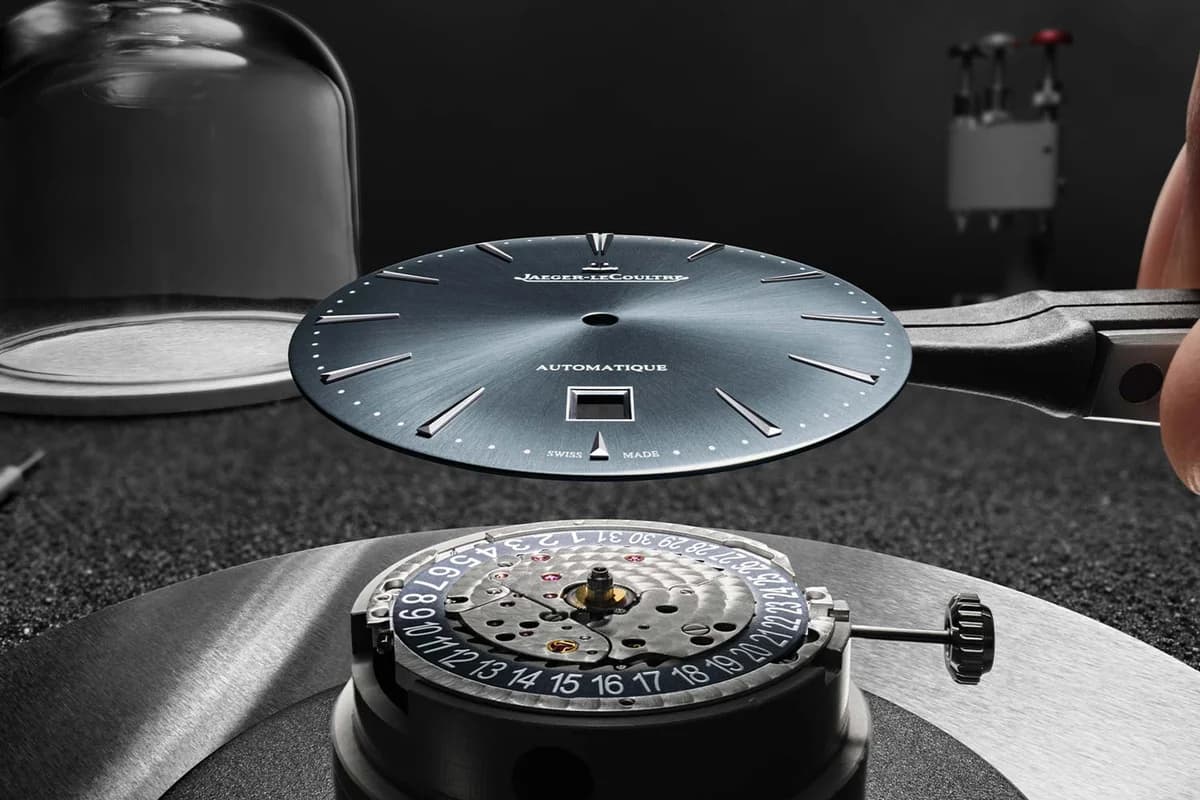
The applied indices catch light in a way that photographs genuinely cannot capture. I mean this seriously. Every photo you see of this watch, including the ones in this article, shows a flat representation of what is actually a three-dimensional experience. The faceted dauphine hands shift between bright and dark as your wrist moves. The applied indices have polished edges that catch and release light. The sunray dial radiates from center. None of this translates to a screen. If you're considering this watch and you haven't seen one in person, go to a boutique and ask to handle one. The difference between the photo and the reality is substantial.
If there's a critique, it's the power reserve. At 38 hours on the Caliber 899/1, you're looking at roughly a day and a half. Take it off Friday night and it might be dead Saturday evening. The Rootbeer does 70 hours. The IWC Mark XX does 120. Even the Santos does 40. 38 hours is the trade-off for the 3.3mm movement height, and that's the engineering reality of ultra-thin watchmaking. Less mainspring height means less stored energy. It's not a dealbreaker, it just means this is a watch you wear or you wind. It's not sitting in a watch box for three days and coming back to life.
I see JLC as genuinely undervalued compared to the Holy Trinity. Same movement quality, same level of finishing, same depth of heritage, often the same actual calibers running inside the competitors' watches. The difference is brand recognition with the general public, and honestly, for someone who buys watches to wear them, that's not a disadvantage. It means you get more watch for your money and you're wearing something that other watch people recognize and respect. The nod you get from another collector when they spot a Master Ultra Thin on your wrist is different from the nod you get for a Nautilus. It's not louder. It's more knowing.
This is a watch that represents everything JLC does best. Precision that traces back to a micron-measuring instrument from 1844. Movement engineering refined across 1,300 calibers. An internal testing standard that preceded everyone else's by decades. And the restraint to put all of that into a 7.8mm case with a dial that shows nothing but the time and the date and does it beautifully. Sometimes the most impressive thing a watchmaker can do is show you how little they need. For me, the Master Ultra Thin is a reminder that sophistication is not about complexity. It is about knowing exactly what to include, what to leave out, and having the skill to execute both decisions flawlessly. I keep coming back to that 7.8mm case height. Every millimeter removed from that profile required an engineering decision that most brands never have to make. JLC made all of them, and the result sits on your wrist like a whisper.
Also in Haute Horlogerie