
H. Moser & Cie
Endeavour Centre Seconds
1200-0215
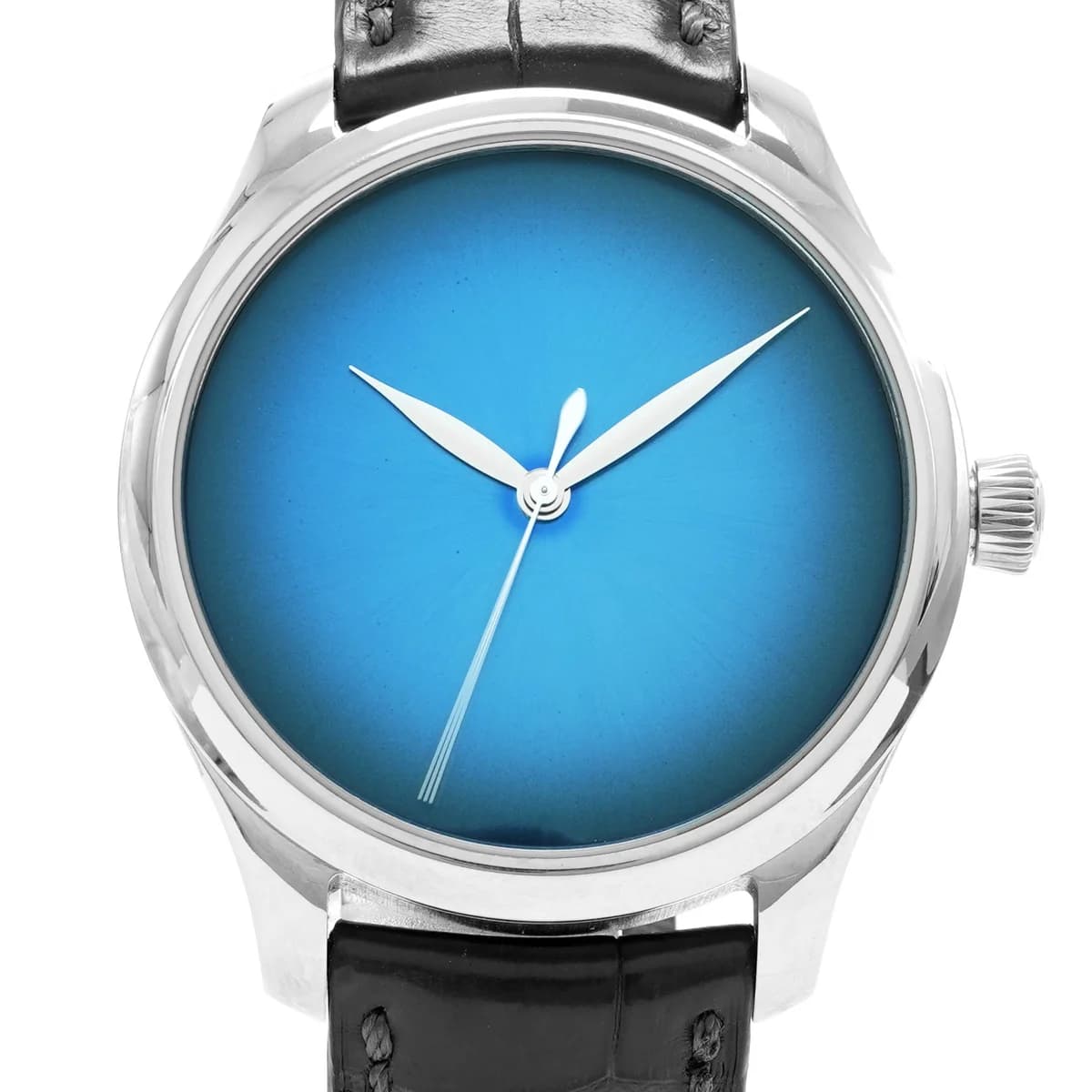
H. Moser and Cie has one of the more unusual origin stories in watchmaking. Heinrich Moser founded the original company in 1828 in St. Petersburg, Russia, selling watches to Russian princes and members of the Imperial Court. Twenty years later, in 1848, he returned to his hometown of Schaffhausen and established a watch factory there. Moser became one of the most important industrial pioneers in the region, co-founding SIG and building the first hydroelectric power station on the High Rhine. Vladimir Lenin reportedly owned a Moser watch, which gives a sense of how far the brand's reach extended. Moser died in 1874, and the company eventually fragmented. The Russian operations were expropriated during the October Revolution of 1918, and the Swiss parts were split among managing directors. The brand was effectively dormant for over a century until Dr. Jurgen Lange and Roger Nicholas Balsiger, Heinrich Moser's great-grandson, re-established it in 2002. A new manufacture opened in Schaffhausen in 2005. Then in 2012, the Meylan family's melb Holding acquired the company, and Edouard Meylan became CEO on April 1, 2013. That is when things got interesting.
Meylan runs Moser like a punk band that happens to produce haute horlogerie movements in Schaffhausen. They made a Swiss Alp Watch shaped exactly like an Apple Watch, displayed it at SIHH, and dared the industry to say something. They followed it up by putting a wheel of Swiss cheese on the dial at Baselworld to mock the state of watch fairs. They released watches with no logo, no indices, and no hands, just a fumé dial and nothing else, to make a point about brand worship. I love this about Moser. In an industry where most brands take themselves painfully seriously, Moser has the confidence to be irreverent while backing it up with genuinely serious watchmaking.
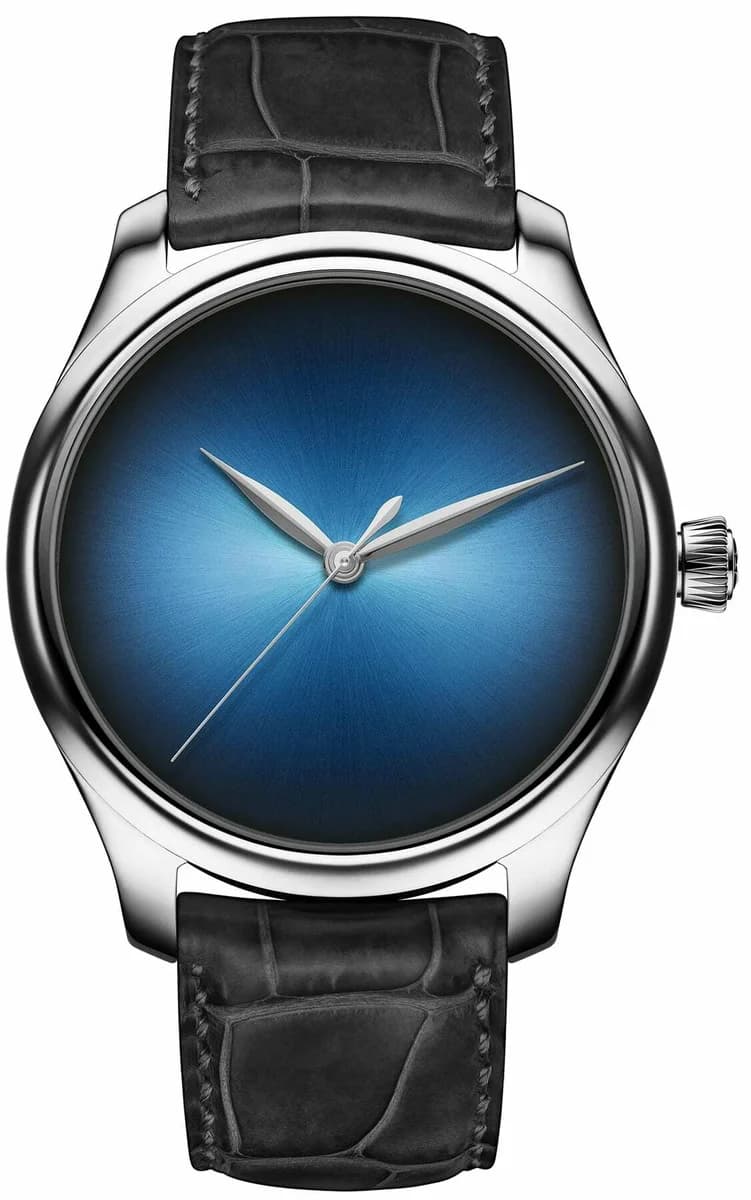
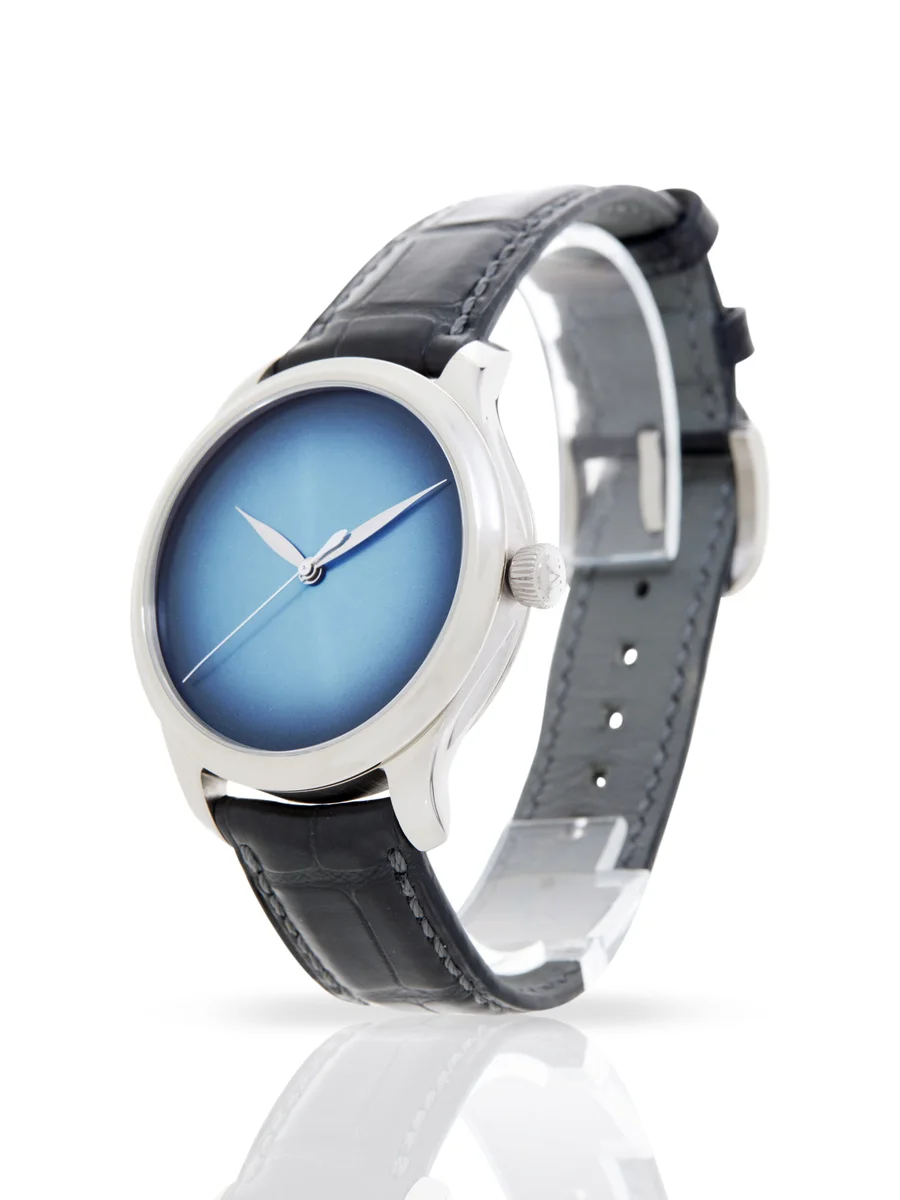
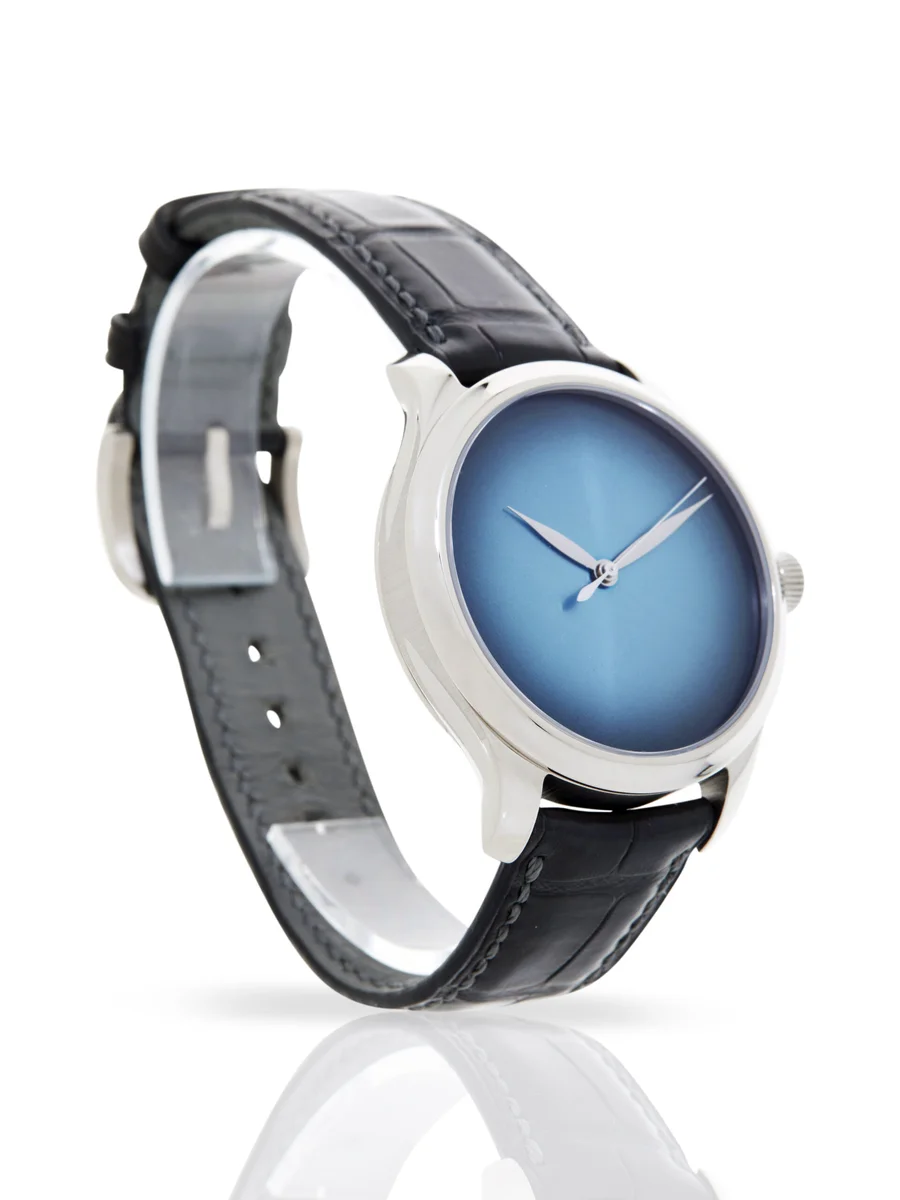
The Endeavour Centre Seconds is the watch underneath all of that. Specifically, the reference 1200-0215 is the Concept version in 18-karat white gold with the Funky Blue fumé dial. Concept means there is nothing on the dial. No logo. No indices. No minute track. Just the fumé gradient and two leaf-shaped polished hands sweeping across an ocean of blue that shifts from light at the center to deep saturation at the edges. The case is 40mm in diameter, 10.7mm thick, and 47mm lug to lug. Those dimensions make it a genuinely comfortable watch. For context, a Rolex Datejust 41 is 11.8mm thick and a Grand Seiko Snowflake is 12.5mm. The Endeavour sits flatter on the wrist than both of them despite housing a full automatic movement with 72 hours of power reserve.
The fumé dial is the reason this watch exists. Fumé means smoked in French, and the technique involves over 200 individual steps to produce a single dial. The base gets a sunburst finish, machined in the traditional way. Then three separate pigments are applied by hand in varying densities, heavier at the edges and lighter toward the center, creating the gradient that gives the dial its depth. The dial is fired twelve times during the process. Each firing bonds the lacquer to the surface, and even minor inconsistencies in temperature or timing alter the shade. The result is that no two fumé dials are exactly the same. Every single one is unique. When light hits the surface, the color appears to glow from within, shifting constantly as the angle changes. I have seen a lot of watch dials in my time. The Moser fumé does something that no photograph fully captures. In person, the dial looks alive.
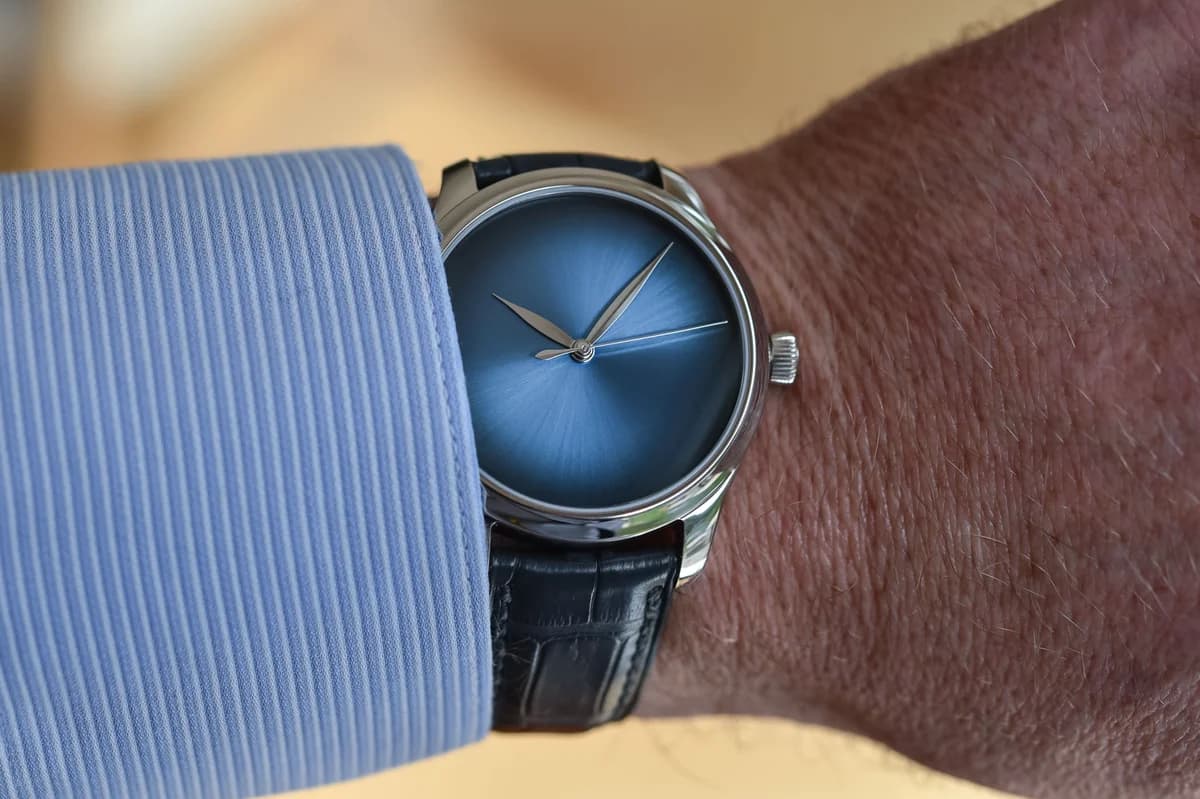
Moser offers the fumé in a range of colors, and each one changes the character of the watch entirely. Funky Blue is the most iconic and the one most associated with the brand. There is also Midnight Blue, which is darker and more formal. Cosmic Green catches light differently depending on whether the wearer is indoors or outside. Burgundy has a warmth that works beautifully with rose gold cases. And newer variants like Smoked Salmon and Lime Green Enamel push the technique into territory nobody else is exploring. The Funky Blue on the 1200-0215 is the one I keep coming back to. The blue shifts from a pale ice at the center to a deep navy at the edges, and in certain light it picks up almost a purple undertone. It is the dial that put Moser on the map for a lot of collectors, and for good reason.
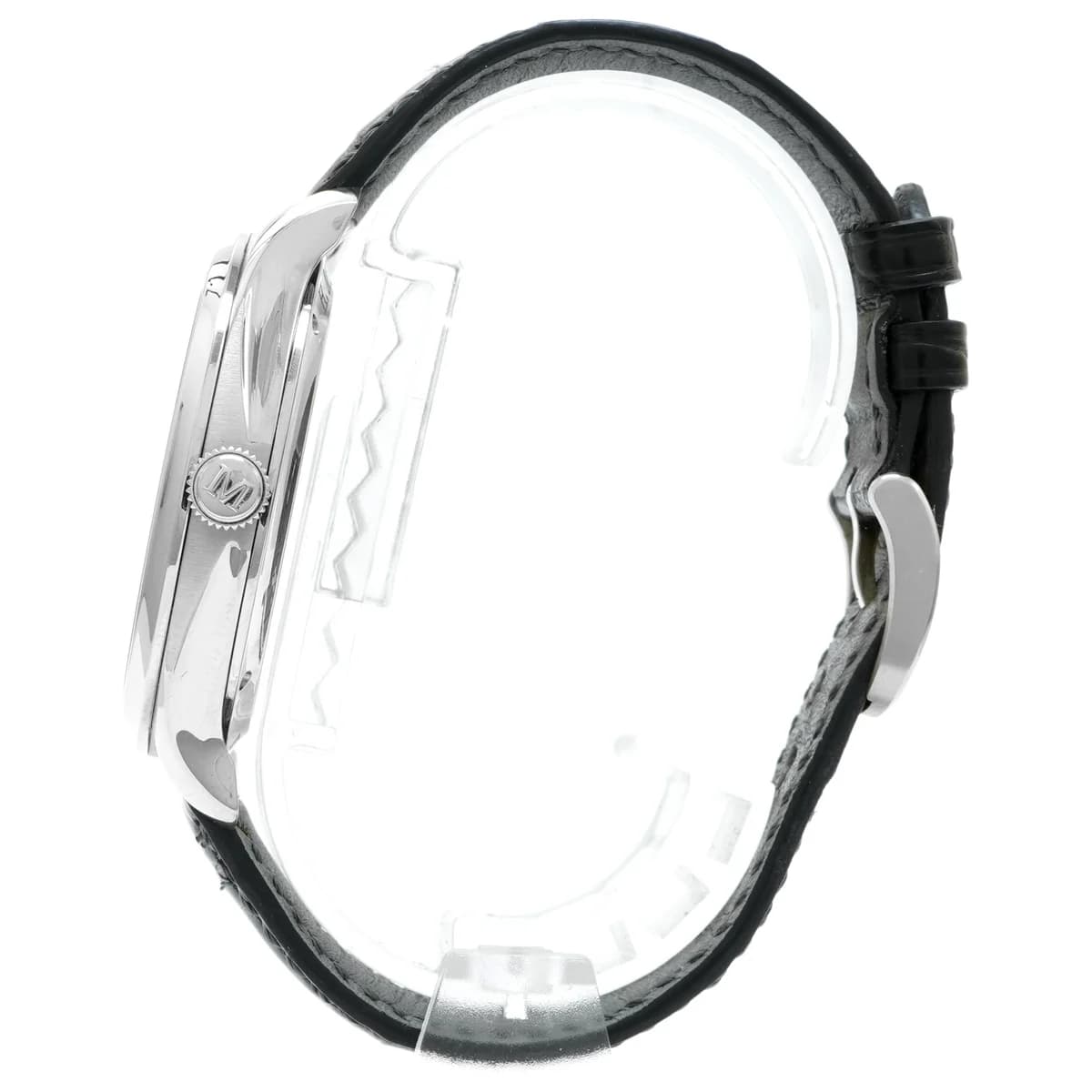
The HMC 200 is Moser's workhorse automatic caliber, and I want to be specific about what in-house means here because the term gets abused across the industry. Moser designs the movement, manufactures the components, and assembles everything in their Schaffhausen workshops. They do not buy outsourced ebauches from ETA or Sellita and decorate them. The HMC 200 measures 32mm in diameter and 5.5mm in height, carries 27 jewels, and beats at 21,600 vibrations per hour, which is 3 Hz. The power reserve is a minimum of 72 hours, which means three full days off the wrist before it stops. It uses a bi-directional pawl winding system with an engraved oscillating weight, and it includes a hacking seconds function for precise time setting. That 3 Hz frequency is slower than the 4 Hz found in most modern sport watches, but it contributes to the longer power reserve and the smooth sweep of the seconds hand has a calm, unhurried quality that fits the personality of the Endeavour. The movement diameter of 32mm inside a 40mm case means the caliber fills the case well, leaving minimal empty space around the edges. Moser did not take a small movement and drop it into a large case. The proportions are intentional.
The real story of the HMC 200, though, is the hairspring. Moser uses the Straumann hairspring, and this is not just a branding exercise. The hairspring is manufactured by Precision Engineering AG, known as peag, which is also based in Schaffhausen and is part of the same melb Holding group. peag was founded in 2001 by Thomas Straumann. The Straumann name connects back to Dr. Reinhard Straumann, who invented the Nivarox alloy in 1931. peag's proprietary alloy is called PE 4000, a refined evolution of that original formula. The first Straumann hairspring was delivered in a Moser watch in 2007. This matters because the hairspring is arguably the single most critical component in any mechanical watch. It is the component that determines accuracy. Most brands in the industry buy their hairsprings from the Swatch Group's Nivarox-FAR subsidiary. Moser makes their own with a flat overcoil configuration. That puts them in very exclusive company alongside Rolex with Parachrom and Syloxi, Omega with the Si14, and a handful of others. For a brand of Moser's size, manufacturing your own hairsprings is an extraordinary commitment to vertical integration.
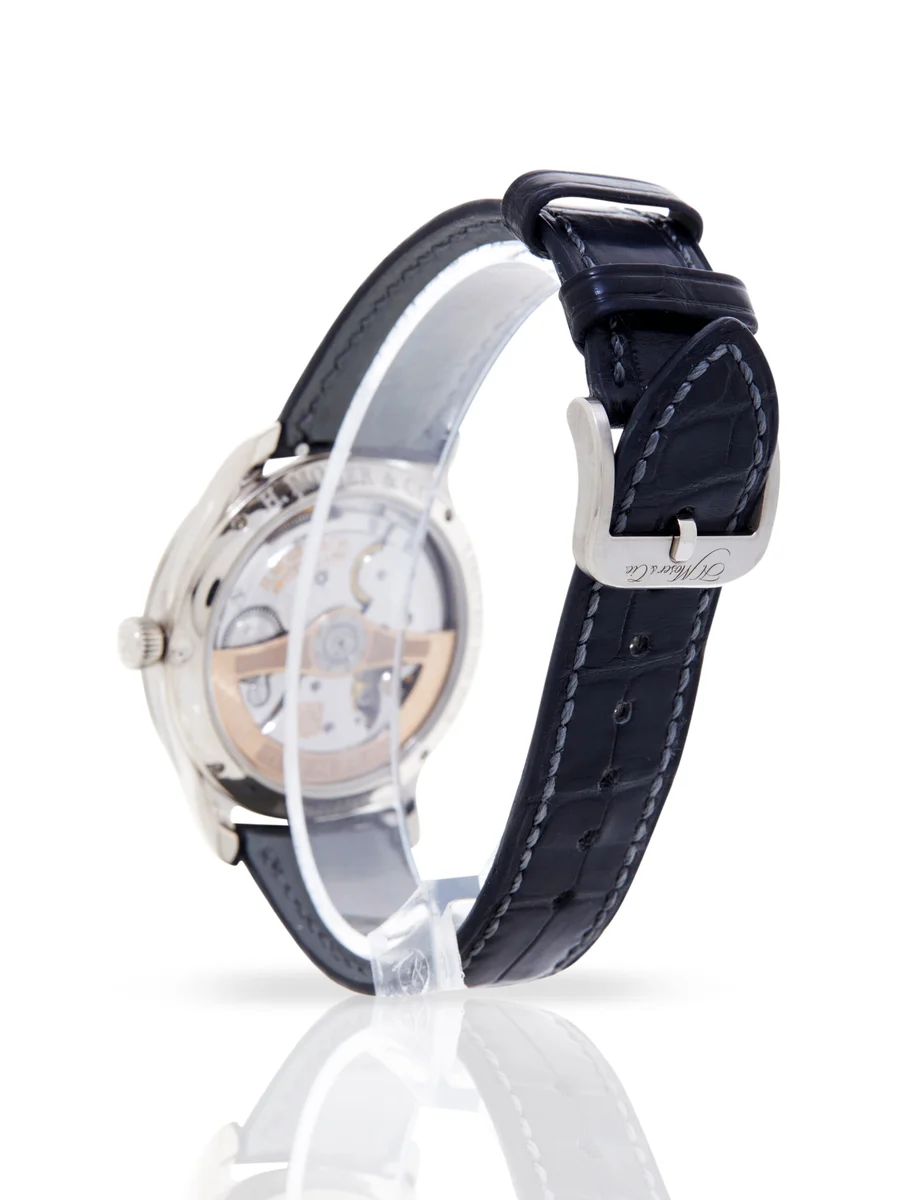
Through the sapphire caseback, the HMC 200 is finished with Moser stripes. These are not Geneva stripes and they are not perlage. Moser deliberately chose to create their own decorative pattern rather than follow the conventions of the Vallee de Joux. The stripes are wider and more modern in appearance, with a clean, contemporary feel that matches the overall design language of the watch. The finishing is confident and precise without being showy. It is not trying to compete with the hand-beveling of A. Lange and Sohne or the mirror polishing of Philippe Dufour. It does not need to. The movement is about engineering credibility, and the finishing reflects that priority.
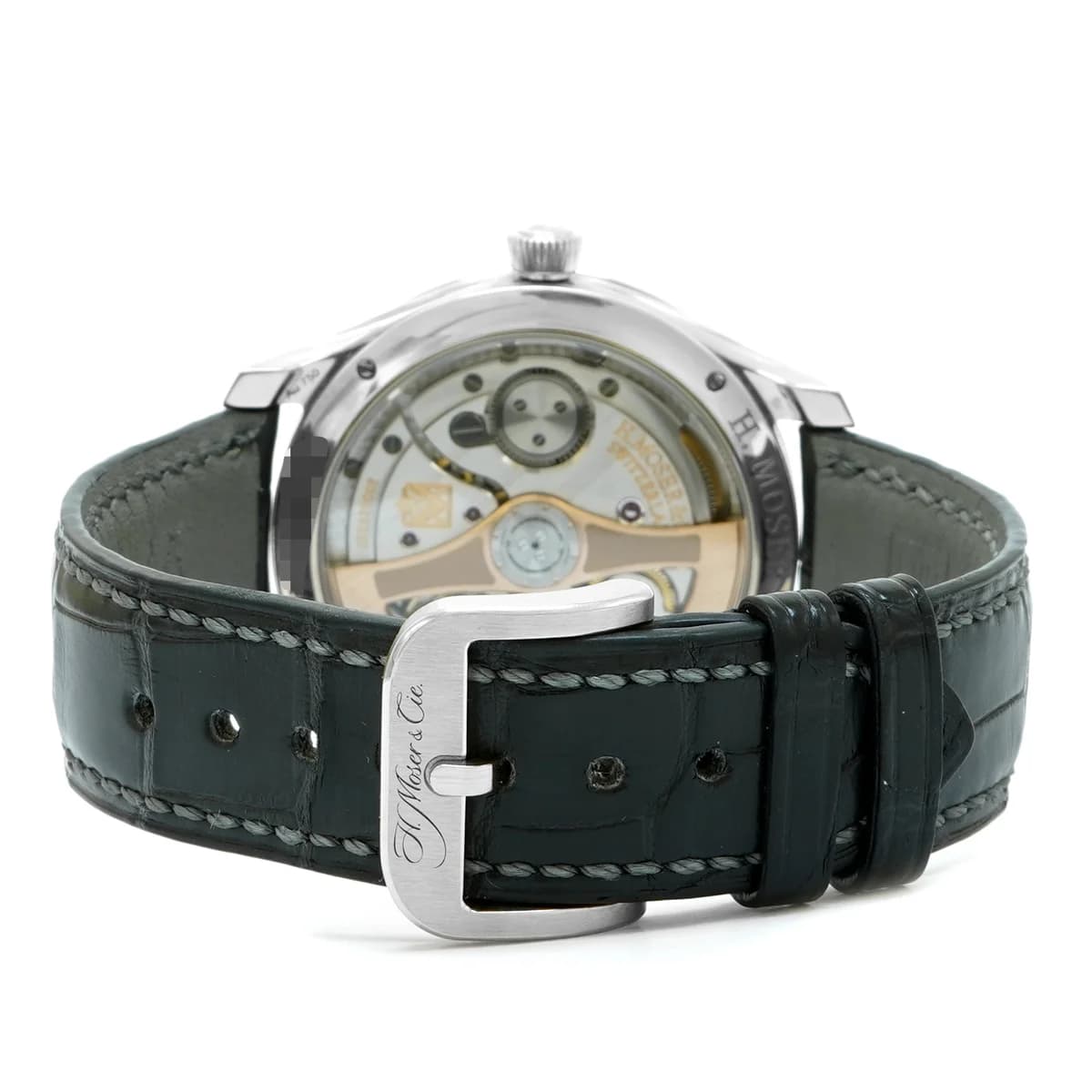
What strikes me about the Endeavour Centre Seconds on the wrist is the balance. At 40mm with 47mm lug to lug, it sits perfectly on my 6.5-inch wrist without any overhang. The 10.7mm thickness means it slides under a shirt cuff without catching. White gold has a subtle presence that steel cannot replicate. It has a weight to it, a density, but it is not heavy in the way a Rolex Submariner in steel feels heavy. The curved lugs follow the contour of the wrist, and the polished and satin-finished surfaces of the case alternate in a way that catches light without being flashy. The 30 meters of water resistance is enough for handwashing and rain, though this is clearly not a watch designed for the ocean. The alligator strap is soft and comfortable from the first wear, which is not always the case with leather straps in this segment. Some brands ship straps that feel like cardboard for the first month. This one does not. I appreciate that. The strap width is 20mm, which is standard enough that finding aftermarket options is straightforward if the alligator is not the right fit for every occasion. A blue or grey suede strap on this watch would be interesting for a more casual context.
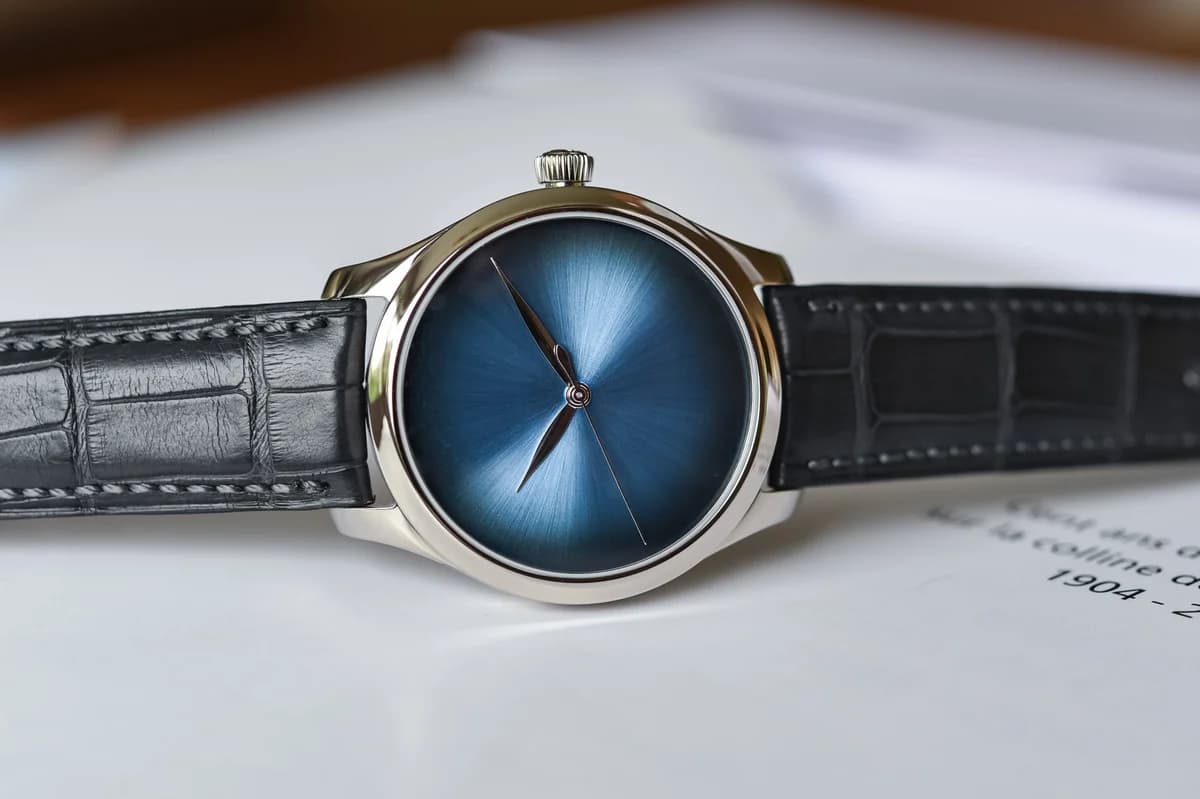
The Concept line deserves its own discussion because it represents something larger than just removing a logo from a dial. Moser introduced the Concept in 2015, and the statement it makes is deliberately uncomfortable for the luxury watch industry. It asks whether a watch needs a logo to be desirable. Whether indices are functional necessities or just visual conventions. Whether the dial itself, the craft of creating that fumé surface, can be enough. For most brands, removing the logo would be commercial suicide because the logo is what the buyer is paying for. For Moser, removing the logo is a statement of confidence. It says that the quality of the work speaks for itself, that anyone who knows watches will recognize a fumé dial across a room without needing four letters to confirm it. I find that genuinely compelling. There is also a practical elegance to the Concept that grows on you over time. Without indices, the eye is not scanning for a specific position. It reads the general time. Quarter past, half past, roughly ten minutes to. It changes the relationship with the watch. Instead of demanding precision, it encourages a more relaxed awareness of time. Whether that appeals to a person or drives them crazy is entirely a matter of personality.
The Endeavour is the core of Moser's collection, but it is not the whole story. The Endeavour family includes the Perpetual Calendar, which won the GPHG Complicated Watch Prize in 2006, just one year after the new manufacture opened. That was a statement of intent. The Tourbillon variants push the Endeavour into high complication territory. The Pioneer collection takes Moser's movements into sportier case designs. The Streamliner, with its integrated bracelet and art deco inspired cushion case, won the GPHG Time Only category in 2024 with the Small Seconds Blue Enamel. And then there is the Swiss Alp Watch, which continues to generate the kind of press coverage that brands with ten times the marketing budget would envy. Moser is independent. They are not owned by Richemont or Swatch Group or LVMH. The Meylan family runs the business directly through melb Holding. In an industry increasingly dominated by conglomerates, that independence is rare and worth appreciating.
The key dates tell the story of a brand with deep roots and a modern resurrection. Heinrich Moser founded the company in 1828. He built his Schaffhausen factory in 1848. He died in 1874 and the company eventually went dormant. In 2002, Dr. Jurgen Lange and Roger Nicholas Balsiger brought the name back. The new Schaffhausen manufacture opened in 2005. The Endeavour Perpetual Calendar won its first GPHG prize in 2006. The Straumann hairspring was first delivered in a Moser watch in 2007. melb Holding acquired the brand in 2012. Edouard Meylan became CEO in 2013. The Concept line launched in 2015. That progression from revival to GPHG recognition to Concept provocation happened in just over a decade, which is remarkable for any watch brand, let alone an independent one. Schaffhausen itself is worth visiting if the opportunity comes up. The city sits on the Rhine near the famous Rhine Falls, and the watchmaking tradition there is deeper than most people realize. IWC is also based in Schaffhausen, which means two serious Swiss watch manufactures share the same small city. The proximity is not a coincidence. Heinrich Moser's industrial legacy helped build the infrastructure that made precision manufacturing possible in the region.
The honest critique of this watch is practical. Without any indices or markers, setting the time on the Concept is a guessing game. There is no minute track, no hour markers, nothing to indicate precisely where the minute hand should point when the crown is pulled. If precise time-setting matters, this is not the watch for that. My second observation is that the provocations, the cheese dial, the Swiss Alp Watch, the Concept itself, sometimes overshadow the actual watchmaking. The cheese dial gets more press than the HMC 200 movement architecture. The Swiss Alp Watch gets more Instagram engagement than the Endeavour. I wish more people talked about the Straumann hairspring and the in-house manufacturing than the marketing stunts, because the substance behind the stunts is what actually justifies the brand's position. And the 30-meter water resistance, while adequate for a dress watch in white gold, is lower than what some competitors offer. The Nomos Club Automatic in steel delivers 100 meters. Different watches with different purposes, but it is worth noting.
The white gold case with the Funky Blue fumé is a combination that works across a wide range of contexts. On darker skin tones, the cool blue and silvery white gold create a striking contrast that I find particularly appealing. The watch pairs naturally with navy and charcoal suiting, and it works just as well with a Kiton sport coat in lighter tones as it does under the cuff of a formal dinner jacket. The alligator strap in grey keeps the overall palette cool and cohesive. This is not a watch that demands attention. It draws it quietly. The fumé catches light in ways that make people lean in for a closer look. That subtlety is rare in watches at this level.
The people who buy Moser buy the Endeavour because the dial is unlike anything else in the industry, and the movement behind it is genuinely in-house at a level that most brands in this segment cannot claim. Limited to 100 pieces, the 1200-0215 represents what I think Moser does better than anyone else in watchmaking. They take serious Swiss horology, back it with a movement and a hairspring that they actually build themselves, finish it with a dial technique that takes over 200 steps and twelve firings, and then they have the audacity to remove every marking from the surface and let the work stand alone. The fumé is the reason to own a Moser. Everything else is theater. But the theater is so good that it makes the substance even more satisfying when you finally discover what sits behind it. A Straumann hairspring, an in-house caliber with 72 hours of reserve, a dial that took over 200 steps and twelve firings to produce. That is what a Moser actually is. The provocations just ensure you pay attention long enough to find out.
Also in Independent Masters