
F.P. Journe
Tourbillon Souverain
Tourbillon Souverain
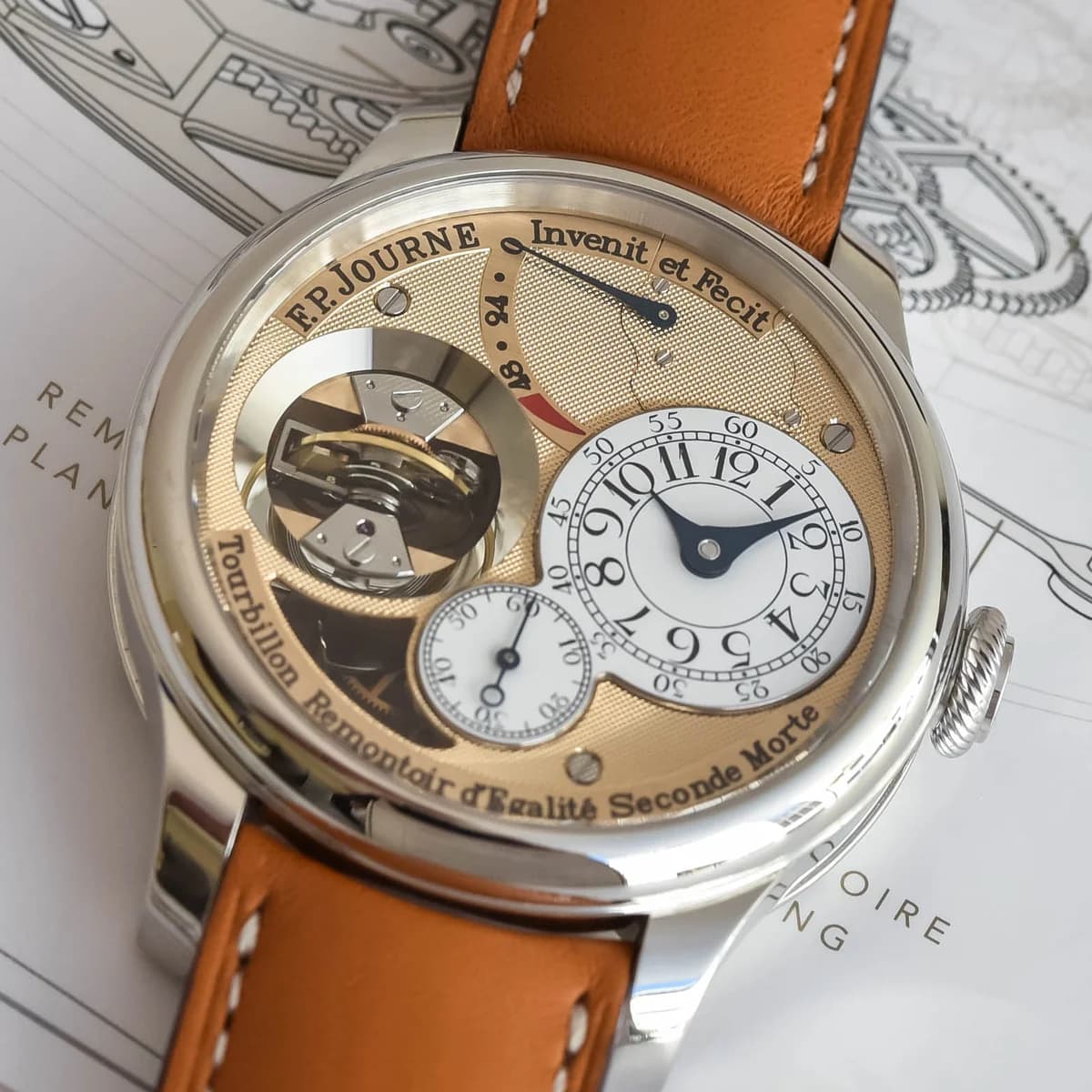
Most watchmakers launch a brand with something safe. A time-only dress watch. A simple three-hander with a reliable base movement. Something that says I am here and I would like to be taken seriously. Francois-Paul Journe did the opposite. In 1999, when he formally launched Montres Journe, the first watch he offered was a tourbillon with a remontoire d'egalite. Not a simple tourbillon. A tourbillon paired with a constant-force mechanism, something that had never been combined in a wristwatch before. That is the most confident opening statement any watchmaker has ever made. He did not walk into the market asking for permission. He walked in with the two most difficult problems in mechanical timekeeping solved simultaneously in a single 38mm case and said this is who I am.
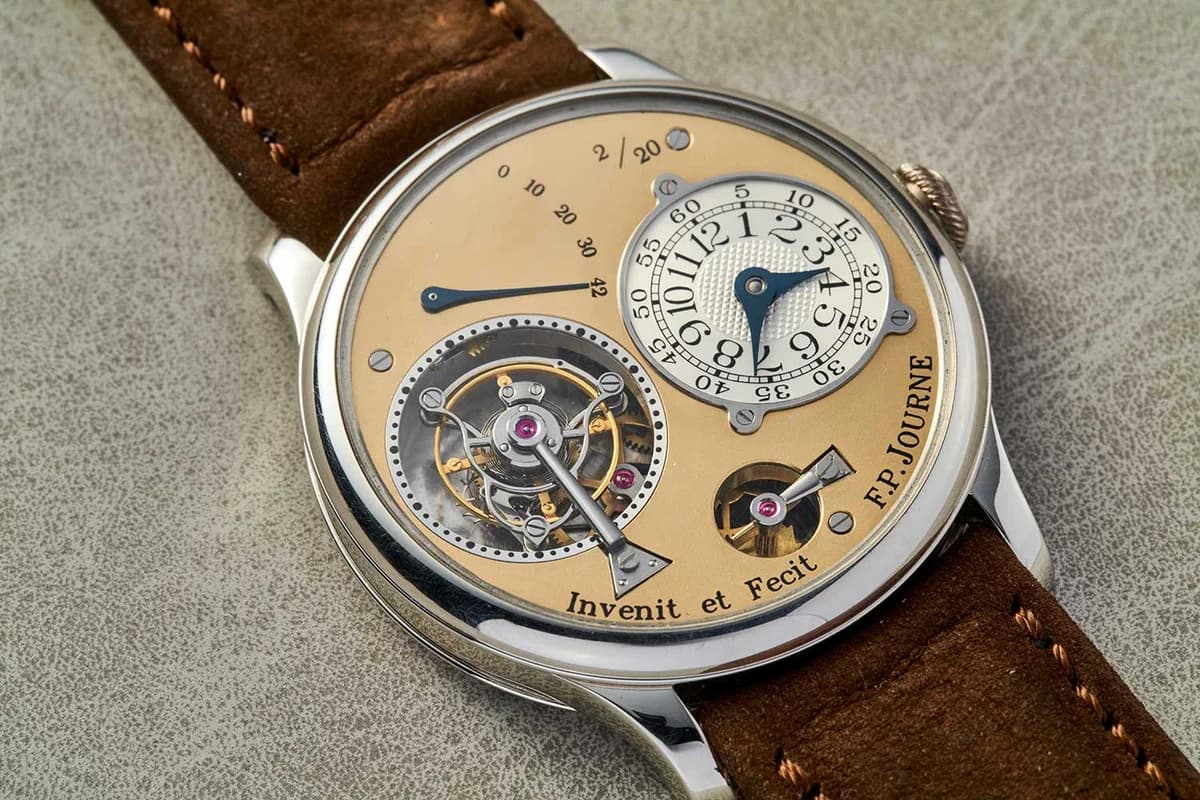
The story actually starts earlier. In 1991, Journe completed his first tourbillon wristwatch prototype, entirely by hand, and signed it F. P. Journe 11/91. That prototype was the first wristwatch ever to pair a tourbillon with a remontoire d'egalite. Only three wristwatches were ever crafted entirely by Journe's hands alone, and that prototype remains in his personal collection. He displayed it at the Basel Fair and spent the rest of the decade refining the concept. In 1993, he made two more, including serial 15/93, the first wristwatch he ever sold and only the second he ever made. By 1999, Journe had enough confidence in the mechanism and enough demand from collectors to launch a proper series. He borrowed a concept from Abraham-Louis Breguet, the souscription model, where buyers paid 50 percent upfront to fund the production of 20 pieces. That first subscription series of the Tourbillon Souverain, all in platinum cases with brass movements and gold dials, established the foundation of everything F. P. Journe would become.
I think about what it means that Journe chose Breguet's business model for his launch. Breguet is the watchmaker Journe studied most closely. As a young craftsman in Paris, apprenticing at his uncle Michel Journe's workshop, Francois-Paul restored actual Breguet movements. Not reproductions. The real objects. He disassembled them, studied how Breguet solved problems with 18th-century tools, and put them back together. The intellectual connection between Breguet and Journe is direct. Breguet invented the tourbillon in 1801, patenting a rotating cage that compensated for the gravitational error that affected pocket watches when they sat in one position. Breguet also built remontoires. But Breguet never combined the two in a single watch. Nobody did, for nearly two centuries, until Journe.
The remontoire d'egalite is the mechanism that separates the Tourbillon Souverain from every other tourbillon wristwatch that has ever existed. To understand why it matters, think about what a tourbillon actually does and what it does not do. A tourbillon rotates the entire escapement, balance wheel and hairspring and escape wheel, inside a cage that typically completes one full revolution every 60 seconds. This rotation averages out the positional error that affects a watch when it sits in one orientation. Dial up, dial down, crown up, crown down, each position exerts gravity on the balance wheel differently, causing rate variations. The tourbillon addresses that. But it does not address a completely separate problem. The mainspring delivers energy to the escapement through a gear train, and that energy is not constant. When the mainspring is fully wound, it pushes harder. As it unwinds over 42 hours, the force diminishes. That declining force causes the amplitude of the balance wheel to change, which causes the rate to change. A tourbillon compensates for position but does nothing about power delivery. The remontoire compensates for power delivery.
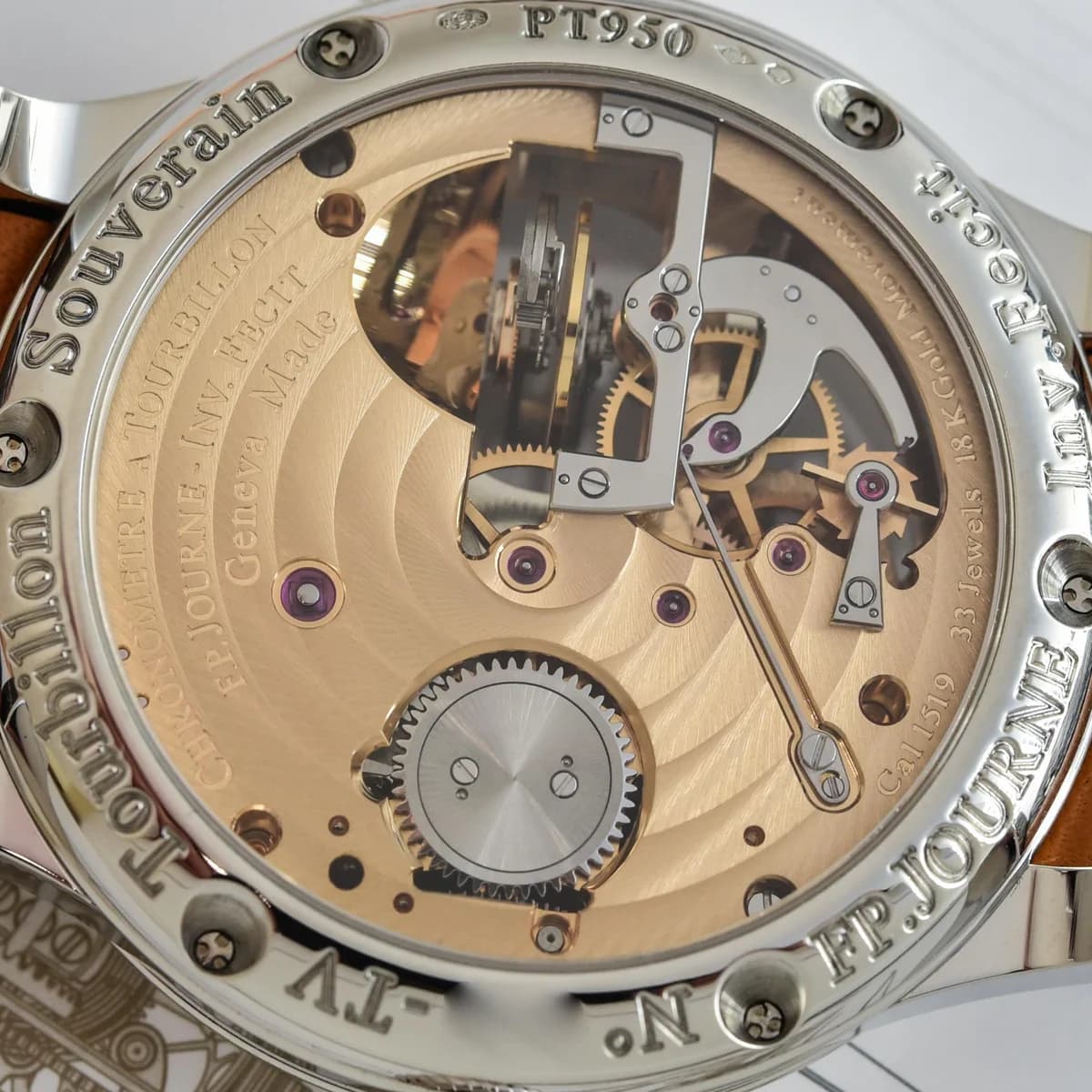
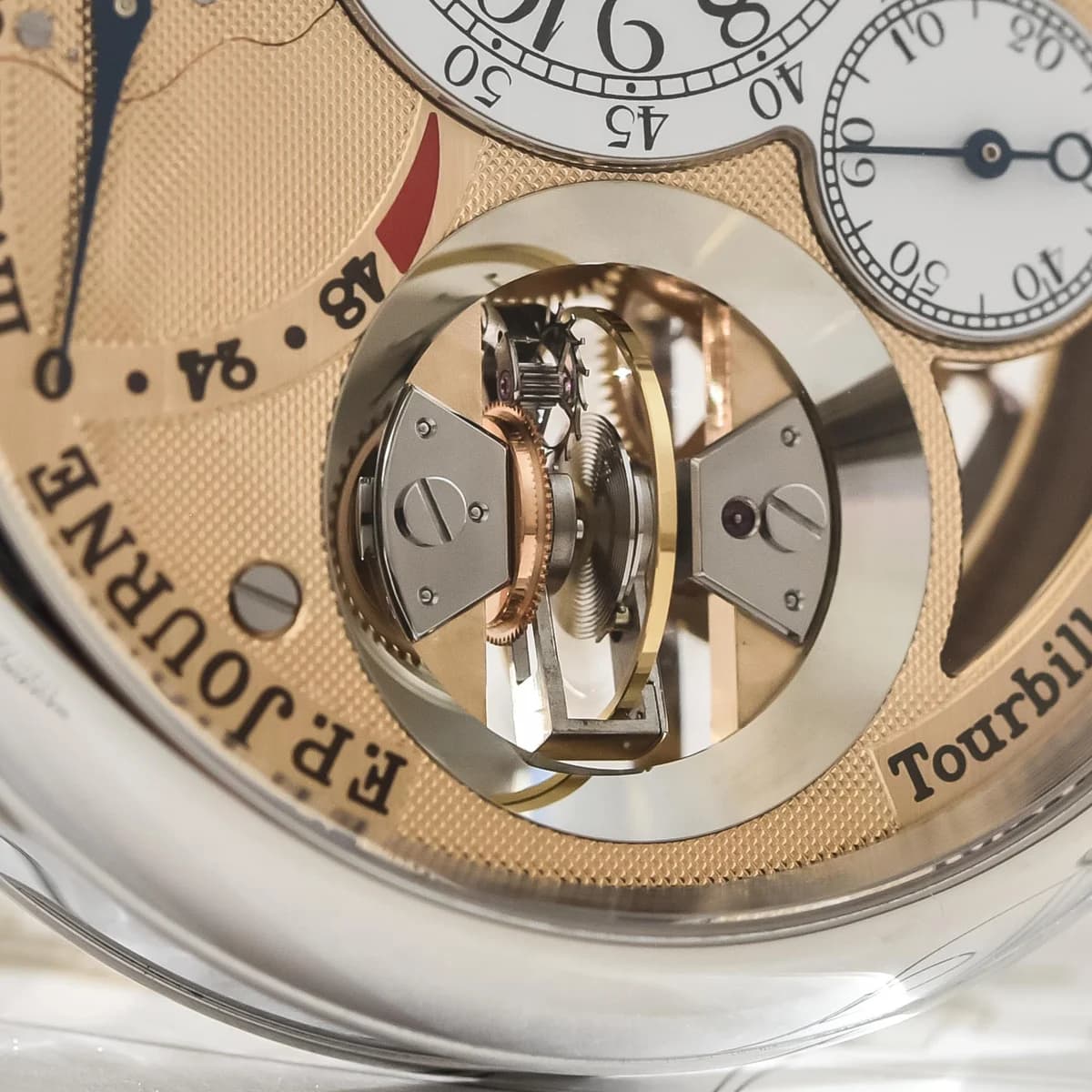
Journe uses a blade spring rather than a spiral spring for the remontoire, choosing compactness over convention. The mechanism sits between the fourth wheel and the escapement, functioning like a dam that controls the flow of water. A secondary wheel is assembled on a pivoting lever that oscillates concentrically to the tourbillon cage. The mainspring pushes energy through the gear train, but instead of that energy reaching the escapement directly, it charges the remontoire's auxiliary spring. That spring stores a precisely measured amount of energy and releases it to the escapement in consistent pulses, one burst per second. The result is a tourbillon that receives exactly the same force at hour one as it does at hour forty. The amplitude stays consistent. The rate stays consistent. The two primary sources of variation in a mechanical watch, positional error and power delivery error, are both addressed in a single movement. Nobody else has done this in a wristwatch. That claim has stood since 1991, through prototype and production, and as of today it remains unchallenged.
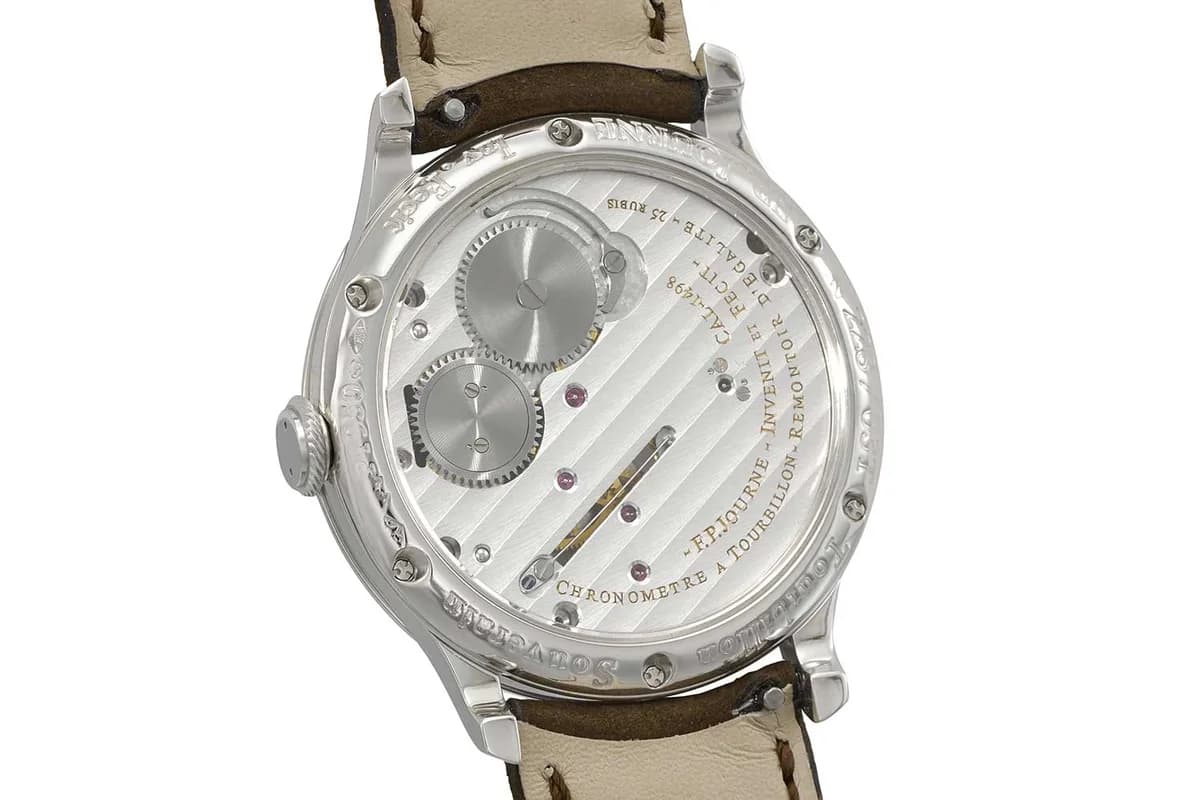
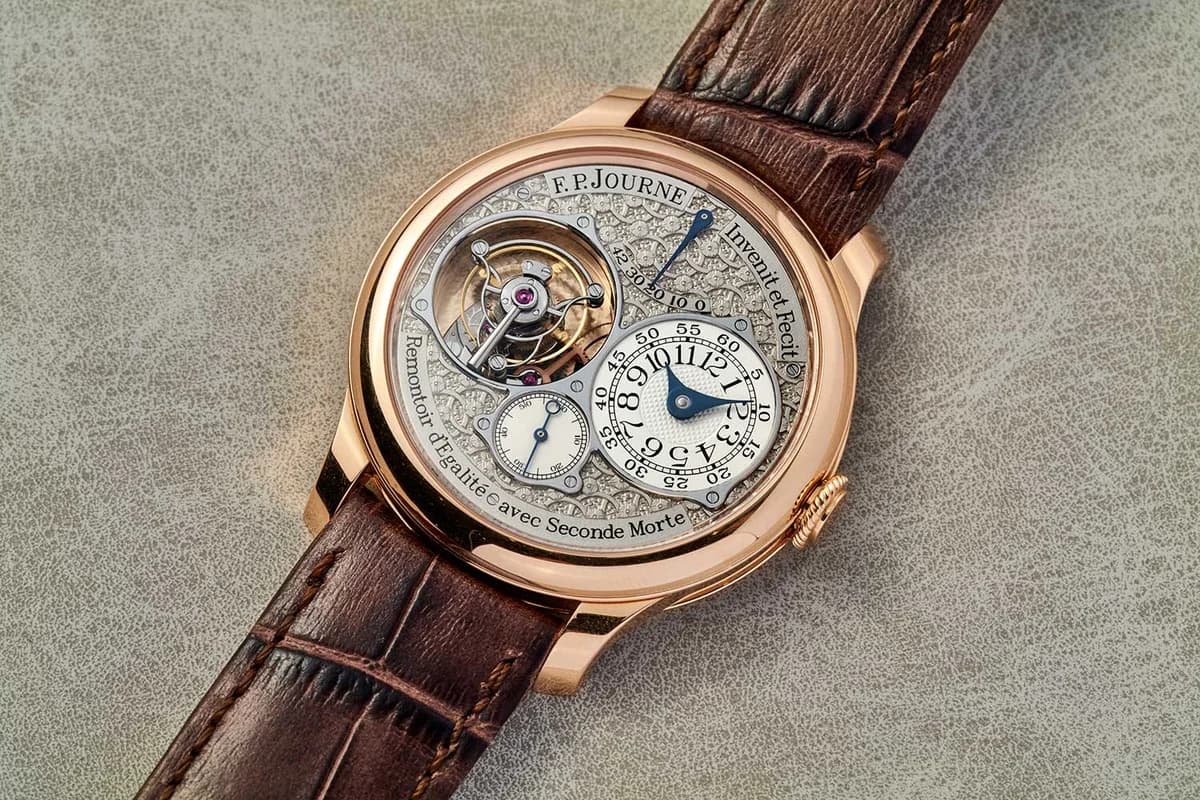
The original production Tourbillon Souverain used the Caliber 1498, a hand-wound movement built in rhodium-plated brass. The movement measures 32.40mm in diameter and just 6.60mm in height, containing 191 components and 28 jewels. The case was 38mm in platinum or 18K rose gold, and at 9.9mm thick it sat remarkably flat on the wrist for a watch housing both a tourbillon and a constant-force mechanism. The dial layout placed the off-center hours and minutes at 3 o'clock, with the tourbillon visible through an aperture on the left side of the dial and a power reserve indicator at 12 o'clock. The frequency is 21,600 vibrations per hour (3 Hz), and the power reserve is 42 hours, plus or minus two. Production of the brass movement Tourbillon Souverain ran from 1999 through late 2003, spanning four distinct series. The subscription series was 20 pieces. A second series of approximately 17 pieces followed. A third series produced around 60 pieces. The fourth and final brass series produced approximately 320 pieces. Each series had subtle dial and finishing differences that collectors use to identify provenance.
In 2003, Journe made a decision that defined the next era of his brand. He transitioned every movement in his collection from brass to 18K rose gold. This was not cosmetic. Rose gold is considerably harder to machine than brass. It requires different tooling, different cutting speeds, different finishing techniques. It is considerably more expensive as a raw material. Journe made the switch because he felt brass did not represent the level of craft his work demanded. He was the first modern watchmaker to build movements entirely in 18K rose gold, and the decision affected every reference in the Souverain and Octa collections simultaneously. The Tourbillon Souverain received the new Caliber 1403, which was not simply a brass movement recast in gold. Only the tourbillon cage carried over from the Caliber 1498. Everything else was re-engineered.
The Caliber 1403 brought two major additions. The first was the natural dead-beat seconds, or seconde morte. This is a complication where the seconds hand advances exactly once per second in a precise jump rather than the sweeping motion typical of mechanical watches. In the Tourbillon Souverain, the dead seconds are not a separate mechanism bolted onto the movement. They are a natural by-product of the remontoire itself. Because the remontoire charges and releases energy in one-second intervals, the seconds hand locks in place during each charge cycle and jumps forward with each release. It is an elegant solution. The dead seconds add no extra components to the movement. They emerge from the physics of the remontoire, a complication that is simultaneously free and mechanically inevitable. The second addition was the movement material itself. The Caliber 1403 contains 193 components and 25 jewels (one fewer than the common misconception of 25), with a movement diameter of 32.40mm and a height of 7.20mm, slightly taller than the brass Caliber 1498 to accommodate the dead seconds mechanism. Despite the additional movement height, the case remained 9.9mm thick.
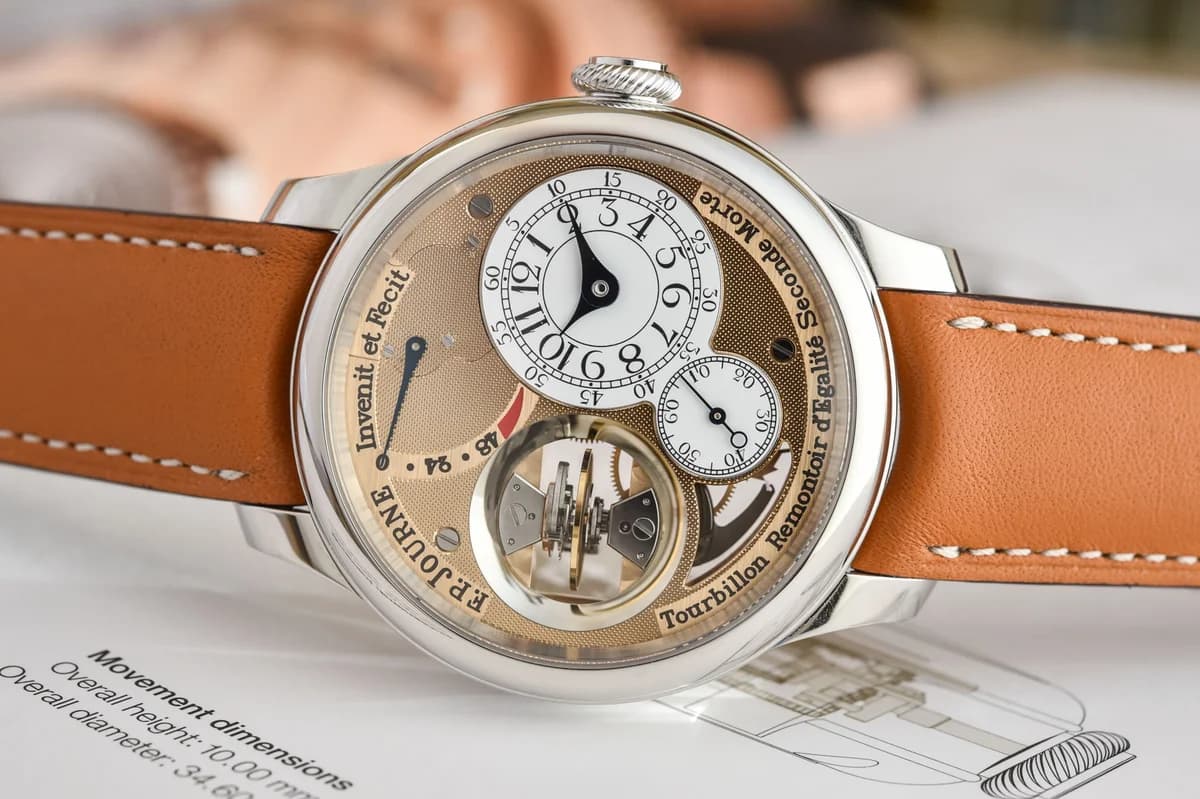
The GPHG recognized this achievement in 2004. The Tourbillon Souverain a seconde morte won the Aiguille d'Or, the Grand Prize, at the Grand Prix d'Horlogerie de Geneve. That is the watchmaking equivalent of winning the Academy Award for Best Picture. It was the first of three Aiguille d'Or wins for F. P. Journe (the Sonnerie Souverain won in 2006, the Centigraphe Souverain in 2008), making Journe the only three-time winner of the grand prize in GPHG history. The fact that his first win came for the Tourbillon Souverain, the watch that started everything, feels appropriate.
The Caliber 1403 version, known internally as Reference TN (Tourbillon Nouveau), remained in production from 2003 to 2018, essentially unchanged for fifteen years. That is a statement about how right Journe got it on the first revision. The case was available in 38mm or 40mm, in platinum or 18K 6N rose gold. The dial evolved through variants that included white gold, rose gold, Black Label editions limited to two per boutique annually, and special dial materials including green jade and black mother-of-pearl. The movement, always in rose gold, is visible through an exhibition caseback, signed Invenit et Fecit, Latin for he invented and he made it. That inscription appears on every F. P. Journe movement, but on the Tourbillon Souverain it carries particular significance because the combination of tourbillon and remontoire is genuinely his invention.
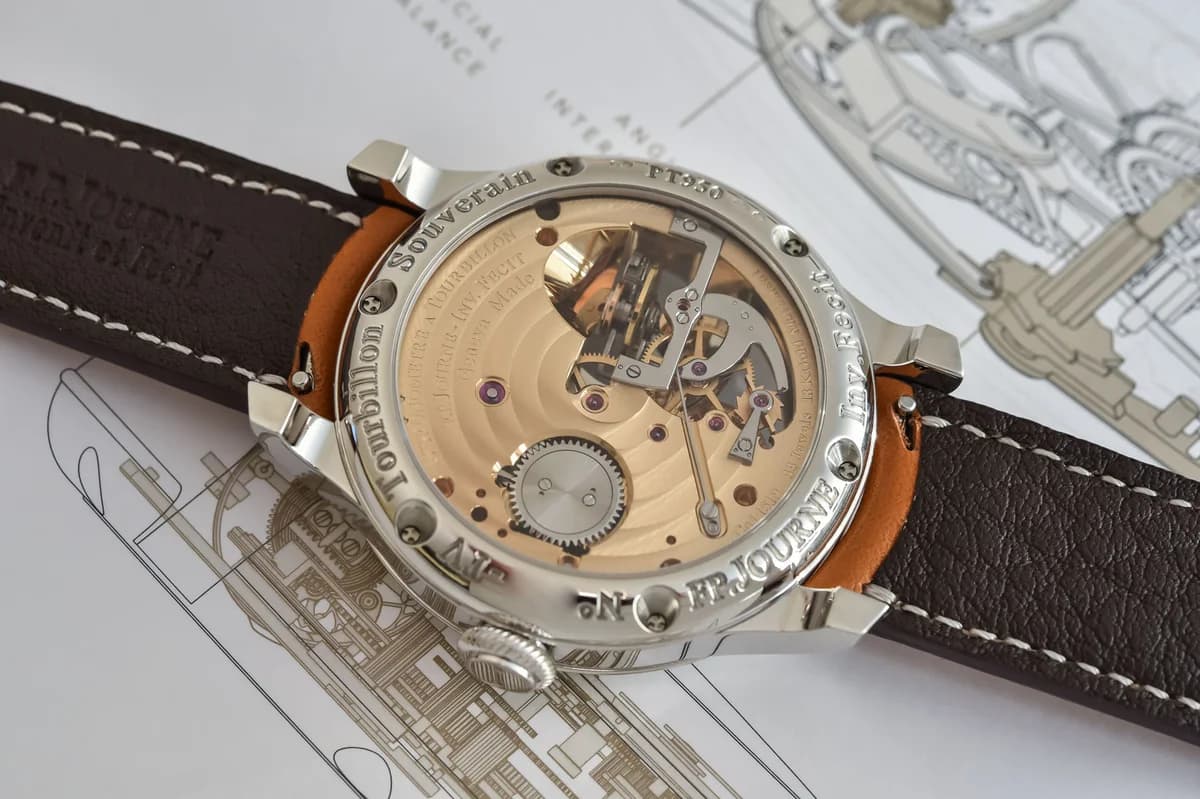
Journe builds the Tourbillon Souverain in his Geneva manufacture on Rue de l'Arquebuse, in the Coulouvreniere neighborhood of central Geneva. He is the only major watchmaker still based in the city center rather than an industrial zone or a valley campus. His facility is a converted gaslamp factory. He owns his own casemaker, Les Boitiers de Geneve, and his own dialmaker, Les Cadraniers de Geneve, both in Meyrin. The total annual production across all F. P. Journe references is approximately 800 to 900 watches. That vertical integration at relatively small scale means the Tourbillon Souverain is not mass produced. It is not even batch produced in any meaningful sense. Each movement is assembled, adjusted, and finished individually in rose gold by a team Journe personally trained.
I love the way the remontoire mechanism is visible on the dial side of the Tourbillon Souverain. Through the tourbillon aperture, the pivoting lever of the remontoire is visible, and it ticks back and forth with each one-second release of energy. It is a visual metronome. Most tourbillon watches invite the viewer to watch the cage rotate. The Tourbillon Souverain invites the viewer to watch the remontoire pulse. The tourbillon cage itself completes one full revolution every 60 seconds, which is the standard period for a tourbillon. But the remontoire action, that precise tick of the blade spring lever, gives the dial a rhythm that other tourbillons do not have. It is hypnotic in a way that a smooth sweep is not. Each tick is a demonstration that constant force is being delivered.
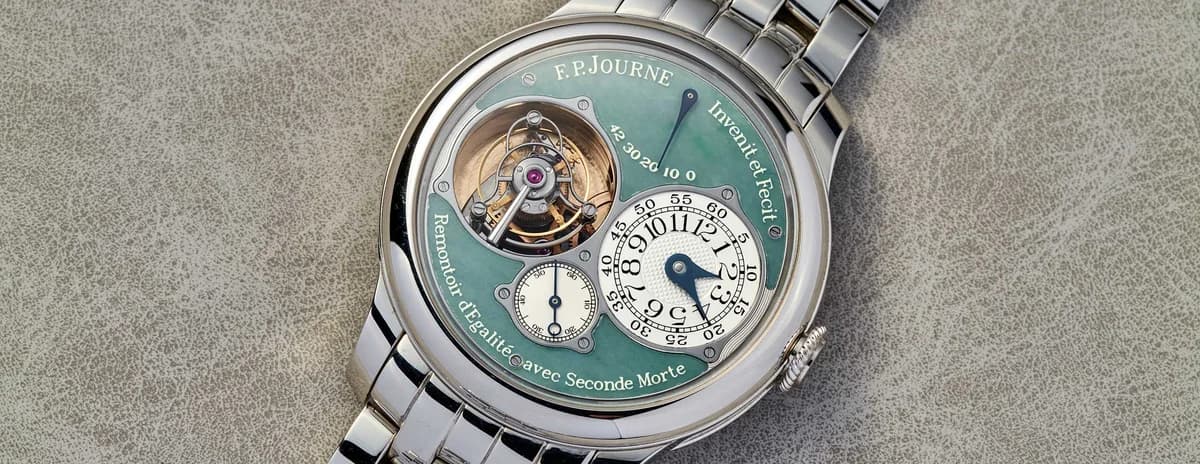
The Tourbillon Souverain has also appeared in several notable limited editions. In 2001, the 99-piece Ruthenium collection included a Tourbillon Souverain in a 40mm platinum case with a ruthenium-coated dial and movement, a dark, industrial aesthetic that looked nothing like the classical gold versions. In 2007, the Tourbillon Titanium (Reference TT) celebrated a boutique anniversary with just 20 pieces, featuring an entirely titanium construction including the tourbillon cage itself. And in 2015, a steel five-watch set retired the 38mm case size, pairing it for the first time with a rose gold movement in a stainless steel case.
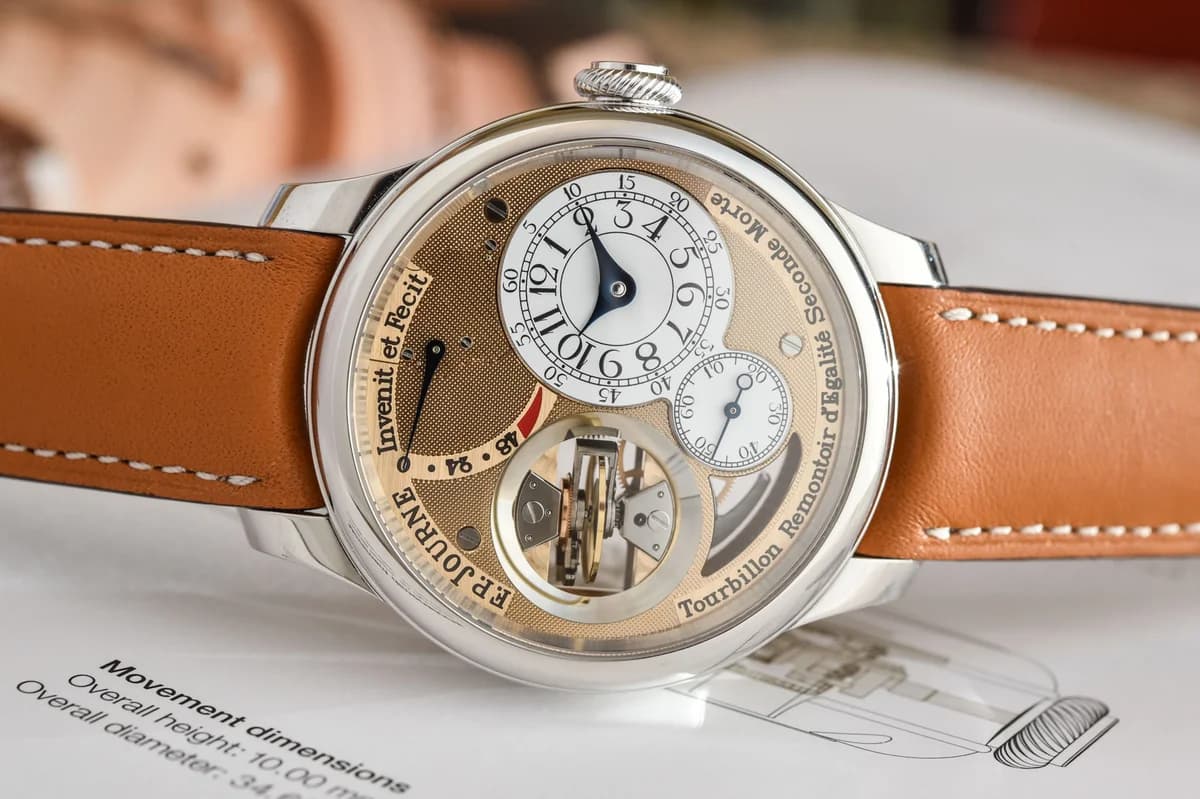
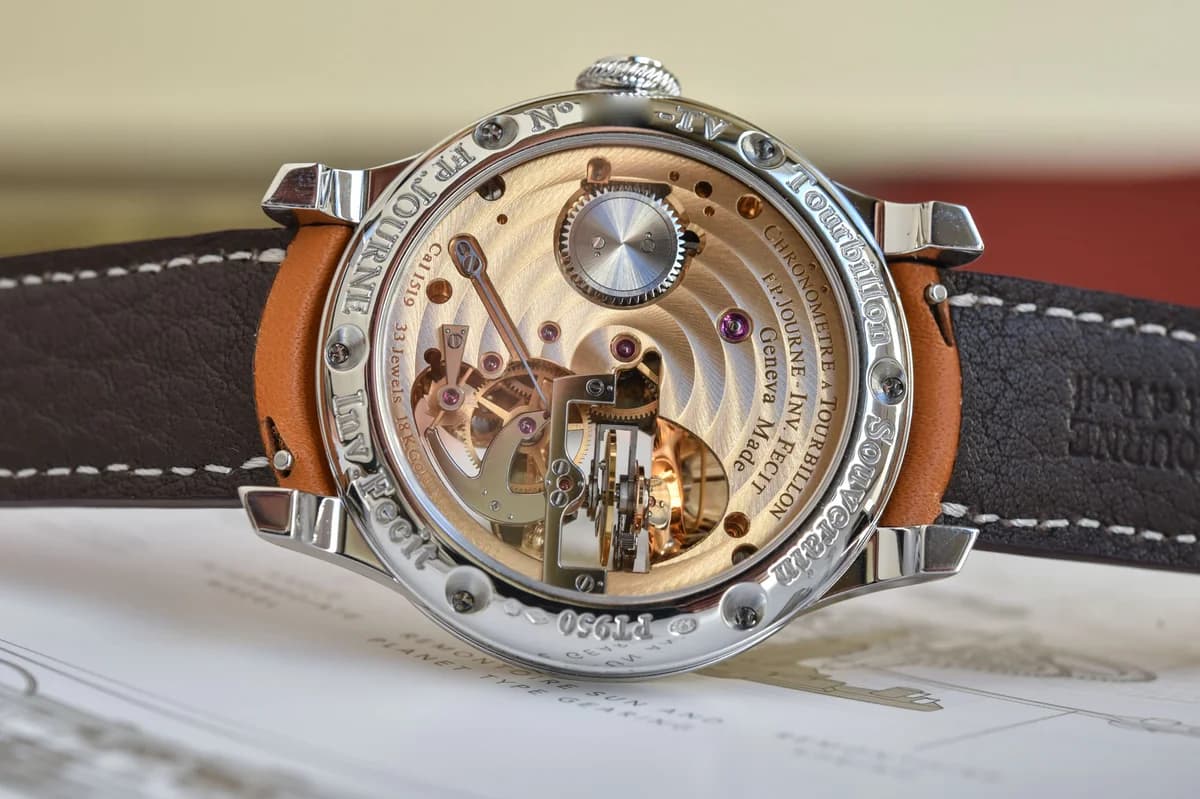
In 2019, for the twentieth anniversary of the Tourbillon Souverain, Journe introduced a fundamental reimagining. The Tourbillon Souverain Vertical uses the new Caliber 1519, which rotates the tourbillon cage 90 degrees from horizontal to vertical. The cage sits perpendicular to the main plate rather than parallel to it, and it completes one revolution every 30 seconds instead of the traditional 60. The vertical orientation means the tourbillon's compensating effect remains constant whether the watch is lying flat or positioned on its side. The Caliber 1519 is larger at 34.60mm diameter and 10.00mm height, with 230 components and 33 jewels. The power reserve nearly doubled to 80 hours. The case grew to 42mm with a thickness of 13.60mm. Available in platinum or 18K 6N rose gold, the Vertical represents the current state of Journe's tourbillon thinking.
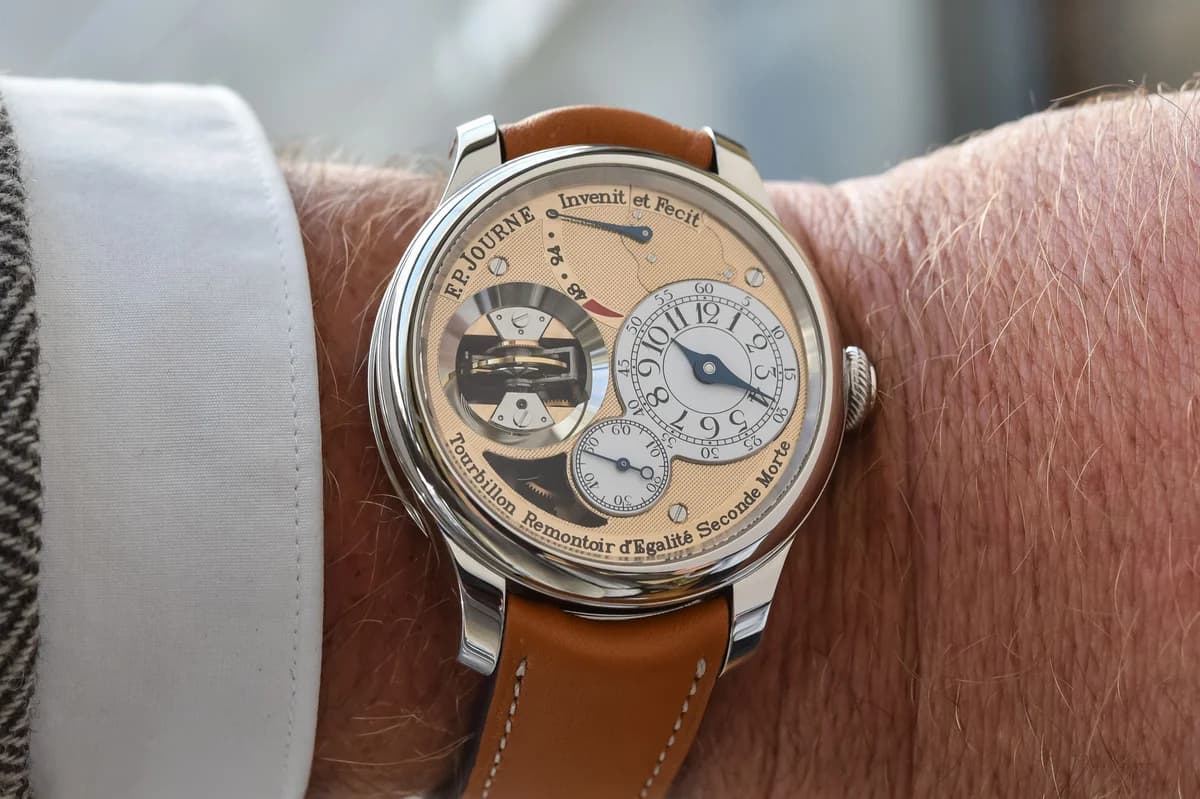
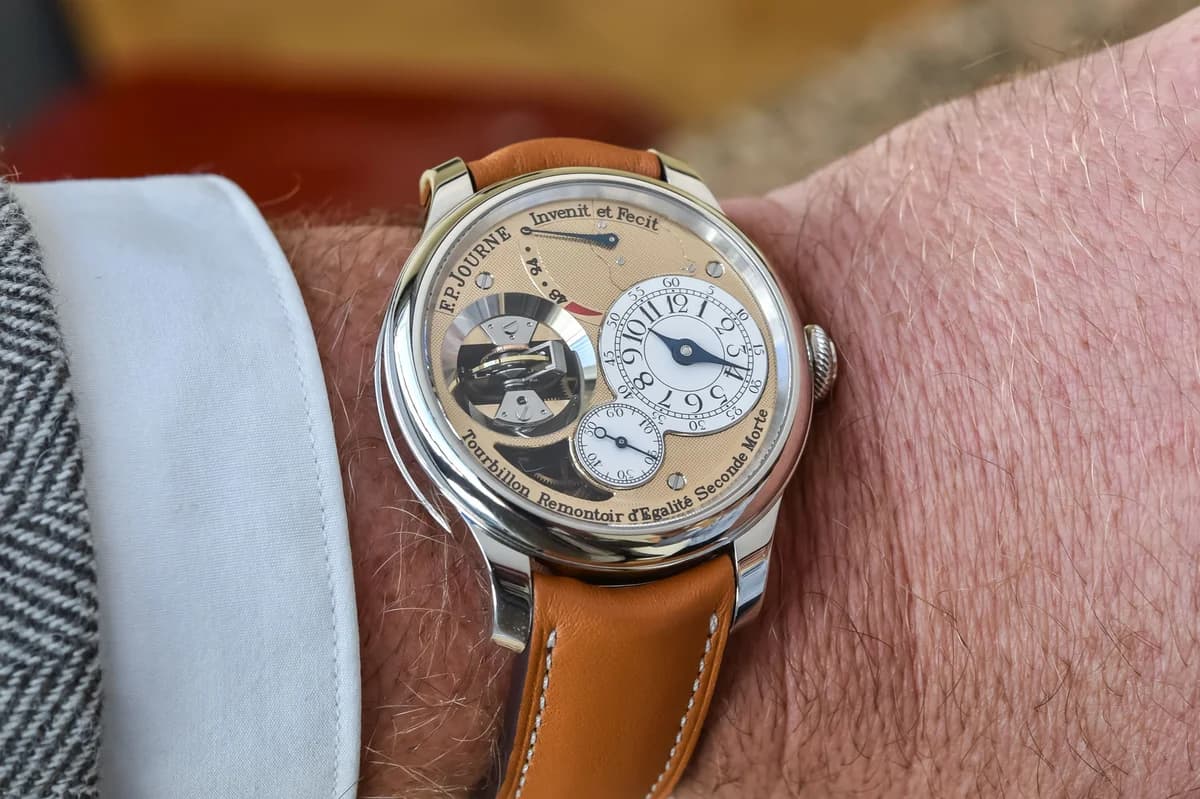
If I have one honest observation about the Tourbillon Souverain, it concerns the accessibility of the Reference TN in the context of daily wear. At 9.9mm thick in a 38mm case, the proportions are excellent and it wears discreetly under a cuff. But the 42-hour power reserve means the watch requires winding every day. With 20 turns of the crown needed for a full wind, that is a committed daily ritual. I appreciate the deliberateness of manual winding, and I think most people drawn to a watch like this enjoy the engagement. But for anyone accustomed to automatic winding or longer power reserves, the Tourbillon Souverain asks for attention. The newer Vertical addresses this with its 80-hour reserve, but at the cost of a substantially larger and thicker case. The 13.60mm thickness of the Vertical is a real step up from the 9.9mm of the TN, and it changes how the watch sits under the sleeve of a Brioni wool suit. The TN disappears. The Vertical does not. That is a genuine tradeoff between power reserve and wearability, and I wish the original proportions could have accommodated a longer reserve. But physics is physics. A larger mainspring barrel for more reserve means more height, and Journe clearly chose to keep the TN thin at the cost of daily winding.
There is also the matter of water resistance. The Tourbillon Souverain has minimal water resistance, as expected for a haute horlogerie complication watch. This is not a watch that goes near water. The exhibition caseback and the complexity of the tourbillon aperture on the dial side leave no room for the kind of sealing that a tool watch requires. That is not a criticism. It is just the reality of what this watch is. A tourbillon with a remontoire is not going swimming.
On the wrist, the rose gold version of the Tourbillon Souverain has a warmth that I notice against darker skin. The 6N rose gold case paired with a gold dial creates a tone that integrates naturally rather than shouting. The 38mm or 40mm case diameter sits with quiet authority. This is a watch that does not announce itself across a dinner table. It reveals itself when someone leans in and notices the remontoire pulsing through the tourbillon aperture. The alligator strap is the only option, and it is the right one. A bracelet would change the character of the watch entirely, adding mass and visual noise to something that is fundamentally about the mechanism, not the metal around it.
I include the Tourbillon Souverain alongside the Resonance because they represent two entirely different sides of Journe's genius. The Resonance uses physics, acoustic energy transfer between two balance wheels, to stabilize timekeeping. The Tourbillon Souverain uses mechanical engineering, a constant-force spring that regulates power delivery to the escapement. Both arrive at the same goal, consistent amplitude and rate, through completely different paths. The Resonance is invisible. The Tourbillon Souverain puts its solution on display. The fact that one man designed both tells you everything about why the independent watchmaking world considers Journe at the absolute summit of contemporary horology. He is the only living watchmaker who has won the GPHG Aiguille d'Or three times. He is the only watchmaker to build movements in 18K rose gold across an entire collection. And the Tourbillon Souverain, the watch that started all of it, remains the only tourbillon wristwatch with a remontoire d'egalite. Some opening statements are so definitive that nobody else even attempts a response.
Also in Independent Masters