
F.P. Journe
Chronometre a Resonance
RQ
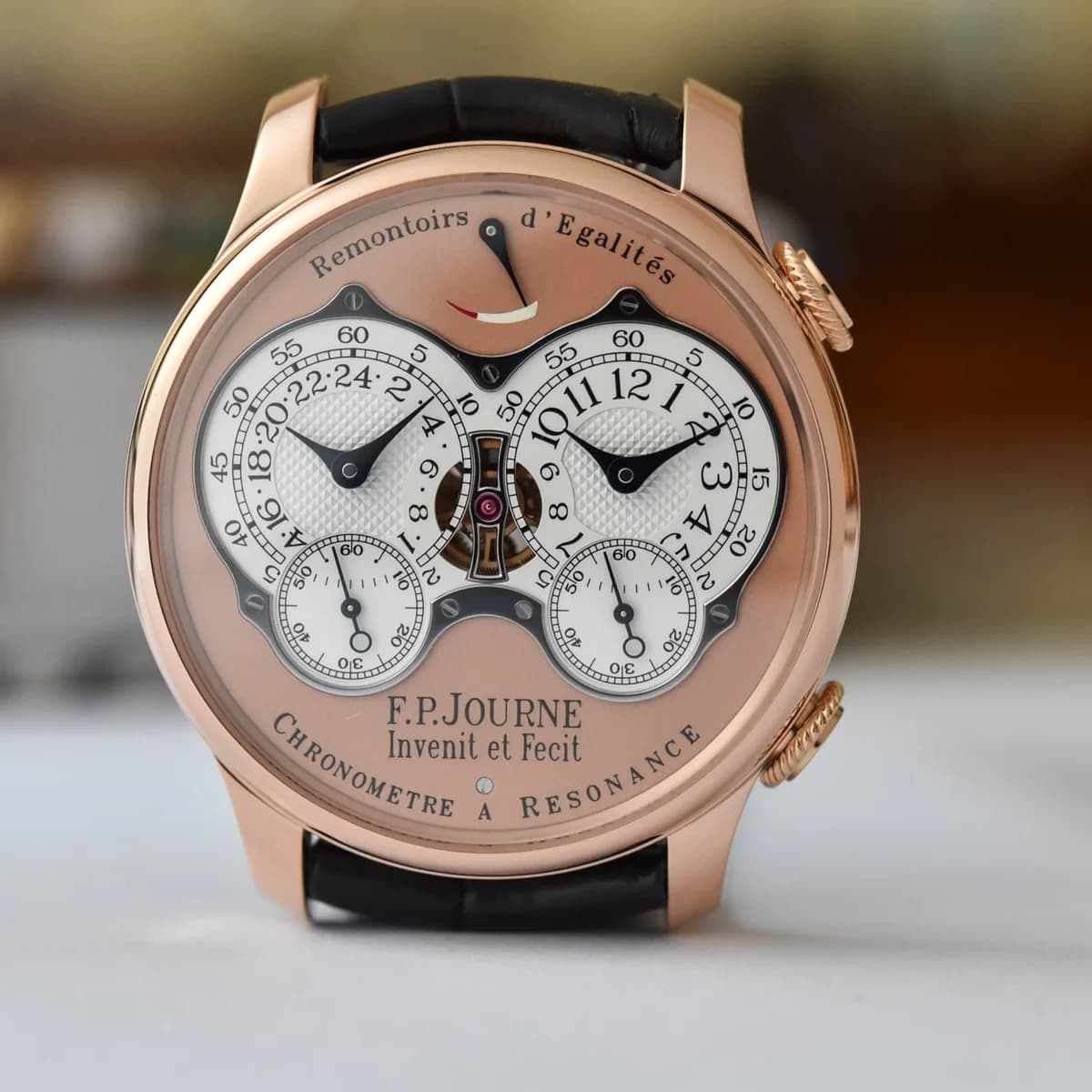
In 1665, Christiaan Huygens was lying ill in his home in The Hague when he noticed something strange. Two of his large pendulum clocks, mounted on the same wooden beam, had synchronized their swings. He disturbed them. They resynchronized. He stopped one entirely. Within thirty minutes, they were beating together again, swinging in opposite directions at exactly the same frequency. Huygens called it an odd sympathy. He initially thought air currents were responsible, but after further experiments he concluded that the vibrations traveling through the shared beam were coupling the two pendulums together. What he had discovered, almost by accident while recovering from illness, was the phenomenon of resonance. It would take 335 years before anyone successfully miniaturized it into a wristwatch.
The history between Huygens and that wristwatch is not a straight line. Antide Janvier, a French clockmaker born in 1751, built three resonance clocks with double pendulums driven by two distinct systems. His clocks No. 400, No. 453, and No. 470 demonstrated that resonance could be engineered deliberately rather than observed accidentally. But Janvier ran into financial trouble and eventually declared bankruptcy. Abraham-Louis Breguet acquired Janvier's workshop, equipment, and stock, and even employed Janvier for a time. Breguet, inspired by what he learned from Janvier's work, became the first horologist to build resonance pocket watches. His No. 2788, No. 2794, and No. 2667 proved the principle could be contained in something portable. One of Breguet's resonance clocks, No. 3671, was made for King George IV and still sits in Buckingham Palace. Another, No. 3177, built for Louis XVIII, is in the Musee des Arts et Metiers in Paris. I find it fascinating that the intellectual thread connecting Huygens to Janvier to Breguet is not just theoretical but physical. Breguet literally acquired Janvier's tools. He held the same components Janvier had machined. That kind of direct lineage through objects, through hands, is what gives horological history its weight.
The connection between Breguet and Journe is not accidental either. As a young watchmaker in Paris, Francois-Paul Journe apprenticed at his uncle Michel Journe's workshop, where he restored antique pocket watches. Among the pieces that passed through his hands were actual Breguet movements. Not reproductions, not photographs in a textbook. The real objects. He disassembled them, studied how Breguet solved problems with the materials and tools available in the eighteenth century, and put them back together. That experience planted the seed. When Journe decided to pursue resonance, he was not starting from theory. He had held Breguet's resonance work in his hands. He understood what Breguet had achieved and where the limitations of the period had constrained him. Journe first experimented with resonance in a pocket watch in 1983. He spent nearly two decades miniaturizing the principle for a wristwatch, and in 2000 he unveiled the Chronometre a Resonance. The first prototype, built around 1994, had a hand-engraved dial that misspelled the name as Resonnance with two N's. The case was greyish gold because Journe could not afford platinum at the time. That prototype was later uncased, and the gold was melted and reused for other projects. I love details like that. Before Journe was the most celebrated independent watchmaker in the world, he was a craftsman melting down cases to fund the next experiment. The distance between that prototype and the current production Resonance is the story of one man's obsession.
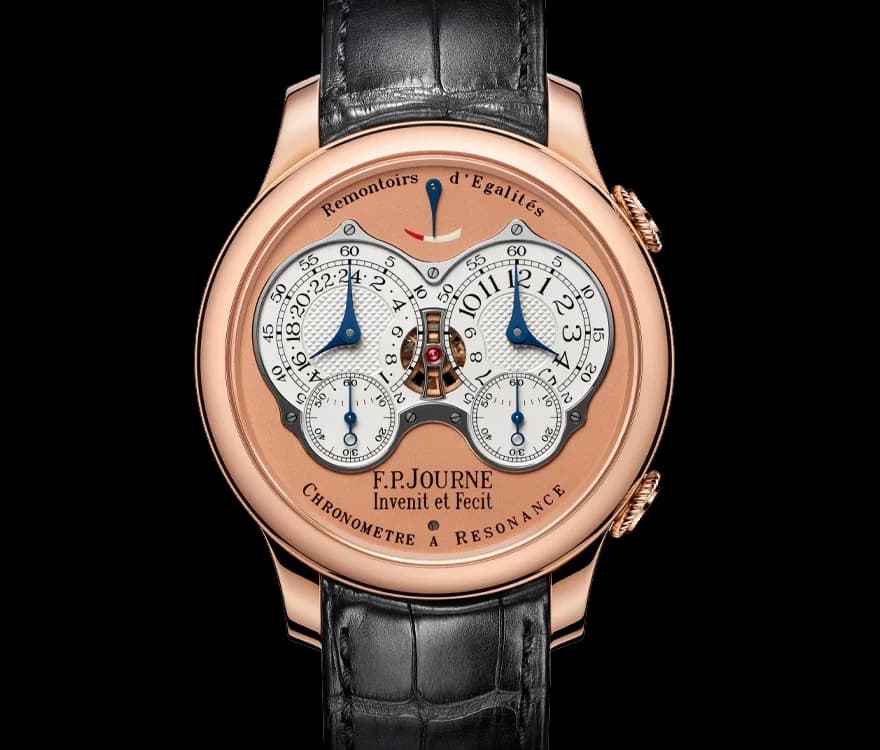
What makes the Resonance so different from other complicated watches is that the complication is invisible. There is no tourbillon cage spinning on the dial. There is no minute repeater hammer striking a gong. There is no perpetual calendar display with four subdials. The complication lives in the relationship between two balance wheels that the wearer never sees. It is an entirely internal phenomenon, and the only evidence that it is working is the accuracy of the timekeeping itself. I think that is what draws me to this watch. The most technically ambitious thing about it is also the most hidden. The best engineering is often invisible, and the Resonance takes that idea to its logical extreme.
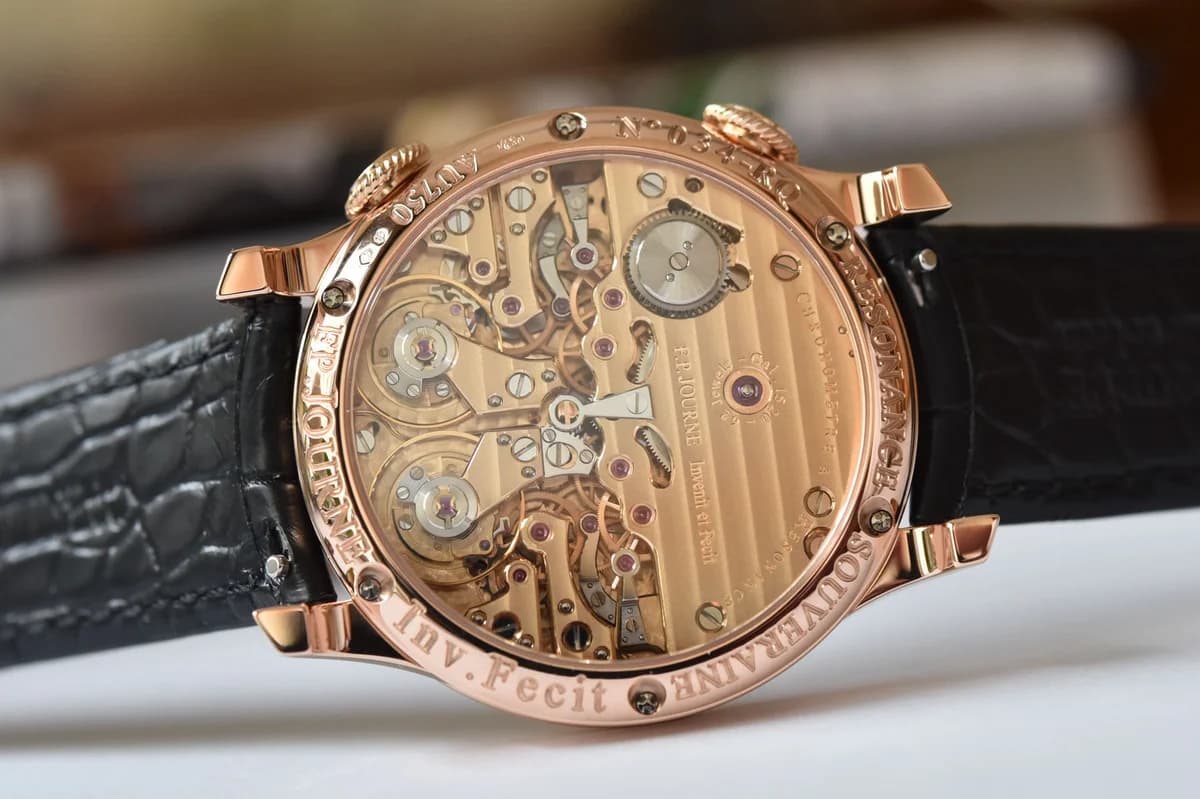
The original production Resonance used the Caliber 1499, built in rhodium-plated brass with 36 jewels and a frequency of 21,600 vibrations per hour (3 Hz). The architecture is what makes this watch unlike anything else in horology. Two completely independent movements share a single main plate. Two mainspring barrels. Two gear trains. Two escapements. Two balance wheels. Each side keeps its own time and displays it on its own subdial, which makes the Resonance a functional dual time zone watch. But timekeeping is not the point. The point is what happens between those two balance wheels. They are mounted close enough together that acoustic energy transfers between them through the shared plate. Over the course of minutes, not hours, the two balances lock into anti-phase synchronization. When one swings clockwise, the other swings counterclockwise. They stabilize each other. Any external perturbation that affects one balance is counteracted by the other. The result is a chronometric accuracy that exceeds what either movement could achieve on its own. This is not a theoretical claim. It is a measurable physical phenomenon, and Journe is the only watchmaker who has ever put it on the wrist.
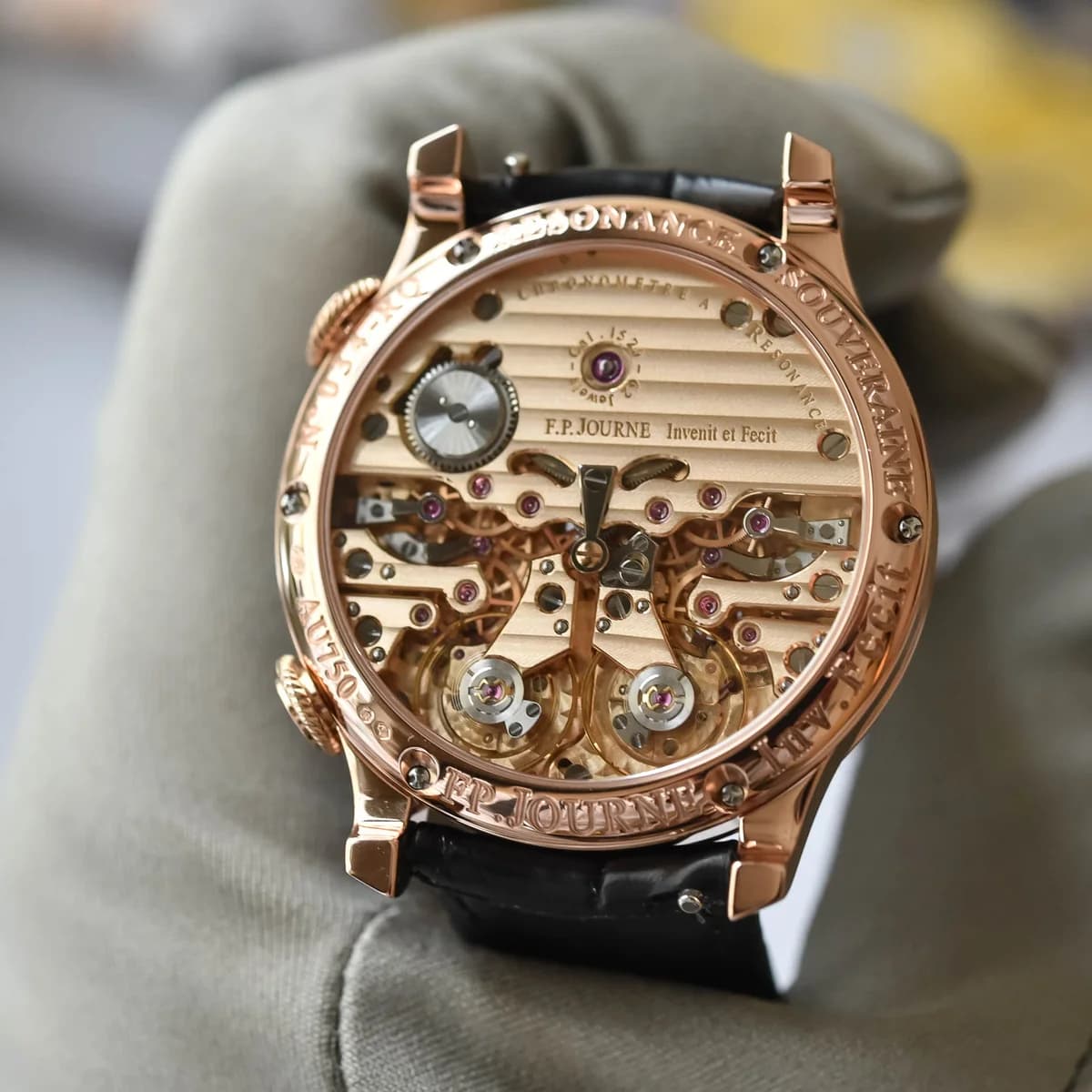
The Resonance has evolved through four generations. The first series (2000 to 2004) used the brass Caliber 1499 in 38mm cases, available in platinum or rose gold with white, rose, or yellow gold dials. The souscription pieces from this era, approximately 17 to 18 watches sold to early supporters who also purchased the Souscription Tourbillon, are among the most sought-after F. P. Journe references in existence. In 2004, when Journe transitioned all his movements from brass to 18K rose gold, the Resonance received the Caliber 1499.2. The move to gold was not cosmetic. Journe felt brass did not adequately represent the level of craft he wanted to express. Rose gold is harder to machine, more difficult to finish, and considerably more expensive as a movement material. He made the switch anyway because the work demanded it. Around 2006, a redesigned power reserve system brought the Caliber 1499.3, which increased the jewel count from 36 to 40 and introduced a more reliable power reserve indication. The second series also expanded the case size options, offering both the original 38mm and a new 40mm diameter for those who wanted more wrist presence. The third generation launched in 2010 for the model's tenth anniversary, converting the left subdial to a 24-hour disc display. That same year, the Resonance won the Grand Complication prize at the Grand Prix d'Horlogerie de Geneve, a recognition that took a decade to arrive but was well deserved. Journe had been receiving GPHG distinctions almost every year since 2002, but the Resonance winning the top complication category felt like the watch world finally catching up to what collectors already knew.
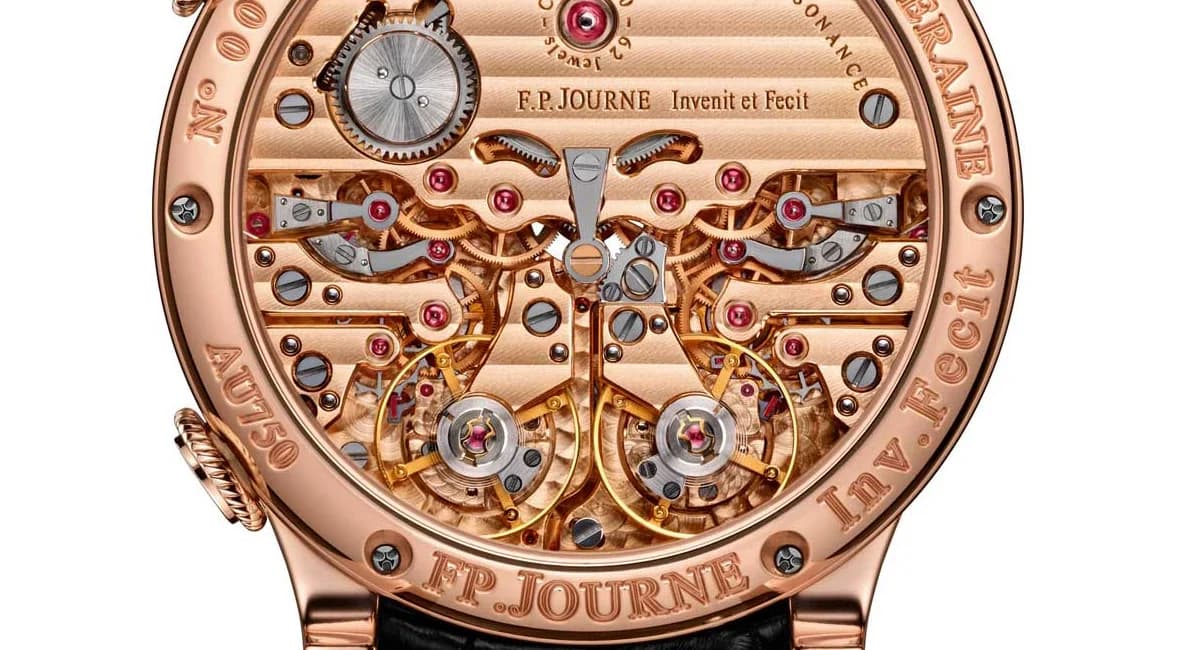
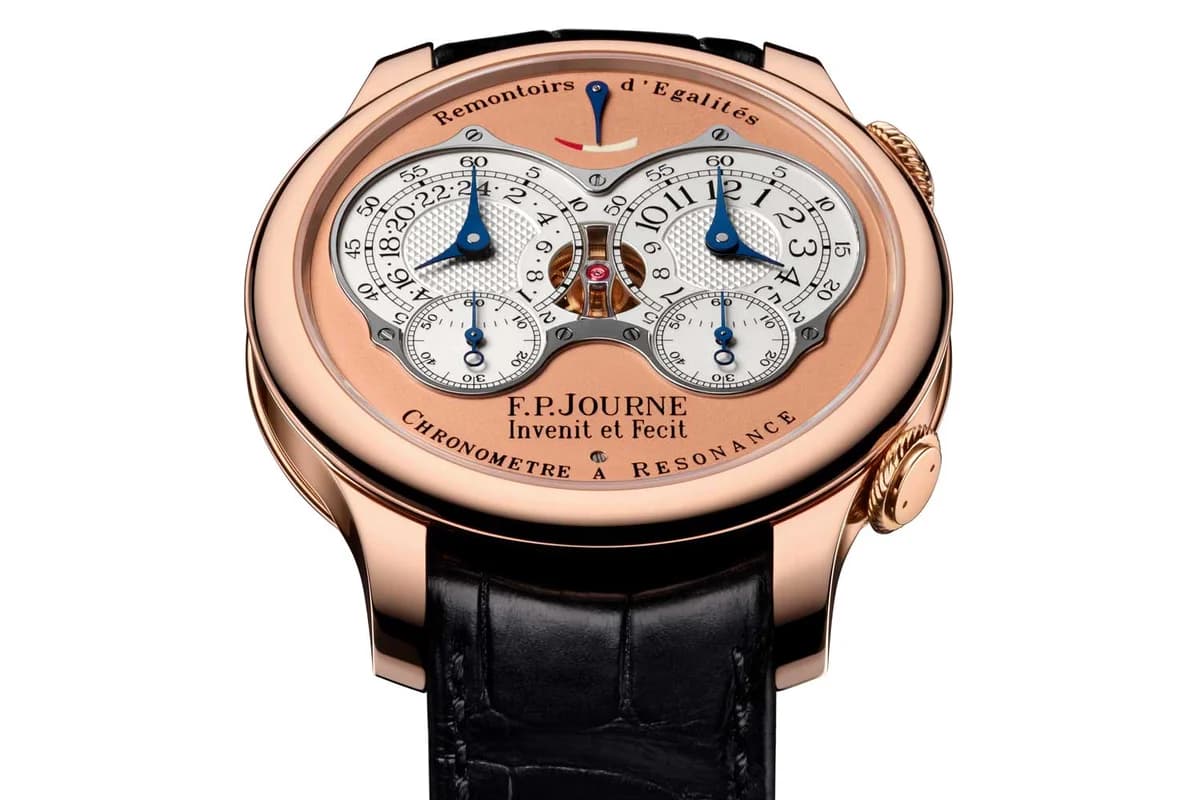
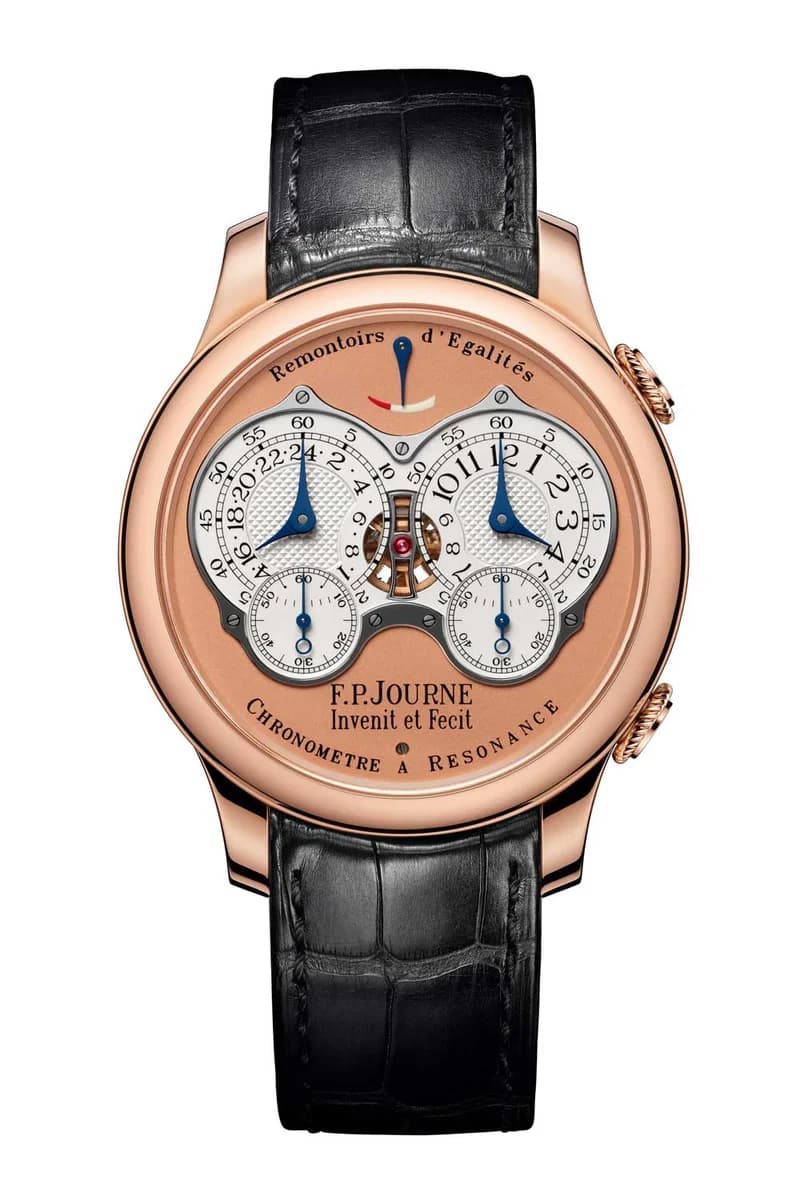
The current fourth generation, introduced in 2020 for the twentieth anniversary, is a complete mechanical overhaul. The Caliber 1520 contains 378 components and 62 jewels. The movement diameter grew to 34.60mm with a height of 6.90mm. The most significant addition is the twin remontoires d'egalite, one constant-force mechanism on each gear train. A remontoire is essentially a tiny secondary spring that recharges at fixed intervals and delivers perfectly consistent energy to the escapement regardless of the mainspring's state of wind. Having one remontoire in a watch is rare. Having two, one for each of two independent resonating gear trains, is something only Journe has attempted. The remontoires cycle every second, maintaining consistent amplitude above 260 degrees on both balances throughout the first 28 hours of the 42-hour total power reserve. The frequency remains 21,600 vph (3 Hz), same as every generation. What changed is the consistency of the energy reaching those balance wheels.
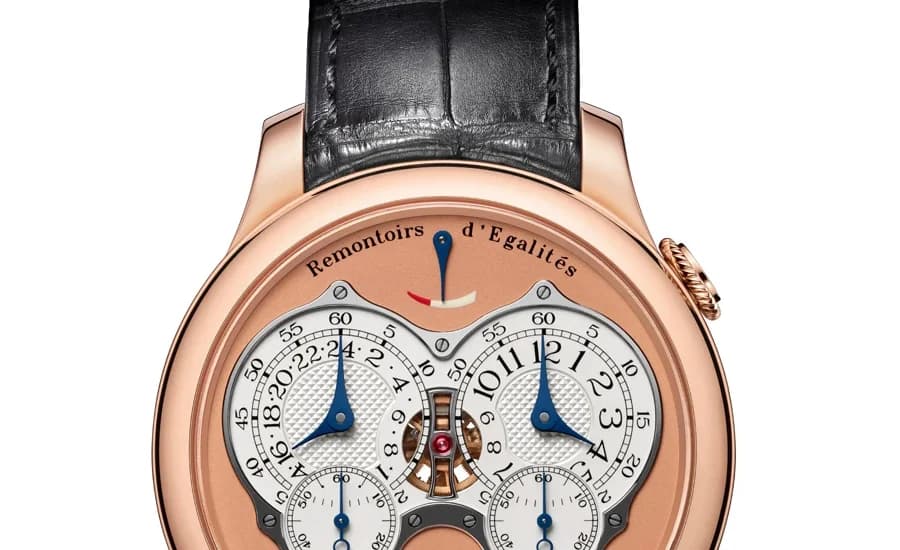
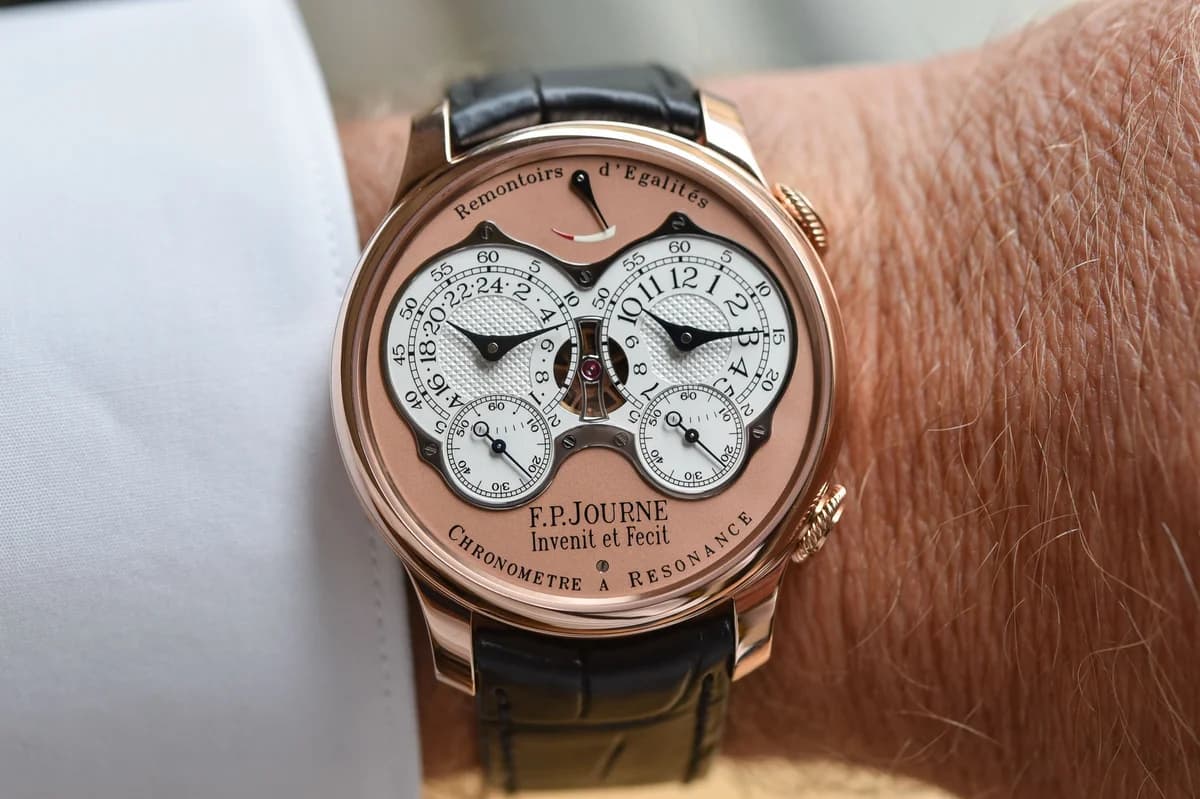
I appreciate what Journe did with the dial layout on the Caliber 1520 version. The case is available in 40mm or 42mm in platinum or 18K 6N rose gold, with the movement height bringing the total case thickness to 10.8mm. The power reserve indicator sits at 12 o'clock. The left subdial displays 24-hour time and the right displays 12-hour time, each with its own small seconds at 6. The dial is white gold or 5N gold depending on the case metal, with whitened silver guilloche clous de Paris on the subdials. The symmetry is deliberate. Everything about the dial reflects the mechanical symmetry of the twin movements beneath. Two crowns sit on the right side of the case, at 2 o'clock for winding and time setting and at 4 o'clock for seconds reset. There is an unusual elegance to having two crowns on a watch with two movements. It reinforces visually what the watch is doing mechanically.
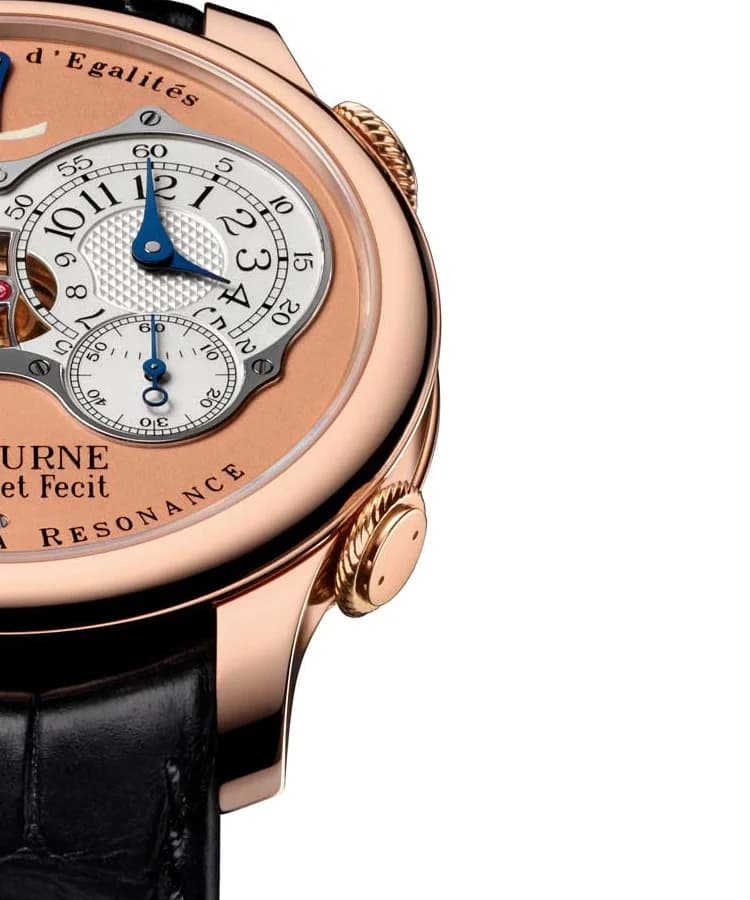
The Resonance sits in a specific place within Journe's broader collection that I find interesting. The Chronometre Souverain is his purest time-only expression, with a single remontoire and dead-beat seconds. The Tourbillon Souverain puts the regulating organ on display. The Sonnerie Souverain, with its minute repeater and grande sonnerie, is the most complex thing Journe builds. The Resonance is none of those. It is not the simplest, not the most complex, not the most visually dramatic. What it is, is the most scientifically interesting. It is the watch that physicists want to talk about. It is the watch that other watchmakers study. Every caliber in the collection is signed Invenit et Fecit, Latin for he invented and he made. On the Resonance, those words carry particular weight because nobody else has invented this, and nobody else has made it work.
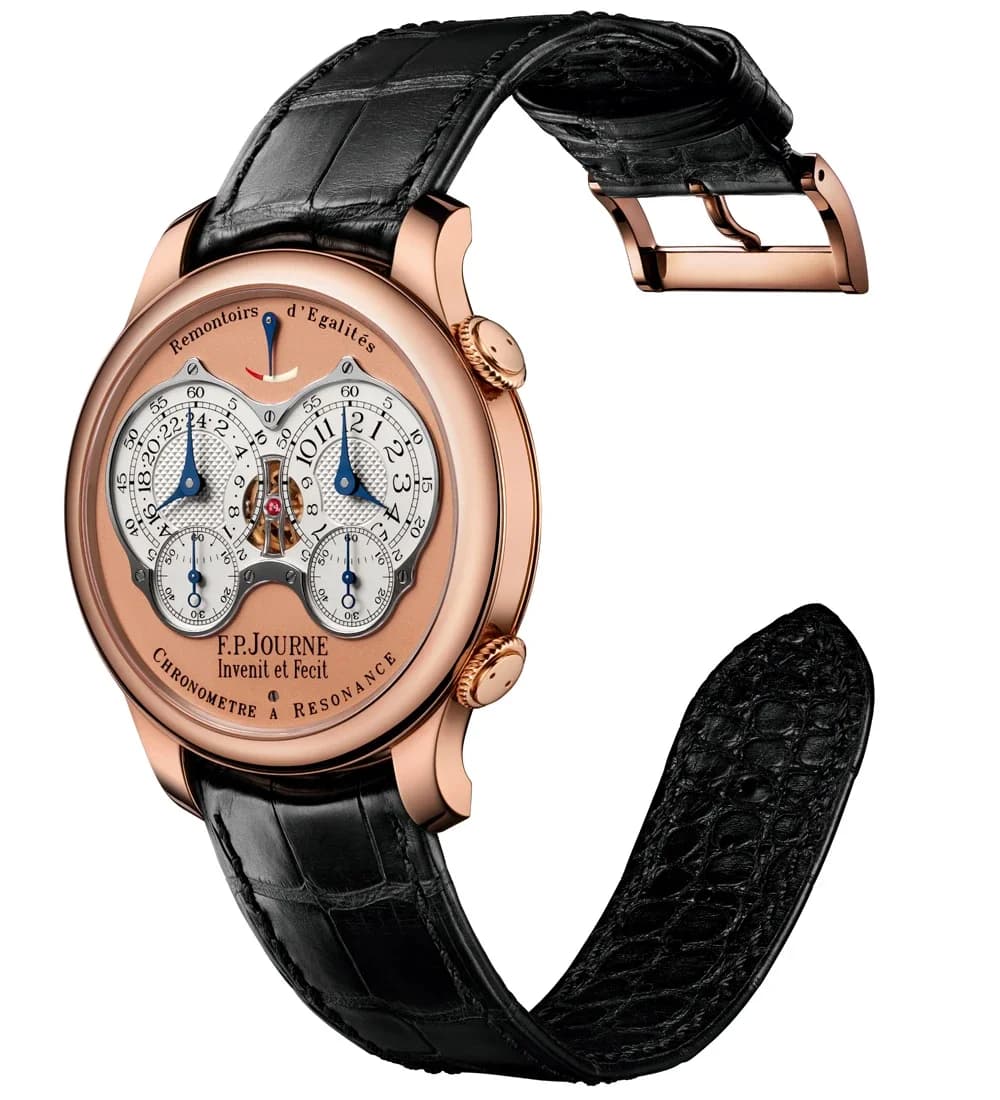
Journe builds the Resonance in his Geneva manufacture with a team he personally trained. The total annual production across all F. P. Journe references is approximately 800 to 900 watches. He owns his own casemaker, Les Boitiers de Geneve, and his own dialmaker, Les Cadraniers de Geneve, both housed in the same facility in Meyrin. This level of vertical integration is unusual even among independent watchmakers. Dufour and Smith make everything in their workshops by hand, but they produce single-digit watches per year. Journe has built a small industrial operation that still maintains the intellectual independence of a one-man atelier. Every movement is still 18K rose gold. Every caliber is still an original design. The scale is larger than Dufour or Smith but the philosophy is identical. Nothing comes from outside. Nothing is borrowed.
Geneva is a city I have spent real time in, and walking through the old town to the Coulouvreniere neighborhood where Journe's headquarters sit is a different experience from visiting a large manufacture in the Vallee de Joux or La Chaux-de-Fonds. Journe is the only major watchmaker still based in central Geneva. His facility is a converted gaslamp factory, not a glass-and-steel campus on a hillside. The scale of the building matches the scale of the production. Everything about it says: this is enough. There is no room for a visitor center, no retail wing, no museum annex. The space is for making watches. When someone tells me they want to understand what independent watchmaking means, I tell them to visit Geneva and look at the building. Then look at what comes out of it.
The Resonance in rose gold has a particular warmth that I notice against darker skin tones. The 6N gold case paired with the gold dial creates a monochromatic warmth that works in contexts where a steel or white-metal watch would feel cold. On the wrist, the symmetrical dial layout reads cleanly at a glance, which is not always the case with dual-subdial complications. The guilloche clous de Paris pattern on the subdials catches light in a way that changes depending on the angle. Straight on, they look matte. At an angle, the texture reveals itself. It is the kind of finishing that rewards attention. For a watch that pairs well with formal dressing, I think about it alongside a Holland and Sherry flannel or a Dormeuil tropical weight wool in navy. The rose gold does not compete with warm fabrics the way a bright polished steel case sometimes can. It integrates.
If I had one honest criticism, it concerns the thickness. The Caliber 1520 version sits at 10.8mm. For a 40mm dress watch, that is not thin. The previous generation with the Caliber 1499.3 was 9.1mm, which wore more discreetly under a cuff. The extra 1.7mm comes from the twin remontoires, and I understand the tradeoff. Constant force to two independent resonating balance wheels requires vertical space for the secondary springs and their release mechanisms. It is a case where the engineering demanded the height and the engineering is the entire point of the watch. But on a 6.5-inch wrist, that extra height means the Resonance sits a touch proud under the sleeve of a Scabal wool jacket rather than disappearing beneath it. Some collectors will not care. For those who do, the tradeoff is worth knowing.
There is also the question of lume, or more accurately, the absence of it. The Resonance has no luminous material on its hands or indices. In low light, the watch is essentially unreadable. This is consistent with Journe's approach across most of the Souveraine collection, and it is a deliberate design choice rather than an oversight. Luminous material would compromise the dial finishing, and Journe clearly prioritizes the aesthetic purity of the guilloche and the hand-finished indices over nighttime legibility. For a watch of this caliber, most wearers are not checking the time in a dark room. But it is worth noting for anyone who expects any level of lume performance. There is none.
The sapphire crystal on the Resonance is flat rather than domed, which keeps the overall profile as slim as possible given the movement height. One practical consideration that comes up in ownership discussions is the winding experience. With 31 turns of the crown required for a full wind on the Caliber 1520 (compared to 27 on the older 1499.2), the winding ritual is a committed daily practice. Some people enjoy that ritual. Others find it excessive for a 42-hour power reserve. I appreciate the deliberateness of it. Winding a Journe is not something done absently. It is a moment of engagement with the mechanism.
I think about what resonance actually means in practice. It means that two independent oscillators, given nothing but proximity and a shared medium through which vibrations can travel, will spontaneously organize themselves into a stable, predictable pattern. Huygens saw it in pendulum clocks on a wall. Janvier engineered it into double-pendulum regulators. Breguet compressed it into pocket watches. And Journe, 335 years after Huygens wrote that letter to his father describing the odd sympathy of two clocks, compressed it into 40 millimeters of rose gold on the wrist. Nobody else has done it. Nobody else is close. Armin Strom has explored resonance with their Mirrored Force concept, using a clutch spring to mechanically couple two balance wheels, but that is a fundamentally different approach. Journe's resonance is acoustic, transferred through the plate itself, with no physical linkage between the balances. It is pure physics, the same phenomenon Huygens observed in 1665, just scaled down by orders of magnitude. The Resonance is not just a watch. It is a physics experiment that keeps time.
Also in Independent Masters