
Chopard
L.U.C XPS
161945-1001
Karl-Friedrich Scheufele did not have to build a watch manufacture. Chopard was already one of the most successful jewelry and watch houses in the world, selling Happy Diamonds, red carpet pieces, and licensed movements in beautiful gold cases. The business did not need in-house calibers. Nobody was asking for them. The Scheufele family had acquired Chopard from the grandson of its founder in 1963 and built it into a global luxury brand. The watch division was profitable using movements sourced from established suppliers, the same approach that most of the industry follows to this day. But Karl-Friedrich looked at what Patek Philippe, Audemars Piguet, and A. Lange and Sohne were doing with their own movements and decided Chopard belonged in that conversation. Not because the market demanded it. Because he believed it.
That distinction matters more than it might seem. When a brand builds a manufacture because the market rewards it, the incentive is commercial. When someone builds a manufacture because they believe the brand deserves to produce at that level, the incentive is personal. Personal motivation produces different work. I find that the watches born from conviction rather than market pressure tend to have a certain character to them, a sense that every decision was made because someone cared about the answer, not because a business case justified it.
To understand why the L. U. C project was audacious, consider what Chopard was in the early 1990s. The brand was founded in 1860 by Louis-Ulysse Chopard in Sonvilier, a small Swiss village in the Jura mountains. Louis-Ulysse was 24 years old and specialized in precision pocket watches. He built a reputation quickly, becoming a supplier to the Swiss railway company and even to Tsar Nicholas II of Russia. His grandson Paul-Andre Chopard eventually moved the company to Geneva, the international center of Swiss watchmaking. But by the 1960s, Paul-Andre had no successor willing to continue the business. Karl Scheufele, a German watchmaker and jeweler from Pforzheim, was looking for a Swiss watch company to acquire. He traveled to Geneva, met Paul-Andre, and the deal was done. The Scheufele family has owned Chopard ever since.
Under the Scheufeles, Chopard became a powerhouse in jewelry and fashion watches. The Happy Diamonds collection, with its floating diamonds between sapphire crystals, became one of the most recognizable designs in luxury jewelry. The brand sponsored the Cannes Film Festival and the Mille Miglia classic car rally. It was successful, glamorous, and respected in its lane. But it was not a manufacture. The watch movements came from outside suppliers. Karl-Friedrich Scheufele, the son of Karl Scheufele, decided to change that.
In 1996, he established the Chopard Manufacture in Fleurier, a commune in the Val-de-Travers region of the Neuchatel canton. Fleurier has a long watchmaking heritage of its own. It is quiet, removed from the larger clusters around La Chaux-de-Fonds and Le Locle, and that geographic separation was deliberate. Scheufele wanted his watchmakers working in a focused environment, not competing for talent in the same postal code as Rolex and Patek. He named the new line L. U. C, the initials of Louis-Ulysse Chopard, connecting the manufacture back to the founder's original vision of precision watchmaking. The first caliber was the L. U. C 1.96, named after the year of its creation. It was a slim automatic movement with a micro-rotor, and it debuted inside the L. U. C 1860, a watch named after the year Chopard was founded. Everything about the project was designed to signal that this was not a marketing exercise. This was a return to origins.
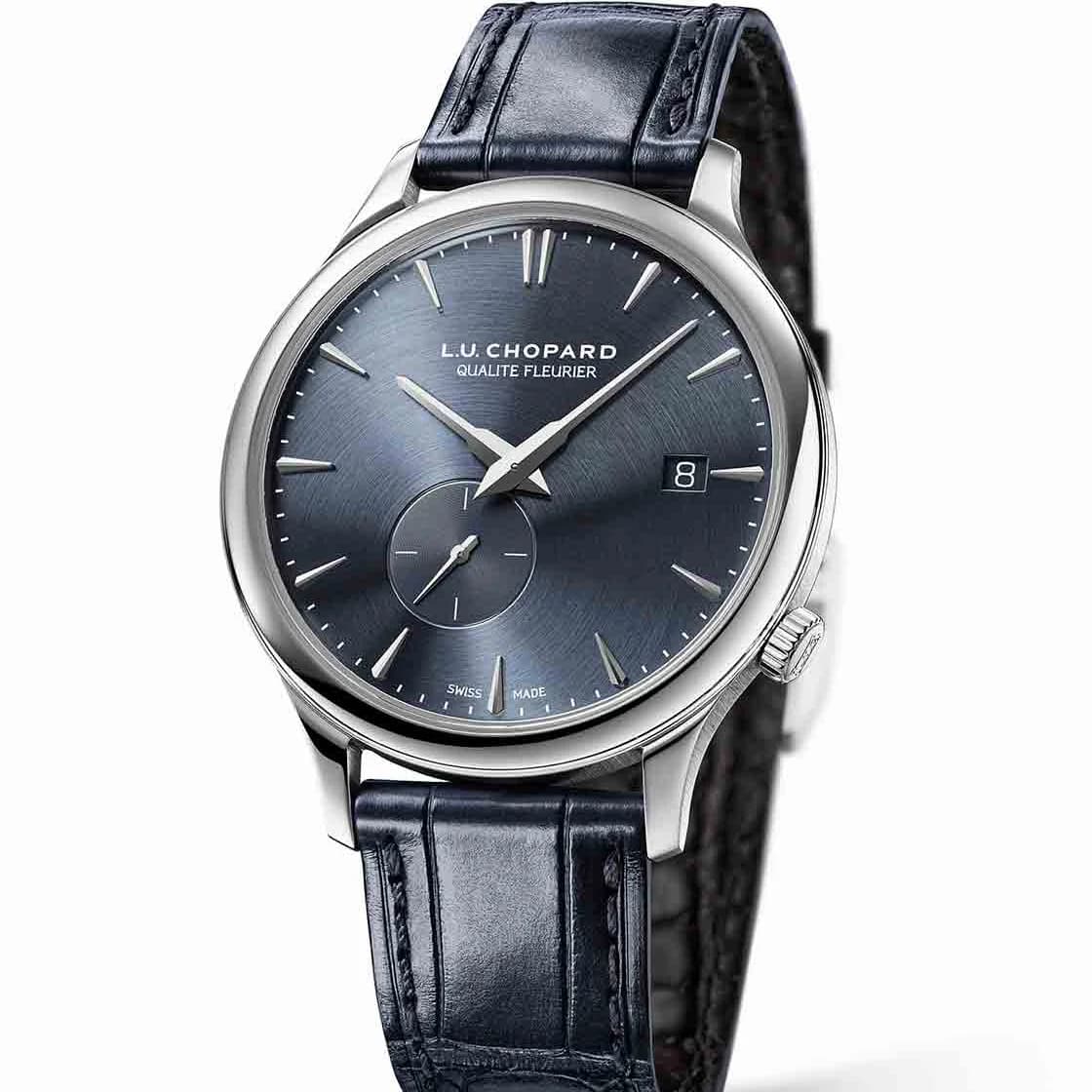
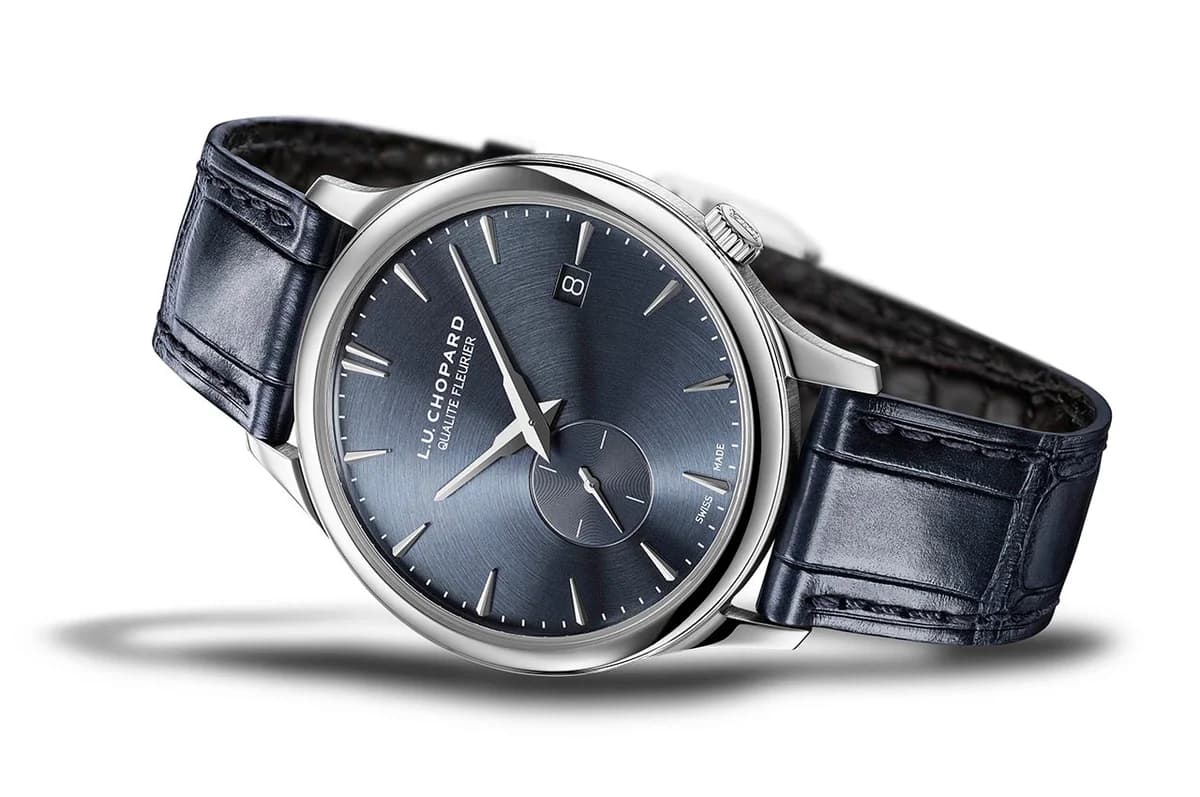
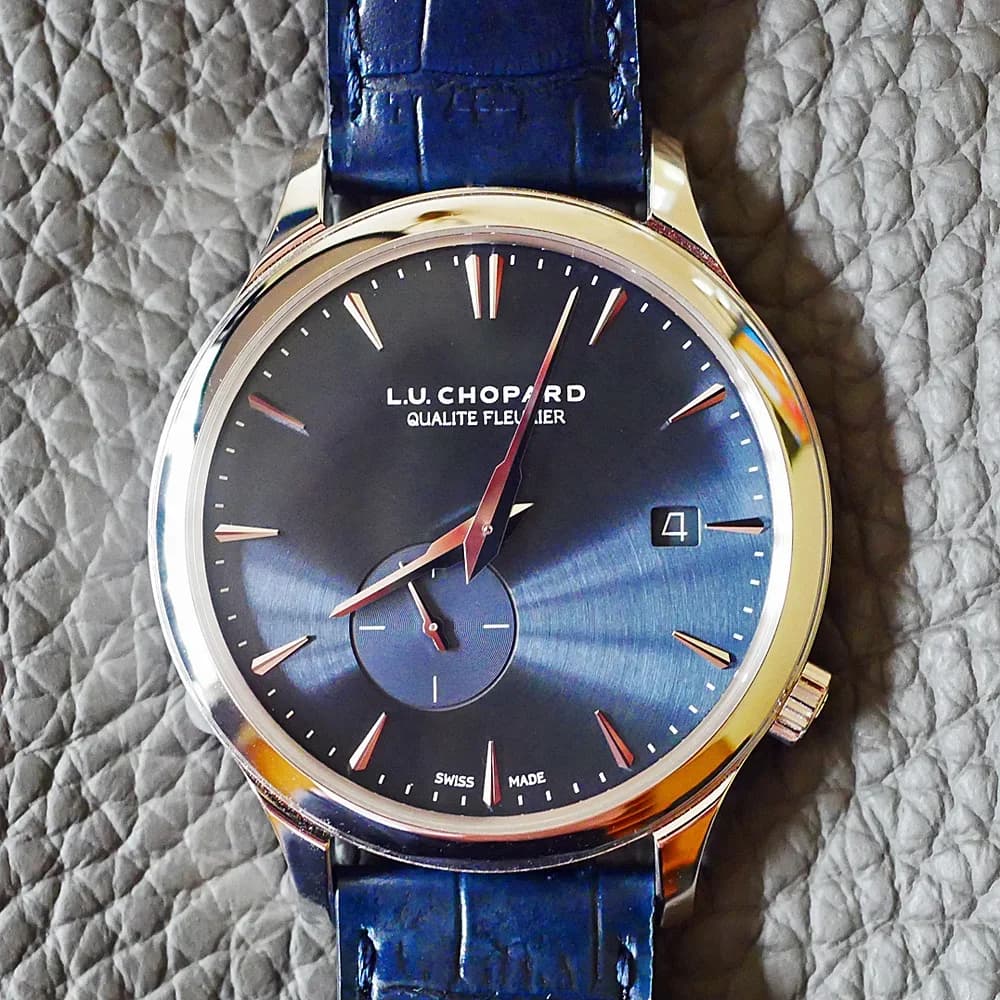
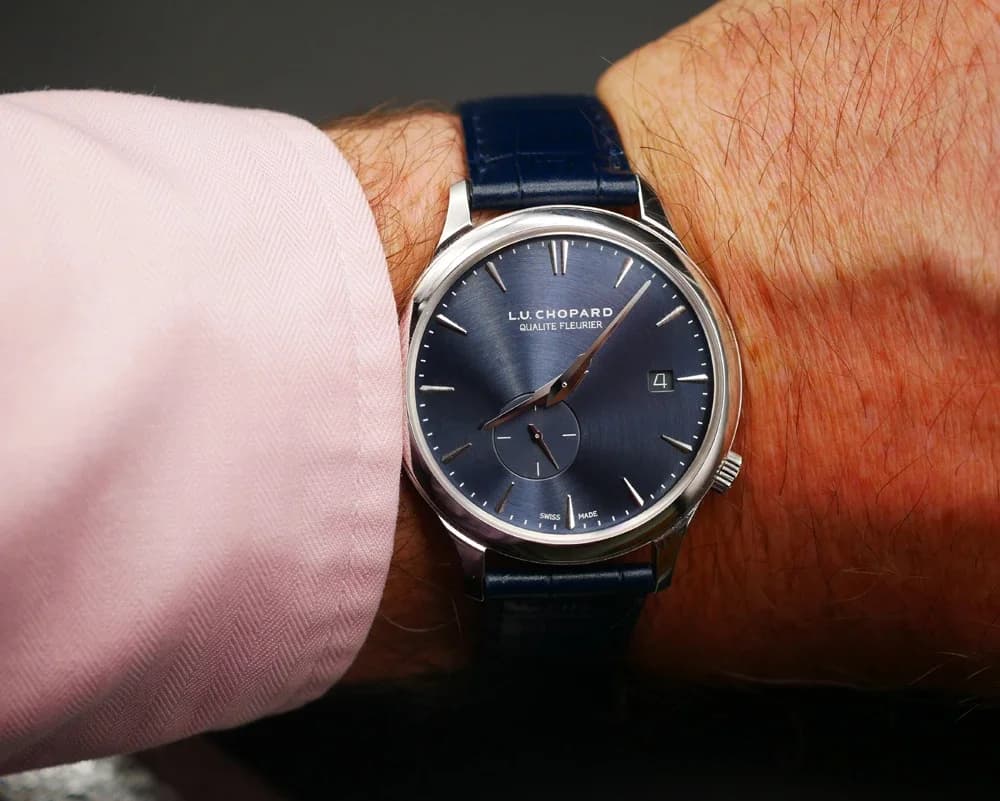
The reference I want to focus on is the 161945-1001, the L. U. C XPS Twist QF in 18K ethical white gold. This is a watch that distills everything the L. U. C manufacture does well into a single, quiet, deeply considered package. The XPS designation stands for Extra-Plate Special, Chopard's ultra-thin dress watch line. The Twist variant repositions the crown from 3 o'clock to 4 o'clock, rotating the entire dial layout. The small seconds subdial shifts to 7 o'clock as a result. It is a subtle asymmetry that gives the watch a different visual rhythm than the standard XPS, and I appreciate that Chopard did not play it safe with the layout.
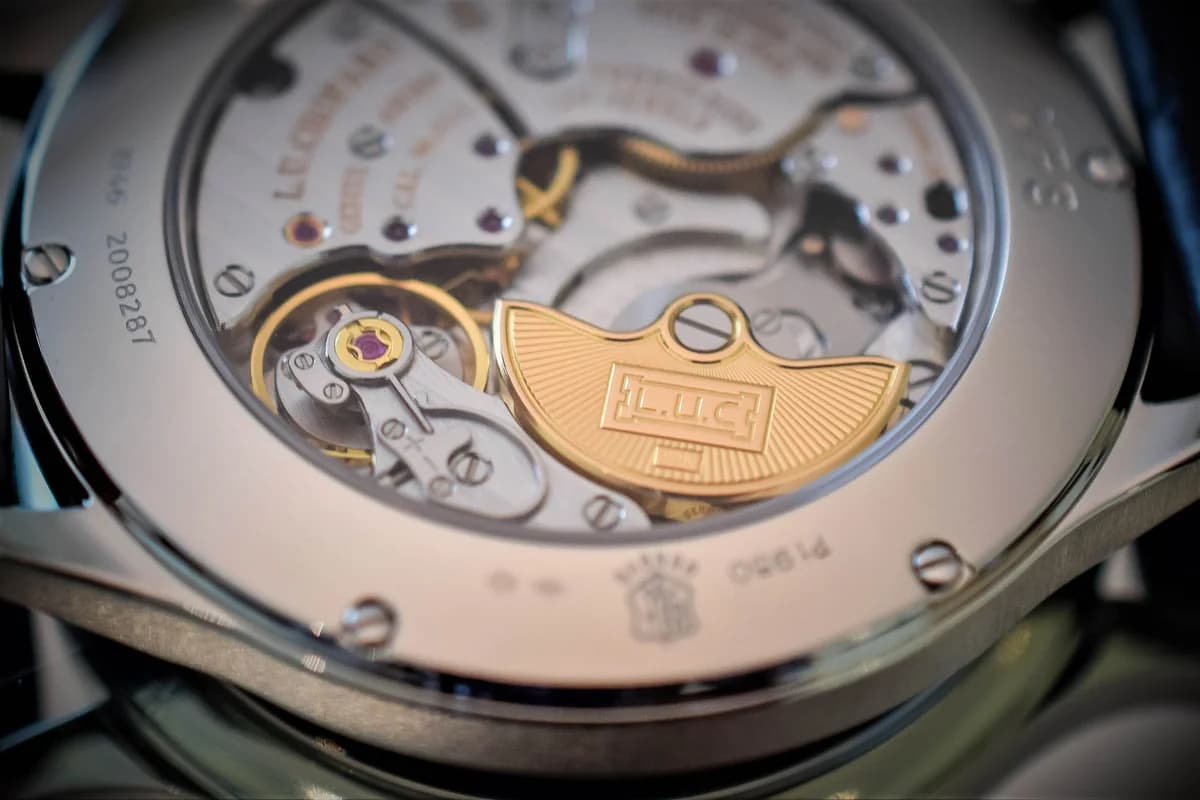
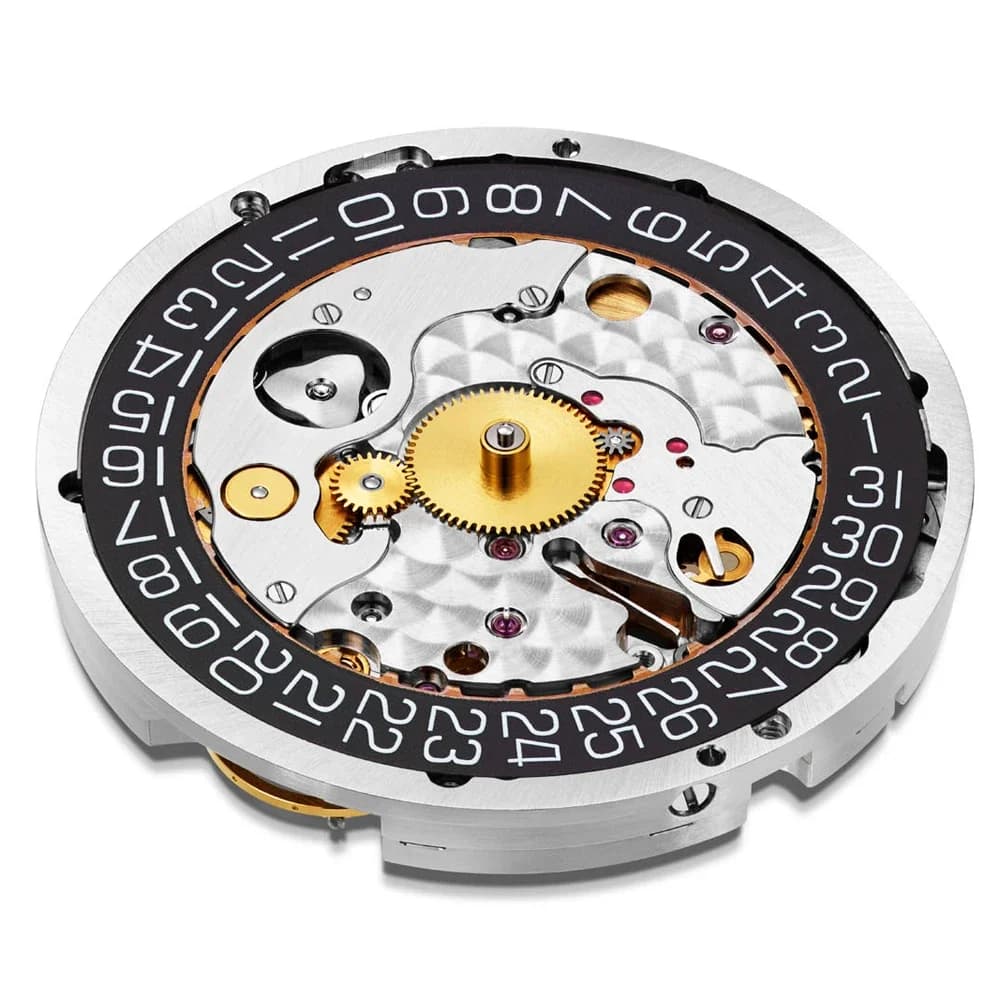
Inside is the Caliber L. U. C 96.26-L, a self-winding movement measuring just 3.3mm thick. That is remarkably slim for an automatic with a micro-rotor and 65 hours of power reserve. The 29-jewel movement beats at 28,800 vibrations per hour, the standard 4 Hz frequency that represents the sweet spot between accuracy and power consumption for a mechanical watch. The movement is both COSC chronometer certified and carries the Qualite Fleurier hallmark. I will come back to what that second certification means, because almost nobody in the watch community talks about it and they really should.
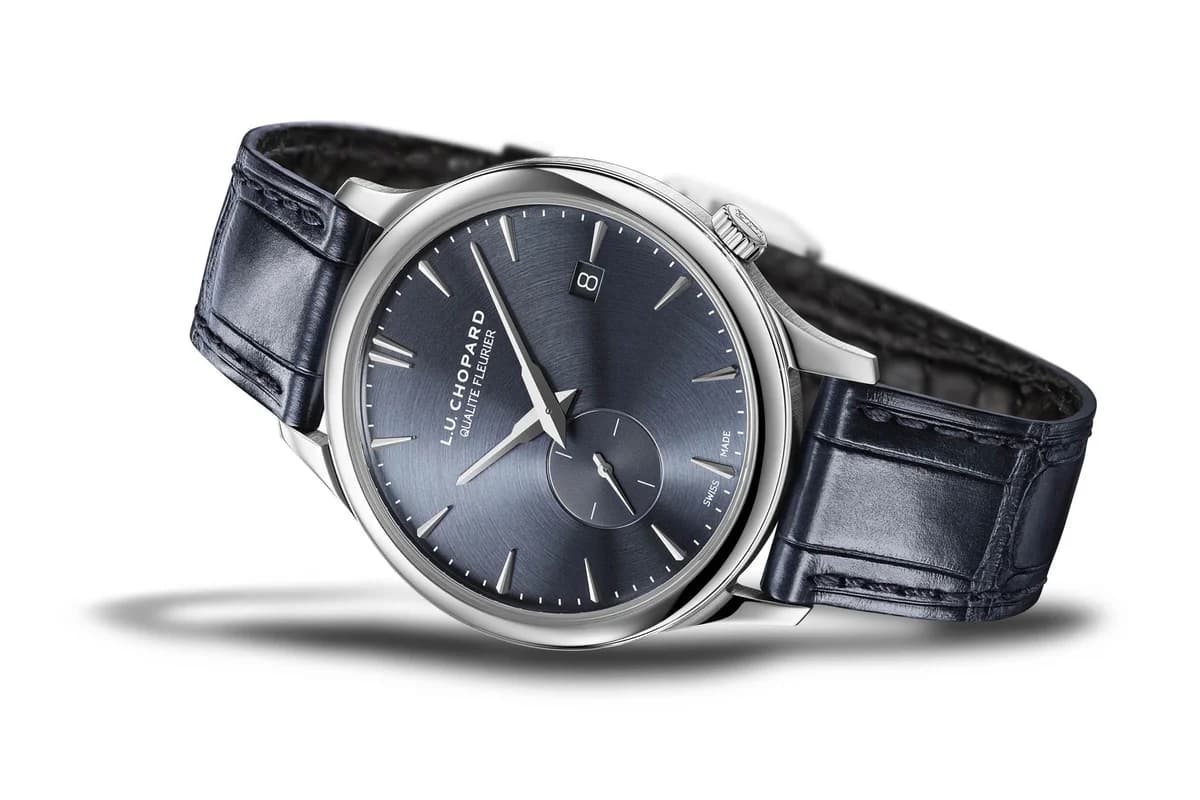
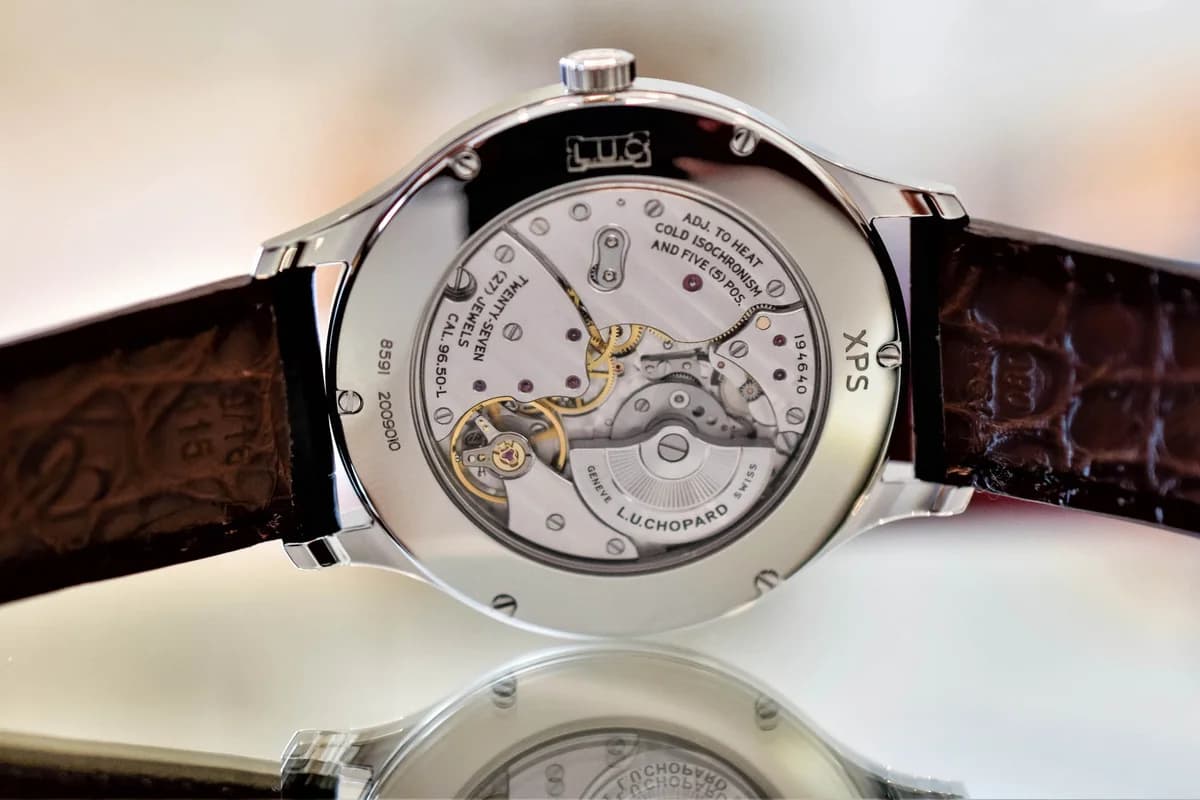
The case measures 40mm in diameter and stands just 7.2mm tall. For context, a Jaeger-LeCoultre Master Ultra Thin is 7.45mm. A Piaget Altiplano automatic is around 6.36mm but achieves that by using a peripheral rotor that adds diameter. The Chopard uses a micro-rotor, which is a fundamentally different engineering approach. A micro-rotor sits within the plane of the movement itself rather than on top of it, which is how Chopard keeps the total movement height at 3.3mm without adding bulk. The tradeoff is that a micro-rotor is smaller and lighter than a full rotor, so it needs to be made from dense material to wind the mainspring efficiently. Chopard uses 22K gold for the micro-rotor, and the winding efficiency is reportedly excellent in daily wear.
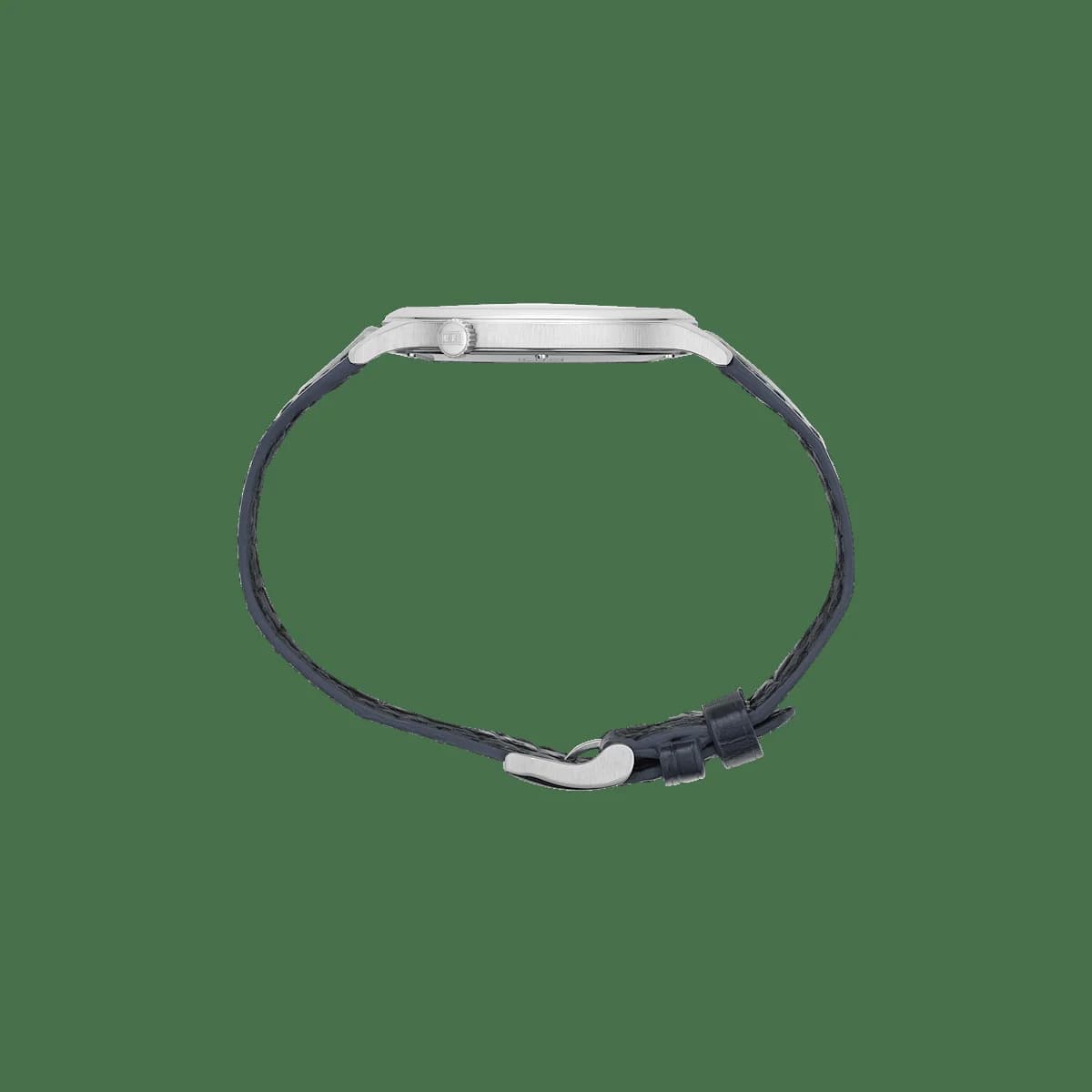
The case is 18K ethical white gold, part of Chopard's commitment to using Fairmined or recycled precious metals across its collections. The lug-to-lug distance is approximately 47mm, but the lugs taper aggressively downward, so it wears closer to 44mm in practice. On a 6.5-inch wrist, 40mm with short lugs is a balanced proportion that sits comfortably without overhang. Water resistance is 30 meters, which is standard for a dress watch and means it handles rain and handwashing but not swimming. The crystal is anti-reflective sapphire on both sides, with an exhibition caseback that shows the decorated movement.
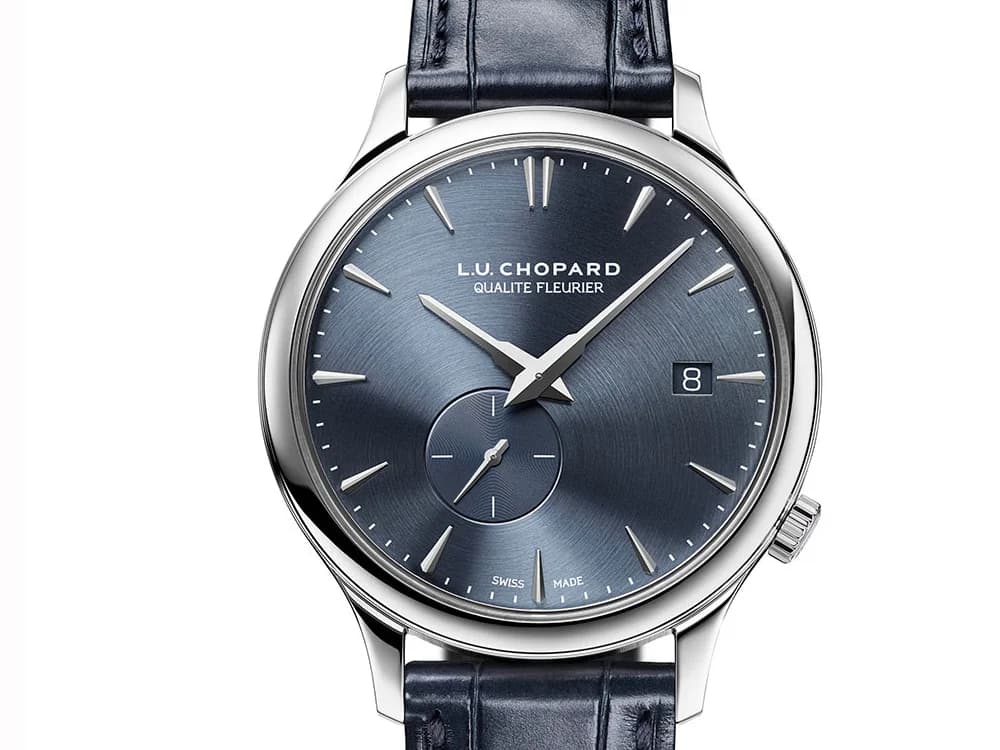
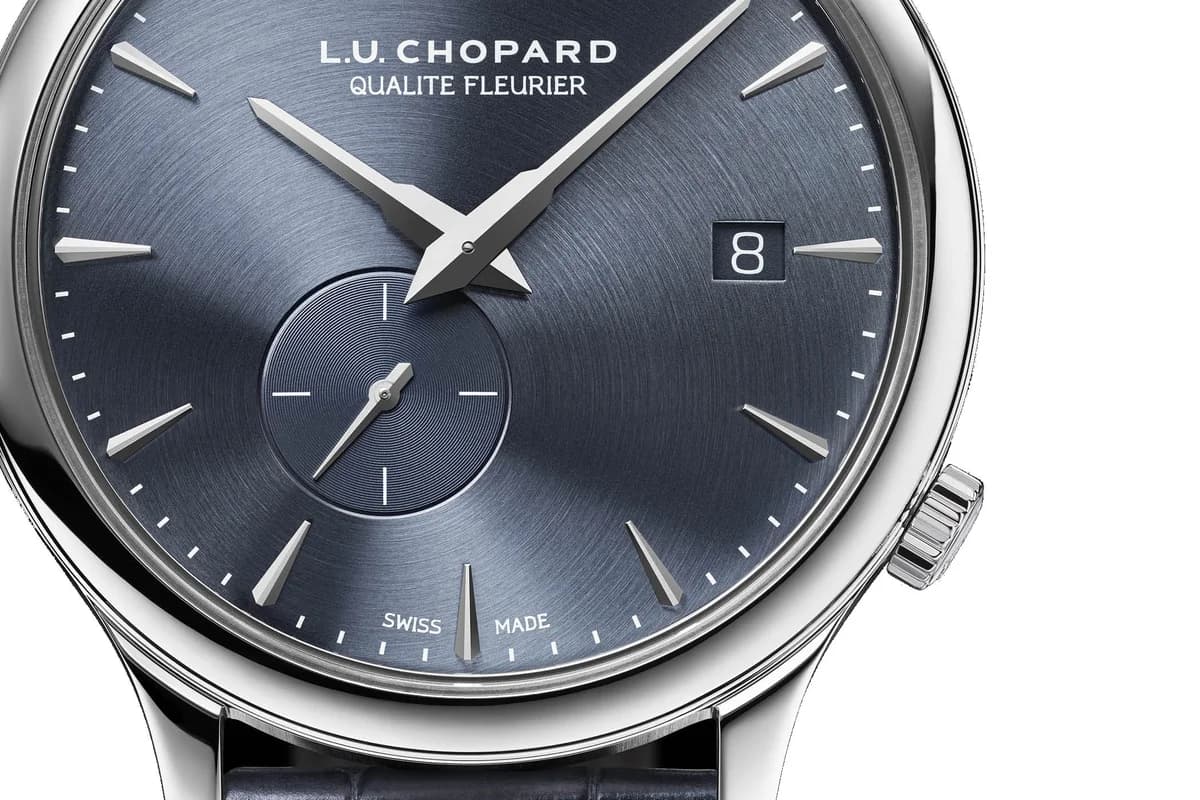
The dial is blue-grey with a satin-brushed sunburst finish radiating outward from the small seconds subdial. The hands are rhodium-plated dauphine style, and the hour markers are applied. The overall impression is restrained but not sterile. There is a warmth to the blue-grey tone that shifts under different lighting, moving from a cool slate in fluorescent light to something warmer and more lavender under incandescent. I notice that Chopard consistently nails dial finishing across the L. U. C line. The sunburst patterns on their dials have a depth that catches light in a way that photographs do not fully capture.
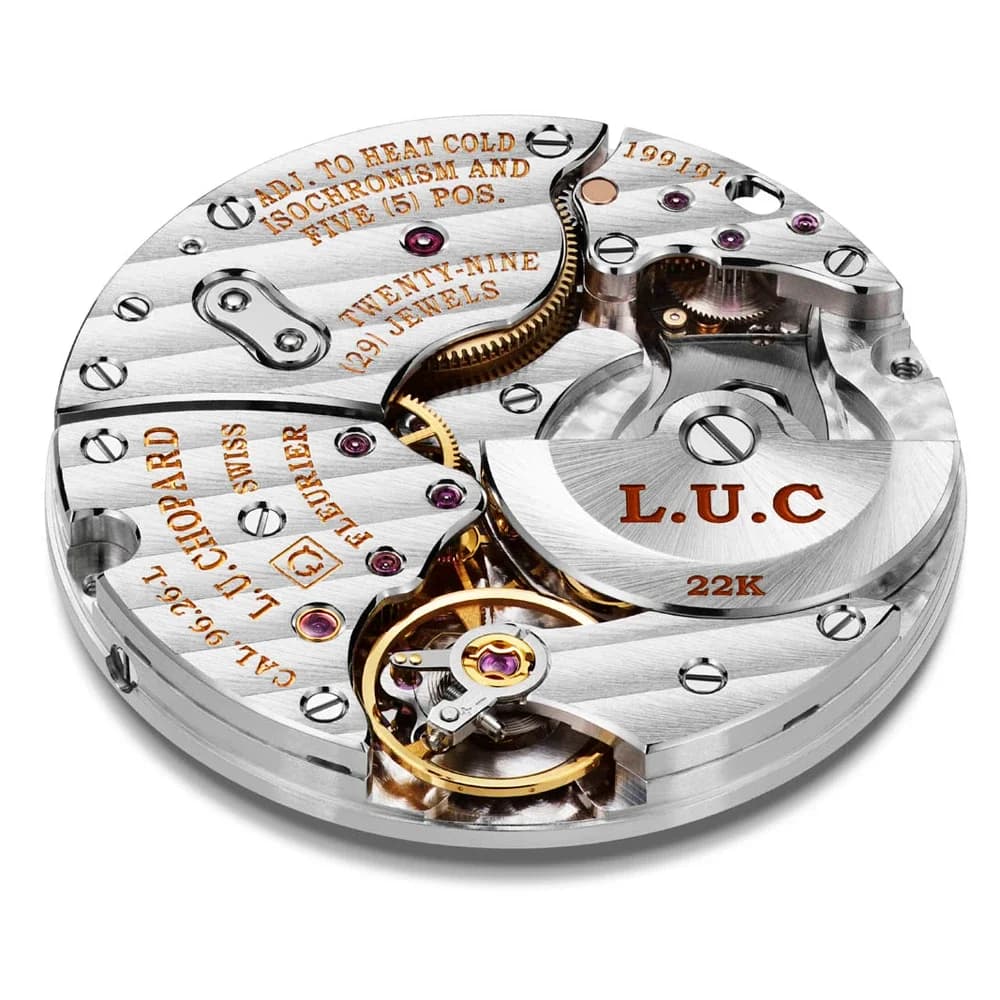
What makes the L. U. C XPS genuinely special is what happens inside the case, and specifically two innovations that I think deserve far more attention than they receive. The first is the Twin barrel technology. Most automatic watches have a single mainspring barrel that stores energy. When a watchmaker wants more power reserve, the typical approach is to use a longer mainspring, which requires a larger barrel, which increases movement thickness. Chopard solved this differently. They stack two barrels coaxially, one on top of the other, connected in series. The two barrels together store enough energy for 65 hours of power reserve without adding lateral diameter or meaningful thickness. The total movement is 3.3mm tall. That is the engineering achievement. Most ultra-thin movements sacrifice power reserve for slimness. The Piaget 1200P, for example, is 2.35mm thin but delivers only 44 hours. The Jaeger-LeCoultre Caliber 899 is 3.3mm and delivers 38 hours. Chopard matches the JLC in thinness and nearly doubles the power reserve. That is what good engineering looks like when the priority is solving a real problem rather than chasing a spec sheet number.
The second innovation is the Qualite Fleurier certification, and I love this story because almost nobody knows about it. In 2001, Chopard co-founded the Fondation Qualite Fleurier with Parmigiani Fleurier, Bovet, and the Vaucher movement manufacturer, along with the municipality of Fleurier itself. The certification was officially launched in 2004. It is, in my opinion, the most demanding quality certification in the Swiss watch industry, and it operates in almost complete obscurity compared to the Geneva Seal or the METAS certification that Omega uses.
Here is what Qualite Fleurier requires. First, the movement must pass COSC chronometer testing, which means accuracy within minus 4 to plus 6 seconds per day across multiple positions and temperatures. That alone puts it in the top tier of mechanical watches. Second, every component must be 100 percent Swiss-made. Third, the finishing must meet haute horlogerie standards verified under magnification. No shortcuts, no hidden rough edges behind bridges or under dials. Fourth, and this is the part that separates it from everything else, the fully assembled watch must pass the Fleuritest. This is a machine that simulates 24 hours of real-world daily wear on a robotic arm. The watch is subjected to the kinds of shocks, movements, and position changes that an actual person would produce. At the end of the test, the watch must be accurate to within 0 to plus 5 seconds per day. Not the movement in isolation. The complete watch, cased and on a wrist simulator. Very few watches carry this certification, and the fact that Chopard bothered to help create it tells me something about what Karl-Friedrich Scheufele was actually trying to build in Fleurier.
I appreciate the L. U. C project on a level that goes beyond the watches themselves. The decision to build a manufacture is a product management decision, and it is one of the most interesting ones in the modern watch industry. Scheufele could have continued sourcing movements from ETA or Valjoux, the way dozens of Swiss brands still do. He could have used the money to expand jewelry production or marketing spend. Instead, he invested in vertical integration, building the capability to produce movements from raw materials to finished caliber entirely in-house. Since 1996, the Fleurier manufacture has developed more than fifteen base calibers and numerous derivatives, including tourbillons, perpetual calendars, and the L. U. C Full Strike minute repeater that won the Aiguille d'Or, the top prize at the Grand Prix d'Horlogerie de Geneve, in 2017. The Aiguille d'Or is the single most prestigious award in the watch industry. When Chopard won it, some people in the community were surprised. They should not have been. The L. U. C division had been producing at that level for two decades. The industry just was not paying attention because the jewelry side of the business consumed all the oxygen.
The broader L. U. C collection extends well beyond the XPS. The L. U. C 1860 was the original model. The XPS is the ultra-thin daily wear piece. The Time Traveler One is a GMT and world timer. The Quattro features four barrels and delivers over nine days of power reserve. The Full Strike, with its sapphire crystal gongs and minute repeater complication, is Chopard's statement piece. Each uses a different L. U. C caliber, and each caliber was developed in Fleurier specifically for that watch. Chopard does not modify existing movements to add complications. They build new calibers from the ground up. That approach is more expensive and more time-consuming, but it means every watch in the collection is wearing a movement that was designed for its specific purpose. That is the kind of thing collectors notice when they look through the caseback.
Chopard sits within an interesting position in the industry. They are independent, still family-owned by the Scheufeles, not part of any conglomerate. They are not Richemont, not LVMH, not the Swatch Group. That independence means they answer to themselves. In the haute horlogerie space, their closest peers are Parmigiani Fleurier (their neighbor in Fleurier and co-founder of the Qualite Fleurier certification), F. P. Journe, and in some ways Audemars Piguet, which is also independently family-owned. The difference is that AP has decades of brand cachet in the haute horlogerie world. Chopard built its reputation in jewelry first and is still earning its horological credibility, despite producing movements that rival anything from the established houses.
The honest observation about the L. U. C XPS is the brand recognition gap. This is a watch that carries dual COSC and Qualite Fleurier certification, houses a micro-rotor movement at 3.3mm with 65 hours of power reserve from twin barrels, comes in ethically sourced precious metal, and is finished to haute horlogerie standards visible through an exhibition caseback. And yet, when most people think of Chopard, they think of Happy Diamonds, of the Cannes Film Festival, of jewelry worn by celebrities on red carpets. That perception gap is real and it creates a strange situation where the L. U. C division is producing some of the most quietly accomplished watchmaking in Switzerland while the broader market does not always register it. I wish more people knew what was happening in Fleurier. The flip side of that gap is that the people who do know tend to appreciate L. U. C watches deeply. Boutique sales associates at multi-brand dealers have told me that L. U. C buyers are among the most informed and deliberate collectors they work with. These are not impulse purchases. They are choices made by people who have done their homework.
The watch wears beautifully in practice. At 7.2mm, it disappears under a shirt cuff in a way that most watches simply cannot. A Carlo Barbera tropical weight wool suit in charcoal, white gold watch on blue-grey alligator strap, and the combination has a quiet authority that I find more appealing than anything louder. The white gold case has a cooler tone than rose gold, which pairs well with navy, grey, and slate. On darker skin, white gold reads as subtly luminous rather than flashy. The alligator strap is comfortable from the first wear, no break-in period, and the pin buckle is easy to adjust. For a dress watch, the pin buckle is the right choice over a deployant. It keeps the profile slim and the closure invisible.
One thing worth noting is that the L. U. C XPS does not have luminous material on the hands or indices. The rhodium-plated dauphine hands catch ambient light well enough to read in low light, but in a truly dark room, the watch goes silent. For a dress watch that lives in offices, restaurants, and events, this is not a practical problem. But it is worth knowing. The decision to omit lume preserves the clean, uninterrupted surface of the dial, and I suspect that was the priority. Adding luminous material to those slim dauphine hands would have changed their visual weight and disrupted the minimalism that makes the dial work.
I keep coming back to the motivation behind the L. U. C project. Louis-Ulysse Chopard started making precision pocket watches in Sonvilier in 1860. He was 24 years old. Over a century later, Karl-Friedrich Scheufele looked at what the brand had become and decided to reconnect it with that original purpose. He named the manufacture after the founder. He built it in the Neuchatel watchmaking region, not far from where Louis-Ulysse started. And he staffed it with people whose job was to build movements that would hold their own against the very best in the industry. The fact that those movements now carry the Aiguille d'Or, the highest prize in watchmaking, suggests he succeeded. The fact that most people still do not know it happened is, honestly, part of what makes the L. U. C collection so interesting to me. These are watches made by a house that has nothing left to prove to the jewelry world and everything still to teach the horological one.
Also in Haute Horlogerie