
Breguet
Classique Souscription
2025BH/28/9W6
In 1795, Abraham-Louis Breguet returned to Paris after fleeing the French Revolution. His workshop at 39 Quai de l'Horloge on the Ile de la Cite was still standing, but his business was in ruins. His clients, many of them aristocrats and members of the court, had either fled France, lost their fortunes, or lost their heads. Breguet needed cash flow. The man who would go on to invent the tourbillon, the pare-chute shock protection system, the overcoil hairspring, and the pomme hands that still bear his name did what any great product mind would do when facing a cash crisis. He simplified. In 1796, he published a prospectus offering a new kind of watch. Clients would pay a quarter of the price upfront, roughly 150 francs of the total 600, and receive a simplified single-hand watch upon completion. He called them montres a souscription. Subscription watches. This was crowdfunding, invented two centuries before the internet existed to make it a Silicon Valley cliche.
The original souscription watches were radical in their restraint. One hand. One gear train. An enamel dial with Breguet's Arabic numerals. A large central barrel for efficient energy transmission. No seconds, no date, no complications. Breguet stripped the watch down to its absolute essence and then finished what remained to his usual extraordinary standard. Between 1798 and 1805, approximately 700 souscription watches were produced and sold. They were not cheap, but they were accessible by Breguet standards, and the advance payment gave him the working capital to fund production. The movement architecture was distinctive: a large central barrel with the balance wheel and gear train arranged symmetrically on either side, visible through the open construction. Later versions incorporated Breguet's own innovations as he developed them, including the pare-chute suspension for shock protection and his ruby cylinder escapement. It was a business model innovation wrapped inside a design philosophy: the idea that the simplest possible expression of a thing, executed perfectly, is more powerful than complexity.
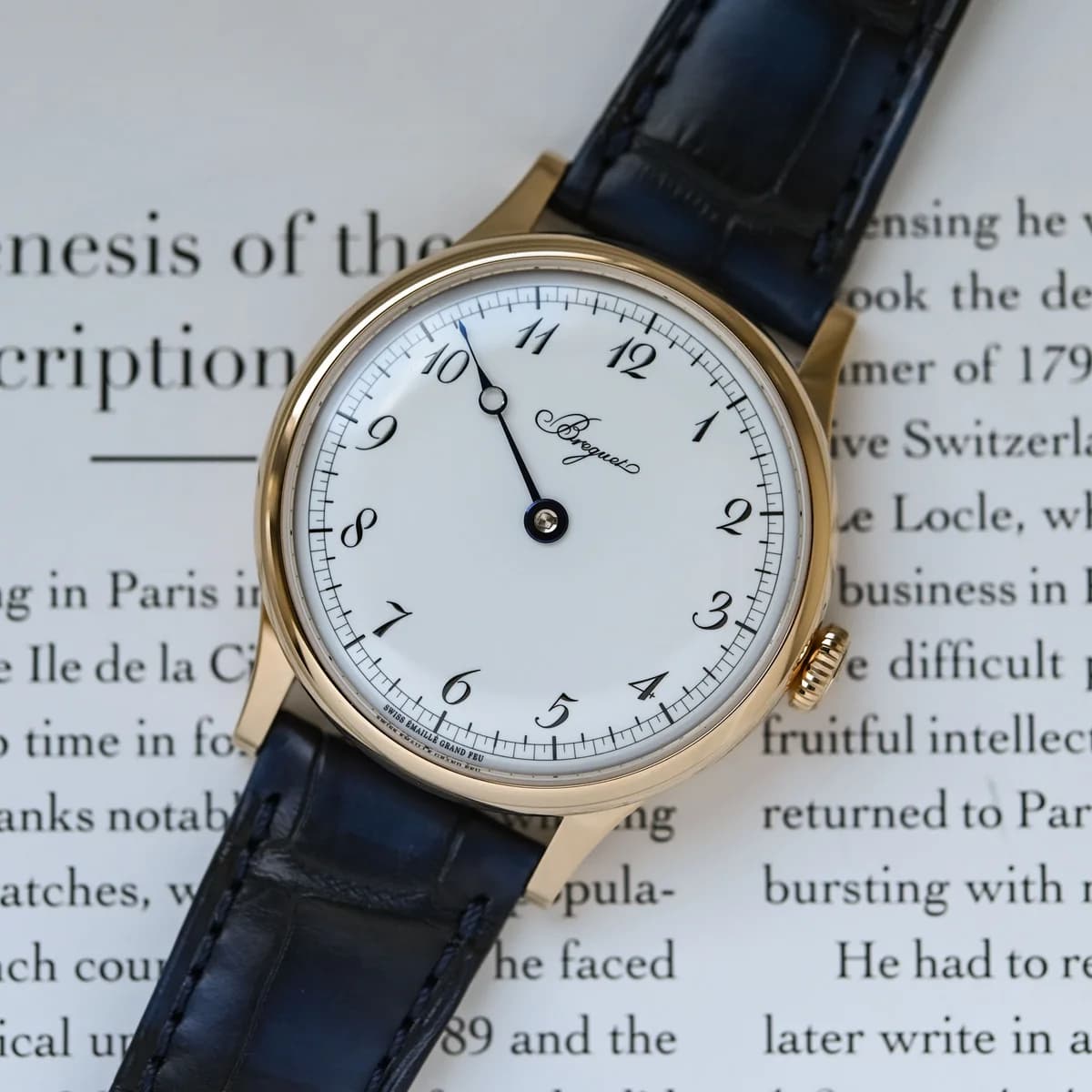
Two hundred and fifty years after Breguet founded that workshop on the Quai de l'Horloge in 1775, the brand chose to celebrate its anniversary not with a grand complication, not with a multi-axis tourbillon, not with a minute repeater. Breguet CEO Gregory Kissling put it directly: they wanted to surprise people by presenting a single-hand watch. The Classique Souscription 2025 is a deliberate revival of that 1796 concept, reduced from the original 60mm pocket watch to a 40mm wristwatch, with the same philosophical commitment to maximum simplicity. On November 13, 2025, at the Batiment des Forces Motrices in Geneva, the 25th Grand Prix d'Horlogerie de Geneve jury awarded it the Aiguille d'Or, the highest honor in watchmaking. A watch with one hand beat every tourbillon, every chronograph, every astronomical complication in the room. The other winners that evening included the Greubel Forsey Nano Foudroyante for mechanical exception, the Audemars Piguet Royal Oak Perpetual Calendar for iconic watch, and the Urban Jurgensen UJ-2 with its double wheel natural escapement for best men's watch. Serious competition from serious brands. And the jury chose the watch with one hand. That decision says something about where the watchmaking establishment's head is.
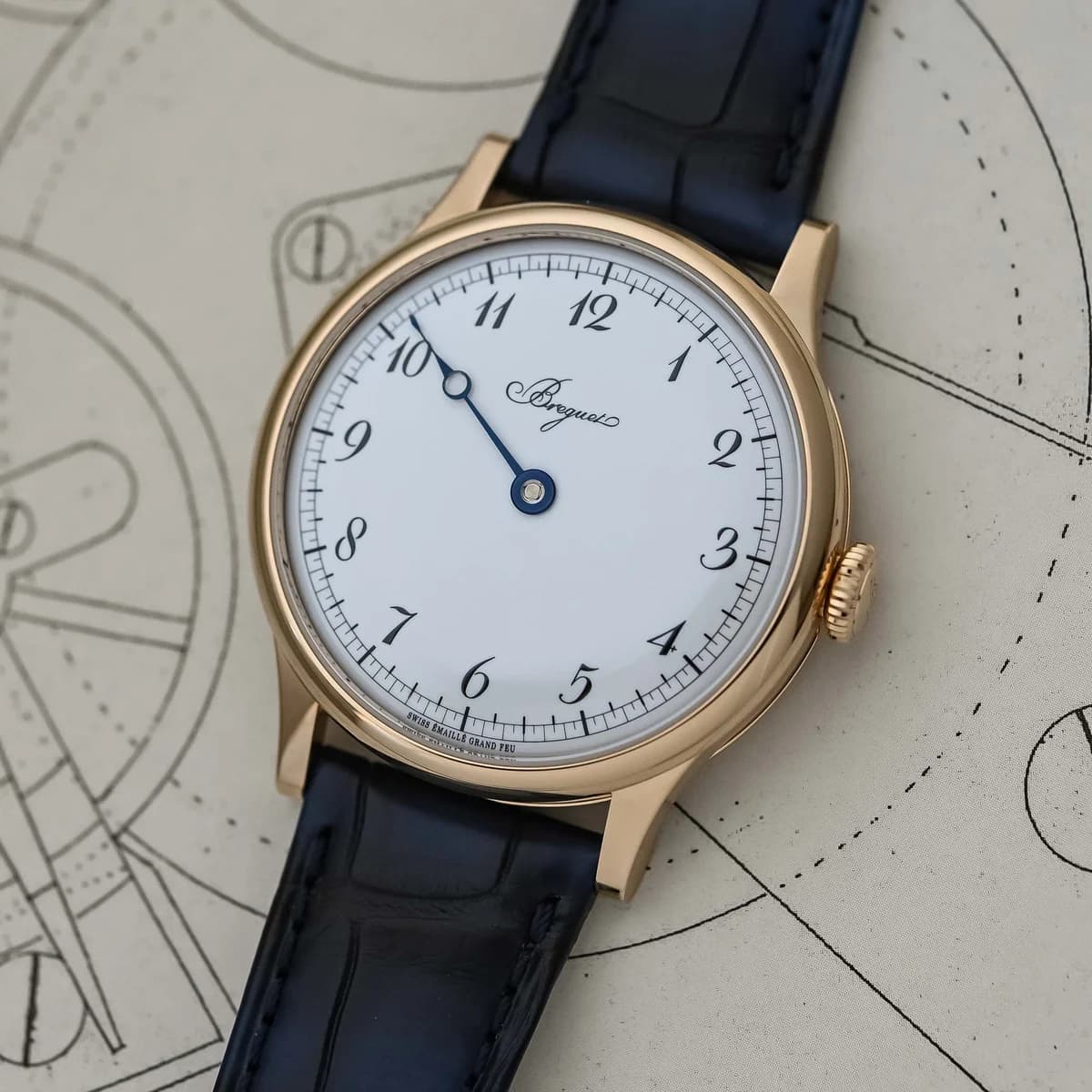
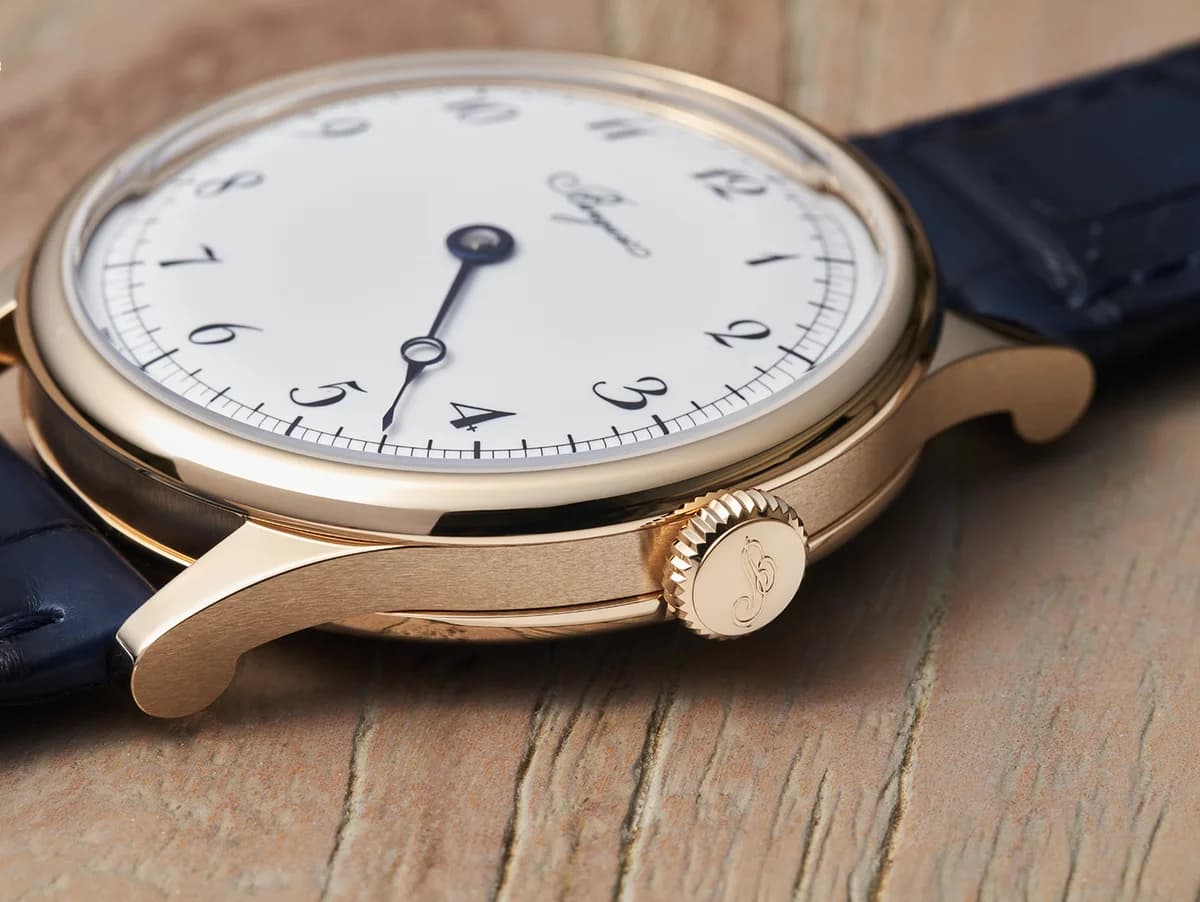
The case is 40mm in diameter and 10.8mm thick, made from what Breguet calls their proprietary gold alloy. It is 18 karat, but the composition includes silver, copper, and palladium alongside the gold, producing a warm tone that sits somewhere between yellow and rose gold. Breguet says the color echoes 18th-century metallurgy, and I believe them. It has a warmth that standard yellow gold lacks and a subtlety that rose gold does not quite achieve. The flanks are satin-brushed horizontally rather than using the traditional coin-edge fluting found on standard Classique models. The bezel is polished and gently domed. The lugs are integrated and curved, and the overall profile reads as clean and historically grounded without being a costume piece. Water resistance is 30 meters, which is standard for a dress watch of this caliber. The crystal is sapphire with an anti-reflective coating.
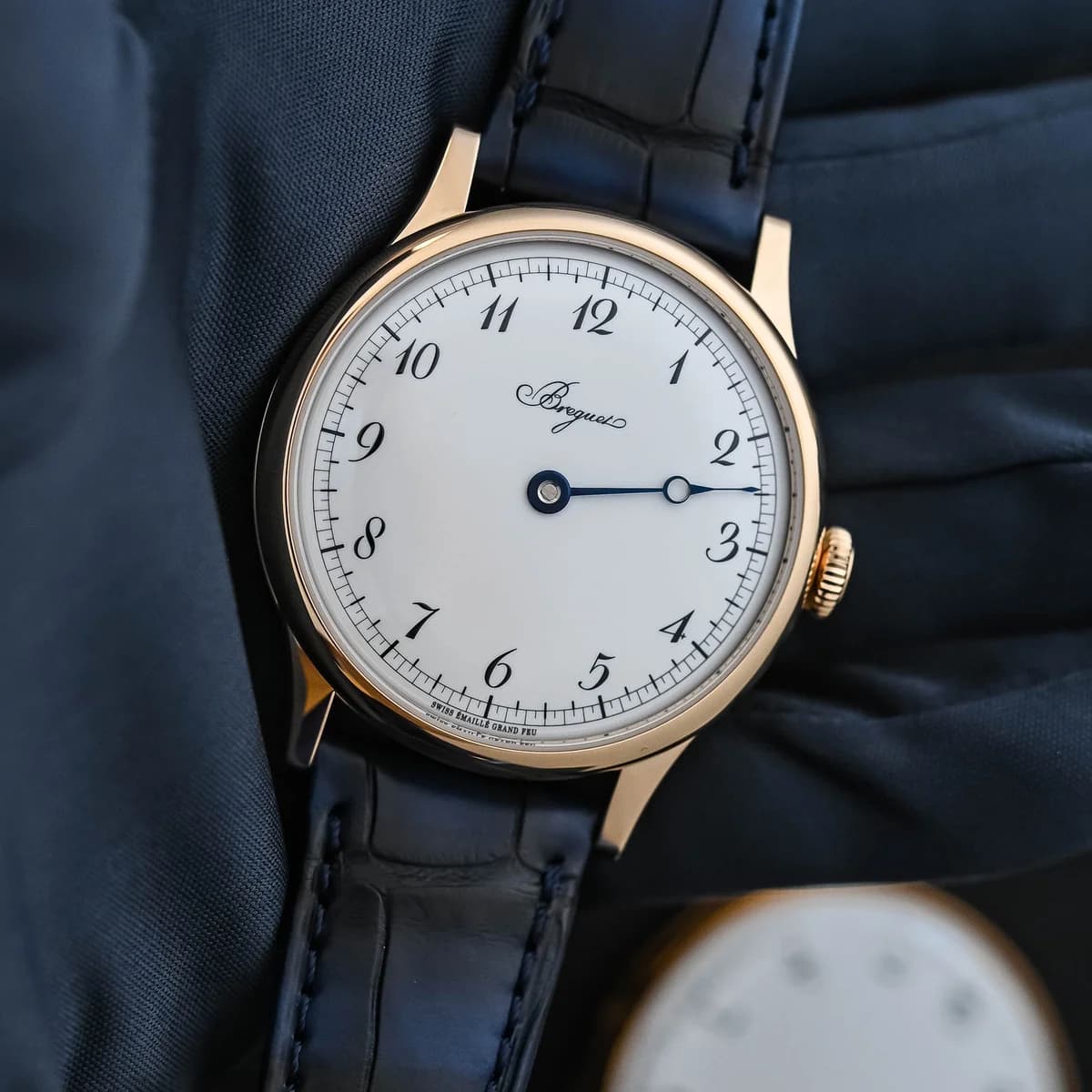
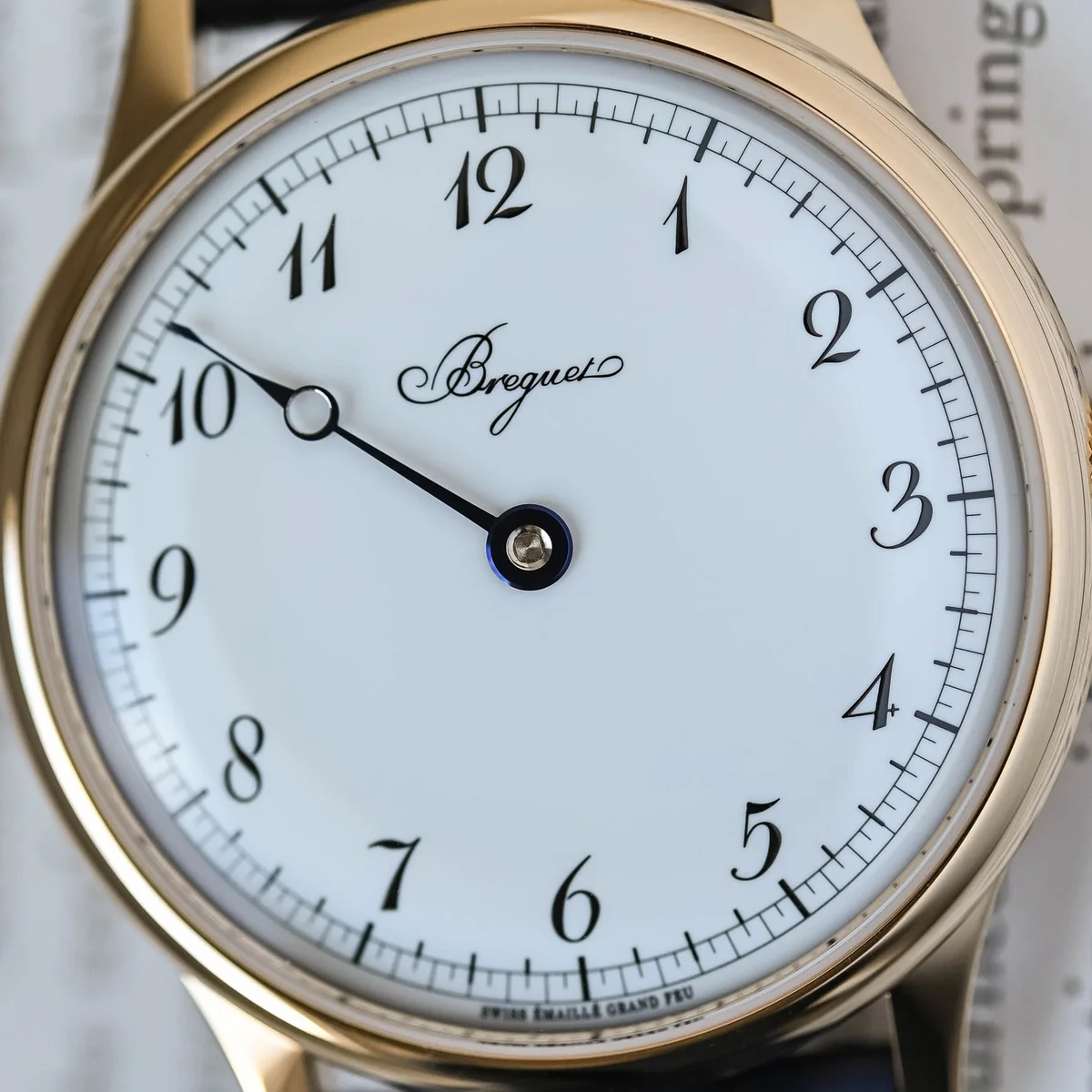
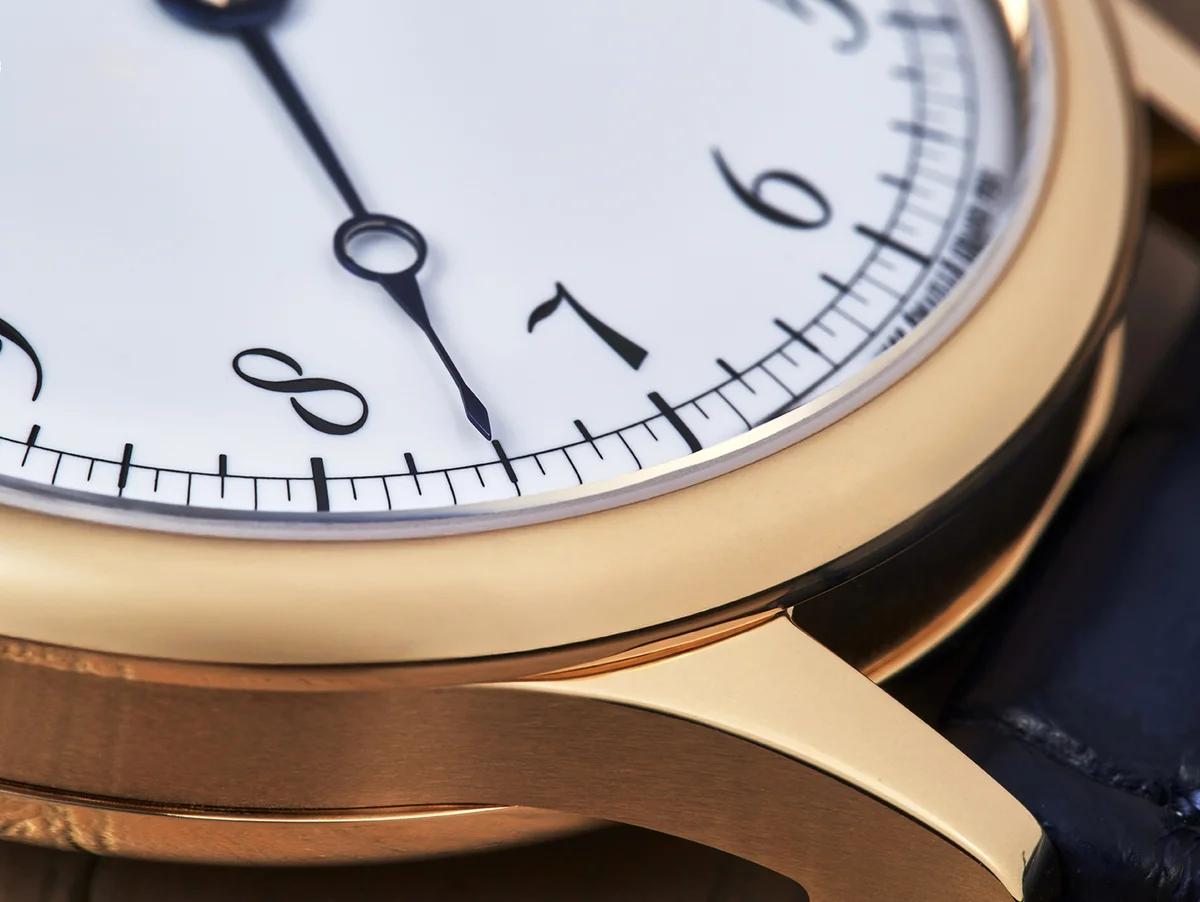
The dial is white Grand Feu enamel over a gold base. Grand Feu means the enamel is fired at extremely high temperatures, typically above 800 degrees Celsius, which gives it a depth and luminosity that painted or lacquered dials simply cannot match. The hour markers are Breguet's distinctive Arabic numerals, applied in black petit feu enamel, with a chemin de fer (railroad track) minute scale dividing each hour into five-minute intervals. This is how the wearer reads the time with a single hand. The lone flame-blued steel Breguet pomme hand sweeps across the dial, and where it falls between the five-minute markers gives an approximate reading. I appreciate the honesty of this design. It does not pretend to offer precision down to the second. It offers precision to within a few minutes, which is exactly how the original 1796 souscription watches worked, and which is, if I am being honest, more than sufficient for how most people actually live their days.
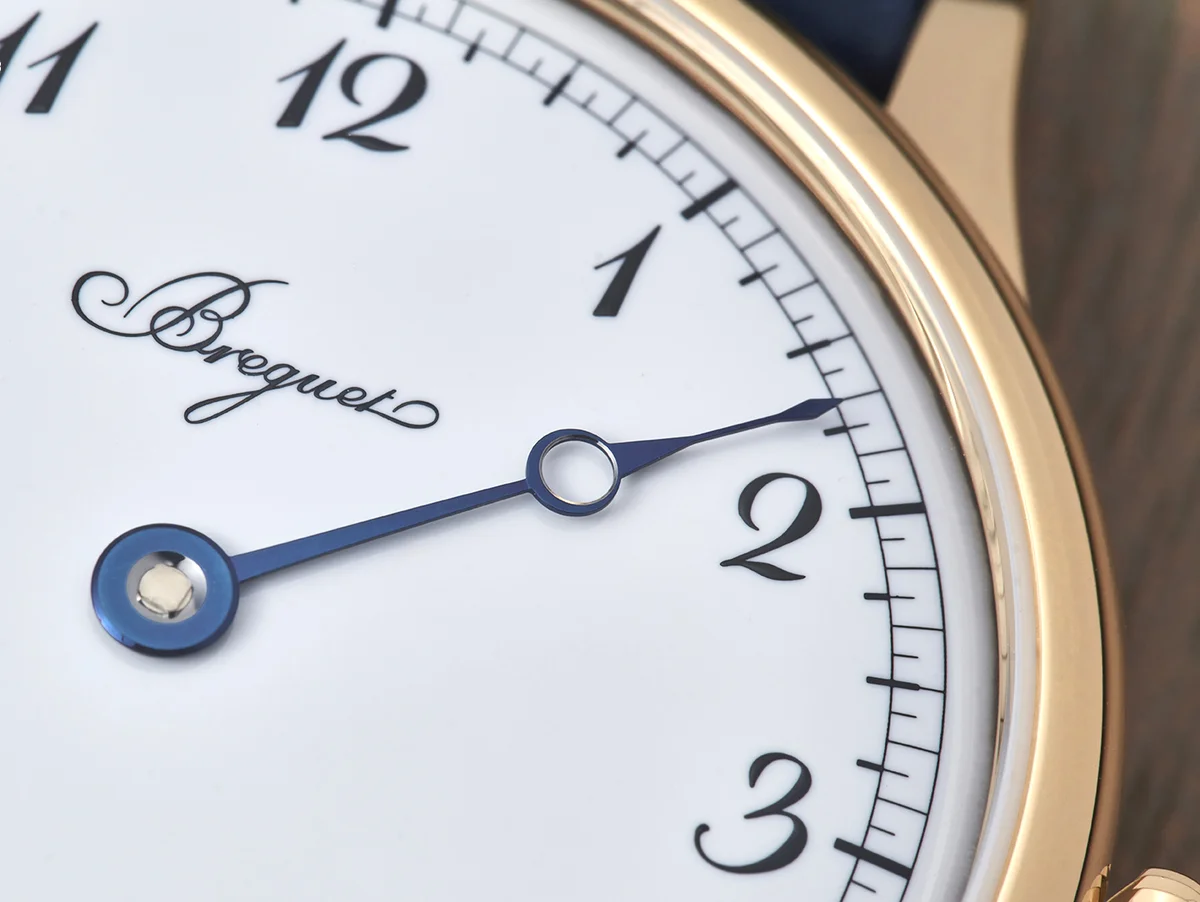
The hand itself deserves attention. It is a single piece of steel, flame-blued to that distinctive deep blue-violet that only thermal oxidation produces, with mirror-polished chamfered edges and a Breguet pomme tip (the hollowed-out apple shape that Breguet invented around 1783). The hand is curved by hand to match the dome of the enamel dial. Between the center of the dial and 6 o'clock, nearly invisible unless the light catches it at the right angle, sits the secret signature: the word "Souscription," the individual serial number, and the Breguet logo. This is where the watch connects two of the most important watchmakers who ever lived.
Breguet introduced the secret signature in 1795 as an anti-counterfeiting measure. Even during his lifetime, his work was so highly regarded that it was extensively counterfeited, and the nearly invisible engraving on the dial surface gave owners a way to verify authenticity. On most modern Breguet watches, the secret signature is laser-etched. On the Classique Souscription, it is applied the traditional way, using a diamond-point pantograph, a manually operated precision tool with articulated arms that traces fine incisions into the hardened enamel. The specific pantograph Breguet uses for this watch was acquired from the estate of George Daniels. George Daniels, who invented the co-axial escapement, who made some of the greatest watches of the 20th century entirely by hand, and who spent years studying and restoring Breguet's own pocket watches. Daniels wrote the definitive book on Breguet's work, "The Art of Breguet," and considered Abraham-Louis the greatest watchmaker who ever lived. Using Daniels' own tool to apply Breguet's secret signature on a watch that revives Breguet's original 1796 concept is the kind of detail that makes the hair on the back of my neck stand up. Two centuries of horological lineage, connected through a single diamond-tipped instrument.
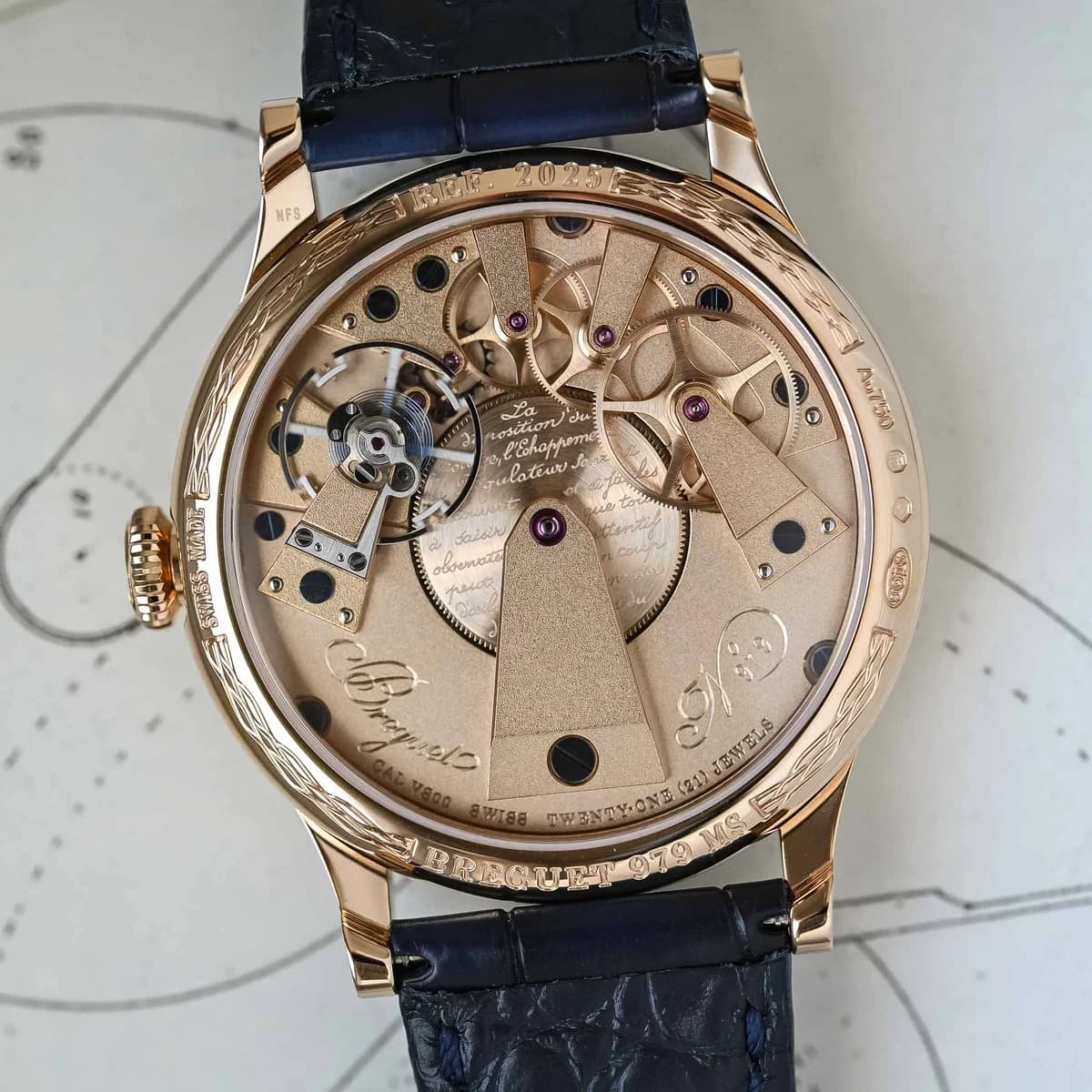
The Caliber VS00 inside is hand-wound and contains 144 components with 21 jewels. It beats at 3 Hz (21,600 vibrations per hour) and delivers a 96-hour power reserve, which is four full days from a single barrel. That is remarkable for a movement this architecturally simple. The movement measures 35.6mm across and just 5.7mm thick. The layout is symmetrical, inspired directly by the original 1797 pocket watch movement: a large central barrel with the balance wheel and gear train arranged symmetrically on either side. The bridges are gilded brass in a soft tone that matches the Breguet gold case, finished with shot-blasting that produces a fine frosted texture. The screws are blued steel. The ratchet wheel that covers the barrel is hand-engraved with a reprography of Abraham-Louis Breguet's original writings from the 1796 prospectus. The escapement is a ruby cylinder, the same type Breguet used in his original souscription watches, which is an extraordinary choice for a modern wristwatch. The balance spring is Nivachron, a titanium-based alloy that is antimagnetic and thermally stable, with a Breguet overcoil terminal curve. The combination of an 18th-century escapement type with 21st-century materials is a deliberate statement about continuity. Most modern watches use Swiss lever escapements, which are self-starting and more solid. The cylinder escapement is less efficient but historically authentic, and Breguet's use of ruby for the cylinder barrel reduces friction to the point where the power reserve actually exceeds many watches with conventional lever escapements. Four days from a hand-wound single barrel with a cylinder escapement is genuinely impressive engineering.
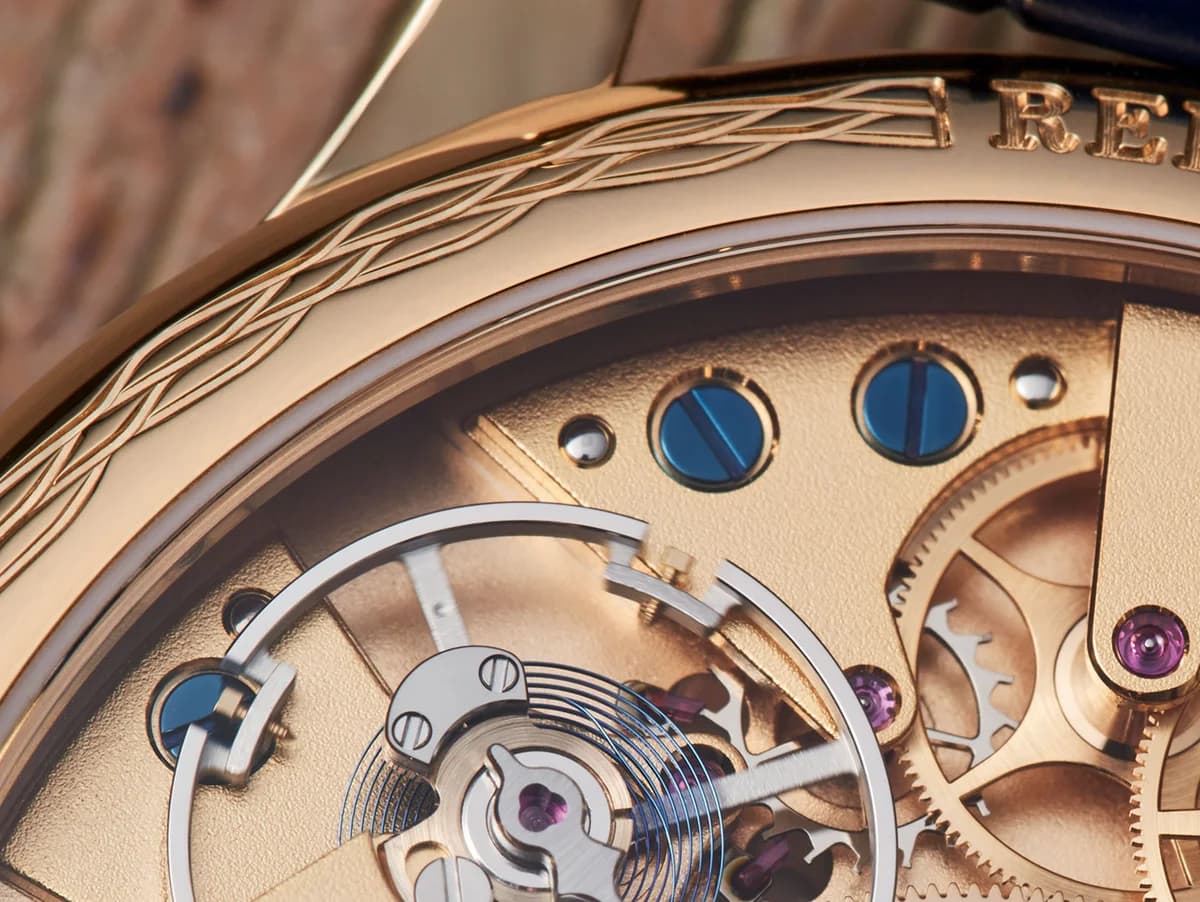
The caseback is sapphire, but not in the way most exhibition casebacks work. Instead of simply showing the movement, it has a hand-executed guilloche pattern called "Quai de l'Horloge," inspired by the curve of the Seine as it encircles the Ile de la Cite where Breguet's workshop stood. The guilloche is cut on a rose engine lathe with custom rosettes made specifically for this pattern. Through the sapphire, the movement architecture is visible in three dimensions, the symmetrical bridge layout and the frosted finishing catching light differently as the watch moves on the wrist. Each caseback pattern is unique because hand-applied guilloche inherently carries the subtle irregularities that distinguish craft from manufacturing.
Breguet sits within the Swatch Group, acquired in 1999 from Investcorp. The brand shares corporate parentage with Blancpain, Omega, and Longines, among others, but occupies the highest tier within the group's hierarchy. What strikes me about Breguet's position in watchmaking is the gap between its historical importance and its contemporary collector perception. Abraham-Louis Breguet invented or perfected the tourbillon (patented June 26, 1801), the pare-chute shock protection, the perpetuelle self-winding mechanism, the overcoil hairspring, the pomme hands, guilloche dials, and the gong spring for repeaters. He sold watches to Napoleon, Empress Josephine, Marie Antoinette (the legendary No. 160, commissioned in 1783 and not completed until 1827, four years after his death), and the courts of Europe. F. P. Journe spent years restoring Breguet's pocket watches, including the No. 3177 at the Arts et Metiers Museum in Paris in 1982, and directly credits that experience with enabling his own natural escapement. Journe even adopted the souscription sales model himself, taking advance payments for his Tourbillon Souverain before he had a manufacture to produce them. By any objective measure of contribution to the craft, Breguet is the most important name in watchmaking history. And yet among collectors, Breguet does not command the same heat as Patek Philippe, Vacheron Constantin, or even Audemars Piguet. The Classique collection itself includes some of Breguet's finest work: the Classique 5157 (a beautifully proportioned time-only dress watch), the Classique Tourbillon 5367, and now the Souscription. But the brand also produces the Marine collection, the Type XX chronographs with genuine French military aviation heritage, and the Tradition line that I wrote about separately. The depth of the catalog reflects 250 years of continuous innovation. The Classique Souscription, and particularly the Aiguille d'Or, feels like the beginning of a correction. The GPHG jury, which included independent watchmakers, collectors, journalists, and industry leaders, chose this watch over everything else. That is not a marketing campaign. That is the watchmaking establishment recognizing what historians have known for 250 years.
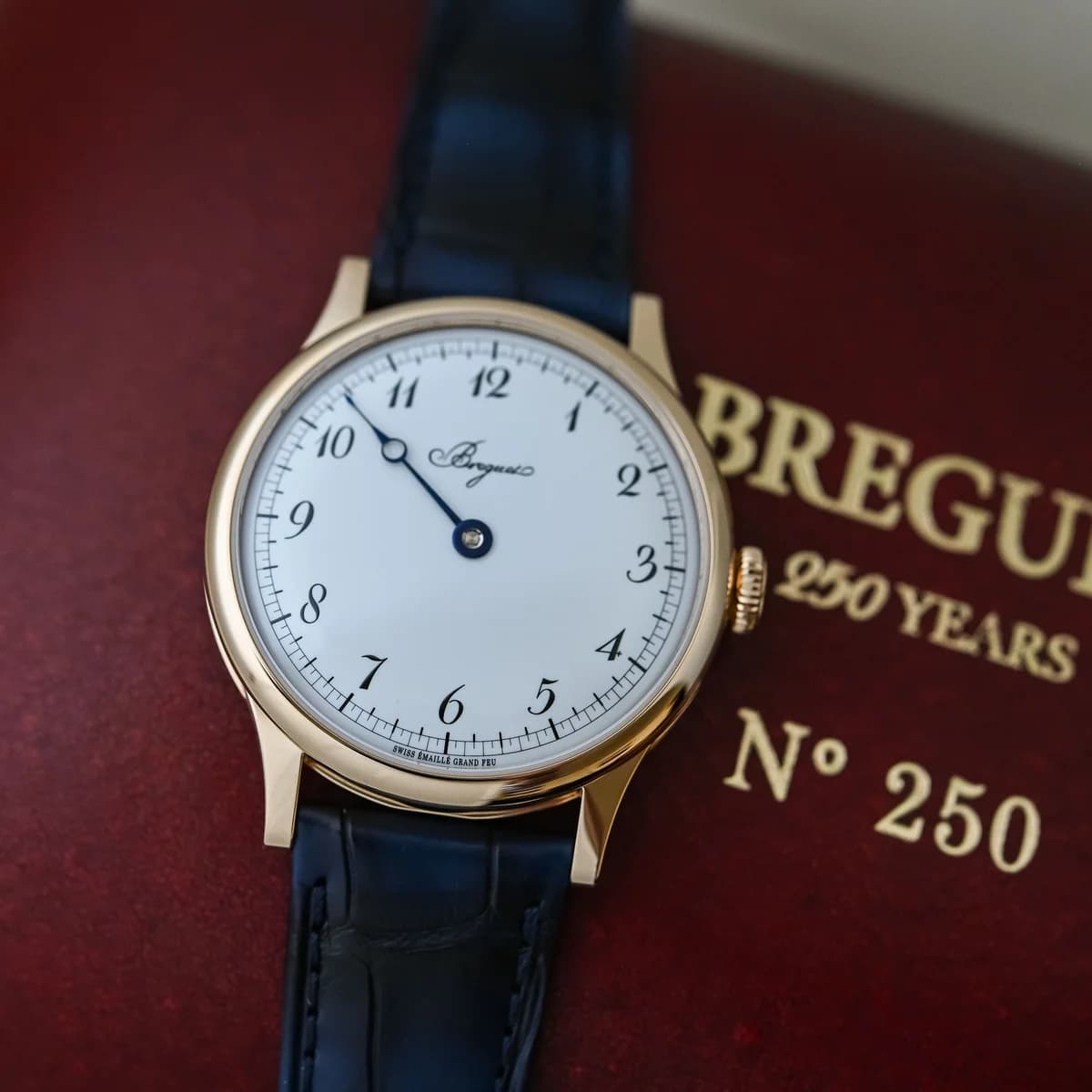
The honest critique is functional. A single-hand watch is, by definition, an imprecise instrument. The chemin de fer track divides each hour into five-minute intervals, and the hand's position between those markers gives an approximate reading, not an exact one. If precision matters to how someone structures their day, if meetings start at 2:17 and the train leaves at 3:42, this is not the watch for that life. The SJX review noted that the single hand "only indicates the time approximately, to the closest five minutes more or less," and that observation is fair. The Classique Souscription is a philosophical object as much as a functional one. It asks the wearer to accept a different relationship with time, one measured in broader strokes rather than precise minutes. I find that genuinely appealing as a concept, and there is historical context worth noting. Before the industrial revolution and the railroad standardized timekeeping, most people lived by approximate time. Church bells marked the hour. Sundials gave estimates. The souscription watch was designed for that world, and wearing one today is a deliberate choice to step back into that mindset. But I also understand that it limits who this watch is for. It is a second watch, or a third watch, or a weekend watch. It is not the only watch. The 30-meter water resistance is splash-proof at best. And the Breguet gold alloy, while beautiful, is still 18 karat gold sitting at roughly 2.75 on the Mohs scale, which means the polished bezel and lugs will pick up micro-scratches. The patina will add character over time, but it is worth knowing going in. There is also no lume on the hand or the dial. In low light, the white enamel remains legible longer than most dials because of the contrast between the blued hand and the white surface, but in true darkness, this watch goes silent. For a watch inspired by a time before electric light, that feels almost intentional.
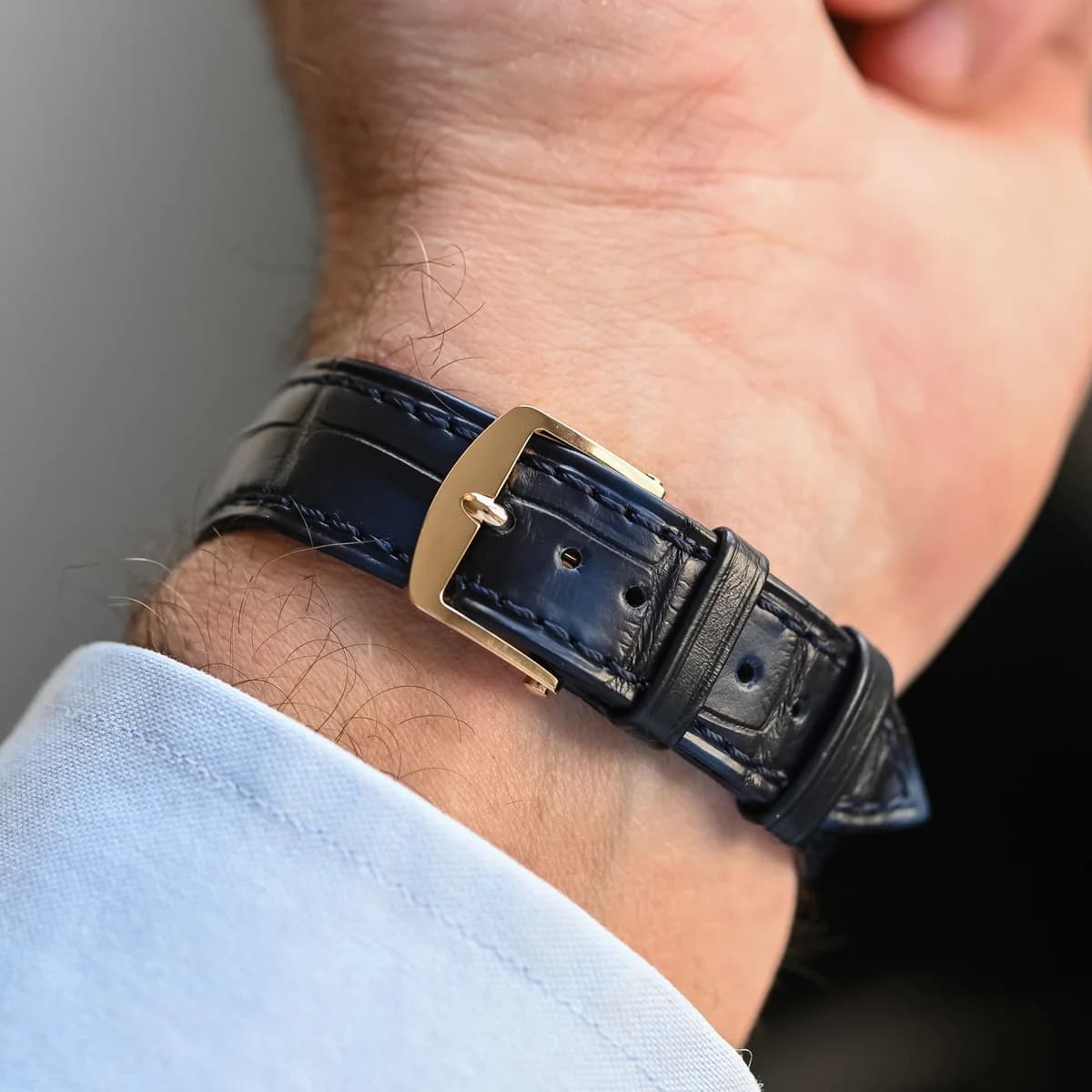
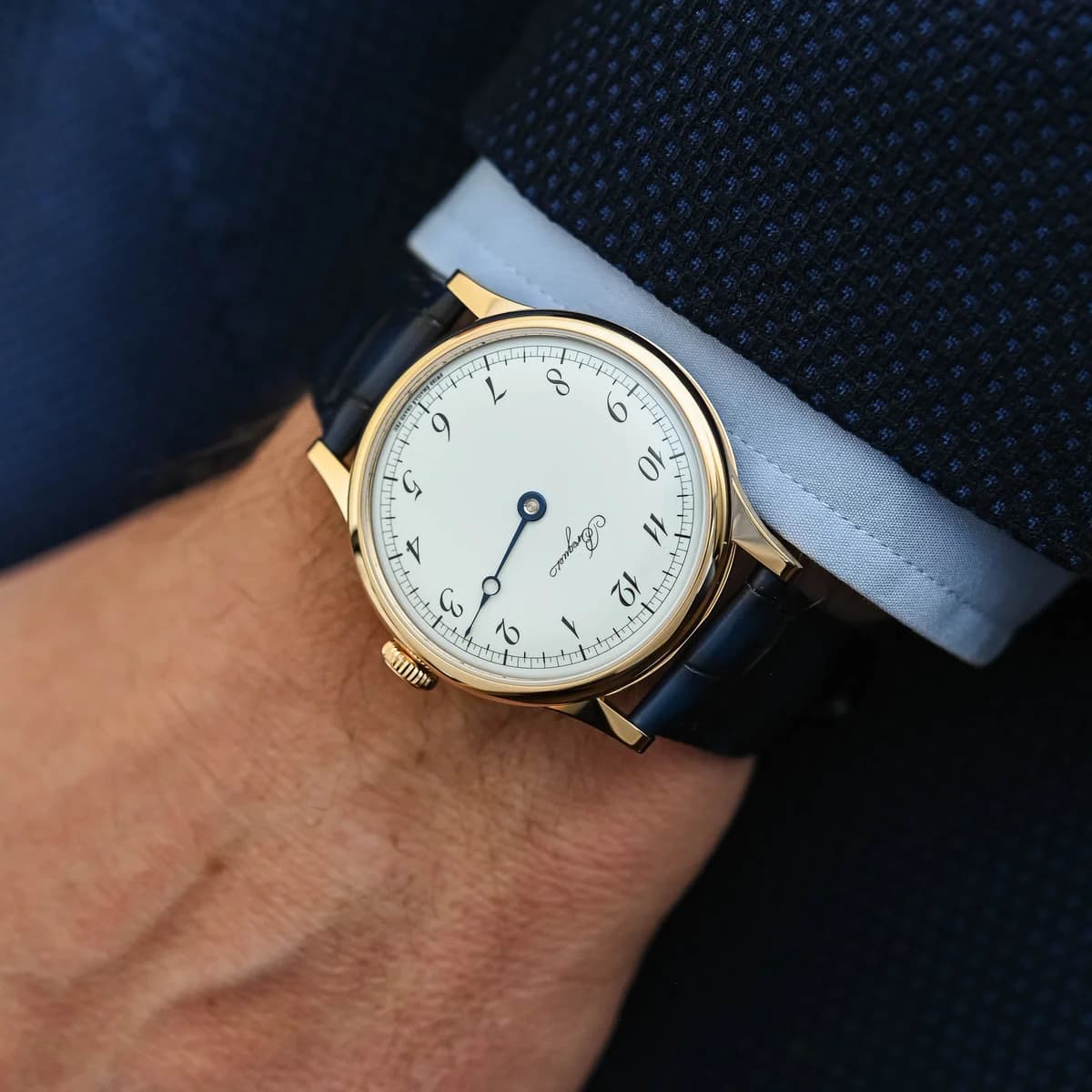
On the wrist, the Classique Souscription wears smaller than its 40mm diameter might suggest. The integrated lugs and the curved case profile keep it close, and at 10.8mm thick it sits flat enough to disappear under a cuff. The navy blue alligator strap with the 18K gold pin buckle adds a formality that pairs naturally with tailored clothing. The warmth of the Breguet gold alloy on darker skin produces a tone that I find more interesting than standard yellow or rose gold. The palladium in the alloy tempers the warmth just enough to give it a character that shifts slightly depending on the light. Under a Zegna flannel in charcoal or navy, the warm case tone catches the eye without demanding it. The single hand sweeping slowly across the white enamel dial is meditative in a way that a three-hand watch simply is not. There is something about watching one hand move through the hours that strips away the anxiety of seconds ticking. The 21mm lug width accommodates most aftermarket straps, though the pin buckle in matching Breguet gold is so well-finished that swapping it for anything else would feel like a downgrade.
Breguet's Classique Souscription exists because 250 years ago, a watchmaker in financial crisis decided that simplicity, executed with absolute conviction, was more powerful than complexity. In 2025, the watchmaking world's most prestigious jury agreed. The Aiguille d'Or did not go to the watch with the most complications or the thinnest movement or the most innovative material. It went to a watch with one hand, one barrel, one escapement type that dates back to the 18th century, and a secret signature applied with a dead man's tool. Every detail in this watch points backward in time while the watch itself moves forward. That is the hardest thing to do in any field, honoring what came before without being imprisoned by it. I keep thinking about that pantograph from George Daniels' workshop, a tool that once belonged to a man who spent his life studying Breguet's genius, now being used to inscribe Breguet's name into enamel fired at 800 degrees on a watch that revives a 230-year-old concept. Some watches impress with what they do. This one impresses with what it chose not to do.
Also in Haute Horlogerie