
Bernhard Lederer
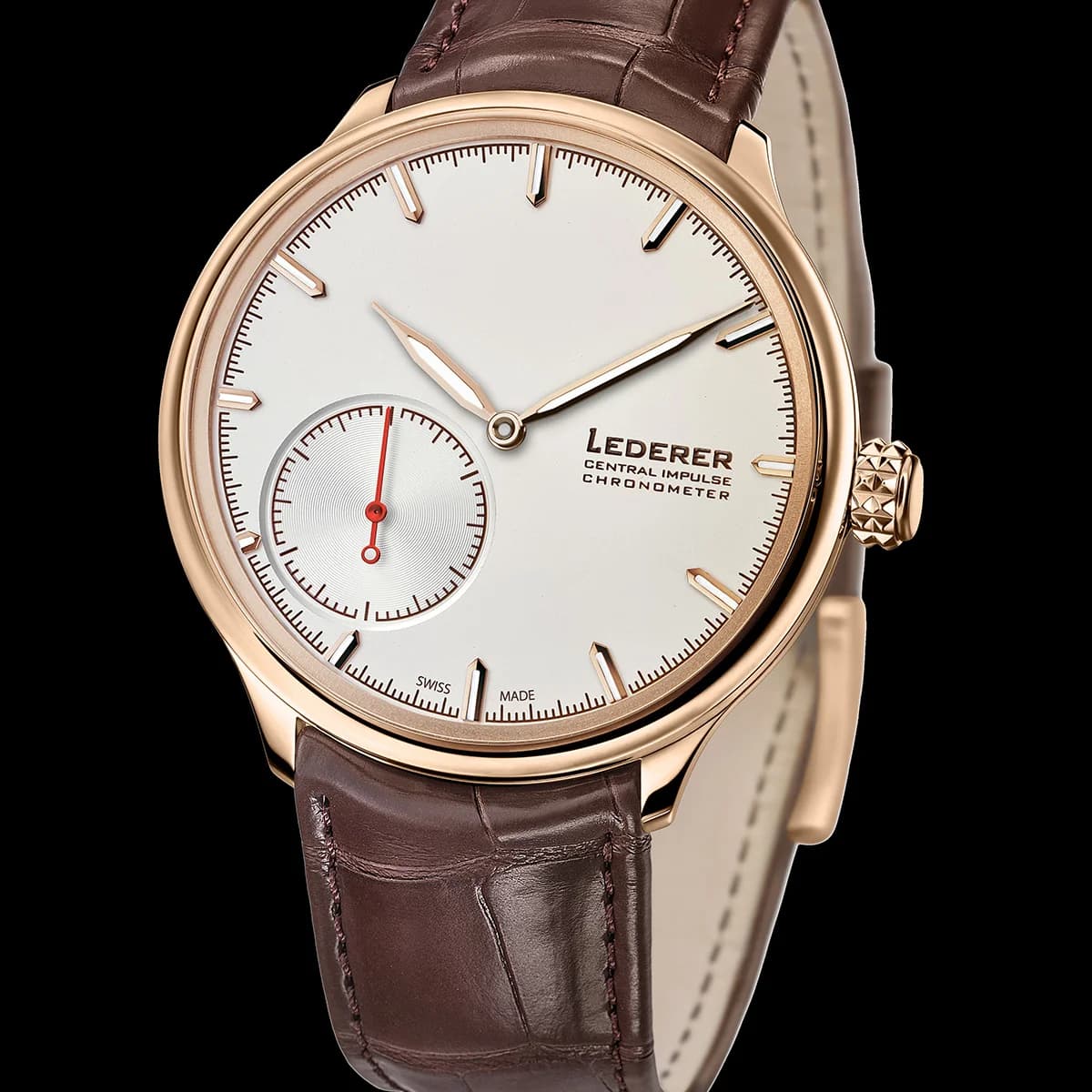
Central Impulse Chronometer
Central Impulse Chronometer
Abraham-Louis Breguet tried to solve this problem two hundred years ago. The natural escapement, his attempt at delivering energy directly to the balance wheel without the friction losses of a conventional lever escapement, was theoretically brilliant and practically unreliable. It worked in pocket watches under controlled conditions. It failed in the real world. The Swiss lever escapement won because it was solid, not because it was elegant. It uses a pallet fork that rocks back and forth, locking and unlocking the escape wheel, transmitting energy to the balance wheel through sliding friction on the pallet jewels. That friction is the compromise. Every Swiss lever escapement wastes energy through the sliding contact between the escape wheel teeth and the pallet stones. Breguet wanted to eliminate that waste entirely by pushing the balance wheel directly, the way you push a child on a swing. No intermediary. No friction loss. Just a clean impulse straight to the oscillator. The idea was sound. The execution was fragile. And for two centuries, nobody could make it work reliably in anything smaller than a clock.
George Daniels picked up where Breguet left off in the twentieth century and developed the co-axial escapement, which Omega eventually adopted and scaled to industrial production. The co-axial was a brilliant compromise, reducing friction without eliminating the lever entirely. But Daniels also built something more radical: the Independent Double Wheel Escapement, a mechanism with two separate escape wheels delivering impulse directly to the balance from both sides, alternating with each oscillation. He built it in pocket watch form. He studied it for years. And he concluded that the mechanism could not be miniaturized into a wristwatch. The tolerances were too tight, the components too delicate, and the architecture too complex to fit inside a case that sits on a human wrist. Bernhard Lederer proved him wrong.
Lederer is a German watchmaker, born in 1958 in Kornwestheim, a small town near Stuttgart. His path into watchmaking started early. He began training at the Wuppertaler Uhrenmuseum, the watch museum in Wuppertal, where he restored historical pocket watches and clocks in their workshop. That experience with antique mechanisms is foundational to everything he would later build. When you spend years taking apart and reassembling escapements designed by watchmakers who died two centuries before you were born, you develop an intimate understanding of how those mechanisms think. Not just how they work, but what the original maker was trying to achieve and where they fell short. Lederer studied at the Pforzheim watchmaking school in parallel and qualified as a Master Watchmaker in 1984. By 1985, he had joined the Academie Horlogere des Createurs Independants, the AHCI, making him one of its earliest members. He was twenty-seven years old.
What makes Lederer's career unusual is the long period of near-invisibility that preceded the Central Impulse Chronometer. After establishing his own workshop, he spent decades working behind the scenes, building complex mechanisms for other brands and private collectors. His diploma project in 1986 featured a gravity escapement and a perpetual calendar. He reinterpreted Charles Bond's gravity escapement in 1990. He built the TROJKA sculpture clock in 1991. He created tower clocks for the 500th anniversary of Brazil in 1996. He developed a triple tourbillon system for the BLU Majestic Tourbillon in 2006. He built a paramagnetic movement resistant to 100,000 Gauss in 2016. Most people in the watch world had never heard of him. He was constructing some of the most technically ambitious mechanisms in contemporary watchmaking, and almost nobody knew his name. What catches my eye about that list of achievements is the range. A gravity escapement, a perpetual calendar, tower clocks, a triple tourbillon, a paramagnetic movement. Each one would be the defining work of most independent watchmakers. For Lederer, they were steps along the way.
Lederer had personal conversations with George Daniels before Daniels died in 2011. Daniels recognized something in the younger German's approach to escapements and reportedly told him, "Too many watchmakers simply repeat what has been done. What you are doing is something new." Those conversations informed everything that followed. When Lederer finally stepped into the spotlight with his own name on the dial after more than a decade of development, he chose the hardest possible problem to solve: build a wristwatch escapement that delivers impulse directly to the balance wheel, from the center of the mechanism, using two independent gear trains, each with its own mainspring barrel, its own escape wheel, and its own constant-force remontoire. The result is the Central Impulse Chronometer.
The Caliber 9012 has 210 parts and 44 jewels in the 44mm version, or 212 parts and 36 jewels in the 39mm. The movement beats at 21,600 vibrations per hour, 3 Hz, with a 42-hour power reserve from two mainspring barrels. But those specifications do not convey what is actually happening inside this watch. There are two completely separate gear trains. Two barrels. Two remontoires that recharge every ten seconds. Two escape wheels made of hardened titanium. The balance wheel receives a regulated burst of energy every five seconds, alternating between the two gear trains. I want to explain why this matters so much. In a conventional watch, the escapement receives energy from a single mainspring through a single gear train. The force varies as the mainspring unwinds. Fully wound, the spring pushes harder. As it depletes, the force drops. The escapement receives inconsistent energy, which affects the rate. A remontoire solves this by interposing a small intermediate spring between the gear train and the escapement, recharged at fixed intervals, delivering constant force regardless of mainspring state. Lederer uses two of them, one per gear train, delivering constant force from both sides of the balance wheel. The inspiration traces to John Harrison's H4 marine chronometer from 1759, the clock that solved the longitude problem. Harrison used a remontoire to deliver constant force. Lederer doubled the concept.
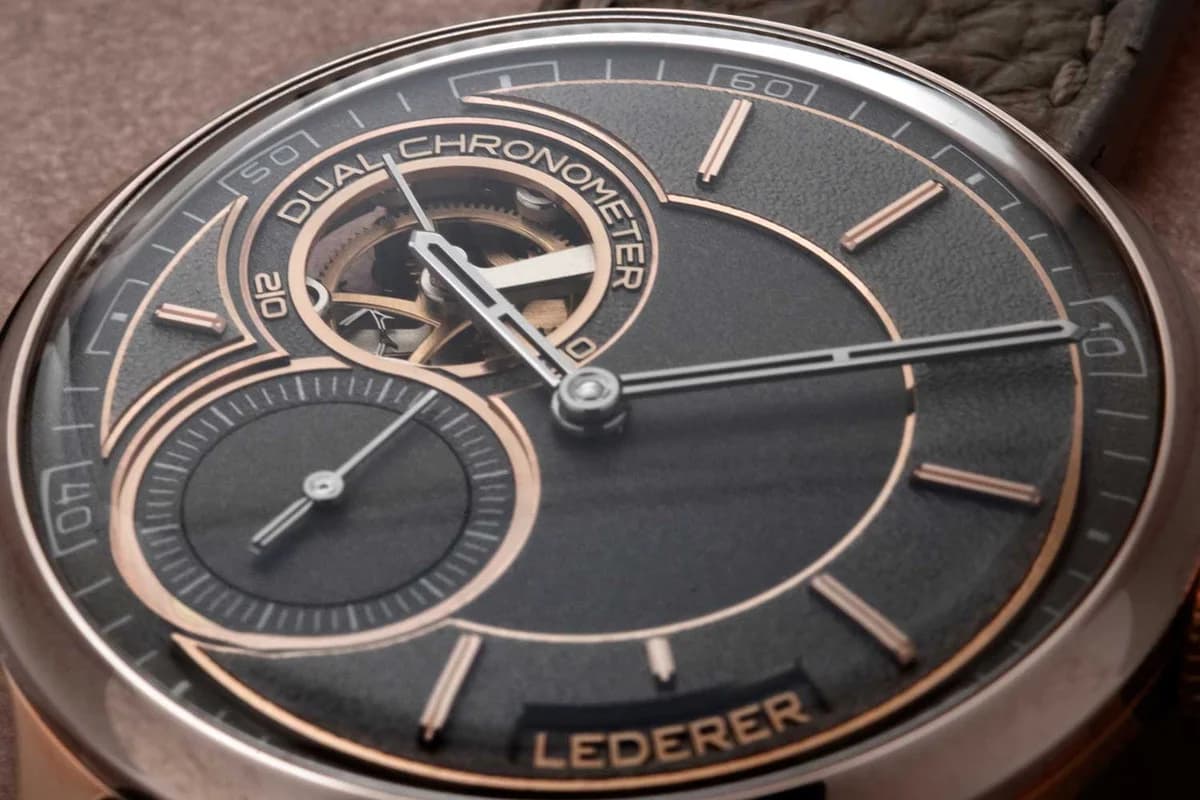
The escapement geometry is set at 120 degrees, wider than Daniels' 100-degree configuration, which reduces the inertia of the impulse and minimizes the disturbance to the balance wheel during each energy delivery. This is a subtle but critical refinement. A narrower impulse angle means the escape wheel tooth contacts the impulse pallet at a steeper angle, which creates more disruption to the balance wheel's natural arc. By widening the geometry to 120 degrees, Lederer softened the contact. The impulse is gentler, smoother, and less disruptive to the oscillation. A proprietary component Lederer calls the waiting pallet ensures correct alignment at low amplitude. At higher amplitudes, the escapement operates in pure direct-impulse mode. At lower amplitudes, when the mainspring is approaching depletion, it transitions to a hybrid indirect-impulse mode that maintains stability. The system is self-adjusting. Lederer also replaced the traditional triangular center stone with a rounded one to prevent recoil and optimize the impulse sequencing. When the remontoire can no longer recharge, the watch stops. Like the Gronefeld 1941 Remontoire, the Central Impulse Chronometer would rather show no time than show inaccurate time. That philosophy appears in every serious constant-force watch and it tells you something about the people who build them.
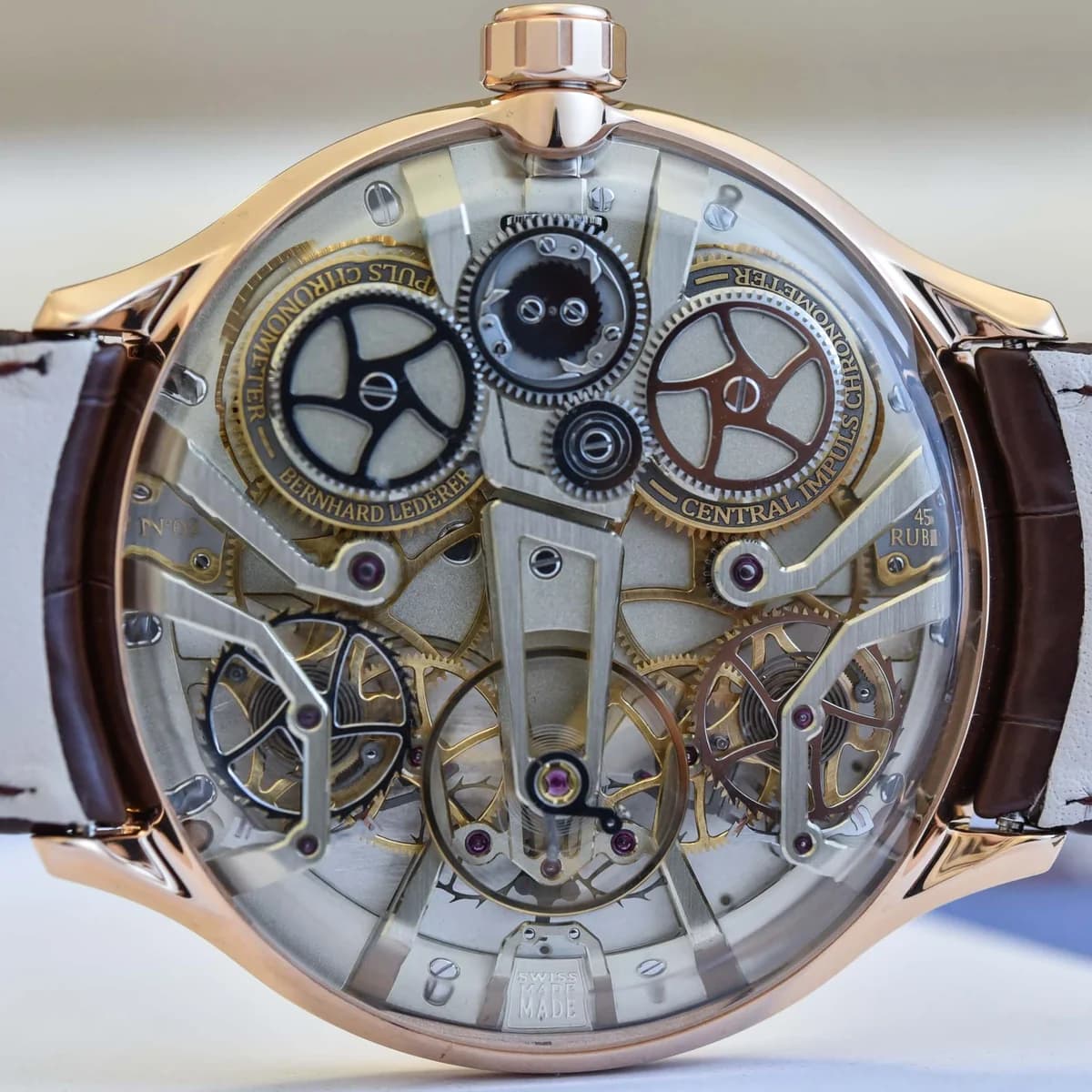
The balance wheel is a variable-inertia design with four regulating weights and four balancing weights, free-sprung with an overcoil hairspring. Free-sprung means there is no regulator lever touching the hairspring to adjust the rate. Instead, the tiny weights on the balance rim are turned inward or outward to change the effective moment of inertia. This is the same approach used by Patek Philippe, Rolex, and other top-tier manufactures, but in the context of this particular escapement, it takes on additional importance. The direct-impulse system is more sensitive to balance wheel consistency than a conventional lever escapement. Any irregularity in the oscillation is amplified because the impulse goes straight to the balance without the damping effect of a pallet fork. The free-sprung variable-inertia balance provides the stability the escapement demands.
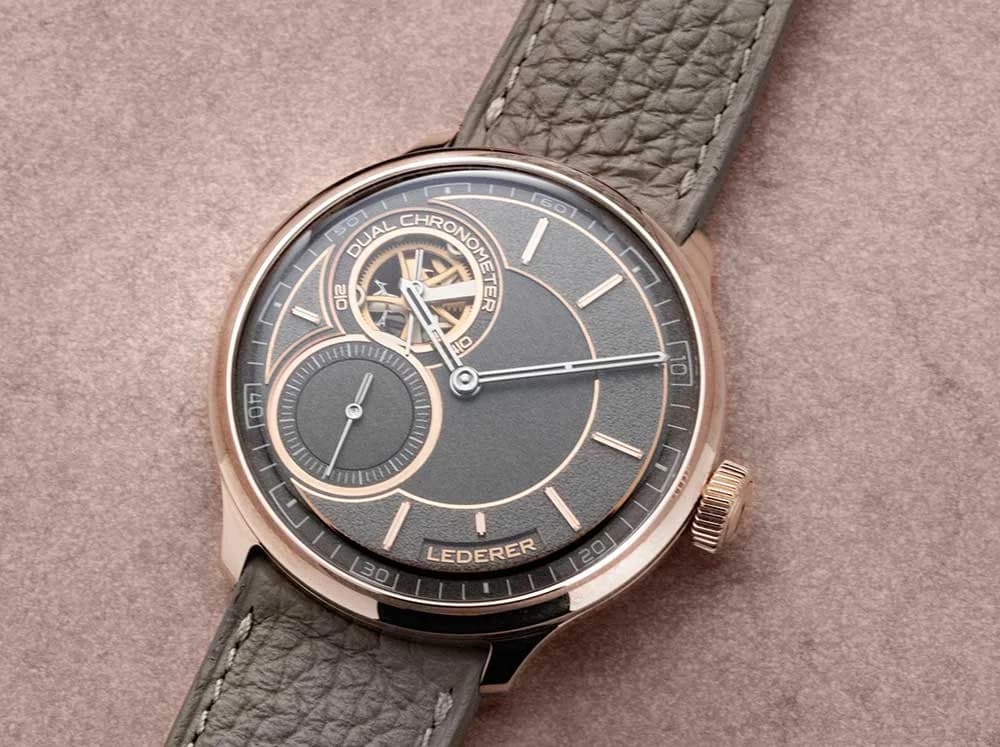
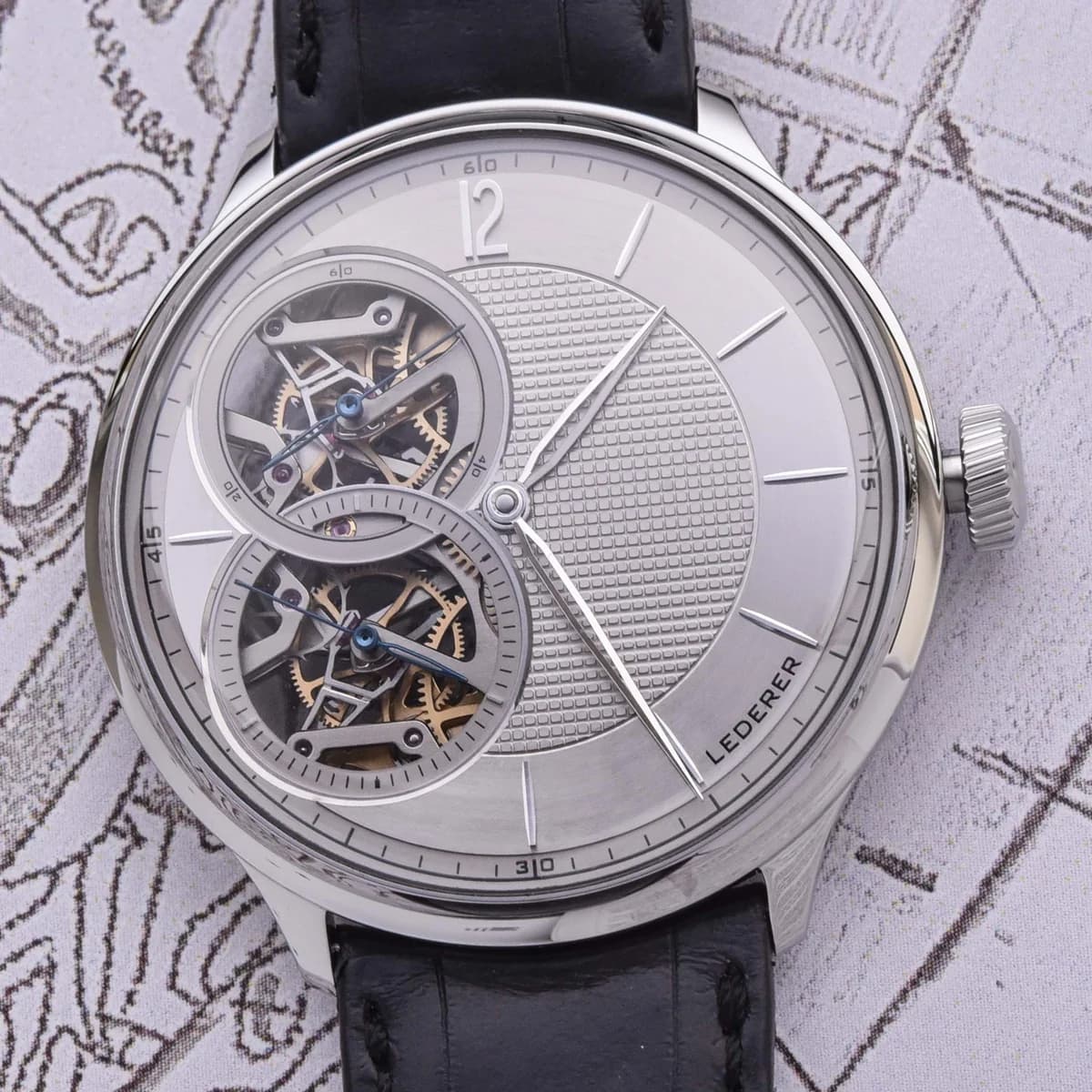
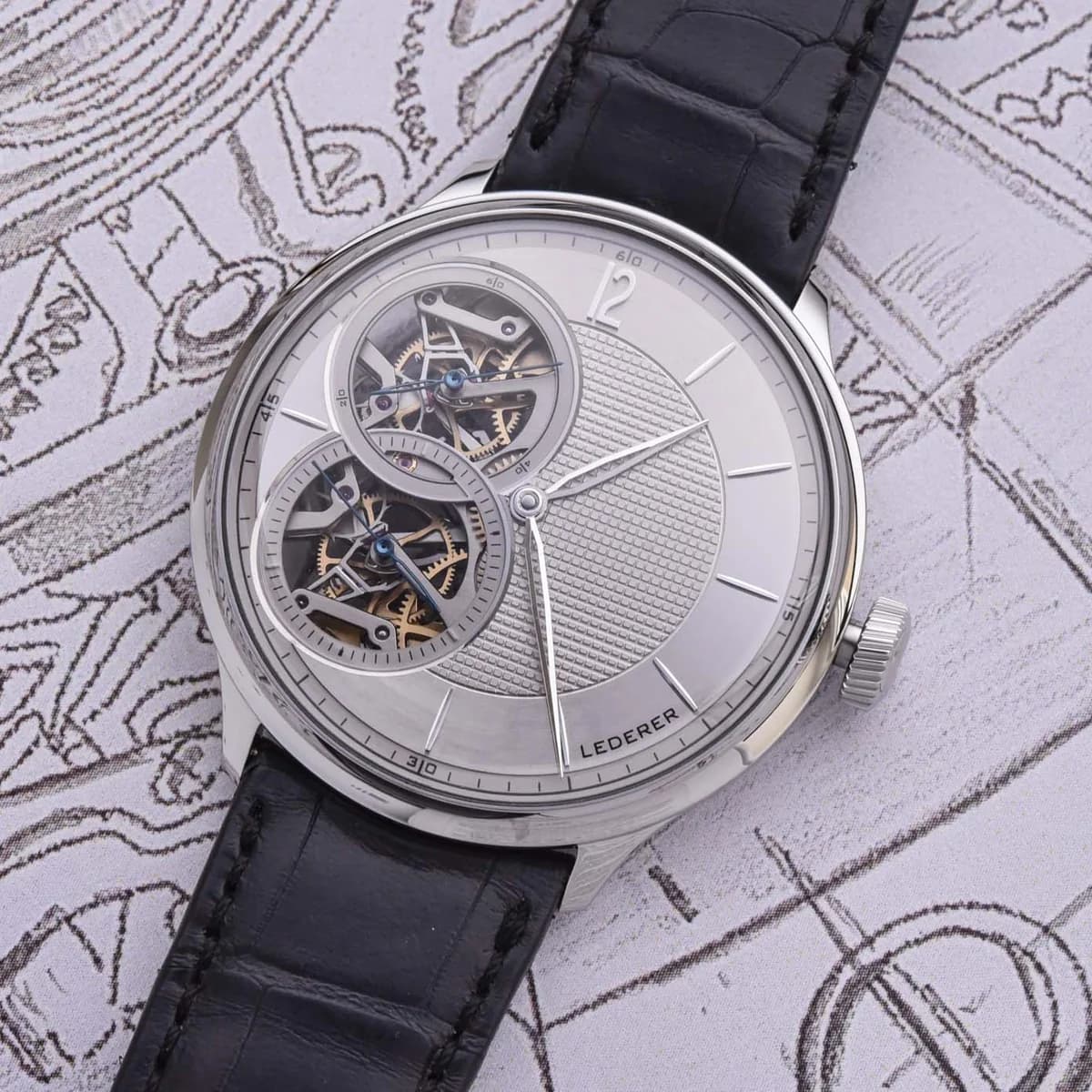
The dial tells you something is different before you understand what. There are two seconds subdials, positioned at 8 o'clock and 11 o'clock, and the seconds hands rotate in opposite directions. One clockwise, one counterclockwise. They move in mirror-image synchronization because they are driven by two separate gear trains running in opposite orientations. Two interlocking circular cutouts in the dial form a figure-eight pattern that reveals the escapement and remontoire action in real time. You can watch the mechanism work. The two escape wheels, the two remontoire springs recharging, the balance wheel receiving its alternating impulse. It is hypnotic. I appreciate that Lederer made the complexity visible rather than hiding it beneath a solid dial. Most watch dials are static surfaces that display time. This dial is a window into the machine. The hour and minute hands are partially openworked, and the hour markers sit on a raised, beveled ring that frames the entire display. The overall impression is architectural rather than decorative.
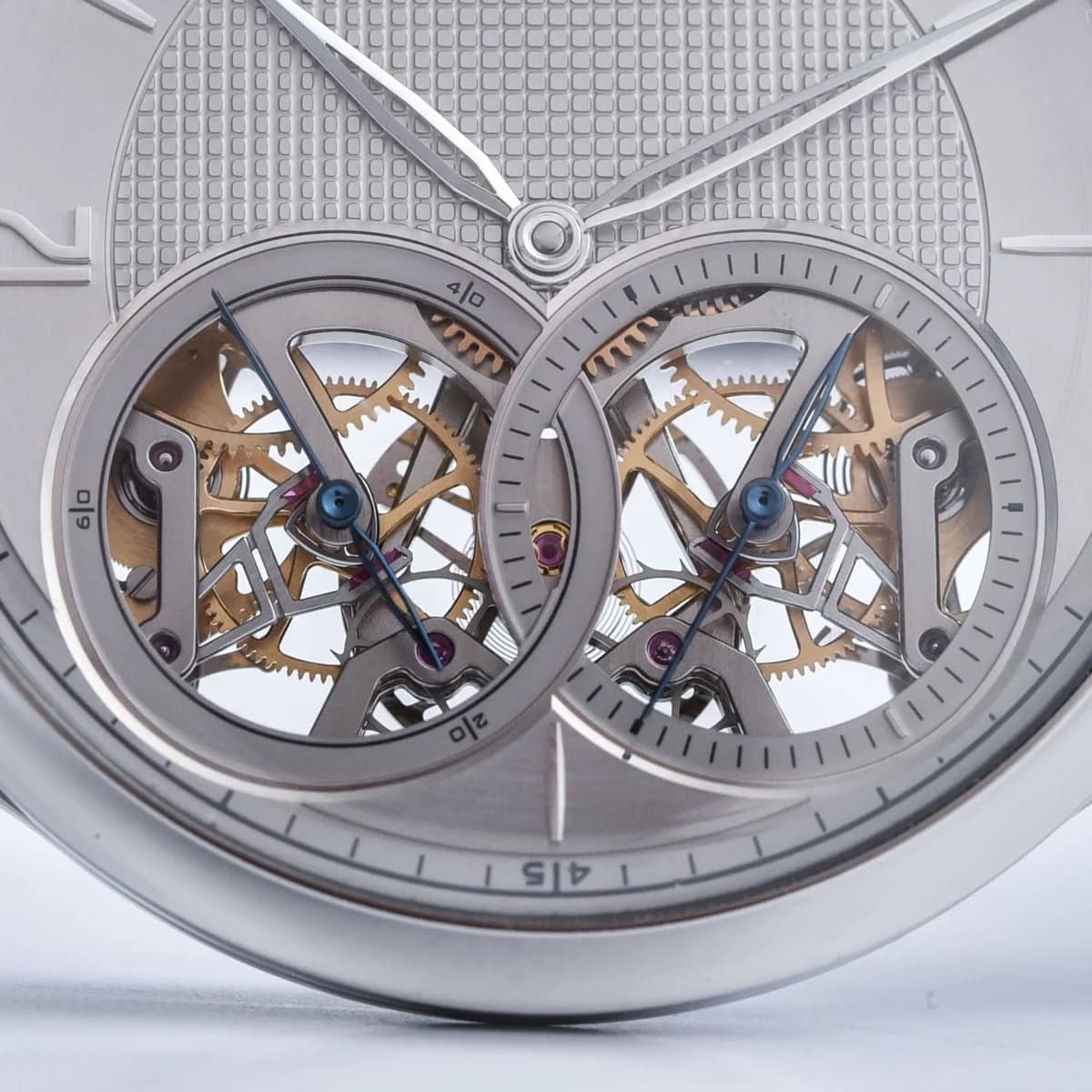
What strikes me about the figure-eight apertures is that they are not decorative for the sake of it. They exist because the mechanism underneath demands visibility. The two counter-rotating seconds hands, the two remontoire springs recharging every ten seconds, the alternating impulse to the balance wheel. Lederer designed the dial to show all of this because hiding it would defeat the point.
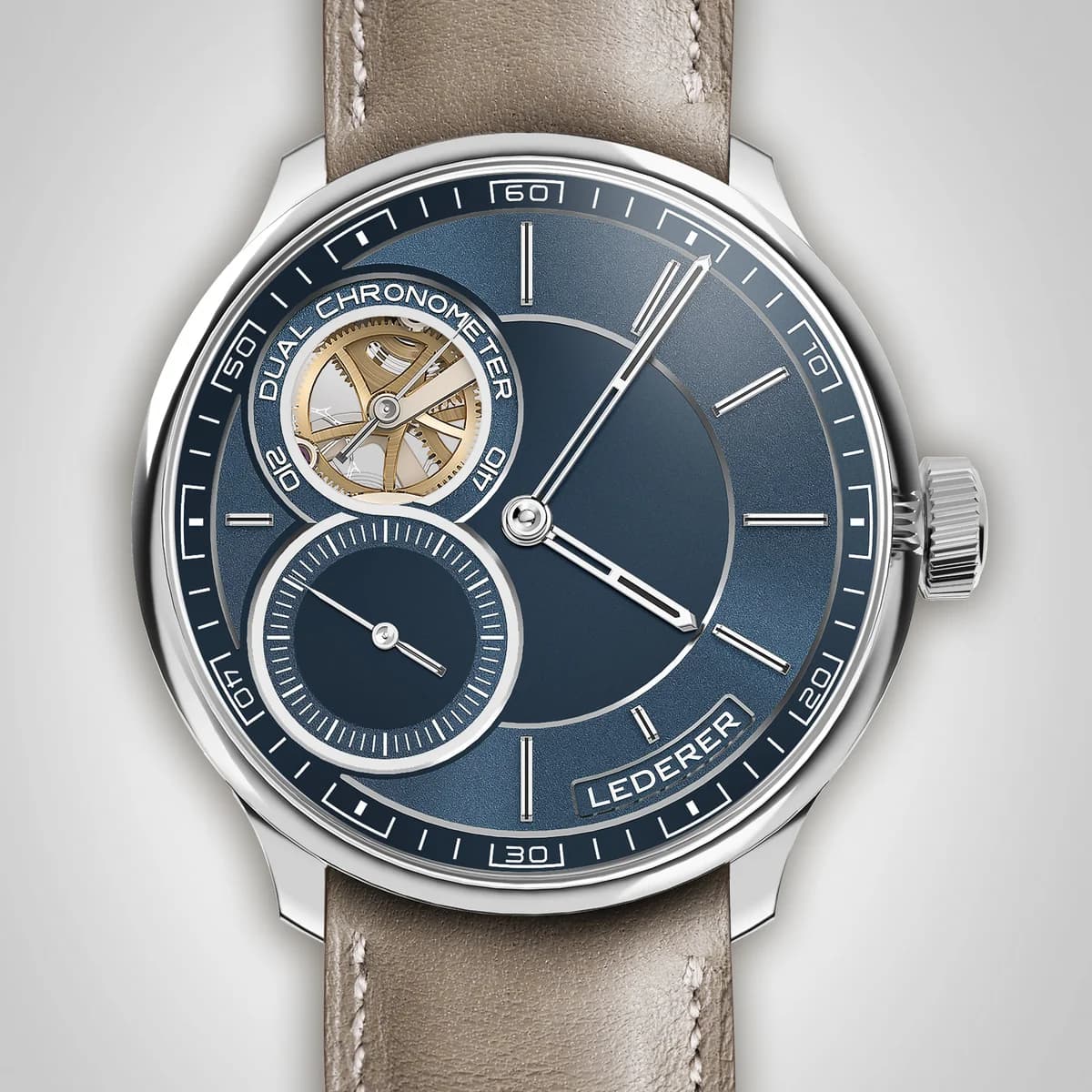
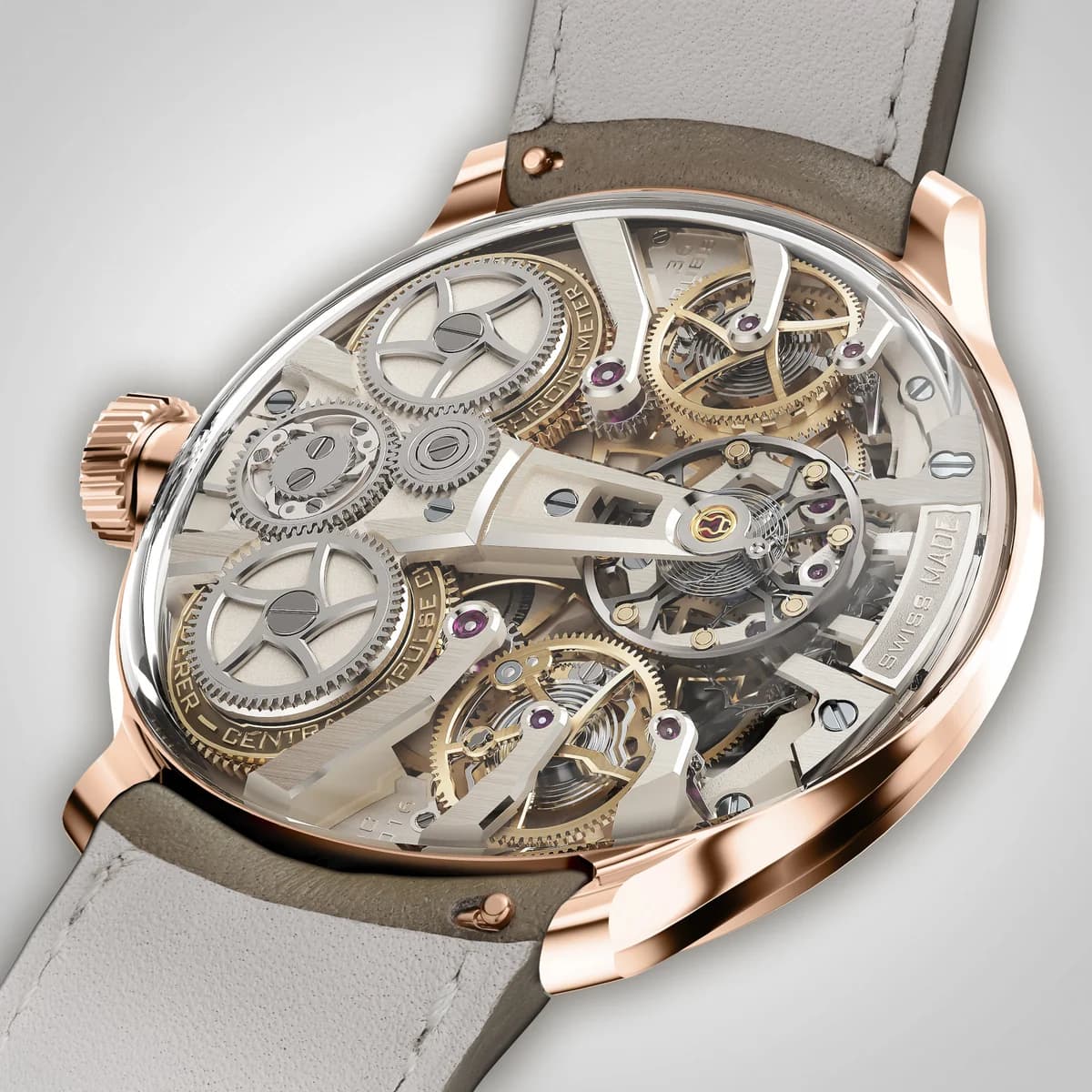
The case is 18-karat white gold in the blue dial configuration, 44mm in diameter and 12.2mm thick, with domed sapphire crystals on both sides. The dual sapphire construction is not just for exhibition. It allows light to enter the movement from both directions, which illuminates the layered gear train architecture in a way that a single crystal and solid caseback never could. Water resistance is 30 meters, enough for a splash but not meant for anything more. This is a watch built for the wrist, not the water. The 44mm case wears large, and I think Lederer recognized that because the 39mm version that followed brought the watch to a more universally wearable size. The 39mm uses a revised caliber measuring 35mm in diameter and just 4.95mm thick, down from 39.3mm and 5.98mm in the larger version. The case thickness drops to 10.75mm. That is a meaningful reduction. Both sizes maintain the same dual-gear-train architecture, the same escapement, the same fundamental philosophy. The 39mm is available in white gold with a blue dial or rose gold with a grey dial, each limited to 25 pieces per configuration.
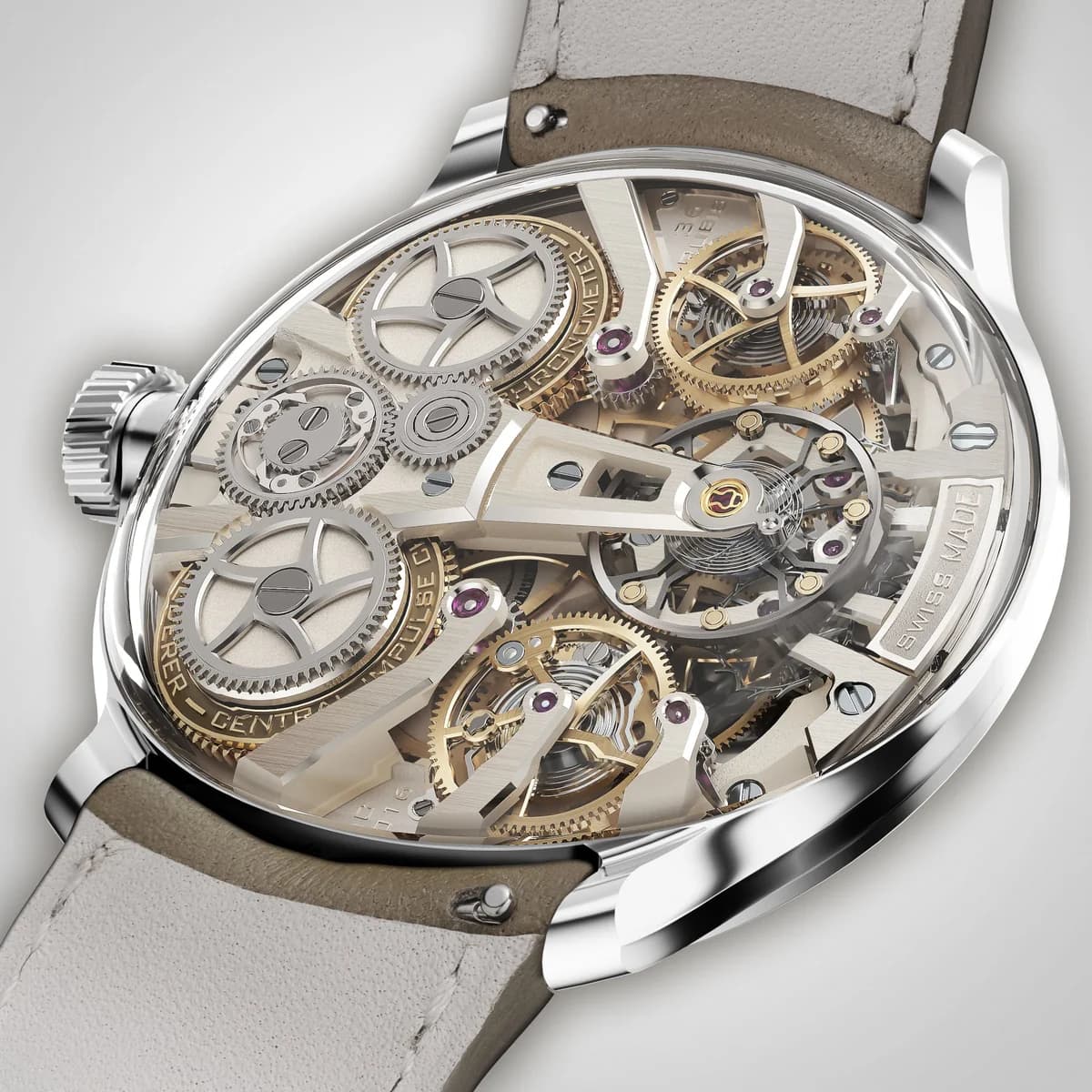
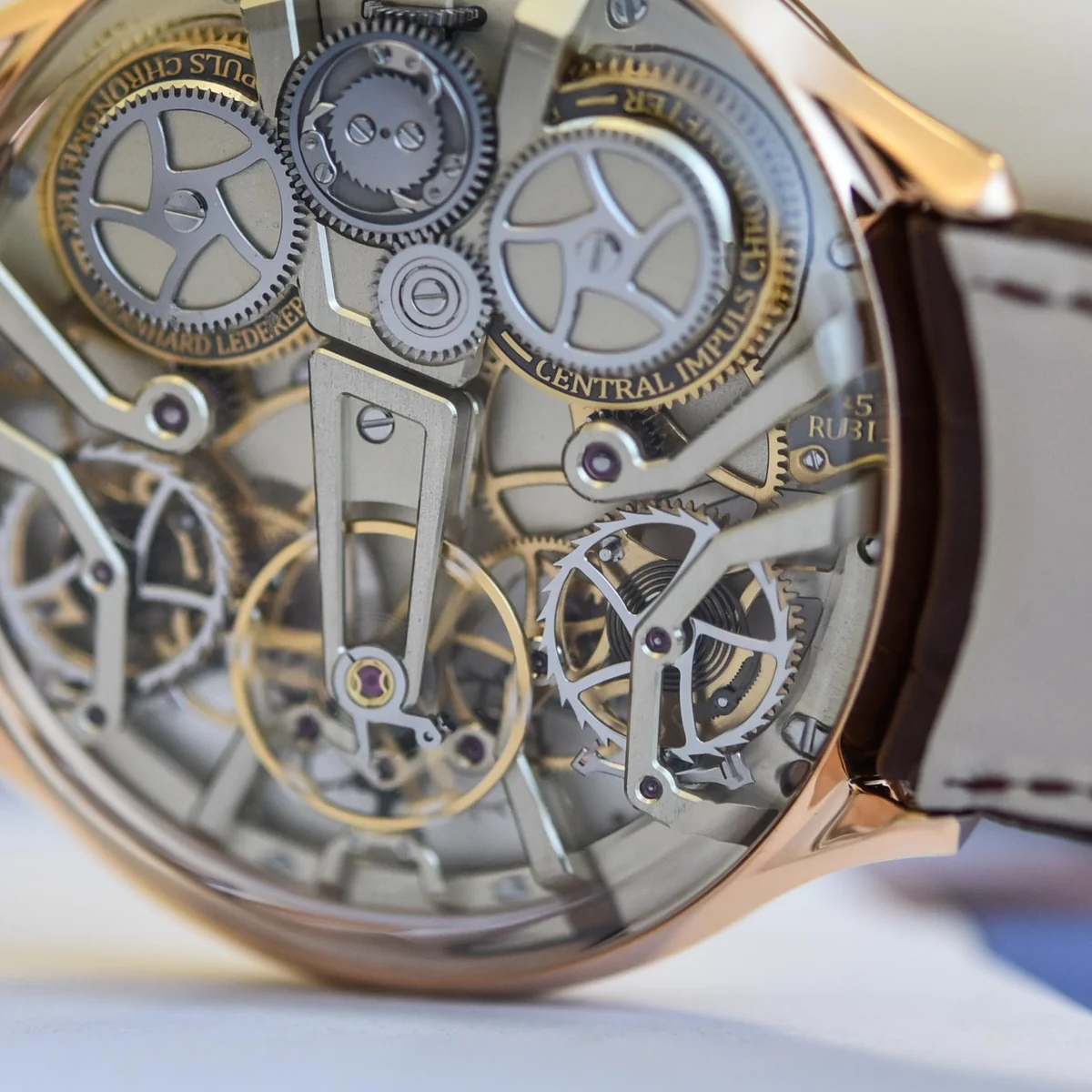
The movement finishing is three-dimensional in a way that most haute horlogerie movements are not. Because the caliber has two complete gear trains layered within the same space, the bridges and plates exist on multiple levels. The bridges are finished with a frosted texture, hand-beveled at every edge with mirror-polished chamfers. The wheels have circular graining with hand-beveled spokes. The steel components are mirror-polished. Surfaces are satin-finished, bead-blasted, and grain-textured across different planes. Looking through the caseback is like looking into a mechanical canyon. The depth of field is striking because there is genuine physical depth. Two gear trains stacked in layers means you are looking at twice the mechanical complexity of a conventional watch, and the finishing holds up at every level. I notice that Lederer's finishing style is closer to the German tradition than the Swiss one. The frosted surfaces, the emphasis on beveling over Geneva stripes, the overall precision of the handwork. It makes sense given that he trained in Wuppertal and Pforzheim before eventually moving to Switzerland.
The Central Impulse Chronometer won the GPHG Innovation Prize in 2021. The Innovation Prize is the category that recognizes genuine technical advancement, not just beautiful design or skilled finishing, but a new idea that moves watchmaking forward. Lederer earned it because the CIC does something that nobody else has done: it takes an escapement concept that the greatest horologist of the twentieth century said could not work in a wristwatch and makes it work. Not as a prototype. Not as a concept piece. As a production wristwatch that you can wear. Later editions of the Central Impulse Chronometer went even further. Lederer submitted the movement for chronometer certification at the Besancon Observatory, and the watch passed. A COSC certificate followed. For a watch whose earliest versions drew criticism from reviewers who questioned whether it could meet chronometric standards, that certification was a quiet but definitive answer. In 2024, Lederer won the GPHG Chronometry Prize for a triple-certified observatory chronometer version, tested and certified by three separate institutions. Two GPHG prizes in three years for a watchmaker most people had never heard of before 2020.
I think about this watch in the context of what Breguet started, what Daniels advanced, and what Lederer finished. Three watchmakers across three centuries, each building on the last. Breguet had the idea. Daniels had the mechanism. Lederer had the engineering to miniaturize it and the constant-force architecture to make it reliable. The Central Impulse Chronometer is not just a watch. It is the conclusion of a 200-year engineering argument about how to deliver energy to a balance wheel. Lederer closed the argument. What I love about this story is the patience. Lederer spent over a decade developing this movement before showing it to anyone. He was not in a rush. He was not chasing a market window or trying to generate social media attention. He was solving a problem that had defeated everyone who came before him, and he took exactly as long as it needed.
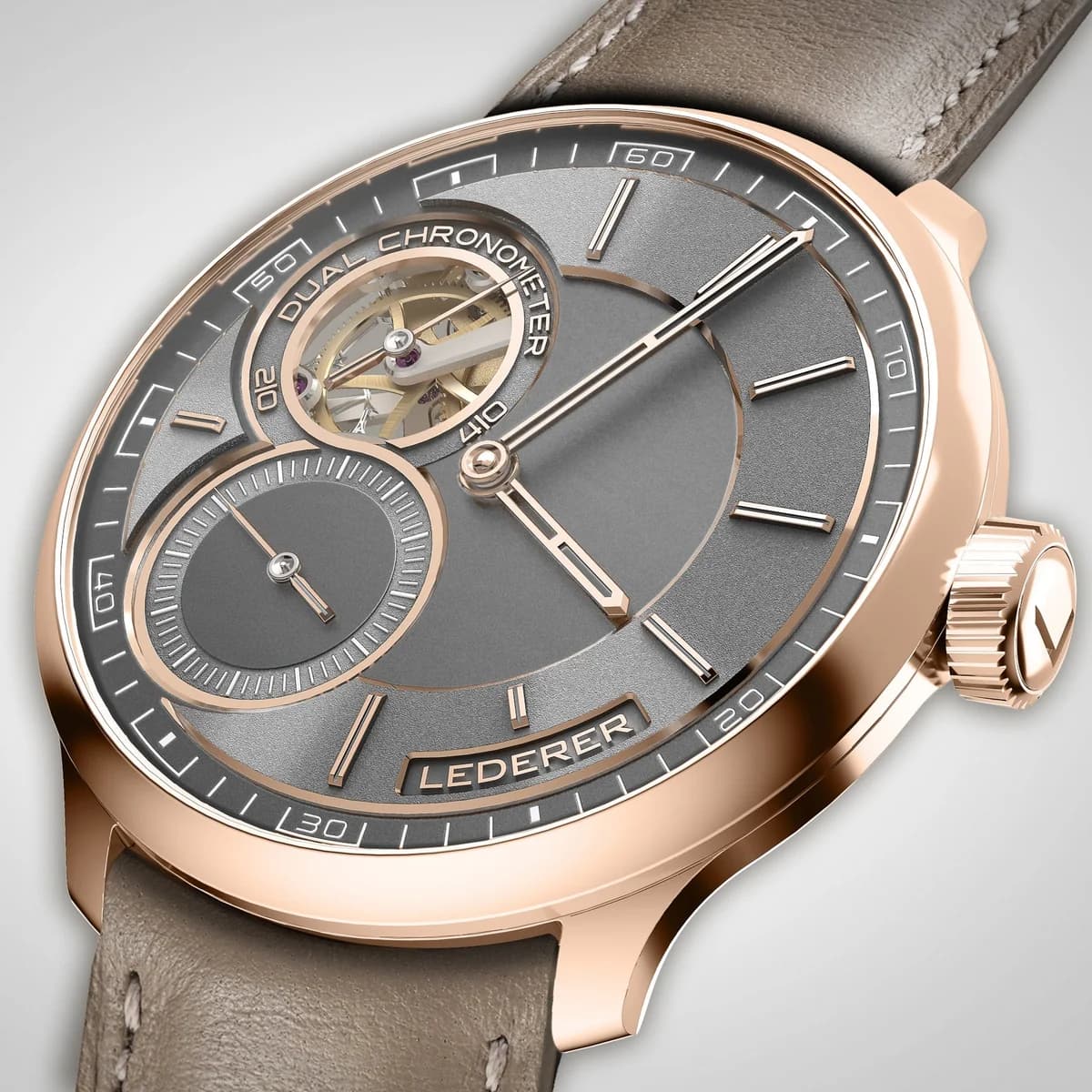
The styling context is interesting because this watch occupies a space between tool and art. The figure-eight apertures and counter-rotating seconds hands make it a conversation piece on any wrist. On a darker skin tone, the white gold case and blue dial combination has a cool, refined contrast that reads beautifully. The 39mm version in rose gold with the grey dial runs warmer and pairs well with earthy tones, a Fox Brothers flannel in charcoal or a Harrisons of Edinburgh tropical weight wool in navy. Either way, this is a watch that sits under a cuff but announces itself the moment you gesture. The alligator strap keeps it dressy. There is no bracelet option, which is the right call. A metal bracelet on a watch this mechanically complex would fight the movement for visual attention. The strap lets the dial and the caseback do the talking.
The honest critique starts with the same observation that applies to every watch at this level of production scarcity. The 44mm white gold blue dial was limited to 25 pieces. The 39mm configurations are limited to 20 each. You are not walking into a boutique and buying one. This is a watch that exists at the intersection of art and engineering, produced in numbers that ensure most collectors will only ever read about it. Beyond accessibility, the 44mm case is genuinely large. At 12.2mm thick and 44mm wide in white gold, it has real wrist presence, perhaps too much for anyone with a wrist under 7 inches. The 39mm version addressed this, but the thinner case and shorter power reserve (38 hours versus 42) are the tradeoff for wearability. I wish the power reserve were longer in both sizes. 42 hours in the 44mm means you need to wind it daily, and 38 hours in the 39mm gives even less margin. The dual remontoire system consumes energy every ten seconds from each gear train, and that constant recharging draws more from the mainsprings than a conventional gear train would. It is the inherent cost of constant force. The mechanism that makes this watch exceptional is the same mechanism that limits its autonomy.
But reading about it matters because the technical achievement is real regardless of whether you can own it. The dual-gear-train, dual-remontoire, central-impulse architecture is one of the most sophisticated escapement systems ever built for the wrist. Bernhard Lederer spent decades in the shadows building for others. He restored museum pieces, constructed tower clocks, developed escapements and tourbillons for brands whose names went on the dials instead of his. When he finally built for himself, he built something that Breguet imagined, Daniels attempted, and nobody else has matched. The fact that he did it from a small workshop in St-Blaise, a town of about 3,000 people on the shore of Lake Neuchatel, makes the achievement more remarkable, not less. Independent watchmaking at its best is one person's obsession pushed to its logical conclusion. The Central Impulse Chronometer is Bernhard Lederer's logical conclusion. It took him forty years to get there. It was worth every one of them.
Also in Independent Masters