
Akrivia
Chronometre Contemporain II
RRCC II
Rexhep Rexhepi was born in Kosovo in 1987. In 1998, at eleven years old, he fled during the war and joined his father in Switzerland. At fourteen he signed an apprenticeship contract. At fifteen he was training at Patek Philippe. He was one of the most talented students in the program. Patek Philippe's training is famously rigorous. Five years of bench work under master watchmakers in the Vallee de Joux tradition. When he completed it, Rexhepi was given the unusual distinction of signing his name on his graduation piece, a pocket watch chronometer. That does not happen. Patek apprentices produce a watch as their final exam. The ones that pass go into the archive. The ones that are exceptional get the student's name engraved. His was exceptional. He spent three years at BNB Concept working on tourbillons and high complications, then roughly three years at F. P. Journe, where he absorbed the philosophy that changed everything for him: one watchmaker, one watch. The same person assembles, finishes, adjusts, and handles after-sales. Journe's Geneva manufacture operates on this principle. Every watch passes through one pair of hands from start to finish. That is impossibly inefficient by any manufacturing standard and it is the entire point. Rexhepi took this philosophy and compressed it further. At Akrivia, the watchmaker who assembles your movement is the one who will service it decades from now. In 2012, at twenty-five, he founded Atelier Akrivia in Geneva's Old Town. He owns 100% of the company.
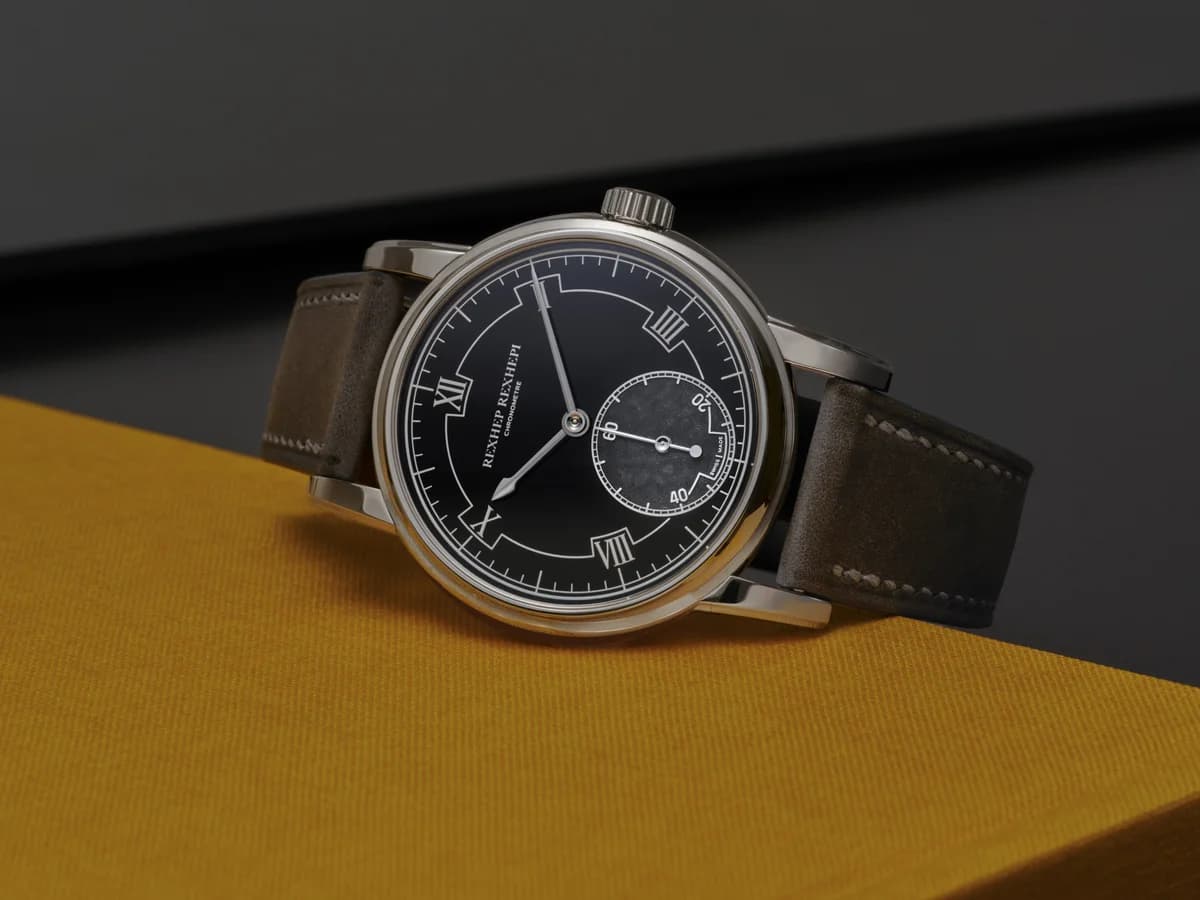
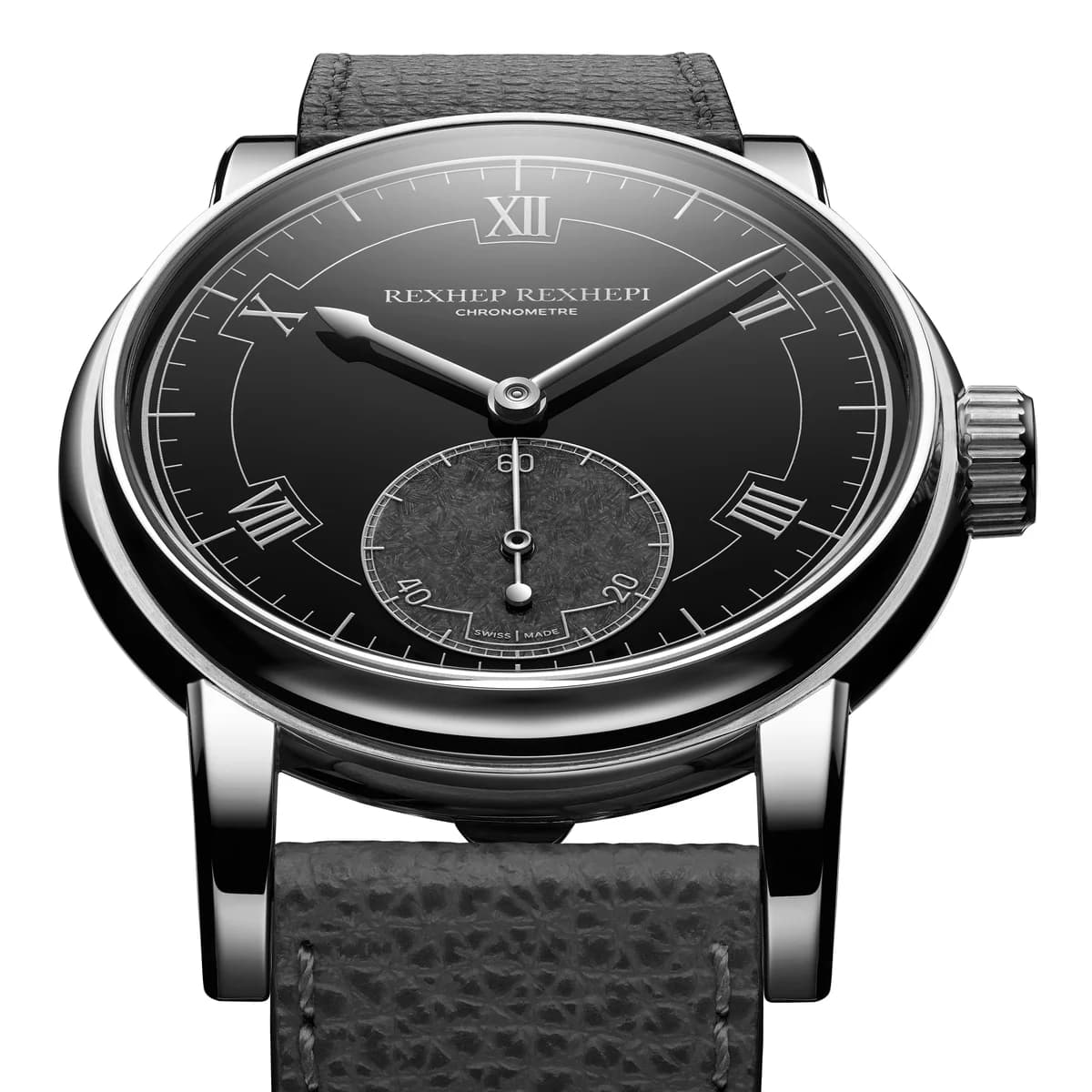
The Chronometre Contemporain II is the watch that defines Rexhepi the way the Chronometre Souverain defines Journe and the Simplicity defines Dufour. A time-only watch elevated by a single complication that looks deceptively simple but tells anyone who understands watchmaking exactly what they are looking at. The complication is seconde morte, deadbeat seconds. The seconds hand does not sweep. It jumps, once per second, in a discrete tick that looks identical to a quartz watch. That visual simplicity conceals one of the most demanding mechanical exercises in watchmaking.
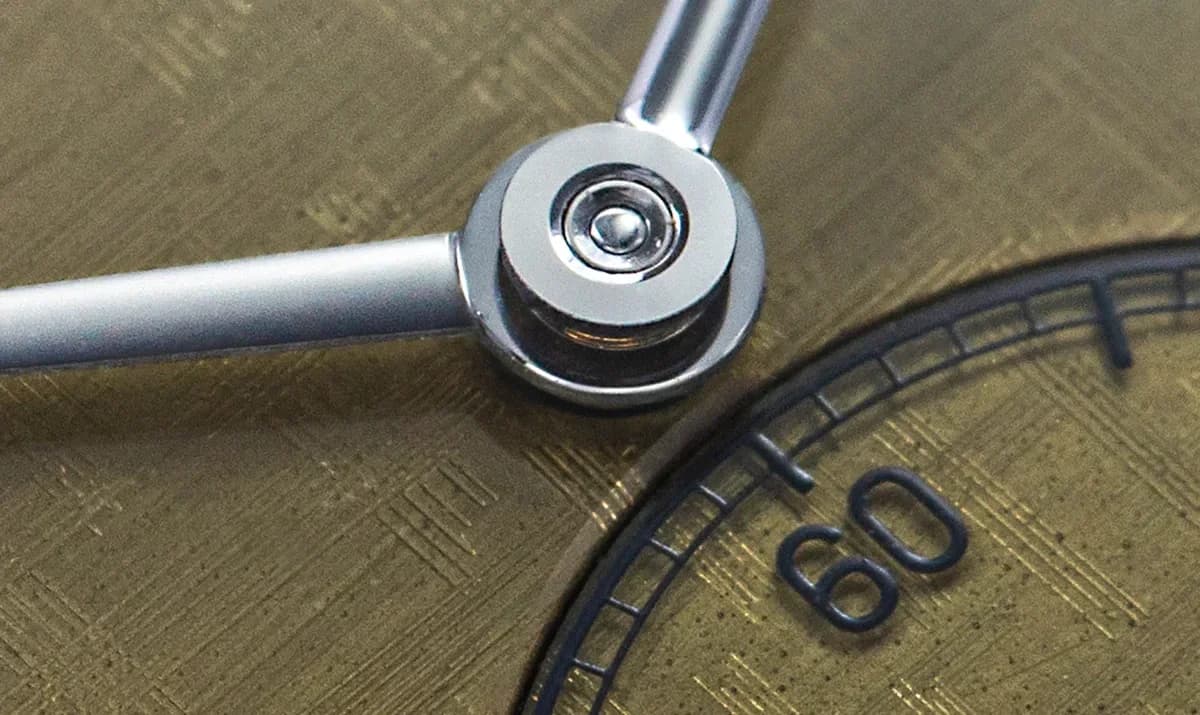
Here is why deadbeat seconds is difficult. A conventional going train delivers energy continuously. The escapement beats, the hands move, everything flows. Deadbeat seconds requires a sudden high-energy impulse once per second to jerk the seconds hand forward, while the escapement continues its steady oscillation undisturbed. If the impulse energy bleeds back into the balance wheel, it disturbs the amplitude and the watch loses accuracy. Most watchmakers who attempt deadbeat seconds use a star-and-flirt mechanism on a single going train, which compromises the balance. Some add a secondary hairspring reservoir. Some use a remontoir d'egalite, which is elegant but adds enormous complexity.
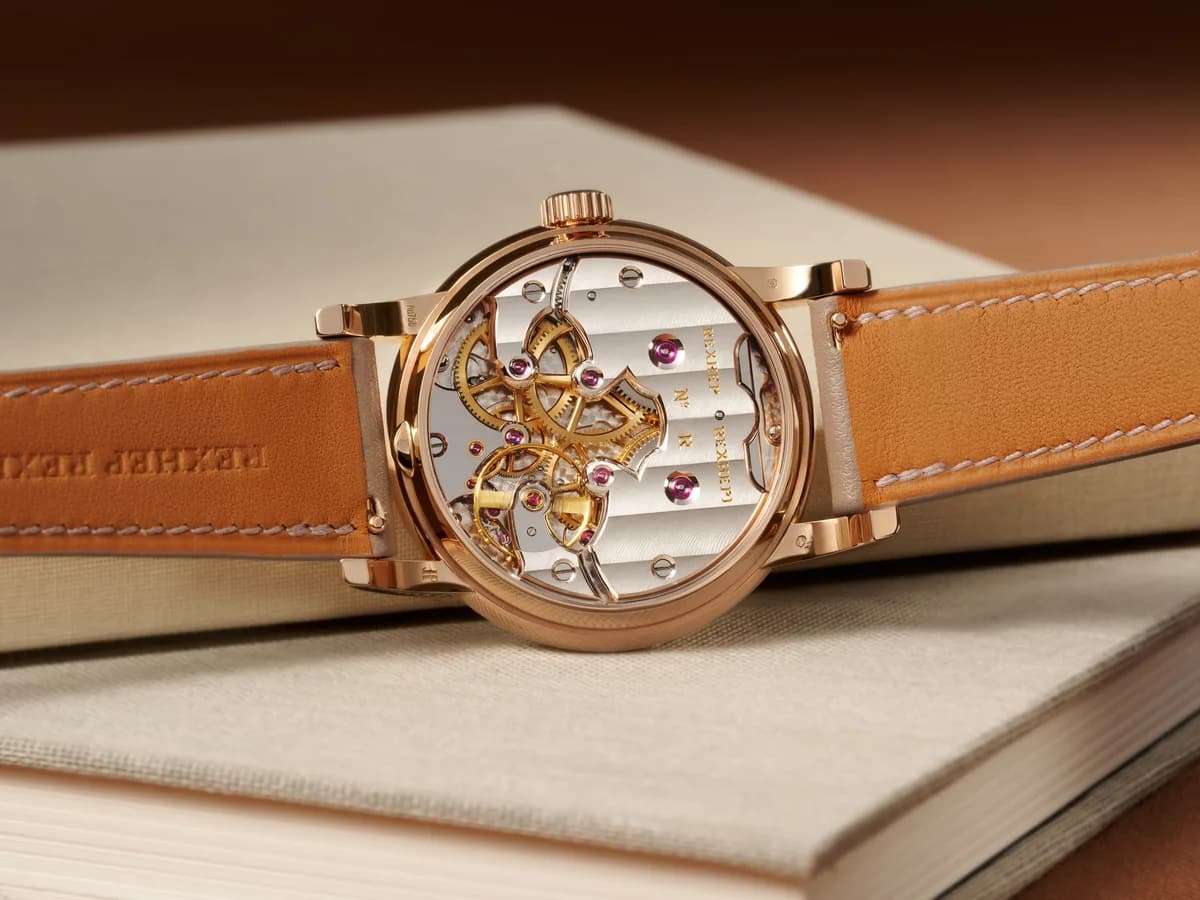
Rexhepi's solution is architecturally radical. The RRCC02 caliber has two completely separate mainspring barrels and two independent going trains. One powers the escapement and timekeeping. The second powers only the deadbeat seconds mechanism. The impulse energy of the jumping seconds never touches the balance wheel. Twin barrels, twin trains, inside a 38mm case at 8.75mm thick. The movement is 31.2mm in diameter with 214 components and 33 jewels, beating at 21,600 vibrations per hour with 82 hours of power reserve. Manual wind. The five-pointed star wheel rotates gradually, and after exactly one second's worth of beats, one arm releases a tensioned spring lever called a flirt. The flirt swings through a complete arc, drives the seconds hand forward by exactly one second, and is arrested by the next arm. Pull the crown and the seconds hand hacks and resets to zero via a heart-shaped cam and reset hammer.
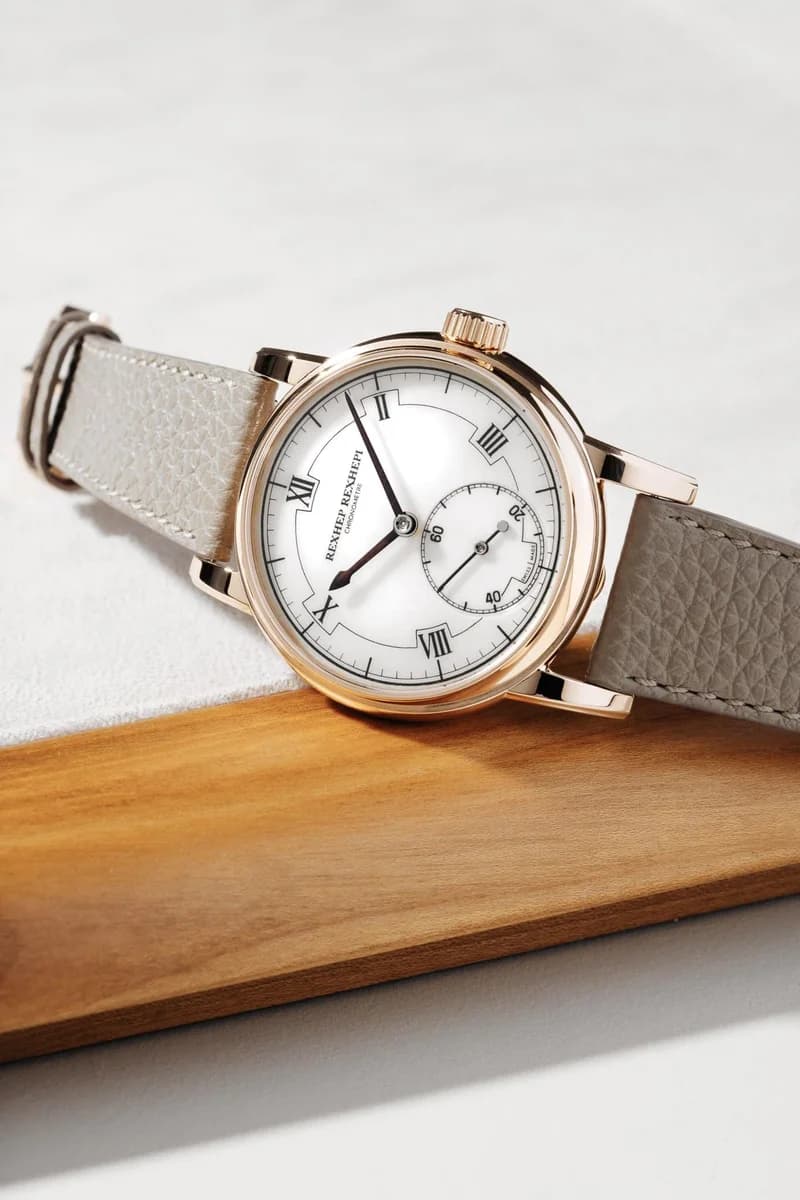
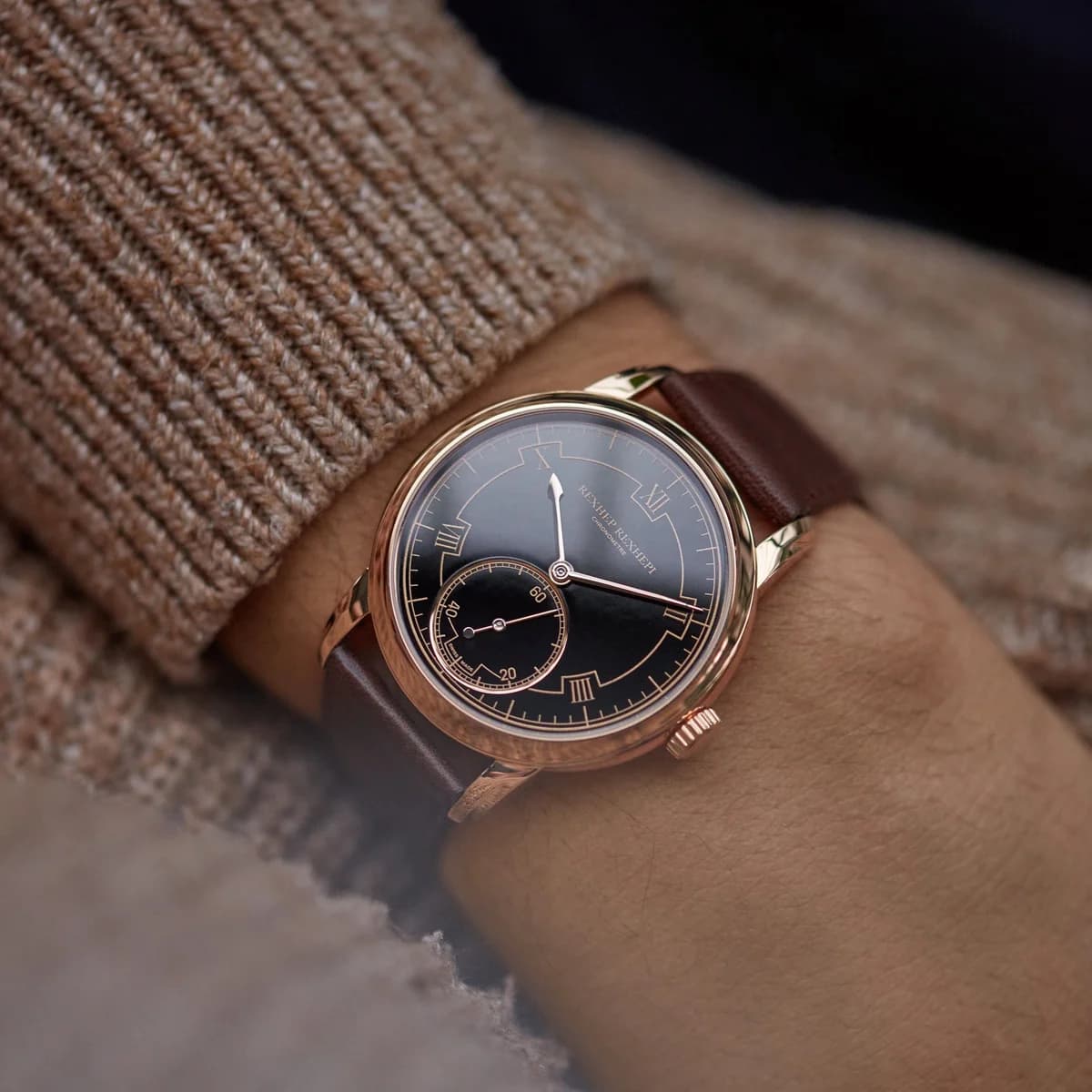
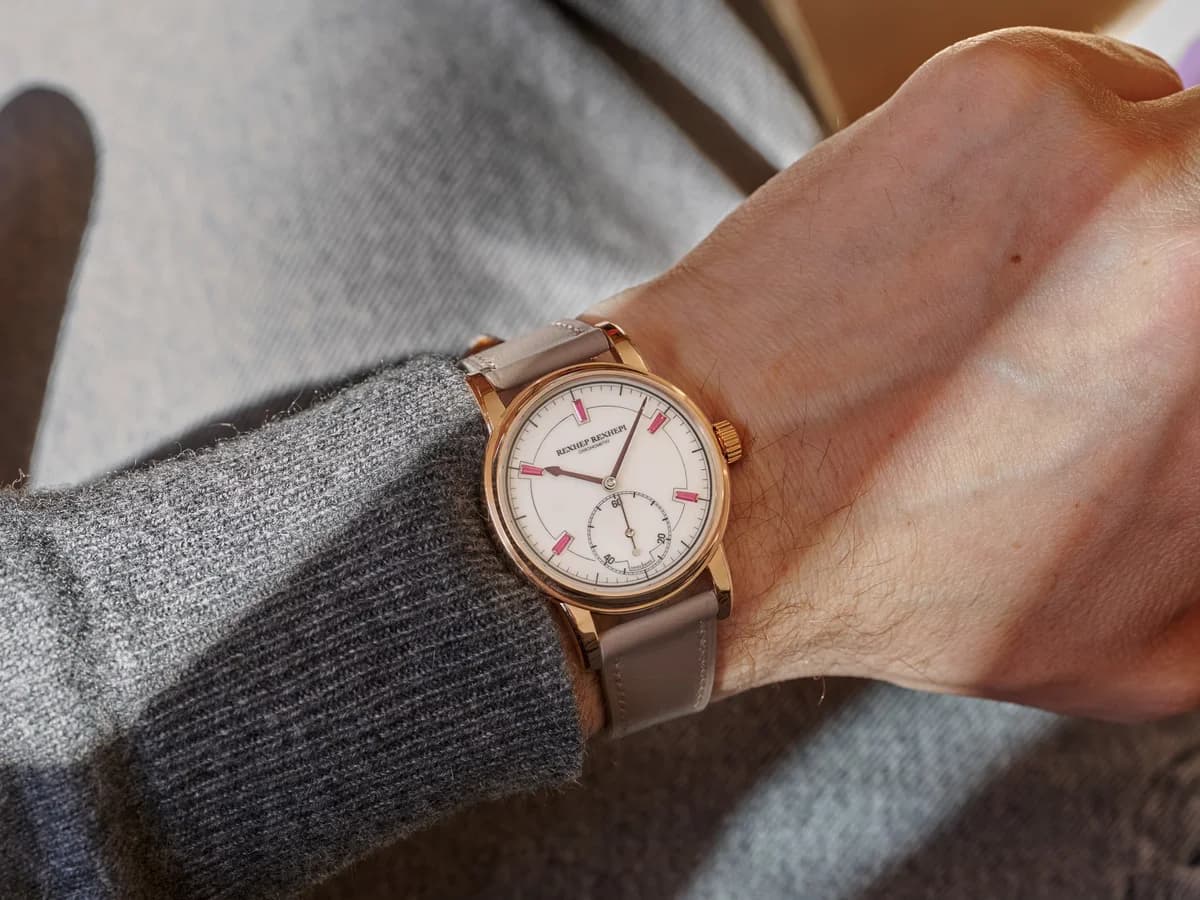
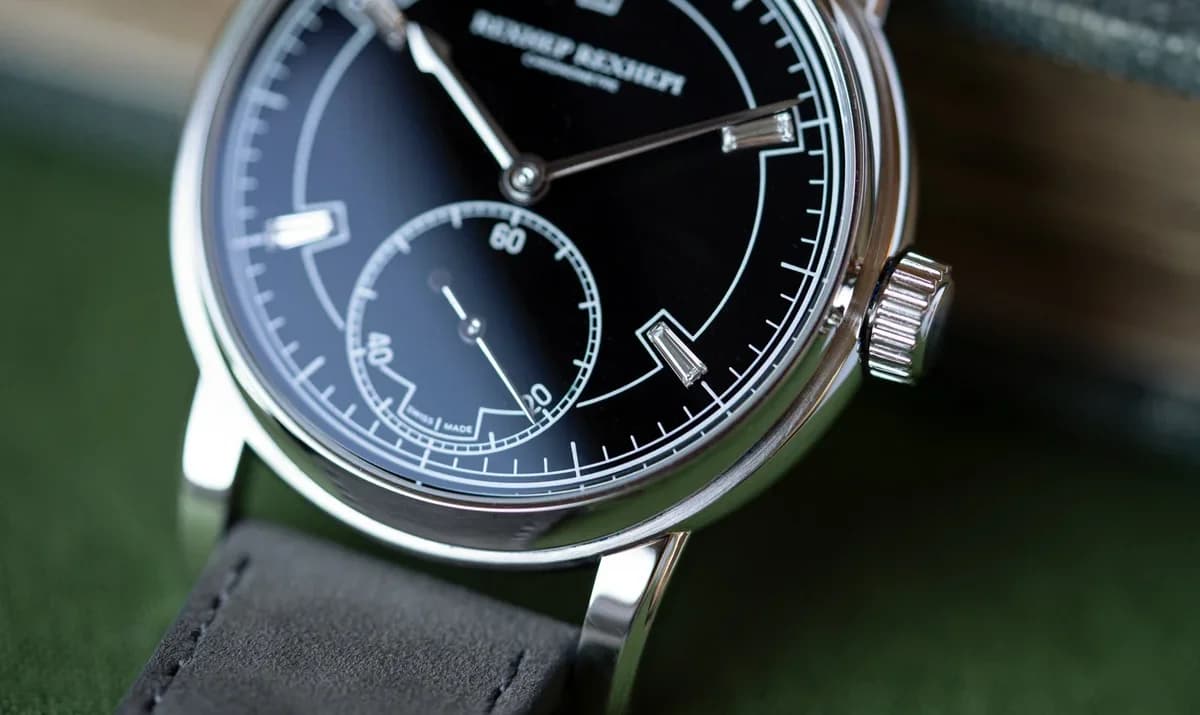
The case is available in platinum or 18K rose gold. The platinum version gets a black grand feu enamel dial with a grey enamel seconds subdial featuring a hand-engraved gratte pattern. The rose gold gets a translucent white grand feu enamel dial with hands fired at 800 degrees Celsius, producing a heat-treated purple rather than the standard blue tempering. That purple is a Rexhepi signature. No one else does it at that temperature.
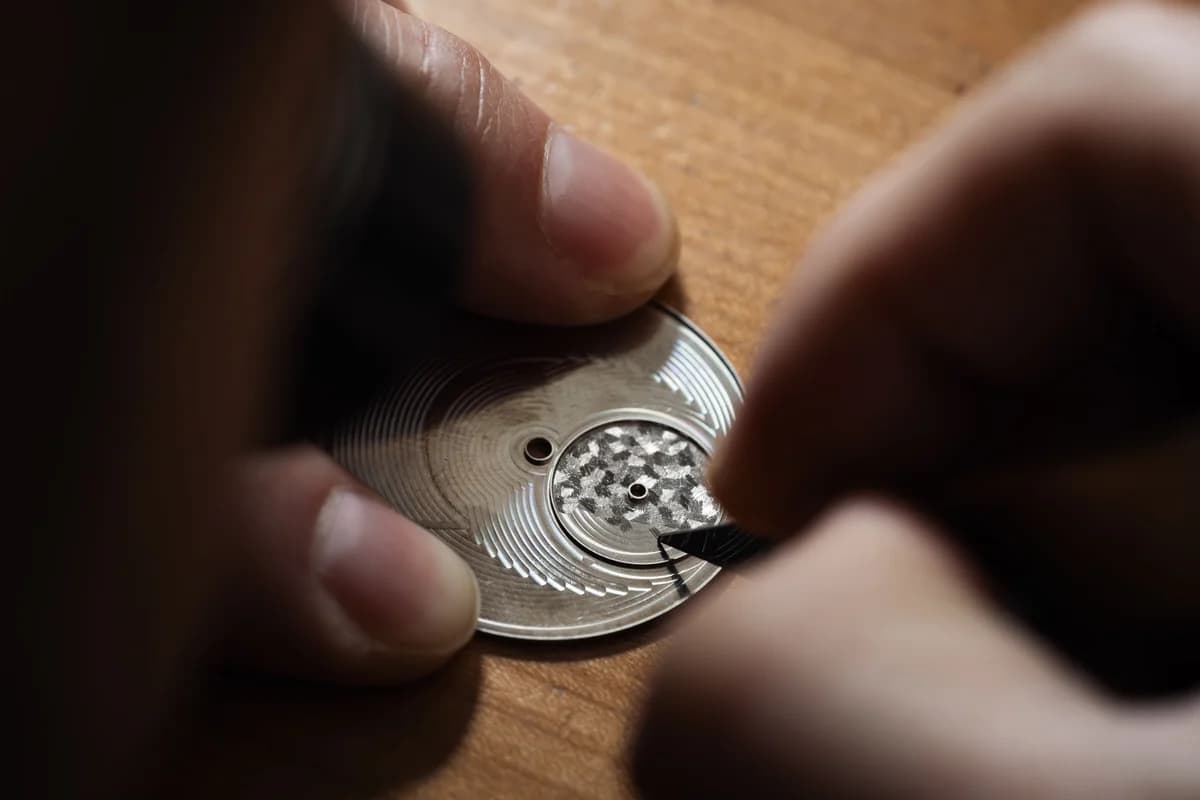
Grand feu enamel is not a coating. It is powdered glass and mineral pigments fused to a metal substrate at kiln temperatures. Rexhepi co-founded a dedicated enamel workshop called Emailleurs de la Cite with Florent Olivier Martin, steps from the Akrivia atelier on Grand-Rue in Geneva's Old Town. The workshop opened in 2024 and employs four experienced enamellists. The process involves grinding the frit by mortar and pestle, washing it multiple times with distilled water, painting it by hand in thin layers onto a gold-palladium alloy dial blank, then firing in a vacuum furnace. A counter-enamel layer goes on the back to prevent warping. The cycle repeats over ten hours of combined application and firing. Then six hours of polishing against progressively finer wheels to eliminate the orange-peel texture of fired enamel and achieve a glassy, mirror-like surface. The rejection rate is extreme. One impurity, one air bubble, one humidity spike, and the dial is ruined. Grand feu means great fire. The name refers to the kiln temperature, typically between 800 and 900 degrees Celsius. At these temperatures, the powdered glass melts and fuses permanently to the metal substrate. The color is not on the surface. It is in the material. That is why grand feu enamel does not fade, does not discolor, does not age. A dial made this way in 1820 looks the same today as the day it was fired. A dial made this way in 2024 will look the same in 2224. That is the promise of enamel, and it is why Rexhepi co-founded an entire workshop to control the process.
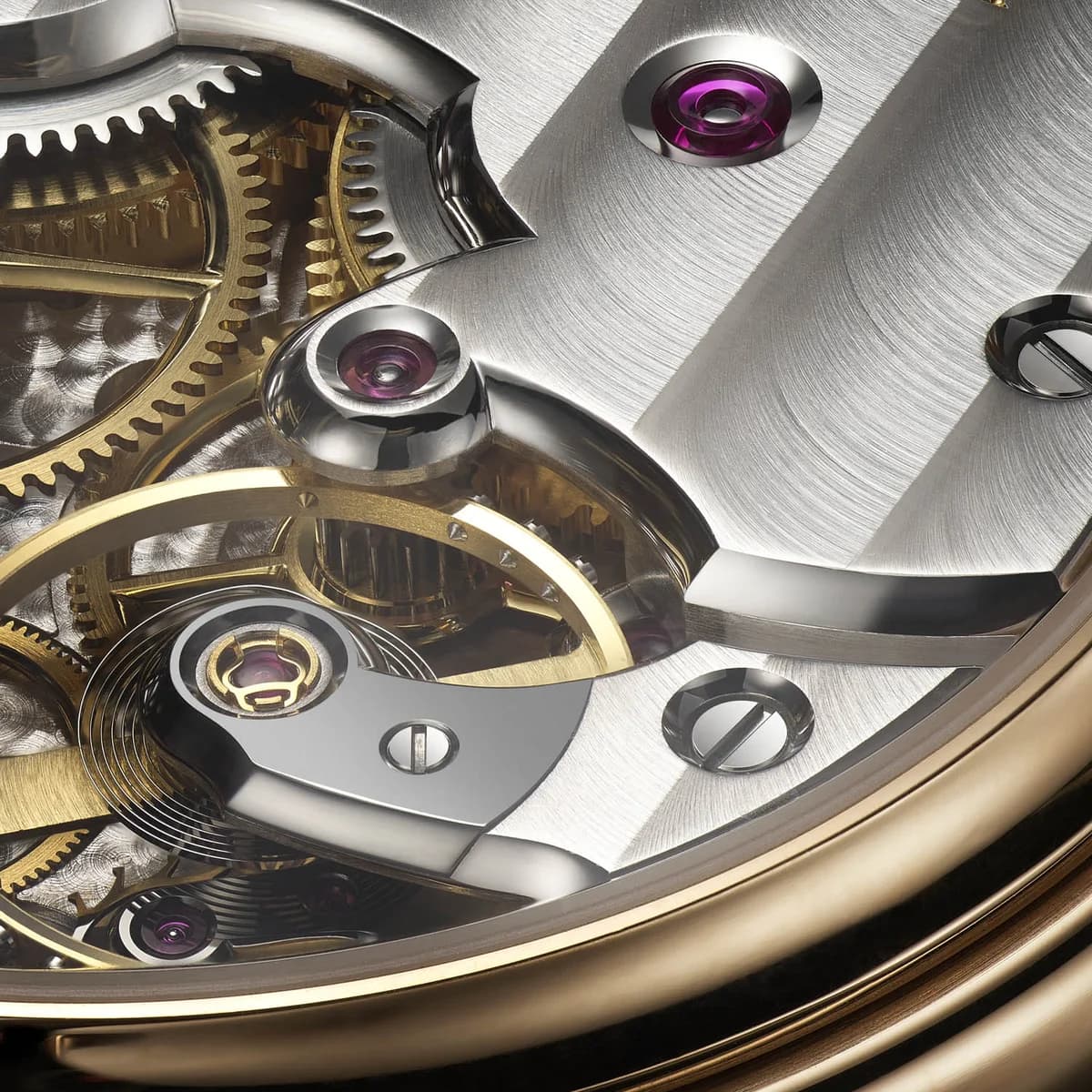
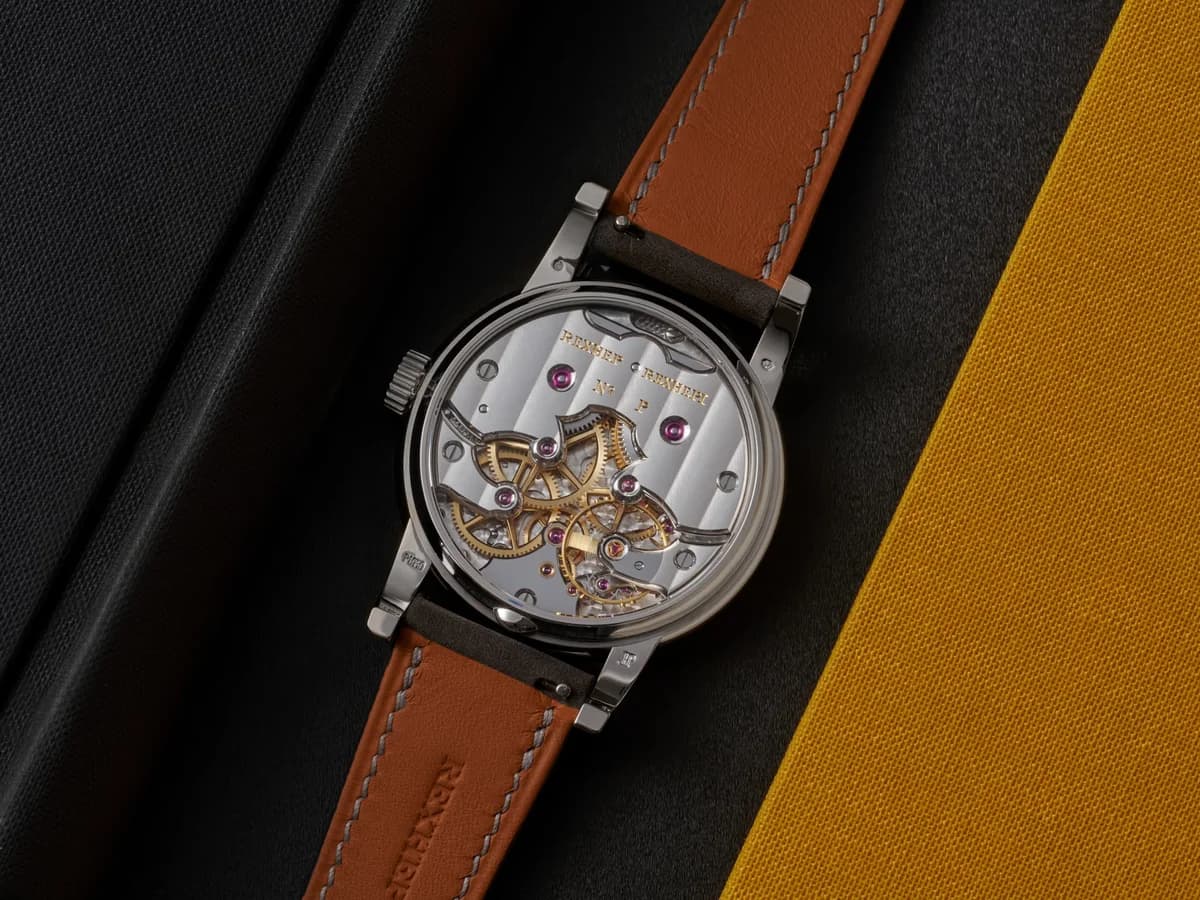
The hand finishing on the RRCC02 is among the most extensive in contemporary watchmaking. The movement has 140 inward angles on the gear train wheels, every one individually beveled and mirror-polished by hand. Inward angles are the hardest to execute because a straight file cannot reach into concave corners. Each requires a custom-shaped tool. The anglage on the bridges is so wide that the beveled surface is broader than the straight-grained flanks of the bridges themselves, a proportion that borders on excess but reads as absolute confidence. The seconds wheel bridge and balance cock are entirely black polished, poli noir, a mirror finish that requires progressively finer abrasives and tolerates no scratches, no ripples, no rounding of edges. The plates and bridges are German silver. What strikes me when I look at the CC2 under a loupe is how the anglage on the bridges has a crispness that I think rivals Dufour.
Rexhepi's workshop occupies four premises in Geneva's Old Town, three of them steps apart on the historic Grand-Rue. A fourth satellite space houses CNC micro-machining equipment. As of 2024, Akrivia employs twenty people including eight watchmakers. Each watch is assembled by a single watchmaker from start to finish. The cases are made in-house under Jean-Pierre Hagmann, a master case maker whom Rexhepi brought out of retirement in 2019 after acquiring his workshop. Each CC2 case is built from fifteen individual components hand-soldered to the case band. The lugs are not cast as part of the case middle. They are individually shaped and soldered on. The crown guard, the bezel, the caseback frame, each is a separate piece joined by hand. Jean-Pierre Hagmann is one of the last master case makers working in the traditional Geneva method. Rexhepi brought him out of retirement because the alternative was sending cases to an external supplier and losing control over the most tactile element of the watch. When you pick up a CC2, the case is what you feel first. The edges between polished and brushed surfaces are hand-finished to a sharpness that CNC cannot achieve.
The CC2 is limited to fifty pieces in platinum and fifty in rose gold. One hundred total, produced over multiple years at Akrivia's annual output of roughly forty watches across all references. Demand is approximately twenty times production capacity.
The CC1 came first in 2018 and won the GPHG Men's Watch Prize that year. The CC2 won the same prize in 2022. Two GPHG category wins for two editions of essentially the same philosophical statement: a time-only watch where the craft is the complication. The CC2 is not an upgrade of the CC1. None of the components are interchangeable. The frequency went from 18,000 to 21,600 vibrations per hour. The power reserve went from 100 hours on a single barrel to 82 hours on twin barrels. The case went from 9.5mm thick to 8.75mm, thinner despite adding the deadbeat seconds mechanism. Rexhepi has said no CC1 part fits a CC2.
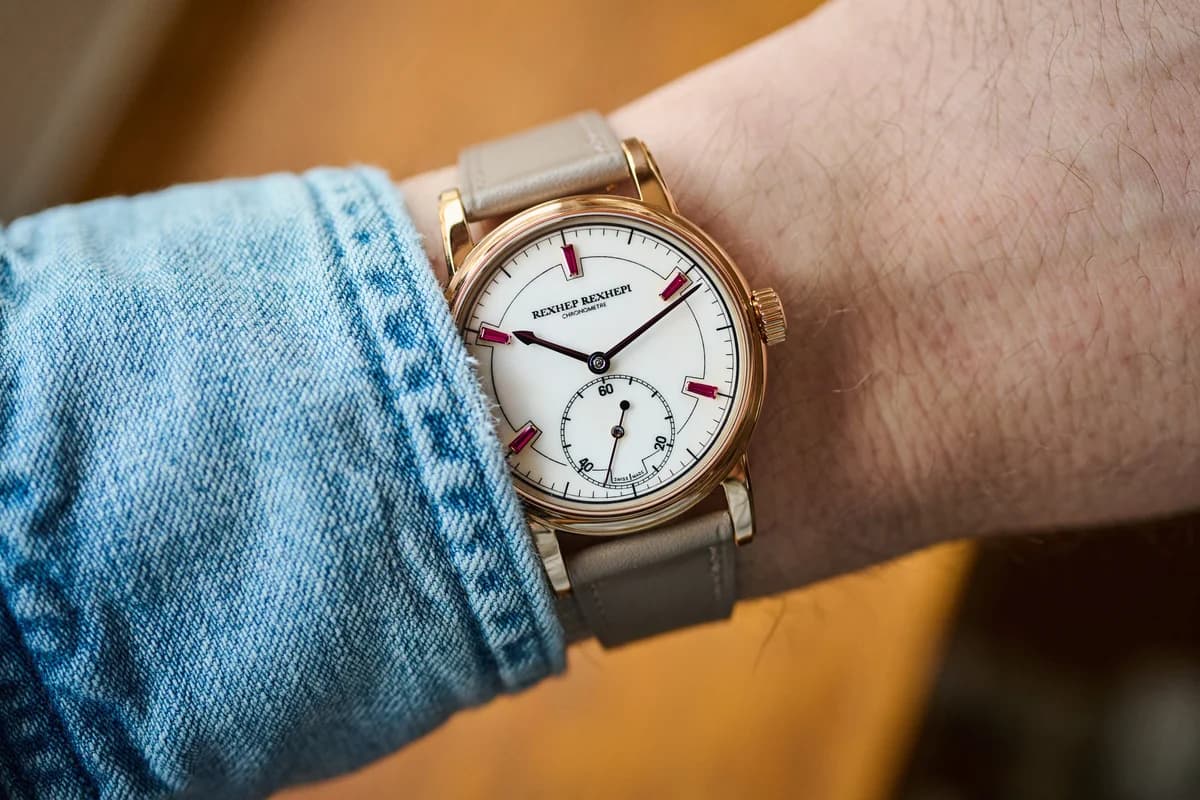
Beyond the standard platinum and rose gold, Rexhepi has produced two variant editions that push the CC2 further. The CC2 Rubis is limited to ten pieces in rose gold, each with baguette-cut ruby indices at the ten-minute intervals against the white grand feu enamel. Ten watches, reserved for long-term supporters of Rexhepi, not available through any waiting list or allocation. The CC2 Diamant replaces the ruby indices with diamonds. Both variants use the same RRCC02 caliber and twin-train deadbeat seconds. The stone-set variants do not change the mechanical story. They change the light story. Rubies absorb and scatter warm light. Diamonds refract everything. Against the depth of grand feu enamel, the effect is unlike anything a painted or printed dial can produce.
The comparisons to Dufour and Journe are inevitable and earned. The Dufour Simplicity is 206 total pieces, production ended. The Journe Chronometre Souverain runs a higher annual volume at roughly 20 watches across all references. The CC2 sits between them in production and above them in complication. Neither the Simplicity nor the standard Souverain has deadbeat seconds. What all three share is the conviction that a time-only watch, executed at the highest level of finishing, is the purest expression of what an independent watchmaker can do. No tourbillon to distract. No perpetual calendar to justify the complexity. Just time, told with absolute precision and crafted with obsessive care.
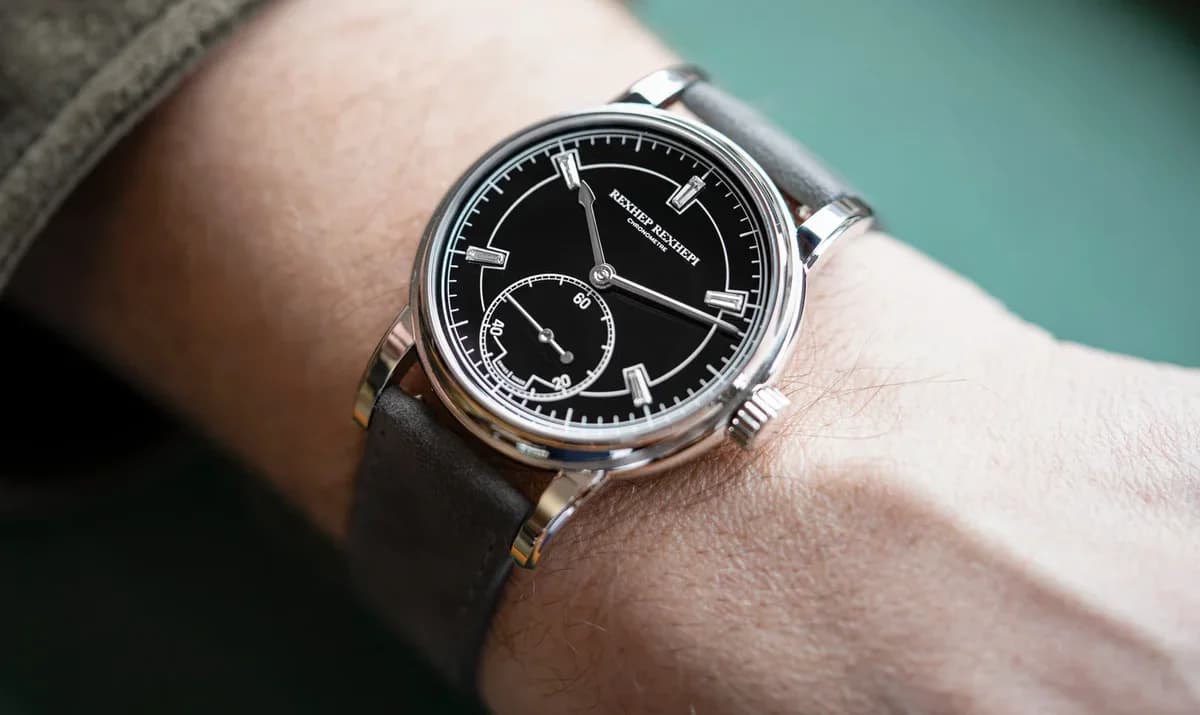
On the wrist, the CC2 carries itself with a quiet confidence that I find unusual for a watch at this level. 38mm cases often feel like a concession to convention, a watchmaker shrinking the canvas because the market asks for it. The CC2 doesn't feel that way. The 8.75mm thickness keeps it genuinely slim under a cuff, and the alternating brushed and polished surfaces on the case give it a visual complexity that makes it read larger than its dimensions suggest. The strap sits flush with the case band, a sign of the careful case-making you get when the person making the case has been practicing for decades. Jean-Pierre Hagmann's precision isn't visible in any one place. It's visible in the way the watch sits on the wrist, the way the case transitions to the lugs, the way the crown engages. These are things you feel before you consciously notice them.
I keep coming back to the crown. There's a tactile satisfaction to extracting and pushing it back in that you feel before you hear. It clicks. Not a soft click, not a mechanical click with the vague sound of something snapping into position. A precise, confident click that tells you the crown is exactly where it belongs. Rexhepi has spoken about wanting every functional gesture in the watch to feel intentional. Winding, setting, engaging the crown. These are the moments when a watch communicates what it is made of, and the CC2 communicates clearly. The hacking function at the crown pulls the balance wheel and stops the seconds hand. Release the crown and the seconds hand does not creep forward the way a conventional seconds hand would. It jumps immediately to the next one-second mark. That is the deadbeat mechanism, and experiencing it in real time is different from reading about it. You feel like the watch is deciding rather than flowing.
The independent collecting community has taken the CC2 seriously in a way that is harder to manufacture than the watch itself. The people who own Dufour Simplicities, who were on the first list for Journe's Tourbillon Souverain, who have seen the Patek calibers disassembled under a watchmaker's loupe, these are the people who look at the RRCC02 and recognize what it cost to build it. Not in the accounting sense. In the sense of what Rexhepi gave up to make it this way. A dual-train deadbeat seconds adds components, adds adjustment complexity, adds service complexity. It would have been simpler to use a star-and-flirt on the main train, accept the minor amplitude variation, and build 150 watches a year instead of 40. He didn't. The CC2 exists in its current form because he refused the simpler path, and that refusal is what collectors with genuinely calibrated eyes respond to.
One question I get about the CC2 is where it stands in the broader Geneva independent scene. The answer depends entirely on what you're optimizing for. If you want an exhibition of complications, there are other ateliers. If you want the most complete expression of what a single watchmaker can accomplish with a time-only movement, the CC2 sits very close to the top. The finishing rivals anything coming out of Glashutte. The movement architecture is original in a way that most complicated watches are not. And the provenance of the maker, the apprenticeship at Patek, the years at Journe, the deliberate choice to build an atelier rather than join a group, tells a story that the watch itself makes physical. Someone will hold a CC2 in twenty years and feel all of that in the crown click and the seconds jump. That kind of longevity is what independent watchmaking is supposed to be for. The two GPHG wins, one for the CC1 in 2018 and one for the CC2 in 2022, confirm that the jury of the industry's highest award agrees. What is rarer is that the collectors who actually spend time with these watches agree as well.
This is the watch I would point someone to if they wanted to understand why independent watchmaking matters. Not because it is the most expensive or the most complicated. Because it is the most distilled. The seconds hand jumps once per second and that single mechanical gesture, powered by its own dedicated train, finished to a level that borders on irrational, tells you everything about who made it and why. A refugee from Kosovo who arrived in Switzerland with nothing, trained at the highest level the industry offers, then built something that the industry's most experienced collectors now compare to Dufour and Journe. The CC2 is not just a watch. It is evidence that mastery is not inherited. It is built. The fact that he accomplished this in an atelier of fewer than ten people, producing forty watches a year, with no group funding and no mass-production shortcut, makes the CC2 one of the more improbable objects in contemporary watchmaking. The GPHG jury recognized it twice. The collectors who have held one and spent time with the movement agree. I am among them. The CC2 is also an argument that independent watchmaking still has room for new names at the top. Rexhepi is not trading on a century of brand equity. He is building it, watch by watch, movement by movement, with every crown click.
Also in Independent Masters