
A. Lange & Sohne
Zeitwerk
142.031
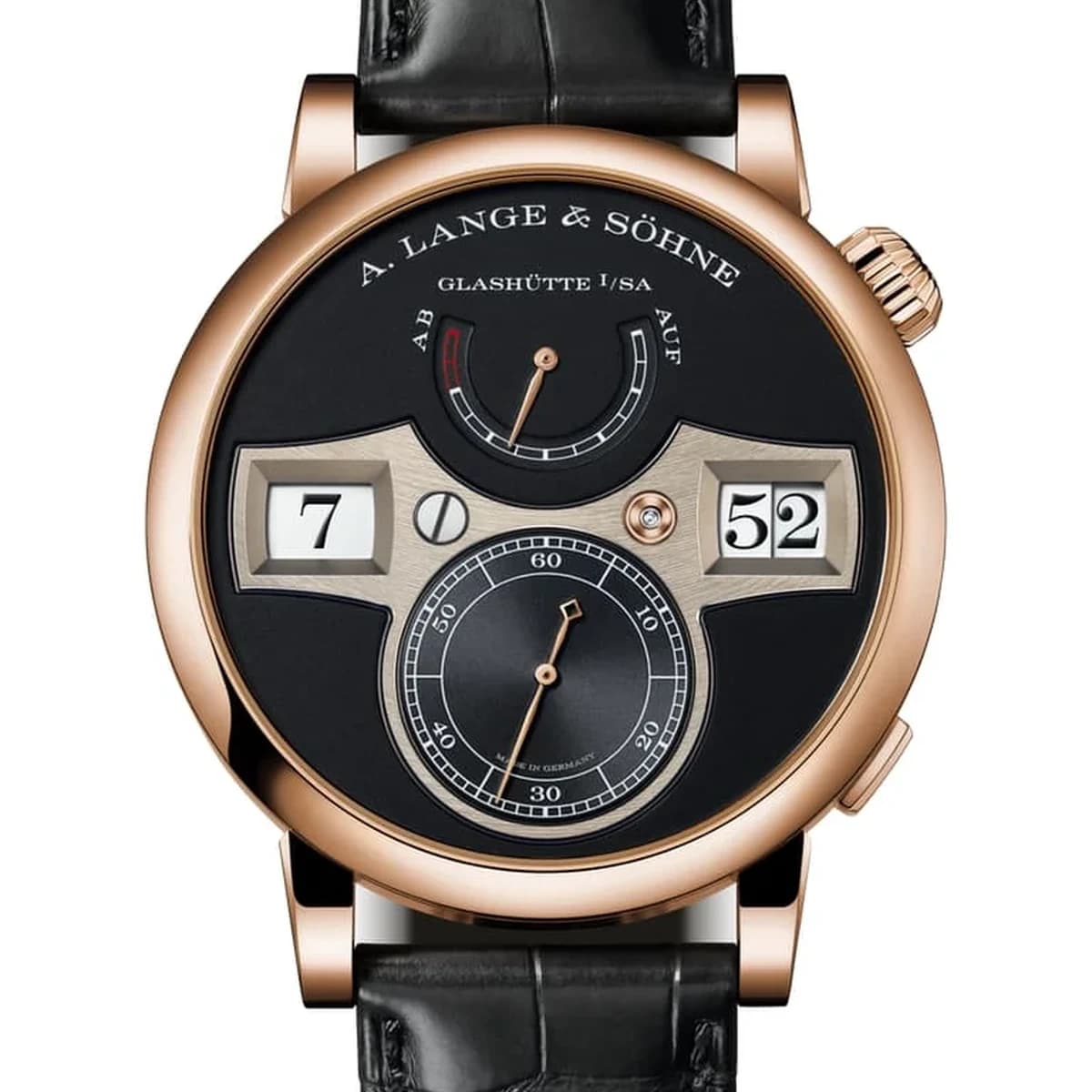
The first time you see a Zeitwerk change its minute, you stop whatever you are doing. The numerals do not sweep. They do not gradually rotate. They snap. One instant it reads 10:36, and then in a fraction of a second, with a subtle mechanical click, it reads 10:37. It is a completely mechanical watch displaying time the way a digital clock does. No battery. No quartz. No electronics of any kind. Just 451 hand-assembled components, German silver plates, and a constant-force remontoire delivering precisely timed bursts of energy to three jumping numeral discs. You will stare at it. Everyone does.
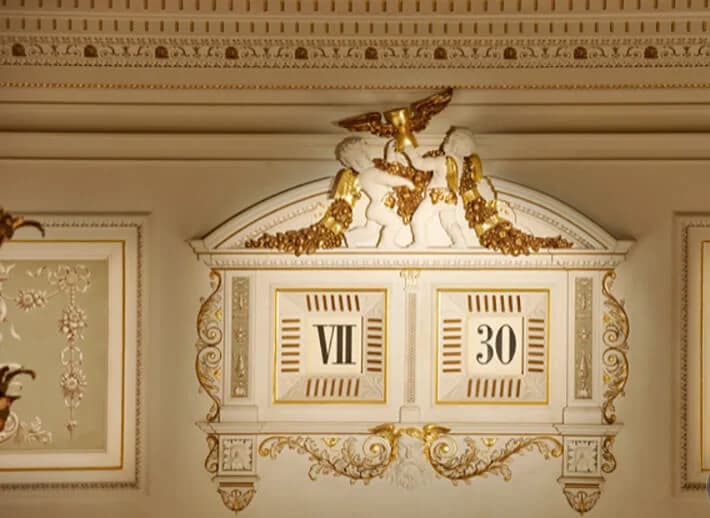
The story of how this watch exists starts with a clock, not a watch. In 1841, Ferdinand Adolph Lange and his mentor Johann Christian Friedrich Gutkaes built a clock for the Semper Opera House in Dresden. The opera house was too dark for audiences to read traditional clock hands from their seats, so Lange and Gutkaes designed a large digital-style display using rotating numeral discs showing hours and five-minute intervals. That clock has been running for over 180 years. It directly inspired the outsize date on the Lange 1 in 1994, and it directly inspired the Zeitwerk in 2009. The Zeitwerk is essentially the Semper Opera House clock miniaturized to fit on a wrist. The same philosophy: digital legibility through purely mechanical means.
Gunter Blumlein sketched the original concept for a digital Lange wristwatch around 2001, shortly before his death. The idea sat dormant until Anthony de Haas joined Lange in 2004 as Director of Product Development. De Haas took Blumlein's sketch and spent five years turning it into a production watch. The engineering challenge was immense. Traditional watch hands are lightweight and rotate continuously with minimal energy. Numeral discs are heavy and must snap to exact positions instantaneously. The system needs to deliver enormous short bursts of energy every 60 seconds without disrupting the precision of the balance wheel. De Haas himself described the discs as "huge and way heavier than hands." Making them jump precisely, 1,440 times a day, is the kind of problem that keeps watchmakers awake at night.
The solution is a mechanism with a 400-year pedigree. A remontoire, from the French remonter, meaning to wind again. The concept was invented by the Swiss clockmaker Jost Burgi around 1595 for his astronomical clocks, then refined by John Harrison in 1739 for his marine chronometers. The idea is simple in principle: place a small secondary spring between the mainspring and the escapement. The mainspring winds this secondary spring at regular intervals, and because the secondary spring is freshly wound each time, it delivers consistent force to the balance wheel regardless of how much tension remains in the mainspring. Harrison's removal of the escapement from the direct influence of the mainspring was one of the most consequential innovations in the history of horology. The Zeitwerk takes this 400-year-old idea and gives it a second job: not only does its remontoire stabilize timekeeping, it also provides the precisely timed burst of energy needed to snap three heavy numeral discs into position every 60 seconds.
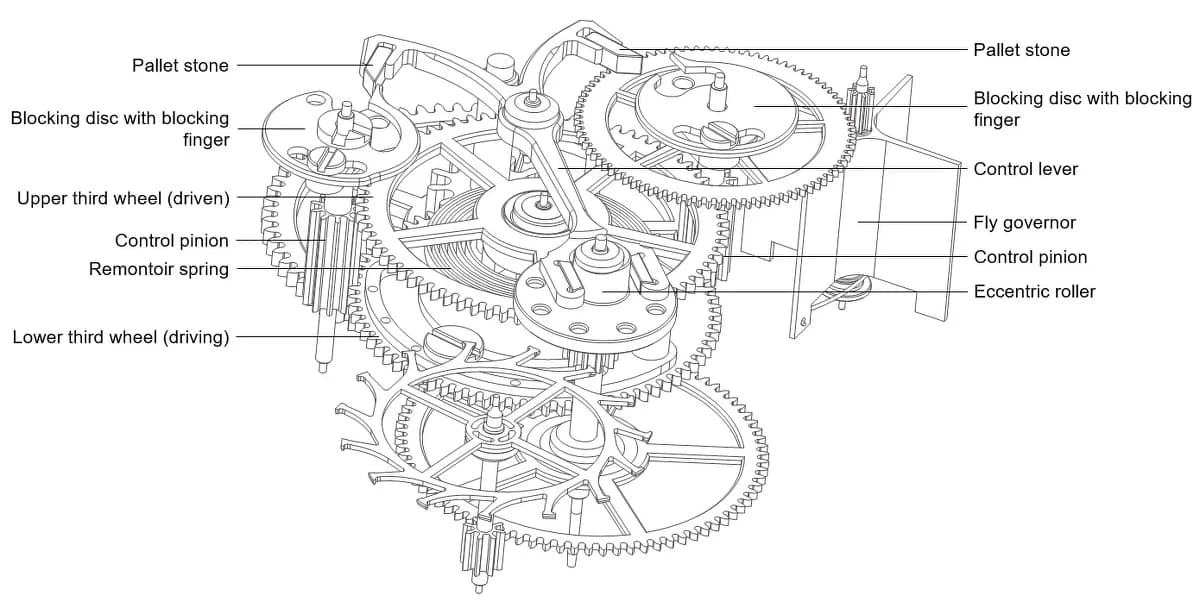
Here is what happens inside the movement during each minute cycle. The third wheel is split into two levels, an upper and a lower. The lower third wheel receives power from the mainspring barrel through the center wheel. A Y-shaped pallet lever locks the lower wheel in place. For 59 seconds, the mainspring's torque has nowhere to go except into winding the remontoire spring, building tension between the locked lower wheel and the free upper wheel. The upper wheel feeds constant energy to the fourth wheel, escape wheel, and balance. Then at the 60-second mark, an eccentric cam on the fourth wheel completes its rotation and contacts the control lever. The lever pivots, lifting the blocking finger off the lower third wheel. The accumulated tension in the remontoire spring discharges in an instant. The numeral discs snap to their next position. A fly governor, a small fan-like component with vanes, spins up and displaces air to absorb the surplus energy and prevent the discs from overshooting. The pallet lever swings to its opposite position, the other blocking finger drops down, and the lower third wheel is locked again. The cycle restarts. This happens 1,440 times per day. At the top of each hour, when all three discs advance simultaneously, the energy demand is at its peak. The first-generation mainspring delivered 28 newton-millimeters of maximum torque, roughly three to five times what a typical dress watch produces, specifically because of the disc-jumping demands.
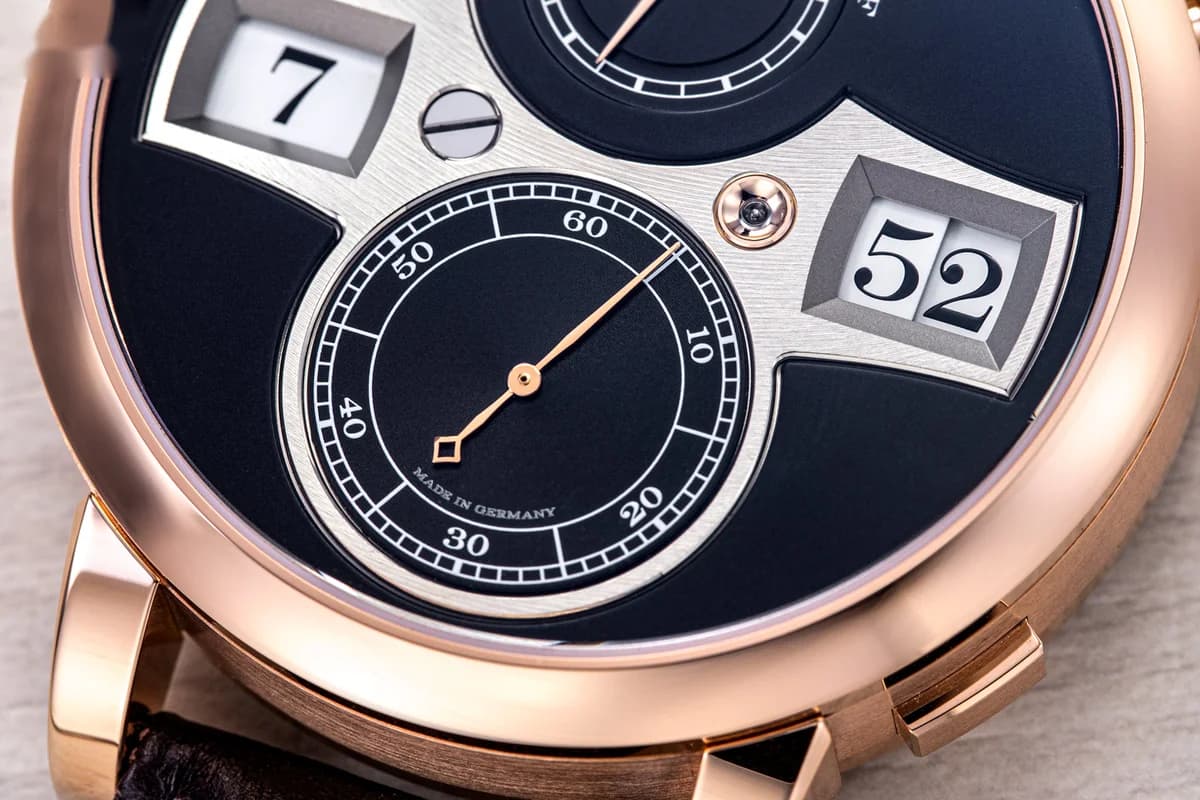
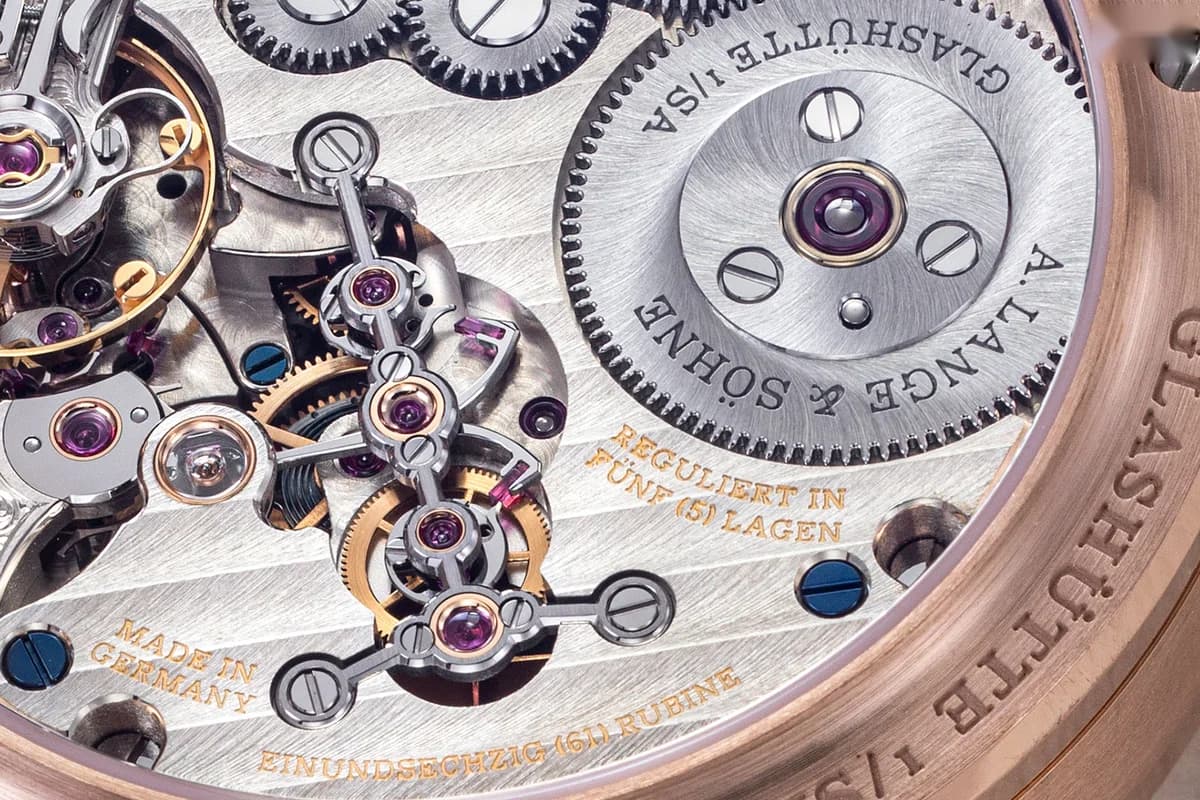
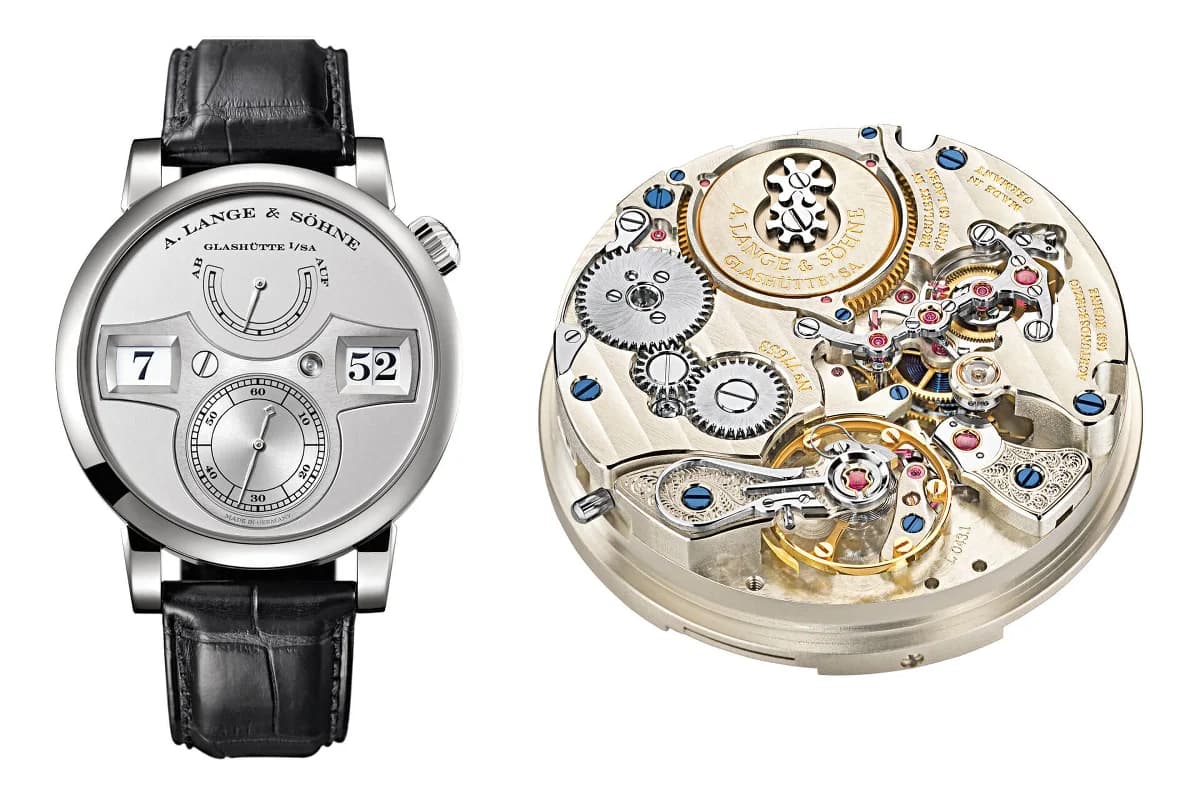
The second generation improved this system dramatically. Robert Hoffmann, Head of the Zeitwerk Assembly Department, developed a thinner remontoire spring that reduced the amplitude drop in the balance wheel from 35 degrees per rewind cycle to just 5 degrees. That number is the clearest measure of how efficiently the energy is being managed. In the first generation, the balance lost significant amplitude every time the remontoire recharged. In the second generation, it barely notices. The dual mainspring barrel, a patented design with two springs stacked vertically and unwinding in parallel, doubled the power reserve from 36 to 72 hours without increasing the barrel diameter. These are the longest mainsprings Lange has ever produced. The parallel unwinding eliminated the need for the Maltese cross stopwork that limited the first generation's barrel rotation. You can verify this visually through the caseback. The Maltese cross visible on Gen 1 movements is absent on Gen 2. De Haas noted they never would have found the remontoire solution if they did not have hairspring manufacturing capacity in-house. The remontoire spring is essentially a specialized hairspring, and Lange's proprietary production was critical to making the whole mechanism work.
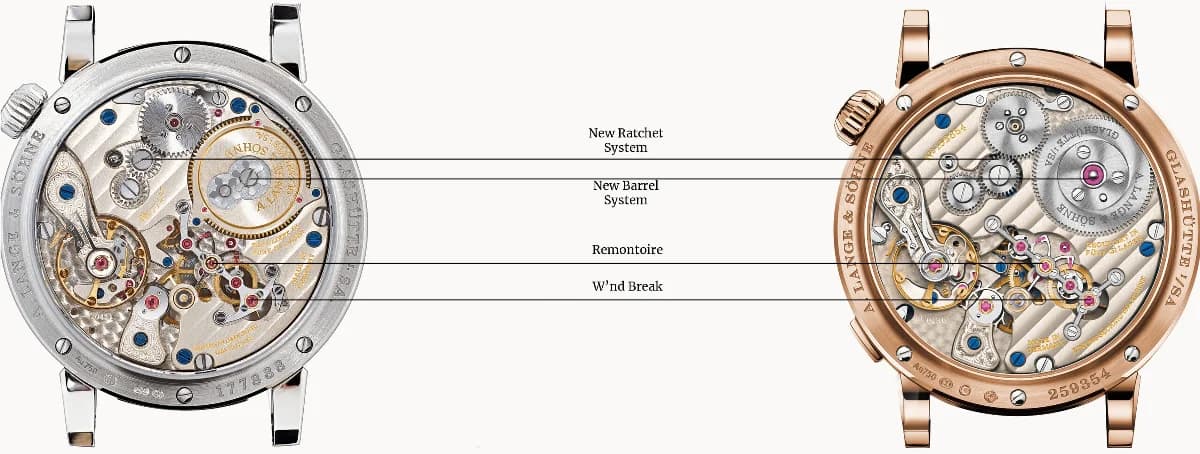
Three numeral discs create the time display. An hours disc shows 1 through 12 in the left aperture. A tens-of-minutes disc shows 0 through 5 in the center. A units-of-minutes disc shows 0 through 9 on the right. You read it left to right, exactly like a digital clock. Every minute, the units disc advances. Every ten minutes, the tens disc advances simultaneously. Every hour, all three discs jump together. That hourly triple jump is the most energy-demanding moment in the entire 72-hour cycle. A fly governor absorbs surplus energy during each transition to prevent the discs from overshooting their position. It is a braking system for rotating numeral discs inside a wristwatch. I find it remarkable that this entire sequence, the gain, hold, and release of energy followed by the disc snap and the fly governor braking, happens 1,440 times per day without human intervention. The engineering required to make this work reliably, silently, and accurately is genuinely extraordinary.
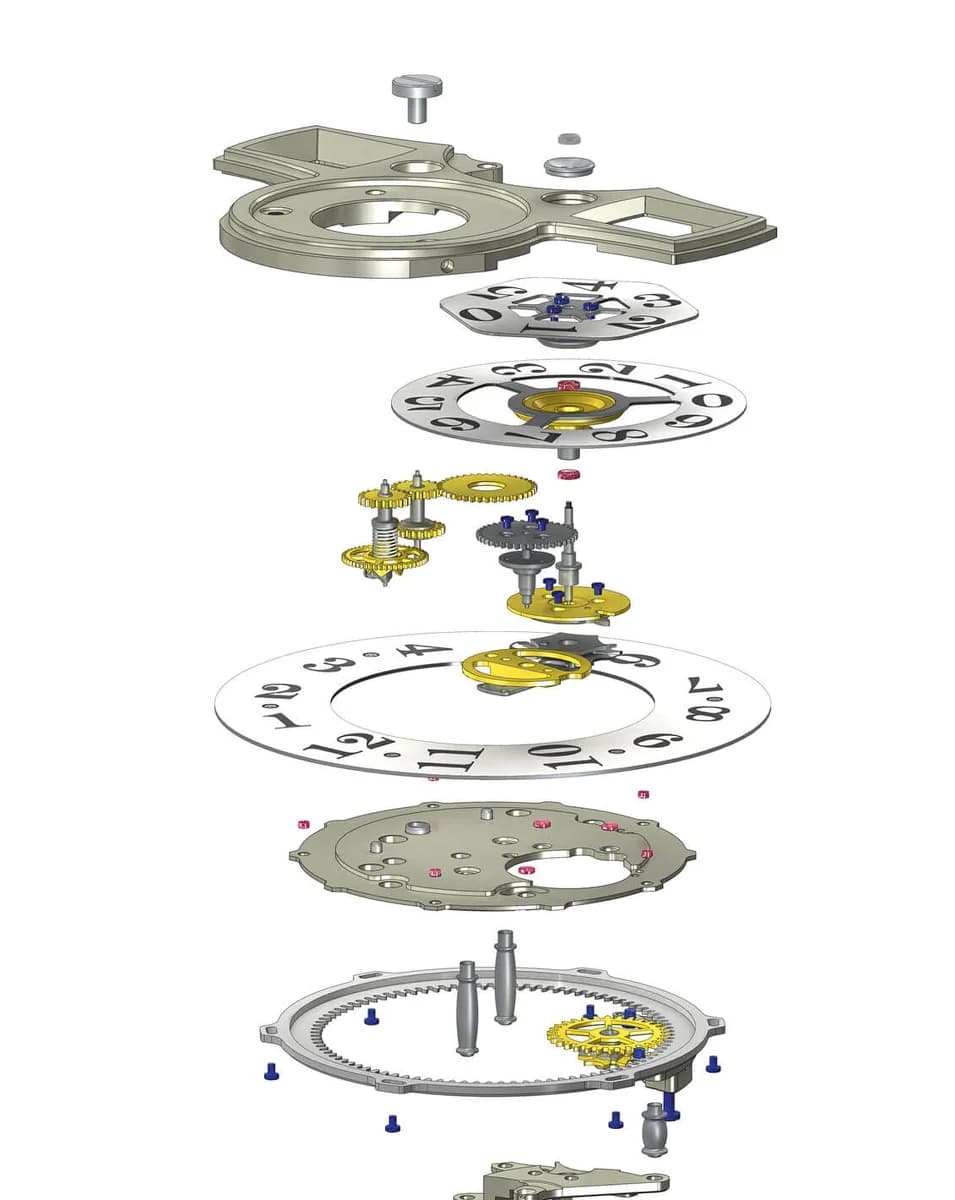
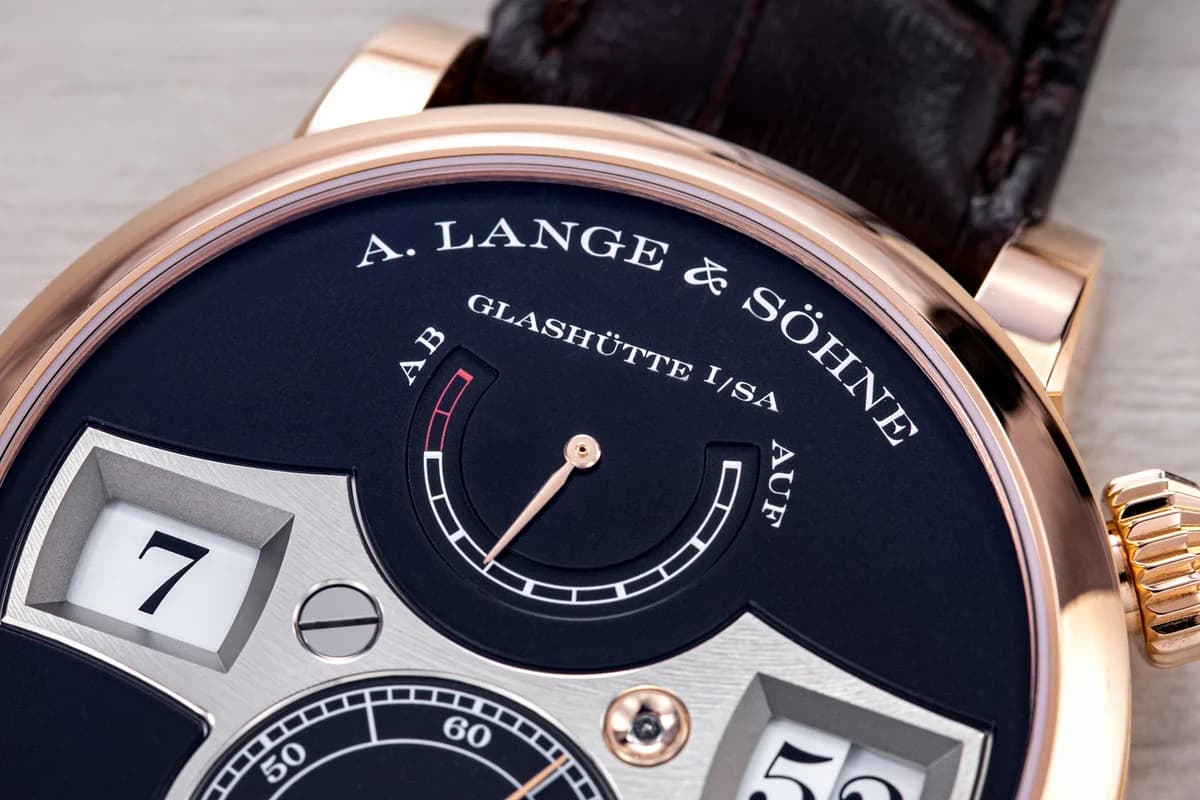
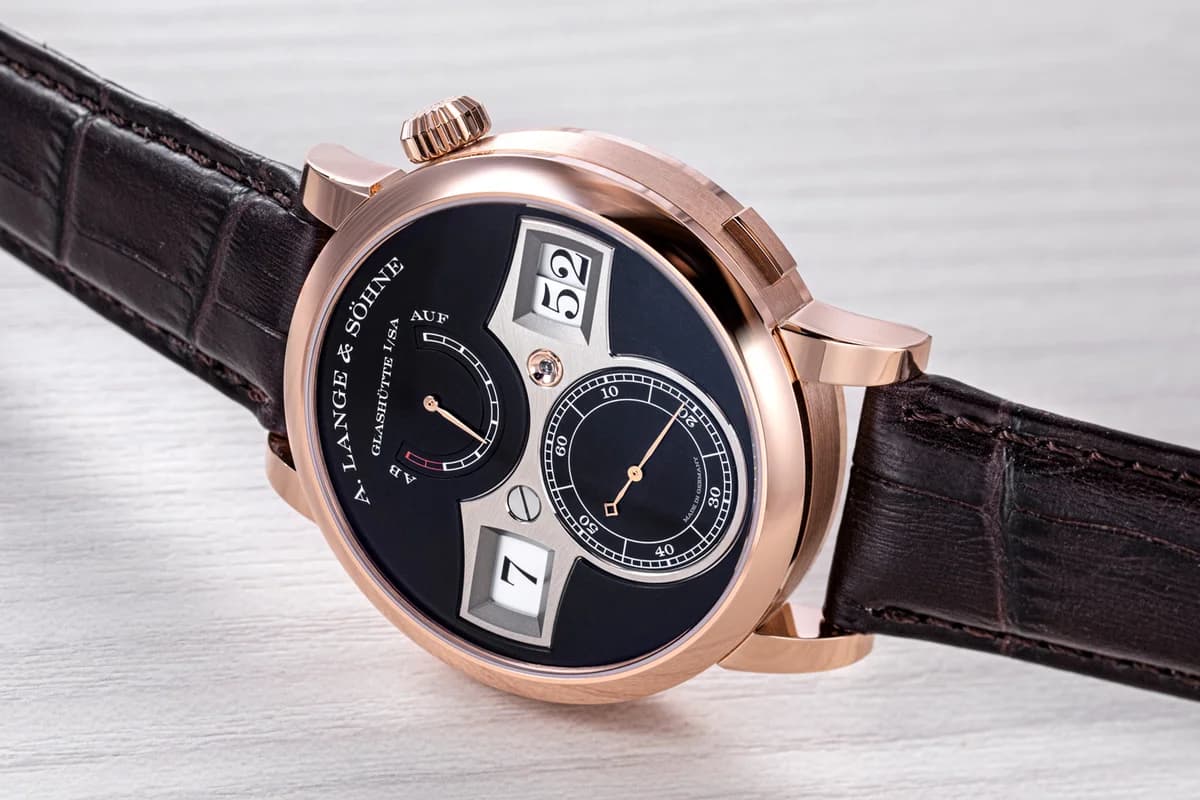
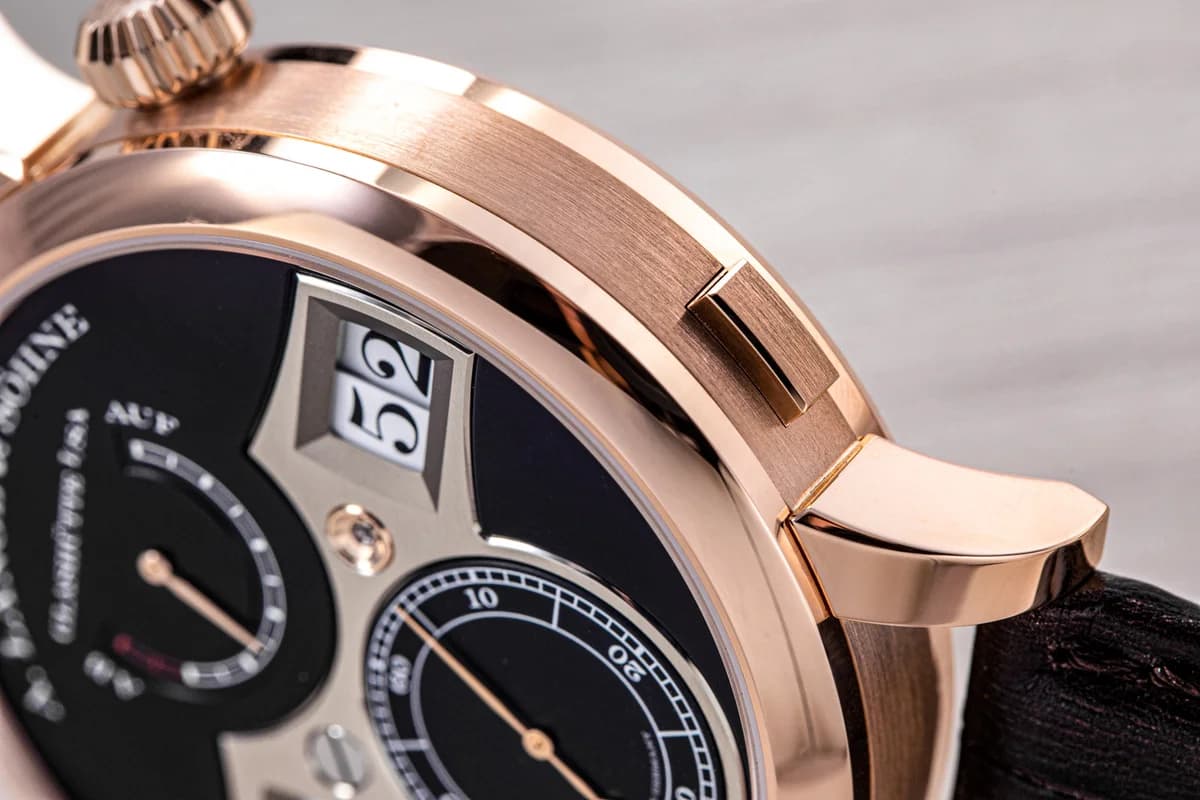
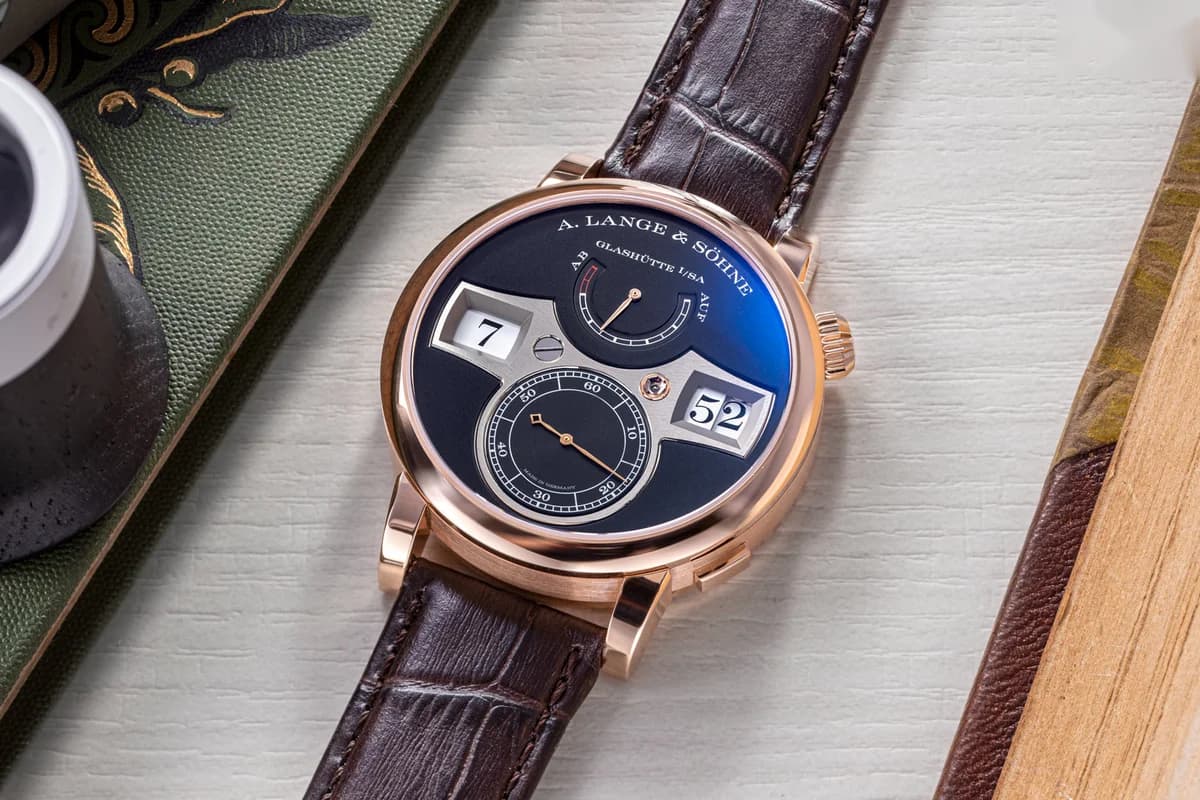
Look at the dial straight on and you see something that does not look like any other watch in existence. The time bridge spans horizontally across the center, housing the three numeral apertures in a wing-shaped structure that tapers from the middle to pointed ends. It looks like a shield. It looks like Superman's chest emblem. Above the bridge sits the power reserve indicator at 12 o'clock. Below it sits the subsidiary seconds at 6 o'clock. The symmetry is perfect along the vertical axis. Power reserve on top, time in the middle, seconds on the bottom. It is architectural. Geometric. Completely unlike the circular harmony of a traditional dial. On the black dial of the 142.031, the rose gold indices and the German silver time bridge create a contrast that is genuinely beautiful in person. Photographs do not capture how this watch reads on the wrist. The black absorbs everything around the numerals, and the jumping white digits against that darkness are hypnotic.
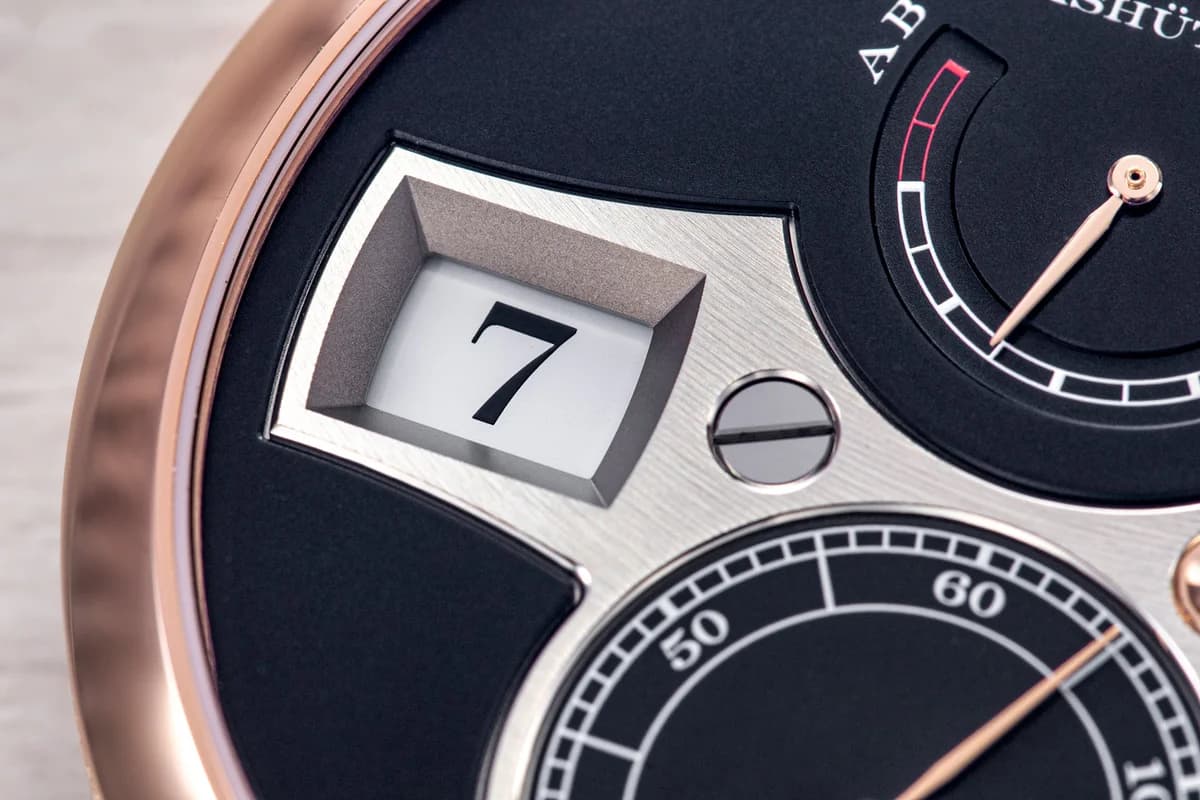
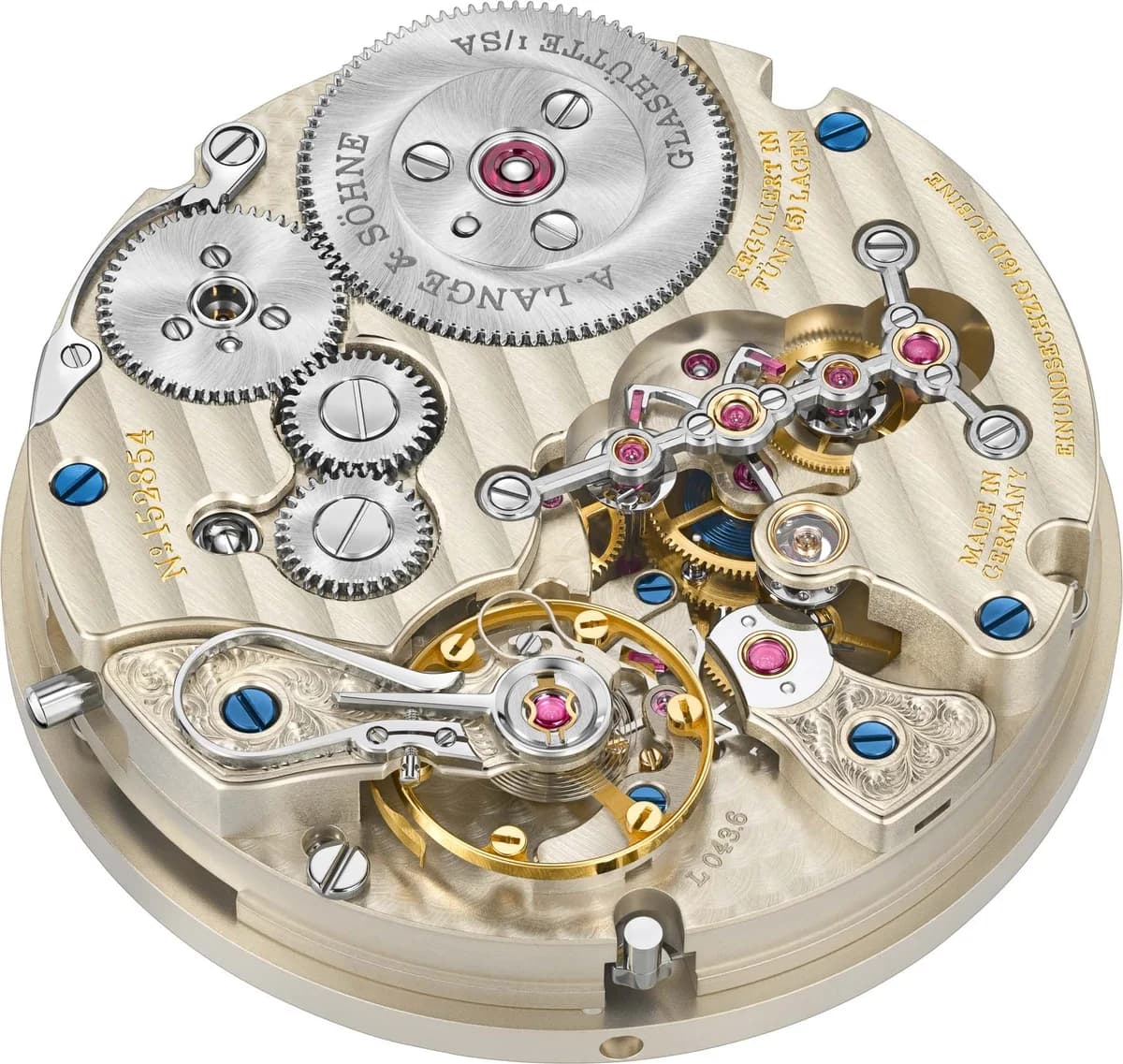
The Caliber L043.6 that powers the second-generation Zeitwerk is a 33.6mm diameter, 8.9mm tall movement with 451 components and 61 jewels. It beats at 18,000 vibrations per hour, which is deliberately slower than the 28,800 of most modern movements. The lower frequency reduces energy consumption, which matters enormously when you are driving three heavy numeral discs. The dual mainspring barrel delivers 72 hours of power reserve, which was a major improvement over the first generation's 36 hours. That first-gen power reserve was the single biggest complaint from owners. Taking the watch off your wrist Friday evening and finding it dead Saturday morning was not acceptable, and Lange knew it. The second generation fixed it.
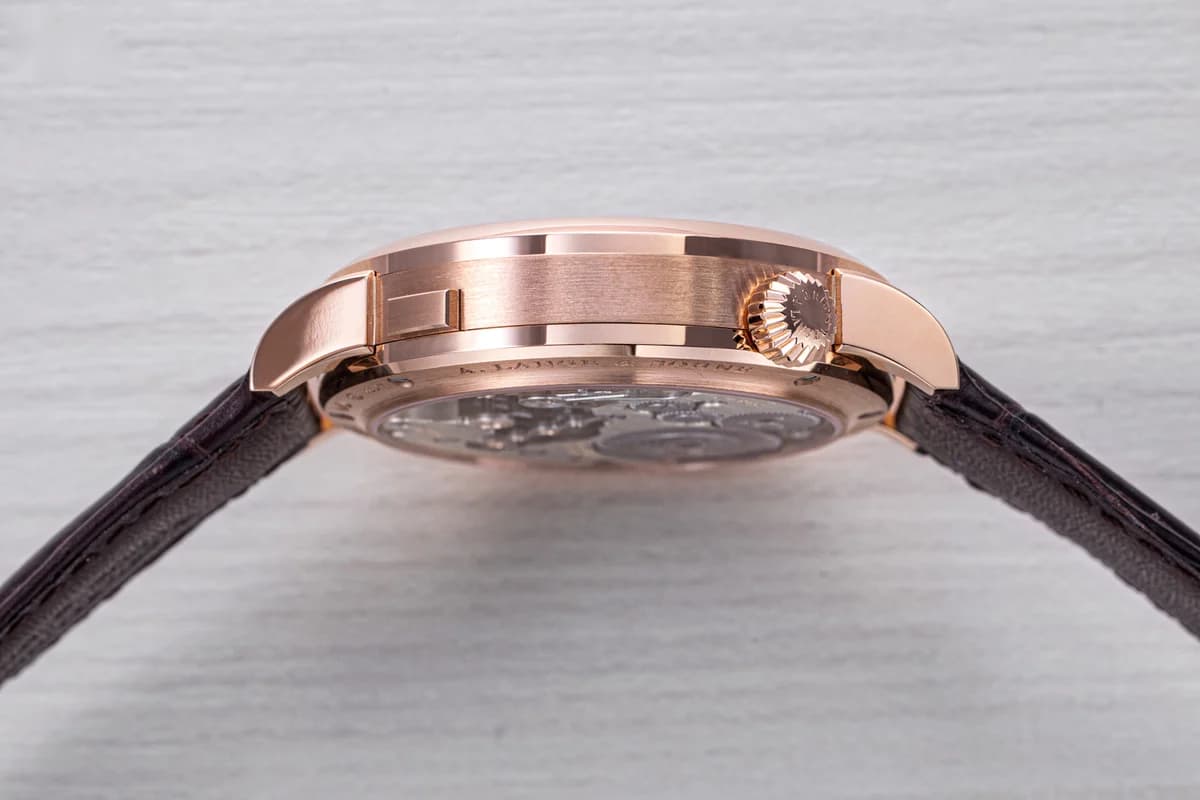
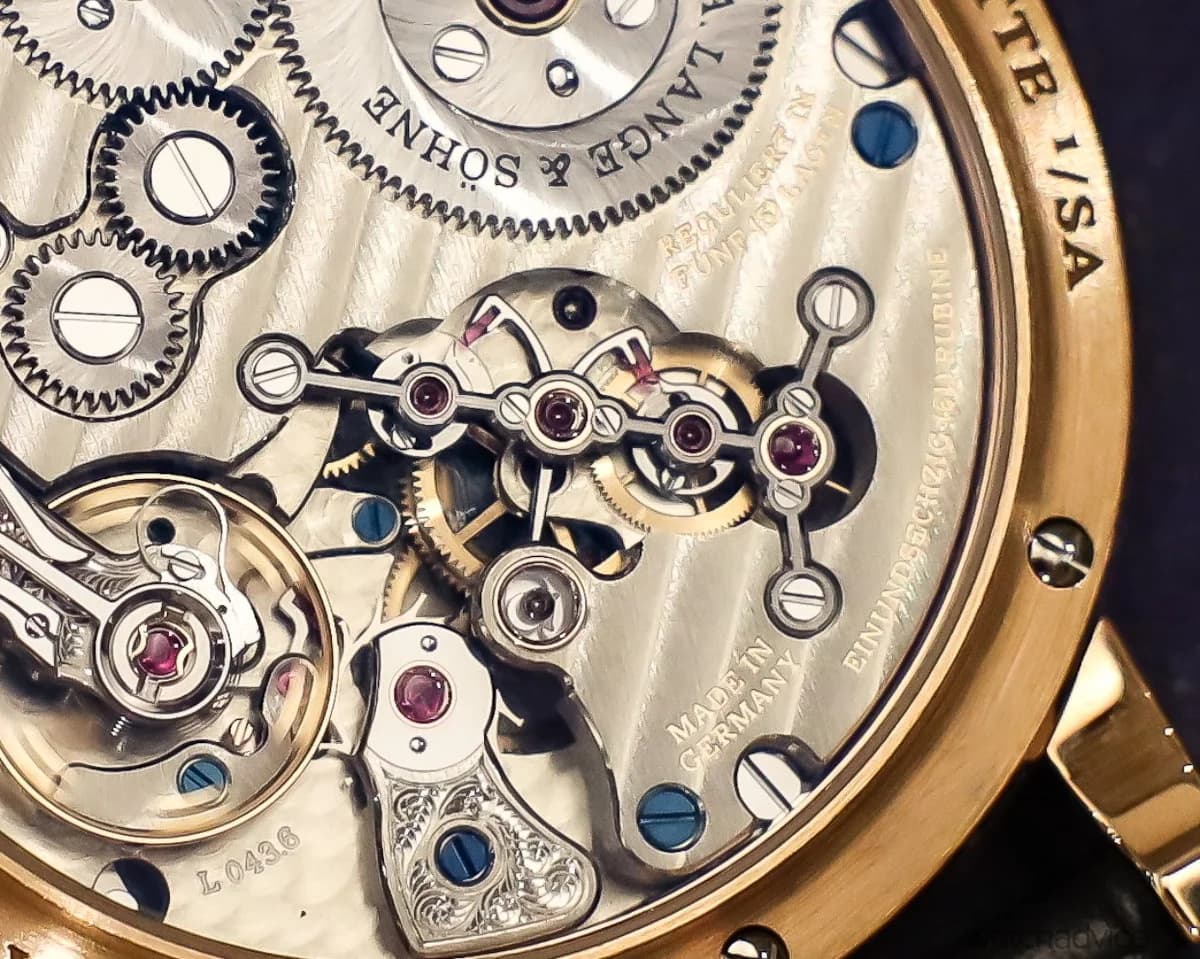
Flip it over and you understand the exotic car engine comparison. The three-quarter plate in untreated German silver. The Glashutte ribbing. Polished gold chatons holding ruby jewels. Thermally blued screws heated to exactly 290 degrees Celsius. The hand-engraved balance cock, unique to each individual watch. Four polished winding wheels with mirrored edges. The dual-barrel system with stacked ratchet wheel visible. It looks like looking down into the engine bay of a Pagani Zonda. Everything is finished to exhibition grade. Every surface has been touched by a human hand. The first generation used 388 parts. The second generation uses 451. More components, more complexity, more things to hand-finish. And every single one of those 451 parts goes together twice because of Lange's double assembly process.
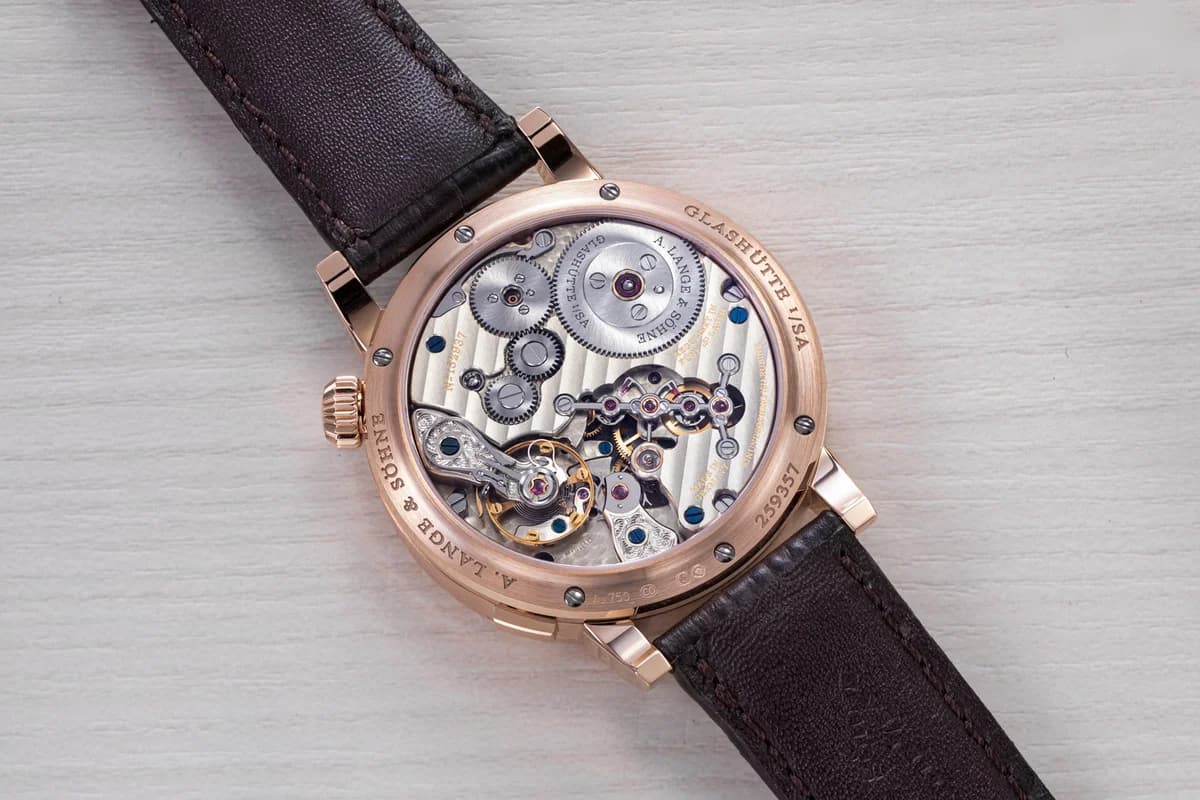
There is something about the Zeitwerk that you only understand when you hold one. Every 60 seconds, the discs advance with a soft, sliding sound. Not a click exactly. More of a mechanical whisper. In a quiet room you can hear it. At the top of the hour, when all three discs jump simultaneously, the sound is slightly more pronounced. Owners take the watch off to watch and listen to the hour changeover through the caseback. It is mesmerizing. The remontoire's gain, hold, and release cycle is visible through the sapphire, and you can see the exact moment the energy releases and the discs snap forward. Standard Zeitwerk models have no lume, so it is not readable in darkness. The Lumen editions solve this with a semi-transparent smoked sapphire dial that lets UV light through to charge luminous numeral discs underneath, so they glow in the dark. Anthony de Haas created the Lumen because he was personally frustrated that he could not read his own Zeitwerk at night. The pusher at 4 o'clock enables quickset hour correction. Press it fully and release, and the hour disc advances by one. It uses a patented vertical clutch to uncouple the hour ring from the jumping mechanism, so you can change time zones without stopping the movement. These are the details that separate a watch you admire from a watch you actually live with.
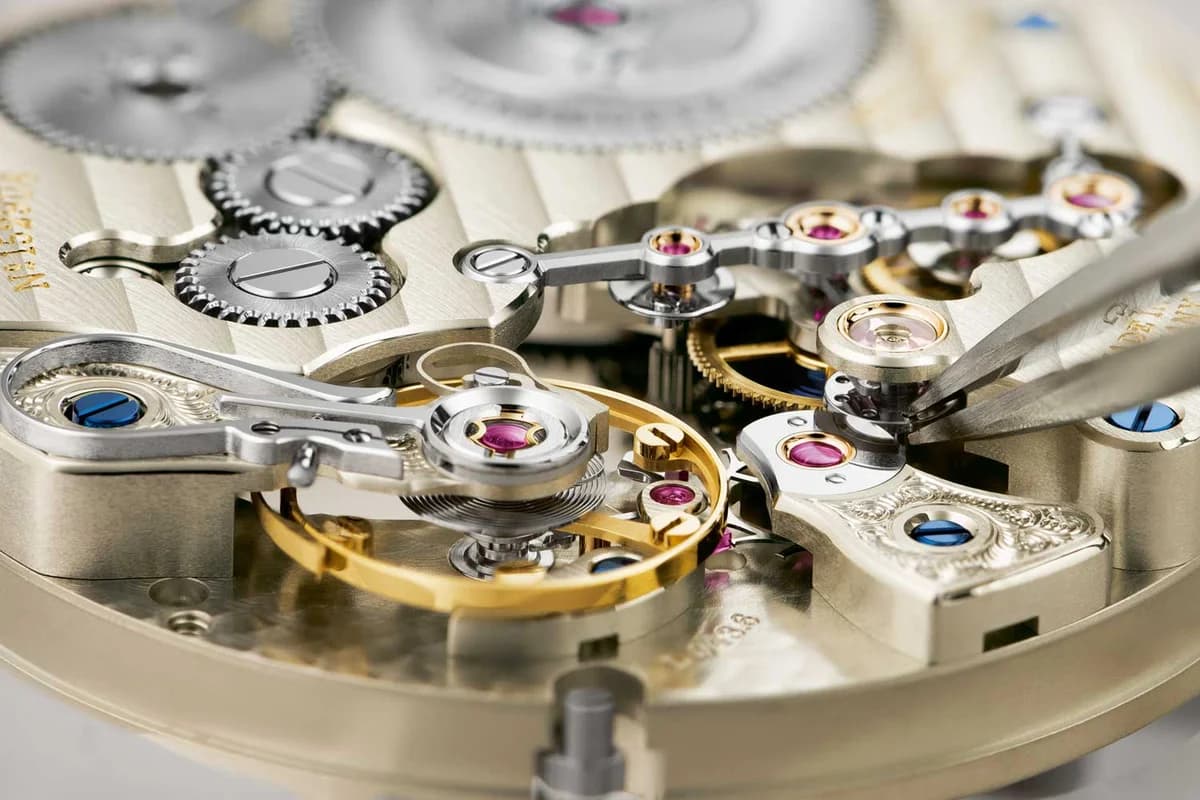
The German silver time bridge that spans the dial deserves its own moment. It is untreated. No rhodium plating, no galvanic coating. Over years and decades, it develops a warm, subtle patina as the copper-zinc-nickel alloy oxidizes naturally. It forms a protective layer and the color shifts from bright silver toward a gentle golden warmth. The movement plates beneath the caseback are the same material, but they age more slowly because they are sealed under sapphire. So the time bridge on the dial side and the movement behind it will develop slightly different characters over time. Your Zeitwerk will age differently from every other Zeitwerk in existence. Collectors actively seek this. They call it patination, and it is one of the reasons Lange uses German silver instead of plated brass.
The 142.031 comes in 18K pink gold, and understanding the metal options matters. Lange's rose gold uses a traditional formulation with copper that gives it a warm, reddish depth. The platinum 142.025 is roughly 41% heavier per equal volume, which changes how the watch sits on the wrist. Platinum also scratches differently. When gold scratches, metal is lost. When platinum scratches, metal is displaced, forming ridges rather than removing mass. You can polish platinum repeatedly without it getting thinner. Lange also makes Zeitwerk editions in Honey Gold, their proprietary alloy that uses silicon in the 18K gold mix. Honey Gold measures over 300 Vickers in hardness, roughly twice as scratch-resistant as standard 18K gold. The color sits between rose gold and yellow gold, a deep amber warmth. It is reserved for limited editions only. On darker skin, the pink gold creates a contrast that is genuinely beautiful. The copper undertones in the rose gold complement melanin-rich complexions in a way that cool-toned metals simply do not achieve. White gold and platinum offer a modern, bold separation against darker skin. But rose gold brings warmth that harmonizes rather than contrasts. It is the most universally flattering gold shade, and on the black dial of the Zeitwerk, the effect is striking.
When you send a Zeitwerk in for service, the same laser welding case restoration applies that Lange uses across their lineup. Their goldsmiths use a 0.1mm diameter thread of matching 18K gold, applied by hand under magnification, to build up scratched or worn areas. Traditional polishing grinds material away. Lange adds it back. You get the original dimensions restored. It is classified as Class 5, Lange's highest complexity tier. The movement is fully disassembled, each of the 451 components inspected individually, all lubricants renewed, then reassembled by one of the few watchmakers qualified to build a Zeitwerk. This is not a watch you take to an independent. Forum consensus is unanimous: the jumping mechanism, constant-force escapement, and disc system are so specialized that only Lange's own service centers should touch it. Spare parts are not available externally. Turnaround is long. Owners report four to six months without their watch. Recommended service interval is every five to seven years.
The Zeitwerk did not invent the concept of a mechanical digital display. IWC made the Pallweber pocket watch in 1884 with jumping numeral discs. Harry Winston commissioned the Opus 3 from Vianney Halter around 2003. F. P. Journe created the Vagabondage II in 2010 and the Vagabondage III in 2017 with jumping digital seconds. But the Zeitwerk is the first wristwatch to display time digitally in a horizontal line, read left to right like a clock or a phone screen. It is also the most reliable of the group. The Opus 3 was famously finicky. The Vagabondage III achieved only 30 hours of power reserve. The Zeitwerk won the Aiguille d'Or at the Grand Prix d'Horlogerie de Geneve in 2009, the highest prize in watchmaking that year. Within Lange's own lineup, it occupies a unique position. The Datograph is their greatest hit. The Grand Complication is their most complex. But the Zeitwerk is arguably their most significant engineering achievement in terms of pure invention. Nothing like it existed before 2009. Nothing since has replicated what it does as well as it does it.
I think about the Zeitwerk in the context of the Quartz Crisis and the digital revolution, and I honestly wish it had existed sooner. When Seiko introduced the Astron in 1969 and Casio started flooding the market with digital watches in the 1970s and 1980s, the mechanical watch industry nearly died. The argument was simple: quartz is more accurate, cheaper, and digital displays are easier to read. What could a mechanical watch offer against that? The Zeitwerk is the answer that arrived 40 years too late. It takes the visual language of a digital display and proves that pure mechanical engineering can achieve the same thing. No battery. No circuit board. Just gears, springs, levers, and human craftsmanship. If this watch had existed in 1975, it would have been the most powerful argument the mechanical industry could have made. As it stands, it arrived in 2009, when the industry had already recovered through luxury positioning. But the philosophical statement is no less powerful. It says: anything digital can do, we can do with our hands.
This is a thick watch. At 12.2mm, it is not hiding under your cuff. It is not pretending to be a slim dress watch. The first generation was even thicker at 12.6mm. For context, a Grand Lange 1 is 8.2mm, a JLC Master Ultra Thin is 7.8mm, and even a Rolex Daytona is 12.4mm. The Zeitwerk at 41.9mm wide and 12.2mm thick is a statement piece. I appreciate that Lange did not try to make this watch thin. The dual mainspring barrel, the three numeral discs, the remontoire, the fly governor, all of that mechanical architecture needs room. It is saying something on your wrist. And that is the point. Not every watch needs to disappear. Some watches are meant to be seen, to start conversations, to make someone across the table lean in and ask what is on your wrist. The Zeitwerk is that watch. On the rose gold case with the black dial, it has a presence that is commanding without being loud. The warmth of the pink gold, the depth of the black, the flash of white numerals jumping every 60 seconds. It is one of the most beautiful things I have ever seen on a wrist.
The honest critique is that it is a special occasion watch that is almost too thick for special occasions. If your special occasion involves a tailored suit with French cuffs, the Zeitwerk is going to fight the fabric. It is also not waterproof beyond splashes. Winding requires noticeable effort because of the dual mainspring tension. And servicing is complex. The movement is classified as Lange's highest complexity tier, Class 5, and few watchmakers outside of Lange's own service centers have the expertise to work on the constant-force mechanism and jumping disc system. But for the people who wear it, none of that matters.
The Zeitwerk exists in an expanding family. The Striking Time adds a visible striking mechanism that chimes every 15 minutes. The Minute Repeater is a decimal repeater with 771 components. The Date adds a peripheral date ring. The Handwerkskunst is limited to 30 pieces with tremblage engraving. The Lumen has a semi-transparent sapphire dial that charges luminous numeral discs, readable in complete darkness.
Blumlein sketched a digital Lange. De Haas spent five years building it. Walter Lange presented it. And the result is a watch that combines the instant legibility of a digital display with the soul of a hand-finished mechanical movement from Glashutte. Every 60 seconds, three numeral discs snap to their new positions, powered by a constant-force remontoire, braked by a fly governor, regulated by a balance wheel, all running on a wound mainspring. It is 451 hand-finished components answering a question that a quartz chip answers perfectly well. And that is exactly why it is one of the most remarkable watches ever made.
Also in Haute Horlogerie