
The FundamentalsLesson 10 of 10 · 6 min read
The Apple Watch and Why It Belongs in This Conversation
The most complicated watch ever made, the best-selling watch on earth, and why the snobbery around it is wrong
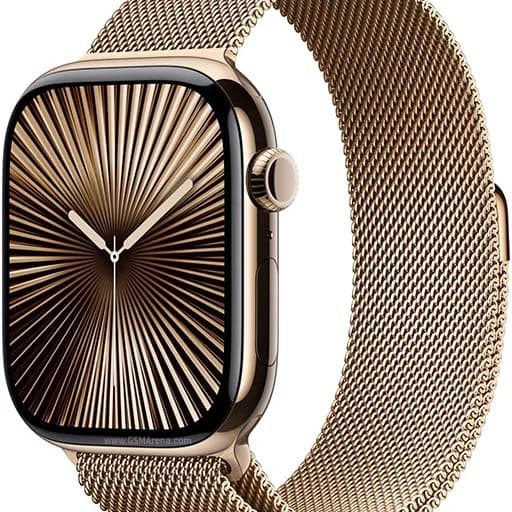
I need to talk about this because pretending it does not exist is exactly the kind of snobbery that makes watch people insufferable.
The Numbers
The Apple Watch is the best-selling watch in the world. 37 million units in 2023. Total revenue approaching what Rolex does, except at a fraction of the average Rolex price per unit. Apple nearly matches Rolex's total revenue while selling watches that cost a thirtieth as much. That is a staggering volume of watches. And every single one of them is, technically, the most complicated watch movement ever mass-produced.
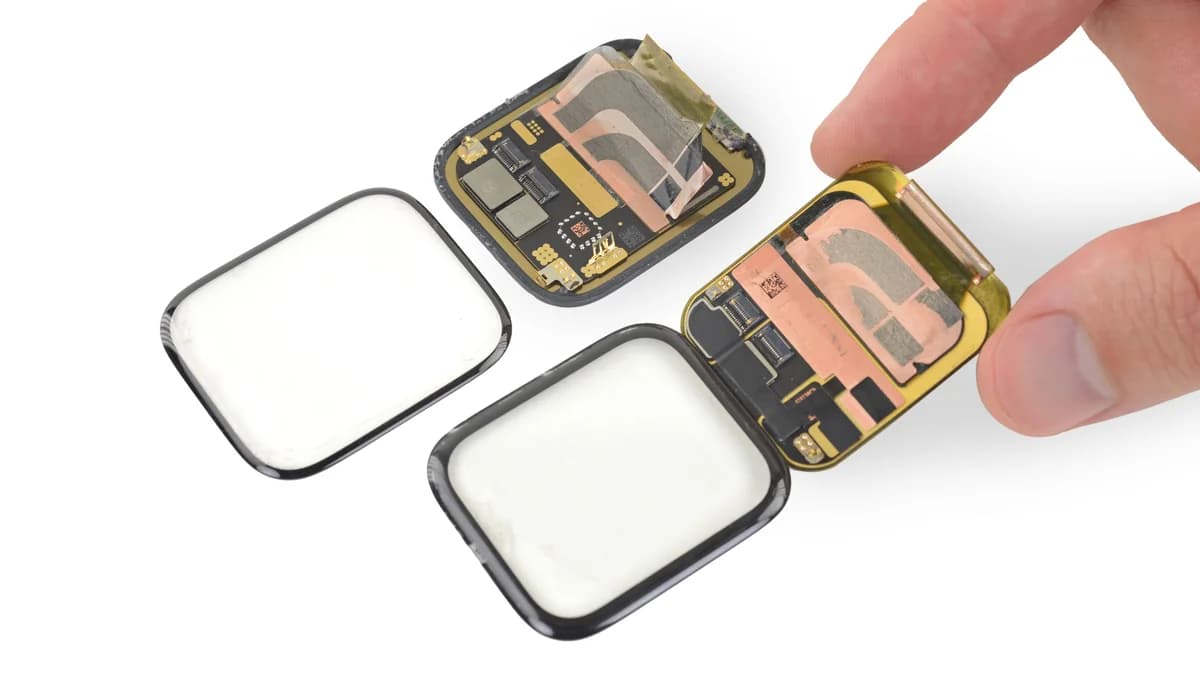
The Most Complicated Movement
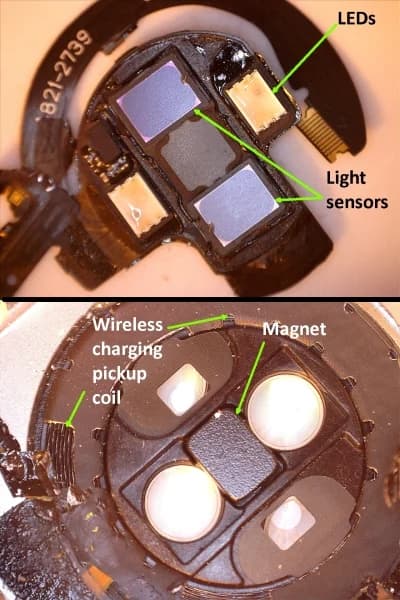
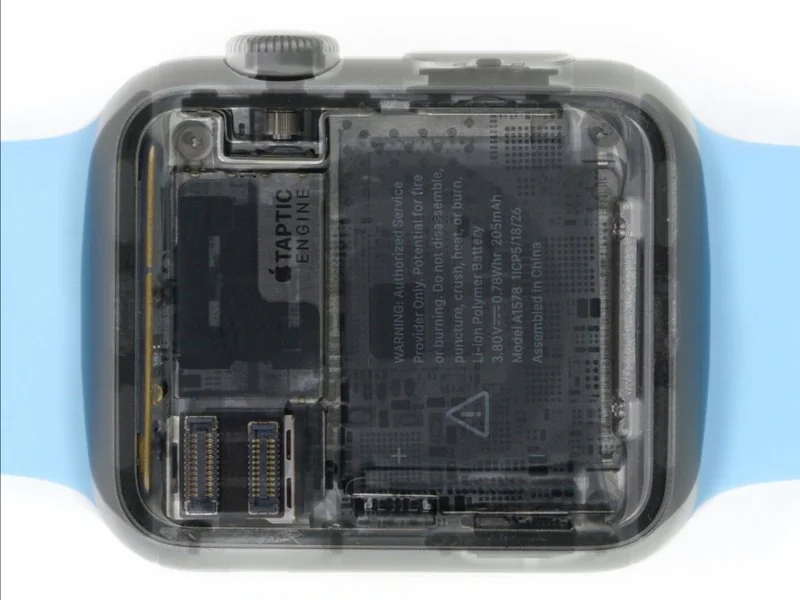
I am not being dramatic. The S9 chip inside an Apple Watch is fabricated by TSMC on a 4-nanometer process. That means the transistors are built at a scale where you are counting atoms. The lithography systems that pattern these circuits (built by ASML in the Netherlands, incidentally, another country that keeps showing up in watchmaking) use extreme ultraviolet light at 13.5 nanometers to etch features that are physically smaller than anything a human hand could ever produce. The chip goes through deposition, etching, ion implantation, and multi-layer interconnect formation before it even reaches testing. Then it gets packaged with DRAM, NAND flash, wireless radios, and sensor arrays into something that fits on your wrist.
If you define "complication" as something a watch does beyond telling time, the Apple Watch has more complications than every watch in the Patek Philippe Grand Complications collection combined. ECG, blood oxygen, temperature sensing, fall detection, crash detection, compass, altimeter, GPS, cellular, NFC payments, music playback, notifications, workout tracking, sleep tracking, and whatever else Apple ships in the next software update. And that is the other thing. The movement gets better over time. Patek does not push a firmware update to your 5270P.
Coexistence
Here is the thing that settles the debate. The Apple Watch has been around for over a decade now. Ten generations. Hundreds of millions of units sold. And the Swiss watch industry did not collapse. It grew. Swiss watch exports have been hitting record highs. Rolex cannot make enough watches to meet demand. Patek has multi-year waitlists. Independent watchmakers like Dufour and Journe have never been more sought after. The Apple Watch proved that a watch on every wrist does not mean the same watch on every wrist. People bought Apple Watches AND they bought more mechanical watches than ever before. The quartz crisis is not repeating. The opposite happened.
The Industry Responds
The Swiss industry's reaction to the Apple Watch has been fascinating to watch. TAG Heuer launched the Connected in 2015. Frederique Constant built hybrid smartwatches with Bluetooth and iOS apps. Montblanc did something similar. Even Max Busser at MB&F, who builds some of the most creatively ambitious mechanical watches on the planet, has acknowledged that connectivity is coming to the wrist whether the industry likes it or not. These brands are not chasing the Apple Watch because they want to be Apple. They are chasing it because their customers keep asking why their mechanical watch cannot do what their Apple Watch does.
Tool vs. Craft
Here is where I land on it. I wore an Apple Watch. It is genuinely impressive as a product. The health tracking is real. The notifications are useful. The build quality is excellent. As a tool, it does things that no mechanical watch will ever do, and anyone who dismisses that is not being honest.
But it is a tool. And I want to be clear about something. The Apple Watch has helped people I care about. Fall detection that called emergency services when someone I know went down. Heart rate alerts that caught something a doctor might have missed. I am genuinely grateful to Apple and the people who build this thing. What they do takes real skill, the same way what a watchmaker does takes real skill. Different skills, different purpose, but the craft of building software and hardware at this level is genuinely extraordinary. The people on the Apple Watch team are builders. I respect builders.
Systems vs. Individuals
The difference is in what gets built and why. There is no single person's hand in the Apple Watch the way Dufour's hand is in every surface of the Simplicity, or the way Journe obsessed over the resonance coupling distance. The Apple Watch is the product of an extraordinary system. The watches I write about on the rest of this site are the products of extraordinary individuals. Both deserve appreciation. They are not competing.
I know plenty of people who own a Patek or an AP or a Submariner and also wear an Apple Watch. Sometimes on the same day. Sometimes on the other wrist. I have friends who wear a Whoop on one wrist for health tracking and whatever they feel like on the other. I have done the same thing. At one point I was wearing a Fitbit with a screen on one wrist and a mechanical watch on the other and nobody died.
The Quartz Crisis Parallel
The quartz crisis in the 1970s was supposed to kill mechanical watchmaking. Seiko released the Astron in 1969, and within a decade the Swiss industry nearly collapsed. Thousands of jobs were lost. Hundreds of brands disappeared. And then mechanical watches came back. Not because they were more accurate. They were not. They came back because people realized that accuracy was not the only thing they wanted from a watch. They wanted craft, heritage, beauty, and something that connected them to a tradition that predates electricity.
The Apple Watch is not going to kill mechanical watchmaking for the same reason quartz did not. It occupies a different space. It does things mechanical watches cannot do. Mechanical watches do things the Apple Watch cannot do. The Venn diagram overlaps at "tells time and goes on your wrist" and that is about it.
The snobbery goes both ways, by the way. There are Apple Watch people who think spending serious money on a mechanical watch is insane when their Apple Watch does more. And they are right that it does more. But "more" and "better" are not the same thing. A Kindle holds more books than a first-edition hardcover. Nobody is confused about which one you put on the shelf.
Wear What Makes You Happy
Wear what makes you happy. Wear what works for you in that moment. If that is an Apple Watch on Monday and a Santos on Tuesday and both on Wednesday, that is fine. If it is a Casio F-91W every day for the rest of your life, that is also fine. This is metal and glass and plastic and silicon, and at the end of the day, it is about what brings you function and joy. Not what somebody on a forum thinks you should be wearing.