
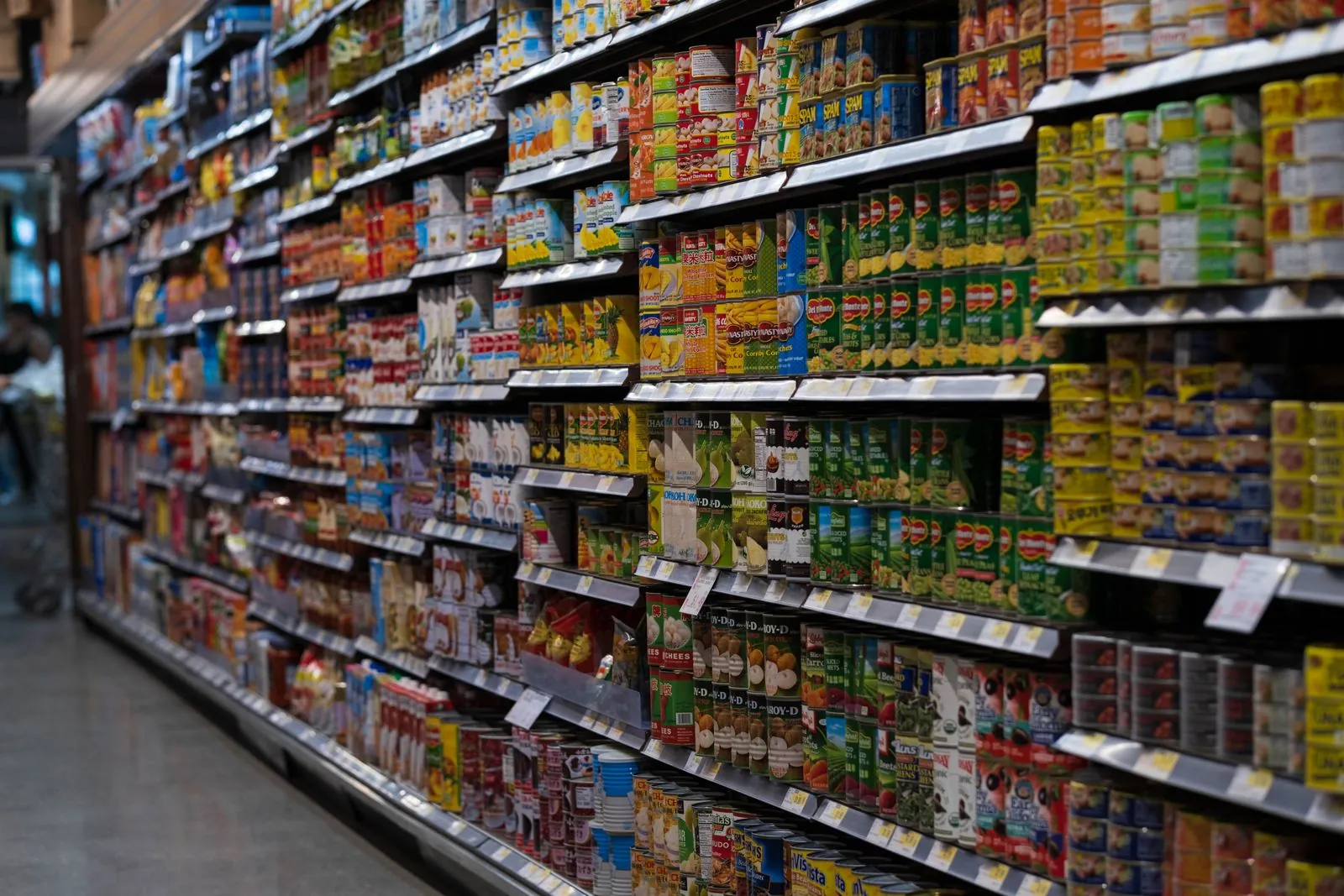
The same brand can be made differently here than overseas, and the US label doesn't tell you the whole story.
Buy a 20-ounce Fanta Orange in the United States and you get 73 grams of added sugar, 143 percent of your Daily Value in one bottle, colored with Yellow 6 and Red 40. Buy Fanta Orange in the UK and the color comes from carrot and pumpkin extracts, with about 27 grams of sugar in the same 20 ounces (4.5 g per 100 ml). Same brand. Same orange soda. Different country, different rules. (The UK version makes up the sweetness with artificial sweeteners, so it's not health food either. It's just proof the same company can make the same drink a different way.)
References
- Fanta Products & Flavors (US). The Coca-Cola Company (company product page).
- Fanta (Great Britain). The Coca-Cola Company, GB site (company product page).
Start with the label you already read. Every % Daily Value on a US Nutrition Facts label is based on a 2,000-calorie day, a number the law calls "general nutrition advice". FDA's own rule of thumb: 5 percent or less is low, 20 percent or more is high. The label counts 50 grams of added sugar as a full day's worth. WHO says get under 10 percent of your calories, and ideally under 5 percent, about 25 grams. The newest US Dietary Guidelines say no amount of added sugar is recommended, and they cap it at 10 percent of daily calories, which is that same 50 grams. So that 50 is a ceiling, not a target. One 20-ounce Fanta blows right through it.
References
- 21 CFR 101.9 Nutrition labeling of food. eCFR.
- Food Labeling: Front-of-Package Nutrition Information (Proposed Rule), 90 FR 5426, FR Doc 2025-00778, Docket FDA-2024-N-2910. FDA, Federal Register, 2025.
- WHO calls on countries to reduce sugars intake among adults and children. World Health Organization, 2015.
- HHS, USDA release 2025-2030 Dietary Guidelines. ADA News (American Dental Association), 2026.
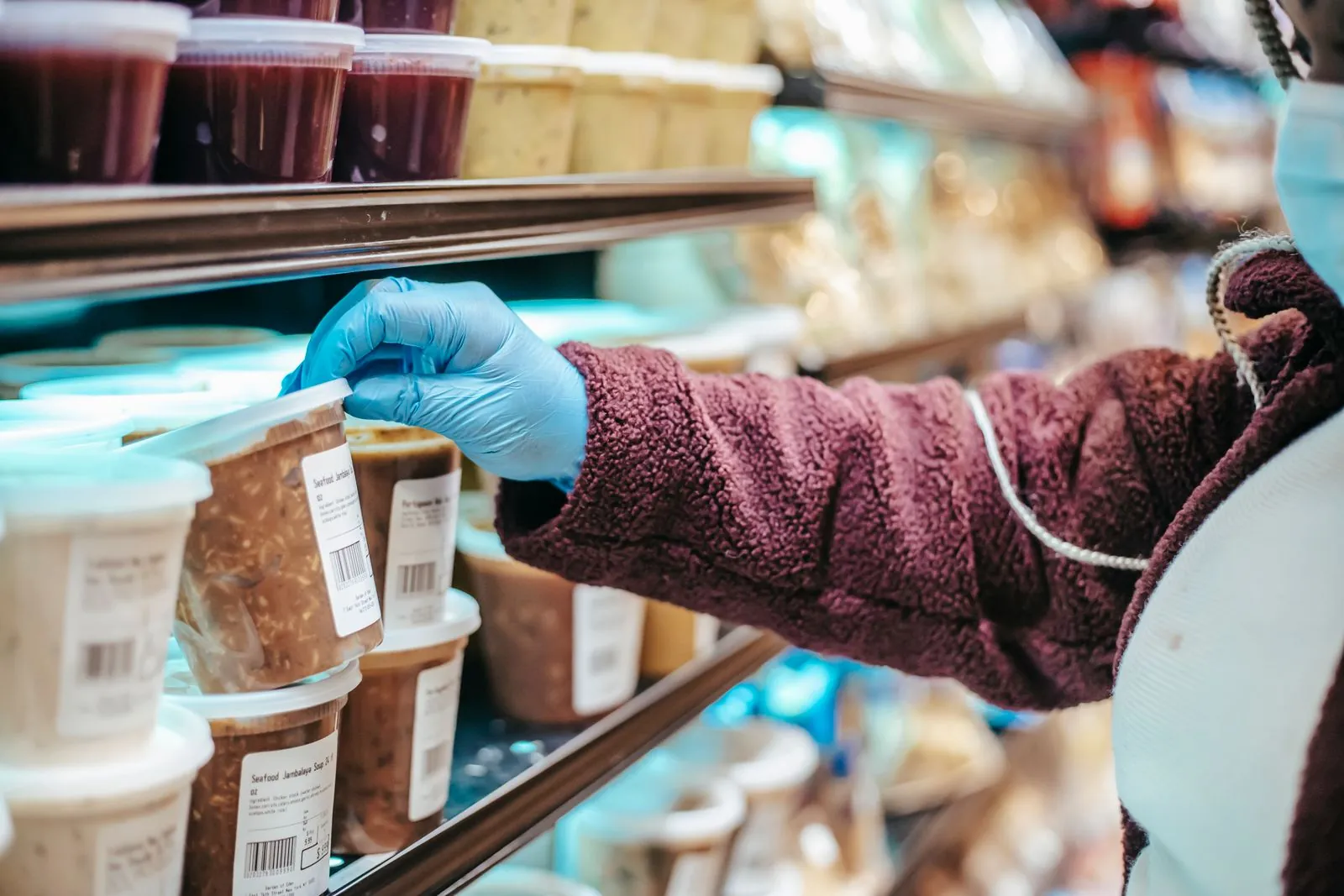
Other countries put the warning on the front of the box. Chile started black "high in" warning labels in 2016. After the law, purchases of "high in" drinks dropped 23.7 percent, and calories bought from "high in" products dropped 23.8 percent. Mexico added its own black warning octagons in 2020, and 44.8 percent of adults said the labels made them buy less junk. The UK has used red, amber and green traffic lights (voluntary) since 2013. France rolled out Nutri-Score (voluntary), an A to E grade, in 2017. The US? FDA proposed a front-of-package "Nutrition Info box" with Low, Med and High ratings in January 2025. Almost two years later, it's still a proposal.
References
- An evaluation of Chile's Law of Food Labeling and Advertising on sugar-sweetened beverage purchases from 2015 to 2017: A before-and-after study. PLOS Medicine, 2020.
- Changes in food purchases after the Chilean policies on food labelling, marketing, and sales in schools: a before and after study. The Lancet Planetary Health, 2021.
- Changes in Sugar-Sweetened Beverage Intake From Before to After Nutrition Labeling Policy Implementation: A Comparison of Mexico and the United States. Preventing Chronic Disease, 2026.
- Self-reported decreases in the purchases of selected unhealthy foods resulting from the implementation of warning labels in Mexican youth and adult population. International Journal of Behavioral Nutrition and Physical Activity, 2024.
- Front of pack nutrition labelling guidance. UK Department of Health and Social Care, GOV.UK.
- Nutri-Score. Santé publique France.
- Food Labeling: Front-of-Package Nutrition Information (Proposed Rule), 90 FR 5426, FR Doc 2025-00778, Docket FDA-2024-N-2910. FDA, Federal Register, 2025.
Here's the part most people have never heard of. In the US, a company can decide on its own that a new ingredient is "generally recognized as safe" and put it in your food without FDA's approval or even FDA knowing. Telling FDA is voluntary. FDA's own words: "an unknown number of substances" are entering food this way. Even when companies did tell FDA, researchers looked at 451 of those safety calls. A company employee made 22.4 percent of them, a consultant the company hired made 13.3 percent, and a panel picked by the company or its consultant made 64.3 percent. An independent panel made none. That's grading your own homework, and only turning it in when you feel like it. In August 2026 FDA finally proposed making notification mandatory. It is not law yet.
References
- Food Safety: FDA Should Strengthen Its Oversight of Food Ingredients Determined to Be Generally Recognized as Safe (GRAS), GAO-10-246. U.S. Government Accountability Office, 2010.
- Substances Generally Recognized as Safe (Proposed Rule), 91 FR 51834, Docket FDA-2025-N-3262, FR Doc 2026-16296. Food and Drug Administration, Federal Register, 2026.
- Conflicts of Interest in Approvals of Additives to Food Determined to Be Generally Recognized as Safe: Out of Balance. JAMA Internal Medicine, 2013.
The additive list tells the same story. FDA pulled Red No. 3 out of cosmetics in 1990 because of thyroid tumors in rats, but left it in food. It took until January 2025 to revoke it for food, and companies have until January 15, 2027 to get it out. To be fair, FDA says those rat tumors are of limited relevance to humans; the law simply bans any color shown to cause cancer in animals. Brominated vegetable oil was in sodas until FDA revoked it in 2024, with enforcement starting a year later. Europe banned titanium dioxide, a whitener, in 2022 because its scientists couldn't rule out DNA damage. In the US it's still allowed while FDA reviews it.
References
- Color Additive Petition From Center for Science in the Public Interest, et al.; Request To Revoke Color Additive Listing for Use of FD&C Red No. 3 in Food and Ingested Drugs, 90 FR 4628, FR Doc 2025-00830. FDA, Federal Register, 2025.
- Micro-Tracers, Inc.; Response to Objections and Requests for a Public Hearing, 91 FR 50475, FR Doc 2026-15920. FDA, Federal Register, 2026.
- Revocation of Authorization for Use of Brominated Vegetable Oil in Food, 89 FR 55040, FR Doc 2024-14300. FDA, Federal Register, 2024.
- Commission Regulation (EU) 2022/63 of 14 January 2022 amending Annexes II and III to Regulation (EC) No 1333/2008 as regards the food additive titanium dioxide (E 171). European Commission, Official Journal of the EU L.
- Titanium dioxide: E171 no longer considered safe when used as a food additive. European Food Safety Authority, 2021.
- List of Select Chemicals in the Food Supply Under FDA Review. FDA.
Now look at your bread. US rules still let bakers add potassium bromate to flour. The World Health Organization's cancer agency calls it possibly carcinogenic, and WHO's food additive experts have said since 1992 that using it to treat flour is not acceptable. US rules also allow azodicarbonamide in flour and bread dough, up to 45 parts per million. In the European Union it is not authorized as a food additive at all. FDA has both of them on its review list, with no deadline.
References
- 21 CFR 137.155 Bromated flour. eCFR (National Archives / FDA).
- IARC Monographs Volume 73: Potassium Bromate (summary and evaluation). International Agency for Research on Cancer (WHO), via IPCS INCHEM.
- JECFA database entry: Potassium Bromate (INS 924a). Joint FAO/WHO Expert Committee on Food Additives (WHO).
- 21 CFR 172.806 Azodicarbonamide. eCFR.
- EU comments, Codex Committee on Food Additives 51st session, agenda item 4b. European Commission, DG SANTE.
- List of Select Chemicals in the Food Supply Under FDA Review. FDA.
- Azodicarbonamide (ADA); Request for Information, 91 FR 27060, FR Doc 2026-09508. FDA, Federal Register, 2026.
Then there are the dyes. In Europe, food with Allura red, tartrazine or sunset yellow has to carry a warning: "may have an adverse effect on activity and attention in children". Those are the same dyes Americans know as Red 40, Yellow 5 and Yellow 6. Europe's warning came from a UK trial where drinks with color mixes made kids more hyperactive, though Europe's food safety agency called that evidence limited. Here, no warning. In April 2025 FDA announced a plan to get petroleum-based dyes out by the end of 2026. The target is now the end of 2027, and it runs on voluntary promises from companies. States aren't waiting. California bans Red 3, potassium bromate, brominated vegetable oil and propylparaben starting in 2027. West Virginia bans seven dyes plus two preservatives from food sold in the state starting January 1, 2028.
References
- Regulation (EC) No 1333/2008 on food additives, Article 24 and Annex V. European Parliament and Council, Official Journal of the EU, 2008.
- JECFA database entries: FD and C Red No. 40 / Allura Red AC; Tartrazine / FD and C Yellow No. 5; Sunset Yellow FCF / FD and C Yellow No. 6. JECFA (WHO).
- Food additives and hyperactive behaviour in 3-year-old and 8/9-year-old children in the community: a randomised, double-blinded, placebo-controlled trial. The Lancet, 2007.
- EFSA evaluates Southampton study on food additives and child behaviour. European Food Safety Authority.
- HHS, FDA to Phase Out Petroleum-Based Synthetic Dyes in Nation's Food Supply. FDA press announcement, 2025.
- Tracking Food Industry Pledges to Remove Petroleum-Based Food Dyes. FDA.
- Landmark Legislation Banning Dangerous Food Additives Signed by Governor (AB 418, California Food Safety Act). Office of Assemblymember Jesse Gabriel, California State Assembly.
- Governor Patrick Morrisey Signs Food Dye Legislation Into Law (HB 2354). Office of the Governor of West Virginia.
Now Monsanto, because everybody asks. Monsanto makes Roundup, and its active ingredient is glyphosate. The WHO's cancer agency calls glyphosate "probably carcinogenic to humans". The EPA says "not likely to be carcinogenic to humans", but in 2022 a federal appeals court said that conclusion "was not supported by substantial evidence" and threw out the human-health part of EPA's decision. EPA is still redoing it. Europe renewed glyphosate until 2033, but banned spraying it on crops right before harvest to dry them out. US rules allow pre-harvest spraying and allow residues up to 30 parts per million on grains like wheat and oats. The CDC estimates 81 percent of Americans 6 and older had recent glyphosate exposure, and says that alone doesn't prove it causes disease. Here's what's proven: it's in us, regulators disagree on cancer, and the lawsuits cost billions. Bayer, which owns Monsanto, agreed to pay up to $10.9 billion in 2020 and another $7.25 billion in a settlement a judge approved in November 2026. In June 2026 the Supreme Court ruled that federal law blocks state lawsuits claiming Roundup should have carried a cancer warning. That was a ruling about who controls the label, not a ruling that it's safe.
References
- IARC Monograph on Glyphosate (IARC News / Q&A). International Agency for Research on Cancer (WHO).
- Glyphosate Interim Registration Review Decision, Case Number 0178, Docket EPA-HQ-OPP-2009-0361. U.S. Environmental Protection Agency, 2020.
- Natural Resources Defense Council, et al. v. U.S. Environmental Protection Agency, No. 20-70787 (9th Cir. June 17, 2022). U.S. Court of Appeals for the Ninth Circuit, 2022.
- Glyphosate (Ingredients Used in Pesticide Products). U.S. EPA.
- Commission Implementing Regulation (EU) 2023/2660 of 28 November 2023 renewing the approval of the active substance glyphosate. European Commission, Official Journal of the EU, 2023.
- 40 CFR 180.364 Glyphosate; tolerances for residues. eCFR (EPA).
- Diet Is a Factor in Contact with Glyphosate. CDC National Biomonitoring Program.
- Bayer to pay up to $10.9 billion to settle Roundup lawsuits. CBS News, 2020.
- Judge approves $7.25B settlement covering current, future Roundup claims. Agri-Pulse (Steve Davies), 2026.
- Monsanto Co. v. Durnell, No. 24-1068 (slip opinion and syllabus). Supreme Court of the United States.
What about GMOs? Don't overclaim this one. The National Academies reviewed all the available studies in 2016 and found no persuasive evidence that eating genetically engineered crops harms your health. The same report found they hadn't sped up yield gains and that weeds had evolved resistance to glyphosate. So the problem isn't that the corn is a GMO. The bigger documented problem is what it gets processed into. About 55 percent of the calories Americans eat now come from ultra-processed food, and for kids it's 61.9 percent. One Japanese survey put it around 38 percent and an Italian survey around 20 percent. The UK, at 54 percent, is right there with us, which tells you this isn't about one country's genes. It's about what's on the shelf.
References
- Genetically Engineered Crops: Experiences and Prospects (news release for the report). National Academies of Sciences, Engineering, and Medicine, 2016.
- Ultra-processed Food Consumption in Youth and Adults: United States, August 2021 to August 2023 (NCHS Data Brief No. 536). CDC National Center for Health Statistics, 2025.
- Consumption of ultra-processed foods decreases the quality of the overall diet of middle-aged Japanese adults. Public Health Nutrition, 2019.
- Ultra-Processed Foods Consumption, Mediterranean Diet Adherence and Sociodemographic Correlates in an Italian Adult Population: The UFO Survey. Nutrients, 2025.
- Identifying the patterns of ultra-processed food consumption and their characteristics in the UK adults using the UK National Diet and Nutritional Surveys 2008/09 to 2018/19. Public Health Nutrition, 2025.
References
- Ultra-processed Food Consumption in Youth and Adults: United States, August 2021 to August 2023 (NCHS Data Brief No. 536). CDC National Center for Health Statistics, 2025.
- Identifying the patterns of ultra-processed food consumption and their characteristics in the UK adults using the UK National Diet and Nutritional Surveys 2008/09 to 2018/19. Public Health Nutrition, 2025.
- Consumption of ultra-processed foods decreases the quality of the overall diet of middle-aged Japanese adults. Public Health Nutrition, 2019.
- Ultra-Processed Foods Consumption, Mediterranean Diet Adherence and Sociodemographic Correlates in an Italian Adult Population: The UFO Survey. Nutrients, 2025.
In my opinion, nobody had to sit in a room and rig the numbers. The system is built so they don't have to. Companies get to declare their own ingredients safe and keep it to themselves. The label shows a full day of added sugar as a normal number when the guidelines say no amount is recommended. Europe puts warnings on the box, and the US asks companies nicely and moves the deadline when they don't. Ingredients other countries ban or flag stay legal here for decades, until a state forces the issue. That's not a conspiracy. It's an industry that profits from the default, and a regulator that lets the default stand. You can't change that tonight. You can change your cart: the fewer ingredients on the label, the less of this you have to think about.