
Some links below are affiliate links. I earn a small commission at no extra cost to you. I only recommend products I personally use every day. Full disclosure
Body / Skin Care
Skin Care: Order Matters
Supplements can go down together. Skin care can't. Products are layered, and the order decides what absorbs and what just irritates. Here's my routine, step by step.
My skin is thin and dry, and I live in a warm, humid climate where I shower two to three times a day. Hot showers strip the oils your skin needs, so everything here is about rebuilding the barrier.
Before You Start
Read this first. It matters more than any product on this page.
Don't chase perfection
There's no such thing. You're a living body that shifts every day. Some days your skin looks great, some days you're sick as a dog and it shows. Build a routine that makes you a little better than your baseline. Make that your new baseline. Repeat. That's the whole game.
Nobody is freeze-framing you
When TV went HD around 2008, actors panicked: viewers could practically see their pores, and makeup artists switched to airbrushing. 4K made it worse. That's the pressure on people paid to be filmed up close. You're not one of them. Nobody is screenshotting your wrinkles, and if someone is, screw them.
Your skin reacts to your life
Climate, travel, sleep, food, stress and getting sick all show up on your skin. I fly a lot, and airplane cabins usually sit under 20% humidity, against 30% or more at home, so my skin dries out in the air. Expect bad stretches. Adjust and keep going.
Written by a man
This is my routine, and I'm a man. Most of it is unisex. But women's skin shifts with hormones through the monthly cycle: drier some weeks, oilier others, and in one survey 44% of women with acne got premenstrual flares. Women also conceal with makeup, which I know nothing about. If you're a woman, you may know more than me. Take what helps and research the rest.
Everyone runs on hormones
Men and women both make testosterone and estrogen, just at very different levels, and they vary from person to person too. Testosterone and other androgens drive your oil glands, so men usually run oilier. Estrogen supports collagen and moisture, which is why skin gets thinner and drier after menopause. Those are two of many hormones. Your skin is your own experiment.
The Basics
What applies to everything else on this page.
Train your skin like a workout
You don't bench 400 pounds on day one. You'd get hurt and lose months. Lotion and sunscreen are the warm-up: they won't hurt you. Actives are the heavy weights: tretinoin, azelaic acid, salicylic acid, vitamin C. They can. Add one at a time, start light, and give it weeks before the next. Pile them on at once and you get burning, peeling, breakouts, and no idea which one did it.
Collagen 101
Collagen is the scaffolding that keeps skin firm. Cells deep in your skin called fibroblasts make it. With age they make less, and UV makes your skin release enzymes that chop up what you have. In one study, sun-damaged skin made 56% less new collagen than sun-protected skin. So protect what you have with sunscreen, and push your fibroblasts to make more with tretinoin.
Collagen pills vs. making your own
Collagen you swallow gets broken down into amino acids and small peptides, like any protein. Some studies show modest gains in skin moisture and elasticity, but a 2025 review found the high-quality trials showed no significant effect. I don't take it. Tretinoin has stronger evidence: in a 1993 trial, 10 to 12 months of 0.1% raised new collagen formation by 80%. Make your own.
Face first, then body
Do your face before your body, so cream and Aquaphor on your hands never end up on your face. At night the body cream goes on while your face dries, so wash your hands before the face steps (before the thin cream layer on tretinoin nights). The Aquaphor tub is always the very last thing.
Moisturize damp skin, then seal it
Hot water strips the fats that hold water in your skin. Moisturizer goes on while skin is still damp, then Aquaphor on top locks it in. The cream already has some petrolatum, but Aquaphor is mostly petrolatum, so it seals far more. Layering them is safe; the only cost is the grease.
Cream vs. lotion
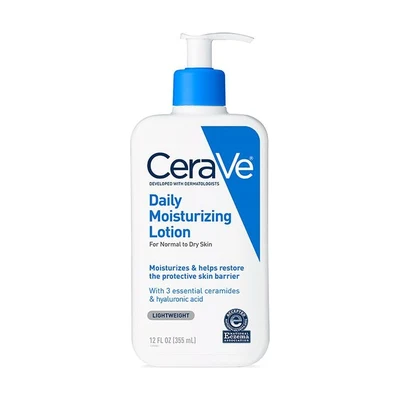
Same CeraVe ceramides and hyaluronic acid, different seal. The cream adds petrolatum, one of the strongest moisture sealers there is, so it holds in more water. The lotion is oil-free and light. Dermatologists steer dry skin toward creams and ointments over lotions. Dry or thin skin like mine: cream. Oily skin or a hot, sticky day: lotion.
Long-haul carry-on kit
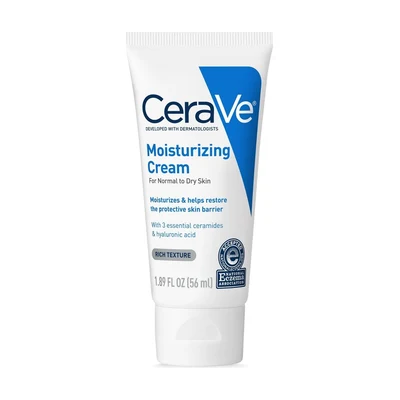
On a 24-hour trip your checked bag is gone, and cabin air is bone dry. Carry-on creams and liquids max out at 3.4 ounces (100 ml) each, all in one quart-size bag, and most countries use the same 100 ml rule. My kit: two 1.89 ounce CeraVe Moisturizing Cream tubes for face and body, the 3 ounce CeraVe AM SPF 30, and the 1.7 ounce La Roche-Posay fluid. For Aquaphor, CeraVe Healing Ointment comes in 1.89 ounces.
Vitamin C is not a retinoid
It belongs in the daytime, under sunscreen. It's an antioxidant that helps defend skin against sun damage. Keep it away from your retinoid at night.
Prescription items
Tretinoin 0.1% and azelaic acid 15% need a prescription. Talk to a dermatologist. I'm sharing what I use, not prescribing what you should use.
If you shave
Shave in the morning, never right after tretinoin. Use shaving cream and a sharp, clean razor. If freshly shaved skin stings, skip the azelaic acid that day.
Tretinoin
One of the two things that help skin the most, and one of the two that people quit in the first week. The first time your face stings, it goes in the trash. These cards are how you get past that.
What actually thickens skin
Tretinoin is the one thing in this routine with real evidence for thicker skin: a thicker outer layer in 24-week controlled trials, and more collagen in a 6-month study. It takes months, not weeks. The CeraVe cream and Aquaphor don't thicken skin. They repair and seal the moisture barrier, which makes thin, dry skin less fragile in the meantime. Daily sunscreen protects the collagen you're building.
What tretinoin actually does
Tretinoin is a prescription vitamin A derivative. Its over-the-counter cousins, from strongest to weakest, are retinaldehyde (retinal), retinol and retinyl esters. Your skin has to convert those into the same active acid, which is why they're gentler and slower. Tretinoin normalizes skin cell turnover, unclogs pores, improves acne and texture, and gets your fibroblasts making new collagen.
Retinoid generations, briefly
Retinoids come in generations, each aimed more precisely at the skin's retinoid receptors (alpha, beta, gamma). First: tretinoin and isotretinoin, which hit all three. Second: acitretin, a pill mostly for psoriasis. Third: adapalene (Differin) and tazarotene, aimed at beta and gamma. Fourth: trifarotene (Aklief), aimed at gamma, the main one in skin. Newer means more targeted, not gentler or better for you.
Tretinoin is not isotretinoin
Not the same drug, even though the names match. Both are vitamin A acid: the same atoms, arranged differently. Tretinoin (Retin-A) is a cream that works in your skin. Only 1 to 2% gets absorbed, and it doesn't change the levels in your blood. Isotretinoin (Accutane) is a pill you swallow, and it works through your whole body. It's the last resort for severe acne.
Why Accutane has a bad reputation
Isotretinoin, sold now as Absorica, Claravis, Amnesteem, Zenatane and Myorisan, carries real warnings: severe birth defects, depression and suicidal thoughts, bowel disease, liver problems and high cholesterol. Studies still argue over the depression and gut links, but it's tightly controlled: iPLEDGE, pregnancy tests and regular blood work. I have friends who had a rough time on it. Tretinoin cream carries none of that, though skip it while pregnant too.
Which tretinoin strength
I use 0.1%, the strongest common strength, because I deal with acne. For anti-aging, 0.025% worked just as well as 0.1% in a 48-week trial, with less redness and peeling. No acne? You can stay at 0.025% for good. Need more for acne? Step up 0.025%, then 0.05%, then 0.1%, a few months apart. Never jump straight to 0.1%.
Start tretinoin slow
Every third night for the first month. Then every other night. Then nightly, once your skin can handle it. In my experience, and for a lot of people, getting to nightly takes up to six months. The rough early weeks are called retinization: redness, dryness, flaking, stinging. You get a smaller round each time you step up a strength.
Red and flaky? Stop.
Don't keep putting more on. Stop the tretinoin until your skin is back to normal, then restart at every third night and work your way back up. Same at any strength: get back to what your skin can tolerate, then ramp up slowly.
Keep tretinoin away from your eyes
Your eyelids are lined with meibomian glands, tiny oil glands that keep your tears from drying out. Retinoids shrink oil glands, and lost meibomian glands don't always come back. The result is dry eye. So don't put tretinoin on wrinkles under your eyes. It also travels while you sleep: it rubs onto your pillow, then into your eyes, moisturizer on top or not.
Dry eyes? Take it seriously
Eyes dry even though you keep tretinoin away? You may have to stop it. Ask your doctor about a gentler retinoid like adapalene (Differin). Skip gel eye drops: they blur your vision, so don't drive after them. My ophthalmologist recommended Biotrue Hydration Boost drops instead. They're thin, so your vision clears right away. They're made for contacts; I don't wear any and use them anyway.
Purging vs. irritation
Tretinoin speeds up skin turnover, which pushes clogged pores to the surface, so a short breakout early on is normal. It should ease within about six weeks. If it drags on past that, or you get burning, swelling or rash-like redness, see your doctor right away. That's likely irritation, not purging.
The tretinoin sandwich
A thin layer of moisturizer, then tretinoin, then night cream on top. The layer underneath cushions it so it irritates less. It may soften the effect a little, but nobody has pinned down how much.
No retinoids in daylight
Tretinoin, Differin and retinol go on at night only. I learned this the hard way: sunburn and chemical burns, even on days that weren't very sunny. Retinoids leave the outer layer of skin more vulnerable to UV, and sensitivity is usually worst in the first few weeks after you start.
Never two retinoids at once
Tretinoin plus Differin (or retinol) stacks irritation. If I spot treat with Differin, it's only on a night I skip tretinoin.
Tretinoin first, azelaic acid later
Starting tretinoin? Hold off on azelaic acid. Tretinoin matters more, and it takes about 5 to 6 months before you tolerate it steadily, nightly or every two or three nights depending on your skin and strength. Only then add azelaic acid. Both can sting and dry you out. Start them together and your face is already irritated, and you can't tell which one to stop.
What azelaic acid adds
Azelaic acid fades dark marks by blocking tyrosinase, the enzyme that makes melanin. It also normalizes skin cell turnover, unclogs pores, kills acne bacteria and calms inflammation. Tretinoin covers turnover and collagen; azelaic acid adds the pigment and bacteria side. Once you're settled on tretinoin, the two complement each other really well.
If tretinoin dries you out
If your face feels tight or flaky in the morning, swap the foaming cleanser at the sink for CeraVe Hydrating Facial Cleanser. It's the gentler one.
Sunscreen
The other one people quit fast. Wear the wrong sunscreen a few times, look like a clown, throw it out. Here's what I've learned, especially for brown skin.
Sunscreen every day
SPF 30 minimum, per the American Academy of Dermatology. It blocks about 97% of UVB. Be generous: cover every bit of exposed skin. I go to SPF 50 for long days outside.
Most advice is written for light skin
Mineral filters like zinc oxide and titanium dioxide can leave a white haze that sits on top of the skin. On light skin you barely notice it. On brown skin like mine it shows, and you look like you're headed to the beach. Sunscreen shouldn't look glossy or chalky. The ones I use below go on white, then settle in clear or blend in with a tint.
Japan and Korea are ahead
In my opinion, the best sunscreen technology right now comes out of Japan and Korea, and friends ask me to bring some back every time I go. Those countries have UV filters the US still doesn't allow. The FDA approved its first new sunscreen filter since 1999 only in June 2026. The catch: a lot of those formulas are made for lighter skin, and several I tried left a white haze on my face.
Everyday vs. active days
Daily sunscreen and sweat-all-day sunscreen are different jobs. Around town, the one you'll wear every day wins. For skiing, the beach or a long day moving, you need water resistance, a formula that stays put near your eyes, and you need to reapply every 2 hours and after swimming or heavy sweating.
Sweat, sunscreen and stinging eyes
When you sweat, it carries sunscreen off your forehead and into your eyes, and some filters burn. Avobenzone is the one that got me; octocrylene and oxybenzone are the other usual culprits. Zinc oxide and titanium dioxide (the mineral filters) sting far less, so on sweaty days use a zinc stick like Neutrogena's Mineral Ultra Sheer stick (not the SPF 70 one; see below) on your forehead and around your eyes, and keep the chemical one below that. Wear a hat or headband, and blot sweat with a dry towel instead of rubbing it in.
Know your actives
Every sunscreen lists its active ingredients in the Drug Facts box. Learn yours. If your eyes sting when you sweat, check for avobenzone or octocrylene and switch to zinc oxide near your eyes. I list the actives for every sunscreen I use below.
The sunscreens I use
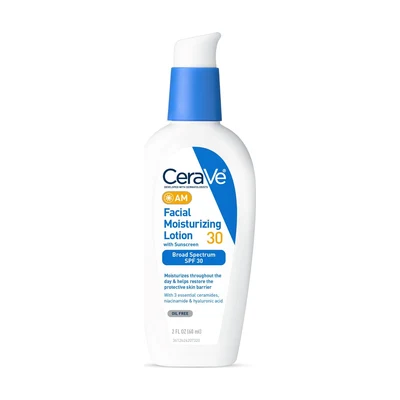
My everyday face sunscreen. It's cheap and it doubles as my moisturizer.
Actives: Homosalate, meradimate, octinoxate, octocrylene, zinc oxide (percentages vary by batch; check your bottle)
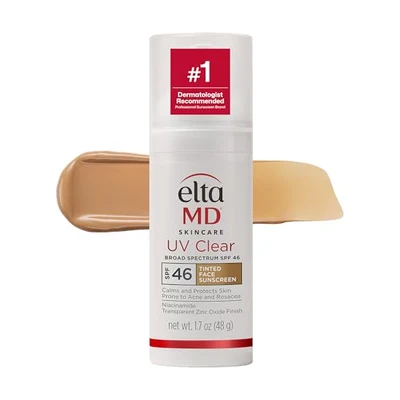
My face sunscreen for going out: dinner, an event, anywhere I want to look my best (not the beach). It's a great sunscreen, and because it's tinted it also evens out skin tone and quiets redness and dark spots. It isn't makeup, but it's the closest thing I use. A dermatologist's office and several female friends told me about it; women have known this trick forever. Pricier, and you get what you pay for. It comes in shades for different skin tones.
Actives: Zinc oxide 9%, octinoxate 7.5%
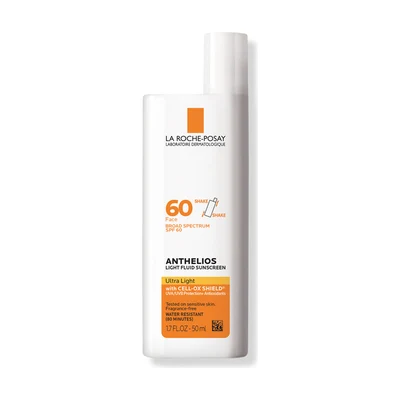
Face sunscreen that lives in my travel bag. It's only 1.7 ounces, so reapplying in the sun is easy.
Actives: Avobenzone 3%, homosalate 10%, octisalate 5%, octocrylene 7%
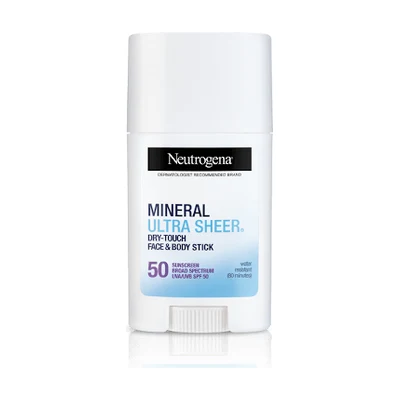
My pick for sweaty days. A zinc-only sunscreen stick, so it doesn't sting when sweat carries it into your eyes. Swipe it on your forehead and around your eyes, then use your regular sunscreen below that. Look for MINERAL on the label: there's an older Ultra Sheer sunscreen stick that looks almost the same.
Actives: Zinc oxide 21.6%
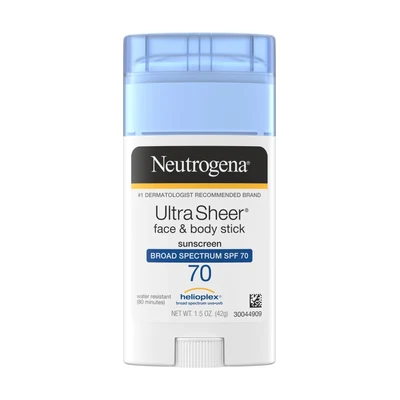
Don't confuse it with the mineral sunscreen stick. This is the older chemical sunscreen stick, which Neutrogena has discontinued, though stores still have some. It has avobenzone, the filter that stung my eyes, so keep it away from your forehead and eyes on sweaty days. Fine for the body.
Actives: Avobenzone 3%, homosalate 15%, octisalate 5%, octocrylene 10%, oxybenzone 3%
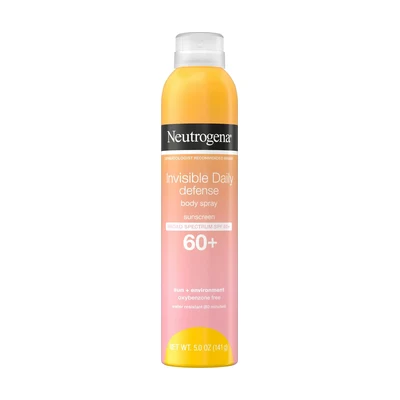
My body sunscreen for the beach and long days out. Cheaper, oxybenzone free, water resistant for 80 minutes.
Actives: Avobenzone 3%, homosalate 10%, octisalate 5%, octocrylene 10%
Waking Up (at the sink)
Right after brushing my teeth. No treatments here, just clean and protect.
Face
- 1
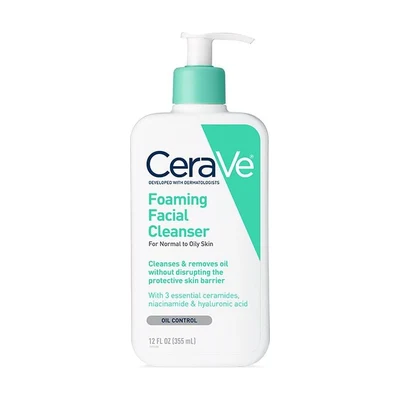
A gentle daily wash made for normal to oily, acne-prone skin. It cleans without stripping. It is not an acne treatment; the treatments come later.
- 2
Moisturizer and sunscreen in one. A freshly washed face never stays bare, and it covers me if I step outside before I shower. Backup: EltaMD UV Clear.
Every Daytime Shower
First shower, gym shower, any shower. Same steps every time.
Face first, then body. Cream and Aquaphor on your hands never go back to your face.
Face
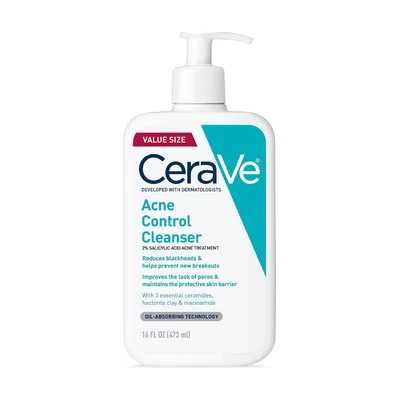
- 1CeraVe Acne Control Cleanser →Face + body
The medicated wash. 2% salicylic acid clears pores. I keep it in the shower because it also works on the neck, back or anywhere a breakout flares.
- 2
Treatments: once a day
After the shower that starts your longest stretch. Gym within a couple of hours? Skip these now and do them after the gym shower. Otherwise, do them after your first shower.
- a
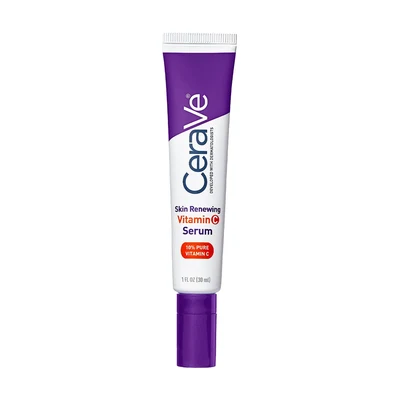
Antioxidant protection for the day ahead, and it helps even out tone over time. Thinnest layer goes first.
Wait 1 to 2 min, until absorbed
- bAzelaic Acid 15% GelRx
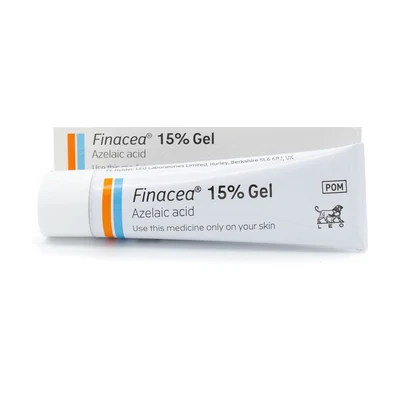
Thin layer for acne and the dark marks acne leaves behind. If it stings on top of vitamin C, alternate days. It can't move to night because tretinoin lives there. New to tretinoin? Add this only after you've settled into tretinoin, about 5 to 6 months in.
Wait 1 to 2 min
- a
- 3
Last step on the face, every time. On a treatment shower it goes on top of the treatments and seals them in.
Body
- 1
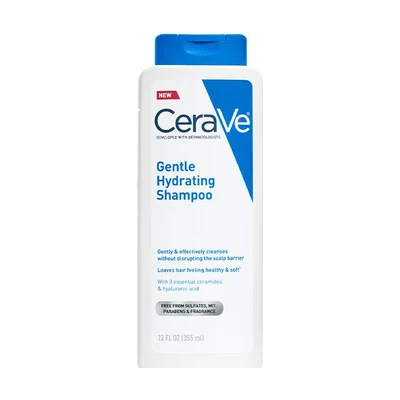
Sulfate free shampoo with ceramides. I use the pump bottle. Only when I'm washing my hair.
- 2
Body wash made for dry, sensitive skin. It cleans without wrecking the barrier, which matters when you shower this often.
- 3
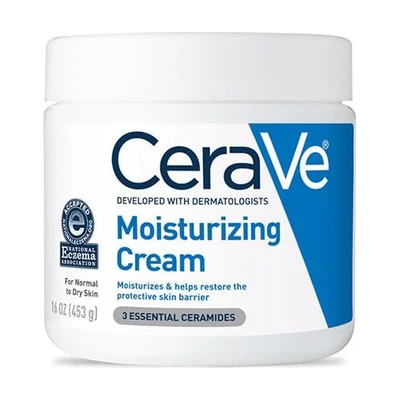
My foundation moisturizer, the big 19 ounce tub, all over the body (not the face), as soon as the face is done and skin is still damp.
- 4
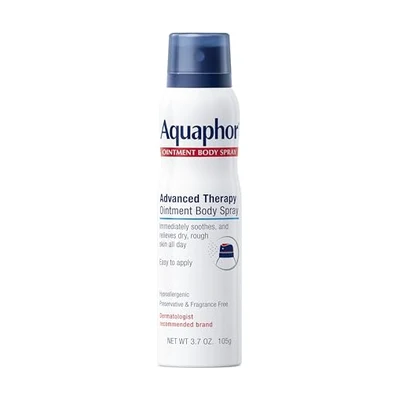
Seals the cream in. No-touch spray, so nothing greasy on your hands. Body only, never near the face.
Going Outside
Reapply sunscreen every 2 hours outside, and after sweating.
Face
- 1
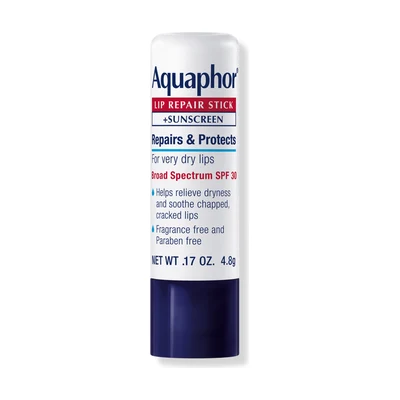
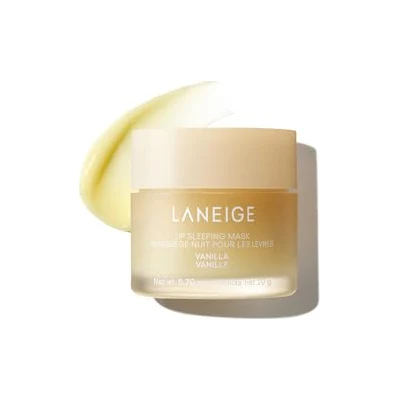
Lips burn too. SPF 30 for daytime; the LANEIGE mask is for night.
Body
- 1
Body sunscreen spray, not for my face. Cheaper, oxybenzone free, water resistant for 80 minutes. Keep sunscreen sprays away from your eyes.
Actives: Avobenzone 3%, homosalate 10%, octisalate 5%, octocrylene 10%
Night Shower and Bedtime
The nightly routine. Tretinoin starts every third night and works up.
Order across both sides: shower, body cream while your face dries, face steps, then the Aquaphor tub on the body last. Greasy hands never touch your face.
Face
- 1CeraVe Acne Control Cleanser →Face + body
Last wash of the day. Pat the face dry. Tretinoin on damp skin irritates more, so the face needs to be fully dry before anything else goes on it, even the thin cream layer.
Wait 20 to 30 min, face fully dry (do the body while you wait)
- 2
Goes on before tretinoin. It protects my lips from any tretinoin that wanders, and keeps them from cracking overnight.
- 3
Bottom of the tretinoin sandwich, on tretinoin nights. Wash your hands first, then a thin layer on the fully dry face, the same cream I use on my body. It cushions the tretinoin so it irritates less. Keep it thin, because a heavy layer underneath blocks more of the tretinoin. CeraVe PM Facial Moisturizing Lotion (under Backups and Extras) is a very good face-specific option. I stick with one tub because it means fewer products. The cream is thicker than a lotion, so use less than you think.
Wait 5 to 10 min, until it soaks in
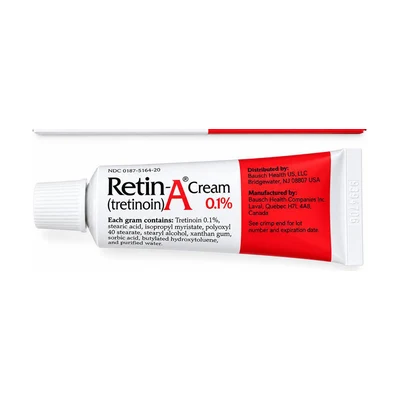
- 4Tretinoin 0.1% CreamRx
Every third night for the first month, then every other night, then nightly if your skin tolerates it. Getting to nightly can take up to six months. A pea-sized amount covers the whole face: dot it on your forehead, cheeks and chin, then spread it thin over the cream layer. Use more and you'll irritate your face: redness, burning and flaking. Keep it off your eyelids (the thinnest skin you have), out of the area around your eyes (stay outside the bone), and away from your lips, nostrils and the corners of your mouth. Tretinoin travels after it goes on, so stop short of those spots.
Wait 20 to 30 min before the night cream
- 5
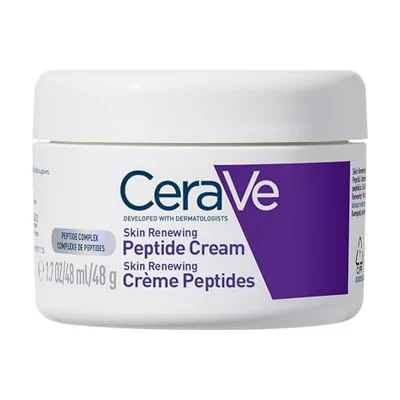
Top of the sandwich and the last face step. Goes over the tretinoin once it has had time to absorb, and calms the dryness. No SPF, because I'm going to sleep.
Body
- 1
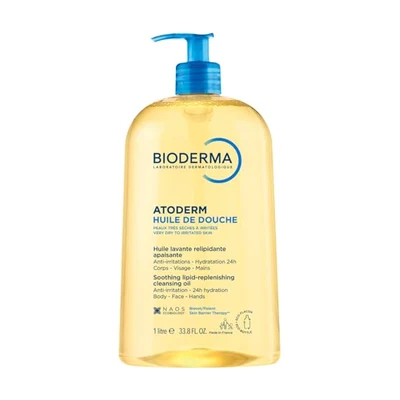
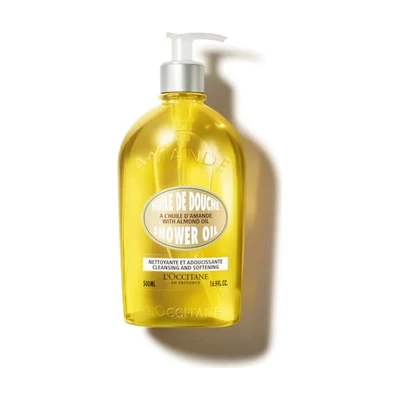
Every night now, for simplicity. Every now and then I swap in L'Occitane Almond Shower Oil as a wind-down treat. I love the smell.
- 2
Body only, right out of the shower while the skin is still damp. Do this while your face dries.
- 3
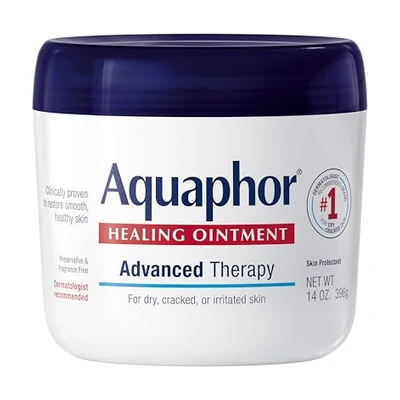
The tub, on the body only, and always the very last thing. It's greasy and stays on your hands, so it never comes out until your face is completely done.
As Needed
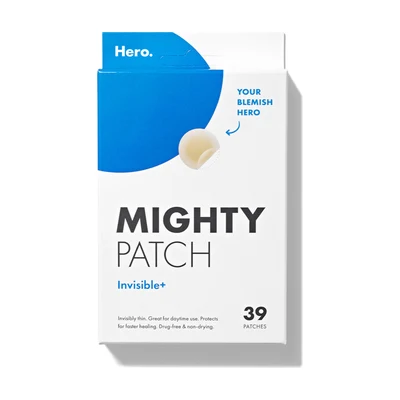
Clear patch over a pimple that's come to a head. Hides it during the day and keeps my hands off it so I'm not touching or disturbing it.
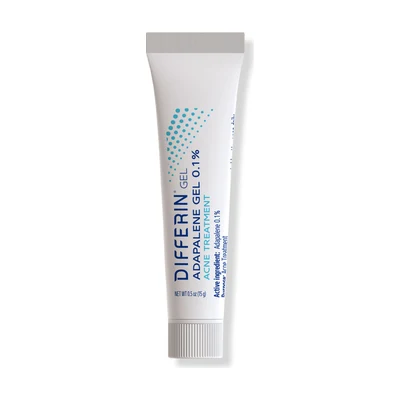
For a bad breakout, and ONLY on a night I skip tretinoin. Two retinoids together means more irritation.
Backups and Extras
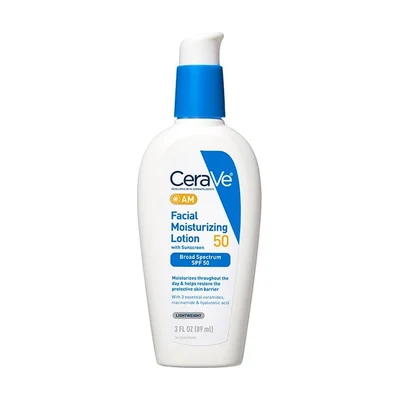
Same lotion, higher SPF. For long days outside.
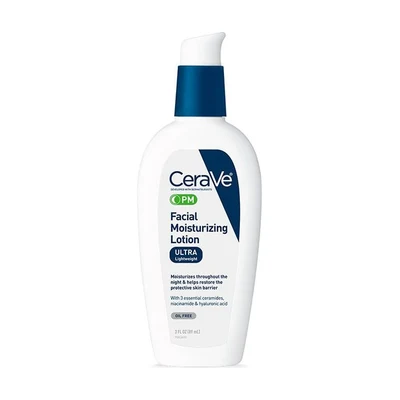
A very good option for the bottom of the tretinoin sandwich. It's light, fragrance-free and made for the face, with niacinamide to calm skin. I use my body cream there instead because it's one less product to buy.
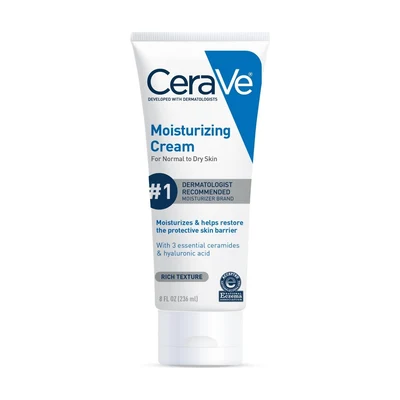
Same cream as the tub at home, in an 8 ounce tube, because the 19 ounce tub is too big and heavy to pack. It is NOT carry-on approved: carry-on creams are capped at 3.4 ounces (100 ml) per container, so this rides in my checked bag. Skip the 16 ounce jar: that's a refill size.
The carry-on answer. The same cream at 1.89 ounces (56 ml), under the 3.4 ounce (100 ml) limit, so no squeezing it into little jars. On long flights, pack two: one tube doesn't go far on face and body.
A wonderful product and my backup. It's not the same as the cream: same three ceramides and hyaluronic acid, but oil-free and lightweight, with no petrolatum, so it seals in less moisture. Pump bottle. Good for oily skin, hot days, or if the cream feels heavy.
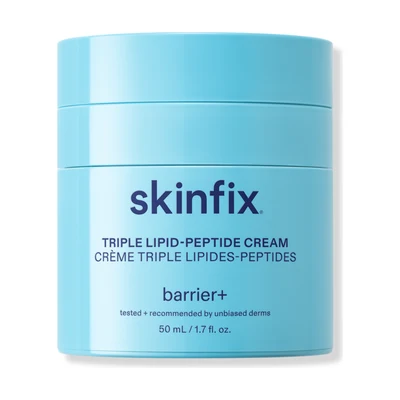
The little blue jar. A richer barrier cream: ceramides, cholesterol-type lipids, fatty acids and peptides. On nights I skip tretinoin, or any time my face is red and flaky, it goes on instead of the night cream. If you've had to stop tretinoin for a few days, this is what you use while your skin calms down.
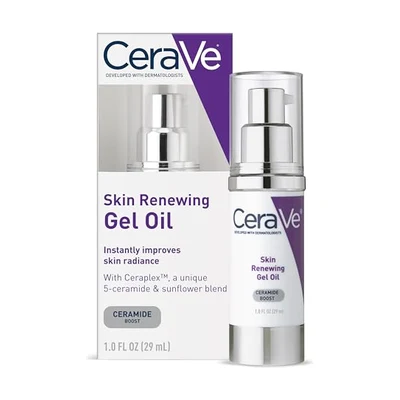
The night treat. Smells wonderful.
Set aside for now because I'm using other things, but I still love it.
Every now and then. Hard to keep as part of a daily routine.
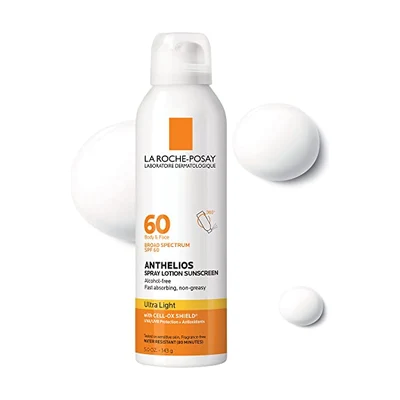
My old body sunscreen spray, and a wonderful one. I was still buying it in May 2025, and La Roche-Posay discontinued it sometime after that, so it's getting hard to find. I still have a few bottles. The Neutrogena Invisible Daily Defense sunscreen body spray is what I use now.
Actives: Avobenzone, homosalate, octisalate, octocrylene, oxybenzone
Key Ingredients, Explained
What each one is, what it's for, when it goes on, and what to watch out for.
Hyaluronic Acid
AM or PM- What it is:
- A water-binding molecule your body already makes.
- What it's for:
- Hydration. It holds water in the top layers of skin, so skin looks plumper and feels less tight.
- Watch out:
- Reactions are rare. Seal it under a moisturizer, especially in dry air, so the water it pulls in doesn't just evaporate.
- Best for:
- All skin types, especially dry or dehydrated skin.
- Found in:
- CeraVe Foaming Facial Cleanser, CeraVe AM Facial Moisturizing Lotion SPF 30, CeraVe Gentle Hydrating Shampoo, CeraVe Vitamin C Serum, CeraVe Moisturizing Cream, CeraVe Skin Renewing Night Cream, CeraVe AM Facial Moisturizing Lotion SPF 50, CeraVe PM Facial Moisturizing Lotion, CeraVe Moisturizing Cream (8 oz tube), CeraVe Moisturizing Cream (1.89 oz travel tube), CeraVe Daily Moisturizing Lotion, Skinfix Barrier+ Triple Lipid-Peptide Cream
Ceramides
AM or PM- What it is:
- Fats (lipids) that make up much of your skin barrier. Think of them as the mortar between skin cells.
- What it's for:
- Repairing the barrier so skin holds water and keeps irritants out. Key for dry skin and for anyone using tretinoin or acids.
- Watch out:
- Very gentle. Ceramides repair the barrier; they don't thicken skin.
- Best for:
- All skin types. Dry, sensitive and over-washed skin most of all.
- Found in:
- CeraVe Foaming Facial Cleanser, CeraVe AM Facial Moisturizing Lotion SPF 30, CeraVe Gentle Hydrating Shampoo, CeraVe Moisturizing Cream, CeraVe AM Facial Moisturizing Lotion SPF 50, CeraVe PM Facial Moisturizing Lotion, CeraVe Moisturizing Cream (8 oz tube), CeraVe Moisturizing Cream (1.89 oz travel tube), CeraVe Daily Moisturizing Lotion, Skinfix Barrier+ Triple Lipid-Peptide Cream, CeraVe Skin Renewing Gel Oil
Niacinamide
AM or PM- What it is:
- A form of vitamin B3.
- What it's for:
- Supports the skin barrier, helps reduce water loss, and may calm redness and help control oil. The evidence is solid but modest.
- Watch out:
- Generally well tolerated and plays well with the other ingredients here.
- Best for:
- Most skin types, including oily and acne-prone.
- Found in:
- CeraVe Foaming Facial Cleanser, CeraVe AM Facial Moisturizing Lotion SPF 30, CeraVe Gentle Hydrating Shampoo, CeraVe Acne Control Cleanser, CeraVe Skin Renewing Night Cream, CeraVe AM Facial Moisturizing Lotion SPF 50, CeraVe PM Facial Moisturizing Lotion, EltaMD UV Clear Tinted Sunscreen SPF 46
Salicylic Acid (BHA)
AM or PM- What it is:
- A beta hydroxy acid that dissolves into oil.
- What it's for:
- Loosens dead skin cells and clears clogged pores. Best for blackheads, whiteheads and mild acne, on the face or body.
- Watch out:
- Can dry and irritate, especially alongside tretinoin, so follow with moisturizer. Don't stack it with other exfoliating acids unless a dermatologist says so. Over the counter strength tops out at 2%.
- Best for:
- Oily and acne-prone skin.
- Found in:
- CeraVe Acne Control Cleanser
Vitamin C
AM- What it is:
- The most abundant antioxidant in human skin. Serums use L-ascorbic acid or a more stable form of it.
- What it's for:
- Helps defend skin against sun damage (it backs up sunscreen, it doesn't replace it) and can help fade dark spots over time.
- Watch out:
- Higher strengths can sting. Keep it away from retinoids at night. It breaks down with light and air, so keep the cap on.
- Best for:
- Most skin types. Dullness, uneven tone, lots of sun.
- Found in:
- CeraVe Vitamin C Serum
Azelaic Acid
AM- What it is:
- An acid that fights acne and evens out pigment by blocking tyrosinase, the enzyme that makes melanin. The 15% gel needs a prescription; over the counter versions are lower strength.
- Also sold as:
- Finacea (15% gel and foam) and Azelex (20% cream). Lower-strength azelaic acid is also sold over the counter.
- What it's for:
- Acne and the dark marks it leaves behind. Be patient: fading marks takes weeks to months of consistent use.
- Watch out:
- New to tretinoin? Wait until you tolerate it (about 5 to 6 months) before adding azelaic acid, and add one new active at a time. Can sting, especially layered over vitamin C. If it does, alternate days. Keep it in the daytime and tretinoin at night. Wear sunscreen.
- Best for:
- Acne-prone skin with dark marks.
- Found in:
- Azelaic Acid 15% Gel
Tretinoin
PM- What it is:
- A prescription retinoid (a vitamin A derivative).
- Also sold as:
- Retin-A, Retin-A Micro, Renova, Altreno, Atralin, Avita, Refissa, Tretin-X, or just generic tretinoin. Chemical name: all-trans retinoic acid. Also inside combo products like Ziana and Veltin (with clindamycin) and Tri-Luma. Some of these brands are no longer made; generic is the most common.
- What it's for:
- Acne and skin aging. It's the one product in this routine with evidence for thicker skin: a thicker outer layer in 24-week controlled trials, and more collagen in a smaller 6-month study.
- Watch out:
- 0.1% is the strongest common strength. For sun damage and aging, 0.025% matched 0.1% in a 48-week trial with less irritation; the higher strengths are mostly for acne. Dermatologists often start at 0.025%, then 0.05%, and only then 0.1% if needed, never jumping straight to the top. The break-in period (retinization) brings dryness, redness and peeling. Start every third night for a month, then every other night, then nightly as tolerated. If you get red and flaky, stop until your skin is back to normal, then restart at every third night. Night only. Apply to fully dry skin, or over a thin moisturizer layer if you sandwich it. A pea-sized amount dotted over the whole face. Keep it off the eyelids, the area around the eyes and the lips. Daily sunscreen is mandatory. Never combine with another retinoid. Not for use while pregnant or trying to get pregnant unless your doctor says so. Prescription only.
- Best for:
- Acne and aging skin, under a dermatologist's care.
- Found in:
- Tretinoin 0.1% Cream
Adapalene (Differin)
PM- What it is:
- A retinoid that used to be prescription only. I used it back when you needed a prescription. In 2016 the FDA made Differin Gel 0.1% the first retinoid sold over the counter, so now it's on the shelf at any US pharmacy. Gentler than tretinoin.
- Also sold as:
- Differin. Combined with benzoyl peroxide: Epiduo and Epiduo Forte (prescription).
- What it's for:
- Acne: clogged pores and inflammation.
- Watch out:
- It's a retinoid, so never on the same night as tretinoin. Night only, and sunscreen the next day.
- Best for:
- Acne-prone skin.
- Found in:
- Differin Gel 0.1%
Petrolatum
AM or PM- What it is:
- Petroleum jelly. The main ingredient in Aquaphor Healing Ointment.
- What it's for:
- Sealing. It sits on top of the skin and cuts water loss far more than other oil-based moisturizers, locking in whatever is underneath.
- Watch out:
- Body only in my routine. The tub is too thick for my face, and Aquaphor says not to use the body spray on or near your face.
- Best for:
- Dry, cracked or over-washed skin.
- Found in:
- CeraVe Moisturizing Cream, Aquaphor Ointment Body Spray, Aquaphor Healing Ointment, CeraVe Moisturizing Cream (8 oz tube), CeraVe Moisturizing Cream (1.89 oz travel tube)
Peptides
PM- What it is:
- Short chains of amino acids, the building blocks of proteins like collagen.
- What it's for:
- Supporting firmness and the barrier. The evidence is modest and mostly from small or industry-funded studies.
- Watch out:
- Treat them as a supporting player. Sunscreen and retinoids are the proven tools for aging skin.
- Best for:
- All skin types.
- Found in:
- CeraVe Skin Renewing Night Cream, Skinfix Barrier+ Triple Lipid-Peptide Cream
Sunscreen Filters
AM- What it is:
- The active ingredients that block UV. Mineral filters (zinc oxide, titanium dioxide) sit on top of the skin; chemical filters absorb UV.
- What it's for:
- Preventing sunburn, dark spots and collagen breakdown. Broad spectrum means it covers both UVA and UVB.
- Watch out:
- SPF 30 or higher, applied generously, reapplied every 2 hours when you're outside. Mineral formulas can leave a white cast. The best sunscreen is the one you'll actually wear every day.
- Best for:
- Everyone. Mineral formulas are often easier on sensitive skin.
- Found in:
- CeraVe AM Facial Moisturizing Lotion SPF 30, Neutrogena Invisible Daily Defense Body Spray SPF 60+, Aquaphor Lip Repair Stick + Sunscreen SPF 30, CeraVe AM Facial Moisturizing Lotion SPF 50, La Roche-Posay Sunscreen Spray SPF 60, EltaMD UV Clear Tinted Sunscreen SPF 46, La Roche-Posay Anthelios Ultra Light Fluid SPF 60, Neutrogena Mineral Ultra Sheer Face & Body Stick SPF 50, Neutrogena Ultra Sheer Face & Body Stick SPF 70 (the other one)
Hydrocolloid
AM or PM- What it is:
- The gel-forming material used in wound dressings.
- What it's for:
- Pimple patches. It absorbs fluid from a surface pimple and covers it so you aren't touching or disturbing it.
- Watch out:
- Works on pimples that have come to a head, not deep ones. The evidence is promising but comes from small studies. It's a spot treatment, not an acne plan.
- Best for:
- Surface breakouts.
- Found in:
- Hero Mighty Patch Invisible+
Important: This reflects my personal protocol based on my own research. I am not a medical professional. Please consult your healthcare provider before starting any supplement regimen or skin care routine, and a dermatologist before using any prescription product.