
Every calorie you eat gets burned or stored. Nothing overflows. Whatever you don't burn goes on your body as fat.
Energy can't be created or destroyed. That's physics, and your body doesn't get an exemption. Every calorie you put past your teeth has to go somewhere. About 5 percent never gets absorbed and leaves in your stool and urine. The rest gets burned or it gets stored. Those are the options.
References
About 5 percent leaves in stool and urine.
References
Burning happens three ways: staying alive (your resting metabolism), digesting food, which costs about 5 to 15 percent of what you burn in a day, and moving: workouts, walking, fidgeting, standing. Whatever you don't burn, you keep.
References
- Diet induced thermogenesis. Nutr Metab (Lond), 2004.
- Role of nonexercise activity thermogenesis in resistance to fat gain in humans. Science, 1999.
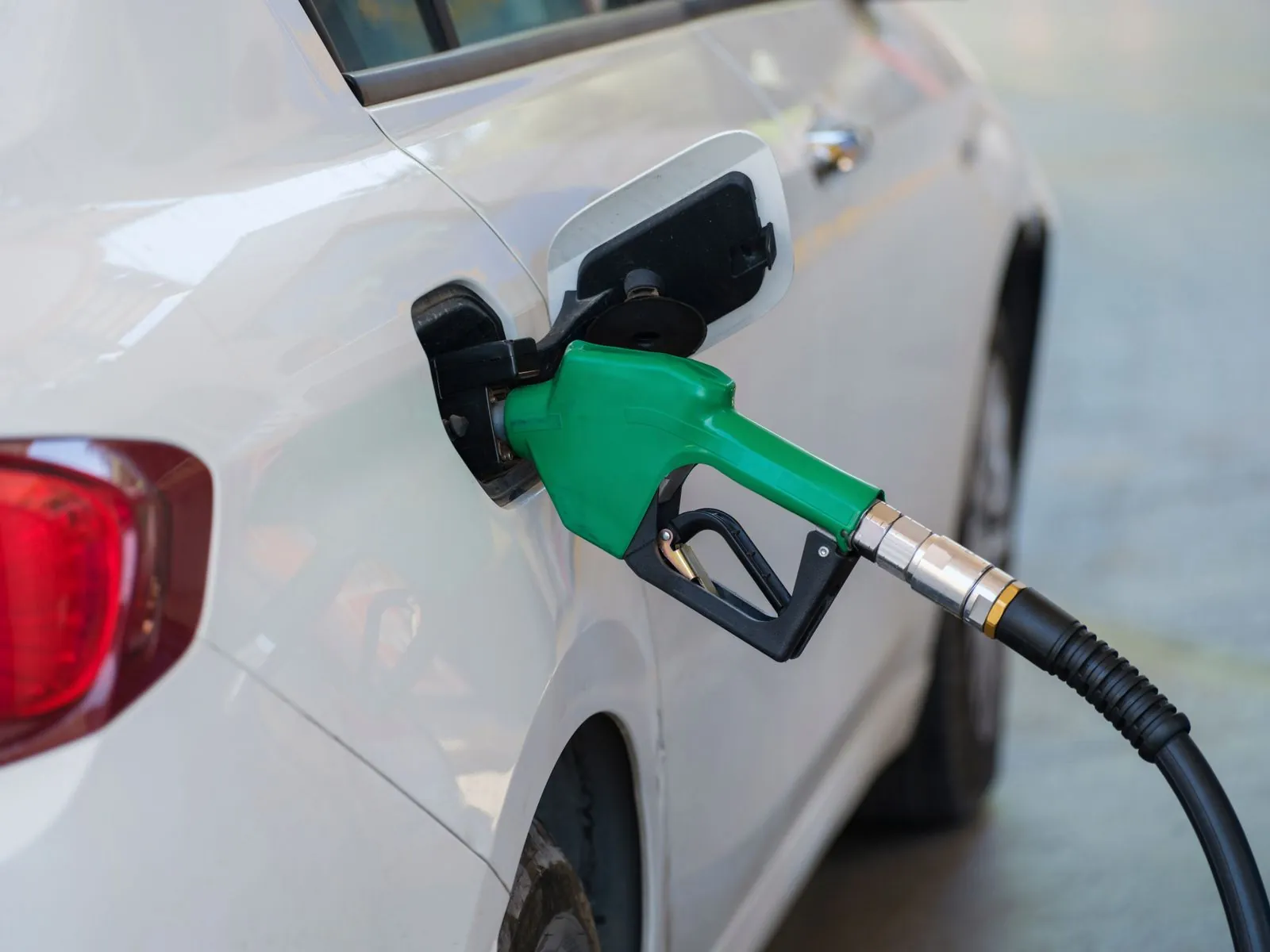
Here's the part I personally had wrong for years. Picture yourself at the gas station. You stop paying attention and keep squeezing the gas pump nozzle after the tank is full. With a real car, the gas comes right back out, down the side of the car, onto the ground, onto your shoe. It stinks, it's annoying, you let go and move on. And the extra gas is gone. Some of it evaporates into the air. Some soaks into the ground. Whatever splashed on the car dries in the sun. Your shoe smells a little when you get back in, but that fades fast. Wipe it off and drive. The tank never held a drop more than it was built to hold. Every tank holds a set number of gallons, whatever the manufacturer built it for, and not one gallon more. Same thing with a one-gallon milk jug under the kitchen faucet. Fill it with water and keep pouring, and the extra runs over the top and into the sink. You can never get more than one gallon into a one-gallon jug. Try it at home. Show the kids.
Now picture it the other way. The second the tank hits full, a guy runs up with one of those red gas cans and duct tapes it to the side of your car. When that one fills, he runs a little pipe from it to a new can and tapes that one on too. You never let go of the nozzle. You never walk around the car to look. Nothing's pouring on your shoe and you can't smell a thing, so as far as you know, everything's fine.
Now your body. That second version is exactly how it works. Nothing spills. Your body tops off a small reserve of glycogen, then starts bolting the rest on as fat, duct-taped on top of your muscles, right under your skin. In overfeeding studies, 75 to 95 percent of the extra calories got stored. If you've never seen body fat, it's a yellowish-white substance that looks like butter. It isn't muscle. It isn't blood. It's stored fuel, packed away for later. Think of a backpack on a camping trip. You stuff it with gear, and you might need some of it someday, but you're hauling all of it on your back every step of the way. That 2,000-calorie candy binge doesn't come out the back end the next morning. It goes in the backpack.
References
- Glycogen storage capacity and de novo lipogenesis during massive carbohydrate overfeeding in man. Am J Clin Nutr, 1988.
- Fat and carbohydrate overfeeding in humans: different effects on energy storage. Am J Clin Nutr, 1995.
Of every 100 extra calories, 75 to 95 ended up stored.
References
- Fat and carbohydrate overfeeding in humans: different effects on energy storage. Am J Clin Nutr, 1995.
This was me. In Amsterdam I'd tell myself one giant Tony's Chocolonely bar wasn't going to affect me. Then maybe one a day, because I was walking around Amsterdam all day, so why not? It's only a few days and then I'm back home. Or a Saturday night at home: you know what, I think I'll have the Blue Bell. The whole carton of Cookies 'n Cream. Every one of those went in the backpack.
I'll be straight about what I got wrong. I thought it all evened out over time. Every business trip, every vacation, every weekend where I said "I'll just eat whatever I feel like today," I had no idea what I was doing. I didn't get that every calorie I put past my teeth was going to do exactly what it did. I knew about the law of conservation of energy. I just thought of it as something that happened out there, outside of me: planets, stars, stardust, kinetic energy, chemistry experiments. I never thought it applied inside my own body, to the stuff I can't see, behind my own eyeballs. But food is energy. That's all it is. Physics works the same everywhere in the universe. Why would it stop working the second food goes down your throat? It doesn't.
So picture it. A pound of body fat holds about 3,500 calories. A regular Snickers bar is 250. Every pound of fat you carry is about 14 candy bars strapped to your body. Thirty pounds over is roughly 420 candy bars, every tub of ice cream and every "I'll even it out" weekend, wrapped between your skin and your muscle. Those are your red gas cans. You ate every bite of them.
References
Keep squeezing that nozzle and pretty soon you can't see the car. There are red cans taped over the doors, the windows, the windshield, everywhere. You can't even tell what model car it is anymore. You only find out when you finally try to drive away. You can't see out. Is this thing a rolling bomb? Is it a fire hazard? Am I getting pulled over?
Now your body. Every one of those questions has a body version. Obesity raises your risk of high blood pressure, type 2 diabetes, heart disease and stroke, many types of cancer, fatty liver, sleep apnea and dying early. It's also the person who looks in the mirror and doesn't recognize themselves, or looks at a picture from 10 years ago and blames getting older. Aging didn't do that. Adjusted for body size, the calories your body burns in a day hold steady from about age 20 to 60. Those are the gas cans you taped on.
References
- Consequences of Obesity. CDC.
- Daily energy expenditure through the human life course. Science, 2021.
In my opinion, the difference between aging like hell and aging gracefully is nutrition. That's it. The people who don't age gracefully never learned how food works, and they end up looking like that duct-taped car nobody can recognize.
One bad day won't wreck you. Even if all 2,000 extra calories became fat, that's under half a pound (about 220 g). The scale jumps more than that because stored glycogen holds water. The problem is "I'll even it out" turning into a habit. Holiday gains average under a pound, and people still hadn't lost them by the next fall. Weekend overeating shows up the same way. Do that enough times and one morning your clothes tell you before the scale does.
References
- Food energy: methods of analysis and conversion factors, Ch. 3. FAO (UN) Food and Nutrition Paper 77, 2003.
- Energy balance and its components: implications for body weight regulation. Am J Clin Nutr, 2012.
- A prospective study of holiday weight gain. N Engl J Med, 2000.
- Influence of weekend lifestyle patterns on body weight. Obesity, 2008.
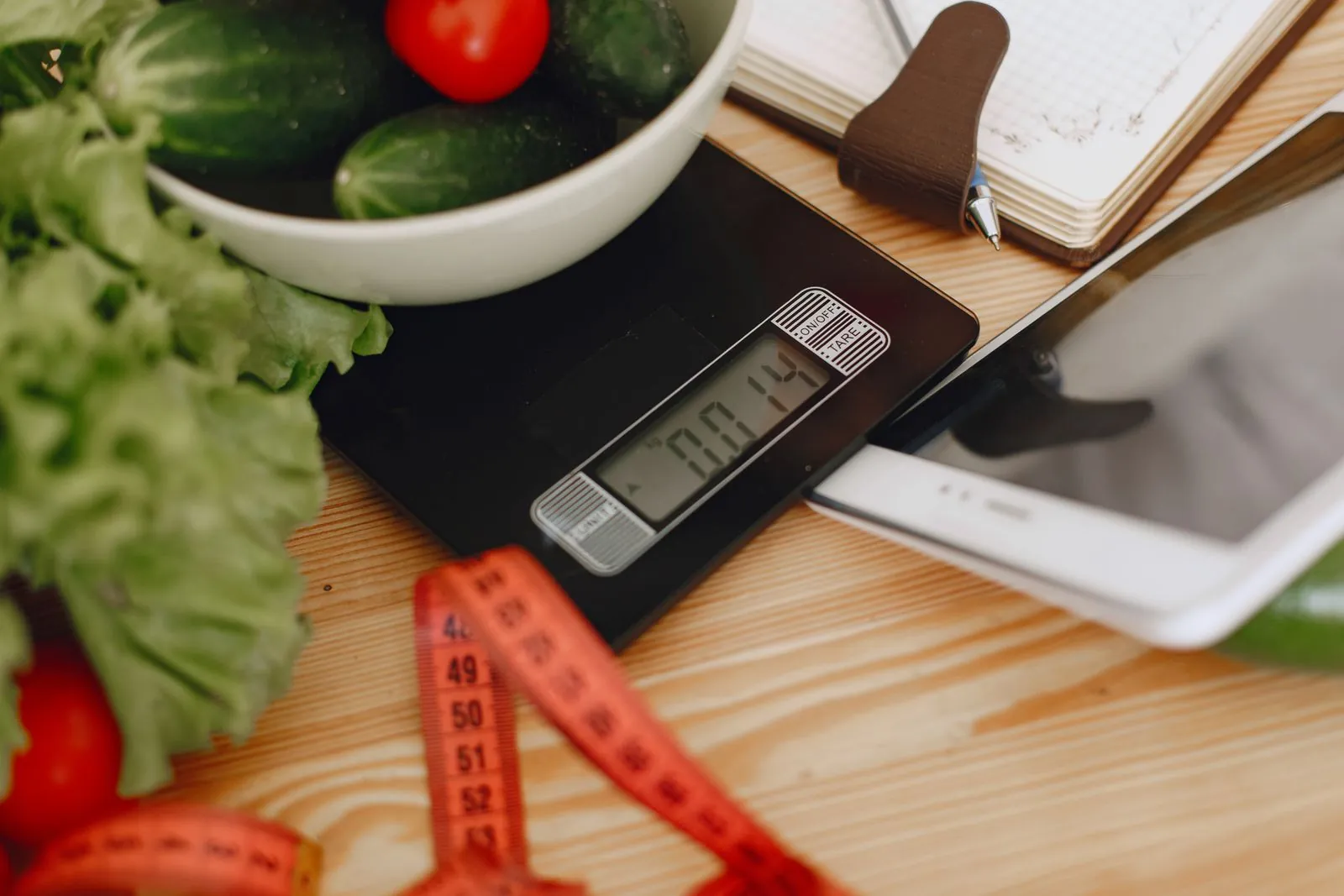
Here's how I know. I wear custom suits. Every one is built from scratch for my body, off more than 30 measurements. Structured or unstructured, the horsehair canvas inside the chest, the cut, British or Italian or American, classic or modern: every one of those choices changes how the suit sits on you. And because I train for muscle size, I get re-measured more often than most people. My body keeps changing, so the numbers have to keep up. So if even one measurement moves, I feel it. The fabric pulls against me. It doesn't drape the way it does in the photo from a few years ago, or even a few months ago. My tailor can tell me exactly where I gained, because we use a measuring tape, and the tape doesn't lie. But that's a fraction of an inch.
Off the rack is a whole different ballgame. Brands cut sizes in ranges so one size fits the most bodies. Look at the labels you already know. On one big brand's chart, chest size runs like this: Medium: 38 to 40 inches. Large: 42 to 44. XL: 46 to 48. Double XL: 50 to 52. So if you went from a medium to a large, or a large to an XL, or an XL to a double XL, you didn't gain half an inch. You blew through an entire size range and into the next one. That's massive.
References
- Hanes Men's Size Chart (chest S 34-36 in. through XXL 50-52 in.). Hanes via Target.
And here's what most people don't know unless they know a little about tailoring. A shirt is built for your shoulders, not your gut. The shoulders are the one part a tailor won't really change. So you're a medium in the shoulders, but the medium won't button over your stomach without stretching. You buy the XL. Now the shoulder seams hang down your arms and you're walking around in a tent.
References
- Suit Alterations: What a Tailor Can (& Can't) Do. Gentleman's Gazette.
Pants are the same story. Traditional trousers sit at your natural waist, around your navel, above the hip bones. Low-rise pants sit on the hip bones. Now look around. Most guys wear their pants under the gut, riding on or below the hip bones, strapped there with a belt, while the stomach hangs over the top. That's not how clothes are supposed to fit. You've seen it your whole life, so it looks normal. Nobody taught you that either.
References
- Should You Wear High-Waisted Pants?. Gentleman's Gazette, 2019.
One more thing about that 3,500 number. It's fine for what a pound of fat holds, but it's bad at predicting how fast you'll lose. Your body adjusts, so small changes add up slower than the math says, and some people burn off extra by moving more. The account still never zeroes itself out. A gap of about 7 calories a day, held for years, is enough to explain the average American's weight gain.
References