
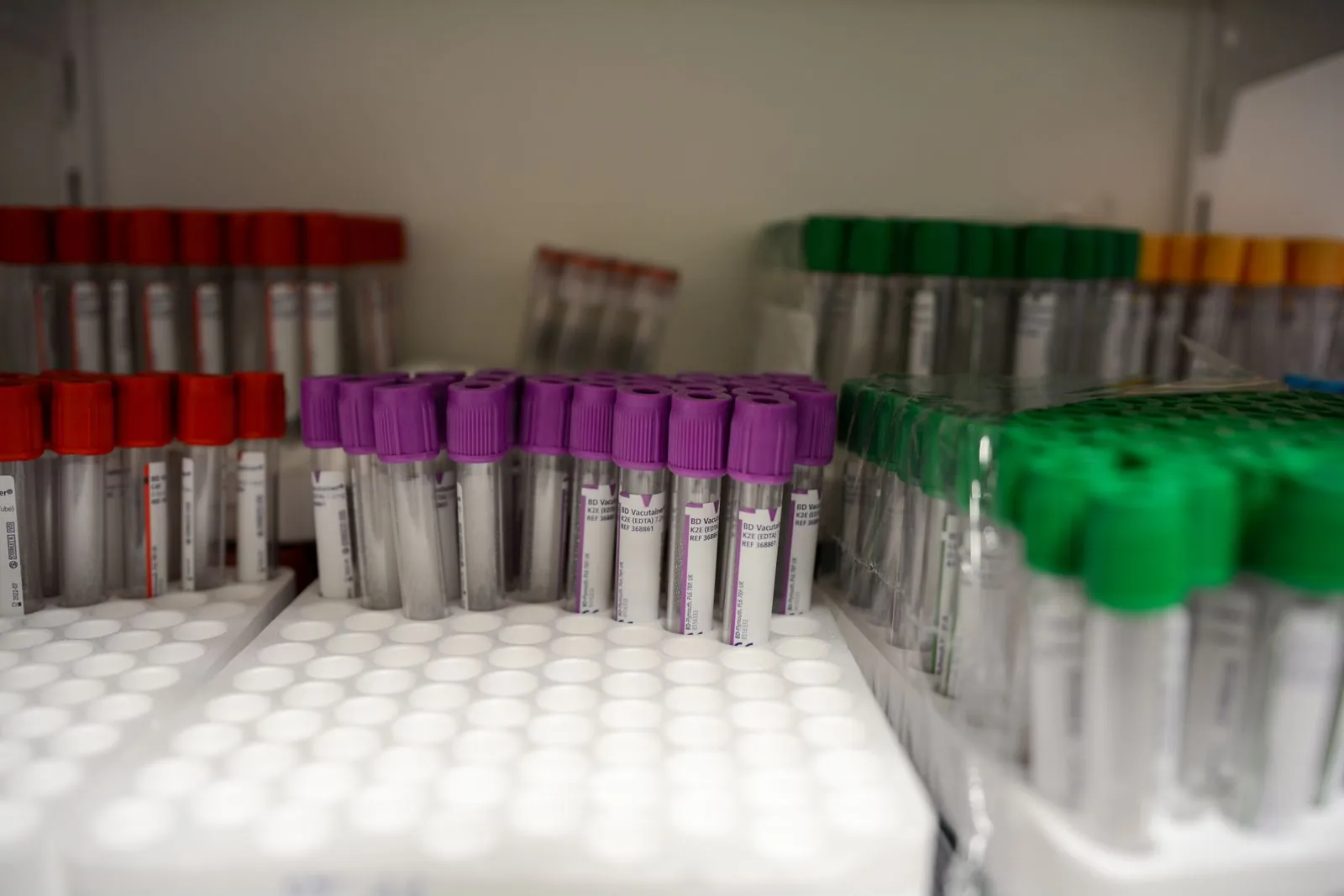
"Normal" on your bloodwork means common, not healthy. When most adults are already sick, common isn't the goal.
When your doctor says your bloodwork came back "normal," here's what that actually means. A lab took a big group of people who looked healthy, measured them, and drew a box around the middle 95%. That box is your range. It tells you what's common. It doesn't tell you what's best. By design, 5 out of every 100 perfectly healthy people land outside the box and get flagged. The NIH's own lab-test site says it plainly: the ranges come from "large groups of healthy people," and healthy people fall outside them all the time.
References
- Reference intervals: current status, recent developments and future considerations. Biochemia Medica, 2016.
- How to Understand Your Lab Results. MedlinePlus, NIH National Library of Medicine.
Now think about what "average" looks like in this country. About 3 out of 4 American adults already have at least one chronic disease, and more than half have two or more. Being average here is not a flex. It's like being proud you're the median driver on a highway full of fender benders.
References
- Trends in Multiple Chronic Conditions Among US Adults, By Life Stage, Behavioral Risk Factor Surveillance System, 2013-2023. Preventing Chronic Disease, 2025.
Here's the proof that "normal" can hide the problem. There was a time when a total cholesterol anywhere from roughly 139 to 273 mg/dL was literally the lab's "reference range," because that's what healthy-looking American men measured. Then the research came in: people over 200 had more heart disease, and bringing it down lowered their risk. Same story with LDL today. The more LDL your arteries are exposed to, and the longer, the more damage. It's a dimmer switch, not an on/off switch. Blood pressure works the same way. In a study of a million adults, the risk of dying from heart attack and stroke kept climbing with every step up from 115/75, with no "safe line" in between. In 2017 the guidelines moved "high blood pressure" down to 130/80, and overnight the share of US adults with hypertension went from about 32% to about 46%. Nobody's body changed that day. The line did.
References
- Reference Intervals: Practical Aspects. EJIFCC, 2008.
- Low-density lipoproteins cause atherosclerotic cardiovascular disease. 1. Evidence from genetic, epidemiologic, and clinical studies. A consensus statement from the European Atherosclerosis Society Consensus Panel. European Heart Journal, 2017.
- Age-specific relevance of usual blood pressure to vascular mortality: a meta-analysis of individual data for one million adults in 61 prospective studies. The Lancet, 2002.
- 2017 ACC/AHA/AAPA/ABC/ACPM/AGS/APhA/ASH/ASPC/NMA/PCNA Guideline for the Prevention, Detection, Evaluation, and Management of High Blood Pressure in Adults. Hypertension, 2017.
- Potential US Population Impact of the 2017 ACC/AHA High Blood Pressure Guideline. Circulation, 2018.
Same people, new line.
References
- Potential US Population Impact of the 2017 ACC/AHA High Blood Pressure Guideline. Circulation, 2018.
Blood sugar is the one that should scare you. A fasting glucose of 100 to 125 mg/dL, or an A1C of 5.7 to 6.4%, is prediabetes. That's 115.2 million American adults, more than 2 in 5, and 8 in 10 of them have no idea. Even the line itself depends on who's drawing it: the World Health Organization starts the warning zone at 110, the American Diabetes Association at 100. And "not diabetic yet" isn't "fine." Prediabetes is already linked to early kidney, nerve, and eye damage. The good news: lifestyle change cuts the risk of tipping into diabetes by 40 to 70%.
References
- Prediabetes (US Diabetes Surveillance report card). CDC.
- Prediabetes: Could It Be You?. CDC, 2026.
- Prediabetes: a high-risk state for diabetes development. The Lancet, 2012.
To be fair, optimal doesn't mean "push every number to the extreme." Vitamin D is the example. The National Academies set 20 ng/mL as enough for at least 97.5% of people, found that higher levels weren't consistently better, and saw risk at both the low and high ends for some outcomes. In 2024 the Endocrine Society said there's no clear evidence for an optimal target and recommended against routine testing in healthy people. Optimal means following the evidence one number at a time, not chugging supplements because more sounds better.
References
- The 2011 report on dietary reference intakes for calcium and vitamin D from the Institute of Medicine: what clinicians need to know. J Clin Endocrinol Metab, 2011.
- Vitamin D for the Prevention of Disease: An Endocrine Society Clinical Practice Guideline. J Clin Endocrinol Metab, 2024.
Nutrition guidance works the same way as lab ranges. The RDA, the Recommended Dietary Allowance, is the amount that covers the needs of nearly all, 97 to 98%, of healthy people. That's a floor, not a target. Protein is the clearest example. The RDA works out to about 0.36 grams per pound of body weight (0.8 g/kg), roughly 65 grams a day for a 180-pound person. Experts on aging say people over 65 need at least 0.45 to 0.55 grams per pound (1.0 to 1.2 g/kg), about 82 to 98 grams at 180 pounds, and more if they're active. The exception is people with serious kidney disease, who should get their protein target from their doctor. For people lifting weights, muscle gains top out around 0.73 grams per pound (1.6 g/kg). Even the new 2025-2030 Dietary Guidelines now set the protein target at 0.55 to 0.73 grams per pound (1.2 to 1.6 g/kg), which is 50 to 100% above the RDA. The minimum and the goal are two different numbers.
References
- Dietary Reference Intakes: Applications in Dietary Assessment. Institute of Medicine / National Academies Press, 2000.
- Evidence-based recommendations for optimal dietary protein intake in older people: a position paper from the PROT-AGE Study Group. J Am Med Dir Assoc, 2013.
- A systematic review, meta-analysis and meta-regression of the effect of protein supplementation on resistance training-induced gains in muscle mass and strength in healthy adults. Br J Sports Med, 2018.
- Dietary Guidelines for Americans, 2025-2030. HHS and USDA, 2026.

Here's why this matters. Americans are living longer: life expectancy reached 79.0 years in 2024. But the World Health Organization puts our healthy life expectancy at 64.6 years, which means the equivalent of about 14 years lived sick or disabled. A Mayo Clinic study of 183 countries found the US has the biggest gap between lifespan and healthspan on the planet. Japan lives about 5 years longer than we do and stays healthy almost 8 years longer. Meanwhile, 1 in 4 Americans took three or more prescription drugs in the last month, and for people 65 and up it's about 2 in 3. Food is a big part of why. Bad diet was tied to 11 million deaths worldwide in a single year, and in the US, diet ranked as the number one risk factor for lost years of healthy life from 1990 to 2010 and was still in the top six in 2016.
References
- Mortality in the United States, 2024. CDC National Center for Health Statistics.
- Life expectancy and healthy life expectancy (HALE) at birth, Global Health Observatory. World Health Organization.
- Global Healthspan-Lifespan Gaps Among 183 World Health Organization Member States. JAMA Network Open, 2024.
- Therapeutic Drug Use. CDC National Center for Health Statistics.
- Prescription Drug Use. CDC National Center for Health Statistics.
- Health effects of dietary risks in 195 countries, 1990-2017: a systematic analysis for the Global Burden of Disease Study 2017. The Lancet, 2019.
- The state of US health, 1990-2010: burden of diseases, injuries, and risk factors. JAMA, 2013.
- The State of US Health, 1990-2016: Burden of Diseases, Injuries, and Risk Factors Among US States. JAMA, 2018.
In my opinion, the system is built to keep the masses out of the emergency room, not to make you thrive. The ranges and the RDAs are drawn for a whole country at once, and the people drawing them have money and politics on every side. In 2025 the government promised a guidelines process that would "minimize conflicts of interest", and the researchers behind the new guidelines' science still included people with financial ties to the beef and dairy industries. The same year, a White House health report cited studies that didn't exist. Left, right, whoever's in charge, guidance is a compromise. Don't hand your health over to a compromise.
References
So here's the shift. Peter Attia calls it Medicine 3.0 in his book Outlive. Medicine 2.0 is great at keeping you from dying when something breaks. Medicine 3.0 gets ahead of it: prevention decades early, built around you as an individual, and healthspan treated as seriously as lifespan. I'm stealing it for food: Nutrition 3.0. The goal isn't abs. The goal is being 80, carrying your own groceries up the stairs, with no hospital bracelet and no pill organizer the size of a tackle box. Get your numbers, know what they actually mean, work with your doctor on where YOU should be, and eat like it. This page isn't medical advice and it's not a substitute for your doctor. It's the reason to have a better conversation with one.
References
- Outlive: The Science and Art of Longevity (Peter Attia, MD). Harmony Books / Penguin Random House, 2023.
- Outlive by Peter Attia: A Book Review. Petrie-Flom Center, Harvard Law School, 2024.